

The DOI matches its Crossref record; 52 of the 53 references it cites were found in a registry or an index.
Adherence and factors affecting satisfaction in long-term telerehabilitation for patients with chronic obstructive pulmonary disease: a mixed methods study
Open accessAbstract
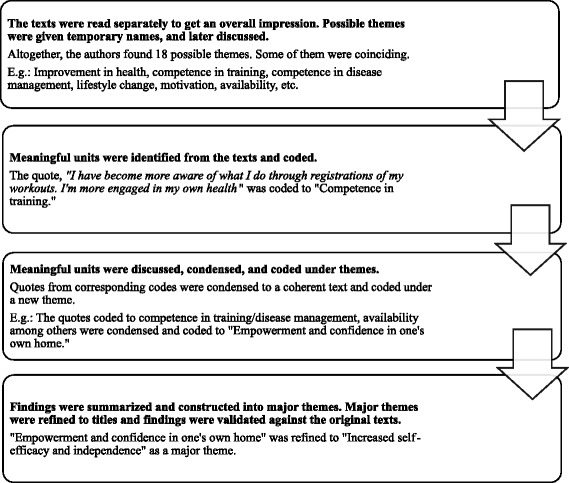
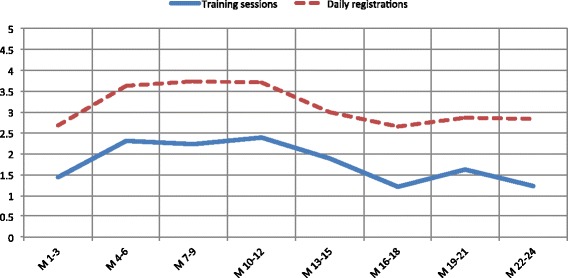
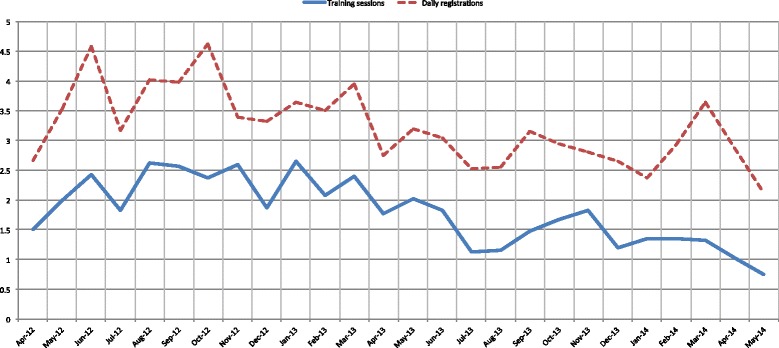
BACKGROUND: Telemedicine may increase accessibility to pulmonary rehabilitation in chronic obstructive pulmonary disease (COPD), thus enhancing long-term exercise maintenance. We aimed to explore COPD patients' adherence and experiences in long-term telerehabilitation to understand factors affecting satisfaction and potential for service improvements. METHODS: A two-year pilot study with 10 patients with COPD was conducted. The intervention included treadmill exercise training at home and a webpage for telemonitoring and self-management combined with weekly videoconferencing sessions with a physiotherapist. We conducted four separate series of data collection. Adherence was measured in terms of frequency of registrations on the webpage. Factors affecting satisfaction and adherence, together with potential for service improvements, were explored through two semi-structured focus groups and an individual open-ended questionnaire. Qualitative data were analysed by systematic text condensation. User friendliness was measured by the means of a usability questionnaire. RESULTS: On average, participants registered 3.0 symptom reports/week in a web-based diary and 1.7 training sessions/week. Adherence rate decreased during the second year. Four major themes regarding factors affecting satisfaction, adherence and potential improvements of the intervention emerged: (i) experienced health benefits; (ii) increased self-efficacy and independence; and (iii) emotional safety due to regular meetings and access to special competence; (iv) maintenance of motivation. Participants were generally highly satisfied with the technical components of the telerehabilitation intervention. CONCLUSIONS: Long-term adherence to telerehabilitation in COPD was maintained for a two-year period. Satisfaction was supported by experienced health benefits, self-efficacy, and emotional safety. Maintenance of motivation was a challenge and might have affected long-term adherence. Four key factors of potential improvements in long-term telerehabilitation were identified: (i) adherence to different components of the telerehabilitation intervention is dependent on the level of focus provided by the health personnel involved; (ii) the potential for regularity that lies within the technology should be exploited to avoid relapses after vacation; (iii) motivation might be increased by tailoring individual consultations to support experiences of good health and meet individual goals and motivational strategies; (iv) interactive functionalities or gaming tools might provide peer-support, peer-modelling and enhance motivation.
Overview
The claims and statistics of this paper haven’t been checked yet.
Run the check — free, no account needed. It reads the open-access text and checks the sources it cites.
Integrity signals
Registry
Cites
Statistics
Figures
Verification
Claims the paper makes
The claims and statistics of this paper haven’t been checked yet.
Run the check — free, no account needed. It reads the open-access text and checks the sources it cites.
Claims other papers make about this one
Each is checked against this paper’s own text: does it say what the citing paper says it does?
The source backs part of the claim, not all of it — or backs it for a different population, condition or comparison.
In the citing paper
“In addition, previous research has found that telerehabilitation may result in lower patient adherence or confidence, which may decrease the treatment’s effectiveness [24].”
From Behavior Modification Techniques on Patients with Chronic Pain in the Context of COVID-19 Telerehabilitation: An Umbrella Review (2022) · cites this paper as [24]
Experimental — accuracy not yet measured
Self-check
Percentages, sums and reported differences re-computed from the paper’s own numbers.
The self-check needs the paper’s full text.
Citations
Cites
Using thematic analysis in psychology
Braun, V., & Clarke, V. (2006) · Qualitative Research in Psychology · doi:10.1191/1478088706qp063oa · Cited by 194,414 · cited 1×
“Analysis of the qualitative data focused on identifying topics rather than on differences and similarities between individual respondents, thus confirming to a thematic analysis technique [38].”
BackgroundSelf-efficacy: The exercise of control
Bandura, A., Freeman, W. H., & Lightsey, R. (1999) · Journal of Cognitive Psychotherapy · doi:10.1891/0889-8391.13.2.158 · Cited by 46,835
Self-efficacy: the exercise of control
(1997) · Choice Reviews Online · doi:10.5860/choice.35-1826 · Cited by 24,451
Vestbo, J., Hurd, S. S., Agustí, A. G., Jones, P. W., Vogelmeier, C., Anzueto, A., Barnes, P. J., Fabbri, L. M., Martinez, F. J., Nishimura, M., et al. (2013) · American Journal of Respiratory and Critical Care Medicine · doi:10.1164/rccm.201204-0596pp · Cited by 15,983
Strategies for ensuring trustworthiness in qualitative research projects
Shenton, A. K. (2004) · Education for Information · doi:10.3233/efi-2004-22201 · Cited by 9,748
SUS: A 'Quick and Dirty' Usability Scale
(1996) · Usability Evaluation In Industry · doi:10.1201/9781498710411-35 · Cited by 8,989
Adherence to Long-Term Therapies: Evidence for Action
Geest, S. D., & Sabate, E. J. (2003) · European Journal of Cardiovascular Nursing · doi:10.1016/s1474-5151(03)00091-4 · Cited by 6,310
The generalizability of the psychoanalytic concept of the working alliance.
Bordin, E. S. (1979) · Psychotherapy: Theory, Research & Practice · doi:10.1037/h0085885 · Cited by 5,238 · cited 1×
“An agreement of goals and methods between the patient and the helper is seen as an important key to the change process [30].”
BackgroundQualitative research: standards, challenges, and guidelines
Malterud, K. (2001) · The Lancet · doi:10.1016/s0140-6736(01)05627-6 · Cited by 5,014
Usability Evaluation In Industry
(1996) · CRC Press eBooks · doi:10.1201/9781498710411 · Cited by 4,445
Spruit, M. A., Singh, S. J., Garvey, C., ZuWallack, R., Nici, L., Rochester, C., Hill, K., Holland, A. E., Lareau, S. C., Man, W. D.-C., et al. (2013) · American Journal of Respiratory and Critical Care Medicine · doi:10.1164/rccm.201309-1634st · Cited by 3,938
Promotion and Prevention: Regulatory Focus as A Motivational Principle
Higgins, E. T. (1998) · Advances in Experimental Social Psychology · doi:10.1016/s0065-2601(08)60381-0 · Cited by 3,511
Global Initiative for Chronic Obstructive Lung Disease (GOLD)
Rahman, M. M., & Siddiqui, M. M. R. (2017) · Anwer Khan Modern Medical College Journal · doi:10.3329/akmmcj.v7i1.31596 · Cited by 3,105
Huber, M., Knottnerus, J. A., Green, L., van der Horst, H. E., Jadad, A. R., Kromhout, D., Leonard, B. E., Lorig, K. R., Loureiro, I., Meer, J. W. M. V. D., et al. (2011) · BMJ · doi:10.1136/bmj.d4163 · Cited by 2,983 · cited 1×
“Further, our analysis was based on a view of health as “the ability to adapt and self-manage in the face of social, physical, and emotional challenges” [28].”
MethodMcCambridge, J., Witton, J., & Elbourne, D. R. (2014) · Journal of Clinical Epidemiology · doi:10.1016/j.jclinepi.2013.08.015 · Cited by 2,748 · cited 2×
“Being observed might change research participants’ behaviour or answers to what they think is expected [54].”
BackgroundThe salutogenic model as a theory to guide health promotion
ANTONOVSKY, A. (1996) · Health Promotion International · doi:10.1093/heapro/11.1.11 · Cited by 2,647 · cited 1×
“of health is also in line with Antonovsky’s salutogenic theory [29].”
ResultAdherence to Long‐Term Therapies: Evidence for Action
Burkhart, P. V., & Sabaté, E. (2003) · Journal of Nursing Scholarship · doi:10.1111/j.1547-5069.2003.tb00001.x · Cited by 2,526
Rochester, C. L., Vogiatzis, I., Holland, A. E., Lareau, S. C., Marciniuk, D. D., Puhan, M. A., Spruit, M. A., Masefield, S. C., Casaburi, R. H., Clini, E. M., et al. (2015) · American Journal of Respiratory and Critical Care Medicine · doi:10.1164/rccm.201510-1966st · Cited by 908 · cited 1×
“A travel time greater than 30 min is a known barrier for attending PR and exercise programs for patients with COPD [41].”
BackgroundHealth Education: Effectiveness, Efficiency And Equity
Tones, K., & Tilford, S. (2001) · Medical Entomology and Zoology · Cited by 529
Determining what individual SUS scores mean
(2009) · Journal of Usability Studies archive · doi:10.5555/2835587.2835589 · Cited by 412
Pinnock, H., Kendall, M., Murray, S. A., Worth, A., Levack, P., Porter, M., MacNee, W., & Sheikh, A. (2011) · BMJ · doi:10.1136/bmj.d142 · Cited by 343
The concepts of health and illness revisited
Nordenfelt, L. (2006) · Medicine Health Care and Philosophy · doi:10.1007/s11019-006-9017-3 · Cited by 327 · cited 1×
“Good health is often seen as medicine’s main goal [42].”
BackgroundBarriers to pulmonary rehabilitation: Characteristics that predict patient attendance and adherence
Hayton, C., Clark, A., Olive, S., Browne, P., Galey, P., Knights, E., Staunton, L., Jones, A., Coombes, E. G., & Wilson, A. M. (2012) · Respiratory Medicine · doi:10.1016/j.rmed.2012.11.016 · Cited by 297 · cited 1×
“The study concluded that age, smoking status, availability of social support, travel distance, and markers of disease severity, in particular use of long-term oxygen therapy, were strong predictors of attendance and adherence to PR [11].”
BackgroundTelehealthcare in COPD: a systematic review and meta-analysis on physical outcomes and dyspnea.
Lundell, S., Holmner, Å., Rehn, B., Nyberg, A., & Wadell, K. (2015) · Respiratory Medicine · doi:10.1016/j.rmed.2014.10.008 · Cited by 203 · cited 2×
“A recent review showed that telerehabilitation may lead to increased physical activity level, but no effect was detected on exercise capacity and dyspnoea [19].”
BackgroundTabak, M., VanderValk, P., Hermens, H., Vollenbroek-Hutten, M., & Brusse-Keizer, M. (2014) · International Journal of Chronic Obstructive Pulmonary Disease · doi:10.2147/copd.s60179 · Cited by 196 · cited 4×
“Telemedicine can easily support peer-modelling processes through interactive interaction or gaming tools [15].”
BackgroundInfluentialAdherence to pulmonary rehabilitation: A qualitative study
Arnold, E., Bruton, A., & Ellis‐Hill, C. (2006) · Respiratory Medicine · doi:10.1016/j.rmed.2006.02.007 · Cited by 174 · cited 1×
“Barriers, which prevent patients from attending PR, include disruption of their everyday routine, travel or transportation difficulties, inconvenient timing of the program, lack of perceived benefit, lack of social support, low self-confidence, and fear of being breathless or exacerbating existing medical problems [2,…”
BackgroundKeating, A., Lee, A. L., & Holland, A. E. (2011) · Journal of Physiotherapy · doi:10.1016/s1836-9553(11)70040-6 · Cited by 159 · cited 1×
“Barriers, which prevent patients from attending PR, include disruption of their everyday routine, travel or transportation difficulties, inconvenient timing of the program, lack of perceived benefit, lack of social support, low self-confidence, and fear of being breathless or exacerbating existing medical problems [2,…”
BackgroundAntypas, K., & Wangberg, S. C. (2014) · Journal of Medical Internet Research · doi:10.2196/jmir.3132 · Cited by 147
Home telemonitoring in COPD: a systematic review of methodologies and patients’ adherence.
Cruz, J., Brooks, D., & Marques, A. (2014) · International Journal of Medical Informatics · doi:10.1016/j.ijmedinf.2014.01.008 · Cited by 144 · cited 1×
“In addition, a telemonitoring component, which focuses on disease management and monitoring of symptoms, for example after an exacerbation or hospitalisation, may be included [18].”
BackgroundTabak, M., Vollenbroek-Hutten, M. M. R., van der Valk, P. D. L. P. M., van der Palen, J. A. M., & Hermens, H. J. (2013) · Clinical Rehabilitation · doi:10.1177/0269215513512495 · Cited by 141
Holland, A. E., Hill, C. J., Rochford, P. D., Fiore, J. F., Berlowitz, D. J., & McDonald, C. F. (2013) · Journal of Telemedicine and Telecare · doi:10.1177/1357633x13487100 · Cited by 117 · cited 2×
“Dropout rates vary greatly between these studies, ranging from 0 % to 45 % [14–16, 19–22].”
BackgroundResultIs Telerehabilitation a Safe and Viable Option for Patients with COPD? A Feasibility Study
Paneroni, M., Colombo, F., Papalia, A., Colitta, A., Borghi, G., Saleri, M., Cabiaglia, A., Azzalini, E., & Vitacca, M. (2014) · COPD Journal of Chronic Obstructive Pulmonary Disease · doi:10.3109/15412555.2014.933794 · Cited by 107
Improving the uptake of pulmonary rehabilitation in patients with COPD:
Harris, D., Hayter, M., & Allender, S. E. (2008) · British Journal of General Practice · doi:10.3399/bjgp08x342363 · Cited by 105
Long-term exercise maintenance in COPD via telerehabilitation: a two-year pilot study
Zanaboni, P., Hoaas, H., Lien, L. A., Hjalmarsen, A., & Wootton, R. (2016) · Journal of Telemedicine and Telecare · doi:10.1177/1357633x15625545 · Cited by 79
Burkow, T. M., Vognild, L. K., Johnsen, E., Risberg, M. J., Bratvold, A., Breivik, E., Krogstad, T., & Hjalmarsen, A. (2015) · BMC Research Notes · doi:10.1186/s13104-015-1713-8 · Cited by 73 · cited 1×
“Online group exercise sessions for patients with COPD have been piloted successfully [50].”
MethodSelf-citationRosen, M. J. (1999) · Neurorehabilitation · doi:10.3233/nre-1999-12103 · Cited by 58
Guo, S., & Bruce, A. (2014) · PLoS ONE · doi:10.1371/journal.pone.0110835 · Cited by 56 · cited 2×
“Further, patients with COPD might need support to define visible results and appraise their newly acquired competences to be able to implement them in everyday life [12, 47].”
BackgroundBurkow, T. M., Vognild, L. K., Østengen, G., Johnsen, E., Risberg, M. J., Bratvold, A., Hagen, T., Brattvoll, M., Krogstad, T., & Hjalmarsen, A. (2013) · BMC Medical Informatics and Decision Making · doi:10.1186/1472-6947-13-33 · Cited by 53 · cited 1×
“Telerehabilitation for patients with COPD often includes exercise and/or self-management education [14–17].”
BackgroundSelf-citationZanaboni, P., Lien, L. A., Hjalmarsen, A., & Wootton, R. (2013) · Journal of Telemedicine and Telecare · doi:10.1177/1357633x13506514 · Cited by 52 · cited 2×
“Clinical and other patient-reported outcomes have been reported elsewhere [14, 25].”
MethodResultCost-Utility Analysis of a Telerehabilitation Program: A Case Study of COPD Patients
Hæsum, L. K. E., Sørensen, N., Dinesen, B., Nielsen, C., Grann, O., Hejlesen, O. K., Toft, E. S., & Ehlers, L. H. (2012) · Telemedicine Journal and e-Health · doi:10.1089/tmj.2011.0250 · Cited by 52 · cited 2×
“Dropout rates vary greatly between these studies, ranging from 0 % to 45 % [14–16, 19–22].”
BackgroundResultExercise Training in Pulmonary Rehabilitation
Andrianopoulos, V., Klijn, P. H. C., Franssen, F. M. E., & Spruit, M. A. (2014) · Clinics in Chest Medicine · doi:10.1016/j.ccm.2014.02.013 · Cited by 44 · cited 1×
“Exercise training is a cornerstone of a PR program [2, 3].”
BackgroundAttitudes of COPD Patients towards Tele-Rehabilitation: A Cross-Sector Case Study
Dinesen, B., Huniche, L., & Toft, E. S. (2013) · International Journal of Environmental Research and Public Health · doi:10.3390/ijerph10116184 · Cited by 43
Hellem, E., Bruusgaard, K. A., & Bergland, A. (2011) · Physiotherapy Theory and Practice · doi:10.3109/09593985.2011.587502 · Cited by 36
Tang, J. E., Mandrusiak, A., & Russell, T. G. (2012) · International Journal of Telemedicine and Applications · doi:10.1155/2012/798791 · Cited by 35 · cited 1×
“Patients living in rural areas especially suffer from poor availability of PR programs [5, 6].”
BackgroundRasekaba, T. M., Williams, E., & Hsu-Hage, B. H. (2009) · Chronic Respiratory Disease · doi:10.1177/1479972309104419 · Cited by 33 · cited 1×
“Patients living in rural areas especially suffer from poor availability of PR programs [5, 6].”
BackgroundManaging Patient Factors in the Assessment of Swallowing via Telerehabilitation
Ward, E. C., Sharma, S., Burns, C. L., Theodoros, D., & Russell, T. G. (2012) · International Journal of Telemedicine and Applications · doi:10.1155/2012/132719 · Cited by 31
Antypas, K., & Wangberg, S. C. (2014) · JMIR Research Protocols · doi:10.2196/resprot.2725 · Cited by 31 · cited 1×
“We see a potential in using the technology to include tailored motivational messages based on the individuals’ promotion or prevention-goal orientation on the webpage or via mobile text messages [31, 48].”
BackgroundMousing, C. A., & Lomborg, K. E. (2012) · Patient Preference and Adherence · doi:10.2147/ppa.s28466 · Cited by 18 · cited 1×
“Further, patients with COPD might need support to define visible results and appraise their newly acquired competences to be able to implement them in everyday life [12, 47].”
BackgroundSalutogenese og empowerment i allmennmedisinsk perspektiv
Walseth, L. T., & Malterud, K. (2004) · Research at the University of Copenhagen (University of Copenhagen) · Cited by 14
[Salutogenesis and empowerment in the perspective of general practice].
Walseth, L. T., & Malterud, K. (2004) · PubMed · Cited by 9
Ability-based notions of health and disease in the Norwegian social security system
Solli, H. M. (2011) · Tidsskrift for Den norske legeforening · doi:10.4045/tidsskr.10.1178 · Cited by 3 · cited 1×
“Patients’ goals and resources are often assessed against their specific context and opportunities in the environment [46].”
Backgroundde Carvalho, D. R., Vidotto, L. S., Merli, M. F., Felcar, J. M., Pitta, F. D. O., Fujisawa, D. S., & Probst, V. S. (2014) · European Respiratory Journal · doi:10.1183/13993003/erj.44.suppl_58.p3349 · Cited by 1 · cited 1×
“Adherence to conventional rehabilitation programs and telemedicine interventions may be influenced by patients’ satisfaction [19, 23].”
Background
Research works printed but not linked: 5
- Borg G, Borg E. The Borg CR Scales® folder. Borg Perception: Hasselby, Sweeden; 2010.
- Borg G, Borg E. A new generation of scaling methods: Level-anchored ratio scaling. Psychologia. 2001;28:15–45.
- Flick U. An introduction to qualitative reserach. 4th ed. London: SAGE Publications Ltd; 2009.
- Malterud K. Kvalitative metoder i medisinsk forskning. 3rd ed. Oslo: Universitetsforlaget AS; 2011.
- Bandura A. Self-efficacy. In: Ramachaudran VS, editor. Encyclopedia of human behavior. 4. New York: Academic Press; 1994. p. 71–81.
Cited by
Sorted by citations
Telehealth and patient satisfaction: a systematic review and narrative analysis
Kruse, C. S., Krowski, N., Rodriguez, B., Tran, L., Vela, J., & Brooks, M. (2017) · BMJ Open · doi:10.1136/bmjopen-2017-016242 · Cited by 1,350
Rochester, C. L., Alison, J. A., Carlin, B. W., Jenkins, A. R., Cox, N. S., Bauldoff, G. S., Bhatt, S. P., Bourbeau, J., Burtin, C., Camp, P. G., et al. (2023) · American Journal of Respiratory and Critical Care Medicine · doi:10.1164/rccm.202306-1066st · Cited by 475
“A high degree of satisfaction is reported with the technological components for those telerehabilitation models making use of more sophisticated equipment (149).”
BackgroundTelerehabilitation for chronic respiratory disease
Cox, N. S., Corso, S. D., Hansen, H., McDonald, C. F., Hill, C. J., Zanaboni, P., Alison, J. A., O’Halloran, P., Macdonald, H., & Holland, A. E. (2021) · Cochrane Database of Systematic Reviews · doi:10.1002/14651858.cd013040.pub2 · Cited by 467
Vasilopoulou, M., Papaioannou, A. Ι., Kaltsakas, G., Louvaris, Z., Chynkiamis, N., Spetsioti, S., Kortianou, E. A., Gennimata, S. A., Palamidas, A. F., Κostikas, Κ., et al. (2017) · European Respiratory Journal · doi:10.1183/13993003.02129-2016 · Cited by 233
Morton, K., Dennison, L., May, C. R., Murray, E., Little, P. S., McManus, R. J., & Yardley, L. (2016) · Patient Education and Counseling · doi:10.1016/j.pec.2016.10.019 · Cited by 192
“Hoaas [34] 2 1 1 2 1 1 1 1 1 1 1 1 1 1 1 ++ Jones [35] 1 1 1 1 3 1 1 3 1 1 1 1 1 1 1 ++ Jones [36] 1 1 1 1 3 2 2 1 1 2 1 1 1 1 1 ++ Kerr [37] 1 1 1 1 3 1 1 1 1 1 1 1 1 1 1 ++ Koopman [38] 1 1 1 2 3 1 1 1 1 1 1 1 1 2 1 ++”
BackgroundInfluential
Metadata
- Authors
- Hoaas, H., Andreassen, H. K., Lien, L. A., Hjalmarsen, A., & Zanaboni, P.
- Affiliations
- University Hospital of North Norway (NO)
- Corresponding author
- Hoaas, Hanne
- Venue
- BMC Medical Informatics and Decision Making
- Published
- 2016-02-25
- Volume
- 16
- Issue
- 1
- Pages
- 26-26
- ISSN
- 1472-6947 (ISSN-L)
- PMC
- PMC4766676
- OpenAlex
- W2285434670
- Cited by
- 152
- References
- 53
- Citations by year
- 2026: 5 · 2025: 13 · 2024: 13 · 2023: 24 · 2022: 29 · 2021: 18 · 2020: 11 · 2019: 8 · 2018: 12 · 2017: 12 · 2016: 6
- FWCI
- 12.56
- Type
- journal article
- Language
- en
- Open access
- gold
- doi.org
- Licence
- cc-by
- Locations
- BMC Medical Informatics and Decision Making (publishedVersion, cc-by)
- Europe PMC (PubMed Central) (publishedVersion, cc-by)
- PubMed Central (publishedVersion, cc-by)
- PubMed (publishedVersion)
- NORA - Norwegian Open Research Archives (submittedVersion, other-oa)
- Funders
- Helse Nord RHF (HST1014-11)
- Topics
- Health Sciences › Medicine › Public Health, Environmental and Occupational Health › Telemedicine and Telehealth Implementation
- Health Sciences › Medicine › Pulmonary and Respiratory Medicine › Chronic Obstructive Pulmonary Disease (COPD) Research
- Health Sciences › Health Professions › General Health Professions › Mobile Health and mHealth Applications
- Keywords
- chronic obstructive pulmonary disease, telerehabilitation, pulmonary rehabilitation, exercise adherence, patient satisfaction, remote patient monitoring, self-management, self-efficacy, motivation, emotional safety, videoconferencing, usability, service improvement
- MeSH terms
- Telerehabilitation, Female, Humans, Male, Middle Aged, Outcome and Process Assessment, Health Care, Patient Compliance, Pilot Projects, Self Care, Patient Satisfaction, Pulmonary Disease, Chronic Obstructive
About these checks
Registry, retraction, Cites and statistics results are computed, not judged, with one exception: a printed reference that no index lists is read once by a model before it counts as a citation error. Claims are extracted by a model and kept only when their quote appears verbatim in the text; each cited source is then checked, with a model’s help, for whether it says what the claim relies on. Those verdicts can be wrong — read the claim’s quote and the cited source before relying on one.
Statistics and arithmetic are recomputed, not judged.
Confidence bands are shown only for fields calibrated on our annotated test set. None is calibrated yet, so no band is shown.
What counts as a claim ›How we measure confidence ›How we check this ›
Are you an author, or do you see a problem with this page? Request a review
