

The DOI matches its Crossref record; 42 of the 42 references it cites were found in a registry or an index.
A machine learning model to predict the risk of 30-day readmissions in patients with heart failure: a retrospective analysis of electronic medical records data
Open accessAbstract
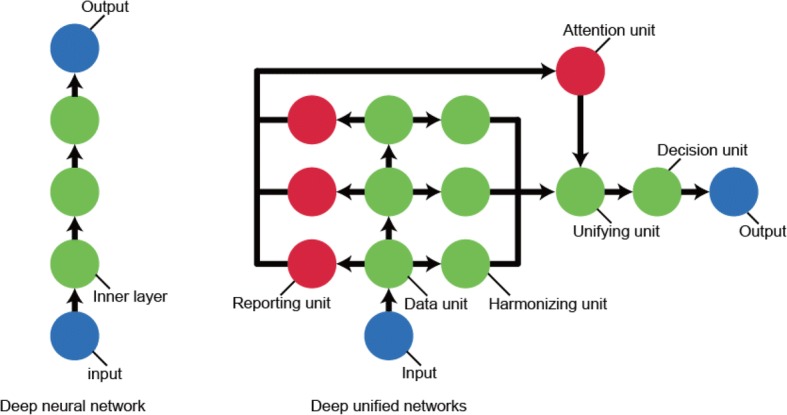
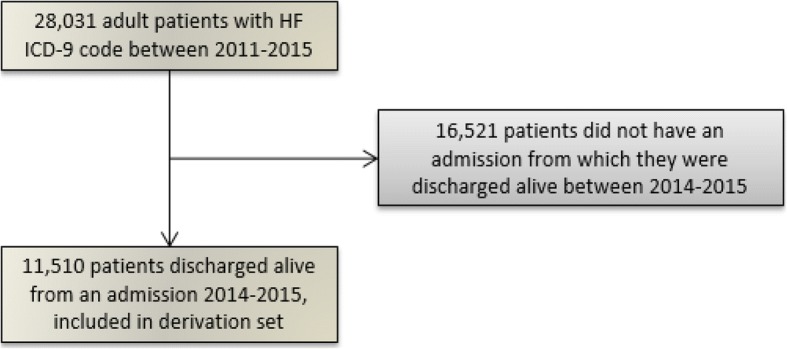
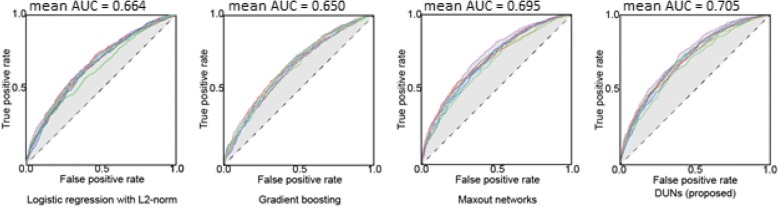
BACKGROUND: Heart failure is one of the leading causes of hospitalization in the United States. Advances in big data solutions allow for storage, management, and mining of large volumes of structured and semi-structured data, such as complex healthcare data. Applying these advances to complex healthcare data has led to the development of risk prediction models to help identify patients who would benefit most from disease management programs in an effort to reduce readmissions and healthcare cost, but the results of these efforts have been varied. The primary aim of this study was to develop a 30-day readmission risk prediction model for heart failure patients discharged from a hospital admission. METHODS: We used longitudinal electronic medical record data of heart failure patients admitted within a large healthcare system. Feature vectors included structured demographic, utilization, and clinical data, as well as selected extracts of un-structured data from clinician-authored notes. The risk prediction model was developed using deep unified networks (DUNs), a new mesh-like network structure of deep learning designed to avoid over-fitting. The model was validated with 10-fold cross-validation and results compared to models based on logistic regression, gradient boosting, and maxout networks. Overall model performance was assessed using concordance statistic. We also selected a discrimination threshold based on maximum projected cost saving to the Partners Healthcare system. RESULTS: Data from 11,510 patients with 27,334 admissions and 6369 30-day readmissions were used to train the model. After data processing, the final model included 3512 variables. The DUNs model had the best performance after 10-fold cross-validation. AUCs for prediction models were 0.664 ± 0.015, 0.650 ± 0.011, 0.695 ± 0.016 and 0.705 ± 0.015 for logistic regression, gradient boosting, maxout networks, and DUNs respectively. The DUNs model had an accuracy of 76.4% at the classification threshold that corresponded with maximum cost saving to the hospital. CONCLUSIONS: Deep learning techniques performed better than other traditional techniques in developing this EMR-based prediction model for 30-day readmissions in heart failure patients. Such models can be used to identify heart failure patients with impending hospitalization, enabling care teams to target interventions at their most high-risk patients and improving overall clinical outcomes.
Overview
The claims and statistics of this paper haven’t been checked yet.
Run the check — free, no account needed. It reads the open-access text and checks the sources it cites.
Integrity signals
Registry
Cites
Statistics
Figures
Verification
Claims the paper makes
The claims and statistics of this paper haven’t been checked yet.
Run the check — free, no account needed. It reads the open-access text and checks the sources it cites.
Claims other papers make about this one
Each is checked against this paper’s own text: does it say what the citing paper says it does?
The source backs part of the claim, not all of it — or backs it for a different population, condition or comparison.
In the citing paper
“Missing data were usually ignored by dropping data or imputing, if not dealt with appropriately can skew the results68,106,173.”
From Multimodal machine learning in precision health: A scoping review (2022) · cites this paper as [106]
Experimental — accuracy not yet measured
Self-check
Percentages, sums and reported differences re-computed from the paper’s own numbers.
The self-check needs the paper’s full text.
Citations
Cites
XGBoost: A Scalable Tree Boosting System
Chen, T., & Guestrin, C. (2016) · Proceedings of the 22nd ACM SIGKDD International Conference on Knowledge Discovery and Data Mining · doi:10.1145/2939672.2939785 · Cited by 54,569
The Elements of Statistical Learning
Hastie, T., Friedman, J., & Tibshirani, R. (2001) · Springer Series in Statistics · doi:10.1007/978-0-387-21606-5 · Cited by 24,162
"Why Should I Trust You?": Explaining the Predictions of Any Classifier
Ribeiro, M. T., Singh, S., & Guestrin, C. (2016) · Proceedings of the 22nd ACM SIGKDD International Conference on Knowledge Discovery and Data Mining · doi:10.1145/2939672.2939778 · Cited by 17,555
Layer NormalizationPreprint
Ba, J., Kiros, J., & Hinton, G. E. (2016) · arXiv.org · doi:10.48550/arxiv.1607.06450 · Cited by 13,762
2013 ACCF/AHA Guideline for the Management of Heart Failure
Yancy, C. W., Jessup, M., Bozkurt, B., Butler, J., Casey, D. E., Drazner, M. H., Fonarow, G. C., Geraci, S. A., Horwich, T., Januzzi, J. L., et al. (2013) · Journal of the American College of Cardiology · doi:10.1016/j.jacc.2013.05.019 · Cited by 12,536
Heart Disease and Stroke Statistics—2016 Update: A Report From the American Heart Association
Mozaffarian, D., Benjamin, E. J., Go, A. S., Arnett, D. K., Blaha, M. J., Cushman, M., Das, S. R., de Ferranti, S., Després, J.-P., Fullerton, H. J., et al. (2016) · Circulation · doi:10.1161/cir.0000000000000350 · Cited by 6,596
Rehospitalizations among Patients in the Medicare Fee-for-Service Program
Jencks, S. F., Williams, M. V., & Coleman, E. A. (2009) · New England Journal of Medicine · doi:10.1056/nejmsa0803563 · Cited by 5,164
2013 ACC/AHA Guideline on the Assessment of Cardiovascular Risk
Goff, D. C., Lloyd-Jones, D. M., Bennett, G., Coady, S., D’Agostino, R. B., Gibbons, R., Greenland, P., Lackland, D. T., Levy, D., O’Donnell, C. J., et al. (2014) · Journal of the American College of Cardiology · doi:10.1016/j.jacc.2013.11.005 · Cited by 4,945
Goff, D. C., Lloyd-Jones, D. M., Bennett, G., Coady, S., D’Agostino, R. B., Gibbons, R., Greenland, P., Lackland, D. T., Levy, D., O’Donnell, C. J., et al. (2014) · Circulation · doi:10.1161/01.cir.0000437741.48606.98 · Cited by 3,697
Cited by
Sorted by citations
Machine learning prediction in cardiovascular diseases: a meta-analysis
Krittanawong, C., Virk, H. H., Bangalore, S., Wang, Z., Johnson, K. W., Pinotti, R., Zhang, H.-J., Kaplin, S. L., Narasimhan, B., Kitai, T., et al. (2020) · Scientific Reports · doi:10.1038/s41598-020-72685-1 · Cited by 447
Multimodal machine learning in precision health: A scoping review
Kline, A., Wang, H., Li, Y., Dennis, S., Hutch, M., Xu, Z., Wang, F., Cheng, F., & Luo, Y. (2022) · npj Digital Medicine · doi:10.1038/s41746-022-00712-8 · Cited by 528
Challenges and opportunities beyond structured data in analysis of electronic health records
Tayefi, M., Ngo, P. D., Chomutare, T., Dalianis, H., Salvi, E., Budrionis, A., & Godtliebsen, F. (2021) · Wiley Interdisciplinary Reviews Computational Statistics · doi:10.1002/wics.1549 · Cited by 328
Artificial Intelligence in Cardiology: Present and Future
López-Jiménez, F. A., Attia, Z. I., Arruda-Olson, A. M., Carter, R. E., Chareonthaitawee, P., Jouni, H., Kapa, S., Lerman, A., Luong, C. L., Medina‐Inojosa, J. R., et al. (2020) · Mayo Clinic Proceedings · doi:10.1016/j.mayocp.2020.01.038 · Cited by 293
Systematic Review of Economic Impact Studies of Artificial Intelligence in Health Care
Wolff, J., Pauling, J. K., Keck, A., & Baumbach, J. (2019) · Journal of Medical Internet Research · doi:10.2196/16866 · Cited by 295
Metadata
- Authors
- Golas, S. B., Shibahara, T., Agboola, S., Otaki, H., Sato, J., Nakae, T., Hisamitsu, T., Kojima, G., Felsted, J., Kakarmath, S., Kvedar, J., & Jethwani, K.
- Affiliations
- Partners HealthCare Connected Health (US)
- Hitachi (Japan) (JP)
- Harvard University (US)
- Corresponding author
- Golas, Sara Bersche
- ORCID
- Venue
- BMC Medical Informatics and Decision Making
- Published
- 2018-06-22
- Volume
- 18
- Issue
- 1
- Pages
- 44-44
- ISSN
- 1472-6947 (ISSN-L)
- PMC
- PMC6013959
- OpenAlex
- W2808897169
- Cited by
- 287
- References
- 42
- Citations by year
- 2026: 17 · 2025: 39 · 2024: 37 · 2023: 37 · 2022: 40 · 2021: 59 · 2020: 35 · 2019: 21 · 2018: 2
- FWCI
- 16.47
- Type
- journal article
- Language
- en
- Open access
- gold
- doi.org
- Licence
- Locations
- BMC Medical Informatics and Decision Making (publishedVersion, cc-by)
- Europe PMC (PubMed Central) (publishedVersion, other-oa)
- PubMed Central (publishedVersion, cc-by)
- PubMed (publishedVersion)
- DOAJ (DOAJ: Directory of Open Access Journals) (submittedVersion, cc-by-sa)
- Funders
- Central Research Laboratory, Hitachi, Ltd.
- Topics
- Physical Sciences › Computer Science › Artificial Intelligence › Machine Learning in Healthcare
- Health Sciences › Health Professions › Health Information Management › Artificial Intelligence in Healthcare
- Health Sciences › Medicine › Cardiology and Cardiovascular Medicine › Heart Failure Treatment and Management
- Keywords
- heart failure, 30-day readmission, readmission prediction, electronic health records, clinical notes, hospital readmission, healthcare cost reduction, disease management programs, deep learning prediction
- MeSH terms
- Deep Learning, Aged, Aged, 80 and over, Female, Heart Failure, Humans, Male, Middle Aged, Models, Theoretical, Patient Readmission, Prognosis, Retrospective Studies, Electronic Health Records
About these checks
Registry, retraction, Cites and statistics results are computed, not judged, with one exception: a printed reference that no index lists is read once by a model before it counts as a citation error. Claims are extracted by a model and kept only when their quote appears verbatim in the text; each cited source is then checked, with a model’s help, for whether it says what the claim relies on. Those verdicts can be wrong — read the claim’s quote and the cited source before relying on one.
Statistics and arithmetic are recomputed, not judged.
Confidence bands are shown only for fields calibrated on our annotated test set. None is calibrated yet, so no band is shown.
What counts as a claim ›How we measure confidence ›How we check this ›
Are you an author, or do you see a problem with this page? Request a review
