

Designing mHealth for maternity services in primary health facilities in a low-income setting - lessons from a partially successful implementation
Open accessThe DOI matches its Crossref record; 26 of the 26 references it cites were found in a registry or an index.
Abstract
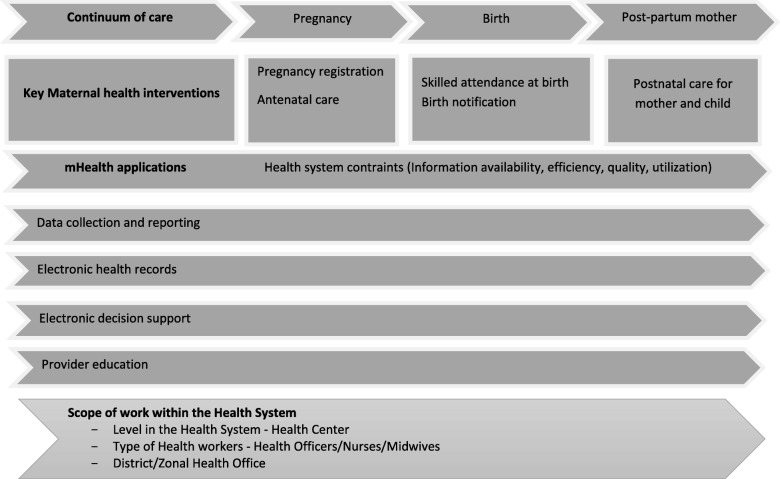
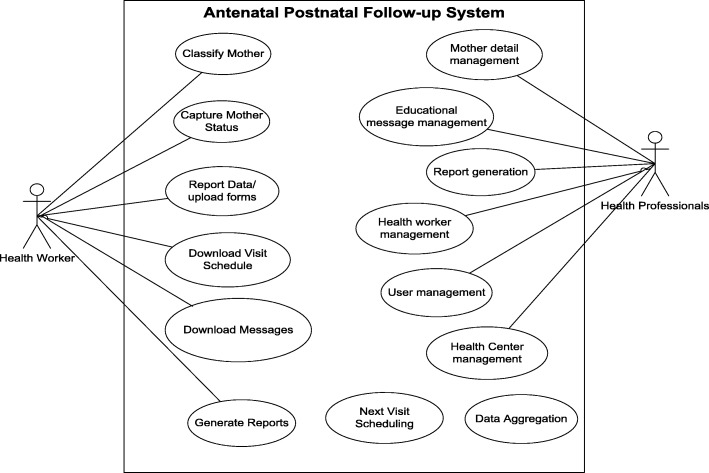
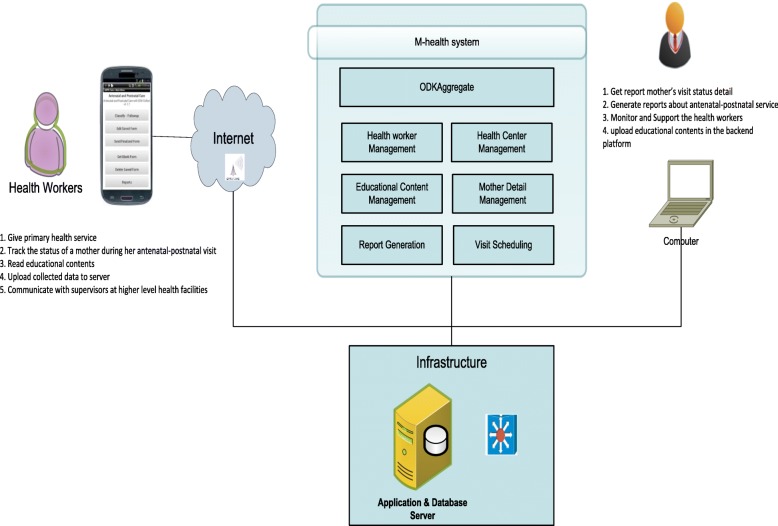
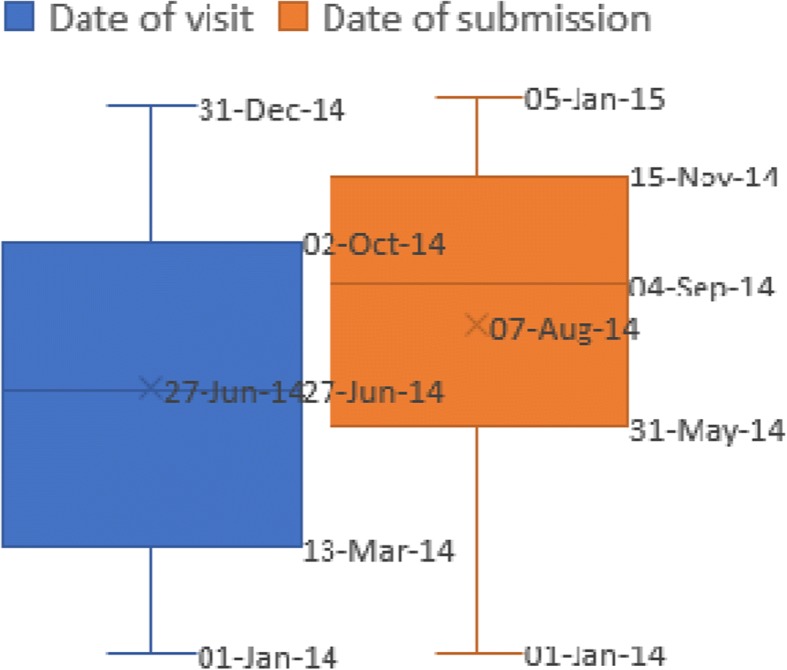
BACKGROUND: Increasing mobile phone ownership, functionality and access to mobile-broad band internet services has triggered growing interest to harness the potential of mobile phone technology to improve health services in low-income settings. The present project aimed at designing an mHealth system that assists midlevel health workers to provide better maternal health care services by automating the data collection and decision-making process. This paper describes the development process and technical aspects of the system considered critical for possible replication. It also highlights key lessons learned and challenges during implementation. METHODS: The mHealth system had front-end and back-end components. The front-end component was implemented as a mobile based application while the back-end component was implemented as a web-based application that ran on a central server for data aggregation and report generation. The current mHealth system had four applications; namely, data collection/reporting, electronic health records, decision support, and provider education along the continuum of care including antenatal, delivery and postnatal care. The system was pilot-tested and deployed in selected health centers of North Shewa Zone, Amhara region, Ethiopia. RESULTS: The system was used in 5 health centers since Jan 2014 and later expanded to additional 10 health centers in June 2016 with a total of 5927 electronic forms submitted to the back-end system. The submissions through the mHealth system were slightly lower compared to the actual number of clients who visited those facilities as verified by record reviews. Regarding timeliness, only 11% of the electronic forms were submitted on the day of the client visit, while an additional 17% of the forms were submitted within 10 days of clients' visit. On average forms were submitted 39 days after the day of clients visit with a range of 0 to 150 days. CONCLUSIONS: In conclusion, the study illustrated that an effective mHealth intervention can be developed using an open source platform and local resources. The system impacted key health outcomes and contributed to timely and complete data submission. Lessons learned through the process including success factors and challenges are discussed.
Overview
The claims and statistics of this paper haven’t been checked yet.
Free: it reads the open-access text and checks the first 5 claims that cite a source we can check. Create a free account to check every claim.
Integrity signals
Registry
Cites
Statistics
Figures
Verification
Claims the paper makes
The claims and statistics of this paper haven’t been checked yet.
Free: it reads the open-access text and checks the first 5 claims that cite a source we can check. Create a free account to check every claim.
Self-check
Percentages, sums and reported differences re-computed from the paper’s own numbers.
The self-check needs the paper’s full text.
Citations
Cites
Ethiopia demographic and health survey, 2000
Central Statistical Agency, & Ethiopia (2017) · Cited by 3,873
Health behavior models in the age of mobile interventions: are our theories up to the task?
Riley, W. T., Rivera, D. E., Atienza, A. A., Nilsen, W., Allison, S. M., & Mermelstein, R. (2011) · Translational Behavioral Medicine · doi:10.1007/s13142-011-0021-7 · Cited by 978
Understanding Knowledge as a Commons: From Theory to Practice
(2006) · The MIT Press eBooks · doi:10.7551/mitpress/6980.001.0001 · Cited by 689
Scaling Up mHealth: Where Is the Evidence?
Tomlinson, M., Rotheram-Borus, M. J., Swartz, L., & Tsai, A. C. (2013) · PLoS Medicine · doi:10.1371/journal.pmed.1001382 · Cited by 673
Aranda-Jan, C. B., Mohutsiwa-Dibe, N., & Loukanova, S. (2014) · BMC Public Health · doi:10.1186/1471-2458-14-188 · Cited by 644
Labrique, A. B., Vasudevan, L., Kochi, E., Fabricant, R., & Mehl, G. (2013) · Global Health: Science and Practice · doi:10.9745/ghsp-d-13-00031 · Cited by 601 · cited 4×
“A relatively new framework proposed by Alain B suggests 12 examples of common mHealth applications related to Reproductive, Maternal, Newborn and Child Health [14].”
BackgroundInfluentialde la Torre-Díez, I., López-Coronado, M., Vaca, C., Aguado, J. S., & de Castro, C. (2015) · Telemedicine and e-Health · doi:10.1089/tmj.2014.0053 · Cited by 495
Hall, C. S., Fottrell, E., Wilkinson, S., & Byass, P. (2014) · Global Health Action · doi:10.3402/gha.v7.25606 · Cited by 384
The use of mobile phones as a data collection tool: A report from a household survey in South Africa
Tomlinson, M., Solomon, W., Singh, Y., Doherty, T., Chopra, M., Ijumba, P., Tsai, A. C., & Jackson, D. (2009) · BMC Medical Informatics and Decision Making · doi:10.1186/1472-6947-9-51 · Cited by 340
Tamrat, T., & Kachnowski, S. (2012) · Maternal and Child Health Journal · doi:10.1007/s10995-011-0836-3 · Cited by 312
Understanding Knowledge as a Commons: From Theory to Practice
(2008) · Online Information Review · doi:10.1108/14684520810897485 · Cited by 301
Lund, S., Hemed, M., Nielsen, B., Said, A., Said, K., Makungu, M., & Rasch, V (2012) · BJOG: An International Journal of Obstetrics & Gynaecology · doi:10.1111/j.1471-0528.2012.03413.x · Cited by 228
Leon, N., Schneider, H., & Daviaud, E. (2012) · BMC Medical Informatics and Decision Making · doi:10.1186/1472-6947-12-123 · Cited by 200
Piette, J., Lun, K., Moura, L., Fraser, H., Mechael, P., Powell, J., & Khoja, S. (2012) · Bulletin of the World Health Organization · doi:10.2471/blt.11.099069 · Cited by 188
Shirima, K., Mukasa, O., Schellenberg, J. A., Manzi, F., John, D., Mushi, A., Mrisho, M., Tanner, M., Mshinda, H., & Schellenberg, D. (2007) · Emerging Themes in Epidemiology · doi:10.1186/1742-7622-4-5 · Cited by 124
Midwives and mobiles: using ICTs to improve healthcare in Aceh Besar, Indonesia1
Chib, A., Lwin, M. O., Ang, J., Lin, H., & Santoso, F. (2008) · Asian Journal of Communication · doi:10.1080/01292980802344182 · Cited by 121
H_pe for mHealth: More “y” or “o” on the horizon?
Labrique, A., Vasudevan, L., Chang, L. W., & Mehl, G. (2013) · International Journal of Medical Informatics · doi:10.1016/j.ijmedinf.2012.11.016 · Cited by 111
Shiferaw, S., Spigt, M., Tekie, M., Abdullah, M., Fantahun, M., & Dinant, G.-J. (2016) · PLOS ONE · doi:10.1371/journal.pone.0158600 · Cited by 90
Self-citationThe promise and peril of mHealth in developing countries
Chib, A. (2013) · Mobile Media & Communication · doi:10.1177/2050157912459502 · Cited by 88
Policymakers and mHealth: roles and expectations, with observations from Ethiopia, Ghana and Sweden
Barkman, C., & Weinehall, L. (2017) · Global Health Action · doi:10.1080/16549716.2017.1337356 · Cited by 60
Krah, E. F., & de Kruijf, J. G. (2016) · DIGITAL HEALTH · doi:10.1177/2055207616679264 · Cited by 56
Sustainable Cost Models for mHealth at Scale: Modeling Program Data from m4RH Tanzania
Mangone, E., Agarwal, S., L’Engle, K. L., Lasway, C., Zan, T., van Beijma, H., Orkis, J., & Karam, R. (2016) · PLoS ONE · doi:10.1371/journal.pone.0148011 · Cited by 47
mHealth in Africa: challenges and opportunities
Folaranmi, T. (2014) · Perspectives in Public Health · doi:10.1177/1757913913514703 · Cited by 46
Neupane, S., Odendaal, W., Friedman, I., Jassat, W., Schneider, H., & Doherty, T. (2014) · BMC Medical Informatics and Decision Making · doi:10.1186/1472-6947-14-69 · Cited by 41
Health workforce acquisition, retention and turnover in southwest Ethiopian health institutions
Gesesew, H. A., Tebeje, B., Alemseged, F., & Beyene, W. (2016) · Ethiopian Journal of Health Sciences · doi:10.4314/ejhs.v26i4.5 · Cited by 32
Amouzou, A., Kidanu, A., Taddesse, N., Silva, R., Hazel, E., Bryce, J., & Black, R. E. (2015) · PLoS ONE · doi:10.1371/journal.pone.0126909 · Cited by 26
Research works printed but not linked: 3
- ITU The world in 2017: ICT facts and figures 2017 Geneva International Telecommunication Union
- Health Sector Transformation Plan The Federal Democratic Republic of Ethiopia Ministry of Health 2015/16–2019/20 2016
- Health FDRoEMo Management Protocol On Selected Obstetrics Topics 2010
Cited by
Manyazewal, T., Woldeamanuel, Y., Blumberg, H. M., Fekadu, A., & Marconi, V. C. (2021) · npj Digital Medicine · doi:10.1038/s41746-021-00487-4 · Cited by 177
Barriers to Sustainable Telemedicine Implementation in Ethiopia: A Systematic Review
Sagaro, G. G., Battineni, G., & Amenta, F. (2020) · Telemedicine Reports · doi:10.1089/tmr.2020.0002 · Cited by 79
“2018 Costs, level of education, culture, phone (mobile), awareness Shiferaw et al.(24) 2018 Cross-sectional Cost, health system, culture, staff turnover, ICT infrastructure, electricity, phone (mobile), service integration, internet, awareness Harding et al.”
BackgroundDigital Solutions for Community and Primary Health Workers: Lessons From Implementations in Africa
Owoyemi, A., Osuchukwu, J. I., Azubuike, C., Ikpe, R. K., Nwachukwu, B. C., Akinde, C. B., Biokoro, G. W., Ajose, A. B., Nwokoma, E. I., Mfon, N. E., et al. (2022) · Frontiers in Digital Health · doi:10.3389/fdgth.2022.876957 · Cited by 78
“The cost of implementation was significantly reduced by integrating opensource software for the application design and deployment (23, 31).”
BackgroundMethodInfluentialImplementation science in maternity care: a scoping review
Dadich, A., Piper, A., & Coates, D. (2021) · Implementation Science · doi:10.1186/s13012-021-01083-6 · Cited by 78
“Quantitative and qualitative study 10 [98, 100, 121, 133, 134, 151, 157, 158, 169, 179]”
BackgroundHealthcare Workers’ Perspectives of mHealth Adoption Factors in the Developing World: Scoping Review
Addotey-Delove, M., Scott, R. E., & Mars, M. (2023) · International Journal of Environmental Research and Public Health · doi:10.3390/ijerph20021244 · Cited by 76
“…at io n an d C om m it m en t M ob il e Ph on e O w ne rs hi p A ff or da bi li ty M is ce ll an eo us Author & Year Jennings et al., 2013 [76] √ Shiferaw et al., 2018 [77] √ √ √ √ Medhanyie et al., 2015 [78] √ √ √ Campbell et al., 2014 [79] √ √ √ Georgette et al., 2016 [80] √ √ √ Källander…”
Metadata
- Authors
- Shiferaw, S., Workneh, A., Yirgu, R., Dinant, G.-J., & Spigt, M.
- Affiliations
- Addis Ababa University (ET)
- Maastricht University (NL)
- Corresponding author
- Shiferaw, Solomon
- Venue
- BMC Medical Informatics and Decision Making
- Published
- 2018-11-12
- Volume
- 18
- Issue
- 1
- Pages
- 96-96
- ISSN
- 1472-6947 (ISSN-L)
- PMC
- PMC6233283
- OpenAlex
- W2900547304
- Cited by
- 31
- References
- 26
- Citations by year
- 2026: 1 · 2025: 4 · 2024: 8 · 2023: 5 · 2022: 4 · 2021: 4 · 2020: 4 · 2019: 1
- FWCI
- 3.44
- Type
- journal article
- Language
- en
- Open access
- gold
- doi.org
- Licence
- cc-by
- creativecommons.org/licenses/by/4.0/ (tdm)
- Locations
- BMC Medical Informatics and Decision Making (publishedVersion, cc-by)
- Europe PMC (PubMed Central) (publishedVersion, cc-by)
- PubMed Central (publishedVersion, cc-by)
- PubMed (publishedVersion)
- Research Publications (Maastricht University) (publishedVersion, cc-by)
- DOAJ (DOAJ: Directory of Open Access Journals) (submittedVersion, cc-by-sa)
- NORA - Norwegian Open Research Archives (submittedVersion, cc-by-nc-nd)
- Research Publications (Maastricht University) (submittedVersion, other-oa)
- Funders
- The study was financially supported by United Nations Population Fund (UNFPA) Ethiopia Country Office.
- Topics
- Health Sciences › Health Professions › General Health Professions › Mobile Health and mHealth Applications
- Physical Sciences › Computer Science › Information Systems › ICT in Developing Communities
- Health Sciences › Health Professions › Health Information Management › Electronic Health Records Systems
- Keywords
- mobile health, obstetric care, primary health centers, mobile data collection, electronic health records, clinical decision support, provider education, prenatal care, postpartum care, low-income settings, implementation barriers, open-source platform, Ethiopia
- MeSH terms
- Delivery of Health Care, Ethiopia, Female, Health Facilities, Humans, Maternal Health Services, Poverty, Pregnancy, Telemedicine, Cell Phone, Electronic Health Records, Mobile Applications
About these checks
Registry, retraction, Cites and statistics results are computed, not judged, with one exception: a printed reference that no index lists is read once by a model before it counts as a citation error. Claims are extracted by a model and kept only when their quote appears verbatim in the text; each cited source is then checked, with a model’s help, for whether it says what the claim relies on. Those verdicts can be wrong — read the claim’s quote and the cited source before relying on one.
Statistics and arithmetic are recomputed, not judged.
Confidence bands are shown only for fields calibrated on our annotated test set. None is calibrated yet, so no band is shown.
What counts as a claim ›How we measure confidence ›How we check this ›
Are you an author, or do you see a problem with this page? Request a review
Data sources
Bibliographic data: Semantic Scholar, OpenAlex, Crossref.
Contains information from the Semantic Scholar Academic Graph Datasets, made available under the ODC Attribution License (ODC-BY 1.0).
Semantic Scholar’s data is described in: Kinney, R., et al. (2023). The Semantic Scholar Open Data Platform. arXiv:2301.10140.
