

Using machine learning methods to predict in-hospital mortality of sepsis patients in the ICU
Open accessThe DOI matches its Crossref record; 54 of the 55 references it cites were found in a registry or an index.
Abstract
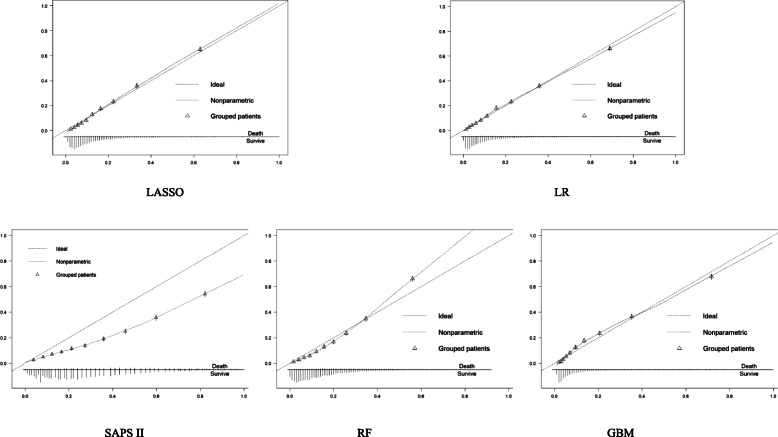
Background: Early and accurate identification of sepsis patients with high risk of in-hospital death can help physicians in intensive care units (ICUs) make optimal clinical decisions. This study aimed to develop machine learning-based tools to predict the risk of hospital death of patients with sepsis in ICUs. Methods: The source database used for model development and validation is the medical information mart for intensive care (MIMIC) III. We identified adult sepsis patients using the new sepsis definition Sepsis-3. A total of 86 predictor variables consisting of demographics, laboratory tests and comorbidities were used. We employed the least absolute shrinkage and selection operator (LASSO), random forest (RF), gradient boosting machine (GBM) and the traditional logistic regression (LR) method to develop prediction models. In addition, the prediction performance of the four developed models was evaluated and compared with that of an existent scoring tool – simplified acute physiology score (SAPS) II – using five different performance measures: the area under the receiver operating characteristic curve (AUROC), Brier score, sensitivity, specificity and calibration plot. Results: The records of 16,688 sepsis patients in MIMIC III were used for model training and test. Amongst them, 2949 (17.7%) patients had in-hospital death. The average AUROCs of the LASSO, RF, GBM, LR and SAPS II models were 0.829, 0.829, 0.845, 0.833 and 0.77, respectively. The Brier scores of the LASSO, RF, GBM, LR and SAPS II models were 0.108, 0.109, 0.104, 0.107 and 0.146, respectively. The calibration plots showed that the GBM, LASSO and LR models had good calibration; the RF model underestimated high-risk patients; and SAPS II had the poorest calibration. Conclusion: The machine learning-based models developed in this study had good prediction performance. Amongst them, the GBM model showed the best performance in predicting the risk of in-hospital death. It has the potential to assist physicians in the ICU to perform appropriate clinical interventions for critically ill sepsis patients and thus may help improve the prognoses of sepsis patients in the ICU.
Overview
The claims and statistics of this paper haven’t been checked yet.
Free: it reads the open-access text and checks the first 5 claims that cite a source we can check. Create a free account to check every claim.
Integrity signals
Registry
Cites
Statistics
Figures
Verification
Claims the paper makes
The claims and statistics of this paper haven’t been checked yet.
Free: it reads the open-access text and checks the first 5 claims that cite a source we can check. Create a free account to check every claim.
Self-check
Percentages, sums and reported differences re-computed from the paper’s own numbers.
The self-check needs the paper’s full text.
Citations
Cites
Breiman, L. (2001) · Machine Learning · doi:10.1023/a:1010933404324 · Cited by 133,538
Regression shrinkage and selection via the lasso
Tibshirani, R. (1996) · Journal of the Royal Statistical Society Series B: Statistical Methodology · doi:10.1111/j.2517-6161.1996.tb02080.x · Cited by 51,482 · cited 1×
“…learning methods such as random forest (RF) [27], gradient boosting machine (GBM) [28] and the least absolute shrinkage and selection operator (LASSO) [29] which is a type of linear regression using shrinkage, have been proposed, and these models have good prediction performance in medicine.”
MethodGreedy function approximation: A gradient boosting machine
Friedman, J. H. (2001) · The Annals of Statistics · doi:10.1214/aos/1013203451 · Cited by 30,731 · cited 2×
“Several innovative and pragmatic machine learning methods such as random forest (RF) [27], gradient boosting machine (GBM) [28] and the least absolute shrinkage and selection operator (LASSO) [29] which is a type of linear regression using shrinkage, have been proposed, and these models have good…”
BackgroundMethodThe third international consensus definitions for sepsis and septic shock (Sepsis-3).
Singer, M., Deutschman, C. S., Seymour, C. W., Shankar-Hari, M., Annane, D., Bauer, M., Bellomo, R., Bernard, G. R., Chiche, J.-D., Coopersmith, C. M., et al. (2016) · JAMA · doi:10.1001/jama.2016.0287 · Cited by 28,250
The Elements of Statistical Learning
Hastie, T., Friedman, J., & Tibshirani, R. (2001) · Springer Series in Statistics · doi:10.1007/978-0-387-21606-5 · Cited by 24,162
APACHE II: A severity of disease classification system
KNAUS, W. A., DRAPER, E. A., WAGNER, D. P., & ZIMMERMAN, J. E. (1985) · Critical Care Medicine · doi:10.1097/00003246-198510000-00009 · Cited by 13,664
APACHE II-A Severity of Disease Classification System: Reply
Knaus, W. A., Draper, E. A., Wagner, D. P., & Zimmerman, J. E. (1986) · Critical Care Medicine · doi:10.1097/00003246-198608000-00028 · Cited by 13,376
Bone, R. C., Balk, R. A., Cerra, F. B., Dellinger, R. P., Fein, A. M., Knaus, W. A., Schein, R. M. H., & Sibbald, W. J. (1992) · Chest · doi:10.1378/chest.101.6.1644 · Cited by 13,198
Vincent, J. L., Moreno, R., Takala, J., Willatts, S., De Mendonça, A., Bruining, H., Reinhart, C. K., Suter, P. M., & Thijs, L. G. (1996) · Intensive Care Medicine · doi:10.1007/bf01709751 · Cited by 11,674 · cited 1×
“In Sepsis-3, instead of checking the SIRS criteria as in previous definitions, infected patients who have a sequential organ failure assessment (SOFA) score [11] higher than 2 are defined as having sepsis.”
MethodAngus, D. C., Linde-Zwirble, W. T., Lidicker, J., Clermont, G., Carcillo, J., & Pinsky, M. R. (2001) · Critical Care Medicine · doi:10.1097/00003246-200107000-00002 · Cited by 8,503
Cited by
Items 101–180 of 180
Optimal mean arterial pressure for favorable neurological outcomes in patients after cardiac arrest
Lee, S., Lee, K.-S., Han, K. S., Song, J., Lee, S. W., & Kim, S. J. (2025) · Journal of Intensive Care · doi:10.1186/s40560-025-00814-x · Cited by 3
Hu, T., Yao, W., Li, Y., & Liu, Y. (2023) · PLoS ONE · doi:10.1371/journal.pone.0282842 · Cited by 4
“7%) which used the MIMIC-III database [21].”
Raven, W., de Hond, A., Bouma, L.-M., Mulder, L. M., & de Groot, B. (2023) · European Journal of Emergency Medicine · doi:10.1097/mej.0000000000000996 · Cited by 4
Bahrami, A., Ghousi, R., Atashi, A., & Barzinpour, F. (2024) · IEEE Access · doi:10.1109/access.2024.3418584 · Cited by 3
“Kong et al. [6] reported that the ML-based methods devised in their research demonstrated strong predictive capabilities.”
MethodArtificial intelligence in critical care
Wu, C.-P., & Mathur, P. (2023) · Elsevier eBooks · doi:10.1016/b978-0-443-15688-5.00006-1 · Cited by 3
Alnajjar, I., Alshakarnah, B., AbuShaikha, T., Jarrar, T., Ozrail, A. A.-R., & Asbeh, Y. A. A. (2025) · BMC Surgery · doi:10.1186/s12893-025-02959-w · Cited by 3
“Consider the following averages for hospital stay [26, 27]: Mean post-operative LOS (all patients): 9.00 ± 5.59 days, adults ( 70 years): 6.44 ± 2.35 days, elderly ( ≥ 70 years): 12.29 ± 9.70 days.”
InfluentialSEP-XTree: An Explainable AI Model for Early Sepsis Detection
J., A., Mohan, M., Parthasarathy, S., Jayaraman, V., & Nikhat, H. F. (2025) · International Conference on Sensors and Related Networks (SENNET) · doi:10.1109/sennet64220.2025.11136025 · Cited by 2
“Kong et al. built in-hospital mortality prediction models for ICU sepsis patients using MIMIC-III [18].”
Xu, Y., Lei, T., Yang, Z., Guo, H. Y., Zhu, L., Wang, J., Liu, H., Liang, T., Lin, Q., Yao, G., et al. (2026) · Journal of Intensive Medicine · doi:10.1016/j.jointm.2025.10.010 · Cited by 3
“[ 43 , 44 ] Notably, ALT and albumin ranked unexpectedly among the top three features in our model.”
Minutti-Martinez, C., Galindo, A., Valdez, L., & Mata, F. (2022) · International Conference on Electrical Engineering, Computing Science and Automatic Control (CCE) · doi:10.1109/cce56709.2022.9976027 · Cited by 2
“The GBM model has already been successfully used in predictive analytics in medicine against other ML and statistical models, e.g., Kong et al. [12] used 86 predictor variables to predict in-hospital mortality of patients with sepsis using different modes: least absolute shrinkage and selection…”
MethodLim, S. H., Kim, M. J., Choi, W. H., Cheong, J. C., Kim, J. W., Lee, K. J., & Park, J. H. (2023) · Annals of Surgical Treatment and Research · doi:10.4174/astr.2023.105.4.237 · Cited by 2
“With machine learning, Kong et al. [13] predicted in-hospital mortality for sepsis patients in the ICU (AUC, 0.829), and Fransvea et al. [28] predicted mortality for emergency surgery in the elderly (accuracy, 94.9%).”
InfluentialMulti-organ spatiotemporal information aware model for sepsis mortality prediction
Feng, X., Zhu, S., Shen, Y., Zhu, H., Yan, M., Cai, G., & Ning, G. (2023) · Artificial Intelligence in Medicine · doi:10.1016/j.artmed.2023.102746 · Cited by 4
Early Prediction of Sepsis Using Ensembled Learning
Akinduyite, C. O., Badeji–Ajisafe, B., Obamiyi, S. E., Oguntimilehin, A., Oluwatoyin, O., Tope-Oke, A. M., Jaiyesinmi, K. F., Abiola, O. B., & Ayogu, B. (2024) · International Conference on Science, Engineering and Business for Driving Sustainable Development Goals (SEB4SDG) · doi:10.1109/seb4sdg60871.2024.10629800 · Cited by 2
“In [5], a machine learning-based tools was proposed to predict mortality rate in sepsis patients the ICUs using Random Forest (RF), Least Absolute Shrinkage and Selection Operator (LASSO), Gradient Boosting Machine (GBM) and the traditional Logistic Regression (LR) on medical statistics mart for…”
BackgroundMethodEarly In-Hospital Mortality Prediction Based on xTimesNet and Time Series Interpretable Methods
Wang, X., Yuan, Z., Yao, Z., Yuan, Y., & Luo, L. (2025) · IEEE Access · doi:10.1109/access.2025.3571789 · Cited by 2
“Numerous studies have focused on disease-specific cohorts such as acute kidney injury [23], [24], acute myocardial infarction [25], [26], and sepsis patients [27], [28], where risk assessment is crucial for clinical intervention.”
Predicting the Risk of Death for Sepsis Based on Within-Class Mixup and Lightgbm
Wang, X., Wang, Y., & Hao, Y. (2021) · 2021 4th International Conference on Artificial Intelligence and Pattern Recognition · doi:10.1145/3488933.3489021 · Cited by 2
Amory, I. A., Khazaee, P. R., & Yousefi, S. (2025) · Health Science Reports · doi:10.1002/hsr2.71556 · Cited by 2
Meinberg, M., Khan, Z., Jaskari, J., Wilkman, E., Lemström, K., Särkkä, S., & Syrjälä, S. (2026) · JTCVS Open · doi:10.1016/j.xjon.2026.101610 · Cited by 2
Komninos, P., Kontogiannis, T., Eleftheroglou, N., & Zarouchas, D. S. (2026) · Data-Centric Engineering · doi:10.1017/dce.2025.10031 · Cited by 3
“…as existing methodologies primarily focus on directly predicting mortality rates (Li-wei et al., 2014; Data and Pirracchio, 2016; Lee et al., 2017; Purushotham et al., 2018; Kong et al., 2020; Lauritsen et al., 2020; Wu et al., 2023), which is not the primary objective of the DSMC model.”
Naseri, E., Hedayati, M., Mobayen, M., Sedighian, H., & Fooladi, A. A. I. (2026) · BMC Infectious Diseases · doi:10.1186/s12879-026-12776-y · Cited by 1
“ML methods have also been applied to predict in-hospital mortality of ICU sepsis patients [22], and Park et al. used Random Forest and other models to predict postoperative mortality in critically ill burn patients [23].”
Gan, Z., Zhang, J. I.-X., Huang, J., Long, S., Wu, W., Wang, G., Yao, X., Li, Q., Yang, X., & Li, Y. (2026) · Frontiers in Medicine · doi:10.3389/fmed.2026.1751311 · Cited by 1
“Although several machine learning models have been developed to predict outcomes in general sepsis populations (12–14), none are specifically tailored to patients with malignant tumors, a group that exhibits distinct pathophysiological features, including therapy-induced immunosuppression, atypical…”
Liu, T., & Li, Q.-P. (2026) · Cardiology Research and Practice · doi:10.1155/crp/6487136 · Cited by 2
Nah, S., Lim, T. H., Chung, S. P., Suh, G. J., Choi, S.-H., Kwon, W. Y., Kim, W. Y., Kim, K., Choi, S., You, J. S., et al. (2026) · BMC Emergency Medicine · doi:10.1186/s12873-026-01558-z · Cited by 1
“…boosting model performed best overall, the AUROC difference compared with logistic regression was modest, and this difference was not statistically significant, consistent with previous studies showing that ML models are not always markedly superior to traditional statistical approaches [32, 33].”
Patient Safety: Opportunities and Risks of Health IT Applications, Methods and Devices
Barbosa, S. D. F. F., & Sasso, G. T. M. D. (2022) · Health informatics · doi:10.1007/978-3-030-91237-6_24 · Cited by 1
Machine learning and medicine- a brief introduction
Lee, B. D., & Peterson, C. (2022) · The Southwest Respiratory and Critical Care Chronicles · doi:10.12746/swrccc.v10i45.1043 · Cited by 1
Scoring for Hemorrhage Severity in Traumatic Injury
Shickel, B., Balch, J. A., Aggas, J. R., Loftus, T. J., Kotanen, C. N., Rashidi, P., & Guiseppi‐Elie, A. (2022) · Biomarkers in disease · doi:10.1007/978-3-030-87302-8_58-1 · Cited by 1
Machine learning-based prediction of low-value care for hospitalized patients
King, A. J., Tang, L., Davis, B. S., Preum, S. M., Bukowski, L. A., Zimmerman, J., & Kahn, J. M. (2023) · Intelligence-Based Medicine · doi:10.1016/j.ibmed.2023.100115 · Cited by 2
“Most prediction-focused machine learning applications in hospital medicine are used to predict clinical outcomes such as mortality [36-38] or whether the patient has a specific clinical condition like sepsis [39-41].”
BackgroundStevenson, J., Murphy, T. E., Tessier‐Sherman, B., Pisani, M. A., Gill, T. M., & Ferrante, L. E. (2024) · CHEST Critical Care · doi:10.1016/j.chstcc.2024.100093 · Cited by 1
Applications of Emerging Machine Learning Models in Healthcare Industry: A Comprehensive Review
Gour, S., & Randa, R. (2024) · Algorithms for intelligent systems · doi:10.1007/978-981-97-4533-3_22 · Cited by 1
Minutti-Martinez, C., Mata, F., Arellano-Vázquez, M., Ramírez, B. E., & Olveres, J. (2025) · Lecture notes in computer science · doi:10.1007/978-3-031-83882-8_8 · Cited by 1
Kryvova, O., KOZAK, L., Kovalenko, O., & Ненашева, Л. В. (2021) · Cybernetics and computer engineering · doi:10.15407/kvt206.04.054 · Cited by 2
Ibrahim, Z. M., Bean, D. M., Searle, T., Wu, H., Shek, A., Kraljević, Ž., Galloway, J. B., Norton, S., Teo, J., & Dobson, R. (2020) · arXiv (Cornell University) · doi:10.48550/arxiv.2011.09361 · Cited by 1
Evaluation of the association between extravascular lung water and prognosis of sepsis
Luo, P., Song, C.-X., Ai, Y.-Q., Chen, Z., Yan, S.-N., Liu, X., Chen, Y., & Sun, J. (2021) · Medicine · doi:10.1097/md.0000000000023971
Liu, X., Zhao, Y., Qin, Y., Wang, D., Yin, X., Yao, R.-Q., Ma, Q., Wang, Y., Zhu, S., Ma, S., et al. (2021) · Research Square · doi:10.21203/rs.3.rs-832364/v1 · Cited by 2
“Maximum RR, (bpm, median[P25,P75]) 26[23,31] 29[25,34] <0.”
Li, S., Song, X., Lui, K. Y., Zhu, Y., Xu, J., Guo, Z., Hu, X., Guan, X., & Cai, C. (2022) · Research Square · doi:10.21203/rs.3.rs-1282305/v1
守克, 土., 和也, 新., 匡, 青., 健太, 程., 誠一, 髙., & 卓, 間. (2022) · Nihon Kyukyu Igakukai Zasshi Journal of Japanese Association for Acute Medicine · doi:10.1002/jja2.12692
Scoring for Hemorrhage Severity in Traumatic Injury
Shickel, B., Balch, J. A., Aggas, J. R., Loftus, T. J., Kotanen, C. N., Rashidi, P., & Guiseppi‐Elie, A. (2023) · Biomarkers in disease · doi:10.1007/978-3-031-07395-3_58 · Cited by 1
Chen, S., Ke, C., Zhai, M., Wang, M., Sun, F., Yang, Y., & Chen, J. (2023) · Research Square · doi:10.21203/rs.3.rs-3053572/v1
Suplemento do XVIII Congresso Mineiro de Medicina Intensiva
(2023) · Revista Médica de Minas Gerais · doi:10.5935/2238-3182.v33supl.8
An novel cutting edge ANN machine learning algorithm for sepsis early prediction and diagnosis
Kanna, R. R., Priya, T. M., Immanuel, V. A., Kirubanand, V. B., Senthilnathan, T., & Rohini, V. (2023) · AIP conference proceedings · doi:10.1063/5.0181885 · Cited by 2
Andreu-Mateu, C., Andreu‐Vilarroig, C., Sánchez-Bermejo, N., Santamaría, C., & Tosca, R. (2024) · International Journal of Medical Informatics · doi:10.1016/j.ijmedinf.2024.105470
Prediction of mortality in sepsis patients using stacked ensemble machine learning algorithm
Babu, M., Sappani, M., Joy, M., Chandiraseharan, V. K., Jeyaseelan, L., & Sudarsanam, T. (2024) · Journal of Postgraduate Medicine · doi:10.4103/jpgm.jpgm_357_24 · Cited by 1
Mirza, M., Mehtab, M., Islam, B., & Shahbaz, S. (2025) · The Healer Journal of Physiotherapy and Rehabilitation Sciences · doi:10.55735/hjprs.v5i1.330 · Cited by 3
Amory, I. A. (2025) · Journal of Information Systems Engineering & Management · doi:10.52783/jisem.v10i36s.6638
“For example, they commonly suffer from feature redundancy, data imbalance, and insufficient data augmentation, which restricts their generalizability and clinical relevance [13-19].”
Shukla, S., Gupta, S., & Sharma, S. (2024) · International Conference on Parallel, Distributed and Grid Computing (PDGC) · doi:10.1109/pdgc64653.2024.10984270
“Kong et al. [8] developed machine learning tools to forecast the risk of in-hospital mortality among critically ill septic patients using the MIMIC III database.”
A Prognostic Machine Learning Model for Sepsis Based on Imbalanced Medical Data
Wu, R., Li, W., Liu, M., Li, J., Hou, Y., & Fan, Z. (2025) · Lecture notes in electrical engineering · doi:10.1007/978-981-96-2528-4_27
Qin, H., Liu, K., Fu, Y., & Wu, X. (2025) · Medicine · doi:10.1097/md.0000000000042950
“In comparison to similar previous studies, [33,34] this research primarily employed a Nomogram model for prediction.”
Air Pollution, Socioeconomic Status, and Avoidable Hospitalizations: A Multifaceted Analysis
Minutti-Martinez, C., Mata, F., Arellano-Vázquez, M., Ramírez, B. E., & Olveres, J. (2025) · Mathematical and Computational Applications · doi:10.3390/mca30040069 · Cited by 1
“…modeling methods often struggle with high-dimensional relationships, advanced machine learning techniques like Gradient Boosting Machine (GBM) models have demonstrated superior performance in medical predictive analytics compared to traditional statistical models (e.g., Kong et al. [24]).”
Predicting early mortality after CPR in the ICU: a multimodal analytical approach
Menteş, O., Çelik, D., Doğanay, G. E., Pehlivan, M. S., Cırık, M. Ö., Arı, E., & Arı, M. (2025) · Anatolian Current Medical Journal · doi:10.38053/acmj.1704150
Wang, S., Jiang, Y., Li, Q., & Zhang, W. (2025) · JMIR AI · doi:10.2196/72671 · Cited by 2
“…0.824 0.951 Decision tree [18] 0.944 0.852 0.889 Random forest [19] 0.891 0.764 0.851 Logistic regression [21] 0.832 0.831 0.932 Gradient boosting [20] Deep learning model with raw clinical data 0.694 0.889 0.602 GRU d [36] 0.584 0.842 0.671 CNN e model 1 [23] 0.589 0.561 0.620 CNN model 2 [22]…”
InfluentialInvestigation on Ensemble Models for Mortality Prediction in Intensive Care Unit Patients
Kashani, S. M., Nazarpourfard, H., Jame, S. Z. B., Moghaddam, N. M., & Fathi, M. (2024) · Journal of Critical Care Excellence · doi:10.5812/jcce-138141
“A developed predictive model to predict patients with sepsis in the ICU can help physicians make optimal clinical decisions, thereby reducing the mortality rate (15).”
Santos, C., Garzón, J. X. R., Pertuz, S. D., & Fajardo, C. A. (2025) · Smart Health · doi:10.1016/j.smhl.2025.100613
Exploring the feasibility of vital signs-based mortality risk prediction in a care facility setting
Viriyavit, W., Deepaisarn, S., Sornlertlamvanich, V., Gomutbutra, P., & Yu, W. (2025) · Digital Health · doi:10.1177/20552076251382025
Sun, W., Zhang, L., Mou, D., Zhao, B. Q., Che, Z., Li, Y., & Wang, S. (2025) · Journal of Inflammation Research · doi:10.2147/jir.s553042 · Cited by 2
Time-Critical Sepsis Prediction: Advancing Healthcare Analytics Through Deep Learning Architectures
Reddy, J. R. N., Gondi, D. S., Yellela, P. K. R., Pokkalla, J. S., Manikonda, P., & Bandaru, V. K. R. (2025) · Lecture notes in networks and systems · doi:10.1007/978-3-032-03740-4_2
HealthMap: Transforming Clinical Time-series into Visual Representation for Predictive Modeling
Nowroozilarki, Z., Bose, B., Al-Kindi, S. G., & Mortazavi, B. J. (2025) · Annual International Conference of the IEEE Engineering in Medicine and Biology Society (EMBC) · doi:10.1109/embc58623.2025.11254209
“For instance, accurate prediction of in-hospital mortality enables timely and targeted interventions for high-risk patients [3].”
Datta, R., Cui, J., Guan, Z., Reddy, V., Eby, J. C., Madden, G. R., Silwal, R., & Vullikanti, A. K. S. (2026) · JMIR AI · doi:10.2196/88356 · Cited by 7
Wang, H., Li, Y., Naidech, A. M., & Luo, Y. (2022) · Figshare · doi:10.6084/m9.figshare.20088087
Stoessel, D., Fa, R., Artemova, S., von Schenck, U., Rostami, H. N., Madiot, P.-E., Landelle, C., Olive, F., Foote, A., Moreau–Gaudry, A., et al. (2024) · Figshare · doi:10.6084/m9.figshare.26639262
Zhang, Y., Xu, W., Yang, P., & Zhang, A. (2023) · Figshare · doi:10.6084/m9.figshare.24792237
Wang, H., Zhang, C., Li, Q., Tian, T., Huang, R., Qiu, J., & Tian, R. (2024) · Figshare · doi:10.6084/m9.figshare.25566181
Chan, M.-C., Pai, K.-C., Su, S.-A., Wang, M.-S., Wu, C.-L., & Chao, W.-C. (2022) · Figshare · doi:10.6084/m9.figshare.19425068
Zeng, Z., Yao, S., Zheng, J., & Gong, X. (2021) · Figshare · doi:10.6084/m9.figshare.15179263
Ju, J., Lin, S., Chen, J., & Wang, Z. (2026) · Digital Health · doi:10.1177/20552076261415938 · Cited by 3
“13,14 Beyond scoring systems, some studies have identi fi ed prognostic variables through retrospective analyses.”
Pradhan, V., Shekhar, H., Munda, P. K., Tiwari, A., Jha, S., & Rai, P. (2026) · medRxiv · doi:10.64898/2026.01.14.26344000
Bukhari, S. A. C., Singh, A., Hossain, S., & Wajahat, I. (2025) · IEEE International Conference on e-Health Networking, Applications and Services (Healthcom) · doi:10.1109/healthcom60686.2025.11343128 · Cited by 1
“For example, Kong et al. used logistic regression and gradient boosting to predict in-hospital mortality for sepsis patients, achieving an area under the receiver operating characteristic curve (AUROC) of 0.85 [6].”
InfluentialR.Anitha, & Lakshmi, R. B. (2025) · International Conference on Ubiquitous Computing and Intelligent Information Systems (ICUIS) · doi:10.1109/icuis67429.2025.11377756
“MLPNN are especially suited for high dimensional data analysis this is so because of the multiple layers it is composed of to help identify key information for prevention and detecting potential complications, including renal failure, sepsis, and medication errors [9, 10].”
AI/ML Trustworthiness for Medical Predictions – Experimental Results
Karim, M., Pias, T. S., Viswanath, B., & Yao, D. D. (2025) · Annual Computer Security Applications Conference Workshops (ACSAC Workshops) · doi:10.1109/acsacw69556.2025.00032
“Several studies applying ML models have been done in predicting mortality risks, and other life-threatening scenarios [1], [2], [3], [4], [5].”
Ma, R., Wang, H., Lv, C., Li, Y., Yang, G., Fang, H., Liang, N., Li, M. A., Hu, Y., & Mo, Y. (2026) · BMC Medical Informatics and Decision Making · doi:10.1186/s12911-026-03425-0
“Similarly, our results align with studies, such as that by Kong et al., indicating that ensemble methods like GBM can perform well in complex clinical prediction tasks [27].”
Self-citationYang, S., Zhang, S., Ma, L., Zeng, J., Wang, M., Huang, S., Zhang, X., Liang, X., & Zhu, M. (2026) · Frontiers in Medicine · doi:10.3389/fmed.2026.1794827
“With the continuous advancement of machine learning (ML) technology in the field of critical care medicine, accumulating evidence has demonstrated its notable advantages in handling high-dimensional nonlinear data features and enhancing the accuracy of prognostic prediction (10).”
Wang, C., Hu, X., Liu, J. Y., Li, G., & Zhang, L. (2026) · Research Square · doi:10.21203/rs.3.rs-9412320/v1
Pradhan, V., Shekhar, H., Munda, P. K., Tiwari, A., Jha, S., & Rai, P. (2026) · Cureus · doi:10.7759/cureus.109459 · Cited by 3
“…multiple scoring systems such as the Acute Physiology and Chronic Health Evaluation (APACHE), Sequential Organ Failure Assessment (SOFA), and Simplified Acute Physiology Score (SAPS) have been developed over time to standardize assessment and guide clinical decision-making in day-to-day life [3,4].”
Prediction models for mortality in patients with sepsis: a systematic review and meta-analysis
Lei, S., Ruan, H., Wang, J., Zhao, G., Zhao, H., Liu, J., & Li, J. (2026) · Frontiers in Medicine · doi:10.3389/fmed.2026.1730156 · Cited by 1
Smart Cardiac ICU: Digital Integration, Predictive Analytics, and Perioperative Inflammation
Azamfirei, L., Veres, M., Bora, S., Oiaga, M. C., Butiulca, M., Lazăr, A. E., Szederjesi, J., & Grigorescu, B. L. (2026) · Bioengineering · doi:10.3390/bioengineering13080921
Li, R., Wang, H., Wang, J., Guo, S., & Lu, J. (2026) · Clinical and Experimental Medicine · doi:10.1007/s10238-026-02227-y
“Sepsis is a systemic inflammatory response syndrome triggered by infection, characterized by rapid progression that often leads to multiple vital organ failure and life-threatening in severe cases [ 1, 2 ].”
Sandlin, D., Arze, S. E., Lane, J., Bhakta, A., Walker, J., Rayanki, A., Williamson, J. R., Hoot, N. R., & Wang, H. (2026) · Healthcare · doi:10.3390/healthcare14152394
“AI-based models have demonstrated success in predicting outcomes, such as delirium, sepsis, and mortality, often utilizing publicly available databases, including the Medical Information Mart for Intensive Care (MIMIC) [18–20].”
Causality-Informed Machine Learning for ICU Length of Stay Prediction: A Healthcare Case Study
Chen, X., Xu, R., Liu, Y., Huang, W., Huang, M., Chen, W., & Xie, S. (2026) · Communications in computer and information science · doi:10.1007/978-981-95-8447-5_12
Kulkarni, S., Joshi, M., Patil, R., & Deshmukh, A. (2023) · Journal of Artificial Intelligence for Healthcare Systems · doi:10.68159/r859477647
Chen, W., & Zhang, L. (2022) · Journal of Artificial Intelligence for Healthcare Systems · doi:10.68159/v282649683
Machine Learning Applications in the ICU: Opportunities and Pitfalls
Sayood, S. S., & Sayood, K. (2026) · Algorithms · doi:10.3390/a19100836
Microbial traits have minimal power for predicting death from bloodstream infectionPreprint
Gilliland, R., Valdes-Tresanco, M. E., Plakhotnyk, A., Westlund, A., Smith, J. T., Pham, T. M., Mortimer, T. D., Walker, B. J., Earl, A. M., Grad, Y. H., et al. (2026) · medRxiv · doi:10.64898/2026.10.08.26365081
Brain-inspired offline reinforcement learning in sepsis prognosis
Wu, X., Li, R., Cheng, C., Yu, T., & Xie, K. (2026) · IISE Transactions on Healthcare Systems Engineering · doi:10.1080/24725579.2026.2753227
Metadata
- Authors
- Kong, G., Lin, K., & Hu, Y.
- Affiliations
- Peking University (CN)
- Corresponding author
- Kong, Guilan
- Venue
- BMC Medical Informatics and Decision Making
- Published
- 2020-10-02
- Volume
- 20
- Issue
- 1
- Pages
- 251-251
- ISSN
- 1472-6947 (ISSN-L)
- PMC
- PMC7531110
- OpenAlex
- W3090266264
- Cited by
- 180
- References
- 55
- Citations by year
- 2026: 25 · 2025: 38 · 2024: 32 · 2023: 29 · 2022: 33 · 2021: 22 · 2020: 1
- FWCI
- 15.24
- Type
- journal article
- Language
- en
- Open access
- gold
- doi.org
- Licence
- cc-by
- creativecommons.org/licenses/by/4.0 (tdm)
- creativecommons.org/licenses/by/4.0 (vor)
- Locations
- BMC Medical Informatics and Decision Making (publishedVersion, cc-by)
- PubMed Central (publishedVersion, cc-by)
- PubMed (publishedVersion)
- DOAJ (DOAJ: Directory of Open Access Journals) (submittedVersion, cc-by-sa)
- Funders
- National Natural Science Foundation of China (81771938, 91846101)
- Peking University (BMU2018MX020, PKU2017LCX05, BMU2020JI011)
- Topics
- Health Sciences › Medicine › Critical Care and Intensive Care Medicine › Sepsis Diagnosis and Treatment
- Physical Sciences › Computer Science › Artificial Intelligence › Machine Learning in Healthcare
- Health Sciences › Health Professions › Health Information Management › Artificial Intelligence in Healthcare
- Keywords
- sepsis, in-hospital mortality, mortality prediction, intensive care unit, machine learning, gradient boosting, random forest, LASSO, logistic regression, SAPS II, MIMIC-III, Sepsis-3, prognostic model, model calibration
- MeSH terms
- Machine Learning, Adult, Aged, Aged, 80 and over, Critical Care, Female, Humans, Intensive Care Units, Male, Middle Aged, Models, Theoretical, Critical Illness, Hospital Mortality, Sepsis
About these checks
Registry, retraction, Cites and statistics results are computed, not judged, with one exception: a printed reference that no index lists is read once by a model before it counts as a citation error. Claims are extracted by a model and kept only when their quote appears verbatim in the text; each cited source is then checked, with a model’s help, for whether it says what the claim relies on. Those verdicts can be wrong — read the claim’s quote and the cited source before relying on one.
Statistics and arithmetic are recomputed, not judged.
Confidence bands are shown only for fields calibrated on our annotated test set. None is calibrated yet, so no band is shown.
What counts as a claim ›How we measure confidence ›How we check this ›
Are you an author, or do you see a problem with this page? Request a review
Data sources
Bibliographic data: Semantic Scholar, OpenAlex, Crossref.
Contains information from the Semantic Scholar Academic Graph Datasets, made available under the ODC Attribution License (ODC-BY 1.0).
Semantic Scholar’s data is described in: Kinney, R., et al. (2023). The Semantic Scholar Open Data Platform. arXiv:2301.10140.
