

Using machine learning methods to predict in-hospital mortality of sepsis patients in the ICU
Open accessThe DOI matches its Crossref record; 54 of the 55 references it cites were found in a registry or an index.
Abstract
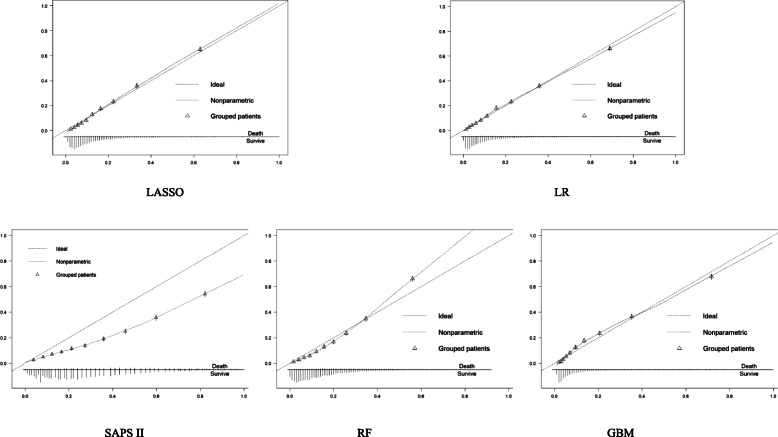
Background: Early and accurate identification of sepsis patients with high risk of in-hospital death can help physicians in intensive care units (ICUs) make optimal clinical decisions. This study aimed to develop machine learning-based tools to predict the risk of hospital death of patients with sepsis in ICUs. Methods: The source database used for model development and validation is the medical information mart for intensive care (MIMIC) III. We identified adult sepsis patients using the new sepsis definition Sepsis-3. A total of 86 predictor variables consisting of demographics, laboratory tests and comorbidities were used. We employed the least absolute shrinkage and selection operator (LASSO), random forest (RF), gradient boosting machine (GBM) and the traditional logistic regression (LR) method to develop prediction models. In addition, the prediction performance of the four developed models was evaluated and compared with that of an existent scoring tool – simplified acute physiology score (SAPS) II – using five different performance measures: the area under the receiver operating characteristic curve (AUROC), Brier score, sensitivity, specificity and calibration plot. Results: The records of 16,688 sepsis patients in MIMIC III were used for model training and test. Amongst them, 2949 (17.7%) patients had in-hospital death. The average AUROCs of the LASSO, RF, GBM, LR and SAPS II models were 0.829, 0.829, 0.845, 0.833 and 0.77, respectively. The Brier scores of the LASSO, RF, GBM, LR and SAPS II models were 0.108, 0.109, 0.104, 0.107 and 0.146, respectively. The calibration plots showed that the GBM, LASSO and LR models had good calibration; the RF model underestimated high-risk patients; and SAPS II had the poorest calibration. Conclusion: The machine learning-based models developed in this study had good prediction performance. Amongst them, the GBM model showed the best performance in predicting the risk of in-hospital death. It has the potential to assist physicians in the ICU to perform appropriate clinical interventions for critically ill sepsis patients and thus may help improve the prognoses of sepsis patients in the ICU.
Overview
The claims and statistics of this paper haven’t been checked yet.
Free: it reads the open-access text and checks the first 5 claims that cite a source we can check. Create a free account to check every claim.
Integrity signals
Registry
Cites
Statistics
Figures
Verification
Claims the paper makes
The claims and statistics of this paper haven’t been checked yet.
Free: it reads the open-access text and checks the first 5 claims that cite a source we can check. Create a free account to check every claim.
Self-check
Percentages, sums and reported differences re-computed from the paper’s own numbers.
The self-check needs the paper’s full text.
Citations
Cites
Breiman, L. (2001) · Machine Learning · doi:10.1023/a:1010933404324 · Cited by 133,538
Regression shrinkage and selection via the lasso
Tibshirani, R. (1996) · Journal of the Royal Statistical Society Series B: Statistical Methodology · doi:10.1111/j.2517-6161.1996.tb02080.x · Cited by 51,482 · cited 1×
“…learning methods such as random forest (RF) [27], gradient boosting machine (GBM) [28] and the least absolute shrinkage and selection operator (LASSO) [29] which is a type of linear regression using shrinkage, have been proposed, and these models have good prediction performance in medicine.”
MethodGreedy function approximation: A gradient boosting machine
Friedman, J. H. (2001) · The Annals of Statistics · doi:10.1214/aos/1013203451 · Cited by 30,731 · cited 2×
“Several innovative and pragmatic machine learning methods such as random forest (RF) [27], gradient boosting machine (GBM) [28] and the least absolute shrinkage and selection operator (LASSO) [29] which is a type of linear regression using shrinkage, have been proposed, and these models have good…”
BackgroundMethodThe third international consensus definitions for sepsis and septic shock (Sepsis-3).
Singer, M., Deutschman, C. S., Seymour, C. W., Shankar-Hari, M., Annane, D., Bauer, M., Bellomo, R., Bernard, G. R., Chiche, J.-D., Coopersmith, C. M., et al. (2016) · JAMA · doi:10.1001/jama.2016.0287 · Cited by 28,250
The Elements of Statistical Learning
Hastie, T., Friedman, J., & Tibshirani, R. (2001) · Springer Series in Statistics · doi:10.1007/978-0-387-21606-5 · Cited by 24,162
APACHE II: A severity of disease classification system
KNAUS, W. A., DRAPER, E. A., WAGNER, D. P., & ZIMMERMAN, J. E. (1985) · Critical Care Medicine · doi:10.1097/00003246-198510000-00009 · Cited by 13,664
APACHE II-A Severity of Disease Classification System: Reply
Knaus, W. A., Draper, E. A., Wagner, D. P., & Zimmerman, J. E. (1986) · Critical Care Medicine · doi:10.1097/00003246-198608000-00028 · Cited by 13,376
Bone, R. C., Balk, R. A., Cerra, F. B., Dellinger, R. P., Fein, A. M., Knaus, W. A., Schein, R. M. H., & Sibbald, W. J. (1992) · Chest · doi:10.1378/chest.101.6.1644 · Cited by 13,198
Vincent, J. L., Moreno, R., Takala, J., Willatts, S., De Mendonça, A., Bruining, H., Reinhart, C. K., Suter, P. M., & Thijs, L. G. (1996) · Intensive Care Medicine · doi:10.1007/bf01709751 · Cited by 11,674 · cited 1×
“In Sepsis-3, instead of checking the SIRS criteria as in previous definitions, infected patients who have a sequential organ failure assessment (SOFA) score [11] higher than 2 are defined as having sepsis.”
MethodAngus, D. C., Linde-Zwirble, W. T., Lidicker, J., Clermont, G., Carcillo, J., & Pinsky, M. R. (2001) · Critical Care Medicine · doi:10.1097/00003246-200107000-00002 · Cited by 8,503
Cited by
Hu, C., Li, L., Huang, W., Wu, T., Xu, Q., Liu, J., & Hu, B. (2022) · Infectious Diseases and Therapy · doi:10.1007/s40121-022-00628-6 · Cited by 160
“Kong et al. [22] developed four ML methods to predict in-hospital mortality of sepsis patients, and found that a gradient boosting machine showed the best performance in discrimination (AUC: 0.845).”
MethodInfluentialSheu, R.-K., & Pardeshi, M. S. (2022) · Sensors · doi:10.3390/s22208068 · Cited by 129
Syed, M., Syed, S., Sexton, K., Syeda, H. B., Garza, M., Zozus, M., Syed, F., Begum, S., Syed, A. U., Sanford, J., et al. (2021) · Informatics · doi:10.3390/informatics8010016 · Cited by 68
Evaluating machine learning models for sepsis prediction: A systematic review of methodologies
Deng, H., Sun, M., Wang, Y., Zeng, J., Yuan, T., Li, T., Li, D.-H., Chen, W., Zhou, P., Wang, Q., et al. (2021) · iScience · doi:10.1016/j.isci.2021.103651 · Cited by 84
Rahmatinejad, Z., Dehghani, T., Hoseini, B., Rahmatinejad, F., Lotfata, A., Reihani, H., & Eslami, S. (2024) · Scientific Reports · doi:10.1038/s41598-024-54038-4 · Cited by 77
“Step 4: ML modeling Our framework included LR 55 and five ensemble ML methods.”
MethodEshghali, M., Kannan, D., Salmanzadeh-Meydani, N., & Sikaroudi, A. M. E. (2023) · Annals of Operations Research · doi:10.1007/s10479-023-05168-x · Cited by 72
“Random forest is a well-known machine learning model used in medical prediction studies which has been proven to be an effective classification model (Kong et al., 2020; Lin et al., 2019).”
MGP-AttTCN: An interpretable machine learning model for the prediction of sepsis
Rosnati, M., & Fortuin, V. (2021) · PLoS ONE · doi:10.1371/journal.pone.0251248 · Cited by 84
“Under these circumstances, it is not surprising that some approaches have been developed in parallel to this work [33–43].”
Artificial intelligence in perioperative medicine: a narrative review
Yoon, H., Yang, H.-L., Jung, C.-W., & Lee, H. (2022) · Korean Journal of Anesthesiology · doi:10.4097/kja.22157 · Cited by 86
“Kong G, Lin K, Hu Y.”
BackgroundMethodInfluentialMachine learning for the prediction of sepsis-related death: a systematic review and meta-analysis
Zhang, Y., Xu, W., Yang, P. C., & Zhang, A. (2023) · BMC Medical Informatics and Decision Making · doi:10.1186/s12911-023-02383-1 · Cited by 75
Zeleke, A. J., Palumbo, P., Tubertini, P., Miglio, R., & Chiari, L. (2023) · Frontiers in Artificial Intelligence · doi:10.3389/frai.2023.1179226 · Cited by 67
“Several studies, including (Kong et al., 2020; Jo et al., 2021; Wu et al., 2021; Xiong et al., 2022), have shown that the GB classifier outperforms other algorithms in predicting PLoS, with reported accuracy, AUC, and Brier score ranging from 75.”
BackgroundWang, H., Zhang, C., Li, Q., Tian, T., Huang, R., Qiu, J., & Tian, R. (2024) · BMC Cancer · doi:10.1186/s12885-024-12146-4 · Cited by 77
“Machine learning (ML) provides a novel approach to achieve this goal and has advantages in incorporating a larger number of multidimensional variables with more dynamic interactions than traditional prognostic tools [13].”
BackgroundPieroni, M., Olier, I., Ortega‐Martorell, S., Johnston, B. W., & Welters, I. D. (2022) · Frontiers in Medicine · doi:10.3389/fmed.2022.915224 · Cited by 51
“, the first 24 h of the ICU admission (9).”
BackgroundZeng, Z., Yao, S., Zheng, J., & Gong, X. (2021) · BioData Mining · doi:10.1186/s13040-021-00276-5 · Cited by 46
Chan, M.-C., Pai, K.-C., Su, S.-A., Wang, M.-S., Wu, C., & Chao, W. (2022) · BMC Medical Informatics and Decision Making · doi:10.1186/s12911-022-01817-6 · Cited by 46
Mahbub, M., Srinivasan, S., Danciu, I., Peluso, A., Begoli, E., Tamang, S. R., & Peterson, G. D. (2022) · PLoS ONE · doi:10.1371/journal.pone.0262182 · Cited by 58
Lyu, W., Dong, X., Wong, R., Zheng, S., Abell-Hart, K., Wang, F., & Chen, C. (2022) · arXiv · doi:10.48550/arxiv.2208.10240 · Cited by 46
“In particular, deep learning based techniques(Dalal et al., 2021; Schwartz et al., 2021), have been used for prediction of in-hospital mortality(Kong et al., 2020; Li et al., 2021), diagnoses(Dong et al., 2019; Yang & Wu, 2021), length of stay(Cai et al., 2016), readmission(Teo et al., 2021).”
MethodCheng, C.-Y., Kung, C., Chen, F.-C., Chiu, I.-M., Lin, C. R., Chu, C.-C., Kung, C.-F., & Su, C.-M. (2022) · Frontiers in Medicine · doi:10.3389/fmed.2022.964667 · Cited by 47
“Examples frequently used as severity assessment tools in the ICU are the simplified acute physiology score (SAPS) II (21), acute physiology and chronic health evaluation (APACHE) III and IV scores (22, 23), and the SOFA score (24).”
BackgroundMachine learning algorithms in sepsis
Agnello, L., Vidali, M., Padoan, A., Lucis, R., Mancini, A., Guerranti, R., Plebani, M., Ciaccio, M., & Carobene, A. (2023) · Clinica Chimica Acta · doi:10.1016/j.cca.2023.117738 · Cited by 41
Park, S. W., Yeo, N. Y., Kang, S., Ha, T., Kim, T. Y., Lee, D., Kim, D., Choi, S., Kim, M., Lee, D., et al. (2024) · Journal of Korean Medical Science · doi:10.3346/jkms.2024.39.e53 · Cited by 38
Deep learning-based prediction of in-hospital mortality for sepsis
Yong, L., & Zhenzhou, L. (2024) · Scientific Reports · doi:10.1038/s41598-023-49890-9 · Cited by 48
Lin, P.-C., Chen, K.-T., Chen, H.-C., Islam, M. M., & Lin, M. (2021) · Journal of Personalized Medicine · doi:10.3390/jpm11111055 · Cited by 35
Zubair, M., Din, I., Sarwar, N., Boltayevich, E. B., Mаkhmudov, S., & Trabelsi, Z. (2025) · BMC Infectious Diseases · doi:10.1186/s12879-025-11423-2 · Cited by 49
Barchitta, M., Maugeri, A., Favara, G., Riela, P. M., Gallo, G., Mura, I., & Agodi, A. (2021) · Journal of Clinical Medicine · doi:10.3390/jcm10050992 · Cited by 35
“Indeed, the prediction of patients at higher risk of mortality in ICU play a key role in improving patients’ survival and in implementing their management [39].”
Machine learning-based prognostic model for 30-day mortality prediction in Sepsis-3
Rahman, M. S., Islam, K. R., Prithula, J., Kumar, J., Mahmud, M., Alam, M. F., Reaz, M. B. I., Alqahtani, A., & Chowdhury, M. E. H. (2024) · BMC Medical Informatics and Decision Making · doi:10.1186/s12911-024-02655-4 · Cited by 40
“Machine learning-based models using MIMIC-III data accurately predict in-hospital death risk for Sepsis patients, with gradient boosting machines (GBM) showing the highest performance [18].”
MethodYu, Y., Gomez-Cabello, C. A., Haider, S. A., Genovese, A., Prabha, S., Trabilsy, M., Collaco, B. G., Wood, N. G., Bagaria, S., Tao, C., et al. (2025) · Diagnostics · doi:10.3390/diagnostics15172204 · Cited by 32
AI Advances in ICU with an Emphasis on Sepsis Prediction: An Overview
Stylianides, C., Nicolaou, A., Sulaiman, W. A., Alexandropoulou, C.-A., Panagiotopoulos, I., Karathanasopoulou, K., Dimitrakopoulos, G., Kleanthous, S., Politi, E., Ntalaperas, D., et al. (2025) · Machine Learning and Knowledge Extraction · doi:10.3390/make7010006 · Cited by 28
“Most of the ML models are tree-based ones like Extreme Gradient Boosting (XGB) [113,116,120,124,125,141], Random Forest (RF) [117,129,145], Gradient Boosting (GB) [114], Light Gradient Boosting Machine (LGBM) [119], and AdaBoost [144].”
Tasnim, N., Al Mamun, S. A., Shahidul Islam, M. S., Kaiser, M. S., & Mahmud, M. (2023) · Applied Sciences · doi:10.3390/app13106138 · Cited by 27
Mușat, F., Păduraru, D. N., Bolocan, A., Palcău, A. C., Copăceanu, A.-M., Daniel, I., Jinga, V., & Andronic, O. (2024) · Biomedicines · doi:10.3390/biomedicines12122892 · Cited by 42
Improvement of APACHE II score system for disease severity based on XGBoost algorithm
Luo, Y., Wang, Z., & Wang, C. (2021) · BMC Medical Informatics and Decision Making · doi:10.1186/s12911-021-01591-x · Cited by 32
“Kong G et al.[41] MIMIC III Sepsis 16,688 Gradient boosting machine 0.”
BackgroundLi, S., Dou, R., Song, X., Lui, K., Xu, J., Guo, Z., Hu, X., Guan, X., & Cai, C. (2023) · Journal of Clinical Medicine · doi:10.3390/jcm12030915 · Cited by 25
“[42] developed ML-based models to predict the hospital mortality of sepsis patients based on the MIMIC-III database, utilizing demographic features and clinical features, such as acute physiological measurements in the first 24 h in ICU and chronic health status.”
MethodMachine-learning models for prediction of sepsis patients mortality
Bao, C., Deng, F., & Zhao, S. D. (2022) · Medicina Intensiva · doi:10.1016/j.medin.2022.06.004 · Cited by 36
Lee, S., Lee, M., Kim, S. H., & Woo, J. (2022) · Sensors · doi:10.3390/s22093108 · Cited by 34
Wang, H., Li, Y., Naidech, A. M., & Luo, Y. (2022) · BMC Medical Informatics and Decision Making · doi:10.1186/s12911-022-01871-0 · Cited by 40
Yang, M., Chen, H., Hu, W., Mischi, M., Shan, C., Li, J., Long, X., & Liu, C. (2024) · Journal of Medical Internet Research · doi:10.2196/50369 · Cited by 37
“Park et al [6] and Kong et al [7] demonstrated that machine learning can improve the XSL • FO RenderX accuracy of sepsis mortality risk prediction, but there is a lack of strong interpretable analysis.”
Ibrahim, Z. M., Bean, D. M., Searle, T., Qian, L., Wu, H., Shek, A., Kraljevic, Z., Galloway, J. B., Norton, S., Teo, J., et al. (2021) · IEEE Journal of Biomedical and Health Informatics · doi:10.1109/jbhi.2021.3089287 · Cited by 34
Machine-learning models for prediction of sepsis patients mortality
Bao, C., Deng, F., & Zhao, S. D. (2022) · Medicina Intensiva (English Edition) · doi:10.1016/j.medine.2022.06.024 · Cited by 32
Exploring a global interpretation mechanism for deep learning networks when predicting sepsis
Strickler, E. A. T., Thomas, J., Thomas, J. P., Benjamin, B., & Shamsuddin, R. (2023) · Scientific Reports · doi:10.1038/s41598-023-30091-3 · Cited by 31
“…result, even though ML has greatly advanced healthcare data analysis 28–35 , computational healthcare studies (including sepsis detection 8–11, 30, 36 ) often choose In this paper, we propose a post-hoc, model-agnostic interpretable mechanism (IM) to globally understand the sepsis-related…”
MethodZhuang, J., Huang, H., Jiang, S., Liang, J., Liu, Y., & Yu, X. (2023) · BMC Medical Informatics and Decision Making · doi:10.1186/s12911-023-02279-0 · Cited by 28
“ML techniques could help to develop risk stratification models to better manage the sepsis patients, including sepsis prediction [32, 43] and severity assessment [22, 23].”
BackgroundMethodMehtap, S., Koc, O., & Kestel, S. (2022) · Informatics in Medicine Unlocked · doi:10.1016/j.imu.2022.100861 · Cited by 27
Ebrahimi‐Khusfi, Z., Dargahian, F., & Nafarzadegan, A. R. (2022) · Environmental Science and Pollution Research · doi:10.1007/s11356-021-17265-0 · Cited by 19
“Generally, the GBM algorithm is trained by Equation (1): (Kong et al. 2020) (1) Here, Gn(z) refers to the output model in which n reaches N. λ is computed in the procedure of reducing the loss function.”
MethodLiu, X., Wang, J., Deng, H., Zhong, X., Li, C., Luo, Y. H., Chen, L., Zhang, B., Wang, D., Huang, Y., et al. (2021) · Journal of Hazardous Materials · doi:10.1016/j.jhazmat.2021.127899 · Cited by 19
Diwan, S., Gandhi, V., Baidya Kayal, E., Khanna, P., & Mehndiratta, A. (2025) · Intensive Care Medicine Experimental · doi:10.1186/s40635-025-00765-5 · Cited by 17
“…regard to studies predicting in-hospital sepsis-related mortality utilizing machine learning (ML) and deep learning (DL) algorithms [15–32], most of such contemporary studies [21–24, 26, 28–31] are based around the large Multiparameter Intelligent Monitoring in Intensive Care (MIMIC) database [33].”
InfluentialChao, H.-Y., Wu, C., Ningthoujam, A. S., Shedd, A., Wolfshohl, J. A., Chou, E. H.-C., Huang, Y., & Chen, K. (2022) · Biomedicines · doi:10.3390/biomedicines10040802 · Cited by 20
“Some interesting activities stemming from the fields of machine learning (ML) have varying success in the prediction of mortality caused by sepsis (Table S1) [15,16].”
BackgroundBahrami, A., Rakhshaninejad, M., Ghousi, R., & Atashi, A. (2025) · PLoS ONE · doi:10.1371/journal.pone.0311250 · Cited by 19
Data Science Trends Relevant to Nursing Practice: A Rapid Review of the 2020 Literature
Douthit, B. J., Walden, R. L., Cato, K., Coviak, C. P., Cruz, C., D’Agostino, F., Forbes, T. H., Gao, G., Kapetanovic, T. A., Lee, M. A., et al. (2022) · Applied Clinical Informatics · doi:10.1055/s-0041-1742218 · Cited by 17
Prognostic prediction of sepsis patient using transformer with skip connected token for tabular data
Choi, J.-W., Yang, M.-U., Kim, J. W., Shin, Y. M., Shin, Y.-G., & Park, S. (2024) · Artificial Intelligence in Medicine · doi:10.1016/j.artmed.2024.102804 · Cited by 17
Jia, Q., Zhu, Y., Xu, R., Zhang, Y., & Zhao, Y. (2022) · Industrial Management & Data Systems · doi:10.1108/imds-12-2021-0769 · Cited by 19
Karboub, K., & Tabaa, M. (2022) · Healthcare · doi:10.3390/healthcare10060966 · Cited by 14
“In fact, many studies, such as [25], showed that MIMIC-III specific machine learning models using only 10 clinical variables outperformed nine commonly used severity scoring methods.”
BackgroundZhi, D., Zhang, M., Lin, J., Liu, P., Wang, Y., & Duan, M. (2021) · American Journal of Infection Control · doi:10.1016/j.ajic.2021.07.010 · Cited by 14
Kostaki, A., Wacker, J. W., Safarika, A., Solomonidi, N., Katsaros, K., Giannikopoulos, G., Koutelidakis, I. M., Hogan, C. A., Uhle, F., Liesenfeld, O., et al. (2022) · Shock · doi:10.1097/shk.0000000000001970 · Cited by 13
He, B., & Qiu, Z. H. (2024) · Frontiers in Artificial Intelligence · doi:10.3389/frai.2024.1348907 · Cited by 22
Nikravangolsefid, N., Reddy, S., Truong, H. H., Charkviani, M., Ninan, J., Prokop, L. J., Suppadungsuk, S., Singh, W., KASHANI, K. B., & Garces, J. P. D. (2024) · Journal of Critical Care · doi:10.1016/j.jcrc.2024.154889 · Cited by 15
Sun, H., Kang, M., Zhang, H., Jiang, J., & Wang, Q. (2025) · Nursing in Critical Care · doi:10.1111/nicc.70206 · Cited by 17
Oh, N., Cha, W. C., Seo, J., Choi, S.-G., Kim, J. M., Chung, C. R., Suh, G. Y., Lee, S. Y., Oh, D. K., Park, M. H., et al. (2024) · Healthcare Informatics Research · doi:10.4258/hir.2024.30.3.266 · Cited by 22
Moore, R., Chanci, D., Brown, S., Ripple, M. J., Bishop, N. R., Grunwell, J. R., & Kamaleswaran, R. (2024) · Shock · doi:10.1097/shk.0000000000002501 · Cited by 13
Early prediction of mortality upon intensive care unit admission
Yeh, Y., Kuo, Y., Kuo, K.-C., Cheng, Y., Liu, D.-S., Lai, F., Kuo, L.-C., Lee, T.-J., Chan, W.-S., Chiu, C., et al. (2024) · BMC Medical Informatics and Decision Making · doi:10.1186/s12911-024-02807-6 · Cited by 20
EL‐Manzalawy, Y., Abbas, M. M., Hoaglund, I., Cerna, A. U., Morland, T., Haggerty, C. M., Hall, E. S., & Fornwalt, B. K. (2021) · BMC Medical Informatics and Decision Making · doi:10.1186/s12911-021-01517-7 · Cited by 26
Chen, J., Guo, C., Lu, M., & Ding, S.-Y. (2022) · Frontiers in Public Health · doi:10.3389/fpubh.2021.793801 · Cited by 12
“We selected a dataset of sepsis patients from the MIMIC-III database, where sepsis is divided into general sepsis, severe sepsis, and septic shock (27, 28).”
MethodThe prediction of mortality influential variables in an intensive care unit: a case study
Khajehali, N., Khajehali, Z., & Tarokh, M. J. (2021) · Personal and Ubiquitous Computing · doi:10.1007/s00779-021-01540-5 · Cited by 16
“Random forest regression, one of the best machine learning algorithms, is applied by Ripoli et al. (2020) [48], to envisage the candidemia possibility among patients admitted in IMWs.”
BackgroundMethodEarly Prediction of Sepsis for ICU Patients using Gradient Boosted Tree
Ying, T. X., & Abu-Samah, A. (2022) · IEEE International Conference on Automatic Control and Intelligent Systems (I2CACIS) · doi:10.1109/i2cacis54679.2022.9815467 · Cited by 12
Integrating Multimodal EHR Data for Mortality Prediction in ICU Sepsis Patients
Wang, Y., & Li, W. (2025) · Statistics in Medicine · doi:10.1002/sim.70060 · Cited by 13
Alexandropoulou, C., Panagiotopoulos, I. E., Kleanthous, S., Dimitrakopoulos, G. J., Constantinou, I. P., Politi, E., Ntalaperas, D., Papageorgiou, X. S., Stylianides, C., Ioannides, N., et al. (2023) · IEEE International Conference on eScience · doi:10.1109/e-science58273.2023.10254863 · Cited by 14
Cheng, Y., Kuo, P., Chen, S.-H., Kuo, Y., Liu, T.-L., Chan, W.-S., Chan, K., & Yeh, Y. (2023) · Journal of Clinical Monitoring and Computing · doi:10.1007/s10877-023-01108-z · Cited by 10
“Regarding sepsis mortality, most machine learning models predict mortality of critically ill sepsis patients at 24 h after ICU admission [10, 11], and only one model predicted 14-day mortality after the diagnosis of sepsis with fair performance (AUROC of 0.76) [12].”
InfluentialWang, S., Jiang, Y., Li, Q., & Zhang, W. (2024) · IEEE Journal of Biomedical and Health Informatics · doi:10.1109/jbhi.2024.3416039 · Cited by 11
“(6) Statistical features with traditional machine learning prediction models [18], [19], [20], [21], [22]: statistics of vital signs including mean, median and standard deviation are calculated as features.”
BackgroundMethodArtificial intelligence's role in vascular surgery decision-making
Zarkowsky, D. S., & Stonko, D. P. (2021) · Seminars in Vascular Surgery · doi:10.1053/j.semvascsurg.2021.10.005 · Cited by 11
Li, F., Qu, H., Li, Y., Liu, J., & Fu, H. (2024) · Aging · doi:10.18632/aging.205772 · Cited by 11
“The gradient lifting machine model with an AUC of 0.845 outperformed LASSO, random forest, logistic regression, and SAPS II models in predicting in-hospital death [42].”
MethodInfluentialExplainable text-tabular models for predicting mortality risk in companion animals
Burton, J., Farrell, S., Noble, P. M., & Moubayed, N. A. (2024) · Scientific Reports · doi:10.1038/s41598-024-64551-1 · Cited by 12
Modern AI/ML Methods for Healthcare: Opportunities and Challenges
Garg, A., Venkataramani, V. V., Karthikeyan, A., & Priyakumar, U. D. (2022) · Lecture notes in computer science · doi:10.1007/978-3-030-94876-4_1 · Cited by 13
“Kong et al. [46] were able to use ML to predict the mortality of sepsis patients in the ICU with moderate success.”
MethodPappada, S. M., Owais, M. H., Feeney, J. J., Salinas, J., Chaney, B., Duggan, J. M., Sparkle, T., Aouthmany, S., Hinch, B. T., & Papadimos, T. J. (2024) · Anaesthesia Critical Care & Pain Medicine · doi:10.1016/j.accpm.2024.101430 · Cited by 14
Zhang, Z., & Ye, J. (2025) · Frontiers in Cardiovascular Medicine · doi:10.3389/fcvm.2025.1568907 · Cited by 9
“Unlike traditional machine learning models, which often require extensive feature engineering, deep learning models can automatically discern intricate patterns and interactions within the data, leading to potentially more accurate predictions (32).”
Dhami, A., Onyeukwu, K. A., Sattar, S., Batra, A., Mostafa, Y., Haris, M., Iqbal, A., Bokhari, S. F. H., & Siddique, M. U. (2025) · Cureus · doi:10.7759/cureus.90465 · Cited by 26
Artificial Intelligence for the Prediction of Sepsis in Adults
Haas, R., & McGill, S. C. (2022) · Canadian Journal of Health Technologies · doi:10.51731/cjht.2022.283 · Cited by 12
TCKAN: a novel integrated network model for predicting mortality risk in sepsis patients
Dong, F., Li, S., & Li, W. (2024) · Medical & Biological Engineering & Computing · doi:10.1007/s11517-024-03245-2 · Cited by 13
“We evaluated the TCKAN model’s performance on the MIMIC-III and MIMIC-IV datasets by comparing it with seven established baseline models: Xgboost [34], SVM, random forest (RF) [35], LGBM [17], LSTM [26], IseeU [36], and Che et al.’s model GRU-D [30].”
MASICU: A Multimodal Attention-based classifier for Sepsis mortality prediction in the ICU
Mondrejevski, L., Rugolon, F., Miliou, I., & Papapetrou, P. (2024) · Proceedings - IEEE Symposium on Computer-Based Medical Systems · doi:10.1109/cbms61543.2024.00061 · Cited by 6
“Finally, Kong et al. [9] developed several ML models to predict the risk of hospital mortality of sepsis patients in the ICU using MIMIC-III with gradient boosting machines.”
MethodStoessel, D., Fa, R., Artemova, S., von Schenck, U., Rostami, H. N., Madiot, P., Landelle, C., Olive, F., Foote, A., Moreau–Gaudry, A., et al. (2023) · BMC Medical Informatics and Decision Making · doi:10.1186/s12911-023-02356-4 · Cited by 6
“In addition, machine learning methods have been used to predict in-hospital mortality from sepsis [20] and diabetic patients in intensive care units [21].”
MethodWang, B., Chen, J., Pan, X., Xu, B., & Ouyang, J. (2024) · PLoS ONE · doi:10.1371/journal.pone.0296456 · Cited by 6
Old, O., Friedrichson, B., Zacharowski, K. D., & Kloka, J. A. (2022) · European Journal of Anaesthesiology Intensive Care · doi:10.1097/ea9.0000000000000014 · Cited by 6
Patient Mortality Prediction and Analysis of Health Cloud Data Using a Deep Neural Network
Alourani, A., Tariq, K., Tahir, M., & Sardaraz, M. (2023) · Applied Sciences · doi:10.3390/app13042391 · Cited by 6
PT3: A Transformer-based Model for Sepsis Death Risk Prediction via Vital Signs Time Series
Luo, R., Gong, M., & Li, C. (2023) · International Joint Conference on Neural Networks (IJCNN) · doi:10.1109/ijcnn54540.2023.10191261 · Cited by 8
“We regard HR records out of the range [30, 260], RR records out of the range [5, 70], SpO 2 records out of the range [0, 100], and MAP records out of the range [10, 200] as error records and delete them.”
MethodPredicting ICU Mortality Among Septic Patients Using Machine Learning Technique
Al-Ansari, A. A., Nejad, F. A. B., Al-Nasr, R. J., Prithula, J., Rahman, T., Hasan, A., Chowdhury, M. E. H., & Alam, M. F. (2025) · Journal of Clinical Medicine · doi:10.3390/jcm14103495 · Cited by 5
“ML methods can predict hospital ICU mortality in sepsis patients [21].”
Huang, X., Chen, Y., Li, T., Ge, L., Yang, L., Peng, T., Chen, G., & Wang, M. (2025) · Anesthesiology and Perioperative Science · doi:10.1007/s44254-025-00157-8 · Cited by 5
“…model with 86 clinical predictor variables to predict the in-hospital mortality of sepsis patients in the intensive care unit (ICU; AUC = 0.845) [11]. van Doorn et al. trained extreme gradient boosting (XGBoost) with 113 clinical characteristics for mortality prediction in patients with sepsis…”
InfluentialZeng, Z., Liu, Y., Yao, S., Liu, J., Xiao, B., Liu, C., & Gong, X. (2023) · Digital Health · doi:10.1177/20552076231171482 · Cited by 8
Lee, Y. S., Han, S., Lee, Y. E., Cho, J., Choi, Y. K., Yoon, S.-Y., Oh, D. K., Lee, S. Y., Park, M. H., Lim, C., et al. (2024) · Scientific Reports · doi:10.1038/s41598-024-64463-0 · Cited by 5
“Following the revised sepsis-3 definition 20 , new prognostic models (encompassing biomarker models, immune dysfunction scores, and machine-learning models) have been developed and validated 13,21–26 .”
Artificial Intelligence for Predicting Mortality Due to Sepsis
Choi, J.-W., Kim, J. W., Nam, J.-H., Maeng, J., Kim, K.-H., & Park, S. (2023) · International Conference on Consumer Electronics · doi:10.1109/icce56470.2023.10043540 · Cited by 5
“To predict in-hospital mortality, Kong et al. [12] employed 4 ML models and SAPS2 with 86 predictors.”
MethodTasnim, N., & Mamun, S. A. (2023) · International Conference on Electrical, Computer and Communication Engineering · doi:10.1109/ecce57851.2023.10101553 · Cited by 5
“To effectively manage COVID-19 patients admitted to a medical unit, Kong et al. [17] used the LASSO algorithm, the random forest (RF), the gradient boosting machine (GBM), and the standard logistic regression (LR) method.”
MethodDiwakar, D., Vaibhav, V., & Majumdar, S. (2021) · International Conference for Emerging Technology (INCET) · doi:10.1109/incet51464.2021.9456363 · Cited by 5
“These health and acuity scores [3] are used by us along with various Machine Learning tools to predict the in-house mortality [2] of the patient.”
MethodLe, J. P., Shashikumar, S. P., Malhotra, A., Nemati, S., & Wardi, G. (2023) · Critical Care Clinics · doi:10.1016/j.ccc.2023.02.003 · Cited by 7
Performance Maintenance of Machine Learning-based Emergency Patient Mortality Predictive Models
Young, Z., & Steele, R. J. (2021) · International Conference of Computer and Informatics Engineering (IC2IE) · doi:10.1109/ic2ie53219.2021.9649069 · Cited by 5
An, S., Ye, Z., Che, W., Gao, Y., Li, J., & Zheng, J. (2025) · BMC Infectious Diseases · doi:10.1186/s12879-025-11949-5 · Cited by 9
“In the study by Kong G et al., RF, least absolute shrinkage and selection operator (LASSO), gradient boosting machine (GBM) was used to predict in-hospital mortality of sepsis, also using MIMIC database [41].”
Jibinsingh, B. R., & Nelson, L. (2025) · Pattern Recognition · doi:10.1016/j.patcog.2025.112813 · Cited by 5
Zhou, L., Zhang, W., Shao, M., Wang, C., & Wang, Y. (2025) · Scientific Reports · doi:10.1038/s41598-025-93961-y · Cited by 6
“To validate the selection of the 12 features used in the study, the researchers removed the three features with the highest p-values—TEMP, NA, and TBIL—and compared models using sets of 9, 10, and 11 features.”
A Machine Learning Understanding of Sepsis
Shetty, M., Alex, S. M., Moni, M., Edathadathil, F., Prasanna, P., Menon, V., Menon, V. P., Athri, P., & Srinivasa, G. (2021) · Annual International Conference of the IEEE Engineering in Medicine and Biology Society (EMBC) · doi:10.1109/embc46164.2021.9629558 · Cited by 4
“Other simpler approaches have also been explored, such as a modified Weilbull-Cox model for prediction of sepsis [5] and logistic regression models to predict mortality risk of sepsis patients [4].”
MethodYadgarov, M. Y., Бондоевич, Б. Л., Kuznetsov, I. V., Kadantseva, K., Yakovlev, A. A., & Likhvantsev, V. V. (2025) · Messenger of Anesthesiology and Resuscitation · doi:10.24884/2078-5658-2025-22-4-6-16 · Cited by 3
Role of Artificial Intelligence in Critical Care Medicine: A Literature Review
ABDELBAKY, A., Elmasry, W. G., Awad, A. H., & Khan, S. (2025) · Cureus · doi:10.7759/cureus.90149 · Cited by 15
The impact of feature combinations on machine learning models for in-hospital mortality prediction
Stenwig, E., Rossi, P. S., Salvi, G., & Skjærvold, N. K. (2025) · Scientific Reports · doi:10.1038/s41598-025-26611-y · Cited by 4
Güler, Ö., Alparslan, V., İnner, B., Balcı, S., Düzgün, A., Baykara, N., & Kuş, A. (2026) · Journal of Intensive Care Medicine · doi:10.1177/08850666261423499 · Cited by 3
Neuro-symbolic artificial intelligence for real-time sepsis mortality prediction
Santis, F. D., Park, G., & Zanichelli, F. (2026) · Engineering Applications of Artificial Intelligence · doi:10.1016/j.engappai.2026.114920 · Cited by 4
Gulia, H., Suhag, M., Bagal, N., Deshwal, P. R., Kumar, S. S., & Joshi, R. K. (2026) · Indian Journal of Critical Care Medicine · doi:10.5005/jp-journals-10071-25196 · Cited by 3
“8,9 Given these limitations, this study aimed to analyze demographic, clinical, and laboratory data to understand how each variable relates to mortality and to develop a predictive model with the help of least absolute shrinkage and selection operator (LASSO)-based logistic regression to highlight…”
Machine Learning Techniques to Determine Mutation Impact in Proteins Associated to Neurofibromatosis
Pinto, H. R., Silva, T. T., & Orjuela-Cañón, Á. D. (2021) · IEEE Latin American Conference on Computational Intelligence (LA-CCI) · doi:10.1109/la-cci48322.2021.9769823 · Cited by 3
Kodati, D., & Dasari, C. M. (2024) · Engineering Applications of Artificial Intelligence · doi:10.1016/j.engappai.2024.109649 · Cited by 5
Metadata
- Authors
- Kong, G., Lin, K., & Hu, Y.
- Affiliations
- Peking University (CN)
- Corresponding author
- Kong, Guilan
- Venue
- BMC Medical Informatics and Decision Making
- Published
- 2020-10-02
- Volume
- 20
- Issue
- 1
- Pages
- 251-251
- ISSN
- 1472-6947 (ISSN-L)
- PMC
- PMC7531110
- OpenAlex
- W3090266264
- Cited by
- 180
- References
- 55
- Citations by year
- 2026: 25 · 2025: 38 · 2024: 32 · 2023: 29 · 2022: 33 · 2021: 22 · 2020: 1
- FWCI
- 15.24
- Type
- journal article
- Language
- en
- Open access
- gold
- doi.org
- Licence
- cc-by
- creativecommons.org/licenses/by/4.0 (tdm)
- creativecommons.org/licenses/by/4.0 (vor)
- Locations
- BMC Medical Informatics and Decision Making (publishedVersion, cc-by)
- PubMed Central (publishedVersion, cc-by)
- PubMed (publishedVersion)
- DOAJ (DOAJ: Directory of Open Access Journals) (submittedVersion, cc-by-sa)
- Funders
- National Natural Science Foundation of China (81771938, 91846101)
- Peking University (BMU2018MX020, PKU2017LCX05, BMU2020JI011)
- Topics
- Health Sciences › Medicine › Critical Care and Intensive Care Medicine › Sepsis Diagnosis and Treatment
- Physical Sciences › Computer Science › Artificial Intelligence › Machine Learning in Healthcare
- Health Sciences › Health Professions › Health Information Management › Artificial Intelligence in Healthcare
- Keywords
- sepsis, in-hospital mortality, mortality prediction, intensive care unit, machine learning, gradient boosting, random forest, LASSO, logistic regression, SAPS II, MIMIC-III, Sepsis-3, prognostic model, model calibration
- MeSH terms
- Machine Learning, Adult, Aged, Aged, 80 and over, Critical Care, Female, Humans, Intensive Care Units, Male, Middle Aged, Models, Theoretical, Critical Illness, Hospital Mortality, Sepsis
About these checks
Registry, retraction, Cites and statistics results are computed, not judged, with one exception: a printed reference that no index lists is read once by a model before it counts as a citation error. Claims are extracted by a model and kept only when their quote appears verbatim in the text; each cited source is then checked, with a model’s help, for whether it says what the claim relies on. Those verdicts can be wrong — read the claim’s quote and the cited source before relying on one.
Statistics and arithmetic are recomputed, not judged.
Confidence bands are shown only for fields calibrated on our annotated test set. None is calibrated yet, so no band is shown.
What counts as a claim ›How we measure confidence ›How we check this ›
Are you an author, or do you see a problem with this page? Request a review
Data sources
Bibliographic data: Semantic Scholar, OpenAlex, Crossref.
Contains information from the Semantic Scholar Academic Graph Datasets, made available under the ODC Attribution License (ODC-BY 1.0).
Semantic Scholar’s data is described in: Kinney, R., et al. (2023). The Semantic Scholar Open Data Platform. arXiv:2301.10140.
