

The DOI matches its Crossref record; 46 of the 47 references it cites were found in a registry or an index.
General self-efficacy modifies the effect of stress on burnout in nurses with different personality types
Open accessAbstract
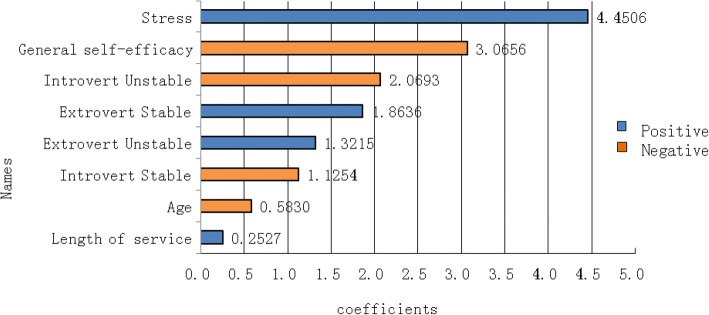
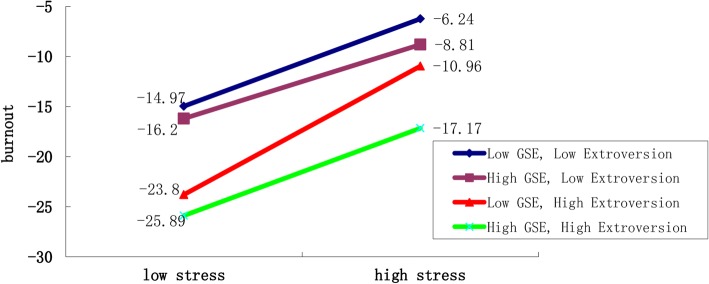
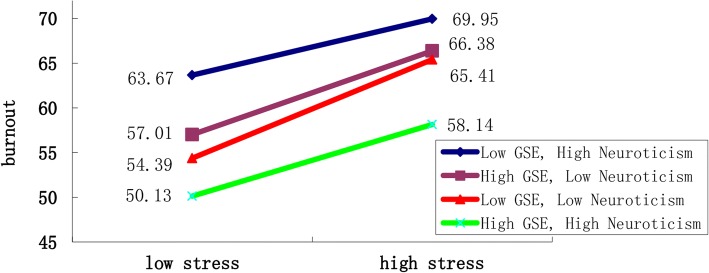
BACKGROUND: Burnout is a health problem in nurses. Individuals with a certain personality are more susceptible to job-related burnout. General self-efficacy (GSE) is an important predictor of job-related burnout. The relationships between general self-efficacy, job-related burnout and different personality types are still not clear. This study aims to analyze the relationships of job-related burnout, stress, general self-efficacy and personality types, as well as their interactions in job-related burnout. METHOD: A cross-sectional survey of 860 nurses was conducted between June and July 2015 in China. We measured their job-related burnout using the scale of the Maslach Occupational Burnout Scale, and personality, stress, and GSE. Machine learning of generalized linear model were performed. RESULTS: Maslach Burnout Inventory (MBI) professional efficacy was significantly associated with gender, marital status, age, job title and length of service. A machine learning algorithm showed that stress was the most important factor in job-related burnout, followed by GSE, personality type (introvert unstable), and job title. Individuals with low GSE and either introversion or unstable (high neuroticism) personality seemed to have stronger burnout when they faced stress (regardless of stress intensity) compared to others. CONCLUSION: Stress, GSE and introvert unstable personality are the top three factors of job-related burnout. GSE moderates the effect of stress on burnout in nurses with extroversion or neuroticism personality. Reducing stress, increasing GSE, and more social support may alleviate job-related burnout in nurses. Nurses with introvert unstable personality should be given more social support in reducing stress and enhancing their GSE.
Overview
The claims and statistics of this paper haven’t been checked yet.
Run the check — free, no account needed. It reads the open-access text and checks the sources it cites.
Integrity signals
Registry
Cites
Statistics
Figures
Verification
Claims the paper makes
The claims and statistics of this paper haven’t been checked yet.
Run the check — free, no account needed. It reads the open-access text and checks the sources it cites.
Claims other papers make about this one
Each is checked against this paper’s own text: does it say what the citing paper says it does?
In the citing paper
“The Cronbach’s ɑ was 0.883 in the present study [39].”
From Workflow interruption and nurses’ mental workload in electronic health record tasks: An observational study (2023) · cites this paper as [39]
Self-check
Percentages, sums and reported differences re-computed from the paper’s own numbers.
The self-check needs the paper’s full text.
Citations
Cites
Self-efficacy: Toward a unifying theory of behavioral change
Bandura, A. (1977) · Psychological Review · doi:10.1037/0033-295x.84.2.191 · Cited by 43,925
Maslach, C., Schaufeli, W. B., & Leiter, M. P. (2001) · Annual Review of Psychology · doi:10.1146/annurev.psych.52.1.397 · Cited by 12,852 · cited 2×
“reported that the levels of job-related burnout in young employees was relatively high [29] .”
Self-efficacy: Toward a unifying theory of behavioral change
Bandura, A. (1978) · Advances in Behaviour Research and Therapy · doi:10.1016/0146-6402(78)90002-4 · Cited by 10,586
Dawson, J., & Richter, A. W. (2006) · Journal of Applied Psychology · doi:10.1037/0021-9010.91.4.917 · Cited by 1,861
Perceived Teacher Self‐Efficacy as a Predictor of Job Stress and Burnout: Mediation Analyses
Schwarzer, R., & Hallum, S. (2008) · Applied Psychology · doi:10.1111/j.1464-0597.2008.00359.x · Cited by 1,179
Schwarzer, R., Bäßler, J., Kwiatek, P., Schröder, K. E. E., & Zhang, J. X. (1997) · Applied Psychology · doi:10.1111/j.1464-0597.1997.tb01096.x · Cited by 967
Born to burnout: A meta-analytic path model of personality, job burnout, and work outcomes
Swider, B. W., & Zimmerman, R. D. (2010) · Journal of Vocational Behavior · doi:10.1016/j.jvb.2010.01.003 · Cited by 929
Maslach burnout inventory-general survey
김, 영. (2009) · Cited by 907
Relationships between personality variables and burnout: A meta-analysis
Alarcon, G., Eschleman, K. J., & Bowling, N. A. (2009) · Work & Stress · doi:10.1080/02678370903282600 · Cited by 804
Bakker, A. B., van der Zee, K. I., Lewig, K. A., & Dollard, M. F. (2006) · The Journal of Social Psychology · doi:10.3200/socp.146.1.31-50 · Cited by 602
Risk factors and prevalence of burnout syndrome in the nursing profession
Cañadas-De la Fuente, G. A., Vargas, C., San Luis, C., García, I., Cañadas, G. R., & De la Fuente, E. I. (2015) · International Journal of Nursing Studies · doi:10.1016/j.ijnurstu.2014.07.001 · Cited by 547
After‐effects of job‐related stress: Families as victims
Jackson, S. E., & Maslach, C. (1982) · Journal of Organizational Behavior · doi:10.1002/job.4030030106 · Cited by 541
Take care! The evaluation of a team-based burnout intervention program for oncology care providers.
Blanc, P. M. L., Hox, J. J., Schaufeli, W. B., Taris, T. W., & Peeters, M. C. W. (2007) · Journal of Applied Psychology · doi:10.1037/0021-9010.92.1.213 · Cited by 289
De Beer, L. T., van der Vaart, L., Escaffi-Schwarz, M., De Witte, H., & Schaufeli, W. B. (2024) · European Journal of Psychological Assessment · doi:10.1027/1015-5759/a000797 · Cited by 270
Schulz-Quach, C., Möller, M. F., Seidler, D., & Schnell, M. W. (2013) · BMC Medical Education · doi:10.1186/1472-6920-13-1 · Cited by 240
Burnout and Health Review: Current Knowledge and Future Research Directions
Shirom, A., Melamed, S., Toker, S., Berliner, S. A., & Shapira, I. (2005) · doi:10.1002/0470029307.ch7 · Cited by 176
Correlates of Psychological Burnout Phases among Police Officers
Burke, R. J., & Deszca, E. (1986) · Human Relations · doi:10.1177/001872678603900601 · Cited by 169
Mills, L. B., & Huebner, E. S. (1998) · Journal of School Psychology · doi:10.1016/s0022-4405(97)00053-8 · Cited by 167
Burnout and coping in human service practitioners.
Río, C. J., Flores, N., & Martínez, B. A. (2007) · Professional Psychology Research and Practice · doi:10.1037/0735-7028.38.1.80 · Cited by 167
Losa Iglesias, M. E., Vallejo, R. B. D. B., & Fuentes, P. S. (2010) · International Journal of Nursing Studies · doi:10.1016/j.ijnurstu.2009.06.014 · Cited by 140
DEVELOPMENT OF THE REVISED EYSENCK PERSONALITY QUESTIONNAIRE SHORT SCALE FOR CHINESE (EPQ-RSC)
Qian, M., Guocheng, W., Rongchun, Z., & Beijing, B. (2000) · Acta Psychologica Sinica · Cited by 137
Personality traits predict job stress, depression and anxiety among junior physicians
Gramstad, T. O., Gjestad, R., & Haver, B. (2013) · BMC Medical Education · doi:10.1186/1472-6920-13-150 · Cited by 134
Perrewé, P. L., Hochwarter, W. A., Rossi, A. M., Wallace, A., Maignan, I., Castro, S. L., Ralston, D. A., Westman, M., Vollmer, G. R., Tang, M., et al. (2002) · Journal of International Management · doi:10.1016/s1075-4253(02)00052-2 · Cited by 123
Síndrome de Burnout en el personal de enfermería de un hospital de Madrid
Albaladejo, R., Villanueva, R., Ortega, P., Astasio, P., Calle, M. E., & Dominguez, V. (2004) · Revista Española de Salud Pública · doi:10.1590/s1135-57272004000400008 · Cited by 118
A systematic review of the relationship between self‐efficacy and burnout in teachers
Brown, C. G. (2012) · Educational and Child Psychology · doi:10.53841/bpsecp.2012.29.4.47 · Cited by 111
Kase, S. M., Waldman, E. D., & Weintraub, A. S. (2018) · Palliative & Supportive Care · doi:10.1017/s1478951517001237 · Cited by 101
Quality of care and health professional burnout: narrative literature review
Humphries, N., Morgan, K., Conry, M. C., McGowan, Y., Montgomery, A., & McGee, H. M. (2014) · International Journal of Health Care Quality Assurance · doi:10.1108/ijhcqa-08-2012-0087 · Cited by 96
Burnout and Leadership in Community Mental Health Systems
Webster, L. L., & Hackett, R. K. (1999) · Administration and Policy in Mental Health and Mental Health Services Research · doi:10.1023/a:1021382806009 · Cited by 78
Yao, Y., Wang, W., Wang, F., & Yao, W. (2014) · International Journal of Occupational Medicine and Environmental Health · doi:10.2478/s13382-014-0255-y · Cited by 60
Self-citationStable Genetic Influence on Anxiety-Related Behaviours Across Middle Childhood
Trzaskowski, M., Zavos, H. M. S., Haworth, C. M. A., Plomin, R. J., & Eley, T. C. (2011) · Research on Child and Adolescent Psychopathology · doi:10.1007/s10802-011-9545-z · Cited by 58
Karanikola, M. N. K., Papathanassoglou, E. D. E., Giannakopoulou, M. D., & Koutroubas, A. (2006) · Journal of Nursing Management · doi:10.1111/j.1365-2934.2006.00673.x · Cited by 54
Zaninotto, L., Rossi, G., Danieli, A., Frasson, A., Meneghetti, L., Zordan, M., Tito, P., Salvetti, B., Conca, A., Ferranti, R., et al. (2018) · Psychiatry Research · doi:10.1016/j.psychres.2018.03.076 · Cited by 54
A Survey of Burnout Among Mental Health Center Directors in a Rural State
Rohland, B. M. (2000) · Administration and Policy in Mental Health and Mental Health Services Research · doi:10.1023/a:1021361419155 · Cited by 51
The effect of profession on burnout in hospital staff
Marques, M., Alves, E., Queirós, C. M. L., Norton, P. M. P. N. S., & Henriques, A. (2018) · Occupational Medicine · doi:10.1093/occmed/kqy039 · Cited by 44
Assessing burn‐out and occupational stressors in a medium secure service
Oddie, S., & Ousley, L. (2007) · The British Journal of Forensic Practice · doi:10.1108/14636646200700011 · Cited by 43
Yao, Y., Yao, W., Wang, W., Li, H., & Lan, Y. (2013) · International Journal of Nursing Practice · doi:10.1111/ijn.12103 · Cited by 35
Self-citationAn Investigation on Job Burnout of Doctor and Nurse
Zheng-xue, L. (2003) · Zhongguo linchuang xinlixue zazhi · Cited by 35
Schult, T. M., Mohr, D. C., & Osatuke, K. (2018) · Stress and Health · doi:10.1002/smi.2809 · Cited by 35
Extraversion as a moderator of the cognitive dissonance associated with disagreement
Matz, D. C., Hofstedt, P. M., & Wood, W. (2008) · Personality and Individual Differences · doi:10.1016/j.paid.2008.05.014 · Cited by 32
Relationship Between Self-Efficacy and Burnout Among Nurses in Behbahan City, Iran
Alidosti, M., Delaram, M., Dehgani, L., & Moghadam, M. M. (2016) · Women’s Health Bulletin · doi:10.17795/whb-30445 · Cited by 31
The test of occupational stress inventory revised edition
Li, J. (2001) · Cited by 25
Yun-li, Z., & Lu, C. (2009) · Acta Psychologica Sinica · doi:10.3724/sp.j.1041.2009.00501 · Cited by 19
[Occupational stress and job burnout in doctors].
Zhu, W., Wang, Z. M., Wang, M., Lan, Y.-J., & Wu, S. (2006) · PubMed · Cited by 16
Burnout bei niedergelassenen Ärztinnen und Ärzten für Allgemeinmedizin
Fuchs, S., Endler, P. C., Mesenholl-Strehler, E., Paß, P., & Frass, M. (2009) · Wiener Medizinische Wochenschrift · doi:10.1007/s10354-009-0669-5 · Cited by 15
Ye, Z. (2004) · Zhongguo xinli weisheng zazhi · Cited by 7
Investigation of psychological health state of medical and nursing staffs in Zhengzhou
Chunhua, S. (2006) · Journal of Zhengzhou University · Cited by 1
Research works printed but not linked: 4
- Farber BA. Crisis in education: stress and burnout in the American teacher. San Francisco: Jossey-Bass; 1st edition. Psyccritiques. 1991;37(4).
- Fangfang L. Investigation and analysis on the impact of Librarian’s personality and coping style upon job burnout. Library Information Serv. 2010;54(9):60–3.
- Li Y, Li Y. Developing the diagnostic Ctiterion of job burnout. Psychol Sci. 2006;29(1):148–50.
- Wang S, Zhao Q, Li S. A survey of job burnout of clinical nurses. Chin Nurs Res. 2008;22(9):2292–3.
Cited by
Sorted by citations
Work stress, perceived social support, self‐efficacy and burnout among Chinese registered nurses
Liu, Y., & Aungsuroch, Y. (2019) · Journal of Nursing Management · doi:10.1111/jonm.12828 · Cited by 197
Liu, Y., Aungsuroch, Y., Gunawan, J., & Zeng, D. (2021) · Journal of Nursing Scholarship · doi:10.1111/jnu.12642 · Cited by 157
What is known about paediatric nurse burnout: a scoping review
Buckley, L., Berta, W. B., Cleverley, K., Medeiros, C., & Widger, K. A. (2020) · Human Resources for Health · doi:10.1186/s12960-020-0451-8 · Cited by 166
Big five model personality traits and job burnout: a systematic literature review
Angelini, G. (2023) · BMC Psychology · doi:10.1186/s40359-023-01056-y · Cited by 179
Shan, Y., Shang, J., Yan, Y., & Ye, X. (2023) · BMC Nursing · doi:10.1186/s12912-023-01209-9 · Cited by 79
Metadata
- Authors
- Yao, Y., Zhao, S., Gao, X., An, Z., Wang, S., Li, H., Li, Y., Gao, L., Lu, L., & Dong, Z.
- Affiliations
- Zhengzhou University (CN)
- Henan Medical University (CN)
- Yale Cancer Center (US)
- Corresponding author
- Yao, Yongcheng
- Venue
- BMC Health Services Research
- Published
- 2018-08-29
- Volume
- 18
- Issue
- 1
- Pages
- 667-667
- ISSN
- 1472-6963 (ISSN-L)
- PMC
- PMC6114188
- OpenAlex
- W2889508361
- Cited by
- 133
- References
- 47
- Citations by year
- 2026: 4 · 2025: 13 · 2024: 16 · 2023: 26 · 2022: 26 · 2021: 29 · 2020: 14 · 2019: 4 · 2018: 1
- FWCI
- 16.25
- Type
- journal article
- Language
- en
- Open access
- gold
- doi.org
- Licence
- Locations
- BMC Health Services Research (publishedVersion, cc-by)
- Europe PMC (PubMed Central) (publishedVersion, cc-by)
- PubMed Central (publishedVersion, cc-by)
- PubMed (publishedVersion)
- DOAJ (DOAJ: Directory of Open Access Journals) (submittedVersion, cc-by-sa)
- Funders
- Education Department of Henan Province
- Science and Technology Department of Henan Province
- Xinxiang Medical University
- Henan Provincial Science and Technology Research Project
- Topics
- Social Sciences › Psychology › Social Psychology › Stress and Burnout Research
- Health Sciences › Medicine › Public Health, Environmental and Occupational Health › Occupational Health and Burnout
- Health Sciences › Health Professions › General Health Professions › Healthcare professionals’ stress and burnout
- Keywords
- general self-efficacy, occupational stress, nurses, personality types, introversion, neuroticism, moderating effect, Maslach Burnout Inventory, social support
- MeSH terms
- Occupational Stress, Adult, Burnout, Professional, China, Cross-Sectional Studies, Female, Humans, Male, Middle Aged, Nurses, Personality, Surveys and Questionnaires, Social Support, Self Efficacy
About these checks
Registry, retraction, Cites and statistics results are computed, not judged, with one exception: a printed reference that no index lists is read once by a model before it counts as a citation error. Claims are extracted by a model and kept only when their quote appears verbatim in the text; each cited source is then checked, with a model’s help, for whether it says what the claim relies on. Those verdicts can be wrong — read the claim’s quote and the cited source before relying on one.
Statistics and arithmetic are recomputed, not judged.
Confidence bands are shown only for fields calibrated on our annotated test set. None is calibrated yet, so no band is shown.
What counts as a claim ›How we measure confidence ›How we check this ›
Are you an author, or do you see a problem with this page? Request a review
