

The DOI matches its Crossref record; 109 of the 111 references it cites were found in a registry or an index.
Long-term mental health of war-refugees: a systematic literature review
Open accessAbstract
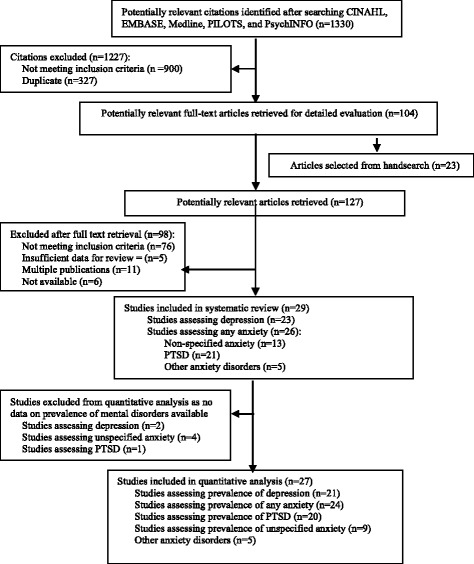
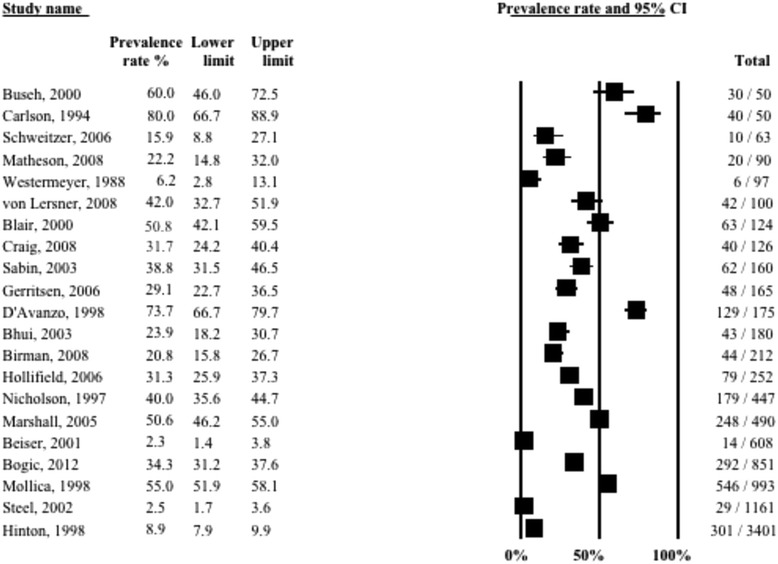
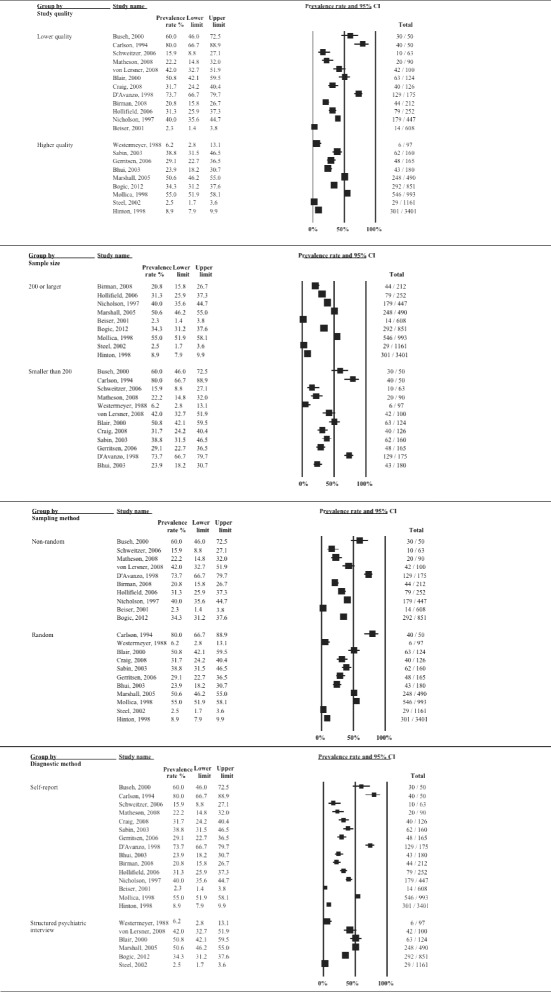
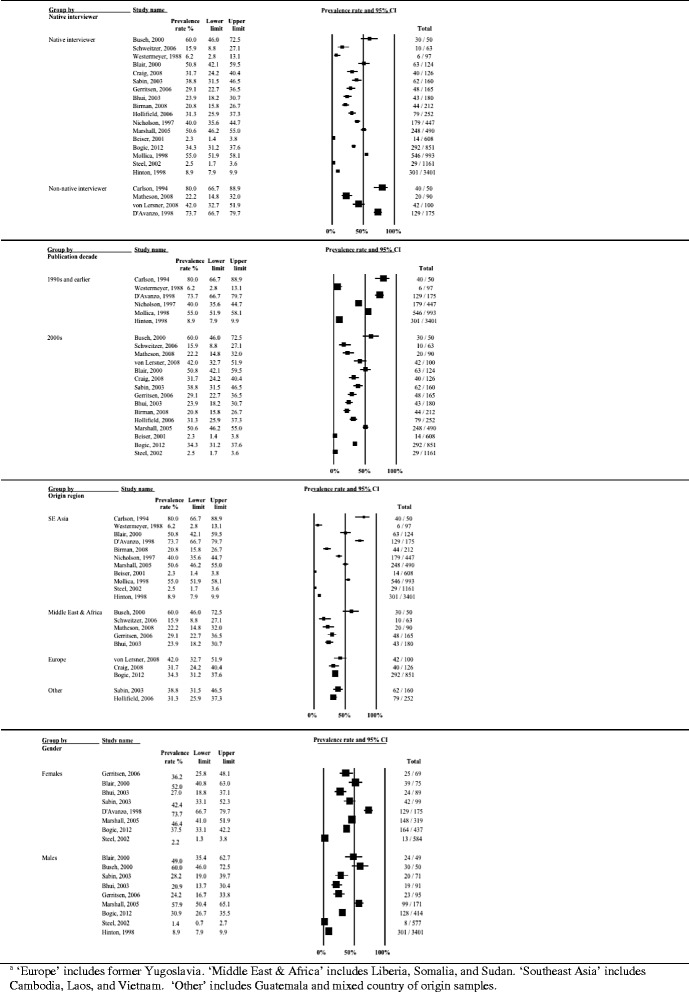
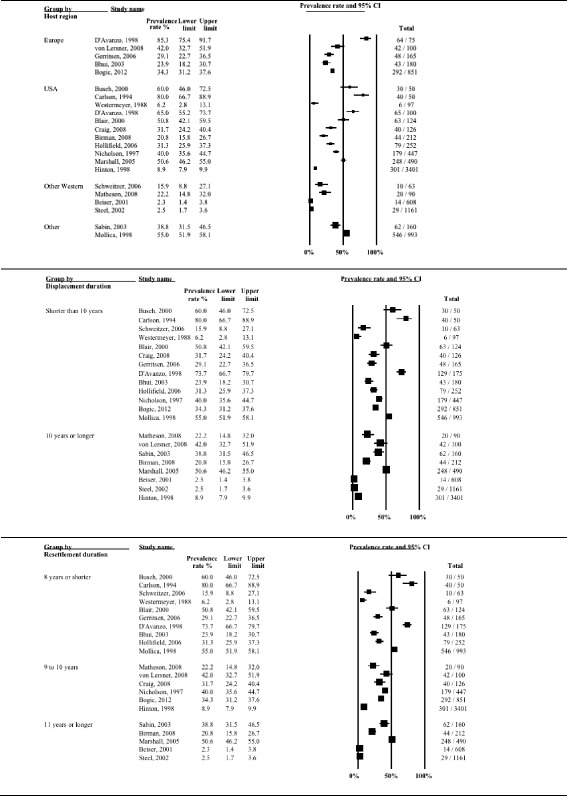
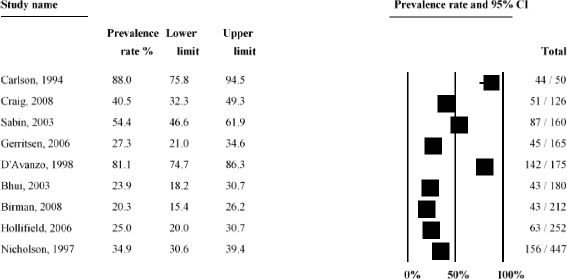
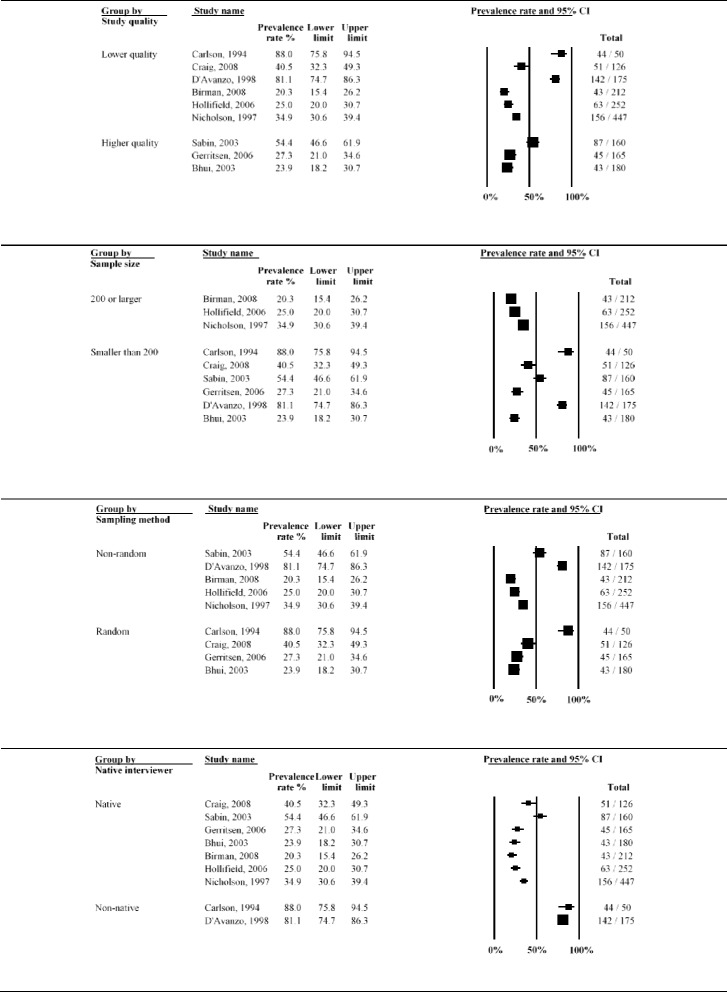
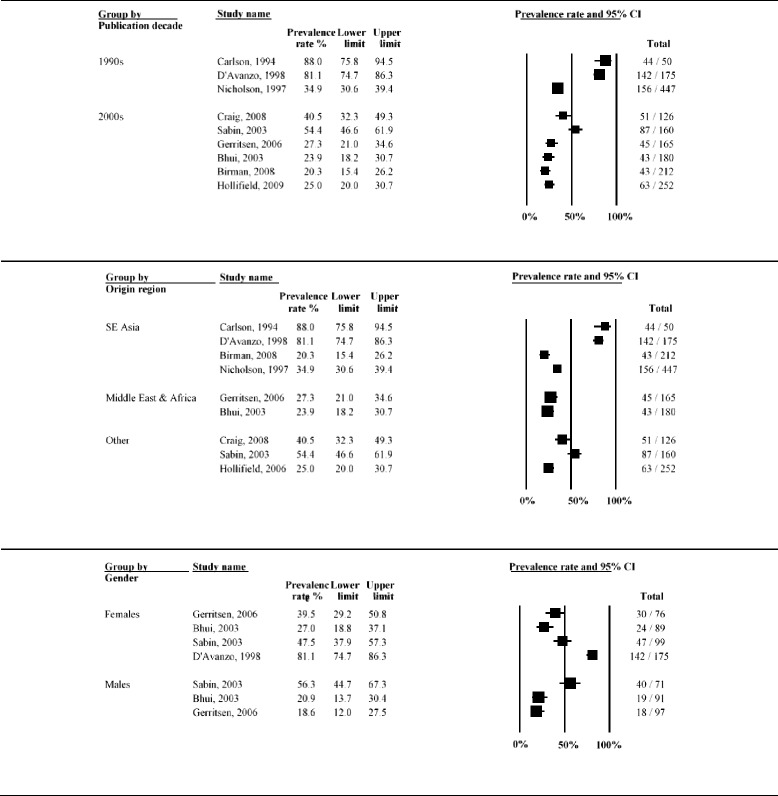
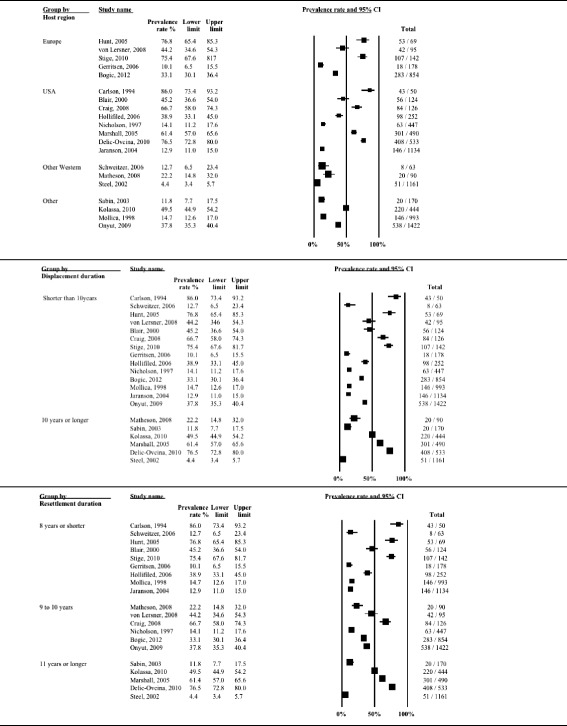
BACKGROUND: There are several million war-refugees worldwide, majority of whom stay in the recipient countries for years. However, little is known about their long-term mental health. This review aimed to assess prevalence of mental disorders and to identify their correlates among long-settled war-refugees. METHODS: We conducted a systematic review of studies that assessed current prevalence and/or factors associated with depression and anxiety disorders in adult war-refugees 5 years or longer after displacement. We searched Medline, Embase, CINAHL, PsycINFO, and PILOTS from their inception to October 2014, searched reference lists, and contacted experts. Because of a high heterogeneity between studies, overall estimates of mental disorders were not discussed. Instead, prevalence rates were reviewed narratively and possible sources of heterogeneity between studies were investigated both by subgroup analysis and narratively. A descriptive analysis examined pre-migration and post-migration factors associated with mental disorders in this population. RESULTS: The review identified 29 studies on long-term mental health with a total of 16,010 war-affected refugees. There was significant between-study heterogeneity in prevalence rates of depression (range 2.3-80%), PTSD (4.4-86%), and unspecified anxiety disorder (20.3-88%), although prevalence estimates were typically in the range of 20% and above. Both clinical and methodological factors contributed substantially to the observed heterogeneity. Studies of higher methodological quality generally reported lower prevalence rates. Prevalence rates were also related to both which country the refugees came from and in which country they resettled. Refugees from former Yugoslavia and Cambodia tended to report the highest rates of mental disorders, as well as refugees residing in the USA. Descriptive synthesis suggested that greater exposure to pre-migration traumatic experiences and post-migration stress were the most consistent factors associated with all three disorders, whilst a poor post-migration socio-economic status was particularly associated with depression. CONCLUSIONS: There is a need for more methodologically consistent and rigorous research on the mental health of long-settled war refugees. Existing evidence suggests that mental disorders tend to be highly prevalent in war refugees many years after resettlement. This increased risk may not only be a consequence of exposure to wartime trauma but may also be influenced by post-migration socio-economic factors.
Overview
The claims and statistics of this paper haven’t been checked yet.
Run the check — free, no account needed. It reads the open-access text and checks the sources it cites.
Integrity signals
Registry
Cites
Statistics
Figures
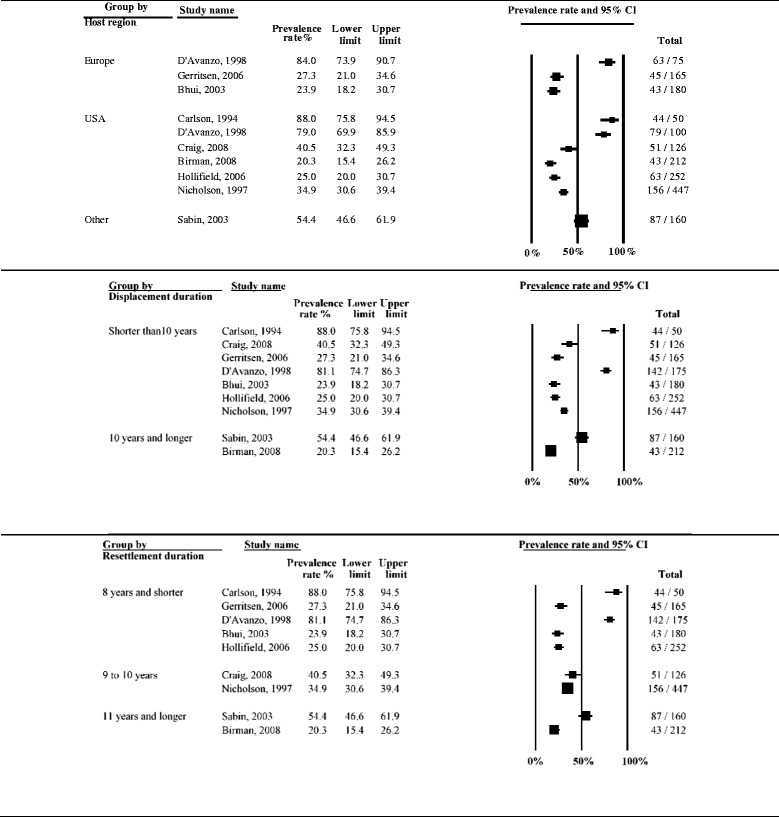
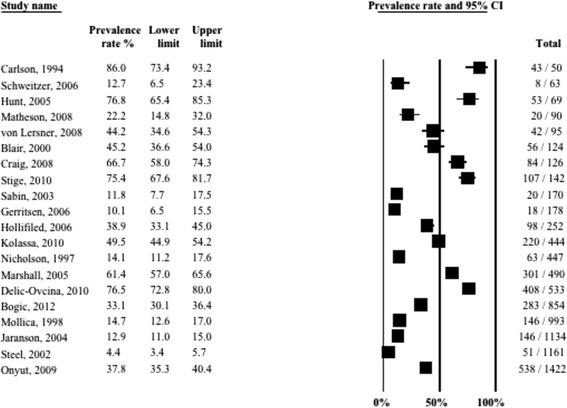
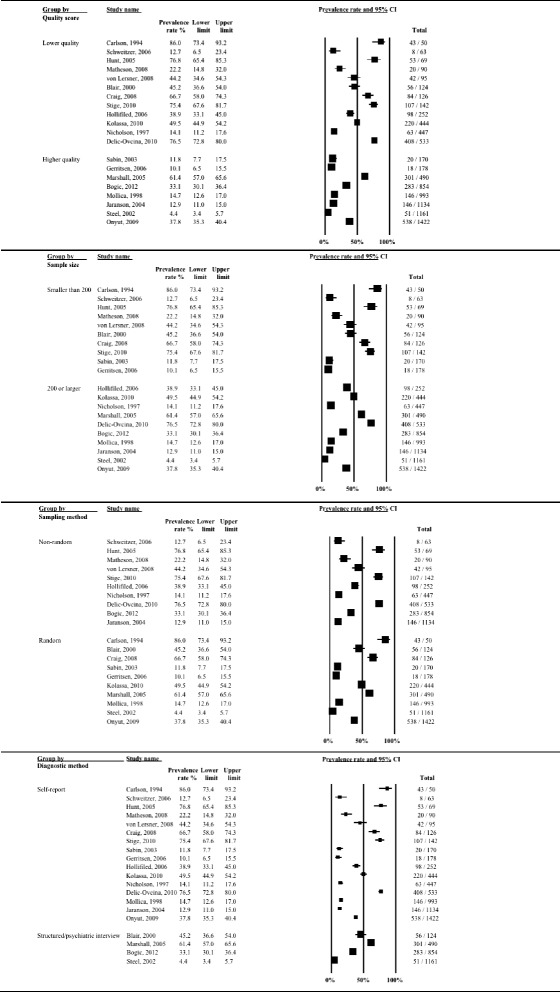
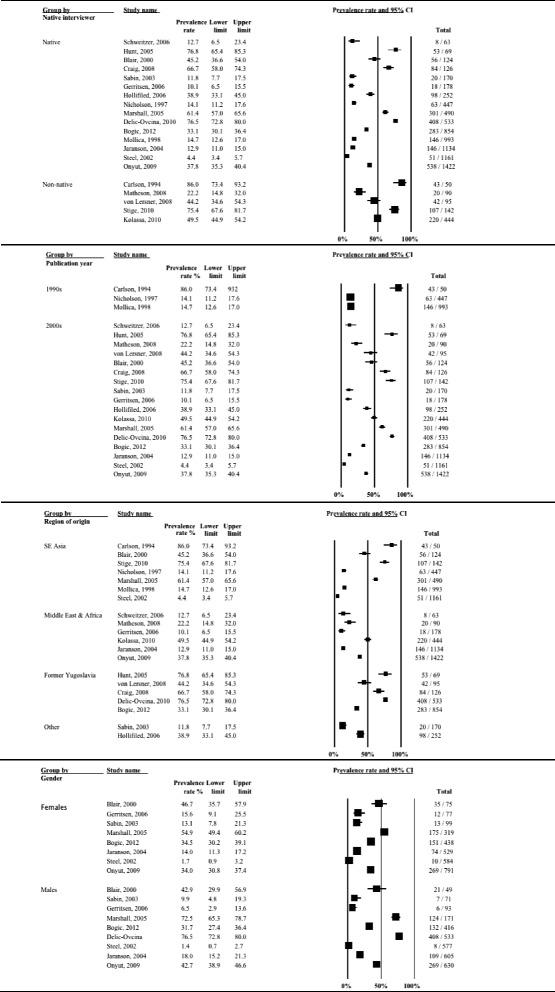
Verification
Claims the paper makes
The claims and statistics of this paper haven’t been checked yet.
Run the check — free, no account needed. It reads the open-access text and checks the sources it cites.
Claims other papers make about this one
Each is checked against this paper’s own text: does it say what the citing paper says it does?
The cited source says what the claim attributes to it.
In the citing paper
“The selection of cova riates was based on knowledge from existing literature investigating factors predicting treatment outcome and refugee mental health (Van Wyk et al., 2012; Bogic et al., 2015; Sonne et al., 2016).”
From Refugees versus persons family reunified to a refugee: A comparison of sociodemographic factors, trauma history, baseline psychopathology and treatment effectiveness (2023) · cites this paper as Bogic et al., 2015
Self-check
Percentages, sums and reported differences re-computed from the paper’s own numbers.
The self-check needs the paper’s full text.
Citations
Cites
Measuring inconsistency in meta-analyses
Higgins, J. P. T., Thompson, S. G., Deeks, J. J., & Altman, D. G. (2003) · BMJ · doi:10.1136/bmj.327.7414.557 · Cited by 63,139
Quantifying heterogeneity in a meta‐analysis
Higgins, J. P. T., & Thompson, S. G. (2002) · Statistics in Medicine · doi:10.1002/sim.1186 · Cited by 36,763
Dermyshi, E., Wang, Y., Yan, C., Hong, W., Qiu, G., Gong, X., & Zhang, T. (2017) · Neonatology · doi:10.1159/000454668 · Cited by 24,586
Meta-analysis of Observational Studies in Epidemiology<SUBTITLE>A Proposal for Reporting</SUBTITLE>
Stroup, D. F. (2000) · JAMA · doi:10.1001/jama.283.15.2008 · Cited by 20,623
(1998) · The Journal of Clinical Psychiatry · Cited by 19,139
Borenstein, M., Hedges, L. V., Higgins, J. P. T., & Rothstein, H. R. (2009) · doi:10.1002/9780470743386 · Cited by 14,225
Kessler, R. C., Chiu, W. T., Demler, O., & Walters, E. E. (2005) · Archives of General Psychiatry · doi:10.1001/archpsyc.62.6.617 · Cited by 12,052
Posttraumatic Stress Disorder in the National Comorbidity Survey
Kessler, R. C. (1995) · Archives of General Psychiatry · doi:10.1001/archpsyc.1995.03950240066012 · Cited by 10,379
(1998) · PubMed · Cited by 10,216
Borenstein, M., Hedges, L. V., Higgins, J. P. T., & Rothstein, H. R. (2021) · doi:10.1002/9781119558378 · Cited by 9,799
Research works printed but not linked: 5
- UNHCR. 2014 Global Trends: World at War. Geneva: United Nations High Commissioner for Refugees; 2015.
- Bowling A. Research Methods in Health: Investigating health and health services. Philadelphia: Open University Press; 2002.
- Buseh AG, McElmurry BJ, Fox PG. Acculturative stress and depressed mood among Liberian men residing in a large U.S. Midwestern city. Int J Psychiatr Nurs Res. 2000;6:695–713.
- Department of Economic and Social Affairs (DESA). World Economic and Social Survey 2004: International Migration. New York: United Nations; 2004.
- Kühne P, Rüßler H. Die Lebensverhältnisse der Flüchtlinge in Deutschland [The living conditions of refugees in Germany]. Campus-Verlag: Frankfurt; 2000.
Cited by
Sorted by citations
Lund, C., Brooke-Sumner, C., Baingana, F., Baron, E. C., Breuer, E., Chandra, P., Haushofer, J., Herrman, H., Jordans, M., Kieling, C., et al. (2018) · The Lancet Psychiatry · doi:10.1016/s2215-0366(18)30060-9 · Cited by 1,147
Blackmore, R., Boyle, J. A., Fazel, M., Ranasinha, S., Gray, K. M., Fitzgerald, G., Misso, M., & Gibson-Helm, M. (2020) · PLOS Medicine · doi:10.1371/journal.pmed.1003337 · Cited by 949
Li, S. S. Y., Liddell, B. J., & Nickerson, A. (2016) · Current Psychiatry Reports · doi:10.1007/s11920-016-0723-0 · Cited by 746
The Social Determinants of Refugee Mental Health in the Post-Migration Context: A Critical Review
Hynie, M. (2018) · The Canadian Journal of Psychiatry · doi:10.1177/0706743717746666 · Cited by 659
Turrini, G., Purgato, M., Ballette, F., Nosè, M., Ostuzzi, G., & Barbui, C. (2017) · International Journal of Mental Health Systems · doi:10.1186/s13033-017-0156-0 · Cited by 412
Metadata
- Authors
- Bogic, M., Njoku, A., & Priebe, S.
- Affiliations
- Horizon Health Network (CA)
- Queen Mary University of London (GB)
- Venue
- BMC International Health and Human Rights
- Published
- 2015-10-28
- Volume
- 15
- Issue
- 1
- Pages
- 29-29
- ISSN
- 1472-698X (ISSN-L)
- PMC
- PMC4624599
- OpenAlex
- W1948339546
- Cited by
- 1,166
- References
- 111
- Citations by year
- 2026: 84 · 2025: 158 · 2024: 133 · 2023: 145 · 2022: 159 · 2021: 105 · 2020: 163 · 2019: 88 · 2018: 70 · 2017: 44 · 2016: 14
- FWCI
- 6.12
- Type
- journal article
- Language
- en
- Open access
- gold
- doi.org
- Licence
- Locations
- BMC International Health and Human Rights (publishedVersion, cc-by)
- PubMed Central (publishedVersion, cc-by)
- PubMed (publishedVersion)
- Queen Mary Research Online (Queen Mary University of London) (submittedVersion)
- Funders
- Queen Mary University of London
- Topics
- Social Sciences › Psychology › Clinical Psychology › Migration, Health and Trauma
- Health Sciences › Medicine › Psychiatry and Mental health › Mental Health Treatment and Access
- Social Sciences › Psychology › Clinical Psychology › Posttraumatic Stress Disorder Research
- Keywords
- war refugees, long-term mental health, depression, anxiety disorders, post-traumatic stress disorder, prevalence of mental disorders, pre-migration trauma, post-migration stressors, socioeconomic status, resettlement, Cambodian refugees
- MeSH terms
- War Exposure, Armed Conflicts, Adult, Anxiety Disorders, Depression, Humans, Mental Health, Refugees, Risk Factors, Social Class, Stress, Psychological, Time Factors, Internationality
About these checks
Registry, retraction, Cites and statistics results are computed, not judged, with one exception: a printed reference that no index lists is read once by a model before it counts as a citation error. Claims are extracted by a model and kept only when their quote appears verbatim in the text; each cited source is then checked, with a model’s help, for whether it says what the claim relies on. Those verdicts can be wrong — read the claim’s quote and the cited source before relying on one.
Statistics and arithmetic are recomputed, not judged.
Confidence bands are shown only for fields calibrated on our annotated test set. None is calibrated yet, so no band is shown.
What counts as a claim ›How we measure confidence ›How we check this ›
Are you an author, or do you see a problem with this page? Request a review
