

Burden of mental disorders and unmet needs among street homeless people in Addis Ababa, Ethiopia
Open accessThe DOI matches its Crossref record; 43 of the 43 references it cites were found in a registry or an index; 5 of the 48 sources its claims cite were checked for support.
Abstract
BACKGROUND: The impact of mental disorders among homeless people is likely to be substantial in low income countries because of underdeveloped social welfare and health systems. As a first step towards advocacy and provision of care, we conducted a study to determine the burden of psychotic disorders and associated unmet needs, as well as the prevalence of mental distress, suicidality, and alcohol use disorder among homeless people in Addis Ababa, the capital of Ethiopia. METHODS: A cross-sectional survey was conducted among street homeless adults. Trained community nurses screened for potential psychosis and administered standardized measures of mental distress, alcohol use disorder and suicidality. Psychiatric nurses then carried out confirmatory diagnostic interviews of psychosis and administered a locally adapted version of the Camberwell Assessment of Needs Short Appraisal Schedule. RESULTS: We assessed 217 street homeless adults, about 90% of whom had experienced some form of mental or alcohol use disorder: 41.0% had psychosis, 60.0% had hazardous or dependent alcohol use, and 14.8% reported attempting suicide in the previous month. Homeless people with psychosis had extensive unmet needs with 80% to 100% reporting unmet needs across 26 domains. Nearly 30% had physical disability (visual and sensory impairment and impaired mobility). Only 10.0% of those with psychosis had ever received treatment for their illness. Most had lived on the streets for over 2 years, and alcohol use disorder was positively associated with chronicity of homelessness. CONCLUSION: Psychoses and other mental and behavioural disorders affect most people who are street homeless in Addis Ababa. Any programme to improve the condition of homeless people should include treatment for mental and alcohol use disorders. The findings have significant implications for advocacy and intervention programmes, particularly in similar low income settings.
Overview
CoChat Summary
TL;DR
In a cross-sectional survey of 217 street homeless adults in Addis Ababa, Ethiopia, about 90% had some form of mental or alcohol use disorder, with 41.0% meeting criteria for psychosis. People with psychosis had extensive unmet needs and a very high treatment gap, with only about 10% ever having received treatment.
Key findings
- Among 217 street homeless adults, 41.0% (89/217) had psychosis; most of those with psychosis had schizophrenia (88%, 79/89).
- About 90% had some form of mental or alcohol use disorder; 60.0% had hazardous or dependent alcohol use, and 14.8% reported attempting suicide in the previous month.
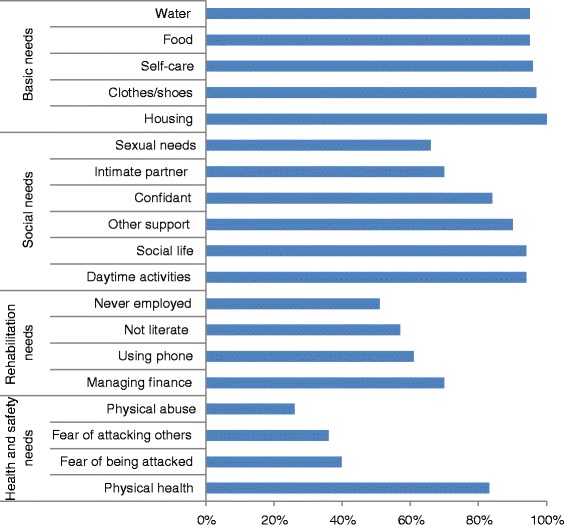
- Homeless people with psychosis had extensive unmet needs, with 80% to 100% reporting unmet needs across 26 domains; nearly 30% had physical disability, and only 10.0% of those with psychosis had ever received treatment for their illness.
- Most had lived on the streets for over 2 years, and alcohol use disorder was positively associated with chronicity of homelessness.
Methods
- Cross-sectional community-based study of street homeless adults in four districts of Addis Ababa; homelessness was defined as rooflessness, and eligibility required at least 24 hours on the street prior to assessment.
- Double-stage sampling: trained community nurses screened for potential psychosis and administered standardized measures of mental distress (K10), suicidality, and alcohol use disorder (AUDIT); psychiatric nurses then conducted confirmatory psychosis assessments using SCAN/PSQ items and administered a locally adapted 26-item Camberwell Assessment of Needs Short Appraisal Schedule (CANSAS).
- Analyses were primarily descriptive, reporting frequencies and percentages; comparative analysis examined factors associated with chronicity of homelessness and compared those with and without psychosis, using complete case analysis for missing data.
Limitations
- The paper states that missing information was a major problem, with missing values in some domains sometimes up to 33%, and that more mobile and recently homeless people were difficult to evaluate.
- The paper states that it did not examine unmet needs among homeless people without psychosis, intentionally focusing on the more severely mentally ill population.
- Evident from the text: the cross-sectional design cannot establish causation, and the two-stage evaluation may have screened out some individuals with psychosis, potentially underestimating prevalence; AUDIT was also noted as not validated in the Ethiopian setting.
Model-written summary. Check it against the paper before relying on it.
Integrity signals
Registry
Cites
Statistics
Figures
Verification
Claims the paper makes
4 Valid · 2 Not valid · 27 Not checked · 83 Own results and interpretations
The cited sources support only part of this claim — read each source’s verdict below.
In the paper
“Although not validated in the Ethiopian setting, AUDIT has been used in neighbouring countries [37,38].”
§ Burden of mental disorders and unmet needs among street homeless people in Addis Ababa, Ethiopia > Methods > Assessments
What the sources say
- Partly supportedcites [37] Chishinga N Kinyanda E Weiss HA Patel P Ayles H Seedat S Validation of brief screening tools for depressive and alcohol use disorders among TB and HIV patients in primary care in Zambia BMC Psychiatry 2011 11 75 10.1186/1471-244X-11-75 21542929 PMC3112078 sourceExperimental — accuracy not yet measured
Our copy supports only the regional-use half of the sentence: it is itself a validation of the AUDIT among TB/HIV patients in Zambian primary care (Discussion; Conclusions; Abstract Results, AUDIT AUROC 0.98 in women and 0.75 in men), and Methods > Screening tools adds that the AUDIT 'was developed and validated in multinational samples involving Kenya [28] and has been validated in South Africa [31]' — Kenya bordering Ethiopia. Nothing in our copy addresses Ethiopia: searches for 'Ethiopia' and for AUDIT validation in East African settings returned no passage stating or implying that the AUDIT has not been validated there, so the negative Ethiopian claim is not supported by this source. (LLM, conf=0.70)
- Not checked yetcites [38] Saunders JB Aasland OG Babor TF de la Fuente JR Grant M Development of the Alcohol Use Disorders Identification Test (AUDIT): WHO Collaborative Project on Early Detection of Persons with Harmful Alcohol Consumption–II Addiction 1993 88 791 804 10.1111/j.1360-0443.1993.tb02093.x 8329970 source
plain- Asserted: passes — The authors put it forward as true.
- Checkable: passes — It can be checked against evidence.
- Load-bearing: unclear — It is unclear whether the paper’s conclusions depend on it.
- Based: passes — The paper gives a reason why it holds.
- Partly supported
Every source the paper cites for this claim was checked and supports it.
In the paper
“To the contrary, a study from rural Ethiopia indicated that there may be less tolerance of the seriously mentally ill in such communities.”
§ Burden of mental disorders and unmet needs among street homeless people in Addis Ababa, Ethiopia > Discussion > Causes of homelessness
What the sources say
- Supportedcites [50] Shibre T Teferra S Morgan C Alem A Exploring the apparent absence of psychosis amongst the Borana pastoralist community of Southern Ethiopia. A mixed method follow-up study World Psychiatry 2010 9 98 102 20671898 PMC2911089 source
The RESultS section of the Borana (rural pastoralist, Southern Ethiopia) key-informant study reports that in all focus groups participants described people with severe mental illness migrating to nearby towns, giving as the reason that "they are better tolerated in town" and that town people "wouldn't chase them away like we do" — i.e., less tolerance in their own community. The diScuSSion reinforces this, noting the strong local belief that marata can never be cured "could potentially lead to stigmatization". The citing sentence is hedged ("may be less tolerance") and so matches the level of confidence in the source; describing the Borana pastoralist setting as rural Ethiopia is a fair paraphrase of the paper's own framing. (LLM, conf=0.85)
hedgedstates a possible cause- Asserted: passes — The authors put it forward as true.
- Checkable: passes — It can be checked against evidence.
- Load-bearing: unclear — It is unclear whether the paper’s conclusions depend on it.
- Based: passes — The paper gives a reason why it holds.
- Supported
A result the paper reports from its own data — it cites no other source for it, so there is none to check. The quote shows it is in the paper.
In the paper
“Most had lived on the streets for over 2 years, and alcohol use disorder was positively associated with chronicity of homelessness.”
§ Burden of mental disorders and unmet needs among street homeless people in Addis Ababa, Ethiopia > Abstract > Results
plainstates an associationn = 217- Asserted: passes — The authors put it forward as true.
- Checkable: passes — It can be checked against evidence.
- Load-bearing: unclear — It is unclear whether the paper’s conclusions depend on it.
- Based: passes — The paper gives a reason why it holds.
A result the paper reports from its own data — it cites no other source for it, so there is none to check. The quote shows it is in the paper.
In the paper
“We assessed 217 street homeless adults, about 90% of whom had experienced some form of mental or alcohol use disorder: 41.0% had psychosis, 60.0% had hazardous or dependent alcohol use, and 14.8% reported attempting suicide in the previous month.”
§ Burden of mental disorders and unmet needs among street homeless people in Addis Ababa, Ethiopia > Abstract > Results
plainn = 217- Asserted: passes — The authors put it forward as true.
- Checkable: passes — It can be checked against evidence.
- Load-bearing: unclear — It is unclear whether the paper’s conclusions depend on it.
- Based: passes — The paper gives a reason why it holds.
62 more claims
Create a free account to see all 116 claims and to verify the 43 references still open.
- Probably not a substantial claim. 37
- It may state two separate claims as one. 19
- The quote only partly states this claim. 2
Claims other papers make about this one
Each is checked against this paper’s own text: does it say what the citing paper says it does?
The check wasn’t confident either way, so it gives no verdict — never disputed.
In the citing paper
“Methadone replacement treatment for opioid dependence reduces use of heroin and maintains engagement with addiction treatment. 40”
From The Hotel Study—Clinical and Health Service Effectiveness in a Cohort of Homeless or Marginally Housed Persons (2017) · cites this paper as [40]
Experimental — accuracy not yet measuredIn the citing paper
“High prevalence rates have been found in descriptive studies across 3 countries. Most Brazilian unsheltered adults had a psychiatric diagnosis (98.8%); an Ethiopian study found that 41.0% had psychosis; and among a small sample of rough sleepers in Dublin, 31.3% had a severe mental illness.14,42,43”
From Unsheltered Homelessness and Health: A Literature Review (2023) · cites this paper as [14]
In the citing paper
“Comorbid mental health and substance use disorder is also common among unsheltered populations.14,42,43”
From Unsheltered Homelessness and Health: A Literature Review (2023) · cites this paper as [14]
In the citing paper
“Among those with mental illness, the most common diagnoses were schizophrenia (88% in Ethiopia, 25% in Dublin, and 9.6% in Brazil) and mood disorders, including major depression (32.5% in Brazil).14,42,43”
From Unsheltered Homelessness and Health: A Literature Review (2023) · cites this paper as [14]
In the citing paper
“Exploratory analysis indicated that adults with psychosis in Ethiopia were more likely to be older and to have longer durations of street homelessness.14”
From Unsheltered Homelessness and Health: A Literature Review (2023) · cites this paper as [14]
1 more claim about this paper
Create a free account to see every claim other papers make about this one.
Self-check
Percentages, sums and reported differences re-computed from the paper’s own numbers.
Each contradiction between two passages listed here was confirmed by an independent check.
Rated major: it would touch a result — a value a result rests on, reported and recomputed p-values on opposite sides of the significance level, two passages that conflict with no sign which is right, or a cited work retracted before this paper was published.
In the paper
§ Burden of mental disorders and unmet needs among street homeless people in Addis Ababa, Ethiopia > Results > General characteristics
“| Duration of homelessness | >5 years | 40 | 54.8 | 45 | 40.2 | 0.051 |”
§ Burden of mental disorders and unmet needs among street homeless people in Addis Ababa, Ethiopia > Results > General characteristics
“| Duration of homelessness (n = 73) | >5 years | 40 | 54.8 |”
Rated minor: it would not touch a result — a value no result rests on, a p-value that stays on the same side of the significance level, or a conflict that is clerical, resolved elsewhere in the paper, or outside its own findings.
In the paper
§ Burden of mental disorders and unmet needs among street homeless people in Addis Ababa, Ethiopia > Results > General characteristics
“Those with psychosis were significantly older (37.1 ± 13.7 years) than those without psychosis (29.1 ± 13.2 years) (Table 3).”
§ Burden of mental disorders and unmet needs among street homeless people in Addis Ababa, Ethiopia > Results > General characteristics
“| Age | ≥35 | 47 | 55.3 | 27 | 22.9 | <0.001 |”
Rated minor: it would not touch a result — a value no result rests on, a p-value that stays on the same side of the significance level, or a conflict that is clerical, resolved elsewhere in the paper, or outside its own findings.
In the paper
§ Burden of mental disorders and unmet needs among street homeless people in Addis Ababa, Ethiopia > Results > Prevalence of mental disorders
“Problematic alcohol use was found in 60.0% of the sample that responded to the AUDIT questions (n = 181).”
§ Burden of mental disorders and unmet needs among street homeless people in Addis Ababa, Ethiopia > Results > General characteristics
“| Alcohol use disorder N = 188 | Hazardous use | 38 | 20.2 |”
Rated minor: it would not touch a result — a value no result rests on, a p-value that stays on the same side of the significance level, or a conflict that is clerical, resolved elsewhere in the paper, or outside its own findings.
In the paper
“| Have place to return to (n = 57) | No | 33 | 55.0 | | Have place to return to (n = 57) | Yes | 27 | 45.0 |”
§ Burden of mental disorders and unmet needs among street homeless people in Addis Ababa, Ethiopia > Results > General characteristics
Reported 57 · recomputed 60
Rated minor: it would not touch a result — a value no result rests on, a p-value that stays on the same side of the significance level, or a conflict that is clerical, resolved elsewhere in the paper, or outside its own findings.
In the paper
“| Children (n = 49) | No | 39 | 89.9 |”
§ Burden of mental disorders and unmet needs among street homeless people in Addis Ababa, Ethiopia > Results > General characteristics
Reported 89.9 · recomputed 79.591837
Citations
Cites
SAUNDERS, J. B., AASLAND, O. G., BABOR, T. F., DE LA FUENTE, J. R., & GRANT, M. (1993) · Addiction · doi:10.1111/j.1360-0443.1993.tb02093.x · Cited by 13,597 · cited 1×
“Although not validated in the Ethiopian setting, AUDIT has been used in neighbouring countries [37,38].”
MethodKESSLER, R. C., ANDREWS, G., COLPE, L. J., HIRIPI, E., MROCZEK, D. K., NORMAND, S.-L. T., WALTERS, E. E., & ZASLAVSKY, A. M. (2002) · Psychological Medicine · doi:10.1017/s0033291702006074 · Cited by 10,327 · cited 7×
“Both the 10-item and 6-item versions (K10 and K6) were validated in Ethiopia, with the 10-item version showing superior validity [35] .”
MethodInfluential(2001) · Cited by 5,455
SCAN: Schedules fonr Clinical Assessment in Neuropsychiatry
Wing, J. K. (1990) · Archives of General Psychiatry · doi:10.1001/archpsyc.1990.01810180089012 · Cited by 2,517
Fazel, S., Khosla, V., Doll, H., & Geddes, J. (2008) · PLoS Medicine · doi:10.1371/journal.pmed.0050225 · Cited by 1,033 · cited 1×
“In a meta-analysis of 29 studies conducted from 1979 to 2005, the commonest disorders found among the homeless population were alcohol dependence, drug dependence and psychotic disorders, with random effects pooled prevalence estimates of 37.9%, 24.4%, and 12.7%, respectively [15].”
BackgroundInfluentialLund, C., Tomlinson, M., De Silva, M., Fekadu, A., Shidhaye, R., Jordans, M., Petersen, I., Bhana, A., Kigozi, F., Prince, M., et al. (2012) · PLoS Medicine · doi:10.1371/journal.pmed.1001359 · Cited by 584
Self-citationPsychosis Screening Questionnaire
Bebbington, P., & Nayani, T. (2014) · PsycTESTS Dataset · doi:10.1037/t30040-000 · Cited by 541 · cited 3×
“The PSQ was administered by psychiatric nurses, and to screen positive on the PSQ, a participant should respond positively at least to all the questions of one of the five domains.”
MethodInfluentialThe population impact of severe mental illness on violent crime
Fazel, S., & Grann, M. (2006) · American Journal of Psychiatry · doi:10.1176/ajp.2006.163.8.1397 · Cited by 539 · cited 1×
“The consequences of mental disorder among homeless people in high income countries are: 1) an increased risk of mortality from general medical causes, suicide [16-18] and drug-related causes [19]; 2) increased vulnerability of the homeless person, including violent victimisation [20] and criminality [21-23]; and 3) in…”
BackgroundMajor Mental Disorders and Criminal Violence in a Danish Birth Cohort
Brennan, P. A., Mednick, S. A., & Hodgins, S. (2000) · Archives of General Psychiatry · doi:10.1001/archpsyc.57.5.494 · Cited by 518 · cited 1×
“The consequences of mental disorder among homeless people in high income countries are: 1) an increased risk of mortality from general medical causes, suicide [16-18] and drug-related causes [19]; 2) increased vulnerability of the homeless person, including violent victimisation [20] and criminality [21-23]; and 3) in…”
BackgroundMortality among men using homeless shelters in Toronto, Ontario
Hwang, S. W. (2000) · JAMA · doi:10.1001/jama.283.16.2152 · Cited by 398 · cited 1×
“The consequences of mental disorder among homeless people in high income countries are: 1) an increased risk of mortality from general medical causes, suicide [16-18] and drug-related causes [19]; 2) increased vulnerability of the homeless person, including violent victimisation [20] and criminality [21-23]; and 3) in…”
Background
Research works printed but not linked: 5
- Paul GO Observations on the Subject of Lunatic Asylums 1812 Gloucester Private publication
- Ocobock P Beier AL Ocobock P Introduction Vagrancy and Homelessness in Global and Historical Perspective 2008 1 USA Ohio University Press 1 34
- UNCHS An Urbanising World: Global Report on Human Settlements 1996 Oxford Oxford University Press
- World Health Organization mhGAP Intervention Guide for Mental, Neurological and Substance Use Disorders in Non-Specialized Health Settings: Mental Health Gap Action Program (mhGAP) 2010 Geneva WHO Press 23741783
- Fekadu A Alem A Hanlon C Alcohol and drug abuse in Ethiopia: past, present and future Afr J Drug Alcohol Stud 2007 6 39 53
Cited by
Epidemiology of suicide and the psychiatric perspective
Bachmann, S. (2018) · International Journal of Environmental Research and Public Health · doi:10.3390/ijerph15071425 · Cited by 1,377
“Certain groups deserve special mention because they are at an even higher risk for suicide: the police, firefighters, and other first-line responders [40] as well as individuals in the army [41,42], incarcerated persons or those in high security hospitals (rates in men 7 times and in women 40 times higher than overall…”
BackgroundUnsheltered Homelessness and Health: A Literature Review
Richards, J., & Kuhn, R. (2023) · AJPM Focus · doi:10.1016/j.focus.2022.100043 · Cited by 201
Ayano, G., Tesfaw, G., & Shumet, S. (2019) · BMC Psychiatry · doi:10.1186/s12888-019-2361-7 · Cited by 176
Suicidal Ideation and Attempt among Homeless People: a Systematic Review and Meta-Analysis
Ayano, G., Tsegay, L., Abraha, M., & Yohannes, K. (2019) · Psychiatric Quarterly · doi:10.1007/s11126-019-09667-8 · Cited by 110
Koschorke, M., Evans-Lacko, S. E., Sartorius, N., & Thornicroft, G. (2016) · Springer eBooks · doi:10.1007/978-3-319-27839-1_4 · Cited by 86
“Recent research is also increasingly focussing not only upon the nature of stigmatisation but also upon its consequences, including profound social exclusion (Fekadu et al. 2014 ; Fekadu and Thornicroft 2014 ).”
Self-citationHomelessness and severe mental illness in low- and middle-income countries: scoping review
Smartt, C., Prince, M. J., Frissa, S., Eaton, J., Fekadu, A., & Hanlon, C. (2019) · BJPsych Open · doi:10.1192/bjo.2019.32 · Cited by 82
Self-citationMedicinal Plants Used in the Treatment of Mental and Neurological Disorders in Ghana
Amoateng, P., Quansah, E., Karikari, T. K., Asase, A., Osei‐Safo, D., Kukuia, K. K. E., Amponsah, I. K., & Nyarko, A. K. (2018) · Evidence-based Complementary and Alternative Medicine · doi:10.1155/2018/8590381 · Cited by 72
Hanlon, C. (2017) · Epidemiology and Psychiatric Sciences · doi:10.1017/s2045796016001013 · Cited by 57
Self-citationFekadu, A., Medhin, G., Selamu, M., Shiferaw, T., Hailemariam, M., Rathod, S. D., Jordans, M. J. D., Teferra, S., Lund, C., Breuer, E., et al. (2016) · BMC Psychiatry · doi:10.1186/s12888-016-0784-y · Cited by 53
Self-citationAquin, J. P., Roos, L. E., Distasio, J., Katz, L. Y., Bourque, J., Bolton, J. M., Bolton, S.-L., Wong, J. Y., Chateau, D., Somers, J. M., et al. (2017) · The Canadian Journal of Psychiatry · doi:10.1177/0706743717694836 · Cited by 43
“Similarly, high prevalence of homelessness comorbidities such as psychosis and alcohol dependence have been demonstrated across other studies.(6,7) Amongst homeless individuals, Eynan et al.”
BackgroundHoner, W. G., Cervantes-Larios, A., Jones, A. A., Vila-Rodriguez, F., Montaner, J. S., Tran, H., Nham, J., Panenka, W. J., Lang, D. J., Thornton, A. E., et al. (2017) · The Canadian Journal of Psychiatry · doi:10.1177/0706743717693781 · Cited by 42
Prevalence of common mental illnesses in Ethiopia: A systematic review and meta-analysis
Kassa, G. M., & Abajobir, A. A. (2018) · Neurology Psychiatry and Brain Research · doi:10.1016/j.npbr.2018.06.001 · Cited by 48
Semunigus, T., Tessema, B., Eshetie, S., & Moges, F. (2016) · Annals of Clinical Microbiology and Antimicrobials · doi:10.1186/s12941-016-0165-x · Cited by 44
“Homelessness is a global problem; an estimated one hundred million to one billion people are homeless worldwide [4].”
BackgroundCoping Styles and Alcohol Dependence among Homeless People
Opalach, C. W., Romaszko, J., Jaracz, M., Kuchta, R., Borkowska, A., & Buciński, A. (2016) · PLoS ONE · doi:10.1371/journal.pone.0162381 · Cited by 51
Common mental disorders and resilience in homeless persons
Patrício, A. C. F. D. A., da Silva, R. A. R., de Araújo, R. F., da Silva, R. F., Nascimento, G. T. D. S., Rodrigues, T. D. D. B., & Leite, M. A. P. (2019) · Revista Brasileira de Enfermagem · doi:10.1590/0034-7167-2018-0541 · Cited by 41
“It should be noted that homeless persons who are in family conflict and with common mental disorders have weakened care in low-income countries, since social services are not always adequate to receive them(26).”
BackgroundGebreyesus, H., Mamo, A., Teweldemedhin, M., Gidey, B., Kahsay, Z. H., & Birhanu, Z. (2019) · BMC Health Services Research · doi:10.1186/s12913-019-4201-3 · Cited by 32
The Lives of Street Women and Children in Hawassa, Ethiopia
Nathan, M. A., & Fratkin, E. M. (2018) · African Studies Review · doi:10.1017/asr.2017.135 · Cited by 27
The Self-Perceived Health-Care Needs of Patients with Bipolar Disorder in Nigeria
Esan, O., & Medubi, A. (2018) · Journal of Psychosocial Rehabilitation and Mental Health · doi:10.1007/s40737-018-0120-6 · Cited by 23
“has been used in a number of African settings [38, 48].”
BackgroundAsibey, B. O., Conroy, E., & Marjadi, B. (2020) · BMC Public Health · doi:10.1186/s12889-020-08648-y · Cited by 28
Alemu, W. G., Due, C., Muir‐Cochrane, E., Mwanri, L., Azale, T., & Ziersch, A. M. (2023) · Quality of Life Research · doi:10.1007/s11136-023-03525-8 · Cited by 26
“While mental health care systems vary across African countries (and internationally), in most countries, there is a significant unmet need for those living with mental illness [22, 23], with mental health services under-staffed and poorly funded in most African countries [24].”
BackgroundSeid, S., Demilew, D., Yimer, S., & Mihretu, A. (2018) · Psychiatry Journal · doi:10.1155/2018/2819643 · Cited by 24
A qualitative exploration of substance misuse among homeless women in Addis Ababa, Ethiopia
Haile, K., Umer, H., Ayano, G., Fejo, E., & Fanta, T. (2020) · BMC Psychiatry · doi:10.1186/s12888-020-02626-9 · Cited by 19
Asher, L., Birhanu, R., Baheretibeb, Y., & Fekadu, A. (2021) · Transcultural Psychiatry · doi:10.1177/13634615211015082 · Cited by 23
“In rural Ethiopia alcohol use disorder is common, particularly amongst people who are street homeless (Fekadu et al., 2014), but it is highly stigmatized and rarely treated (Zewdu et al., 2019) .”
BackgroundMethodInfluentialSelf-citationFamily reintegration of homeless in Maputo and Matola: a descriptive study
Gouveia, L., Massanganhe, H., Mandlate, F. M., Mabunda, D., Fumo, W., Mocumbi, A. O., & Mari, J. D. J. (2017) · International Journal of Mental Health Systems · doi:10.1186/s13033-017-0133-7 · Cited by 19
Tirfessa, K., Lund, C., Medhin, G., Hailemichael, Y., Habtamu, K., Fekadu, A., & Hanlon, C. (2019) · Social Psychiatry and Psychiatric Epidemiology · doi:10.1007/s00127-019-01709-7 · Cited by 21
Self-citationArmoon, B., LESAGE, A. D., Mohammadi, R., Khoshnazar, Z., Varnousfaderani, M. R., Hosseini, A., Fotovvati, F., Mohammadjani, F., Khosravi, L., Beigzadeh, M., et al. (2025) · Administration and Policy in Mental Health and Mental Health Services Research · doi:10.1007/s10488-025-01446-x · Cited by 19
“…al., 2017; Durbin et al., 2014, 2017; Edlund et al., 2009; Edlund et al., 2006; Etheridge et al., 2001; Evans et al., 2004 ; Ezpeleta et al., 2011; Fekadu et al., 2014; Field et al., 2005; Fleury et al., 2021; Flisher et al., 1997 ; Forman–Hoffman et al., 2018; Fortuna et al., 2019; Fox & Hanes,…”
Tomita, A. M., Burns, J. K., King, H., Baumgartner, J. N., Davis, G. P., Mtshemla, S., Nene, S., & Susser, E. (2016) · Social Work in Health Care · doi:10.1080/00981389.2015.1088926 · Cited by 17
“Originally designed to assess the perceived needs of patients with SMI, the CAN has been used in a number of African settings, including South Africa (Flisher, Sorsdahl, & Joska, 2012; Joska & Flisher, 2007), Ethiopia (Fekadu et al., 2014) and Somalia (McCrone et al., 2005).”
Yohannes, K., Målqvist, M., Bradby, H., Berhane, Y., & van Wees, S. H. (2023) · International Journal for Equity in Health · doi:10.1186/s12939-023-01874-x · Cited by 17
“In addition to struggling with a lack of basic needs and mental health problems [25, 26], homeless women in Ethiopia face limited access to reproductive health services [27].”
BackgroundFernandes, A. M., Marques, J. G., Bento, A., & Telles‐Correia, D. (2021) · CNS Spectrums · doi:10.1017/s1092852921000547 · Cited by 18
Pathways through homelessness among women in Addis Ababa, Ethiopia: A qualitative study
Haile, K., Umer, H., Fanta, T., Birhanu, A., Fejo, E., Tilahun, Y., Derajew, H., Tadesse, A., Zienawi, G., Chaka, A., et al. (2020) · PLoS ONE · doi:10.1371/journal.pone.0238571 · Cited by 14
Yohannes, K., Gezahegn, M., Aregu, M. B., Simachew, Y., Moges, A., Ayano, G., Toitole, K. K., Mokona, H., & Abebe, L. (2023) · BMC Psychology · doi:10.1186/s40359-023-01162-x · Cited by 11
“8% of homeless adults had attempted suicide the previous month [29].”
BackgroundHanlon, C., Smartt, C., Mutiso, V. N., Yaro, P., Misganaw, E., Read, U., Mayston, R., Birhanu, R., Dako-Gyeke, P., Ndetei, D. M., et al. (2025) · Epidemiology and Psychiatric Sciences · doi:10.1017/s2045796025000186 · Cited by 11
“We will map contexts; conduct focused ethnography to understand lived experiences of homelessness and SMI; carry out a cross-sectional survey of people who are homeless (n = 750 Ghana/Ethiopia; n = 350 Kenya) to estimate prevalence of SMI and identify prioritised needs; and conduct in-depth interviews and focus group…”
InfluentialSelf-citationHanlon, C., Smartt, C., Mutiso, V., Yaro, P., Misganaw, E., Read, U., Mayston, R., Birhanu, R., Dako-Gyeke, P., Ndetei, D., et al. (2024) · doi:10.1101/2024.11.28.24318066 · Cited by 11
Self-citationChidarikire, S., Cross, M., Skinner, I., & Cleary, M. L. (2020) · Issues in Mental Health Nursing · doi:10.1080/01612840.2020.1770385 · Cited by 7
Availability, Price and Affordability of Psychotropic Medicines in Addis Ababa, Ethiopia
Habte, F., Shifa, M., & Berhanu, H. (2023) · Risk Management and Healthcare Policy · doi:10.2147/rmhp.s409929 · Cited by 11
“attempt, respectively; despite this, only 10% of psychotic patients received treatment.(8) Mental illness greatly affects the patients’ overall health, economic situation, and social integration.”
BackgroundMihretu, A., Fekadu, W., Alemu, A. A., Amare, B., Assefa, D., Misganaw, E., Ayele, A. N., Esleman, O., Assefa, Z., Alem, A., et al. (2023) · International Journal of Mental Health Systems · doi:10.1186/s13033-023-00612-8 · Cited by 12
“The impact of untreated mental health conditions in Ethiopia pre-pandemic was substantial [11], including disability [12], premature mortality [13, 14], chaining or restraint [15, 16], homelessness [17], and impoverishment of affected households [18–20].”
BackgroundSelf-citationWhisler, A., Dosani, N., To, M. J., O’Brien, K., Young, S., & Hwang, S. W. (2021) · PLoS ONE · doi:10.1371/journal.pone.0246859 · Cited by 9
“These individuals report physical disabilities such as impaired vision and mobility [15].”
BackgroundStudying the context of psychoses to improve outcomes in Ethiopia (SCOPE): Protocol paper
Hanlon, C., Roberts, T., Misganaw, E., MALLA, A. K., Cohen, A., Shibre, T., Fekadu, W., Teferra, S., Kebede, D., Mulushoa, A., et al. (2024) · PLoS ONE · doi:10.1371/journal.pone.0293232 · Cited by 7
“Our approach to early case identification will be adapted for identification of people who are homeless and have psychosis, mapping out places where people who are homeless commonly congregate, liaising with community police and making contact early in the morning to facilitate privacy [92].”
BackgroundMethodInfluentialSelf-citationda Saúde, O. P.-A. (2022) · Pan American Health Organization eBooks · doi:10.37774/9789275726440 · Cited by 22
Access to essential psychotropic medicines in Addis Ababa: A cross-sectional study
Teshager, M., Araya, M., & Fenta, T. G. (2023) · PLoS ONE · doi:10.1371/journal.pone.0283348 · Cited by 6
“Besides, studies confirmed that the prevalence of common mental disorders in Addis Ababa is higher than the national prevalence rate [25, 26].”
BackgroundSmartt, C., Ketema, K., Frissa, S., Tekola, B., Birhane, R., Eshetu, T., Selamu, M., Prince, M. J., Fekadu, A., & Hanlon, C. (2021) · BMC Public Health · doi:10.1186/s12889-021-10629-8 · Cited by 11
Self-citationAlcohol use disorder among prisoners in Debre Berhan prison, Ethiopia: a cross-sectional study
Haile, Y. G., Kebede, K. B., Limenhe, A., Habatmu, K., & Alem, A. (2020) · Substance Abuse Treatment Prevention and Policy · doi:10.1186/s13011-020-00270-w · Cited by 9
Yohannes, K., Berhane, Y., Bradby, H., van Wees, S. H., & Målqvist, M. (2023) · BMC Health Services Research · doi:10.1186/s12913-023-09810-z · Cited by 4
“Although this is critical to address the service gap, mental health structures fail to address the mental healthcare needs of individuals experiencing homelessness [37].”
BackgroundPreventing Substance Use and Overdose Among Young Adults: The Role of Social Determinants of Health
Jones, C. M. (2024) · FOCUS The Journal of Lifelong Learning in Psychiatry · doi:10.1176/appi.focus.20240022 · Cited by 5
Amissah, N. B., Amissah, C. M., & Amponsah, B. (2022) · Journal of Health Psychology · doi:10.1177/13591053221082767 · Cited by 4
“In the African context, it has been reported that as many as 90% of homeless adults in Ethiopia had experienced one form of mental disorder or another (Fekadu et al., 2014).”
BackgroundAlenko, A., & Kerebih, H. (2022) · African Health Sciences · doi:10.4314/ahs.v22i1.31 · Cited by 4
Kenu, S., Teklu, T., Solomon, F. B., & Alemu, G. (2025) · Journal of Health Population and Nutrition · doi:10.1186/s41043-025-00870-x · Cited by 4
McPhail, L., Smartt, C., Musyimi, C. W., Agorinya, J., Timothewos, S., Feyera, F., Tsigebrhan, R., Eshetu, T., Misganaw, E., Asher, L., et al. (2025) · The Lancet Psychiatry · doi:10.1016/s2215-0366(25)00206-8 · Cited by 3
“…services globally are inadequate and often unavailable to meet the specific needs of people experiencing homelessness who have severe mental illness (PEHSMI); 80–100% of people who are homeless and have psychosis in Addis Ababa and Ethiopia reported multiple unmet health and social needs (12).”
Self-citationTreatment Gap in Mental Health Care among Low- and Middle-income Countries: A Narrative Review
Rajan, V., Patra, S., Behera, P., Singh, A. K., & Patro, B. K. (2025) · Indian Journal of Social Psychiatry · doi:10.4103/ijsp.ijsp_225_24 · Cited by 4
Asharani, P. V., Tan, Y. W. B., Samari, E., Wang, P., Cetty, L., Satghare, P., Ho, J., Koh, S. A., Yi, L. Z., Tang, C. Y. Z., et al. (2022) · Frontiers in Psychiatry · doi:10.3389/fpsyt.2022.952666 · Cited by 6
“A similar study in Ethiopia among individuals with psychosis identified higher unmet needs on basic (accommodation, food, daytime activities) and social life domains (37).”
BackgroundPatient needs four years after first psychiatric hospitalization in a Brazilian cohort
Santos, M. E. S. B., da Roza, D. L., Barros, R. E. M., Santos, J. L. F., Razzouk, D., Marques, J. M. D. A., Menezes, P. R., & Del‐Ben, C. M. (2021) · Brazilian Journal of Medical and Biological Research · doi:10.1590/1414-431x2021e11447 · Cited by 3
“For instance, a crosssectional survey among homeless adults in Addis Ababa (Ethiopia) found patients with 80–100% of unmet needs across all CAN’s domains, the majority of them with substance use-related problems (38).”
BackgroundTeferra, S. (2020) · South African Journal of Psychiatry · doi:10.4102/sajpsychiatry.v26i0.1418 · Cited by 3
Self-citationShamebo, T., Gumi, B., Zewude, A., Gashaw, F., Mohammed, T., Abdela, M. G., Zerihun, B., Getu, M., Mekasha, S., Getahun, M., et al. (2023) · Scientific Reports · doi:10.1038/s41598-023-48407-8 · Cited by 2
“In Ethiopia, particularly in the major cities, homelessness is becoming a serious social problem 5,6 .”
BackgroundZeleke, T. K., Alamirew, B. D., Bazezew, Z. A., Alemu, M. A., Jara, A. G., & Abebe, R. B. (2023) · Drugs in Context · doi:10.7573/dic.2023-7-2 · Cited by 4
Tsehay, M., Kelkile, T. S., Fekadu, W., Cohen, A., Misganaw, E., & Hanlon, C. (2026) · PLoS ONE · doi:10.1371/journal.pone.0297891 · Cited by 2
“…diverse community and faith-based organisations, and greater proximity to formal health facilities. but also the potential for fragmentation of care, more transient populations, less social capital, substance use, and a visible population of people who are homeless and have apparent psychosis [38].”
Self-citationReview on ayurvedic plant based compounds to cure the neurological disorders
Pattanaik, S., & Sharma, D. (2023) · International Journal of Pharmacognosy and Life Science · doi:10.33545/27072827.2023.v4.i1a.65 · Cited by 1
Psychosis and Gender: A Focus on Women in the Global South
Barber, S., Mulushoa, A., Hanlon, C., & MALLA, A. K. (2024) · The Canadian Journal of Psychiatry · doi:10.1177/07067437241295301 · Cited by 1
“29 There are signi fi cant barriers to women in Ethiopia accessing reproductive health services, including safe abortion, and justice.”
Self-citationYohannes, K., Målqvist, M., Bradby, H., Berhane, Y., Tewahido, D., & van Wees, S. H. (2025) · Frontiers in Public Health · doi:10.3389/fpubh.2025.1488770 · Cited by 2
Keynejad, R. C., Gaifém, F., Nikolic, I. Z., Belay, S., Amare, H. H., Areru, H. A., Mautner, M.-C., Lichtwarck, H. O., & Eick, F. (2026) · Frontiers in Sociology · doi:10.3389/fsoc.2026.1612133 · Cited by 4
Spread of Infections and Global Health Security
NICOGOSSIAN, A. E., Septimus, E. J., Kloiber, O., Stabile, B. B., & Zimmerman, T. (2014) · World Medical & Health Policy · doi:10.1002/wmh3.117
“Homelessness, poverty, and poor nutrition are potential foci for sexually transmitted infections, mental problems; and metabolic disorders promoting poor health outcomes and increase risks for epidemics (Amiri et al., 2014; Fekadu et al., 2014; Johnson et al., 2014; Kerker et al., 2011; Medlow, Klineberg, & Steinbeck,…”
BackgroundLa réhabilitation psychosociale du malade mental errant au Cameroun. Analyse d’une activité pilote
Ntone, F. E., Essi, M. J., Toto, M. N., & Olembe, J. (2016) · HEALTH SCIENCES AND DISEASE · doi:10.5281/hsd.v17i1.619
Cerebral Malaria and Toxoplasmosis: Could their Concomitant Presentation Worsen Psychotic Condition?
Ibrahim, M. A., Atilola, O., Mohammed, A., Awosanya, E., Odetokun, I. A., Muhammad, A. I., Chukwudi, C. U., Ukwaja, K. N., & Oyeyemi, O. T. (2020) · Annals of Science and Technology · doi:10.2478/ast-2020-0011 · Cited by 8
Chidarikire, S., Cross, M., Skinner, I., & Cleary, M. L. (2019) · Research Square · doi:10.21203/rs.2.12074/v1
“A large body of literature has highlighted issues of poor access to treatment in low and middle income countries [72, 73], pharmacological and non-pharmacological treatment gaps for people with mental disorders [22, 74], and the urgent need to scale up mental health services [6, 75].”
Backgroundปัจจัยทางจิตสังคมของกลุ่มประชากรคนไร้บ้านที่มีโรคจิตเวชในเขตกรุงเทพมหานคร
ช่วยมิ่ง, ถ. (2018) · Chula Digiverse · doi:10.58837/chula.the.2018.1423
Hanlon, C., Cohen, A., & Alem, A. (2023) · Oxford University Press eBooks · doi:10.1093/med/9780198735588.003.0013
Self-citationWho are the homeless and what kind of problems do they have? A review of the literature
Romaszko, J., & Giergielewicz-Januszko, B. (2023) · Acta Elbingensia · doi:10.61785/ael/175588 · Cited by 1
California verbal learning test trial among the polish homeless
Romaszko-Wojtowicz, A. M., Borkowska, A., Opalach, C. W., Romaszko, M. Z., Łowczak, A., & Buciński, A. (2023) · Acta Elbingensia · doi:10.61785/ael/174764 · Cited by 1
Roy, R., Raman, K. J., Elangovan, A. R., & Varambally, S. S. (2024) · Journal of Psychosocial Rehabilitation and Mental Health · doi:10.1007/s40737-024-00413-3
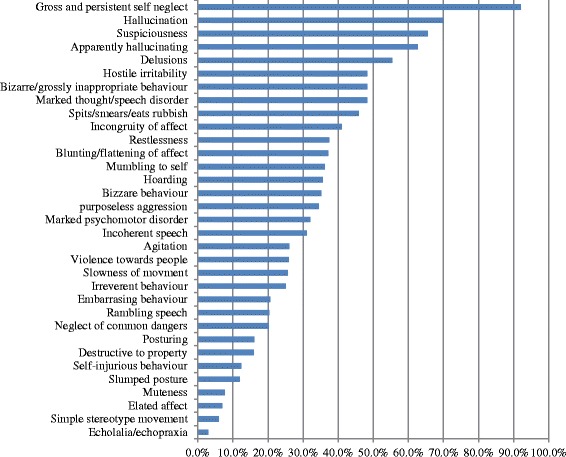
“…psychosis had unmet sexual needs, 84% had unmet physical health needs and 94% had unmet social activity needs and 12% of the homeless were at immediate risk of self-harm and 19% had a history of imprisonment and only 10.5% of those with psychosis had ever received treatment (Fekadu et al., 2014).”
InfluentialAn Item Response Theory Analysis of the Psychosis Screening Questionnaire in Ethiopia
Yared, M., Kim, H. H., Ametaj, A., Alemayehu, M., Stevenson, A., Milkias, B., Girma, E., Gelaye, B., & Teferra, S. (2024) · Early Intervention in Psychiatry · doi:10.1111/eip.13609
“Another study in Ethiopia also found hallucination to be the highest reported symptom among unhoused individuals, although they found a much higher proportion with 70% of people reporting hallucinations in the past year, followed by suspiciousness, which was around 65% (Fekadu et al. 2014).”
Self-citationPrevalence of Alcoholism in Adults Worldwide: Systematic Review with Meta-Analysis
Costa, D. D. A., Ribeiro, K. M., Parnaíba, A. L. D. O., de Oliveira, A. C. C. B., Barbosa, B. D. S., PAULA, G. L. F. R. D., Nogueira, P. S. F., & Coelho, M. D. M. F. (2025) · International Journal of Mental Health and Addiction · doi:10.1007/s11469-025-01467-5
Yohannes, K., Berhane, Y., Bradby, H., Herzig van Wees, S., & Målqvist, M. (2023) · Figshare · doi:10.6084/m9.figshare.23819829
Yohannes, K., Berhane, Y., Bradby, H., Herzig van Wees, S., & Målqvist, M. (2023) · Figshare · doi:10.6084/m9.figshare.23819832
Yohannes, K., Berhane, Y., Bradby, H., Herzig van Wees, S., & Målqvist, M. (2023) · Figshare · doi:10.6084/m9.figshare.23819826
Yohannes, K., Berhane, Y., Bradby, H., Herzig van Wees, S., & Målqvist, M. (2023) · Figshare · doi:10.6084/m9.figshare.23819823
Exploring the Multidimensional Impact of Homelessness on Health and Social Inclusion
(2026) · Frontiers research topics · doi:10.3389/978-2-8325-7339-6
Owusu, A. A., Baning, F., Gyimah, L., Nuamah, D., Xatse, J., Gyapong, A. O., Konlaan, R., Fiawotror, D. K., Mortotsi, B., & Asare, J. B. (2026) · PLOS mental health. · doi:10.1371/journal.pmen.0000510
The ocular health status of homeless or marginally housed adults: a scoping review
Kaleem, S., Xiao, F. (., Kaleem, S., Ali, M., Hatamnejad, A., & Lichter, M. (2026) · Expert Review of Ophthalmology · doi:10.1080/17469899.2026.2654221
“F e k a d u [ 16 ] 2014 E t h i o p i a C r o ss - s e c t i o n a l 217 90 % h a d m e n t a l o r a l c o h o l d i s o r d e r s a n d 30 % h a d p h y s i c a l d i s a b i l i t i e s , i n c l u d i n g v i s u a l i m p a i r m e n t .”
İNTİHAR ÖNCESİNDE KAYDEDİLEN VİDEOLARIN VE NOTLARIN İÇERİK ANALİZİ YÖNTEMİ İLE İNCELENMESİ
Bilgiseven, E., Özbayrak, G., Aktürk, İ., & Yaman, Ö. M. (2026) · Akademi Sosyal Bilimler Dergisi · doi:10.65083/asbider.1898303
Metadata
- Authors
- Fekadu, A., Hanlon, C., Gebre-Eyesus, E., Agedew, M., Solomon, H., Teferra, S., Gebre-Eyesus, T., Baheretibeb, Y., Medhin, G., Shibre, T., Workneh, A., Tegegn, T., Ketema, A., Timms, P., Thornicroft, G., & Prince, M.
- Affiliations
- King's College London (GB)
- Amanuel Mental Specialized Hospital (ET)
- Addis Ababa University (ET)
- St. Paul's Hospital Millennium Medical College (ET)
- University of Toronto (CA)
- South London and Maudsley NHS Foundation Trust (GB)
- Corresponding author
- Fekadu, Abebaw
- ORCID
- Venue
- BMC Medicine
- Published
- 2014-08-20
- Volume
- 12
- Issue
- 1
- Pages
- 138-138
- ISSN
- 1741-7015 (ISSN-L)
- PMC
- PMC4147171
- OpenAlex
- W2163576960
- Semantic Scholar
- 837cc65f80f95a3964876bcf42dd24fca8d67e1d
- Cited by
- 76
- References
- 42
- Citations by year
- 2026: 5 · 2025: 7 · 2024: 6 · 2023: 18 · 2022: 4 · 2021: 5 · 2020: 7 · 2019: 6 · 2018: 7 · 2017: 3 · 2016: 7 · 2014: 1
- FWCI
- 6.64
- Type
- journal article
- Language
- en
- Open access
- gold
- doi.org
- Locations
- BMC Medicine (publishedVersion, cc-by)
- Europe PMC (PubMed Central) (publishedVersion, cc-by)
- PubMed Central (publishedVersion, cc-by)
- PubMed (publishedVersion)
- Research Portal (King's College London) (submittedVersion, cc-by)
- TSpace (University of Toronto) (submittedVersion)
- Edinburgh Research Explorer (University of Edinburgh) (submittedVersion, cc-by)
- Funders
- National Institute for Health and Care Research (NF-SI-0611-10053)
- Topics
- Social Sciences › Sociology and Political Science › Homelessness and Social Issues
- Health Sciences › Medicine › Psychiatry and Mental health › Mental Health Treatment and Access
- Social Sciences › Psychology › Clinical Psychology › Psychiatric care and mental health services
- Keywords
- street homelessness, mental illness, psychosis, unmet needs, psychological distress, suicidality, alcoholism, chronic homelessness, physical disability, access to mental health care, Addis Ababa
- MeSH terms
- Adult, Aged, Alcoholism, Mental Disorders, Cross-Sectional Studies, Ethiopia, Female, Ill-Housed Persons, Humans, Male, Middle Aged, Suicide, Prevalence, Cost of Illness
About these checks
Registry, retraction, Cites and statistics results are computed, not judged, with one exception: a printed reference that no index lists is read once by a model before it counts as a citation error. Claims are extracted by a model and kept only when their quote appears verbatim in the text; each cited source is then checked, with a model’s help, for whether it says what the claim relies on. Those verdicts can be wrong — read the claim’s quote and the cited source before relying on one.
The claim verdicts this report counts are experimental: their accuracy is not yet measured.
A language model drew the claims from the paper on 2026-10-07, under version 3 of the claim definition (model deepseek-v4.1-flash, prompt extract-v3).
A second model labelled each claim on 2026-10-07 (model jev-1.13-20260917, definition revision gold-guideline-v0.2).
Cited sources are checked with a language model’s help (qwen3.8-omni-flash).
Statistics and arithmetic are recomputed, not judged.
Confidence bands are shown only for fields calibrated on our annotated test set. None is calibrated yet, so no band is shown.
What counts as a claim ›How we measure confidence ›How we check this ›
Are you an author, or do you see a problem with this page? Request a review
Data sources
Bibliographic data: Semantic Scholar, OpenAlex, Crossref.
Contains information from the Semantic Scholar Academic Graph Datasets, made available under the ODC Attribution License (ODC-BY 1.0).
Semantic Scholar’s data is described in: Kinney, R., et al. (2023). The Semantic Scholar Open Data Platform. arXiv:2301.10140.
