

The DOI matches its Crossref record; 56 of the 56 references it cites were found in a registry or an index.
There is no such thing as a validated prediction model
Open accessAbstract
BACKGROUND: Clinical prediction models should be validated before implementation in clinical practice. But is favorable performance at internal validation or one external validation sufficient to claim that a prediction model works well in the intended clinical context? MAIN BODY: We argue to the contrary because (1) patient populations vary, (2) measurement procedures vary, and (3) populations and measurements change over time. Hence, we have to expect heterogeneity in model performance between locations and settings, and across time. It follows that prediction models are never truly validated. This does not imply that validation is not important. Rather, the current focus on developing new models should shift to a focus on more extensive, well-conducted, and well-reported validation studies of promising models. CONCLUSION: Principled validation strategies are needed to understand and quantify heterogeneity, monitor performance over time, and update prediction models when appropriate. Such strategies will help to ensure that prediction models stay up-to-date and safe to support clinical decision-making.
Overview
The claims and statistics of this paper haven’t been checked yet.
Run the check — free, no account needed. It reads the open-access text and checks the sources it cites.
Integrity signals
Registry
Cites
Statistics
Figures
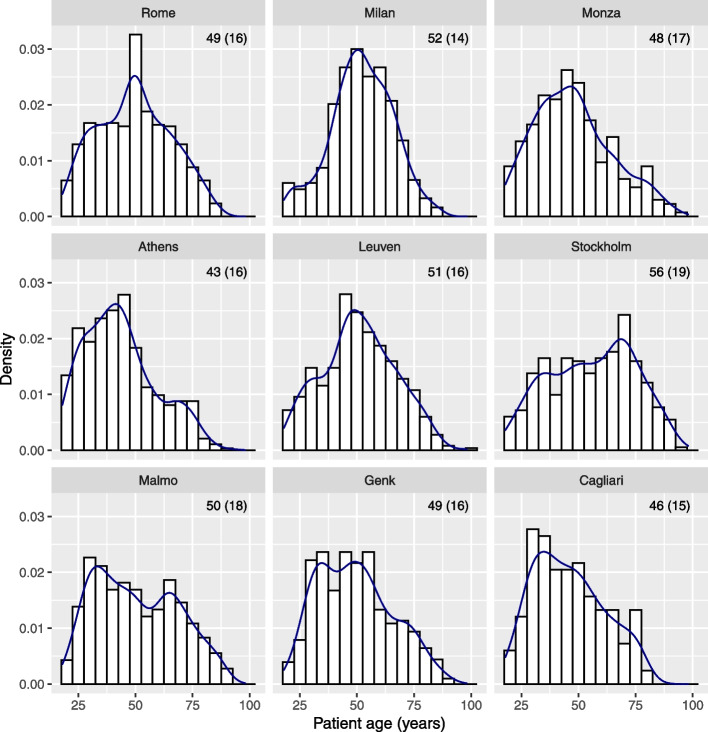
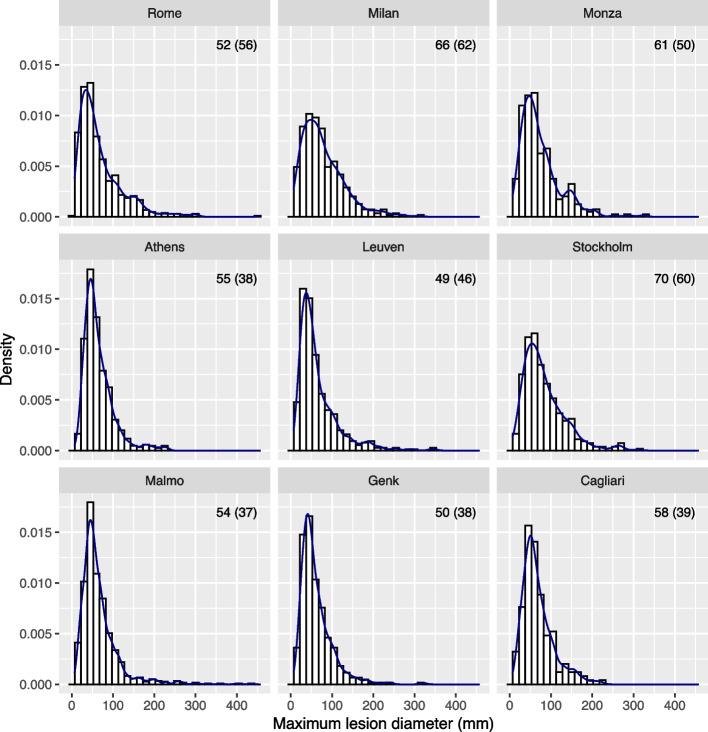
Verification
Claims the paper makes
The claims and statistics of this paper haven’t been checked yet.
Run the check — free, no account needed. It reads the open-access text and checks the sources it cites.
Claims other papers make about this one
Each is checked against this paper’s own text: does it say what the citing paper says it does?
The cited source says what the claim attributes to it.
In the citing paper
“There are widespread concerns that the performance of these tools in early validation studies may not reflect their use in practice.19,20”
From Uptake of Generative AI Integrated With Electronic Health Records in US Hospitals (2025) · cites this paper as [19]
In the citing paper
“Second, heterogeneity in model performance should be expected based on differences in populations and measurement procedures between locations, settings, or time periods.”
From Evaluation of performance measures in predictive artificial intelligence models to support medical decisions: overview and guidance (2025) · cites this paper as [91]
In the citing paper
“Miscalibration is often not just a problem of the model but a sign that we need to improve our understanding of the various contexts in which the model is validated and used.”
From Evaluation of performance measures in predictive artificial intelligence models to support medical decisions: overview and guidance (2025) · cites this paper as [91]
In the citing paper
“One successful external validation, however, does not establish transportability to many other settings, while such a requirement might lead to the selective reporting of validation data.100”
From Developing clinical prediction models: a step-by-step guide (2024) · cites this paper as [100]
In the citing paper
“Using data from 2001 to 2011, EuroSCORE was shown to consistently overestimate mortality and its calibration deteriorated over time.100”
From Developing clinical prediction models: a step-by-step guide (2024) · cites this paper as [100]
Self-check
Percentages, sums and reported differences re-computed from the paper’s own numbers.
The self-check needs the paper’s full text.
Citations
Cites
Moons, K. G. M., Altman, D. G., Reitsma, J. B., Ioannidis, J. P. A., Macaskill, P., Steyerberg, E. W., Vickers, A. J., Ransohoff, D. F., & Collins, G. S. (2015) · Annals of Internal Medicine · doi:10.7326/m14-0698 · Cited by 5,147
Self-citationInternal validation of predictive models
Steyerberg, E. W., Harrell, F. E., Borsboom, G. J. J. M., Eijkemans, M. J. C., Vergouwe, Y., & Habbema, J. D. F. (2001) · Journal of Clinical Epidemiology · doi:10.1016/s0895-4356(01)00341-9 · Cited by 2,746
Calibration: the Achilles heel of predictive analytics
On behalf of Topic Group ‘Evaluating diagnostic tests and prediction models’ of the STRATOS initiative, Van Calster, B., McLernon, D. J., van Smeden, M., Wynants, L., & Steyerberg, E. W. (2019) · BMC Medicine · doi:10.1186/s12916-019-1466-7 · Cited by 2,650
Anderson, D., Rodger, M., Ginsberg, J., Kearon, C., Gent, M., Turpie, A., Bormanis, J., Weitz, J., Chamberlain, M., Bowie, D., et al. (2000) · Thrombosis and Haemostasis · doi:10.1055/s-0037-1613830 · Cited by 1,651
Prognosis and prognostic research: validating a prognostic model
Altman, D. G., Vergouwe, Y., Royston, P., & Moons, K. G. M. (2009) · BMJ · doi:10.1136/bmj.b605 · Cited by 1,436
Prediction models need appropriate internal, internal-external, and external validation
Steyerberg, E. W., & Harrell, F. E. (2016) · Journal of Clinical Epidemiology · doi:10.1016/j.jclinepi.2015.04.005 · Cited by 1,304
Assessing the Generalizability of Prognostic Information
Justice, A. C., Covinsky, K. E., & Berlin, J. A. (1999) · Annals of Internal Medicine · doi:10.7326/0003-4819-130-6-199903160-00016 · Cited by 1,160
A calibration hierarchy for risk models was defined: from utopia to empirical data
Van Calster, B., Nieboer, D., Vergouwe, Y., De Cock, B., Pencina, M. J., & Steyerberg, E. W. (2016) · Journal of Clinical Epidemiology · doi:10.1016/j.jclinepi.2015.12.005 · Cited by 910
Self-citationUnderstanding receiver operating characteristic (ROC) curves
Fan, J., Upadhye, S., & Worster, A. (2006) · Canadian Journal of Emergency Medicine · doi:10.1017/s1481803500013336 · Cited by 843
Collins, G. S., Ogundimu, E. O., & Altman, D. G. (2016) · Statistics in Medicine · doi:10.1002/sim.6787 · Cited by 665
Cited by
Sorted by citations
Items 201–285 of 285
Rijk, M. H., Platteel, T. N., Geersing, G., Hollander, M., Dalmolen, B. L. G. P., Little, P. S., Rutten, F. H., van Smeden, M., & Venekamp, R. P. (2023) · Figshare · doi:10.6084/m9.figshare.24761522
Rijk, M. H., Platteel, T. N., Geersing, G., Hollander, M., Dalmolen, B. L. G. P., Little, P. S., Rutten, F. H., van Smeden, M., & Venekamp, R. P. (2024) · Figshare · doi:10.6084/m9.figshare.24761888
de Winkel, J., Maas, C. C. H. M., Roozenbeek, B., van Klaveren, D., & Lingsma, H. F. (2024) · Figshare · doi:10.6084/m9.figshare.26758733
Arakaki, D., Iwata, M., & Terasawa, T. (2024) · Figshare · doi:10.6084/m9.figshare.25506577
McLernon, D. J., Nath, M., Shingshetty, L., & Bhattacharya, S. (2025) · Elsevier eBooks · doi:10.1016/b978-0-443-26745-1.00011-6
External evaluation of the Manchester score in a contemporary SCLC cohort
Cunniffe, C., Sperrin, M., Walls, G., Blackhall, F. H., & Price, G. J. (2025) · Lung Cancer · doi:10.1016/j.lungcan.2025.108884
Chen, T., Tu, J., Liu, J., sun, H., Lu, Y., Chen, R., Hao, H., & Shen, C. (2026) · Research Square · doi:10.21203/rs.3.rs-8452508/v1
Tao, Z., Chen, L., Xu, Q., Zhu, Y., Ding, S., & Dong, Y. (2026) · BMC Public Health · doi:10.1186/s12889-026-26661-5
Liu, L., Nie, Z., Ganggayah, M. D., & Krishnasamy, S. (2026) · doi:10.2196/preprints.74956
Khantee, W., Somsuphaprungyos, S., & Natho, P. (2025) · International Conference on Robotics, Automation and Artificial Intelligence (RAAI) · doi:10.1109/raai67517.2025.11423419
Jiang, Y., & He, S. Y. (2026) · Journal of Transport & Health · doi:10.1016/j.jth.2026.102293
Lefebvre, O., Lemyre, F. C., Éthier, J., Chikouche, L. H., Amriou, L., Poenaru, D., & Vallières, M. (2026) · Journal of the American Medical Informatics Association · doi:10.1093/jamia/ocag034 · Cited by 1
Fu, L., Feng, K., Cui, C., Li, L., Zou, B. J., & Liu, N. (2026) · Frontiers in Cardiovascular Medicine · doi:10.3389/fcvm.2026.1753784
Lopeta, M., Palikša, S., Belevičius, J., Ukanis, M., Kasiliauskienė, L., Dziuge, L., Žutautaitė, I., Barisiene, M., Bakavičius, A., Mickevičius, R., et al. (2026) · World Journal of Urology · doi:10.1007/s00345-026-06396-z
Fraire-Zamora, J. J., Correa, N., Lattes, K., Popovic, M., & Rodríguez-Aranda, A. (2026) · Journal of Assisted Reproduction and Genetics · doi:10.1007/s10815-026-03869-3
Verheul, E. M., Doornkamp, F., Petrov, I., Siesling, S., Lingsma, H. F., Koppert, L. B., Vreven, L. W. A., Voogd, A. C., Karsten, M. M., Doppelbauer, L., et al. (2026) · Breast Cancer Research and Treatment · doi:10.1007/s10549-026-07958-w · Cited by 1
Yimer, N. B., Belsti, Y., Seifu, B. L., Goldstein, R., Teede, H. J., & Enticott, J. (2026) · Diagnostic and Prognostic Research · doi:10.1186/s41512-026-00229-8
Clinical AI/ML Model Testing and Validation
Pandey, A., Gupta, P., & Sehgal, N. K. (2026) · Springer eBooks · doi:10.1007/978-3-032-10808-1_6
Munir, L. Z., Cai, A., Cai, A., Debs, C., Jesudason, D., Leslie, A., Mutahar, D., Zaka, A., Kovoor, J. G., & Gupta, A. (2026) · International Journal of Cardiology Innovations · doi:10.1016/j.ijci.2026.100005
Schatzkästchen oder Büchse der Pandora? – Klinische Ethik und Künstliche Intelligenz
Beil, M., Janssens, U., & Fuest, K. (2026) · Springer eBooks · doi:10.1007/978-3-662-72378-4_16
Diagnostic predictive models for cancer-related fatigue: current evidence and future directions
Liang, F., Wang, M., Li, K., Lv, D., Qian, T., & Bu, Z. (2026) · Supportive Care in Cancer · doi:10.1007/s00520-026-10822-8
Hossain, M. M., Jahan, I., Ahmed, A. B., Sanu, M. A., & Rois, R. (2026) · Clinical Epidemiology and Global Health · doi:10.1016/j.cegh.2026.102407
Ensor, J., CALSTER, B. V., Barreñada, L., Wynants, L., & Perry, B. I. (2026) · Research Square · doi:10.21203/rs.3.rs-10767123/v1 · Cited by 1
AI-ECG performance for left ventricular systolic dysfunction: Reading beyond the pooled estimate
Goings, D. (2026) · International Journal of Cardiology Innovations · doi:10.1016/j.ijci.2026.100008
Groot, O. Q. (2026) · Clinical Orthopaedics and Related Research · doi:10.1097/corr.0000000000004024
Pereira, H. R., Diogo, V. S., Fonseca, J., Ferreira, H. A., & Prata, D. P. (2026) · Clinical Neuroradiology · doi:10.1007/s00062-026-01688-8
Cabezón‐Gutiérrez, L., Palka-Kotlowska, M., Custodio‐Cabello, S., Rosero-Rodriguez, A. C., & Chacón-Ovejero, B. (2026) · Frontiers in Oncology · doi:10.3389/fonc.2026.1830731
Koçak, B., & Meşe, İ. (2026) · European Radiology · doi:10.1007/s00330-026-12730-1
Validation of the UB‐ROSC Score for Predicting OHCA Survival in Chiayi City, Taiwan
Chang, W. T., Chou, C.-C., & Tsai, C.-C. (2026) · Emergency Medicine International · doi:10.1155/emmi/5871234
An Automated Listener-Effort Measure for ALS Generalizes across Diverse Platforms and ProtocolsPreprint
Roitberg, E. G., Trevisan, M. A., Peller, J., Sevlever, F., Aguirre, F., Shalom, D. E., Taitz, A., Bujía, G., Schwartz, J., Osik, J., et al. (2026) · Research Square · doi:10.21203/rs.3.rs-9849001/v1
Chen, Y., Li, W., Qiu, P., Zhong, R., Jiang, B., He, M., Chen, P., Liu, H., Gao, R., Li, X., et al. (2026) · Artificial Intelligence Surgery · doi:10.20517/ais.2026.27
Yang, Y., Wen, M., Huang, T., Liu, X., & Zeng, X. (2026) · Research Square · doi:10.21203/rs.3.rs-10261069/v1
Uribe, S. E., Carrasco‐Labra, A., Schwendicke, F., & Maldupa, I. (2026) · Caries Research · doi:10.1159/000553309
Yang, Q., Liu, F., Ren, C., Xiong, W., Zou, J., Yang, L., & Zeng, Q. (2026) · Clinical and Applied Thrombosis/Hemostasis · doi:10.1177/10760296261468959
Shao, L., Li, Y., Xu, C., Tai, H., Wang, L. Q., & Shi, J. (2026) · Research Square · doi:10.21203/rs.3.rs-10050782/v1
Advancing cardiovascular risk stratification in COPD: methodological gains and remaining gaps
Samarasinghe, Y., & Sadatsafavi, M. (2026) · European Respiratory Journal · doi:10.1183/13993003.00497-2026
Yue, Y., & Zhang, C. (2026) · Research Square · doi:10.21203/rs.3.rs-10135331/v1
Aly, F., Descallar, J., Robledo, K. P., Sundaresan, P., Miller, A., Vinod, S. K., & Holloway, L. C. (2026) · Radiotherapy and Oncology · doi:10.1016/j.radonc.2026.111714
Li, H., Zhang, Y., Li, W., & Lu, Y. (2026) · Lymphatic Research and Biology · doi:10.1177/15578585261470704
Birrenkott, D. A., Stubblefield, W. B., Altheimer, A., Ouadah, S. J., Griffey, R. T., Asaro, P. V., Beckman, J. A., Fermann, G. J., Keller, J. L., Storrow, A. B., et al. (2026) · Thrombosis Research · doi:10.1016/j.thromres.2026.109796
KİLİM, O. (2026) · Advances in Artificial Intelligence Research · doi:10.54569/aair.1998842
Oliveira, C. C., Jongen, C. A. M., Mikolić, A., Incrocci, L., Lingsma, H. F., Roobol, M. J., Korfage, I. J., Heemsbergen, W. D., van Klaveren, D., Romero, C., et al. (2026) · Translational Oncology · doi:10.1016/j.tranon.2026.102961
Shabaan, A. A., Kassem, I., Mahrous, A. I., Aboulmagd, I., Amer, I. A., Shaaban, A., Fathy, K. K., Ragab, R., El-Ghafour, M. A., Ibrahim, S., et al. (2026) · BMC Oral Health · doi:10.1186/s12903-026-09491-0
From Explanations to Reflective Questions in Human-AI Decision-Making
Fischer, S. W. S., Holmberg, L., Thill, S., & Schraffenberger, H. (2026) · Mensch und Computer (MuC) · doi:10.1145/3820253.3831391
de Jong, Y., Langenhuijsen, L. F. S., & van Diepen, M. (2026) · American Journal of Kidney Diseases · doi:10.1053/j.ajkd.2026.06.004
From prediction to decision: prediction-based decision rules and target trial emulation in ADHD
Garcia‐Argibay, M., Faraone, S. V., Chang, Z., Cortese, S., & Larsson, H. (2026) · The Lancet Psychiatry · doi:10.1016/s2215-0366(26)00227-0
Yeşilçay, H. B., & Aydın, A. A. (2026) · Current Oncology · doi:10.3390/curroncol33080491
Jasenecova, M., Harker, G., Adas, M. A., Qureshi, S., Duquenne, L. M., Wilson, M., Hensor, E. M. A., Emery, P., Mankia, K. S., Bechman, K., et al. (2026) · EULAR Rheumatology Open · doi:10.1016/j.ero.2026.100228
Zhang, G., Yang, C., Jiang, S., Li, X., & Duan, H. (2026) · Research Square · doi:10.21203/rs.3.rs-10708009/v1
Liu, F., Pan, Y., Ding, Y., & Wang, D. (2026) · Frontiers in Pediatrics · doi:10.3389/fped.2026.1902940
Rahim, A. A. A., Abdullah, N. E., Shauri, R. L. A., & Janin, Z. (2026) · IEEE International Conference on Innovation, Ethics & Emerging Tech in Engineering and Computing Education (IE2C) · doi:10.1109/ie2c69620.2026.11663032
Nie, J., Xu, T., Wang, R., Zhou, W., Tong, Y., Chen, J., Zhang, X., & Song, Y. (2026) · Research Square · doi:10.21203/rs.3.rs-10593383/v1
Segawa, Y., Okamoto, A., Sumiyoshi, S., Watase, H., Iwata, M., Tomita, A., & Terasawa, T. (2026) · Journal of the Formosan Medical Association · doi:10.1016/j.jfma.2026.08.053
Chen, Q., Chen, J., Xie, C., Chen, Y., Zheng, S., Shen, G., & Yang, W. (2026) · Research Square · doi:10.21203/rs.3.rs-10528907/v1
Huo, B., Chartash, D., Tsang, L., Collins, P. G. S., Cacciamani, G. E., Ruurda, J. P. H., Mayol, J. M., Hinchliffe, R. J., & Guyatt, G. (2026) · Nature Medicine · doi:10.1038/s41591-026-04647-5
Larsen, M. S., Munch, P. V., Heide‐Jørgensen, U., Iversen, L. H., & Christiansen, C. F. (2026) · BJS Open · doi:10.1093/bjsopen/zrag124
Temporal and cross-site validation of an AI system for self-harm detection
Rozova, V. S., Chen, L., Witt, K., Conway, D. M., Robinson, J., & Verspoor, K. M. (2026) · PLOS Digital Health · doi:10.1371/journal.pdig.0001667
Moran, L., Dhungana, R. R., Dawadi, S., Rolnik, D. L., Wang, R., Mousa, A., Tay, C. T., Palmer, K. R., Mol, B. W., Teede, H. J., et al. (2026) · Computers in Biology and Medicine · doi:10.1016/j.compbiomed.2026.111932
Qin, L.-H., Lü, Y.-X., Liang, W., Song, R., Chen, P.-Y., Xu, W., Zeng, G., Chen, J., Zhao, Y., & Long, L. (2026) · Academic Radiology · doi:10.1016/j.acra.2026.08.110
Cao, R., & An, L. (2026) · Research Square · doi:10.21203/rs.3.rs-10843496/v1
Ilyas, R., Putri, D. I. P., Apriani, L., & istiqammah, I. (2026) · Research Square · doi:10.21203/rs.3.rs-10736091/v1
Chi, H., Liu, X., Yan, Y., Wang, L., Luo, P., Su, L., Jiang, L., Zhou, X., Huang, G., Jiang, Y., et al. (2026) · Genes & Diseases · doi:10.1016/j.gendis.2026.102480 · Cited by 1
Machine learning–enabled vibrational spectroscopy for translational bioclinical applications
Egbewole, B. I., Ilesanmi, T. M., Olatunde, S. K., Bamidele, D. B., Ogbonna, C. E., & Olawade, D. B. (2026) · Microchemical Journal · doi:10.1016/j.microc.2026.119784
Amorocho-Morales, J. D., Peláez, S., Forero, J. F., Liscano, J., & Correa‐Morales, J. E. (2026) · Research Square · doi:10.21203/rs.3.rs-10543145/v1
Sergeev, S., Diakova, I., & Nadirashvili, L. (2026) · Journal of IVF-Worldwide · doi:10.46989/001c.171311
Gokhale, S., Belsti, Y., Taylor, D., Zeps, N., Nagpurkar, M., Teede, H., & Enticott, J. (2026) · Archives of Gerontology and Geriatrics Plus · doi:10.1016/j.aggp.2026.100338
Reproducibility in biomedical research
Zhong, J., D’Angelo, D., Lyu, C., Xu, I., Enns, P. K., Wang, F., & Kaushal, R. (2026) · Nature Medicine · doi:10.1038/s41591-026-04667-1
Zhang, X., Li, H., & Bao, S. (2026) · Integrative Psychological and Behavioral Science · doi:10.1007/s12124-026-10032-1
Zygouris, N. C., Styliaras, S. K., Vlachos, F. M., Evaggelos Spyrou, A., Patrikelis, P., Messinis, L., & Nasios, G. (2026) · Journal of Integrative Neuroscience · doi:10.31083/jin52375
Beyond CEA and CA19-9: Is the TDCP index ready for clinical use in rectal cancer?
Ando, M., Matsumura, T., & Fukami, Y. (2026) · Surgical Oncology · doi:10.1016/j.suronc.2026.102583
He, X., Wang, Y., Chen, Q., Yang, H., Geng, Z., Liu, J., Yin, X., Rong, Y., zhang, S., WANG, G., et al. (2026) · Research Square · doi:10.21203/rs.3.rs-10702588/v1
der Vorst, A. V., Grimberg, C., van Maaren, M. C., Hueting, T. A., Weltens, C. G., Siesling, S., & Groothuis‐Oudshoorn, C. G. M. (2026) · The Breast · doi:10.1016/j.breast.2026.104944
Topal, C. S., Duymaz, Y. K., Sönmez, B., & Ülgür, H. Ş. (2026) · Diagnostics · doi:10.3390/diagnostics16193258
Wang, L., Wang, M., Chen, Z., Chuanlin, C., Ma, Y., Sui, M., & 应晓华 (2026) · Research Square · doi:10.21203/rs.3.rs-10892305/v1
Sultan, M. A. (2026) · SSRN Electronic Journal · doi:10.2139/ssrn.7624476
‘From exacerbation counts to calibrated risk: lessons from ACCEPT 3.0-UK for COPD prediction models’
Antón, A. J., Romero, P., & Navarrete, B. A. (2026) · Thorax · doi:10.1136/thorax-2026-225547
Flores, E., Meza, D., Gonzales, R., Agudelo-Santos, C., Sosa, L., Espinoza, L. C., & Zablah, I. (2026) · Diagnostics · doi:10.3390/diagnostics16213440
A Peritonitis Risk Rate Prediction System for Pediatric Peritoneal Dialysis with eXplainable AIPreprint
Vinarti, R. A., Fahlevi, R., Anggraeni, W., Riksakomara, E., Ismail, F. K., Tejaputri, N. A., Kurnia, M. A. K., Andika, A., & Astutik, E. (2026) · Research Square · doi:10.21203/rs.3.rs-11185474/v1
Yang, J., Tang, J., & He, J. (2026) · iScience · doi:10.1016/j.isci.2026.117725
Ngana, L. P., Wojtusiak, J., Haghighathoseini, A., Patel, B., & Desai, D. (2026) · PLOS Digital Health · doi:10.1371/journal.pdig.0001793
Guniganti, S. K., & Saketh, B. V. (2026) · Indian Journal of Critical Care Medicine · doi:10.5005/jp-journals-10071-25262
Duquenne, P., Liposits, G. I., Wing-Lok, C., Akagündüz, B., Beauplet, B., & Pilleron, S. (2026) · Journal of Geriatric Oncology · doi:10.1016/j.jgo.2026.104666
Zhao, T., Gao, F., He, X., Jiang, W., & Hou, J. (2026) · Research Square · doi:10.21203/rs.3.rs-11307418/v1
Metadata
- Authors
- Van Calster, B., Steyerberg, E. W., Wynants, L., & van Smeden, M.
- Affiliations
- KU Leuven (BE)
- Maastricht University (NL)
- Venue
- BMC Medicine
- Published
- 2023-02-24
- Volume
- 21
- Issue
- 1
- Pages
- 70-70
- ISSN
- 1741-7015 (ISSN-L)
- PMC
- PMC9951847
- OpenAlex
- W4321782827
- Cited by
- 286
- References
- 56
- Citations by year
- 2026: 99 · 2025: 91 · 2024: 67 · 2023: 29
- FWCI
- 58.07
- Type
- journal article
- Language
- en
- Open access
- gold
- doi.org
- Locations
- BMC Medicine (publishedVersion, cc-by)
- PubMed Central (publishedVersion, cc-by)
- PubMed (publishedVersion)
- Research Publications (Maastricht University) (publishedVersion, cc-by)
- Leiden Repository (Leiden University) (submittedVersion, cc-by)
- Lirias (KU Leuven) (submittedVersion, other-oa)
- DOAJ (DOAJ: Directory of Open Access Journals) (submittedVersion, cc-by-sa)
- Utrecht University Repository (Utrecht University) (submittedVersion, other-oa)
- Funders
- Fonds Wetenschappelijk Onderzoek (G097322N)
- Topics
- Physical Sciences › Mathematics › Statistics and Probability › Statistical Methods in Epidemiology
- Health Sciences › Health Professions › Health Information Management › Artificial Intelligence in Healthcare
- Social Sciences › Decision Sciences › Statistics, Probability and Uncertainty › Meta-analysis and systematic reviews
- Keywords
- clinical prediction model, model validation, external validation, internal validation, model updating, clinical decision support
About these checks
Registry, retraction, Cites and statistics results are computed, not judged, with one exception: a printed reference that no index lists is read once by a model before it counts as a citation error. Claims are extracted by a model and kept only when their quote appears verbatim in the text; each cited source is then checked, with a model’s help, for whether it says what the claim relies on. Those verdicts can be wrong — read the claim’s quote and the cited source before relying on one.
Statistics and arithmetic are recomputed, not judged.
Confidence bands are shown only for fields calibrated on our annotated test set. None is calibrated yet, so no band is shown.
What counts as a claim ›How we measure confidence ›How we check this ›
Are you an author, or do you see a problem with this page? Request a review
