

Severe falciparum malaria in pregnancy in Southeast Asia: a multi-centre retrospective cohort study
Open accessThe DOI matches its Crossref record; 48 of the 48 references it cites were found in a registry or an index.
Abstract
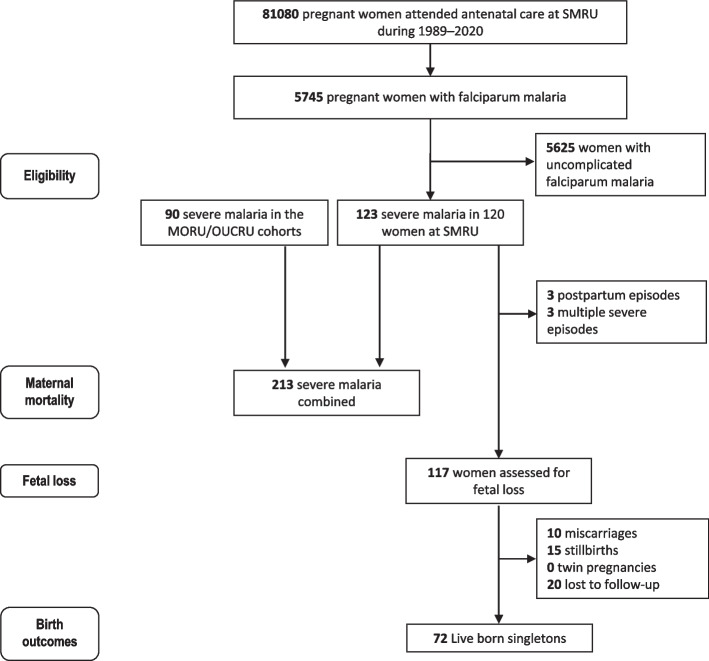
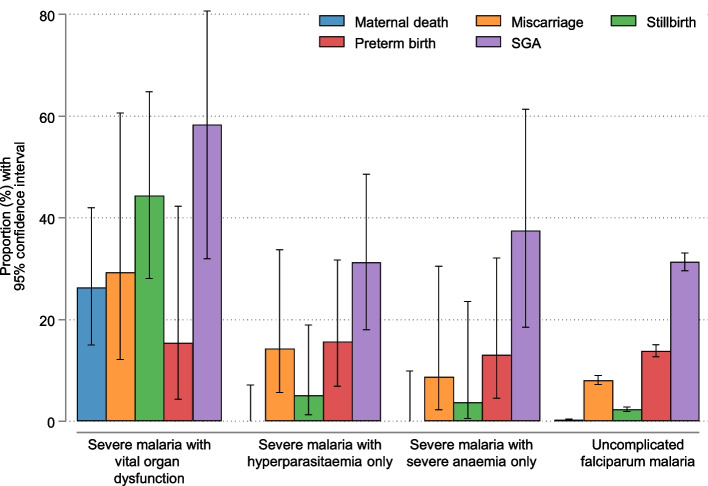
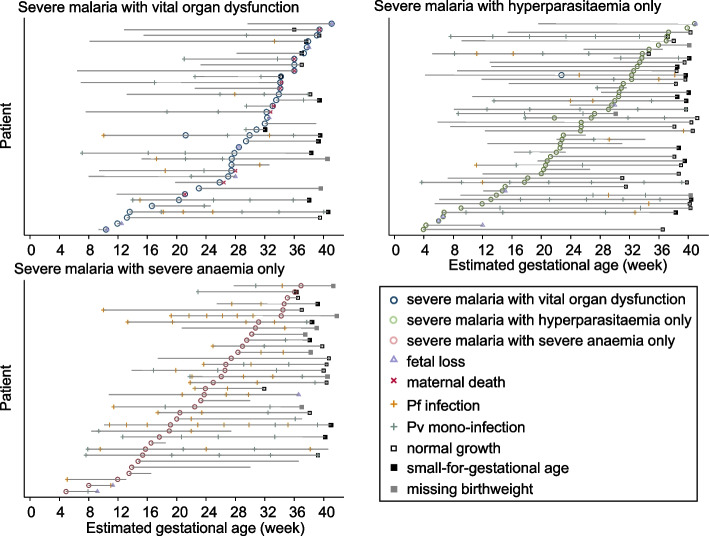
Background: Severe malaria in pregnancy causes maternal mortality, morbidity, and adverse foetal outcomes. The factors contributing to adverse maternal and foetal outcomes are not well defined. We aimed to identify the factors predicting higher maternal mortality and to describe the foetal mortality and morbidity associated with severe falciparum malaria in pregnancy. Methods: A retrospective cohort study was conducted of severe falciparum malaria in pregnancy, as defined by the World Health Organization severe malaria criteria. The patients were managed prospectively by the Shoklo Malaria Research Unit (SMRU) on the Thailand-Myanmar border or were included in hospital-based clinical trials in six Southeast Asian countries. Fixed-effects multivariable penalised logistic regression was used for analysing maternal mortality. Results: We included 213 (123 SMRU and 90 hospital-based) episodes of severe falciparum malaria in pregnancy managed between 1980 and 2020. The mean maternal age was 25.7 (SD 6.8) years, and the mean gestational age was 25.6 (SD 8.9) weeks. The overall maternal mortality was 12.2% (26/213). Coma (adjusted odds ratio [aOR], 7.18, 95% CI 2.01–25.57, p = 0.0002), hypotension (aOR 11.21, 95%CI 1.27–98.92, p = 0.03) and respiratory failure (aOR 4.98, 95%CI 1.13–22.01, p = 0.03) were associated with maternal mortality. Pregnant women with one or more of these three criteria had a mortality of 29.1% (25/86) (95%CI 19.5 to 38.7%) whereas there were no deaths in 88 pregnant women with hyperparasitaemia (> 10% parasitised erythrocytes) only or severe anaemia (haematocrit < 20%) only. In the SMRU prospective cohort, in which the pregnant women were followed up until delivery, the risks of foetal loss (23.3% by Kaplan–Meier estimator, 25/117) and small-for-gestational-age (38.3%, 23/60) after severe malaria were high. Maternal death, foetal loss and preterm birth occurred commonly within a week of diagnosis of severe malaria. Conclusions: Vital organ dysfunction in pregnant women with severe malaria was associated with a very high maternal and foetal mortality whereas severe anaemia or hyperparasitaemia alone were not associated with poor prognosis, which may explain the variation of reported mortality from severe malaria in pregnancy. Access to antenatal care must be promoted to reduce barriers to early diagnosis and treatment of both malaria and anaemia.
Overview
The claims and statistics of this paper haven’t been checked yet.
Free: it reads the open-access text and checks the first 5 claims that cite a source we can check. Create a free account to check every claim.
Integrity signals
Registry
Cites
Statistics
Figures
Verification
Claims the paper makes
The claims and statistics of this paper haven’t been checked yet.
Free: it reads the open-access text and checks the first 5 claims that cite a source we can check. Create a free account to check every claim.
Claims other papers make about this one
Each is checked against this paper’s own text: does it say what the citing paper says it does?
The source backs part of the claim, not all of it — or backs it for a different population, condition or comparison.
In the citing paper
“Moreover, infants born to mothers with malaria have a higher risk of malaria infection and morbidity in early life [16–18].”
From Current update on malaria in pregnancy: a systematic review (2025) · cites this paper as [18]
Experimental — accuracy not yet measuredThe source backs part of the claim, not all of it — or backs it for a different population, condition or comparison.
In the citing paper
“The fetus and newborn are at risk of intrauterine growth retardation, low birth weight, premature birth, and increased neonatal mortality.”
From Current update on malaria in pregnancy: a systematic review (2025) · cites this paper as [18]
Experimental — accuracy not yet measuredThe source backs part of the claim, not all of it — or backs it for a different population, condition or comparison.
In the citing paper
“Maternal complications include severe anemia, increased susceptibility to other infections, and a higher mortality rate.”
From Current update on malaria in pregnancy: a systematic review (2025) · cites this paper as [18]
Experimental — accuracy not yet measured
Self-check
Percentages, sums and reported differences re-computed from the paper’s own numbers.
The self-check needs the paper’s full text.
Citations
Cites
The third international consensus definitions for sepsis and septic shock (Sepsis-3).
Singer, M., Deutschman, C. S., Seymour, C. W., Shankar-Hari, M., Annane, D., Bauer, M., Bellomo, R., Bernard, G. R., Chiche, J.-D., Coopersmith, C. M., et al. (2016) · JAMA · doi:10.1001/jama.2016.0287 · Cited by 28,250 · cited 1×
“The three risk cri - teria identified in this study coincide with those used in the quick SOFA score for screening for sepsis [51], highlighting the importance of these three signs in life-threatening infections.”
Villar, J., Ismail, L. C., Victora, C. G., Ohuma, E. O., Bertino, E., Altman, D. G., Lambert, A., Papageorghiou, A. T., Carvalho, M., Jaffer, Y. A., et al. (2014) · The Lancet · doi:10.1016/s0140-6736(14)60932-6 · Cited by 2,281 · cited 1×
“Small-for-gestational-age (SGA) was defined as birthweight < 10% using the international standard [23].”
MethodMetaprop: a Stata command to perform meta-analysis of binomial data
Nyaga, V. N., Arbyn, M., & Aerts, M. (2014) · Archives of Public Health · doi:10.1186/2049-3258-72-39 · Cited by 2,139 · cited 1×
“We used metaprop command in Stata [27].”
International Statistical Classification of Diseases and Related Health Problems 10th Revision
(2013) · A Companion to the Classification of Mental Disorders · doi:10.1093/med/9780199669493.005.0005 · Cited by 2,059
White, N. J., Pukrittayakamee, S., Hien, T. T., Faiz, M. A., Mokuolu, O. A., & Dondorp, A. M. (2014) · The Lancet · doi:10.1016/s0140-6736(13)60024-0 · Cited by 1,123
Self-citationWorld Health Organization (2000) · Transactions of the Royal Society of Tropical Medicine and Hygiene · doi:10.1016/s0035-9203(00)90300-6 · Cited by 1,085 · cited 2×
“Life-threatening anaemia ( Hb 4 g/dL) [7] was uncommon in this study (2.5%, 5/198).”
BackgroundInfluentialSevere falciparum malaria. World Health Organization, Communicable Diseases Cluster.
(2000) · PubMed · Cited by 1,079
Artesunate versus quinine for treatment of severe falciparum malaria: a randomised trial.
(2005) · The Lancet · doi:10.1016/s0140-6736(05)67176-0 · Cited by 1,050
Dondorp, A. M., Fanello, C. I., Hendriksen, I. C., Gomes, E., Seni, A., Chhaganlal, K. D., Bojang, K., Olaosebikan, R., Anunobi, N., Maitland, K., et al. (2010) · The Lancet · doi:10.1016/s0140-6736(10)61924-1 · Cited by 1,022
Self-citationWhite, N. J. (2018) · Malaria Journal · doi:10.1186/s12936-018-2509-9 · Cited by 563 · cited 5×
“Anaemia is also very common in pregnant women and is often multifactorial [41].”
BackgroundInfluentialSelf-citation(2014) · Tropical Medicine & International Health · doi:10.1111/tmi.12313_2 · Cited by 543
How should variable selection be performed with multiply imputed data?
Wood, A. M., White, I. R., & Royston, P. (2008) · Statistics in Medicine · doi:10.1002/sim.3177 · Cited by 485 · cited 1×
“A multivariable model for predicting maternal mortality was built by backward elimination using p 0.05 by Wald test as the cut-off [25].”
MethodInfluentialA Controlled Trial of Artemether or Quinine in Vietnamese Adults with Severe Falciparum Malaria
Hien, T. T., Day, N. P. J., Phu, N. H., Mai, N. T. H., Chau, T. T. H., Loc, P. P., Sinh, D. X., Chuong, L. V., Vinh, H., Waller, D., et al. (1996) · New England Journal of Medicine · doi:10.1056/nejm199607113350202 · Cited by 406 · cited 2×
“…compared intravenous artesunate and intravenous quinine in Bangladesh, India, Indonesia and Myanmar [4]; the AQ study compared intramuscular artemether and intramuscular quinine in Vietnam [20], and the AAV study compared intramuscular artesunate and intramuscular artemether also in Vietnam [21].”
BackgroundResultSelf-citationThe epidemiology of severe malaria in an area of low transmission in Thailand.
Luxemburger, C., Ricci, F., Nosten, F., Raimond, D., Bathet, S., & White, N. J. (1997) · Transactions of the Royal Society of Tropical Medicine and Hygiene · doi:10.1016/s0035-9203(97)90066-3 · Cited by 299 · cited 3×
“In pregnancy, the risk of developing severe malaria is higher than in non-pregnant women in both high- and low-transmission areas [7] (2–3 times higher in low-transmission areas [8]), and the mortality of severe malaria is usually reported as higher in pregnancy [2, 9, 10].”
BackgroundSelf-citationWhite, N. J. (2022) · Malaria Journal · doi:10.1186/s12936-022-04301-8 · Cited by 215 · cited 8×
“…between parasite density and mortality is complex and depends on background immunity, stage of parasite development at presentation and access to artemisinin-containing antimalarials, which prevent circulating young ring stage parasites maturing and resulting in red cell sequestration [2, 3].”
BackgroundInfluentialSelf-citationQUININE AND SEVERE FALCIPARUM MALARIA IN LATE PREGNANCY
Looareesuwan, S., White, N. J., Karbwang, J., Turner, R. C., Phillips, R. E., Kietinun, S., Rackow, C., & Warrell, D. A. (1985) · The Lancet · doi:10.1016/s0140-6736(85)90056-x · Cited by 208 · cited 1×
“Increased risks of foetal loss and SGA after severe malaria in pregnancy, particularly among those with organ dysfunction, were reported previously in a small case series [30].”
BackgroundSelf-citationMalaria in pregnancy in the Asia-Pacific region
Rijken, M. J., McGready, R., Boel, M. E., Poespoprodjo, R., Singh, N., Syafruddin, D., Rogerson, S., & Nosten, F. (2012) · The Lancet Infectious Diseases · doi:10.1016/s1473-3099(11)70315-2 · Cited by 181 · cited 5×
“Discussion Severe falciparum malaria is an important cause of maternal death in malaria-endemic areas, particularly in lower-transmission areas such as those in most of Asia [2, 11].”
BackgroundMethodInfluentialSelf-citationEffects of Malaria during Pregnancy on Infant Mortality in an Area of Low Malaria Transmission
Luxemburger, C. (2001) · American Journal of Epidemiology · doi:10.1093/aje/154.5.459 · Cited by 178 · cited 2×
“In the refugee camps, more than 90% of women attended antenatal care [18].”
BackgroundMcGready, R., Cho, T., Keo, N. K., Thwai, K. L., Villegas, L., Looareesuwan, S., White, N. J., & Nosten, F. (2001) · Clinical Infectious Diseases · doi:10.1086/324349 · Cited by 178 · cited 1×
“In a study of 418 pregnant women with malaria at SMRU, only 2% did not have anaemia (haematocrit < 30%) detected between day 0 and day 42 [42].”
BackgroundSelf-citationCarrara, V. I., Sirilak, S., Thonglairuam, J., Rojanawatsirivet, C., Proux, S., Gilbos, V., Brockman, A., Ashley, E. A., McGready, R., Krudsood, S., et al. (2006) · PLoS Medicine · doi:10.1371/journal.pmed.0030183 · Cited by 146 · cited 3×
“During the latter part of this 31-year period, there was an active and highly successful programme of malaria elimination [17]: the last case of severe falciparum malaria in a pregnant woman was reported in 2013.”
BackgroundSelf-citationWHO Technical Consultation on Postpartum and Postnatal Care
Zisovska, E. (2011) · Goce Delchev University Repository (Goce Delčev University of Štip) · Cited by 146
Epidemiology of malaria in pregnancy in central India.
(1999) · Europe PMC (PubMed Central) · Cited by 140
jomo: A Flexible Package for Two-level Joint Modelling Multiple Imputation
Quartagno, M., Grund, S., & Carpenter, J. (2019) · The R Journal · doi:10.32614/rj-2019-028 · Cited by 140 · cited 1×
“For missingness, joint-modelling multilevel multiple imputation was conducted using jomo command in R [24] (Additional file 3).”
MethodA Simple Score to Predict the Outcome of Severe Malaria in Adults
Hanson, J., Lee, S. J., Mohanty, S., Faiz, M. A., Anstey, N. M., Charunwatthana, P., Yunus, E. B., Mishra, S. K., Tjitra, E., Price, R. N., et al. (2010) · Clinical Infectious Diseases · doi:10.1086/649928 · Cited by 135 · cited 2×
“Certain clinical or labora - tory findings (e.g. coma, acidosis) are associated with an increased risk of death within the broader definition of severe malaria [5, 9, 14] but this has not been studied specifically in pregnancy.”
BackgroundSelf-citationKrishnan, A., & Karnad, D. R. (2003) · Critical Care Medicine · doi:10.1097/01.ccm.0000079603.82822.69 · Cited by 128
Randomized Comparison of Artesunate and Quinine in the Treatment of Severe Falciparum Malaria
Newton, P. N., Angus, B. J., Chierakul, W., Dondorp, A., Ruangveerayuth, R., Silamut, K., Teerapong, P., Suputtamongkol, Y., Looareesuwan, S., & White, N. J. (2003) · Clinical Infectious Diseases · doi:10.1086/375059 · Cited by 115 · cited 2×
“Certain clinical or labora - tory findings (e.g. coma, acidosis) are associated with an increased risk of death within the broader definition of severe malaria [5, 9, 14] but this has not been studied specifically in pregnancy.”
BackgroundSelf-citationPrediction of outcome in adults with severe falciparum malaria: a new scoring system
Mishra, S. K., Panigrahi, P., Mishra, R., & Mohanty, S. (2007) · Malaria Journal · doi:10.1186/1475-2875-6-24 · Cited by 77 · cited 2×
“Certain clinical or labora - tory findings (e.g. coma, acidosis) are associated with an increased risk of death within the broader definition of severe malaria [5, 9, 14] but this has not been studied specifically in pregnancy.”
BackgroundOral Artesunate in the Treatment of Uncomplicated Hyperparasitemic Falciparum Malaria
Luxemburger, C., Nosten, F., Shotar, Raimond, D., Chongsuphajaisiddhi, T., & White, N. J. (1995) · The American Journal of Tropical Medicine and Hygiene · doi:10.4269/ajtmh.1995.53.522 · Cited by 75 · cited 2×
“Previous studies have shown that uncomplicated hyperparasitaemia can be treated successfully with oral ACTs without mortality [19, 45], although longer courses of artemisinin derivatives (5–7 days) [19] and close monitoring are required.”
BackgroundMethodSelf-citationSevere and Complicated Falciparum Malaria in Melanesian Adults in Papua New Guinea
Lalloo, D. G., Trevett, A. J., Paul, M., Korinhona, A., Laurenson, I. F., Mapao, J., Nwokolo, N., Danga-Christian, B., Black, J., Saweri, A., et al. (1996) · The American Journal of Tropical Medicine and Hygiene · doi:10.4269/ajtmh.1996.55.119 · Cited by 70
Burden of malaria in pregnancy in Jharkhand State, India
Hamer, D. H., Singh, M. P., Wylie, B. J., Yeboah-Antwi, K., Tuchman, J., Desai, M., Udhayakumar, V., Gupta, P., Brooks, M. I., Shukla, M. M., et al. (2009) · Malaria Journal · doi:10.1186/1475-2875-8-210 · Cited by 67
Low seroprevalence of HIV and syphilis in pregnant women in refugee camps on the Thai-Burma border.
Plewes, K., Lee, T., Kajeechewa, L., Thwin, M. M., Lee, S. J., Carrara, V. I., Nosten, F., & Mcgready, R. (2008) · International Journal of STD & AIDS · doi:10.1258/ijsa.2008.008034 · Cited by 66 · cited 1×
“Although co-morbidities that are known to be associated with maternal mortality were not measurable except for eclampsia/pre-eclampsia, HIV infection was an unlikely comorbidity on the Thailand-Myanmar border where the seroprevalence has been reported as 0.5% [46].”
BackgroundInfluentialSelf-citationTreating Severe Malaria in Pregnancy: A Review of the Evidence
Kovacs, S. D., Rijken, M. J., & Stergachis, A. (2015) · Drug Safety · doi:10.1007/s40264-014-0261-9 · Cited by 66 · cited 2×
“In contrast to the large prospective series of severe malaria in children and non-pregnant adults that have been reported [4, 12], there are a few studies on severe malaria in pregnancy [13].”
MethodResultSelf-citationPrice, R. N., Luxemburger, C., van Vugt, M., Nosten, F. H., Kham, A., Simpson, J. A., Looareesuwan, S., Chongsuphajaisiddhi, T., & White, N. J. (1998) · Transactions of the Royal Society of Tropical Medicine and Hygiene · doi:10.1016/s0035-9203(98)90750-7 · Cited by 64 · cited 3×
“Pregnant women with hyperparasitaemia or severe anaemia only were systematically treated with oral antimalarials at SMRU consistent with treatment evidenced in non-pregnant patients in the same setting [19, 45], but even without intravenous treatment, these two groups had better prognosis than those with other severe…”
BackgroundMethodResultSelf-citationPhu, N. H., Tuan, P. Q., Day, N., Mai, N. T., Chau, T. T., Chuong, L. V., Sinh, D. X., White, N. J., Farrar, J., & Hien, T. T. (2010) · Malaria Journal · doi:10.1186/1475-2875-9-97 · Cited by 62 · cited 2×
“…compared intravenous artesunate and intravenous quinine in Bangladesh, India, Indonesia and Myanmar [4]; the AQ study compared intramuscular artemether and intramuscular quinine in Vietnam [20], and the AAV study compared intramuscular artesunate and intramuscular artemether also in Vietnam [21].”
BackgroundResultSelf-citationClinical course of malaria in pregnancy — a prospective controlled study from India
Sholapurkar, S. L., Gupta, A. N., & Mahajan, R. C. (1988) · Transactions of the Royal Society of Tropical Medicine and Hygiene · doi:10.1016/0035-9203(88)90124-1 · Cited by 59
Kochar, D. K., Shubhakaran, Kumawat, B. L., Kochar, S. K., Halwai, M. A., Makkar, R. K., Joshi, A., & Thanvi, I. (2002) · PubMed · Cited by 58
Rijken, M., Rijken, J., Papageorghiou, A., Kennedy, S., Visser, G., Nosten, F., & McGready, R. (2011) · BJOG: An International Journal of Obstetrics & Gynaecology · doi:10.1111/j.1471-0528.2010.02880.x · Cited by 51 · cited 1×
“As a sensitivity analysis, assessment of birthweight was also conducted only for those who were weighed within 3 days of the date of birth [26].”
MethodSelf-citationPoespoprodjo, J. R., Fobia, W., Kenangalem, E., Lampah, D. A., Sugiarto, P., Tjitra, E., Anstey, N. M., & Price, R. N. (2014) · PLoS ONE · doi:10.1371/journal.pone.0084976 · Cited by 48
The epidemiology of postpartum malaria: a systematic review
Boel, M. E., Rijken, M. J., Brabin, B. J., Nosten, F., & McGready, R. (2012) · Malaria Journal · doi:10.1186/1475-2875-11-114 · Cited by 45 · cited 1×
“Although the placenta, the site of sequestration of falciparum malaria parasites, no longer exists after delivery, hormonal changes take place over the several weeks of postpartum period, and little is known about the recovery of immunity which has been altered by pregnancy [47].”
BackgroundSelf-citationChandrasiri, U. P., Randall, L. M., Saad, A. A., Bashir, A. M., Rogerson, S. J., & Adam, I. (2014) · The Journal of Infectious Diseases · doi:10.1093/infdis/jit646 · Cited by 44
Concomitant Bacteremia in Adults With Severe Falciparum Malaria
Phu, N. H., Day, N., Tuan, P. Q., Hoang, N. T., Chau, T. T. H., Chuong, L. V., Vinh, H., Loc, P. P., Sinh, D. X., Hoa, N. T. T., et al. (2020) · Clinical Infectious Diseases · doi:10.1093/cid/ciaa191 · Cited by 43 · cited 1×
“sepsis with coincidental parasitaemia) is less likely [3, 49].”
BackgroundSelf-citationLeopold, S. J., Watson, J. A., Jeeyapant, A., Simpson, J. A., Phu, N. H., Hien, T. T., Day, N., Dondorp, A. M., & White, N. J. (2019) · PLoS Medicine · doi:10.1371/journal.pmed.1002858 · Cited by 37 · cited 1×
“Similar findings have been reported previously in both children and adults showing that coma, increased blood urea, metabolic acidosis, shock and pulmonary oedema were associated with increased mortality [40].”
ResultSelf-citationAssessment of perinatal outcomes of pregnant women with severe versus simple malaria
Kwizera, A., Ntasumumuyange, D., Small, M., Rulisa, S., Moscovitz, A. N., & Magriples, U. (2021) · PLOS ONE · doi:10.1371/journal.pone.0247053 · Cited by 25 · cited 2×
“A higher risk of foetal loss and preterm birth in severe malaria compared with uncomplicated malaria has also been reported in sub-Saharan Africa [15].”
BackgroundResultLon, C., Timmermans, A., Buathong, N., Nou, S., Se, Y., Sitthy, N., Chann, S., Kraesub, S., Wongstitwilairoong, T., Walsh, D. S., et al. (2013) · Malaria Journal · doi:10.1186/1475-2875-12-217 · Cited by 23
Srinamon, K., Watson, J. A., Silamut, K., Intharabut, B., Phu, N. H., Diep, P. T., Lyke, K. E., Fanello, C. A., von Seidlein, L., Chotivanich, K., et al. (2022) · Nature Communications · doi:10.1038/s41467-022-34678-8 · Cited by 23 · cited 1×
“Although higher parasitaemia is generally associated with severe clinical manifestations, the relationship is not linear [3, 41, 44].”
BackgroundSelf-citationDharmaratne, A. D. V. T. T., Dini, S., O’Flaherty, K., Price, D. J., Beeson, J., McGready, R., Nosten, F., Fowkes, F. J. I., Simpson, J. A., & Zaloumis, S. G. (2022) · Malaria Journal · doi:10.1186/s12936-022-04111-y · Cited by 20
Self-citationFalciparum malaria and pregnancy.
Kochar, D. K., Thanvi, I., Joshi, A. K., Subhakaran, Aseri, S., & Kumawat, B. L. (1998) · PubMed · Cited by 19
Malaria parasite density in pregnant women of district Jabalpur, Madhya Pradesh.
Singh, N. K., Shukla, M. M., & Valecha, N. (1996) · PubMed · Cited by 9
Research works printed but not linked: 3
- Mishra S Mohanty S Satpathy S Patnaik J Complicated falciparum malaria during pregnancy J Obstet Gynec India 1998 48 31 34
- Hasan A Parvez A Shah A Pregnancy in patients with malaria J Indian Acad Clin Med 2006 7 1 25 29
- World Health Organization. Statement on maternal sepsis. 2017 In. Geneva World Health Organization
Cited by
Current update on malaria in pregnancy: a systematic review
Minwuyelet, A., Yewhalaw, D., Siferih, M., & Atenafu, G. (2025) · Tropical Diseases, Travel Medicine and Vaccines · doi:10.1186/s40794-025-00248-1 · Cited by 49
“Moreover, infants born to mothers with malaria have a higher risk of malaria infection and morbidity in early life [16–18].”
Malaria in pregnancy at the frontline: a delicate balance
Kokuhennadige, V., Aitken, E. H., & Rogerson, S. J. (2026) · Current Opinion in Immunology · doi:10.1016/j.coi.2026.102726 · Cited by 8
Placental Malaria Induces Oxidative Stress in Human Syncytiotrophoblast
Sarr, D., Andrew, A. K., Shukla, A. K., Mwalimu, S., & Moore, J. M. (2025) · The Journal of Infectious Diseases · doi:10.1093/infdis/jiaf243 · Cited by 8
“Mortality rates associated with severe malaria are high among pregnant women [2], making understanding of disease pathogenesis in pregnancy of critical importance.”
Malaria in pregnancy: baby steps
Rogerson, S. J., & Aitken, E. H. (2024) · Current Opinion in Infectious Diseases · doi:10.1097/qco.0000000000001037 · Cited by 6
Wang, X.-H., Saeed, G., Afzal, A., Saddozai, U. A. K., Shao, G.-M., Rehman, A., Hamid, S. E., Pan, S.-Y., Ji, X., & Khawar, M. B. (2026) · Frontiers in Endocrinology · doi:10.3389/fendo.2026.1858727 · Cited by 3
Metadata
- Authors
- Saito, M., Phyo, A. P., Chu, C., Proux, S., Rijken, M. J., Beau, C., Win, H. H., Archasuksan, L., Wiladphaingern, J., Phu, N. H., Hien, T. T., Day, N. P., Dondorp, A. M., White, N. J., Nosten, F., & McGready, R.
- Affiliations
- Mahidol University (TH)
- Utrecht University (NL)
- Oxford University Clinical Research Unit (VN)
- Corresponding author
- Saito, Makoto
- ORCID
- Venue
- BMC Medicine
- Published
- 2023-08-24
- Volume
- 21
- Issue
- 1
- Pages
- 320-320
- ISSN
- 1741-7015 (ISSN-L)
- PMC
- PMC10464355
- OpenAlex
- W4386127163
- Semantic Scholar
- 0766ae88a30fd0323897ac02d7a5922041bae15c
- Cited by
- 14
- References
- 48
- Citations by year
- 2026: 6 · 2025: 4 · 2024: 4
- FWCI
- 3.57
- Type
- journal article
- Language
- en
- Open access
- gold
- doi.org
- Licence
- cc-by
- creativecommons.org/licenses/by/4.0 (tdm)
- creativecommons.org/licenses/by/4.0 (vor)
- Locations
- BMC Medicine (publishedVersion, cc-by)
- PubMed Central (publishedVersion, cc-by)
- PubMed (publishedVersion)
- DOAJ (DOAJ: Directory of Open Access Journals) (submittedVersion, cc-by-sa)
- Utrecht University Repository (Utrecht University) (submittedVersion, other-oa)
- Pure Amsterdam UMC (submittedVersion, cc-by)
- Funders
- Japan Society for the Promotion of Science (JP21KK0294, JP21K16316)
- Wellcome Trust (220211)
- Topics
- Health Sciences › Medicine › Public Health, Environmental and Occupational Health › Malaria Research and Control
- Health Sciences › Medicine › Pediatrics, Perinatology and Child Health › Global Maternal and Child Health
- Health Sciences › Medicine › Genetics (clinical) › Hemoglobinopathies and Related Disorders
- Keywords
- severe falciparum malaria, malaria in pregnancy, maternal mortality, fetal death, small for gestational age, fetal growth restriction, coma, hypotension, respiratory failure, hyperparasitemia, severe anemia, risk factors, Shoklo Malaria Research Unit, Southeast Asia, maternal and fetal outcomes, malaria treatment
- MeSH terms
- Adult, Myanmar, Female, Fetus, Humans, Infant, Infant, Newborn, Pregnancy, Prospective Studies, Retrospective Studies, Premature Birth
About these checks
Registry, retraction, Cites and statistics results are computed, not judged, with one exception: a printed reference that no index lists is read once by a model before it counts as a citation error. Claims are extracted by a model and kept only when their quote appears verbatim in the text; each cited source is then checked, with a model’s help, for whether it says what the claim relies on. Those verdicts can be wrong — read the claim’s quote and the cited source before relying on one.
Statistics and arithmetic are recomputed, not judged.
Confidence bands are shown only for fields calibrated on our annotated test set. None is calibrated yet, so no band is shown.
What counts as a claim ›How we measure confidence ›How we check this ›
Are you an author, or do you see a problem with this page? Request a review
Data sources
Bibliographic data: Semantic Scholar, OpenAlex, Crossref.
Contains information from the Semantic Scholar Academic Graph Datasets, made available under the ODC Attribution License (ODC-BY 1.0).
Semantic Scholar’s data is described in: Kinney, R., et al. (2023). The Semantic Scholar Open Data Platform. arXiv:2301.10140.
