

Meta-analysis of prostate cancer gene expression data identifies a novel discriminatory signature enriched for glycosylating enzymes
Open accessThe DOI matches its Crossref record; 47 of the 49 references it cites were found in a registry or an index.
Abstract
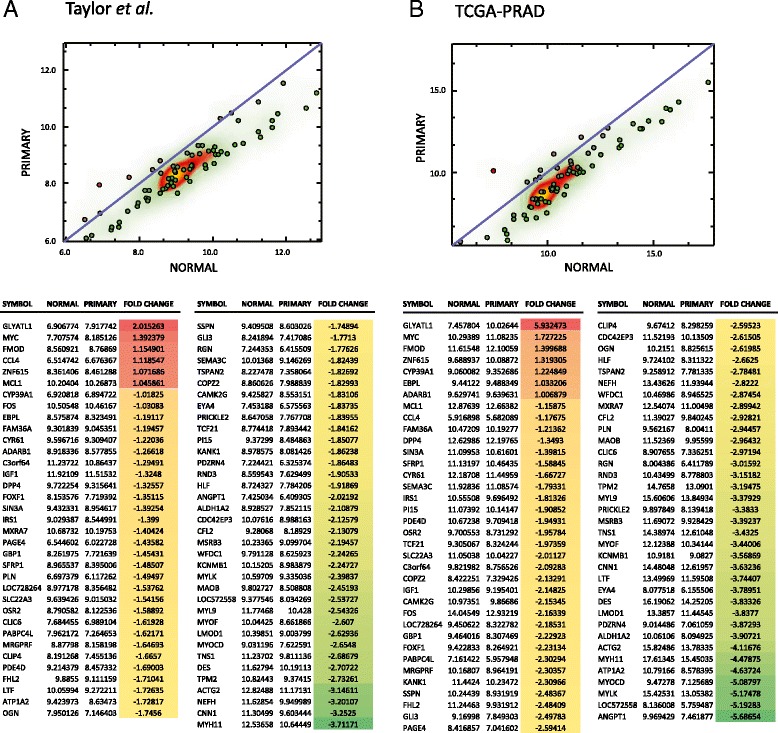
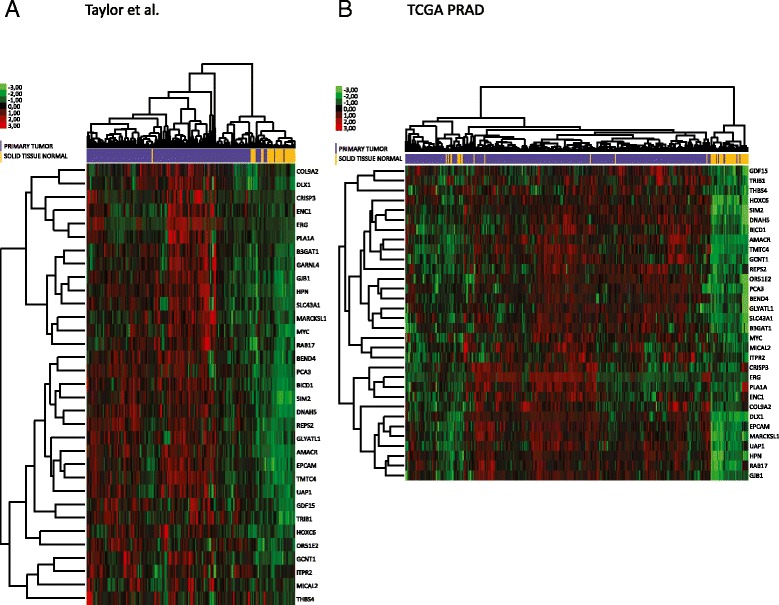
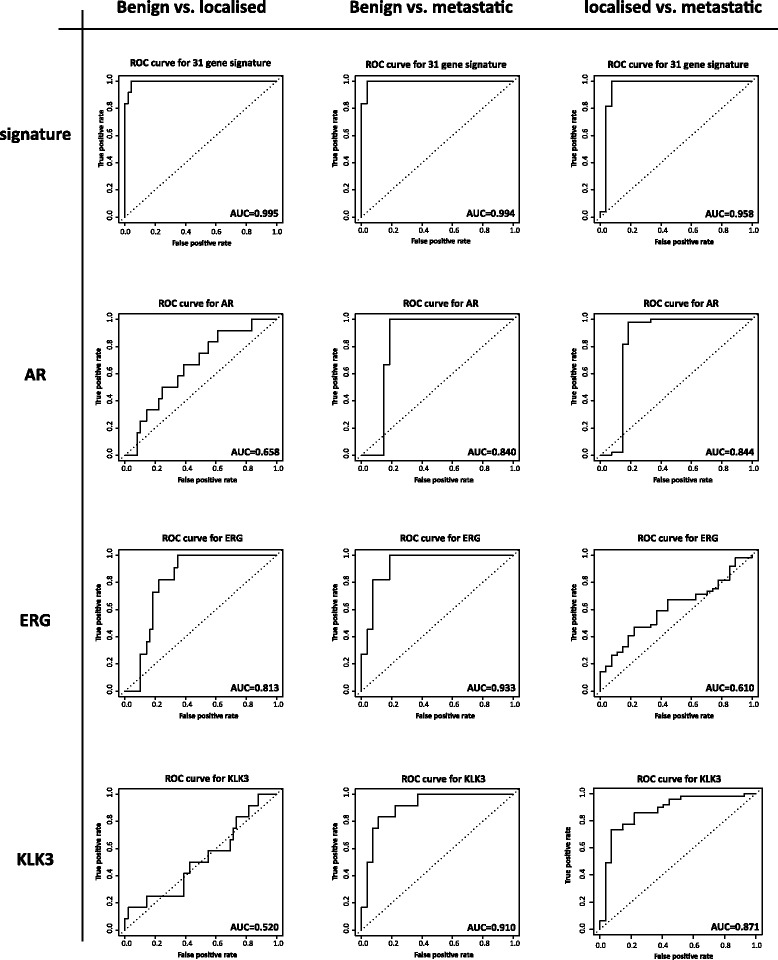
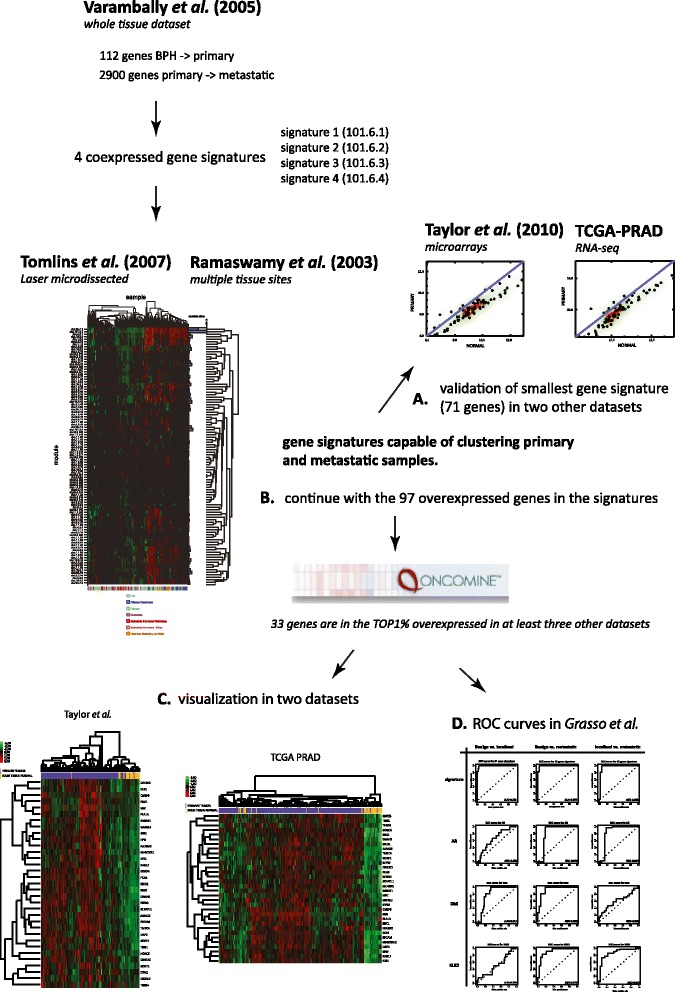
BACKGROUND: Tumorigenesis is characterised by changes in transcriptional control. Extensive transcript expression data have been acquired over the last decade and used to classify prostate cancers. Prostate cancer is, however, a heterogeneous multifocal cancer and this poses challenges in identifying robust transcript biomarkers. METHODS: In this study, we have undertaken a meta-analysis of publicly available transcriptomic data spanning datasets and technologies from the last decade and encompassing laser capture microdissected and macrodissected sample sets. RESULTS: We identified a 33 gene signature that can discriminate between benign tissue controls and localised prostate cancers irrespective of detection platform or dissection status. These genes were significantly overexpressed in localised prostate cancer versus benign tissue in at least three datasets within the Oncomine Compendium of Expression Array Data. In addition, they were also overexpressed in a recent exon-array dataset as well a prostate cancer RNA-seq dataset generated as part of the The Cancer Genomics Atlas (TCGA) initiative. Biologically, glycosylation was the single enriched process associated with this 33 gene signature, encompassing four glycosylating enzymes. We went on to evaluate the performance of this signature against three individual markers of prostate cancer, v-ets avian erythroblastosis virus E26 oncogene homolog (ERG) expression, prostate specific antigen (PSA) expression and androgen receptor (AR) expression in an additional independent dataset. Our signature had greater discriminatory power than these markers both for localised cancer and metastatic disease relative to benign tissue, or in the case of metastasis, also localised prostate cancer. CONCLUSION: In conclusion, robust transcript biomarkers are present within datasets assembled over many years and cohorts and our study provides both examples and a strategy for refining and comparing datasets to obtain additional markers as more data are generated.
Overview
The claims and statistics of this paper haven’t been checked yet.
Free: it reads the open-access text and checks the first 5 claims that cite a source we can check. Create a free account to check every claim.
Integrity signals
Registry
Cites
Statistics
Figures
Verification
Claims the paper makes
The claims and statistics of this paper haven’t been checked yet.
Free: it reads the open-access text and checks the first 5 claims that cite a source we can check. Create a free account to check every claim.
Self-check
Percentages, sums and reported differences re-computed from the paper’s own numbers.
The self-check needs the paper’s full text.
Citations
Cites
A Mathematical Theory of Communication
Shannon, C. E. (1948) · Bell System Technical Journal · doi:10.1002/j.1538-7305.1948.tb01338.x · Cited by 88,486
Hierarchical Grouping to Optimize an Objective Function
Ward, J. H. (1963) · Journal of the American Statistical Association · doi:10.1080/01621459.1963.10500845 · Cited by 20,598 · cited 13×
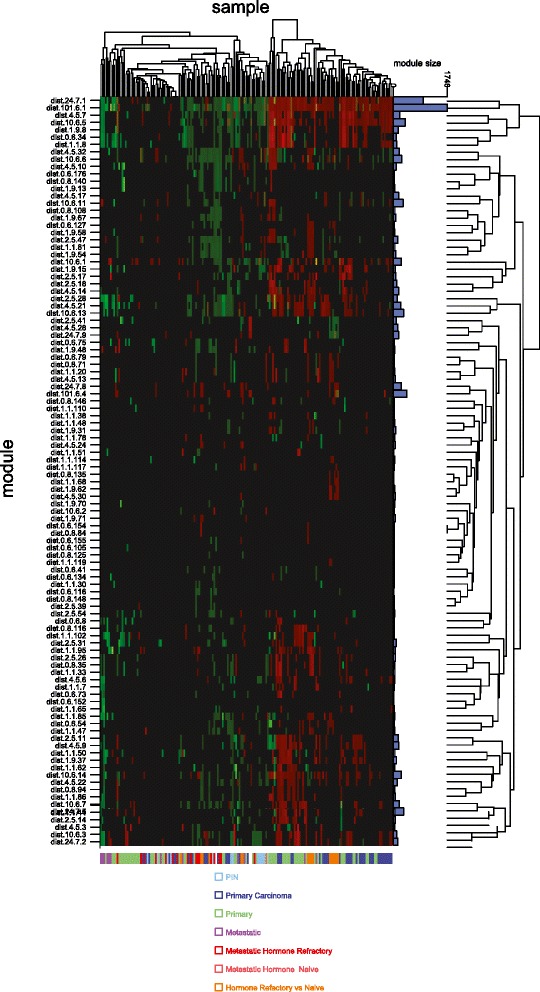
“To determine the best clustering method and branch length thresholds to apply to our analysis we clustered our 4662 reporter prostate tumour progression signature (Additional file 2: Table S1) using single, average, complete, Ward’s1 minimum variance method and mcquitty2 agglomerative hierarchical clustering methods a…”
MethodInfluentialRidge regression: Biased estimation for nonorthogonal problems
Hoerl, A. E., & Kennard, R. W. (1970) · Technometrics · doi:10.1080/00401706.1970.10488634 · Cited by 9,648
Recurrent Fusion of TMPRSS2 and ETS Transcription Factor Genes in Prostate Cancer
Tomlins, S. A., Rhodes, D. R., Perner, S., Dhanasekaran, S. M., Mehra, R., Sun, X.-W., Varambally, S., Cao, X., Tchinda, J., Kuefer, R., et al. (2005) · Science · doi:10.1126/science.1117679 · Cited by 3,846
Integrative Genomic Profiling of Human Prostate Cancer
Taylor, B. S., Schultz, N., Hieronymus, H., Gopalan, A., Xiao, Y., Carver, B. S., Arora, V. K., Kaushik, P., Cerami, E., Reva, B., et al. (2010) · Cancer Cell · doi:10.1016/j.ccr.2010.05.026 · Cited by 3,701 · cited 1×
“, and also The Cancer Genome Atlas (TCGA) data recently generated using high-throughput transcript sequencing of prostate cancers [24] (data generated by the data generated by the TCGA Research Network: http:// cancergenome.”
MethodONCOMINE: A Cancer Microarray Database and Integrated Data-Mining Platform
Rhodes, D. R., Yu, J., Shanker, K., Deshpande, N., Varambally, R., Ghosh, D., Barrette, T., Pander, A., & Chinnaiyan, A. M. (2004) · Neoplasia · doi:10.1016/s1476-5586(04)80047-2 · Cited by 3,612
Ridge Regression: Applications to Nonorthogonal Problems
Hoerl, A. E., & Kennard, R. W. (1970) · Technometrics · doi:10.1080/00401706.1970.10488635 · Cited by 2,956
The mutational landscape of lethal castration-resistant prostate cancer
Grasso, C. S., Wu, Y.-M., Robinson, D. R., Cao, X., Dhanasekaran, S. M., Khan, A. P., Quist, M. J., Jing, X., Lonigro, R. J., Brenner, J. C., et al. (2012) · Nature · doi:10.1038/nature11125 · Cited by 2,517 · cited 1×
“, and consisting of benign tissue, localised prostate cancer and metastatic cases [43].”
BackgroundA molecular signature of metastasis in primary solid tumors
Ramaswamy, S., Ross, K. N., Lander, E. S., & Golub, T. R. (2003) · Nature Genetics · doi:10.1038/ng1060 · Cited by 2,449 · cited 18×
“Ramaswamy S, Ross KN, Lander ES, Golub TR: A molecular signature of metastasis in primary solid tumors.”
BackgroundMethodInfluentialIn vivo amplification of the androgen receptor gene and progression of human prostate cancer
Visakorpi, T., Hyytinen, E., Koivisto, P., Tanner, M., Keinänen, R., Palmberg, C., Palotie, A., Tammela, T., Isola, J., & Kallioniemi, O.-P. (1995) · Nature Genetics · doi:10.1038/ng0495-401 · Cited by 1,484
Cited by
Wang, A., Shen, J., Rodriguez, A. A., Saunders, E. J., Chen, F., Janivara, R., Darst, B. F., Sheng, X., Xu, Y., Chou, A., et al. (2023) · Nature Genetics · doi:10.1038/s41588-023-01534-4 · Cited by 194
“…in prostate cancer risk, expression of SIM2 , a transcription factor, has been shown to discriminate prostate cancer and noncancerous tumor tissue 17 and to be associated with poorer survival 18 , while PIM1 is a serine/threonine kinase overexpressed in prostate cancer 19 , shown to modulate…”
BackgroundGlycans as Biomarkers in Prostate Cancer
Scott, E., & Munkley, J. (2019) · International Journal of Molecular Sciences · doi:10.3390/ijms20061389 · Cited by 143
The role of glycans in the development and progression of prostate cancer
Munkley, J., Mills, I. G., & Elliott, D. J. (2016) · Nature Reviews Urology · doi:10.1038/nrurol.2016.65 · Cited by 133
Self-citationBarfeld, S. J., Urbanucci, A., Itkonen, H. M., Fazli, L., Hicks, J. L., Thiede, B., Rennie, P. S., Yegnasubramanian, S., Marzo, A. M. D., & Mills, I. G. (2017) · EBioMedicine · doi:10.1016/j.ebiom.2017.04.006 · Cited by 126
“The AR is a ligand-activated transcription factor that controls key cellular processes including anabolic metabolism and cell cycle control (Barfeld et al., 2014b; Massie et al., 2011).”
BackgroundSelf-citationMunkley, J., Oltean, S., Vodák, D., Wilson, B. T., Livermore, K. E., Zhou, Y., Star, E., Floros, V. I., Johannessen, B., Knight, B., et al. (2015) · Oncotarget · doi:10.18632/oncotarget.6024 · Cited by 99
“A recent meta-analysis of clinical PCa gene expression data identified a novel discriminatory signature enriched for 4 glycosylating enzymes ST6GalNAc1: glucosaminyl (N-acetyl) transferase 1, core 2 (GCNT1), UDP N-acetylglucosamine pyrophosphorylase 1 (UAP1) and beta-1,3-glucuronyltransferase 1 (B3GAT1) [25].”
BackgroundSelf-citationMultifaceted regulation and functions of replication factor C family in human cancers.
Li, Y., Gan, S., Ren, L., Yuan, L., Liu, J., Wang, W., Wang, X., Zhang, Y., Jiang, J., Zhang, F., et al. (2018) · Europe PMC (PubMed Central) · Cited by 87
Glycosylation is a global target for androgen control in prostate cancer cells
Munkley, J. (2017) · Endocrine Related Cancer · doi:10.1530/erc-16-0569 · Cited by 64
Goel, S., Bhatia, V., Kundu, S., Biswas, T., Carskadon, S. L., Gupta, N. S., Asim, M., Morrissey, C. M., Palanisamy, N., & Ateeq, B. (2021) · Nature Communications · doi:10.1038/s41467-021-25623-2 · Cited by 47
Distinct urinary glycoprotein signatures in prostate cancer patients
Kawahara, R., Ortega, F., Rosa-Fernandes, L., Guimarães, V. R., Quina, D., Nahas, W. C., Schwämmle, V., Srougi, M., Leite, K. R. M., Thaysen‐Andersen, M., et al. (2018) · Oncotarget · doi:10.18632/oncotarget.26005 · Cited by 40
“[60] which contained differentially expressed genes between localized PCa and benign prostate tissue, thus demonstrating that biological processes occurring in prostatic tissues may be reflected in urine.”
BackgroundComputational Biology and Chemistry
Behzadi, P., & Bernabò, N. (2019) · IntechOpen eBooks · doi:10.5772/intechopen.83539 · Cited by 40
Androgen receptor and prostate cancer
Livermore, K. E., Munkley, J., & Elliott, D. J. (2016) · AIMS molecular science · doi:10.3934/molsci.2016.2.280 · Cited by 34
“progression [66-71].”
Kunej, T. (2019) · OMICS A Journal of Integrative Biology · doi:10.1089/omi.2019.0149 · Cited by 30
“Meta-analysis of prostate cancer gene expression data revealed a novel molecular signature, enriched for glycosylation enzymes (Barfeld et al., 2014).”
RFC4 promotes the progression and growth of Oral Tongue squamous cell carcinoma in vivo and vitro
Zhang, J., Wang, L., & Xie, X. (2021) · Journal of Clinical Laboratory Analysis · doi:10.1002/jcla.23761 · Cited by 24
Mallik, S., & Zhao, Z. (2017) · Quantitative Biology · doi:10.1007/s40484-017-0119-0 · Cited by 22
De Masi, R., & Orlando, S. (2022) · International Journal of Molecular Sciences · doi:10.3390/ijms23137373 · Cited by 20
“Regarding prostate cancer, a net molecular signature suggests a prevalence of glycosylation enzymes with a missense variant rs61752561 resulting in prostate specific antigen (PSA) extra glycosylation as well as other somatic variants causing the potential loss of glycosylation [142].”
BackgroundERG expression in prostate cancer: biological relevance and clinical implication
Abou–Ouf, H., Zhao, L., & Bismar, T. A. (2015) · Journal of Cancer Research and Clinical Oncology · doi:10.1007/s00432-015-2096-x · Cited by 20
“Recently, several groups identified a prognostic gene signature that was able to reflect ERG status and was at some points, considered to be more robust than ERG itself, therefore reflecting downstream targets of ERG overexpression as summarized in Table 1 (Bismar et al. 2014; Barfeld et al. 2014; Gasi Tandefelt et al…”
BackgroundScreening of cervical cancer-related hub genes based on comprehensive bioinformatics analysis
Tu, S., Zhang, H., Yang, X., Wen, W., Song, K., Yu, X., & Qu, X. (2021) · Cancer Biomarkers · doi:10.3233/cbm-203262 · Cited by 19
“Compared with normal prostate tissue, RFC5 is significantly expressed in prostate cancer tissue [23].”
The expression and prognostic value of GLYATL1 and its potential role in hepatocellular carcinoma
Guan, R., Hong, W., Huang, J., Peng, T., Zhao, Z., Lin, Y., Yu, M., & Jian, Z. (2020) · Journal of Gastrointestinal Oncology · doi:10.21037/jgo-20-186 · Cited by 18
“GLYATL1 was first identified at the mRNA and cellular level in 2007 (7) and encodes an enzyme involved in the catalysis of arylacetyl transfer (8).”
BackgroundYao, H., Zhou, X., Zhou, A., Chen, J., Chen, G., Shi, X., Shi, B., Tai, Q., Mi, X., Zhou, G., et al. (2023) · Molecular Carcinogenesis · doi:10.1002/mc.23523 · Cited by 16
Differential research of inflammatory and related mediators in BPH, histological prostatitis and PCa
Huang, T.-B., Wang, G. C., Zhang, H. M., & Peng, B. (2018) · Andrologia · doi:10.1111/and.12974 · Cited by 16
Characterization of glycine‐N‐acyltransferase like 1 (GLYATL1) in prostate cancer
Eich, M., Chandrashekar, D. S., Peña, M. D. C. R., Robinson, A. D., Siddiqui, J., Daignault‐Newton, S., Chakravarthi, B. V. S. K., Kunju, L. P., Netto, G. J., & Varambally, S. (2019) · The Prostate · doi:10.1002/pros.23887 · Cited by 15
Li, W.-J., Wu, D., Zhou, Y., Zhang, C.-W., & Liao, X.-W. (2022) · Hematology · doi:10.1080/16078454.2022.2072064 · Cited by 14
“A previous study showed significant RFC5 upregulation in prostate cancer compared to normal prostate tissues [20].”
BackgroundWu, G., Zhou, J., Zhu, X., Tang, X., Liu, J., Zhou, Q., Chen, Z., Liu, T., Wang, W., Xiao, X., et al. (2022) · Aging · doi:10.18632/aging.204039 · Cited by 13
Pro-Survival Factor EDEM3 Confers Therapy Resistance in Prostate Cancer
Scott, E., Garnham, R., Cheung, K., Duxfield, A., Elliott, D. J., & Munkley, J. (2022) · International Journal of Molecular Sciences · doi:10.3390/ijms23158184 · Cited by 13
He, Y., Hu, S., Zhong, J., Cheng, A., & Shan, N. (2020) · PeerJ · doi:10.7717/peerj.10386 · Cited by 12
“Besides liver cancer, RFC4 has been reported to be associated with several types of cancer, including prostate cancer, colon cancer non-small cell lung cancer and leukemia (LaTulippe et al., 2002; Jung, Choi & Kim, 2009; Erdogan et al., 2009; Barfeld et al., 2014).”
BackgroundZhang, P., Wang, H., Wang, J., Liu, Q., Wang, Y., Feng, F., & Shi, L. (2017) · Oncology Letters · doi:10.3892/ol.2017.6282 · Cited by 11
Mao, Q., Dong, G., Wenjie, X., Wang, A., Chen, B., Weidong, M., Xu, L., & Jiang, F. (2017) · Oncotarget · doi:10.18632/oncotarget.20232 · Cited by 11
“Barfeld’s investigation revealed a novel signature for prostate cancer [17].”
BackgroundA glance at the emerging diagnostic biomarkers in the most prevalent genitourinary cancers
Alshahrani, M. M. (2022) · Saudi Journal of Biological Sciences · doi:10.1016/j.sjbs.2022.01.017 · Cited by 10
“Genetics, family history and diet such as increased consumption of red meat, low vitamin D blood level, increased carbohydrate intake, are associated with increased risk of PC (Benafif and Eeles, 2016; Kiciński et al., 2011; Barfeld et al., 2014; Freedland et al., 2008; Lin et al., 2015; Schenk et al., 2014; Wilson et…”
BackgroundQian, S., Jia Hui, X. I. A., Liu, H., Zhang, Y., Zhang, L., & Yu, Y. (2018) · The Aging Male · doi:10.1080/13685538.2018.1424129 · Cited by 8
“tified a novel gene signature that can discriminate between prostate tumor tissue and benign tissue [18].”
BackgroundXu, S., Zhong, F., Jiang, J., Yao, F., Li, M., Tang, M., Cheng, Y., Yulin, Y., Wen, W., Zhang, X., et al. (2024) · Technology in Cancer Research & Treatment · doi:10.1177/15330338241271906 · Cited by 6
Expression and localization of MYH11 in mouse tissues, oocytes and preimplantation embryos
Fang, J., Meng, D., Huo, J., Zhang, Y., & Peng, H. (2019) · Biologia · doi:10.2478/s11756-019-00353-5 · Cited by 3
Zhang, C., Zeng, J., Ye, C., Tian, K., & Xian, Z. (2024) · Translational Cancer Research · doi:10.21037/tcr-23-1383 · Cited by 3
Systems Glycobiology: Past, Present, and Future
Yıldız, S. Y. (2020) · IntechOpen eBooks · doi:10.5772/intechopen.92267 · Cited by 3
“A novel molecular signature that is enriched for enzymes of glycosylation was revealed by meta-analysis performed for gene expression of prostate cancer [58].”
BackgroundPeter, O. A. (2024) · Cancer therapy & Oncology International Journal · doi:10.19080/ctoij.2024.27.556202 · Cited by 1
Sankar, D., Pandi, A., Sinduja, P., Jayaseelan, V. P., & Arumugam, P. (2025) · Journal of Oral and Maxillofacial Surgery Medicine and Pathology · doi:10.1016/j.ajoms.2025.04.014 · Cited by 1
The pathophysiologic basis of prostate cancer review
Manoharan, G., & Gottam, B. (2022) · International Journal of Science and Research Archive · doi:10.30574/ijsra.2022.7.1.0205 · Cited by 1
Barbato, L. (2023) · Nottingham Trent University's Institutional Repository (Nottingham Trent Repository) · Cited by 1
Micrornas as predictors and therapy for prostate cancer
Montes, M. (2015) · TDX (Tesis Doctorals en Xarxa)
Can Decellularised Prostate Tissue Be Used to Model Tumour Malignancy?
Maitland, N. J. (2016) · European Urology Focus · doi:10.1016/j.euf.2016.05.001
Validation of Biological Markers for Epidemiological Studies
Fowler, B. A. (2016) · Elsevier eBooks · doi:10.1016/b978-0-12-809589-8.00005-6
Opening Basement Membrane Gaps During C. elegans Uterine-Vulval Attachment
McClatchey, S. T. (2016) · DukeSpace (Duke University)
Biomarcadores teciduais e urinários diagnósticos e preditores de agressividade do câncer de próstata
Ortega, F. (2019) · Digital Library of Theses and Dissertations (Universidade de São Paulo) · doi:10.11606/t.5.2019.tde-07082019-102922
Meyer, Y. (2018) · heiDOK (Heidelberg University) · doi:10.11588/heidok.00024637
Identification of Potential Biomarkers using Improved Ranked Guided Iterative Feature Elimination
Ng, W. X., & Chan, W. H. (2021) · International Journal of Innovative Computing · doi:10.11113/ijic.v11n1.288
“GM2 ganglioside activator 30 Exist in KEGG pathway analysis for prostate cancer [25]”
(2020) · PeerJ · doi:10.7287/peerj.10386v0.1/reviews/1
“Besides liver cancer, RFC4 has been reported to be associated with 245 several types of cancer, including prostate cancer, colon cancer non-small cell lung cancer and 246 leukemia (LaTulippe et al., 2002; Jung et al., 2009; Erdogan et al., 2009; Barfeld et al., 2014).”
Banerjee, S., Thirunavukkarasu, S., Ojha, R., & Kumar, S. (2025) · Elsevier eBooks · doi:10.1016/b978-0-443-22300-6.00002-4
GLYATL1 PROMOTES ENDOCRINE THERAPY RESISTANCE IN BREAST CANCER
Sofyalı, E. (2019) · heiDOK (Heidelberg University) · doi:10.11588/heidok.00027068
Κυρμανίδου, Ε. (2021) · University of Thessaly Institutional Repository (University of Thessaly) · doi:10.26253/heal.uth.11944
MicroRNAs as predictors and therapy for prostate cancer
Montes, M., & de Medicina, U. A. D. B. D. (2015) · LA Referencia (Red Federada de Repositorios Institucionales de Publicaciones Científicas)
Delliaux, C. (2017) · theses.fr (ABES) · doi:10.70675/ee5c5a3ez961dz416dz8018z51380eef6213
Chew, I. Y. Y., Jayapalan, J. J., & Lim, J. (2026) · PeerJ · doi:10.7717/peerj.21401
“…total PSA for detection ( Yoneyama et al., 2014 ), while variation in glycogenes like MGAT3, MGAT5, FUT8, ST6GAL1, and ST3GAL1, and risk variants affecting PSA glycosylation, help explain inter-patient differences in EPS glyco-signatures ( Barfeld et al., 2014 ; Srinivasan et al., 2019 ).”
Prostate Cancer: Patterns of Occurrence, Major Risk Factors, and Diagnostic Methods
Ramzan, I., Saad, M., Yasir, M. A., Nawaz, I. F., Fatima, A., & Laraib, F. (2025) · Annual Methodological Archive Research Review · doi:10.63075/6rs79s46
Metadata
- Authors
- Barfeld, S. J., East, P., Zuber, V., & Mills, I. G.
- Affiliations
- Oslo University Hospital (NO)
- Corresponding author
- Barfeld, Stefan J
- Mills, Ian G
- Venue
- BMC Medical Genomics
- Published
- 2014-12
- Volume
- 7
- Issue
- 1
- Pages
- 513-513
- ISSN
- 1755-8794 (ISSN-L)
- PMC
- PMC4351903
- OpenAlex
- W2034829050
- Cited by
- 47
- References
- 49
- Citations by year
- 2026: 1 · 2025: 2 · 2024: 2 · 2023: 2 · 2022: 6 · 2021: 4 · 2020: 7 · 2019: 6 · 2018: 4 · 2017: 5 · 2016: 5 · 2015: 3
- FWCI
- 0.74
- Type
- journal article
- Language
- en
- Open access
- gold
- doi.org
- Licence
- cc-by
- creativecommons.org/licenses/by/4.0/ (tdm)
- creativecommons.org/licenses/by/4.0/ (vor, 30 d)
- Locations
- BMC Medical Genomics (publishedVersion, cc-by)
- Europe PMC (PubMed Central) (publishedVersion, cc-by)
- PubMed Central (publishedVersion, cc-by)
- PubMed (publishedVersion)
- Research Portal (Queen's University Belfast) (submittedVersion, other-oa)
- NORA - Norwegian Open Research Archives (submittedVersion, cc-by)
- Funders
- Kreftforeningen
- European Molecular Biology Laboratory
- Cancer Research UK
- University of Cambridge
- Universitetet i Oslo
- Norges Forskningsråd
- Topics
- Life Sciences › Biochemistry, Genetics and Molecular Biology › Cancer Research › Prostate Cancer Treatment and Research
- Life Sciences › Biochemistry, Genetics and Molecular Biology › Molecular Biology › Gene expression and cancer classification
- Life Sciences › Biochemistry, Genetics and Molecular Biology › Cancer Research › Breast Cancer Treatment Studies
- Keywords
- prostate cancer, gene expression signatures, glycosylation, localized prostate cancer, metastatic prostate cancer, ERG, prostate-specific antigen, androgen receptor, tumor heterogeneity
- MeSH terms
- Glycosylation, Humans, Male, Neoplasm Proteins, Prostatic Neoplasms, Gene Expression Regulation, Neoplastic, Gene Expression Regulation, Developmental, Transcriptome
About these checks
Registry, retraction, Cites and statistics results are computed, not judged, with one exception: a printed reference that no index lists is read once by a model before it counts as a citation error. Claims are extracted by a model and kept only when their quote appears verbatim in the text; each cited source is then checked, with a model’s help, for whether it says what the claim relies on. Those verdicts can be wrong — read the claim’s quote and the cited source before relying on one.
Statistics and arithmetic are recomputed, not judged.
Confidence bands are shown only for fields calibrated on our annotated test set. None is calibrated yet, so no band is shown.
What counts as a claim ›How we measure confidence ›How we check this ›
Are you an author, or do you see a problem with this page? Request a review
Data sources
Bibliographic data: Semantic Scholar, OpenAlex, Crossref.
Contains information from the Semantic Scholar Academic Graph Datasets, made available under the ODC Attribution License (ODC-BY 1.0).
Semantic Scholar’s data is described in: Kinney, R., et al. (2023). The Semantic Scholar Open Data Platform. arXiv:2301.10140.
