

Meta-analysis of prostate cancer gene expression data identifies a novel discriminatory signature enriched for glycosylating enzymes
Open accessThe DOI matches its Crossref record; 49 of the 49 references it cites were found in a registry or an index.
Abstract
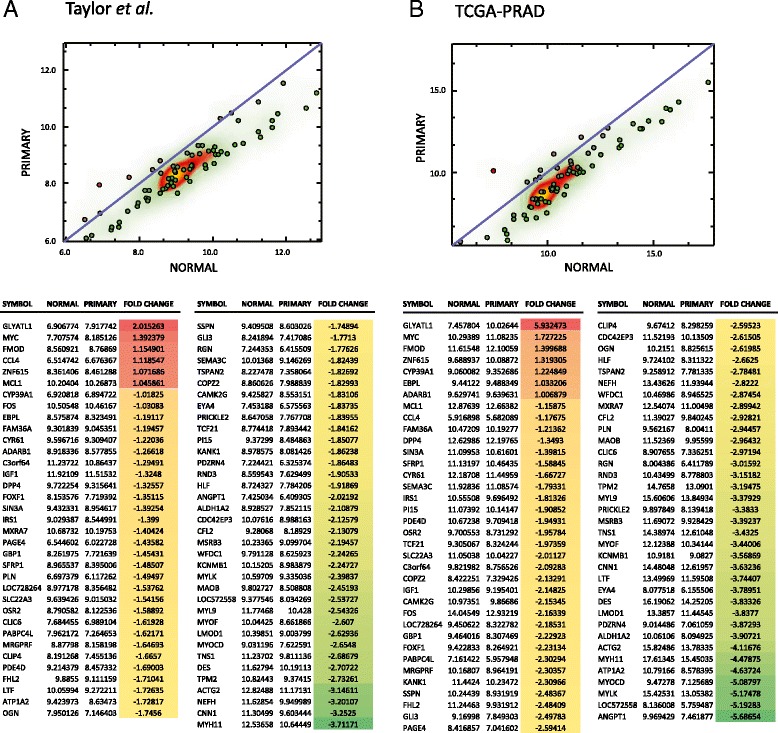
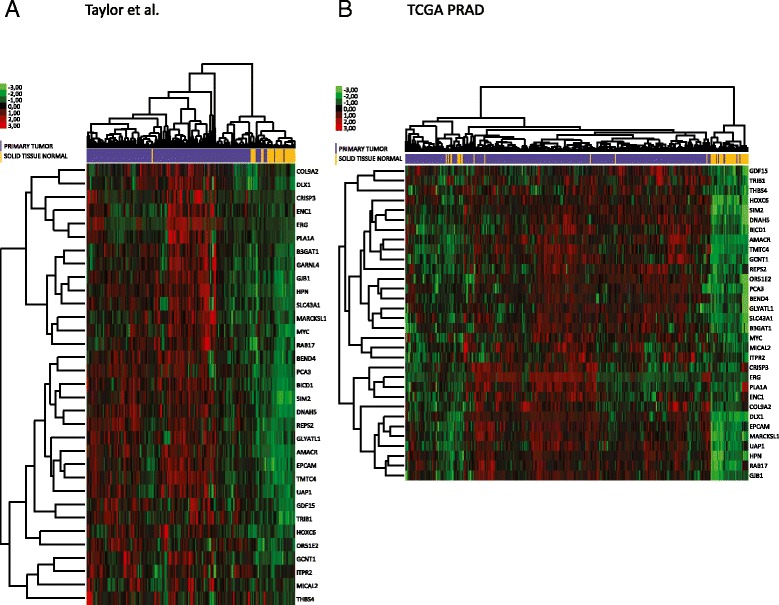
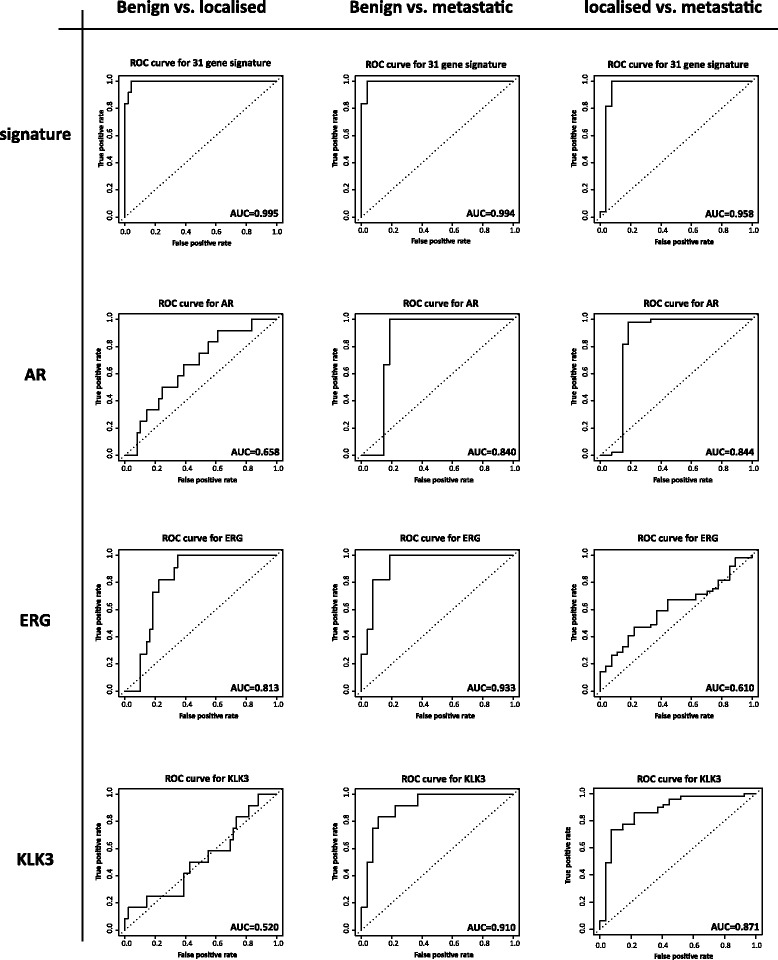
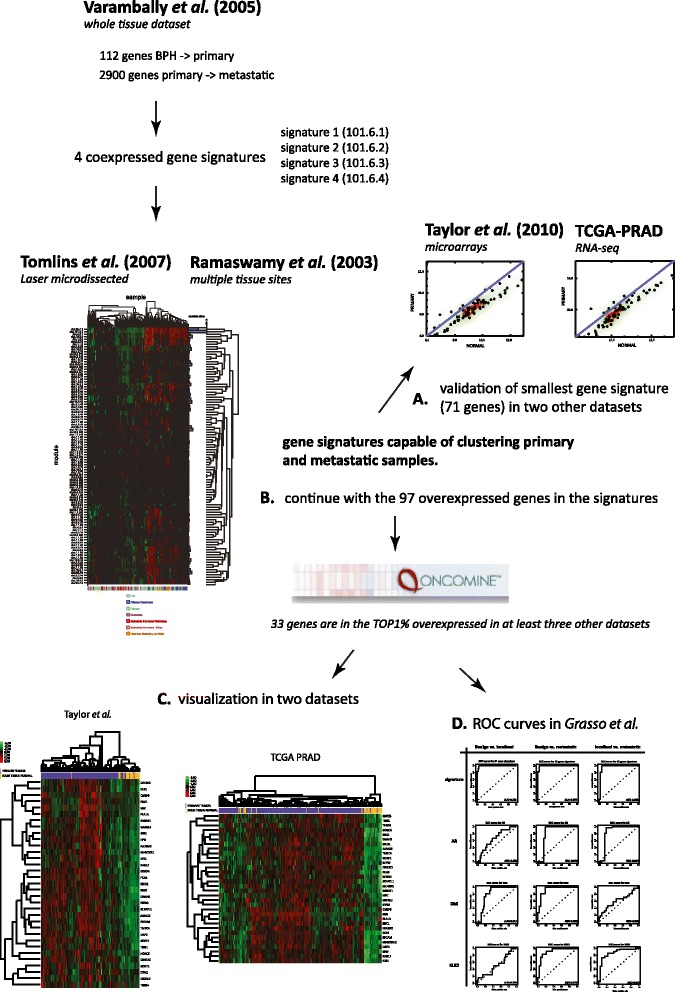
BACKGROUND: Tumorigenesis is characterised by changes in transcriptional control. Extensive transcript expression data have been acquired over the last decade and used to classify prostate cancers. Prostate cancer is, however, a heterogeneous multifocal cancer and this poses challenges in identifying robust transcript biomarkers. METHODS: In this study, we have undertaken a meta-analysis of publicly available transcriptomic data spanning datasets and technologies from the last decade and encompassing laser capture microdissected and macrodissected sample sets. RESULTS: We identified a 33 gene signature that can discriminate between benign tissue controls and localised prostate cancers irrespective of detection platform or dissection status. These genes were significantly overexpressed in localised prostate cancer versus benign tissue in at least three datasets within the Oncomine Compendium of Expression Array Data. In addition, they were also overexpressed in a recent exon-array dataset as well a prostate cancer RNA-seq dataset generated as part of the The Cancer Genomics Atlas (TCGA) initiative. Biologically, glycosylation was the single enriched process associated with this 33 gene signature, encompassing four glycosylating enzymes. We went on to evaluate the performance of this signature against three individual markers of prostate cancer, v-ets avian erythroblastosis virus E26 oncogene homolog (ERG) expression, prostate specific antigen (PSA) expression and androgen receptor (AR) expression in an additional independent dataset. Our signature had greater discriminatory power than these markers both for localised cancer and metastatic disease relative to benign tissue, or in the case of metastasis, also localised prostate cancer. CONCLUSION: In conclusion, robust transcript biomarkers are present within datasets assembled over many years and cohorts and our study provides both examples and a strategy for refining and comparing datasets to obtain additional markers as more data are generated.
Overview
The claims and statistics of this paper haven’t been checked yet.
Free: it reads the open-access text and checks the first 5 claims that cite a source we can check. Create a free account to check every claim.
Integrity signals
Registry
Cites
Statistics
Figures
Verification
Claims the paper makes
The claims and statistics of this paper haven’t been checked yet.
Free: it reads the open-access text and checks the first 5 claims that cite a source we can check. Create a free account to check every claim.
Self-check
Percentages, sums and reported differences re-computed from the paper’s own numbers.
The self-check needs the paper’s full text.
Citations
Cites
A Mathematical Theory of Communication
Shannon, C. E. (1948) · Bell System Technical Journal · doi:10.1002/j.1538-7305.1948.tb01338.x · Cited by 88,486
Hierarchical Grouping to Optimize an Objective Function
Ward, J. H. (1963) · Journal of the American Statistical Association · doi:10.1080/01621459.1963.10500845 · Cited by 20,598 · cited 13×
“To determine the best clustering method and branch length thresholds to apply to our analysis we clustered our 4662 reporter prostate tumour progression signature (Additional file 2: Table S1) using single, average, complete, Ward’s1 minimum variance method and mcquitty2 agglomerative hierarchical clustering methods a…”
MethodInfluentialRidge regression: Biased estimation for nonorthogonal problems
Hoerl, A. E., & Kennard, R. W. (1970) · Technometrics · doi:10.1080/00401706.1970.10488634 · Cited by 9,648
Recurrent Fusion of TMPRSS2 and ETS Transcription Factor Genes in Prostate Cancer
Tomlins, S. A., Rhodes, D. R., Perner, S., Dhanasekaran, S. M., Mehra, R., Sun, X.-W., Varambally, S., Cao, X., Tchinda, J., Kuefer, R., et al. (2005) · Science · doi:10.1126/science.1117679 · Cited by 3,846
Integrative Genomic Profiling of Human Prostate Cancer
Taylor, B. S., Schultz, N., Hieronymus, H., Gopalan, A., Xiao, Y., Carver, B. S., Arora, V. K., Kaushik, P., Cerami, E., Reva, B., et al. (2010) · Cancer Cell · doi:10.1016/j.ccr.2010.05.026 · Cited by 3,701 · cited 1×
“, and also The Cancer Genome Atlas (TCGA) data recently generated using high-throughput transcript sequencing of prostate cancers [24] (data generated by the data generated by the TCGA Research Network: http:// cancergenome.”
MethodONCOMINE: A Cancer Microarray Database and Integrated Data-Mining Platform
Rhodes, D. R., Yu, J., Shanker, K., Deshpande, N., Varambally, R., Ghosh, D., Barrette, T., Pander, A., & Chinnaiyan, A. M. (2004) · Neoplasia · doi:10.1016/s1476-5586(04)80047-2 · Cited by 3,612
Ridge Regression: Applications to Nonorthogonal Problems
Hoerl, A. E., & Kennard, R. W. (1970) · Technometrics · doi:10.1080/00401706.1970.10488635 · Cited by 2,956
The mutational landscape of lethal castration-resistant prostate cancer
Grasso, C. S., Wu, Y.-M., Robinson, D. R., Cao, X., Dhanasekaran, S. M., Khan, A. P., Quist, M. J., Jing, X., Lonigro, R. J., Brenner, J. C., et al. (2012) · Nature · doi:10.1038/nature11125 · Cited by 2,517 · cited 1×
“, and consisting of benign tissue, localised prostate cancer and metastatic cases [43].”
BackgroundA molecular signature of metastasis in primary solid tumors
Ramaswamy, S., Ross, K. N., Lander, E. S., & Golub, T. R. (2003) · Nature Genetics · doi:10.1038/ng1060 · Cited by 2,449 · cited 18×
“Ramaswamy S, Ross KN, Lander ES, Golub TR: A molecular signature of metastasis in primary solid tumors.”
BackgroundMethodInfluentialIn vivo amplification of the androgen receptor gene and progression of human prostate cancer
Visakorpi, T., Hyytinen, E., Koivisto, P., Tanner, M., Keinänen, R., Palmberg, C., Palotie, A., Tammela, T., Isola, J., & Kallioniemi, O.-P. (1995) · Nature Genetics · doi:10.1038/ng0495-401 · Cited by 1,484
Rhodes, D. R., Yu, J., Shanker, K., Deshpande, N., Varambally, R., Ghosh, D., Barrette, T., Pandey, A., & Chinnaiyan, A. M. (2004) · Proceedings of the National Academy of Sciences · doi:10.1073/pnas.0401994101 · Cited by 1,019 · cited 1×
“These include the identification of consensus profiles across multiple datasets [1] and identifying biologically categorised gene sets with enriched representation of deregulated genes [2,3].”
BackgroundIntegrative molecular concept modeling of prostate cancer progression
Tomlins, S. A., Mehra, R., Rhodes, D. R., Cao, X., Wang, L., Dhanasekaran, S. M., Kalyana-Sundaram, S., Wei, J. T., Rubin, M. A., Pienta, K. J., et al. (2007) · Nature Genetics · doi:10.1038/ng1935 · Cited by 922 · cited 6×
“SLC22A3 has been reported to be overexpressed in localised prostate cancer at the transcript level when compared to benign tissue [5].”
BackgroundMethodInfluentialMyc-driven murine prostate cancer shares molecular features with human prostate tumors
Ellwood-Yen, K., Graeber, T. G., Wongvipat, J., Iruela-Arispe, M. L., Zhang, J., Matusik, R., Thomas, G. V., & Sawyers, C. L. (2003) · Cancer Cell · doi:10.1016/s1535-6108(03)00197-1 · Cited by 816 · cited 1×
“MYC has been shown to be overexpressed in prostate cancer [18] and to drive tumourigenesis in a transgenic model of the disease [19].”
BackgroundRidge Regression: Biased Estimation for Nonorthogonal Problems
Hoerl, A. E., & Kennard, R. W. (2000) · Technometrics · doi:10.1080/00401706.2000.10485983 · Cited by 808 · cited 1×
“We estimated the weights of each gene using an L2 regularized logit regression model [7] with the R package glmnet.”
MethodVarambally, S., Yu, J., Laxman, B., Rhodes, D. R., Mehra, R., Tomlins, S. A., Shah, R. B., Chandran, U., Monzon, F. A., Becich, M. J., et al. (2005) · Cancer Cell · doi:10.1016/j.ccr.2005.10.001 · Cited by 800 · cited 1×
“about a decade ago and consisting of a small number of whole tissue sections [8].”
BackgroundCuzick, J., Swanson, G. P., Fisher, G., Brothman, A. R., Berney, D. M., Reid, J. E., Mesher, D., Speights, V., Stankiewicz, E., Foster, C. S., et al. (2011) · The Lancet Oncology · doi:10.1016/s1470-2045(10)70295-3 · Cited by 792 · cited 1×
“Many of these overexpressed genes also constitute a prognostic cell cycle progression gene signature, which has been validated at the transcript level in biopsy samples [14]).”
BackgroundA module map showing conditional activity of expression modules in cancer
Segal, E., Friedman, N., Koller, D., & Regev, A. (2004) · Nature Genetics · doi:10.1038/ng1434 · Cited by 685 · cited 1×
“These include the identification of consensus profiles across multiple datasets [1] and identifying biologically categorised gene sets with enriched representation of deregulated genes [2,3].”
BackgroundAnalysis of oncogenic signaling networks in glioblastoma identifies ASPM as a molecular target
Horvath, S., Zhang, B., Carlson, M., Lu, K. V., Zhu, S., Felciano, R. M., Laurance, M. F., Zhao, W., Qi, S., Chen, Z., et al. (2006) · Proceedings of the National Academy of Sciences · doi:10.1073/pnas.0608396103 · Cited by 641
Chou, T.-Y., Hart, G. W., & Dang, C. V. (1995) · Journal of Biological Chemistry · doi:10.1074/jbc.270.32.18961 · Cited by 453 · cited 1×
“c-Myc is a well-established oncogenic transcription factor, which is overexpressed through chromosomal amplification on 8q24 but also through post-translational events, which may include glycosylation of the N-terminal transactivation and concomitant antagonism of proteasomal degradation [18,31,32].”
BackgroundJenkins, R. B., Qian, J., Lieber, M. M., & Bostwick, D. G. (1997) · PubMed · Cited by 443
Nuclear MYC protein overexpression is an early alteration in human prostate carcinogenesis
Gurel, B., Iwata, T., M Koh, C., Jenkins, R. B., Lan, F., Van Dang, C., Hicks, J. L., Morgan, J., Cornish, T. C., Sutcliffe, S., et al. (2008) · Modern Pathology · doi:10.1038/modpathol.2008.111 · Cited by 441 · cited 1×
“c-Myc is a well-established oncogenic transcription factor, which is overexpressed through chromosomal amplification on 8q24 but also through post-translational events, which may include glycosylation of the N-terminal transactivation and concomitant antagonism of proteasomal degradation [18,31,32].”
BackgroundYuan, X., Cai, C., Chen, S., Chen, S., Yu, Z., & Balk, S. P. (2014) · Oncogene · doi:10.1038/onc.2013.235 · Cited by 370 · cited 1×
“from cholesterol in order to maintain androgen receptor activity [17].”
Backgroundon behalf of the Transatlantic Prostate Group, Cuzick, J., Berney, D. M., Fisher, G., Mesher, D., Møller, H., Reid, J. E., Perry, M., Park, J., Younus, A., et al. (2012) · British Journal of Cancer · doi:10.1038/bjc.2012.39 · Cited by 364 · cited 1×
“This is particularly intriguing since metastatic PCa is characterised by increases in the proliferative index of tumours [16] and the ability to produce autocrine steroid hormones”
BackgroundUrine TMPRSS2:ERG Fusion Transcript Stratifies Prostate Cancer Risk in Men with Elevated Serum PSA
Tomlins, S. A., Aubin, S. M. J., Siddiqui, J., Lonigro, R. J., Sefton-Miller, L., Miick, S., Williamsen, S., Hodge, P., Meinke, J., Blase, A., et al. (2011) · Science Translational Medicine · doi:10.1126/scitranslmed.3001970 · Cited by 350 · cited 1×
“Detection of the fusion has been reported in biological fluids including urine samples [42].”
BackgroundItkonen, H. M., Minner, S., Guldvik, I. J., Sandmann, M. J., Tsourlakis, M. C., Berge, V., Svindland, A., Schlomm, T., & Mills, I. G. (2013) · Cancer Research · doi:10.1158/0008-5472.can-13-0549 · Cited by 292 · cited 5×
“Notably, others and we have recently reported that UAP1 and GCNT1 are overexpressed in prostate cancer tissue using immunohistochemistry.”
BackgroundSelf-citationTMPRSS2 : ERG Fusion Identifies a Subgroup of Prostate Cancers with a Favorable Prognosis
Saramäki, O. R., Harjula, A. E., Martikainen, P. M., Vessella, R. L., Tammela, T. L. J., & Visakorpi, T. (2008) · Clinical Cancer Research · doi:10.1158/1078-0432.ccr-07-2051 · Cited by 243 · cited 1×
“ERG by contrast whilst consistently overexpressed in the majority of localised prostate cancers is of variable utility as a prognostic marker according to the study cohort examined associating variously positively or negatively with progression and metastasis [44-46].”
BackgroundSimilarity Analysis by Reciprocal Pairs for Discrete and Continuous Data
McQuitty, L. L. (1966) · Educational and Psychological Measurement · doi:10.1177/001316446602600402 · Cited by 201 · cited 2×
“H(X) GO bit values generated from branch length thresholds plotted against the number of clusters produced for single, average, complete, Ward and Mcquitty agglomerative hierarchical and divisive clustering methods.”
MethodIn silico dissection of cell-type-associated patterns of gene expression in prostate cancer
Stuart, R. O., Wachsman, W., Berry, C. C., Wang-Rodriguez, J., Wasserman, L., Klacansky, I., Masys, D., Arden, K., Goodison, S., McClelland, M., et al. (2004) · Proceedings of the National Academy of Sciences · doi:10.1073/pnas.2536479100 · Cited by 198 · cited 1×
“tions in different samples [4], and laser microdissection combined with in vitro linear amplification [5].”
MethodNam, R. K., Sugar, L., Wang, Z., Yang, W., Kitching, R., Klotz, L. H., Venkateswaran, V., Narod, S. A., & Seth, A. (2007) · Cancer Biology & Therapy · doi:10.4161/cbt.6.1.3489 · Cited by 164 · cited 1×
“ERG by contrast whilst consistently overexpressed in the majority of localised prostate cancers is of variable utility as a prognostic marker according to the study cohort examined associating variously positively or negatively with progression and metastasis [44-46].”
BackgroundFurlanello, C., Serafini, M., Merler, S., & Jurman, G. (2003) · BMC Bioinformatics · doi:10.1186/1471-2105-4-54 · Cited by 159 · cited 1×
“Most relevant for this study the approach has previously been used as a measure of the robustness of gene regulatory networks [12], to accelerate feature elimination when classifying microarray expression data [13].”
MethodKoh, C. M., Gürel, B., Sutcliffe, S., Aryee, M. J., Schultz, D., Iwata, T., Uemura, M., Zeller, K. I., Anele, U. A., Zheng, Q., et al. (2011) · American Journal Of Pathology · doi:10.1016/j.ajpath.2010.12.040 · Cited by 144
Di Vizio, D., Morello, M., Sotgia, F., Pestell, R. G., Freeman, M. R., & Lisanti, M. P. (2009) · Cell Cycle · doi:10.4161/cc.8.15.9116 · Cited by 137
Leshem, O., Madar, S., Kogan-Sakin, I., Kamer, I., Goldstein, I., Brosh, R., Cohen, Y., Jacob‐Hirsch, J., Ehrlich, M., Ben‐Sasson, S. A., et al. (2011) · PLoS ONE · doi:10.1371/journal.pone.0021650 · Cited by 136 · cited 1×
“These approaches have linked MYC to processes including ribosome biogenesis and splicing and ERG to cell motility and migration, respectively [36-38].”
BackgroundItkonen, H., Engedal, N., Babaie, E., Luhr, M., Guldvik, I., Minner, S., Hohloch, J., Tsourlakis, M., Schlomm, T., & Mills, I. (2014) · Oncogene · doi:10.1038/onc.2014.307 · Cited by 95 · cited 1×
“In addition, an aminosugar conjugate, O-linked N-acetylglucosamine (O-GlcNAc), is also significantly elevated in prostate cancer [26,27].”
BackgroundSelf-citationThe resistance of B-CLL cells to DNA damage-induced apoptosis defined by DNA microarrays
Vallat, L. (2003) · Blood · doi:10.1182/blood-2002-06-1743 · Cited by 93 · cited 2×
“Vallat L, Magdelenat H, Merle-Beral H, Masdehors P, Potocki De Montalk G, Davi F, Kruhoffer M, Sabatier L, Orntoft TF, Delic J: The resistance of B-CLL cells to DNA damage-induced apoptosis defined by DNA microarrays.”
BackgroundKamigaito, T., Okaneya, T., Kawakubo, M., Shimojo, H., Nishizawa, O., & Nakayama, J. (2013) · Prostate Cancer and Prostatic Diseases · doi:10.1038/pcan.2013.56 · Cited by 89
Chou, W.-Y., Tsai, W.-P., Lin, C.-C., & Chang, G.-G. (1995) · Journal of Biological Chemistry · doi:10.1074/jbc.270.43.25935 · Cited by 81
Expression of core 2 β1,6-N-acetylglucosaminyltransferase facilitates prostate cancer progression
Hagisawa, S., Οhyama, C., Takahashi, T., Endoh, M., Moriya, T., Nakayama, J., Arai, Y., & Fukuda, M. (2005) · Glycobiology · doi:10.1093/glycob/cwi086 · Cited by 68
ERG–SOX4 interaction promotes epithelial–mesenchymal transition in prostate cancer cells
Wang, L., Li, Y., Yang, X., Yuan, H., Li, X., Qi, M., Chang, Y. W. Y., Wang, C., Fu, W., Yang, M., et al. (2014) · The Prostate · doi:10.1002/pros.22783 · Cited by 66 · cited 1×
“These approaches have linked MYC to processes including ribosome biogenesis and splicing and ERG to cell motility and migration, respectively [36-38].”
BackgroundMikaelsson, E., Daneshmanesh, A. H., Lüppert, A., Jeddi‐Tehrani, M., Rezvany, M.-R., Sharifian, R. A., Safaie, R., Roohi, A., Österborg, A., Shokri, F., et al. (2005) · Blood · doi:10.1182/blood-2004-10-3941 · Cited by 65 · cited 1×
“It is, however, known to be significantly overexpressed in chronic lymphocytic leukemia (CLL) versus normal B lymphocytes [20] and associated with a resistance signature to DNA damage-induced apoptosis in CLL [21].”
BackgroundLevens, E., Luo, X., Ding, L. J., Williams, R. S., & Chegini, N. (2005) · Molecular Human Reproduction · doi:10.1093/molehr/gah187 · Cited by 63 · cited 1×
“Furthermore, the expression of fibromodulin is known to be induced in leiomyoma in response to TGF-beta through Smad and MAP kinase signalling [22].”
BackgroundIncreased Expression of SIM2-s Protein Is a Novel Marker of Aggressive Prostate Cancer
HALVORSEN, O. J., Rostad, K., Oyan, A. M., Puntervoll, H. E., Bø, T. H., Stordrange, L., Olsen, S., Haukaas, S. A., Hood, L., Jonassen, I., et al. (2007) · Clinical Cancer Research · doi:10.1158/1078-0432.ccr-06-1207 · Cited by 63 · cited 1×
“SIM2 overexpression is associated with changes in transcriptional control affecting other loci on chromosome 21 [34,35].”
BackgroundN-Linked Glycosylation Supports Cross-Talk between Receptor Tyrosine Kinases and Androgen Receptor
Itkonen, H. M., & Mills, I. G. (2013) · PLoS ONE · doi:10.1371/journal.pone.0065016 · Cited by 59 · cited 4×
“Notably, others and we have recently reported that UAP1 and GCNT1 are overexpressed in prostate cancer tissue using immunohistochemistry.”
BackgroundSelf-citationRibeiro, F. R., Paulo, P., Costa, V. L., Barros-Silva, J. D., Ramalho-Carvalho, J., Jerónimo, C., Henrique, R., Lind, G. E., Skotheim, R. I., Lothe, R. A., et al. (2011) · PLoS ONE · doi:10.1371/journal.pone.0022317 · Cited by 49 · cited 2×
“genes with bona fide target genes such as B3GAT1 and PLA1A corroborating a contribution at least from ERG to this prostate cancer-specific overexpression signature [39].”
BackgroundDown's syndrome-associated single minded gene as a novel tumor marker.
DeYoung, M. P., Scheurle, D., Damania, H., Zylberberg, C., & Narayanan, R. (2002) · PubMed · Cited by 40
Fukuma, Y., Matsui, H., Koike, H., Sekine, Y., Shechter, I., Ohtake, N., Nakata, S., Ito, K., & Suzuki, K. (2012) · Prostate Cancer and Prostatic Diseases · doi:10.1038/pcan.2012.14 · Cited by 39 · cited 17×
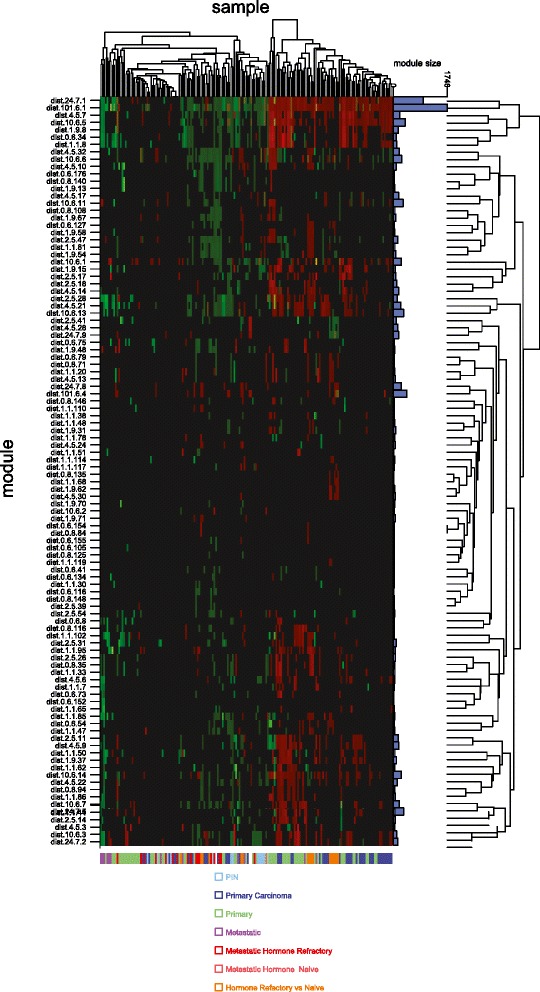
“The 38 genes associated with the focal adhesion annotation (p-value 7.21x10⁻⁶) in signature 1 are listed in Table 1 and were all significantly downregulated in metastatic samples relative to benign and localised PCa.”
BackgroundInfluentialOn the Interplay between Entropy and Robustness of Gene Regulatory Networks
Chen, B., & Li, C. (2010) · Entropy · doi:10.3390/e12051071 · Cited by 37 · cited 1×
“Most relevant for this study the approach has previously been used as a measure of the robustness of gene regulatory networks [12], to accelerate feature elimination when classifying microarray expression data [13].”
MethodDiagnostic and Prognostic Scoring System for Prostate Cancer Using Urine and Plasma Biomarkers
Ma, W., Diep, K., Fritsche, H. A., Shore, N. D., & Albitar, M. X. (2014) · Genetic Testing and Molecular Biomarkers · doi:10.1089/gtmb.2013.0424 · Cited by 23 · cited 1×
“Furthermore, the UAP1 transcript has also been reported to be detectable in urine and plasma samples as a component of a multi-gene signature [28].”
BackgroundFleischmann, A., Saramäki, O. R., Zlobec, I., Rotzer, D., Genitsch, V., Seiler, R., Visakorpi, T., & Thalmann, G. N. (2014) · The Prostate · doi:10.1002/pros.22882 · Cited by 19 · cited 1×
“ERG by contrast whilst consistently overexpressed in the majority of localised prostate cancers is of variable utility as a prognostic marker according to the study cohort examined associating variously positively or negatively with progression and metastasis [44-46].”
Background
Cited by
Wang, A., Shen, J., Rodriguez, A. A., Saunders, E. J., Chen, F., Janivara, R., Darst, B. F., Sheng, X., Xu, Y., Chou, A., et al. (2023) · Nature Genetics · doi:10.1038/s41588-023-01534-4 · Cited by 192
“…in prostate cancer risk, expression of SIM2 , a transcription factor, has been shown to discriminate prostate cancer and noncancerous tumor tissue 17 and to be associated with poorer survival 18 , while PIM1 is a serine/threonine kinase overexpressed in prostate cancer 19 , shown to modulate…”
BackgroundGlycans as Biomarkers in Prostate Cancer
Scott, E., & Munkley, J. (2019) · International Journal of Molecular Sciences · doi:10.3390/ijms20061389 · Cited by 143
The role of glycans in the development and progression of prostate cancer
Munkley, J., Mills, I. G., & Elliott, D. J. (2016) · Nature Reviews Urology · doi:10.1038/nrurol.2016.65 · Cited by 133
Self-citationBarfeld, S. J., Urbanucci, A., Itkonen, H. M., Fazli, L., Hicks, J. L., Thiede, B., Rennie, P. S., Yegnasubramanian, S., Marzo, A. M. D., & Mills, I. G. (2017) · EBioMedicine · doi:10.1016/j.ebiom.2017.04.006 · Cited by 126
“The AR is a ligand-activated transcription factor that controls key cellular processes including anabolic metabolism and cell cycle control (Barfeld et al., 2014b; Massie et al., 2011).”
BackgroundSelf-citationMunkley, J., Oltean, S., Vodák, D., Wilson, B. T., Livermore, K. E., Zhou, Y., Star, E., Floros, V. I., Johannessen, B., Knight, B., et al. (2015) · Oncotarget · doi:10.18632/oncotarget.6024 · Cited by 99
“A recent meta-analysis of clinical PCa gene expression data identified a novel discriminatory signature enriched for 4 glycosylating enzymes ST6GalNAc1: glucosaminyl (N-acetyl) transferase 1, core 2 (GCNT1), UDP N-acetylglucosamine pyrophosphorylase 1 (UAP1) and beta-1,3-glucuronyltransferase 1 (B3GAT1) [25].”
BackgroundSelf-citation
Metadata
- Authors
- Barfeld, S. J., East, P., Zuber, V., & Mills, I. G.
- Affiliations
- Oslo University Hospital (NO)
- Corresponding author
- Barfeld, Stefan J
- Mills, Ian G
- Venue
- BMC Medical Genomics
- Published
- 2014-12
- Volume
- 7
- Issue
- 1
- Pages
- 513-513
- ISSN
- 1755-8794 (ISSN-L)
- PMC
- PMC4351903
- OpenAlex
- W2034829050
- Cited by
- 47
- References
- 49
- Citations by year
- 2026: 1 · 2025: 2 · 2024: 2 · 2023: 2 · 2022: 6 · 2021: 4 · 2020: 7 · 2019: 6 · 2018: 4 · 2017: 5 · 2016: 5 · 2015: 3
- FWCI
- 0.74
- Type
- journal article
- Language
- en
- Open access
- gold
- doi.org
- Licence
- cc-by
- creativecommons.org/licenses/by/4.0/ (tdm)
- creativecommons.org/licenses/by/4.0/ (vor, 30 d)
- Locations
- BMC Medical Genomics (publishedVersion, cc-by)
- Europe PMC (PubMed Central) (publishedVersion, cc-by)
- PubMed Central (publishedVersion, cc-by)
- PubMed (publishedVersion)
- Research Portal (Queen's University Belfast) (submittedVersion, other-oa)
- NORA - Norwegian Open Research Archives (submittedVersion, cc-by)
- Funders
- Kreftforeningen
- European Molecular Biology Laboratory
- Cancer Research UK
- University of Cambridge
- Universitetet i Oslo
- Norges Forskningsråd
- Topics
- Life Sciences › Biochemistry, Genetics and Molecular Biology › Cancer Research › Prostate Cancer Treatment and Research
- Life Sciences › Biochemistry, Genetics and Molecular Biology › Molecular Biology › Gene expression and cancer classification
- Life Sciences › Biochemistry, Genetics and Molecular Biology › Cancer Research › Breast Cancer Treatment Studies
- Keywords
- prostate cancer, gene expression signatures, glycosylation, localized prostate cancer, metastatic prostate cancer, ERG, prostate-specific antigen, androgen receptor, tumor heterogeneity
- MeSH terms
- Glycosylation, Humans, Male, Neoplasm Proteins, Prostatic Neoplasms, Gene Expression Regulation, Neoplastic, Gene Expression Regulation, Developmental, Transcriptome
About these checks
Registry, retraction, Cites and statistics results are computed, not judged, with one exception: a printed reference that no index lists is read once by a model before it counts as a citation error. Claims are extracted by a model and kept only when their quote appears verbatim in the text; each cited source is then checked, with a model’s help, for whether it says what the claim relies on. Those verdicts can be wrong — read the claim’s quote and the cited source before relying on one.
Statistics and arithmetic are recomputed, not judged.
Confidence bands are shown only for fields calibrated on our annotated test set. None is calibrated yet, so no band is shown.
What counts as a claim ›How we measure confidence ›How we check this ›
Are you an author, or do you see a problem with this page? Request a review
Data sources
Bibliographic data: Semantic Scholar, OpenAlex, Crossref.
Contains information from the Semantic Scholar Academic Graph Datasets, made available under the ODC Attribution License (ODC-BY 1.0).
Semantic Scholar’s data is described in: Kinney, R., et al. (2023). The Semantic Scholar Open Data Platform. arXiv:2301.10140.
