

Pirfenidone and nintedanib modulate properties of fibroblasts and myofibroblasts in idiopathic pulmonary fibrosis
Open accessThe DOI matches its Crossref record; 35 of the 35 references it cites were found in a registry or an index.
Abstract
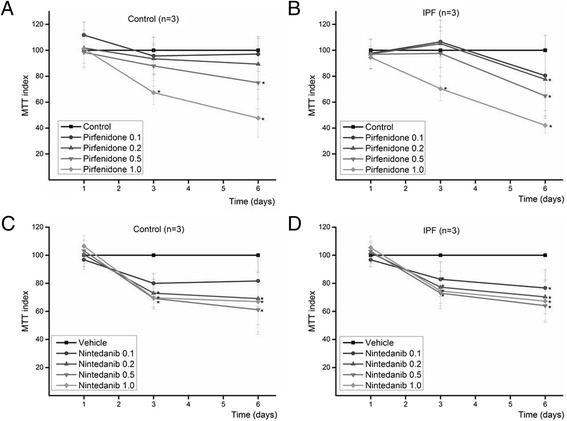
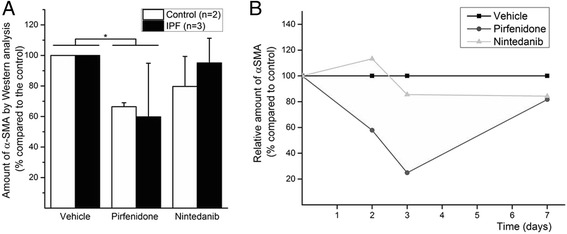
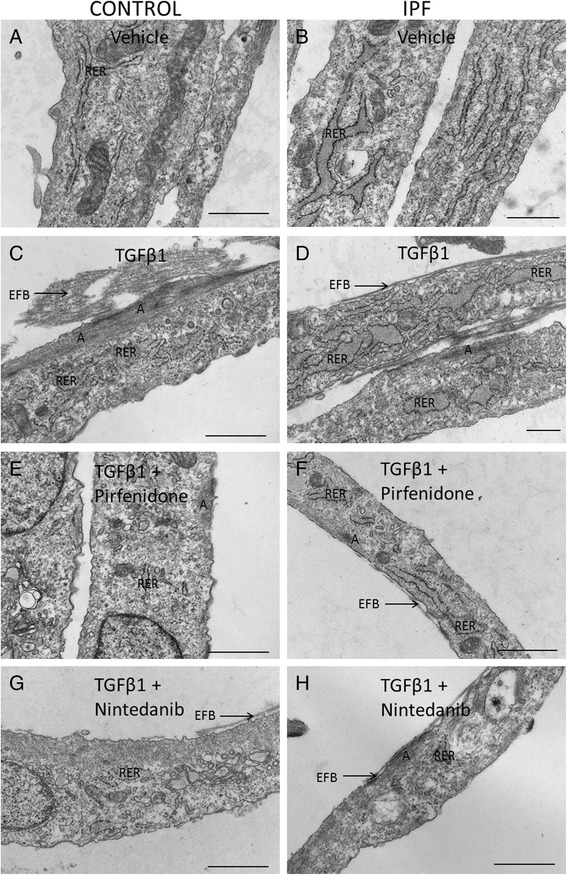
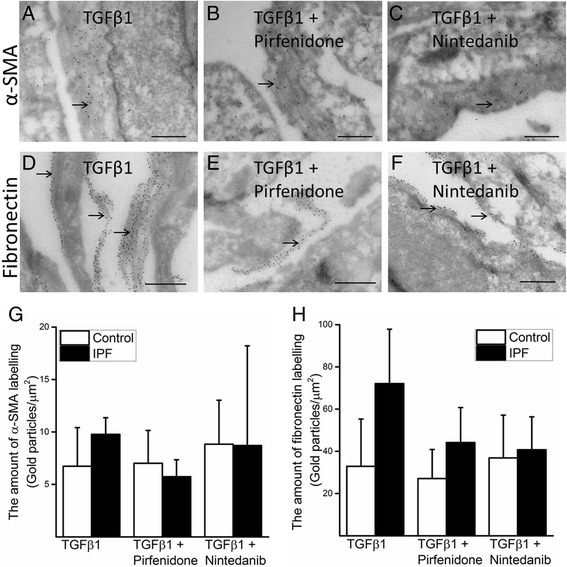
BACKGROUND: Idiopathic pulmonary fibrosis (IPF) is an incurable lung disease with a poor prognosis. Fibroblasts and myofibroblasts are the key cells in the fibrotic process. Recently two drugs, pirfenidone and nintedanib, were approved for clinical use as they are able to slow down the disease progression. The mechanisms by which these two drugs act in in vitro cell systems are not known. The aim of this study was therefore to examine the effects of pirfenidone and nintedanib on fibroblasts and myofibroblasts structure and function established from patients with or without IPF. METHODS: Stromal cells were collected and cultured from control lung (n = 4) or IPF (n = 7). The cells were treated with pirfenidone and/or nintedanib and the effect of treatment was evaluated by measuring cell proliferation, alpha smooth muscle actin (α-SMA) and fibronectin expression by Western analysis and/or immunoelectron microscopy, ultrastructural properties by transmission electron microscopy and functional properties by collagen gel contraction and invasion assays. RESULTS: Both pirfenidone and nintedanib reduced in vitro proliferation of fibroblastic cells in a dose dependent manner. The number of cells from control lung was reduced to 47 % (p = 0.04) and of IPF cells to 42 % (p = 0.04) by 1 mM pirfenidone and correspondingly to 67 % (p = 0.04) and 68 % (p = 0.04), by 1 μM nintedanib. If both drugs were used together, a further reduced proliferation was observed. Both pirfenidone and nintedanib were able to reduce the amount of α-SMA and the myofibroblastic appearance although the level of reduction was cell line dependent. In functional assays, the effect of both drugs was also variable. CONCLUSIONS: We conclude that the ultrastructure and function of fibroblasts and myofibroblasts are affected by pirfenidone and nintedanib. Combination of the drugs reduced cell proliferation more than either of them individually. Human lung derived cell culture systems represent a potential platform for screening and testing drugs for fibrotic diseases.
Overview
The claims and statistics of this paper haven’t been checked yet.
Free: it reads the open-access text and checks the first 5 claims that cite a source we can check. Create a free account to check every claim.
Integrity signals
Registry
Cites
Statistics
Figures
Verification
Claims the paper makes
The claims and statistics of this paper haven’t been checked yet.
Free: it reads the open-access text and checks the first 5 claims that cite a source we can check. Create a free account to check every claim.
Claims other papers make about this one
Each is checked against this paper’s own text: does it say what the citing paper says it does?
In the citing paper
“Furthermore, this compound reduces fibroblast proliferation and attenuates TGFβ-induced αSMA and collagen production in primary skin fibroblast (192, 193).”
From Unraveling SSc Pathophysiology; The Myofibroblast (2018) · cites this paper as [193]
Self-check
Percentages, sums and reported differences re-computed from the paper’s own numbers.
The self-check needs the paper’s full text.
Citations
Cites
Raghu, G., Collard, H. R., Egan, J. J., Martinez, F. J., Behr, J., Brown, K. K., Colby, T. V., Cordier, J.-F., Flaherty, K. R., Lasky, J. A., et al. (2011) · American Journal of Respiratory and Critical Care Medicine · doi:10.1164/rccm.2009-040gl · Cited by 7,186
King, T. E., Pardo, A., & Selman, M. (2011) · The Lancet · doi:10.1016/s0140-6736(11)60052-4 · Cited by 2,194
Prednisone, Azathioprine, and N -Acetylcysteine for Pulmonary Fibrosis
The Idiopathic Pulmonary Fibrosis Clinical Research Network (2012) · New England Journal of Medicine · doi:10.1056/nejmoa1113354 · Cited by 1,621
Presence of modified fibroblasts in granulation tissue and their possible role in wound contraction
Gabbiani, G., Ryan, G. B., & Majno, G. (1971) · Experientia · doi:10.1007/bf02147594 · Cited by 1,485 · cited 1×
“Originally myofibroblasts were discovered during EM investigations of a healing wound [21].”
Rock, J. R., Barkauskas, C. E., Cronce, M. J., Xue, Y., Harris, J. R., Liang, J., Noble, P. W., & Hogan, B. L. M. (2011) · Proceedings of the National Academy of Sciences · doi:10.1073/pnas.1117988108 · Cited by 1,030 · cited 1×
“In particular, we and other investigators have observed that fibroblasts and myofibroblasts containing cells lines cultured from IPF patients are more invasive than the cells obtained from other lung diseases [11, 13].”
Moeller, A., Ask, K., Warburton, D., Gauldie, J., & Kolb, M. (2008) · The International Journal of Biochemistry & Cell Biology · doi:10.1016/j.biocel.2007.08.011 · Cited by 1,007 · cited 1×
“For instance, bleomycin-induced fibrosis in rodents resembles rather poorly the IPF in humans [16, 17], and further, the pulmonary anatomy and cellular components of rodents and other experimental animals are very different from their human counterparts.”
Wollin, L., Maillet, I., Quesniaux, V., Holweg, A., & Ryffel, B. (2014) · The Journal of Pharmacology and Experimental Therapeutics · doi:10.1124/jpet.113.208223 · Cited by 633 · cited 2×
“In lung tissue of mice, nintedanib reduced total lung collagen levels, as well as the extent of inflammation and fibrosis and prevented granuloma formation [30].”
Randomized Trial of Acetylcysteine in Idiopathic Pulmonary Fibrosis
The Idiopathic Pulmonary Fibrosis Clinical Research Network (2014) · New England Journal of Medicine · doi:10.1056/nejmoa1401739 · Cited by 505
(2007) · Clinical Atlas of Interstitial Lung Disease · doi:10.1007/978-1-84628-326-0_6 · Cited by 499
Kuhn, C., & McDonald, J. A. (1991) · PubMed · Cited by 472
Cited by
Interstitial lung disease associated with systemic sclerosis (SSc-ILD)
Cottin, V., & Brown, K. K. (2019) · Respiratory Research · doi:10.1186/s12931-019-0980-7 · Cited by 292
Finnerty, J. P., Ponnuswamy, A., Dutta, P., Abdelaziz, A., & Kamil, H. (2021) · BMC Pulmonary Medicine · doi:10.1186/s12890-021-01783-1 · Cited by 209
“Their modes of action are not completely understood but there is evidence of considerable overlap [5, 6], and they have similar effects in clinical practice.”
BackgroundA Novel Antifibrotic Mechanism of Nintedanib and Pirfenidone. Inhibition of Collagen Fibril Assembly
Knüppel, L., Ishikawa, Y., Aichler, M., Heinzelmann, K., Hatz, R., Behr, J., Walch, A., Bächinger, H. P., Eickelberg, O., & Staab-Weijnitz, C. A. (2017) · American Journal of Respiratory Cell and Molecular Biology · doi:10.1165/rcmb.2016-0217oc · Cited by 183
Unraveling SSc Pathophysiology; The Myofibroblast
van Caam, A., Vonk, M., van den Hoogen, F., van Lent, P., & van der Kraan, P. (2018) · Frontiers in Immunology · doi:10.3389/fimmu.2018.02452 · Cited by 153
Nathan, S. D., Waxman, A., Rajagopal, S., Case, A., Johri, S., DuBrock, H., De La Zerda, D. J., Sahay, S., King, C., Melendres-Groves, L., et al. (2021) · The Lancet Respiratory Medicine · doi:10.1016/s2213-2600(21)00165-x · Cited by 152
Safety of nintedanib added to pirfenidone treatment for idiopathic pulmonary fibrosis
Flaherty, K. R., Fell, C. D., Huggins, J. T., Nunes, H., Sussman, R., Valenzuela, C., Petzinger, U., Stauffer, J. L., Gilberg, F., Bengus, M., et al. (2018) · European Respiratory Journal · doi:10.1183/13993003.00230-2018 · Cited by 141
Microvascular Dysfunction in Heart Failure With Preserved Ejection Fraction
D’Amario, D., Migliaro, S., Borovac, J. A., Restivo, A., Vergallo, R., Galli, M., Leone, A. M., Montone, R. A., Niccoli, G., Aspromonte, N., et al. (2019) · Frontiers in Physiology · doi:10.3389/fphys.2019.01347 · Cited by 138
Fibrotic microtissue array to predict anti-fibrosis drug efficacy
Asmani, M., Velumani, S., Li, Y., Wawrzyniak, N., Hsia, I., Chen, Z., Hinz, B., & Zhao, R. (2018) · Nature Communications · doi:10.1038/s41467-018-04336-z · Cited by 137
Therapeutic targets in idiopathic pulmonary fibrosis
Kolb, M. R. J., Bonella, F., & Wollin, L. (2017) · Respiratory Medicine · doi:10.1016/j.rmed.2017.07.062 · Cited by 142
Betensley, A., Sharif, R., & Karamichos, D. (2016) · Journal of Clinical Medicine · doi:10.3390/jcm6010002 · Cited by 119
“In addition, in both trials, patients in the nintedanib treatment arm were significantly more likely than patients in the placebo arm to be functionally stable at week 52 [68].”
ResultSavary, G., Dewaeles, E., Diazzi, S., Buscot, M., Nottet, N., Fassy, J., Courcot, E., Henaoui, I.-S., Lemaire, J., Martis, N., et al. (2019) · American Journal of Respiratory and Critical Care Medicine · doi:10.1164/rccm.201807-1237oc · Cited by 113
Tissue-resident mesenchymal stromal cells: Implications for tissue-specific antifibrotic therapies
Lemos, D. R., & Duffield, J. S. (2018) · Science Translational Medicine · doi:10.1126/scitranslmed.aan5174 · Cited by 113
Mejías, J. C., Nelson, M. R., Liseth, O. Y., & Roy, K. (2020) · Lab on a Chip · doi:10.1039/d0lc00644k · Cited by 113
Regulatory Immune Cells in Idiopathic Pulmonary Fibrosis: Friends or Foes?
van Geffen, C., Deißler, A., Quante, M., Renz, H. E., Hartl, D., & Kolahian, S. (2021) · Frontiers in Immunology · doi:10.3389/fimmu.2021.663203 · Cited by 88
Gad, E. S., Salama, A., Elshafie, M. F., Arafa, H. M. M., Abdelsalam, R. M., & Khattab, M. M. (2019) · Inflammation · doi:10.1007/s10753-019-01101-2 · Cited by 80
Vu, T. N., Chen, X., Foda, H. D., Smaldone, G. C., & Hasaneen, N. A. (2019) · Respiratory Research · doi:10.1186/s12931-019-1171-2 · Cited by 84
Macitentan reduces progression of TGF-β1-induced pulmonary fibrosis and pulmonary hypertension
Bellaye, P., Yanagihara, T., Granton, E., Sato, S., Shimbori, C., Upagupta, C., Imani, J., Hambly, N., Ask, K., Gauldie, J., et al. (2018) · European Respiratory Journal · doi:10.1183/13993003.01857-2017 · Cited by 72
Surolia, R., Li, F. J., Wang, Z., Li, H., Liu, G., Zhou, Y., Luckhardt, T., Bae, S., Liu, R.-M., Rangarajan, S., et al. (2017) · JCI Insight · doi:10.1172/jci.insight.91377 · Cited by 69
Zhang, C., Duan, J., Yang, H., Sun, C., Zhong, W., Tao, J., Guan, X., Jiang, H., Hammock, B. D., Hwang, S. H., et al. (2019) · FEBS Journal · doi:10.1111/febs.15105 · Cited by 65
Lung transplantation in idiopathic pulmonary fibrosis
Kumar, A., Kapnadak, S. G., Girgis, R. E., & Raghu, G. (2018) · Expert Review of Respiratory Medicine · doi:10.1080/17476348.2018.1462704 · Cited by 76
Lambers, C., Roth, M., Jaksch, P., Muraközy, G., Tamm, M., Klepetko, W., Ghanim, B., & Zhao, F. (2018) · Scientific Reports · doi:10.1038/s41598-018-19294-1 · Cited by 61
Fibroproliferative genes are preferentially expressed in central centrifugal cicatricial alopecia
Aguh, C., Dina, Y., Talbot, C. C., & Garza, L. A. (2018) · Journal of the American Academy of Dermatology · doi:10.1016/j.jaad.2018.05.1257 · Cited by 62
Korfei, M., Stelmaszek, D., MacKenzie, B., Skwarna, S., Chillappagari, S., Bach, A., Ruppert, C., Saito, S., Mahavadi, P., Klepetko, W., et al. (2018) · PLoS ONE · doi:10.1371/journal.pone.0207915 · Cited by 64
Outcome of lung transplantation in idiopathic pulmonary fibrosis with previous anti-fibrotic therapy
Leuschner, G., Stocker, F., Veit, T., Kneidinger, N., Winter, H., Schramm, R., Weig, T., Matthes, S., Ceelen, F., Arnold, P., et al. (2018) · The Journal of Heart and Lung Transplantation · doi:10.1016/j.healun.2017.07.002 · Cited by 59
Aucubin Alleviates Bleomycin-Induced Pulmonary Fibrosis in a Mouse Model
Zhou, Y., Li, P., Duan, J., Liu, T., Guan, X., Mei, W.-X., Liu, Y., Sun, G., Wan, L., Zhong, W., et al. (2017) · Inflammation · doi:10.1007/s10753-017-0646-x · Cited by 60
“Pirfenidone is an approved anti-fibrotic drug for the treatment of patients suffering from pulmonary fibrosis, partially via inhibition of fibroblast proliferation and activity [5, 9].”
Yin, W., Han, J., Zhang, Z., Han, Z., & Wang, S. (2018) · Scientific Reports · doi:10.1038/s41598-018-24565-y · Cited by 55
Corona, B. T., Rivera, J. C., & Greising, S. M. (2017) · Clinical and Translational Science · doi:10.1111/cts.12519 · Cited by 55
Yu, D. H., Ruan, X., Huang, J., Liu, X., Ma, H., Chen, C., Hu, W., & Li, S. (2020) · Frontiers in Genetics · doi:10.3389/fgene.2020.00302 · Cited by 54
Bioengineered in Vitro Tissue Model of Fibroblast Activation for Modeling Pulmonary Fibrosis
Sundarakrishnan, A., Zukas, H., Coburn, J., Bertini, B. T., Liu, Z., Georgakoudi, I., Baugh, L., Dasgupta, Q., Black, L. D., & Kaplan, D. L. (2019) · ACS Biomaterials Science & Engineering · doi:10.1021/acsbiomaterials.8b01262 · Cited by 50
The evolution ofin vitromodels of lung fibrosis: promising prospects for drug discovery
Kolanko, E., Cargnoni, A., Papait, A., Silini, A. R., Czekaj, P., & Parolini, O. (2024) · European Respiratory Review · doi:10.1183/16000617.0127-2023 · Cited by 56
“In vitro studies have utilised primary lung fibroblasts from healthy [20, 21] and IPF patients [22, 23], as well as immortalised cell lines [21, 24, 25].”
BackgroundPurinergic receptors: new targets for the treatment of gout and fibrosis
Gicquel, T., Daré, B. L., Boichot, E., & Lagente, V. (2016) · Fundamental and Clinical Pharmacology · doi:10.1111/fcp.12256 · Cited by 53
Human microvasculature-on-a chip: anti-neovasculogenic effect of nintedanib in vitro
Zeinali, S., Bichsel, C. A., Hobi, N., Funke, M., Marti, T. M., Schmid, R. A., Guenat, O. T., & Geiser, T. (2018) · Angiogenesis · doi:10.1007/s10456-018-9631-8 · Cited by 52
“The presence of nintedanib in the cell culture medium reduced the invasion capability of lung fibroblasts [26].”
BackgroundMethodInfluentialZhou, B., Wang, W., Wu, X., Zhang, W., Zhou, G., Gao, Z., & Liu, W. (2020) · Acta Pharmacologica Sinica · doi:10.1038/s41401-020-0381-y · Cited by 55
Sun, S., Han, R., Hou, S.-S., Yi, H.-Q., Chi, S.-J., & Zhang, A. (2020) · Biomedicine & Pharmacotherapy · doi:10.1016/j.biopha.2020.110119 · Cited by 50
Tzouvelekis, A., Ntolios, P., Karampitsakos, Τ., Tzilas, V., Anevlavis, S., Bouros, E., Steiropoulos, P., Koulouris, N. G., Stratakos, G. K., Froudarakis, Μ. E., et al. (2017) · Pulmonary Pharmacology & Therapeutics · doi:10.1016/j.pupt.2017.08.011 · Cited by 50
Li, C., Rezov, V., Joensuu, E. I., Vartiainen, V. A., Rönty, M. J., Yin, M., Myllärniemi, M., & Koli, K. M. (2018) · Scientific Reports · doi:10.1038/s41598-018-28297-x · Cited by 53
Inhibition of NF-κB by ACT001 reduces fibroblast activity in idiopathic pulmonary fibrosis
Jaffar, J., Glaspole, I., Symons, K., & Westall, G. (2021) · Biomedicine & Pharmacotherapy · doi:10.1016/j.biopha.2021.111471 · Cited by 45
Longitudinal “Real-World” Outcomes of Pirfenidone in Idiopathic Pulmonary Fibrosis in Greece
Tzouvelekis, A., Karampitsakos, Τ., Ntolios, P., Tzilas, V., Bouros, E., Markozannes, E., Malliou, I., Anagnostopoulos, A., GRANITSAS, A. N., Steiropoulos, P., et al. (2017) · Frontiers in Medicine · doi:10.3389/fmed.2017.00213 · Cited by 50
Kaur, R., Shaikh, T. B., Sripadi, H. P., Kuncha, M., Sarathi, U. V. R. V., Kulhari, H., Andugulapati, S. B., & Sistla, R. (2023) · International Journal of Pharmaceutics · doi:10.1016/j.ijpharm.2023.123644 · Cited by 45
Toward Normalization of the Tumor Microenvironment for Cancer Therapy
Zheng, J., & Gao, P. (2019) · Integrative Cancer Therapies · doi:10.1177/1534735419862352 · Cited by 48
“Recently, 2 drugs, pirfenidone and nintedanib, have been approved for the treatment of idiopathic pulmonary fibrosis.(71) Pirfenidone has antifibrotic and anti-inflammatory activities via multiple targets such as TGF-β, TNF, IL-10, while nintedanib is an angiokinase inhibitor via VEGF receptor (VEGFR), fibroblast grow…”
BackgroundEvaluation of Pirfenidone and Nintedanib in a Human Lung Model of Fibrogenesis
Roach, K., Castells, E., Dixon, K., Mason, S., Elliott, G., Marshall, H., Poblocka, M., Macip, S., Richardson, M., Khalfaoui, L., et al. (2021) · Frontiers in Pharmacology · doi:10.3389/fphar.2021.679388 · Cited by 39
“…fibrosis in bleomycin-treated animals and inhibits human lung fibroblast proliferation, differentiation and collagen secretion through the inhibition of TGFβ1-dependent signalling (Hilberg et al., 2012; Lehtonen et al., 2016; Knüppel et al., 2017; Epstein Shochet et al., 2018; Jin et al., 2019).”
BackgroundResultInfluentialSHIP‐1, a target of miR‐155, regulates endothelial cell responses in lung fibrosis
Tang, H., Mao, J., Ye, X., Zhang, F., Kerr, W. G., Zheng, T., & Zhu, Z. (2019) · The FASEB Journal · doi:10.1096/fj.201902063r · Cited by 42
Epstein Shochet, G., Wollin, L., & Shitrit, D. (2018) · Respirology · doi:10.1111/resp.13287 · Cited by 38
Cedilak, M., Banjanac, M., Belamarić, D., Radičević, A. P., Faraho, I., Ilić, K., Čužić, S., Glojnarić, I., Haber, V. E., & Bosnar, M. (2019) · Pulmonary Pharmacology & Therapeutics · doi:10.1016/j.pupt.2019.02.005 · Cited by 45
Mechanisms of pulmonary fibrosis induced by core fucosylation in pericytes
Sun, W., Tang, H., Gao, L., Sun, X., Liu, J., Wang, W., Wu, T., & Lin, H. (2017) · The International Journal of Biochemistry & Cell Biology · doi:10.1016/j.biocel.2017.05.010 · Cited by 38
“Although the underlying of mechanisms of pulmonary fibrosis remain unclear, a characteristic pathological feature of pulmonary fibrosis is the excessive accumulation of lung myofibroblasts, which result in the deposition of extracellular matrix (Lehtonen et al., 2016; Elmufdi et al., 2015).”
BackgroundEffect of nintedanib on airway inflammation and remodeling in a murine chronic asthma model
Lee, H. Y., Hur, J., Kim, I. K., Kang, J. Y., Yoon, H. K., Lee, S. Y., Kwon, S. S., Kim, Y. K., & Rhee, C. K. (2017) · Experimental Lung Research · doi:10.1080/01902148.2017.1339141 · Cited by 40
“reported that nintedanib reduces proliferation of fibroblasts from patients with IPF in vitro and decreases the amount of α-SMA and myofibroblasts.[31] That is, the effects of nintedanib can be explained not only as those a multi-tyrosine kinase inhibitor but inhibiting fibroblast activation.”
Backgroundp53 Expression in Lung Fibroblasts Is Linked to Mitigation of Fibrotic Lung Remodeling
Nagaraja, M. R., Tiwari, N., Shetty, S. K., Marudamuthu, A. S., Fan, L., Ostrom, R. S., Fu, J., Gopu, V., Radhakrishnan, V., Idell, S., et al. (2018) · The American Journal of Pathology · doi:10.1016/j.ajpath.2018.07.005 · Cited by 37
Upcoming treatments for morphea
Wenzel, D., Haddadi, N., Afshari, K., Richmond, J. M., & Rashighi, M. (2021) · Immunity Inflammation and Disease · doi:10.1002/iid3.475 · Cited by 41
Romano, E., Rosa, I., Fioretto, B. S., Matucci‐Cerinic, M., & Manetti, M. (2021) · Life · doi:10.3390/life11070610 · Cited by 40
Kumari, J., Wagener, F. A. D. T. G., & Kouwer, P. H. J. (2022) · ACS Applied Materials & Interfaces · doi:10.1021/acsami.2c02549 · Cited by 32
Dong, H., Xue, T., Liu, Y., He, S., Yi, Y., Zhang, B., Xin, J., Wang, Z., & Li, X. (2022) · Oxidative Medicine and Cellular Longevity · doi:10.1155/2022/7038834 · Cited by 33
“Few drugs are currently available for the treat-ment of interstitial lung diseases, and the most common ones are pirfenidone and Nintedanib [3, 4].”
Is personalised medicine the key to heterogeneity in idiopathic pulmonary fibrosis?
Clarke, D. L., Murray, L. A., Crestani, B., & Sleeman, M. A. (2016) · Pharmacology & Therapeutics · doi:10.1016/j.pharmthera.2016.09.010 · Cited by 33
Tissue-informed engineering strategies for modeling human pulmonary diseases
Bailey, K. E., Floren, M. L., D’Ovidio, T. J., Lammers, S. R., Stenmark, K. R., & Magin, C. M. (2018) · American Journal of Physiology-Lung Cellular and Molecular Physiology · doi:10.1152/ajplung.00353.2018 · Cited by 34
“Bucchieri et al. (22), for example, showed that bronchial tissue embedded in Matrigel could form outgrowth cultures with multicellular sheets including motile cilia that were viable for more than one year in culture.”
BackgroundInfluentialPapadimitriou, T. I., van Caam, A., van der Kraan, P. M., & Thurlings, R. M. (2022) · Biomedicines · doi:10.3390/biomedicines10020316 · Cited by 35
“Pirfenidone is a pyridine derivative that is widely used in IPF, as it reduces fibroblast proliferation and TGF-β-induced collagen production in primary skin fibroblasts [179] (Figure 4).”
Background3D pulmonary fibrosis model for anti-fibrotic drug discovery by inkjet-bioprinting
Kang, D., Lee, Y., Kim, W., Lee, H., & Jung, S. (2022) · Biomedical Materials · doi:10.1088/1748-605x/aca8e3 · Cited by 34
“In addition, we demonstrated that the expression of αSMA protein was dramatically reduced in the groups treated with both nintedanib and pirfenidone (figure 3(d)), as they reduced proliferation and the myofibroblastic-like ultrastructural features of cultured stromal cells [41].”
Ono, J., Takai, M., Kamei, A., Azuma, Y., & Izuhara, K. (2021) · Biomolecules · doi:10.3390/biom11081084 · Cited by 30
“Currently, only two anti-fibrotic agents (pirfenidone and nintedanib) are available to treat IPF in worldwide [176].”
BackgroundDu, M., Duan, J., Zhang, C., Yang, H., Guan, X., Zhong, W., Liu, Y., Li, Z., Cheng, Y., Zhou, Y., et al. (2019) · Cell Biology International · doi:10.1002/cbin.11205 · Cited by 27
Macromolecular Crowding as a Tool to Screen Anti-fibrotic Drugs: The Scar-in-a-Jar System Revisited
Cavanzo, N. P., Bigaeva, E., Boersema, M., Olinga, P., & Bank, R. A. (2021) · Frontiers in Medicine · doi:10.3389/fmed.2020.615774 · Cited by 25
“Both observations are in line with published records (56, 57).”
ResultThe Role of Pro-fibrotic Myofibroblasts in Systemic Sclerosis: From Origin to Therapeutic Targeting
Romano, E., Rosa, I., Fioretto, B. S., Matucci‐Cerinic, M., & Manetti, M. (2021) · Current Molecular Medicine · doi:10.2174/0929867328666210325102749 · Cited by 26
Hagmeyer, L., Treml, M., Priegnitz, C., & Randerath, W. J. (2016) · Respiration · doi:10.1159/000444690 · Cited by 22
Miao, Y., Geng, Y., Yang, L., Zheng, Y., Dai, Y., & Wei, Z. (2021) · The Journal of Nutritional Biochemistry · doi:10.1016/j.jnutbio.2021.108923 · Cited by 22
BAL Transcriptomes Characterize Idiopathic Pulmonary Fibrosis Endotypes With Prognostic Impact
Sadeleer, L. D., Verleden, S. E., Schupp, J. C., McDonough, J. E., Goos, T., Yserbyt, J., Bargagli, E., Rottoli, P., Kaminski, N., Prasse, A., et al. (2022) · CHEST Journal · doi:10.1016/j.chest.2021.12.668 · Cited by 27
Novel mediators of idiopathic pulmonary fibrosis
Saito, S., Deskin, B., Rehan, M., Yadav, S., Matsunaga, Y., Lasky, J. A., & Thannickal, V. J. (2022) · Clinical Science · doi:10.1042/cs20210878 · Cited by 20
New treatment directions for IPF: current status of ongoing and upcoming clinical trials
Macagno, F., Varone, F., Leone, P. M., Mari, P., Panico, L., Berardini, L., & Richeldi, L. (2017) · Expert Review of Respiratory Medicine · doi:10.1080/17476348.2017.1335601 · Cited by 19
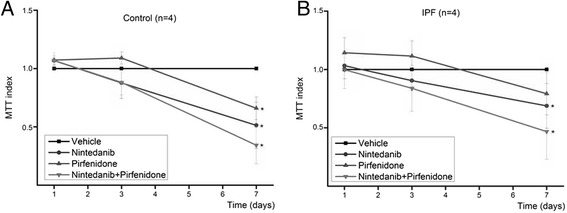
“The combination of the two drugs seems to reduce cell proliferation more than either of them individually in human lung derived cells culture [105].”
BackgroundRamírez‐Ríos, S., Michallet, S., Peris, L., Barette, C., Rabat, C., Feng, Y., Fauvarque, M., Andrieux, A., Sadoul, K., & Lafanéchère, L. (2020) · Frontiers in Pharmacology · doi:10.3389/fphar.2020.00543 · Cited by 19
Antifibrotic drugs in lung transplantation and chronic lung allograft dysfunction: a review
Bos, S., Sadeleer, L. D., Vanstapel, A., Beeckmans, H., Sacreas, A., Yserbyt, J., Wuyts, W. A., & Vos, R. (2021) · European Respiratory Review · doi:10.1183/16000617.0050-2021 · Cited by 26
Cyclic Stretching of Fibrotic Microtissue Array for Evaluation of Anti-Fibrosis Drugs
Asmani, M., Kotei, C., Hsia, I., Marecki, L., Wang, T., Zhou, C., & Zhao, R. (2019) · Cellular and Molecular Bioengineering · doi:10.1007/s12195-019-00590-3 · Cited by 16
Pulmonary fibrosis, part II: state-of-the-art patient management
Meyer, K. C. (2017) · Expert Review of Respiratory Medicine · doi:10.1080/17476348.2017.1312347 · Cited by 18
“[44] reported a synergistic effect of pirfenidone and nintedanib on in vitro proliferation of fibroblasts, and Hagmeyer et al.”
BackgroundInvestigational drugs for idiopathic pulmonary fibrosis
Varone, F., Montemurro, G., Macagno, F., Calvello, M., Conte, E. G., Intini, E., Iovene, B., Leone, P. M., Mari, P., & Richeldi, L. (2017) · Expert Opinion on Investigational Drugs · doi:10.1080/13543784.2017.1364361 · Cited by 15
“Some researches are focused on the possible efficacy of the combination of pirfenidone and nintedanib [119,120], the only two approved drugs for IPF.”
BackgroundTashiro, S., Tanaka, M., Goya, T., Aoyagi, T., Kurokawa, M., Imoto, K., Kuwano, A., Takahashi, M., Suzuki, H., Kohjima, M., et al. (2021) · Toxicology and Applied Pharmacology · doi:10.1016/j.taap.2021.115817 · Cited by 18
Adipose Stromal Cell-Secretome Counteracts Profibrotic Signals From IPF Lung Matrices
Vasse, G. F., van Os, L., Jager, M. D., Jonker, M. R., Borghuis, T., Toorn, L. T. V. D., Jellema, P. G., White, E. S., van Rijn, P., Harmsen, M. C., et al. (2021) · Frontiers in Pharmacology · doi:10.3389/fphar.2021.669037 · Cited by 16
“Multiple ECM proteins such as fibronectin and periostin are known to be more abundant in lung tissue of patients with IPF (Naik et al., 2012; Lehtonen et al., 2016; Tomos et al., 2017; Kudo and Kii, 2018), but collagens are the most abundant.”
BackgroundShakeel, I., Afzal, M., Islam, A., Sohal, S. S., & Hassan, M. I. (2023) · Medicine in Drug Discovery · doi:10.1016/j.medidd.2023.100167 · Cited by 16
Imaging of Idiopathic Pulmonary Fibrosis
Kusmirek, J. E., Martin, M. D., & Kanne, J. P. (2016) · Radiologic Clinics of North America · doi:10.1016/j.rcl.2016.05.004 · Cited by 15
Speca, S., Dubuquoy, C., Rousseaux, C., Chavatte, P., Desreumaux, P., & Spagnolo, P. (2021) · PLoS ONE · doi:10.1371/journal.pone.0257281 · Cited by 13
Hsia, I., Asmani, M., & Zhao, R. (2023) · Biosensors and Bioelectronics · doi:10.1016/j.bios.2023.115194 · Cited by 12
Yüksel, R., Yüksel, N., Yazır, Y., Öztürk, A., Rençber, S. F., & KÜÇÜK, K. D. (2023) · Experimental Eye Research · doi:10.1016/j.exer.2023.109431 · Cited by 12
Wang, L., Zhu, W., Sun, R., Liu, J., Ma, Q., Zhang, B., & Shi, Y. (2022) · Evidence-based Complementary and Alternative Medicine · doi:10.1155/2022/7753508 · Cited by 11
“However, differentiation of lung fibroblasts into myofibroblasts is essential for the development of PF [37, 38].”
BackgroundLung Cancer in Patients with Severe Idiopathic Pulmonary Fibrosis: Critical Aspects
Bargagli, E., Bonti, V., Ferrari, K., Rosi, E., Bindi, A., Bartolucci, M., Moroni, C., & Voltolini, L. (2017) · In Vivo · doi:10.21873/invivo.11130 · Cited by 13
Chondroitin sulfate in tissue remodeling: Therapeutic implications for pulmonary fibrosis
Kai, Y., Yoneyama, H., Yoshikawa, M., Kimura, H., & Muro, S. (2021) · Respiratory Investigation · doi:10.1016/j.resinv.2021.05.012 · Cited by 12
A drug-responsive multicellular human spheroid model to recapitulate drug-induced pulmonary fibrosis
Saygılı, E., Devamoglu, U., Bağca, B. G., Göksel, Ö., Avcı, Ç. B., Göksel, T., & Yeşil-Çeliktaş, Ö. (2022) · Biomedical Materials · doi:10.1088/1748-605x/ac73cd · Cited by 11
“The dosage ranges of both nintedanib (0.1–1 µ M) and pirfenidone (0.5–1.5 mM) were chosen from previous studies [61, 62].”
InfluentialLee, J. H., & Song, J. (2023) · Journal of Thoracic Disease · doi:10.21037/jtd-23-946 · Cited by 15
“The different estimated action mechanisms of pirfenidone and nintedanib provide a rational basis for use of combination therapy of the two agents in an attempt to hamper lung function decline in IPF (8).”
Promising advances in treatments for the management of idiopathic pulmonary fibrosis
Sofia, C., Comes, A., Sgalla, G., & Richeldi, L. (2024) · Expert Opinion on Pharmacotherapy · doi:10.1080/14656566.2024.2354460 · Cited by 11
Liu, T., Jia, H., Li, X., Shi, L., Wang, J., Liu, M., Liu, H., Zhang, T., Zhao, Z., Zhao, X., et al. (2025) · International Immunopharmacology · doi:10.1016/j.intimp.2025.114718 · Cited by 10
Meersseman, C., Martínez-Besteiro, E., Romain‐Scelle, N., Crestani, B., Marchand-Adam, S., Nunès, H., Wémeau-Stervinou, L., Borie, R., Diesler, R., Valenzuela, C., et al. (2025) · Archivos de Bronconeumología · doi:10.1016/j.arbres.2025.10.004 · Cited by 11
RS4651 suppresses lung fibroblast activation via the TGF-β1/SMAD signalling pathway
Li, S., Xu, A., Li, Y., Tan, C., Regina, G. L., Silvestri, R., Wang, H., & Qi, W. (2021) · European Journal of Pharmacology · doi:10.1016/j.ejphar.2021.174135 · Cited by 9
Zhang, C.-Y., Guan, X., Song, Z.-H., Jiang, H., Liu, Y., Chen, P., Duan, J., & Zhou, Y. (2022) · Oxidative Medicine and Cellular Longevity · doi:10.1155/2022/5759626 · Cited by 15
“Although pirfenidone and nintedanib have been authorized by the Food and Drug Administration [2], they only slow down lung function decline in patients with the mild and moderate disease [3].”
Meng, C., Fan, G., Liu, J., Tao, N., & Sun, T. (2024) · Biochemical and Biophysical Research Communications · doi:10.1016/j.bbrc.2024.150020 · Cited by 9
Bicaklioglu, G., Yazır, Y., Duruksu, G., Rençber, S. F., & Yüksel, N. (2022) · International Journal of Ophthalmology · doi:10.18240/ijo.2022.06.08 · Cited by 7
Haak, A. J., Girtman, M. A., Ali, M. F., Carmona, E. M., LIMPER, A. H., & Tschumperlin, D. J. (2017) · European Journal of Pharmacology · doi:10.1016/j.ejphar.2017.05.050 · Cited by 7
“In an effort to identify the mechanism of action of pirfenidone, its in vitro antifibrotic efficacy was established in isolated fibroblasts (Conte et al., 2014; Hewitson et al., 2001; Lehtonen et al., 2016a).”
BackgroundIdiopathic Pulmonary Fibrosis and Antifibrotic Treatments: Focus on Experimental Studies
Lunardi, F., Pezzuto, F., Vuljan, S. E., & Calabrese, F. (2018) · Archives of Pathology & Laboratory Medicine · doi:10.5858/arpa.2018-0080-ra · Cited by 6
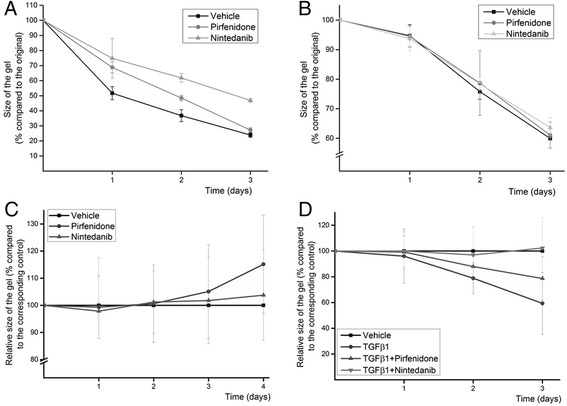
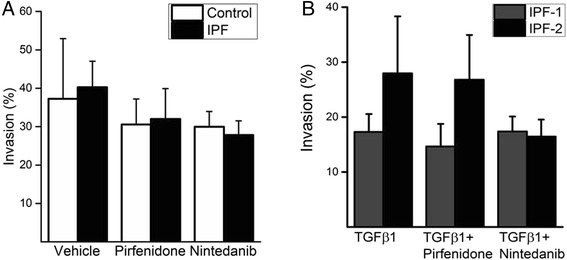
“Both pirfenidone and nintedanib were able to reduce the amount of a-SMA expression and the myofibroblastic appearance although the level of reduction was cell-line dependent.(53) In an in vitro study, Knüppel and colleagues(54) very recently investigated a novel antifibrotic mechanism.”
BackgroundJaśkiewicz, K., Mycroft, K., Maskey‐Warzęchowska, M., Paralusz-Stec, K., Siemiez, N., Nejman‐Gryz, P., Barnaś, M., Krenke, R., & Górska, K. (2020) · Journal of Clinical Medicine · doi:10.3390/jcm9082523 · Cited by 9
“Animal models of lung fibrosis (bleomycin-induced fibrosis) have shown the efficacy of pirfenidone in inhibiting the development of fibrosis, reducing oxidative stress indicators and reducing neutrophilic inflammation [16,17].”
BackgroundSynthesis and evaluation of new pirfenidone derivatives as anti-fibrosis agents
Gu, C., Li, W., Ju, Q., Yao, H., Yang, L., An, B., Hu, W., & Li, X. (2022) · RSC Advances · doi:10.1039/d2ra00990k · Cited by 7
Three-Dimensional Idiopathic Pulmonary Fibrosis Model Using a Layer-by-Layer Cell Coating Technique
Kuno, H., Akagi, T., Fukui, E., Yamato, H., Akashi, M., & Shintani, Y. (2021) · Tissue Engineering Part C Methods · doi:10.1089/ten.tec.2020.0365 · Cited by 7
Undifferentiated Pleomorphic Sarcoma after Pirfenidone Use: A Case Report
Moore, C. A., & Kapila, A. (2018) · The Permanente Journal · doi:10.7812/tpp/17-116 · Cited by 6
Patient Profile-Based Management with Nintedanib in Patients with Idiopathic Pulmonary Fibrosis
Viswanathan, V. K., Ghoshal, A. G., Mohan, A., Patil, K., Bhargave, C., CHOUDHARI, S. Y., & Mehta, S. C. (2024) · Pulmonary Therapy · doi:10.1007/s41030-024-00271-1 · Cited by 9
Inchingolo, R., Condoluci, C., Smargiassi, A., Mastrobattista, A., Boccabella, C., Comes, A., Golfi, N., & Richeldi, L. (2017) · Expert Opinion on Pharmacotherapy · doi:10.1080/14656566.2017.1383382 · Cited by 7
“Growing evidence supports a multifactorial pathogenesis in IPF [3,14,15].”
BackgroundPotential roles of exosomes in the initiation and metastatic progression of lung cancer
Liang, H., Zhang, L., & Rong, J. (2023) · Biomedicine & Pharmacotherapy · doi:10.1016/j.biopha.2023.115222 · Cited by 5
Germanguz, I., Aranda, E., Xiong, J. C., Kissel, N., Nichols, A., Gadee, E., & O’Neill, J. D. (2019) · bioRxiv (Cold Spring Harbor Laboratory) · doi:10.1101/833913 · Cited by 13
Lehtonen, S. T., & Kaarteenaho, R. L. (2022) · Cells · doi:10.3390/cells11142226 · Cited by 4
“According to several studies [10,12,14,16,20,21], fibroblast cell lines cultured from BAL seem to remain heterogeneous, but there is currently no data showing how well this heterogeneity resembles that seen in cell lines cultured from lung tissue or in lung tissue in vivo.”
BackgroundSelf-citationSandal, A., Akgün, M., & Nemery, B. (2023) · Springer eBooks · doi:10.1007/978-3-031-22483-6_96-1 · Cited by 4
Metadata
- Authors
- Lehtonen, S. T., Veijola, A., Karvonen, H., Lappi-Blanco, E., Sormunen, R., Korpela, S., Zagai, U., Sköld, M. C., & Kaarteenaho, R.
- Affiliations
- Oulu University Hospital (FI)
- University of Toronto (CA)
- Karolinska Institutet (SE)
- University of Eastern Finland (FI)
- Corresponding author
- Lehtonen, Siri T.
- Venue
- Respiratory Research
- Published
- 2016-02-04
- Volume
- 17
- Issue
- 1
- Pages
- 14-14
- ISSN
- 1465-9921 (ISSN-L)
- 1465-993X
- PMC
- PMC4743320
- OpenAlex
- W2267777024
- Cited by
- 133
- References
- 35
- Citations by year
- 2026: 6 · 2025: 9 · 2024: 4 · 2023: 11 · 2022: 15 · 2021: 20 · 2020: 7 · 2019: 15 · 2018: 22 · 2017: 19 · 2016: 5
- FWCI
- 18.18
- Type
- journal article
- Language
- en
- Open access
- gold
- doi.org
- Locations
- Respiratory Research (publishedVersion)
- PubMed Central (publishedVersion, cc-by)
- PubMed (publishedVersion)
- TSpace (University of Toronto) (submittedVersion)
- Funders
- Foundation of the Finnish Anti-Tuberculosis Association
- Jalmari and Rauha Ahokas Foundation
- Väinö and Laina Kivi Foundation
- Swedish-Finnish Cultural Foundation
- Oulu University Hospital
- Hjärt-Lungfonden
- Otto A. Malm Foundation
- Topics
- Health Sciences › Medicine › Pulmonary and Respiratory Medicine › Interstitial Lung Diseases and Idiopathic Pulmonary Fibrosis
- Health Sciences › Medicine › Pulmonary and Respiratory Medicine › Pulmonary Hypertension Research and Treatments
- Health Sciences › Medicine › Pulmonary and Respiratory Medicine › Occupational and environmental lung diseases
- Keywords
- idiopathic pulmonary fibrosis, pirfenidone, nintedanib, fibroblasts, myofibroblasts, fibroblast proliferation, alpha-smooth muscle actin, fibronectin, collagen gel contraction, cell invasion, combination therapy, antifibrotic agents, drug screening
- MeSH terms
- Anti-Inflammatory Agents, Non-Steroidal, Cells, Cultured, Dose-Response Relationship, Drug, Drug Therapy, Combination, Fibroblasts, Humans, Indoles, Pyridones, Treatment Outcome, Cell Proliferation, Idiopathic Pulmonary Fibrosis, Myofibroblasts
About these checks
Registry, retraction, Cites and statistics results are computed, not judged, with one exception: a printed reference that no index lists is read once by a model before it counts as a citation error. Claims are extracted by a model and kept only when their quote appears verbatim in the text; each cited source is then checked, with a model’s help, for whether it says what the claim relies on. Those verdicts can be wrong — read the claim’s quote and the cited source before relying on one.
Statistics and arithmetic are recomputed, not judged.
Confidence bands are shown only for fields calibrated on our annotated test set. None is calibrated yet, so no band is shown.
What counts as a claim ›How we measure confidence ›How we check this ›
Are you an author, or do you see a problem with this page? Request a review
Data sources
Bibliographic data: Semantic Scholar, OpenAlex, Crossref.
Contains information from the Semantic Scholar Academic Graph Datasets, made available under the ODC Attribution License (ODC-BY 1.0).
Semantic Scholar’s data is described in: Kinney, R., et al. (2023). The Semantic Scholar Open Data Platform. arXiv:2301.10140.
