

Effect of metformin on all-cause and cardiovascular mortality in patients with coronary artery diseases: a systematic review and an updated meta-analysis
Open accessThe DOI matches its Crossref record; 80 of the 81 references it cites were found in a registry or an index.
Abstract
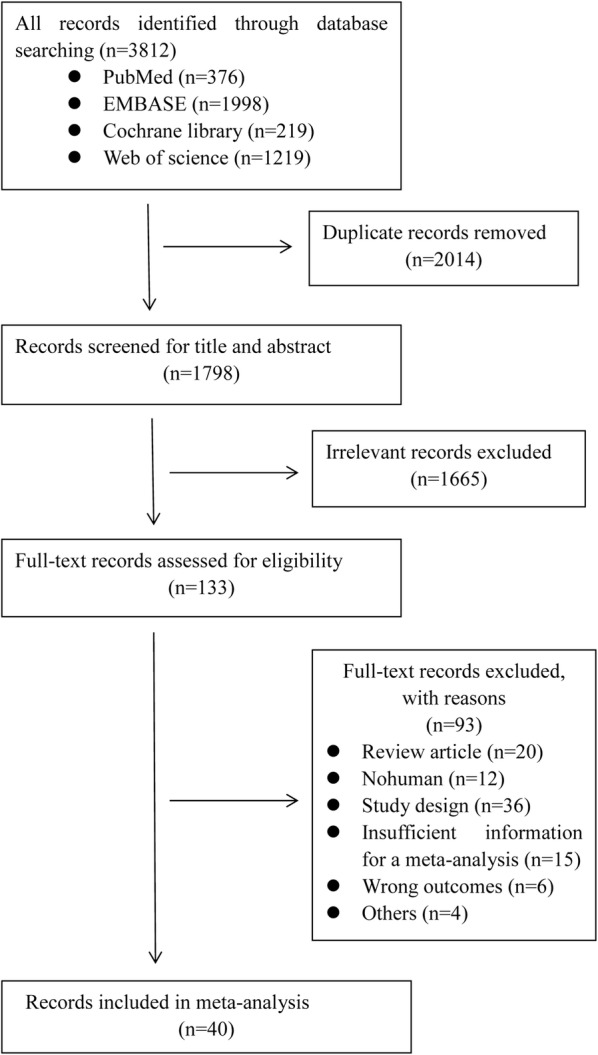
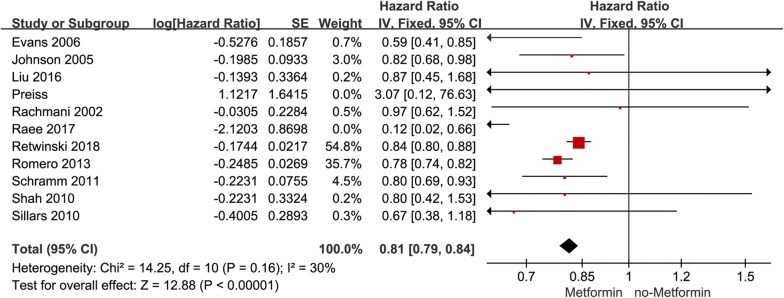
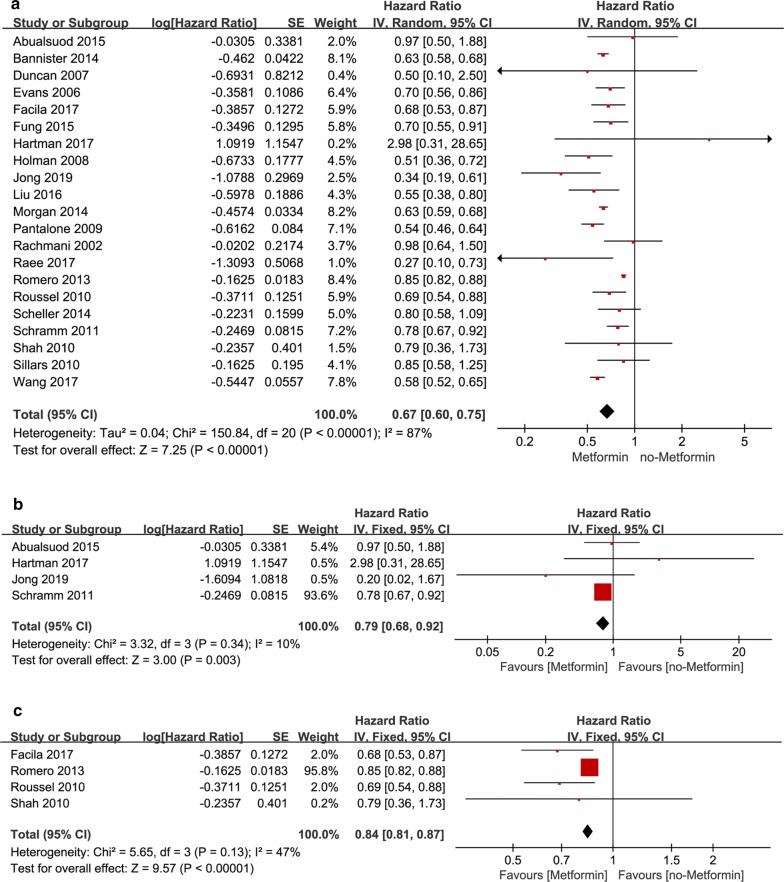
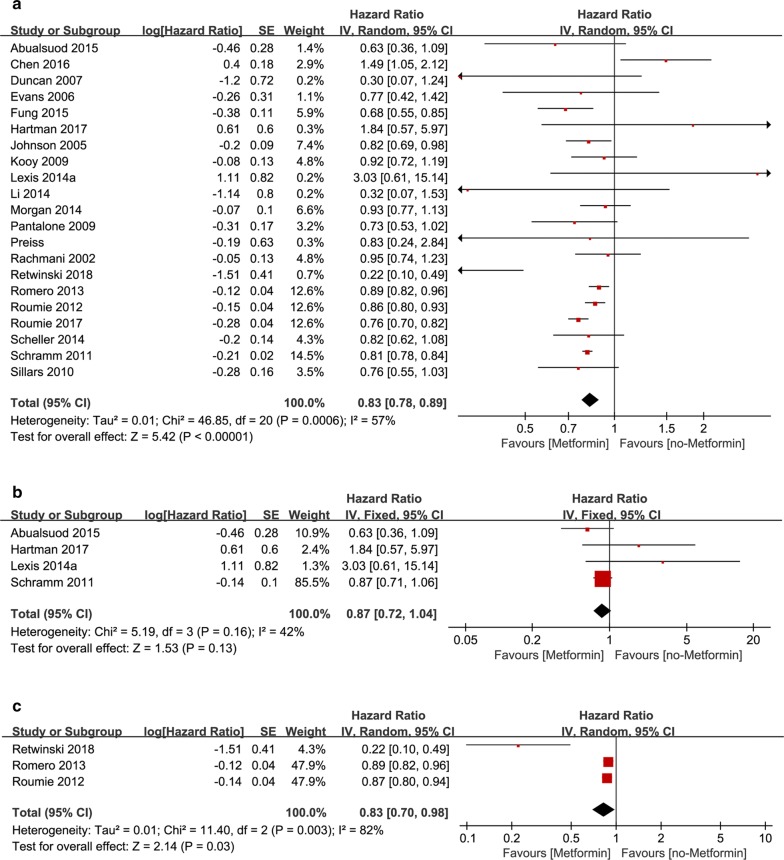
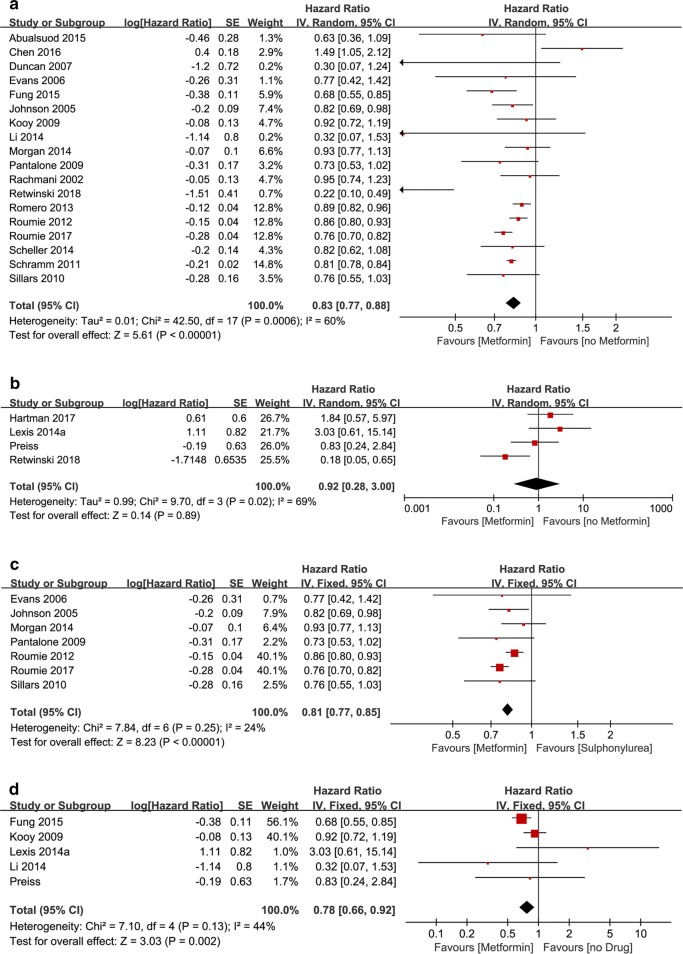
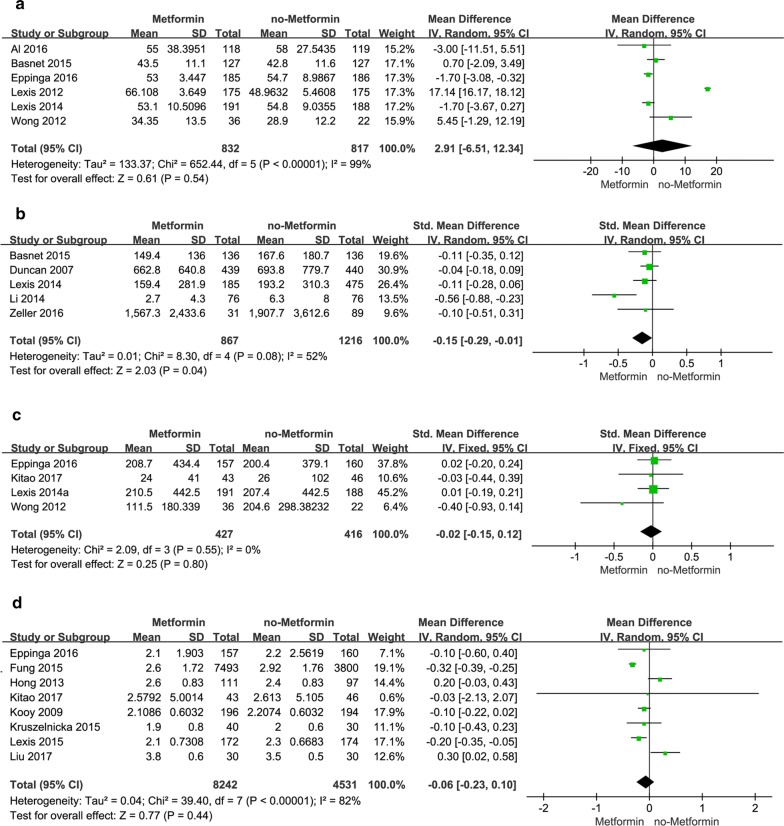
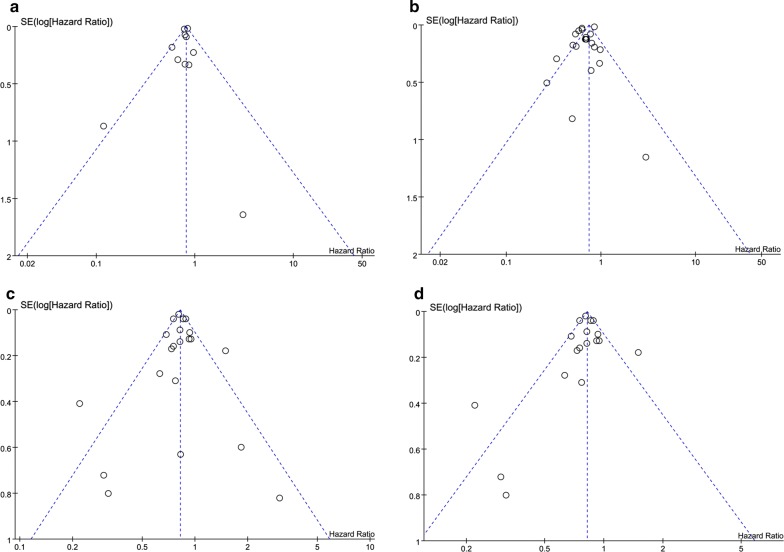
BACKGROUND: Metformin is the most widely prescribed drug to lower glucose and has a definitive effect on the cardiovascular system. The goal of this systematic review and meta-analysis is to assess the effects of metformin on mortality and cardiac function among patients with coronary artery disease (CAD). METHODS: Relevant studies reported before October 2018 was retrieved from databases including PubMed, EMBASE, Cochrane Library and Web of Science. Hazard ratio (HR) was calculated to evaluate the all-cause mortality, cardiovascular mortality and incidence of cardiovascular events (CV events), to figure out the level of left ventricular ejection fraction (LVEF), creatine kinase MB (CK-MB), type B natriuretic peptide (BNP) and to compare the average level of low density lipoprotein (LDL). RESULTS: In this meta-analysis were included 40 studies comprising 1,066,408 patients. The cardiovascular mortality, all-cause mortality and incidence of CV events were lowered to adjusted HR (aHR) = 0.81, aHR = 0.67 and aHR = 0. 83 respectively after the patients with CAD were given metformin. Subgroup analysis showed that metformin reduced all-cause mortality in myocardial infarction (MI) (aHR = 0.79) and heart failure (HF) patients (aHR = 0.84), the incidence of CV events in HF (aHR = 0.83) and type II diabetes mellitus (T2DM) patients (aHR = 0.83), but had no significant effect on MI (aHR = 0.87) and non-T2DM patients (aHR = 0.92). Metformin is superior to sulphonylurea (aHR = 0.81) in effects on lowering the incidence of CV events and in effects on patients who don't use medication. The CK-MB level in the metformin group was lower than that in the control group standard mean difference (SMD) = - 0.11). There was no significant evidence that metformin altered LVEF (MD = 2.91), BNP (MD = - 0.02) and LDL (MD = - 0.08). CONCLUSION: Metformin reduces cardiovascular mortality, all-cause mortality and CV events in CAD patients. For MI patients and CAD patients without T2DM, metformin has no significant effect of reducing the incidence of CV events. Metformin has a better effect of reducing the incidence of CV events than sulfonylureas.
Overview
The claims and statistics of this paper haven’t been checked yet.
Free: it reads the open-access text and checks the first 5 claims that cite a source we can check. Create a free account to check every claim.
Integrity signals
Registry
Cites
Statistics
Figures
Verification
Claims the paper makes
The claims and statistics of this paper haven’t been checked yet.
Free: it reads the open-access text and checks the first 5 claims that cite a source we can check. Create a free account to check every claim.
Claims other papers make about this one
Each is checked against this paper’s own text: does it say what the citing paper says it does?
In the citing paper
“This Class IIa recommendation for metformin is based on the weight of opinion rather than the weight of evidence; results from meta-analyses of observational studies suggest associations with better CV outcome, but this is not supported by results from meta-analyses restricted to randomized trials in patients with T2DM and ASCVD, where no statistically significant effect of metformin has been”
From 2023 ESC guidelines for the management of cardiovascular disease in patients with diabetes. (2023) · cites this paper as [185]
Self-check
Percentages, sums and reported differences re-computed from the paper’s own numbers.
The self-check needs the paper’s full text.
Citations
Cites
1 retracted
Loi, H., Boal, F., Tronchère, H., Cinato, M., Крамар, С., Oleshchuk, O., Korda, M. M., & Kunduzova, O. (2019) · Frontiers in Pharmacology · doi:10.3389/fphar.2019.00154 · Cited by 53
RetractedPreferred Reporting Items for Systematic Reviews and Meta-Analyses: the PRISMA statement
Moher, D., Liberati, A., Tetzlaff, J., Altman, D. G., & for the PRISMA Group (2009) · BMJ · doi:10.1136/bmj.b2535 · Cited by 83,823
Preferred reporting items for systematic reviews and meta-analyses: the PRISMA Statement.
(2009) · PubMed Central · Cited by 44,859
Turner, R. C., Fox, C., Matthews, McElroy, H. H., Cull, C. A., Holman, R. R., Neil, P., Hadden, D. R., Wright, D., Manley, E., et al. (1998) · The Lancet · Cited by 8,419
Gupta, A., & Uribarri, J. (2016) · Hormone Research in Paediatrics · doi:10.1159/000444053 · Cited by 4,006
Campbell, J. M., Bellman, S. M., Stephenson, M. D., & Lisy., K. (2017) · Ageing Research Reviews · doi:10.1016/j.arr.2017.08.003 · Cited by 455
Kooy, A., de Jager, J., Lehert, P., Bets, D., Wulffelé, M. G., Donker, A. J. M., & Stehouwer, C. D. A. (2009) · Archives of Internal Medicine · doi:10.1001/archinternmed.2009.20 · Cited by 440
Schramm, T. K., Gislason, G. H., Vaag, A., Rasmussen, J. N., Folke, F., Hansen, M. L., Fosbøl, E. L., Køber, L., Norgaard, M. L., Madsen, M., et al. (2011) · European Heart Journal · doi:10.1093/eurheartj/ehr077 · Cited by 418
Griffin, S. J., Leaver, J. K., & Irving, G. J. (2017) · Diabetologia · doi:10.1007/s00125-017-4337-9 · Cited by 398
Cited by
2023 ESC guidelines for the management of cardiovascular disease in patients with diabetes.
Marx, N., Federici, M., Schütt, K., Müller-Wieland, D., Ajjan, R. A., Antunes, M. J., Christodorescu, R. M., Crawford, C., Di Angelantonio, E., Eliasson, B., et al. (2023) · European Heart Journal · doi:10.1093/eurheartj/ehad192 · Cited by 1,642
Muzurović, E., Mikhailidis, D. P., & Mantzoros, C. (2021) · Metabolism · doi:10.1016/j.metabol.2021.154770 · Cited by 336
Wittert, G., Bracken, K., Robledo, K. P., Grossmann, M., Yeap, B. B., Handelsman, D. J., Stuckey, B., Conway, A., Inder, W., McLachlan, R., et al. (2021) · The Lancet Diabetes & Endocrinology · doi:10.1016/s2213-8587(20)30367-3 · Cited by 362
Drug-microbiota interactions: an emerging priority for precision medicine
Zhao, Q., Chen, Y., Huang, W., Zhou, H., & Zhang, W. (2023) · Signal Transduction and Targeted Therapy · doi:10.1038/s41392-023-01619-w · Cited by 268
“346,347 351 While some theories suggest that metformin activates AMP-activated protein kinase (AMPK) and inhibits the mitochondrial respiratory chain, these completely account for all of its positive actions.”
BackgroundMetformin: Is it a drug for all reasons and diseases?
Triggle, C. R., Mohammed, I., Bshesh, K., Marei, I., Ye, K., Ding, H., MacDonald, R., Hollenberg, M. D., & Hill, M. A. (2022) · Metabolism · doi:10.1016/j.metabol.2022.155223 · Cited by 275
Metformin: A Review of Potential Mechanism and Therapeutic Utility Beyond Diabetes
Dutta, S., Shah, R. B., Singhal, S., Dutta, S. B., Bansal, S., Sinha, S., & Haque, M. (2023) · Drug Design, Development and Therapy · doi:10.2147/dddt.s409373 · Cited by 248
“reported by a meta analysis where metformin reduced all-cause and cardiovascular death in patients having coronary artery illnesses.(76) The “MetCool ACS” trial has been initiated in patients without diabetes, to evaluate the effectiveness”
Insulin: too much of a good thing is bad
Kolb, H., Kempf, K., Röhling, M., & Martin, S. (2020) · BMC Medicine · doi:10.1186/s12916-020-01688-6 · Cited by 237
Should metformin remain the first-line therapy for treatment of type 2 diabetes?
Baker, C., Retzik-Stahr, C., Singh, V., Plomondon, R., Anderson, V., & Rasouli, N. (2021) · Therapeutic Advances in Endocrinology and Metabolism · doi:10.1177/2042018820980225 · Cited by 181
Approved Nanomedicine against Diseases
Jia, Y., Jiang, Y., He, Y., Zhang, W., Zou, J., Magar, K. T., Boucetta, H., Teng, C., & He, W. (2023) · Pharmaceutics · doi:10.3390/pharmaceutics15030774 · Cited by 207
The Current and Potential Therapeutic Use of Metformin—The Good Old Drug
Drzewoski, J., & Hanefeld, M. (2021) · Pharmaceuticals · doi:10.3390/ph14020122 · Cited by 198
“Furthermore, it was found that besides the anti-hyperglycemic effect, metformin could reduce all-cause mortality in the T2DM subgroup of patients with HF only [6].”
BackgroundMetformin: Therapeutic profile in the treatment of type 2 diabetes
Bailey, C. J. (2024) · Diabetes Obesity and Metabolism · doi:10.1111/dom.15663 · Cited by 180
“122 As noted in the UKPDS, the CV benefits of metformin emerge gradually during several years of treatment, and while some short-term studies provide numerical reductions in CV events, these may not achieve statistical significance.”
The intersection of metformin and inflammation
Bharath, L. P., & Nikolajczyk, B. S. (2021) · American Journal of Physiology-Cell Physiology · doi:10.1152/ajpcell.00604.2020 · Cited by 134
Diabetic Vasculopathy: Molecular Mechanisms and Clinical Insights
Jia, G., Bai, H., Mather, B., Hill, M. A., Jia, G., & Sowers, J. R. (2024) · International Journal of Molecular Sciences · doi:10.3390/ijms25020804 · Cited by 136
“Metformin has been shown to be more effective for reducing the incidence of CV events than sulfonylurea [85].”
BackgroundQin, F., Ma, H., Zou, J., Wang, W., Zhu, L., Deng, H., Meng, M., Tan, S., Zhang, H., Xiao, X., et al. (2020) · Journal of Molecular and Cellular Cardiology · doi:10.1016/j.yjmcc.2020.05.016 · Cited by 127
Personalized type 2 diabetes management: an update on recent advances and recommendations
Williams, D. M., Jones, H., & Stephens, J. W. (2022) · Diabetes, Metabolic Syndrome and Obesity: Targets and Therapy · doi:10.2147/dmso.s331654 · Cited by 121
“One meta-analysis reported that metformin reduced the rate of cardiovascular events, cardiovascular mortality and all-cause mortality.(53) Compared with other treatments, sulphonylurea use in people with T2D was associated with increased cardiovascular and all-cause mortality.”
Gut-Heart Axis: The Role of Gut Microbiota and Metabolites in Heart Failure
Snelson, M., Muralitharan, R. R., Liu, C., Markó, L., Forslund, S. K., Marques, F. Z., & Tang, W. H. W. (2025) · Circulation Research · doi:10.1161/circresaha.125.325516 · Cited by 126
Goel, S. K., Singh, R. P., Singh, V., Singh, H., Kumari, P., Chopra, H., Sharma, R., Nepovimová, E., Vališ, M., Kuča, K., et al. (2022) · Frontiers in Genetics · doi:10.3389/fgene.2022.1022739 · Cited by 130
“Gradually, studies have found more evidence for the cardioprotective nature of metformin (Han et al., 2019; Slater et al., 2019).”
BackgroundHoong, C. W. S., & Chua, M. W. J. (2021) · Endocrinology · doi:10.1210/endocr/bqab079 · Cited by 110
Li, T., Providencia, R. A., Mu, N., Yin, Y., Chen, M., Wang, Y., Liu, M., Yu, L., Gu, C., & Ma, H. (2021) · Cardiovascular Diabetology · doi:10.1186/s12933-020-01202-5 · Cited by 106
“Han and colleagues included 40 studies comprising 1,066,408 patients and found that metformin reduces cardiovascular mortality, all-cause mortality and cardiovascular events in coronary artery diseases (CAD) patients [13].”
BackgroundChristensen, R. H., von Scholten, B. J., Hansen, C. S., Jensen, M. T., Vilsbøll, T., Rossing, P., & Jørgensen, P. G. (2019) · Cardiovascular Diabetology · doi:10.1186/s12933-019-0917-y · Cited by 103
Lee, C. G., Heckman-Stoddard, B., Dabelea, D., Gadde, K. M., Ehrmann, D., Ford, L., Prorok, P., Boyko, E. J., Pi-Sunyer, X., Wallia, A., et al. (2021) · Diabetes Care · doi:10.2337/dc21-1046 · Cited by 102
Effects of Metformin in Heart Failure: From Pathophysiological Rationale to Clinical Evidence
Salvatore, T., Galiero, R., Caturano, A., Vetrano, E., Rinaldi, L., Coviello, F., Martino, A. D., Albanese, G., Marfella, R., Sardu, C., et al. (2021) · Biomolecules · doi:10.3390/biom11121834 · Cited by 102
“In a recent meta-analysis including 40 studies comprising over a million diabetic patients, metformin reduced all-cause mortality as well as the incidence of CV events in people with HF and CHD better than sulfonylureas or non-medication [192].”
BackgroundAla, M., & Ala, M. (2021) · ACS Pharmacology & Translational Science · doi:10.1021/acsptsci.1c00167 · Cited by 95
Halabi, A., Sen, J., Huynh, Q., & Marwick, T. H. (2020) · Cardiovascular Diabetology · doi:10.1186/s12933-020-01100-w · Cited by 93
Metformin: An old drug against old age and associated morbidities
Salvatore, T., Pafundi, P. C., Morgillo, F., Liello, R. D., Galiero, R., Nevola, R., Marfella, R., Monaco, L., Rinaldi, L., Adinolfi, L. E., et al. (2020) · Diabetes Research and Clinical Practice · doi:10.1016/j.diabres.2020.108025 · Cited by 91
Chunxing, L., Liang, S., Gao, L., & Liu, H. (2021) · PLoS ONE · doi:10.1371/journal.pone.0244689 · Cited by 96
Hsu, S., Cheng, K., Mgbeahuruike, M. O., Lin, Y., Wu, C., Wang, H., Yen, C., Chiu, C., & Sheu, S. (2021) · International Journal of Molecular Sciences · doi:10.3390/ijms22179453 · Cited by 86
“The previous large observational studies indicated that significant decrease in the incidence of coronary artery disease (CAD) was observed in early- or late-stage DM patients treated with metformin compared to sulfonylurea monotherapy [32].”
BackgroundMetformin in therapeutic applications in human diseases: its mechanism of action and clinical study
Du, Y., Zhu, Y., Zhou, Y., Ding, J., & Liu, J. (2022) · Molecular Biomedicine · doi:10.1186/s43556-022-00108-w · Cited by 97
The right place for metformin today
Schernthaner, G., & Schernthaner, G.-H. (2019) · Diabetes Research and Clinical Practice · doi:10.1016/j.diabres.2019.107946 · Cited by 88
Zhang, K., Yang, W., Dai, H., & Deng, Z. (2020) · Diabetes Research and Clinical Practice · doi:10.1016/j.diabres.2020.108001 · Cited by 87
Froldi, G. (2024) · Pharmaceuticals · doi:10.3390/ph17040478 · Cited by 83
“Of interest, metformin treatment is accompanied by a moderate reduction in body weight (3–4 kg) of the subjects and, in the long-term use, by a decrease in cardiovascular risk with favorable effects on vascular endothelium and antioxidant and anti-inflammatory actions [29,30].”
BackgroundSchernthaner, G., Brand, K. M. G., & Bailey, C. J. (2022) · Metabolism · doi:10.1016/j.metabol.2022.155160 · Cited by 77
Li, S., Shi, Y., Liu, P., Song, Y., Liu, Y., Ying, L., Quan, K., Guo, Y., Fan, Z., & Zhu, W. P. (2020) · Journal of Neuroinflammation · doi:10.1186/s12974-020-01868-4 · Cited by 76
“Metformin, an AMPK activator, exerts a cardioprotective function by reducing the incidence of cardiovascular events [21].”
BackgroundSelf-citationGandoy-Fieiras, N., González‐Juanatey, J. R., & Eirás, S. (2020) · International Journal of Molecular Sciences · doi:10.3390/ijms21072641 · Cited by 71
Park, S. S., Perez, J. L. P., Gandara, B. P., Agudelo, C. W., Ortega, R. R., Ahmed, H., García‐Arcos, I., McCarthy, C., & Geraghty, P. M. (2022) · Medicina · doi:10.3390/medicina58081030 · Cited by 78
Zhang, D.-P., Xu, L., Wang, L.-F., Wang, H.-J., & Jiang, F. (2020) · Cardiovascular Diabetology · doi:10.1186/s12933-020-0987-x · Cited by 64
Recomendaciones preventivas cardiovasculares. Actualización PAPPS 2022
Orozco‐Beltrán, D., Cuixart, C. B., Banegas, J. R., Gil-Guillén, V. F., Cuenca, A. M. C., Rioboó, E. M., Baldó, A. J., Vicuña, J., & Pérez, J. N. (2022) · Atención Primaria · doi:10.1016/j.aprim.2022.102444 · Cited by 80
Metformin: Past, Present, and Future
Chaudhary, S., & Kulkarni, A. (2024) · Current Diabetes Reports · doi:10.1007/s11892-024-01539-1 · Cited by 68
“Another meta-analysis by Han et al. showed that metformin reduced all-cause and cardiovascular death in patients with coronary artery diseases [57].”
Varghese, E., Samuel, S. M., Líšková, A., Kubatka, P., & Büsselberg, D. (2021) · PLoS Pathogens · doi:10.1371/journal.ppat.1009634 · Cited by 68
Cardiovascular disease risk and pathogenesis in systemic lupus erythematosus
Oliveira, C. B., & Kaplan, M. J. (2022) · Seminars in Immunopathology · doi:10.1007/s00281-022-00922-y · Cited by 72
“Although a subgroup analysis indicates no significant reduction in CV event incidence in patients without type 2 diabetes mellitus [168], metformin may have a role in addressing CVD risk in SLE patients.”
BackgroundEmerging role of neutrophil extracellular traps in the complications of diabetes mellitus
Shafqat, A., Rab, S. A., Ammar, O., Alsalameh, S., Alkhudairi, A., Kashir, J., AlKattan, K. M., & Yaqinuddin, A. (2022) · Frontiers in Medicine · doi:10.3389/fmed.2022.995993 · Cited by 67
The Potential to Fight Obesity with Adipogenesis Modulating Compounds
Zhao, J., Zhou, A., & Qi, W. (2022) · International Journal of Molecular Sciences · doi:10.3390/ijms23042299 · Cited by 61
“In addition, metformin decreases the T2D risk in obese adults [30], reduces weight gain and the risk of all-cause mortality in overweight patients with T2D [31], and reduces cardiovascular mortality in patients with coronary artery disease [32].”
BackgroundRiley, D. R., Essa, H., Austin, P., Preston, F., Kargbo, I., Ibarburu, G. H., Ghuman, R., Cuthbertson, D. J., Lip, G. Y. H., & Alam, U. (2023) · Diabetes, Obesity and Metabolism · doi:10.1111/dom.15185 · Cited by 59
Fontvieille, E., Viallon, V., Recalde, M., Córdova, R., Jansana, A., Peruchet‐Noray, L., Lennon, H., Heath, A. K., Aune, D., Christakoudi, S., et al. (2023) · BMC Medicine · doi:10.1186/s12916-023-03114-z · Cited by 65
“Second, metformin, a first line medication for T2D, may lead to weight loss and may also reduce the risk of certain cancers [44, 45].”
BackgroundRahman, M. M., Shaikh, M. A. A., Yeasmin, M. S., Gafur, M. A., Hossain, M. I., Alam, M. A., Khan, M. S., Paul, T., & Quddus, M. S. (2024) · Groundwater for Sustainable Development · doi:10.1016/j.gsd.2024.101244 · Cited by 59
Repurposing Antidiabetic Drugs for Cardiovascular Disease
Schubert, M., Hansen, S., Leefmann, J., & Guan, K. (2020) · Frontiers in Physiology · doi:10.3389/fphys.2020.568632 · Cited by 61
Recommendations for Practical Use of Metformin, a Central Pharmacological Therapy in Type 2 Diabetes
Vieira, I. H., Barros, L. M., Baptista, C. F., Rodrigues, D. M., & Paiva, I. (2021) · Clinical Diabetes · doi:10.2337/cd21-0043 · Cited by 64
The Use of Metformin to Increase the Human Healthspan
Piskovatska, V., Storey, K. B., Vaiserman, A. M., & Lushchak, O. V. (2020) · Advances in experimental medicine and biology · doi:10.1007/978-3-030-42667-5_13 · Cited by 61
Where Does Metformin Stand in Modern Day Management of Type 2 Diabetes?
Ahmad, E., Sargeant, J. A., Zaccardi, F., Khunti, K., Webb, D. R., & Davies, M. J. (2020) · Pharmaceuticals · doi:10.3390/ph13120427 · Cited by 61
Kuka, J., Ozola, M., Makrecka‐Kuka, M., Liepiņš, J., Grīnberga, S., Sevostjanovs, E., Vilks, K., Liepinsh, E., & Dambrova, M. (2020) · Scientific Reports · doi:10.1038/s41598-020-71470-4 · Cited by 56
Metformin Benefits: Another Example for Alternative Energy Substrate Mechanism?
Giaccari, A., Solini, A., Frontoni, S., & Prato, S. D. (2021) · Diabetes Care · doi:10.2337/dc20-1964 · Cited by 55
“(12), T2D subjects with coronary artery disease randomized to either metformin or glipi-”
BackgroundNT-proBNP as a predictor of death and cardiovascular events in patients with type 2 diabetes
Malachias, M. V. B., Wijkman, M. O., & Bertoluci, M. C. (2022) · Diabetology & Metabolic Syndrome · doi:10.1186/s13098-022-00837-6 · Cited by 56
“However, a meta-analysis of four studies, that evaluated the effect of metformin on BNP concentrations in patients with T2DM and CHD, concluded that the difference between patients on metformin versus non-metformin therapy was negligible [38].”
ResultTop, W. M. C., Kooy, A., & Stehouwer, C. D. A. (2022) · Pharmaceuticals · doi:10.3390/ph15030312 · Cited by 54
Li, T., Providencia, R. A., Jiang, W., Mu, N., Wang, Y., Li, X., Yin, Y., Liu, M., Yu, L., Gu, C., et al. (2022) · Drugs · doi:10.1007/s40265-021-01665-0 · Cited by 50
Gorica, E., Geiger, M. A., Venanzio, L. D., Atzemian, N., Kleeberger, J., Grigorian, D., Mongelli, A., Veseli, B. E., Mohammed, S. A., Ruschitzka, F. T., et al. (2025) · Cardiovascular Diabetology · doi:10.1186/s12933-025-02774-w · Cited by 55
Digital Health Coaching for Type 2 Diabetes: Randomized Controlled Trial of Healthy at Home
Azelton, K. R., Crowley, A. P., Vence, N., Underwood, K., Morris, G., Kelly, J., & Landry, M. J. (2021) · Frontiers in Digital Health · doi:10.3389/fdgth.2021.764735 · Cited by 49
“Certain medications which influence insulin resistance, including metformin, sodium-glucose cotransporter 2 (SGLT2) inhibitors and glucagon-like peptide 1 (GLP1) receptor agonists, have modest cardiovascular benefits although the exact mechanism is not known (18, 19).”
BackgroundSenescence: Pathogenic Driver in Chronic Obstructive Pulmonary Disease
Rivas, M., Gupta, G., Costanzo, L., Ahmed, H., Wyman, A. E., & Geraghty, P. M. (2022) · Medicina · doi:10.3390/medicina58060817 · Cited by 51
Metformin and cardiorenal outcomes in diabetes: A reappraisal
Petrie, J. R., Rossing, P. R., & Campbell, I. W. (2020) · Diabetes Obesity and Metabolism · doi:10.1111/dom.13984 · Cited by 49
Yang-Jensen, S. K., Nägele, N. S., & Jensen, B. A. H. (2025) · American Journal of Physiology-Cell Physiology · doi:10.1152/ajpcell.00704.2025 · Cited by 49
Metformin: new applications for an old drug
Naseri, A., Sanaie, S., Hamzehzadeh, S., Sahebari, S. S., Hosseini, M., Gholipour-khalili, E., Rezazadeh-Gavgani, E., Majidazar, R., Seraji, P., Daneshvar, S., et al. (2022) · Journal of Basic and Clinical Physiology and Pharmacology · doi:10.1515/jbcpp-2022-0252 · Cited by 46
Metformin and cognition from the perspectives of sex, age, and disease
Chaudhari, K., Reynolds, C. D., & Yang, S.-H. (2020) · GeroScience · doi:10.1007/s11357-019-00146-3 · Cited by 44
“On the other hand, in the Diabetes Prevention Program study, women receiving metformin to prevent T2DM were less adherent to treatment and reported a higher rate of adverse events (Walker et al. 2006).”
BackgroundInfluentialEffects of metformin on atrial and ventricular arrhythmias: evidence from cell to patient
Nantsupawat, T., Wongcharoen, W., Chattipakorn, S. C., & Chattipakorn, N. (2020) · Cardiovascular Diabetology · doi:10.1186/s12933-020-01176-4 · Cited by 43
Bailey, C. J., & Gwilt, M. (2022) · Frontiers in Pharmacology · doi:10.3389/fphar.2022.784459 · Cited by 42
The direct targets of metformin in diabetes and beyond
Yao, L., Wang, L., Zhang, R., Soukas, A. A., & Wu, L. (2024) · Trends in Endocrinology and Metabolism · doi:10.1016/j.tem.2024.07.017 · Cited by 41
Gorica, E., Mohammed, S. A., Ambrosini, S., Calderone, V., Costantino, S., & Paneni, F. (2022) · Frontiers in Cardiovascular Medicine · doi:10.3389/fcvm.2022.923014 · Cited by 40
GDF-15 as a Weight Watcher for Diabetic and Non-Diabetic People Treated With Metformin
Ouyang, J., Isnard, S., Lin, J., Fombuena, B., Peng, X., Chen, Y., & Routy, J.-P. (2020) · Frontiers in Endocrinology · doi:10.3389/fendo.2020.581839 · Cited by 39
Targeting ageing and preventing organ degeneration with metformin
Sunjaya, A. P., & Sunjaya, A. F. (2020) · Diabetes & Metabolism · doi:10.1016/j.diabet.2020.09.009 · Cited by 37
Rahman, M. M., Maniruzzaman, M., ealam, N., Mahmud, P., Khatun, S., Hossain, M. A., Hossain, M. I., Hasanuzzaman, M., Alam, M. A., Al-Amin, M., et al. (2025) · Carbohydrate Polymer Technologies and Applications · doi:10.1016/j.carpta.2025.100698 · Cited by 63
Wang, M.-C., Li, C., Liu, C.-S., Lin, C.-H., Yang, S.-Y., Li, T., & Lin, C. (2021) · Cardiovascular Diabetology · doi:10.1186/s12933-021-01421-4 · Cited by 37
Current type 2 diabetes guidelines: Individualized treatment and how to make the most of metformin
Chan, J. C. N., Yang, A., Chu, N. H. S., & Chow, E. (2024) · Diabetes Obesity and Metabolism · doi:10.1111/dom.15700 · Cited by 38
“67 However, the risk association of metformin with MI and heart failure among patients with T2D 68,69 was not always consistent.”
Rahman, M. M., Hossain, M. I., Ghos, B. C., Gafur, M. A., Alam, M. A., Uddin, M. J., Yeasmin, M. S., Hasan, M., Chowdhury, T. A., Rana, G. M. M., et al. (2024) · Environmental Nanotechnology Monitoring & Management · doi:10.1016/j.enmm.2024.101015 · Cited by 48
Balliu, B., Carcamo‐Orive, I., Gloudemans, M. J., Nachun, D. C., Durrant, M. G., Gazal, S., Park, C. Y., Knowles, D. A., Wabitsch, M., Quertermous, T., et al. (2021) · The American Journal of Human Genetics · doi:10.1016/j.ajhg.2021.08.014 · Cited by 41
Sim, R., Chong, C. W., Loganadan, N. K., Fong, A. Y. Y., Navaravong, L., Hussein, Z. B., Khunti, K., & Lee, S. W. H. (2022) · Diabetic Medicine · doi:10.1111/dme.14780 · Cited by 40
Role of neutrophils in type 2 diabetes and associated atherosclerosis
Keeter, W. C., Moriarty, A. K., & Galkina, E. (2021) · The International Journal of Biochemistry & Cell Biology · doi:10.1016/j.biocel.2021.106098 · Cited by 36
Lombardi, M., Chiabrando, J. G., Vescovo, G. M., Bressi, E., Del Buono, M. G., Carbone, S., Koenig, R. A., Van Tassell, B. W., Abbate, A., Biondi-Zoccai, G., et al. (2020) · Current Atherosclerosis Reports · doi:10.1007/s11883-020-00865-5 · Cited by 33
Tratamento farmacológico da hiperglicemia no DM2
Filho, R. L. D. S., Albuquerque, L., Cavalcanti, S. M., Tambascia, M. A., Valente, F., & Bertoluci, M. C. (2022) · Conectando Pessoas eBooks · doi:10.29327/557753.2022-10 · Cited by 42
Pleiotropic effects of anti-diabetic drugs: A comprehensive review
Nath, M., Bhattacharjee, K., & Choudhury, Y. (2020) · European Journal of Pharmacology · doi:10.1016/j.ejphar.2020.173349 · Cited by 37
Du, Y., Zhu, J., Guo, Z., Wang, Z., Wang, Y., Hu, M., Zhang, L., Yang, Y., Wang, J., Huang, Y., et al. (2024) · Expert Review of Clinical Pharmacology · doi:10.1080/17512433.2024.2306223 · Cited by 33
“In recent years, a number of conflicting conclusions have emerged: metformin may [3,4] or may not [5–7] reduce the risk of cardiovascular disease in patients with T2DM.”
BackgroundAnti-senescence therapies: a new concept to address cardiovascular disease
Stojanović, S. D., Thum, T., & Bauersachs, J. K. (2025) · Cardiovascular Research · doi:10.1093/cvr/cvaf030 · Cited by 34
“As a broadly implemented anti-diabetic medication reducing CV mortality in Type 2 diabetes, 97 metformin was examined for anti-senescence effects in multiple experimental models.”
Dugunchi, F., Mudgal, S. K., Marznaki, Z. H., Shirafkan, H., Abrotan, S., Jafarian, F., & Pourkia, R. (2024) · BMC Cardiovascular Disorders · doi:10.1186/s12872-024-03827-w · Cited by 34
“This widespread affliction places substantial societal burdens in terms of economic costs, disease burden, and escalated mortality rates [3].”
BackgroundChow, E., Yang, A., Chung, C. H. L., & Chan, J. C. N. (2022) · Pharmaceuticals · doi:10.3390/ph15040442 · Cited by 35
“However, the risk association of metformin with myocardial infarction and heart failure amongst patients with T2D [42,43] was not always consistent [44], with many of these meta-analyses and systematic reviews having low or critically low quality [25,44,45].”
ResultBertoluci, M. C., Salles, J. E. N., Silva‐Nunes, J., Pedrosa, H. C., Moreira, R. O., Duarte, R., Carvalho, D. M., Trujilho, F. R., Raposo, J. F. C. D. S., Parente, E. B., et al. (2020) · Diabetology & Metabolic Syndrome · doi:10.1186/s13098-020-00551-1 · Cited by 33
“• A prospective observational study [48] was conducted to assess the effect of starting metformin on the prognosis of patients with newly diagnosed HF and new-onset T2DM treated with a “contemporary medical regimen” for 9 years.”
BackgroundSutanto, H., Fetarayani, D., Narendra, M. R., & Nasution, S. A. (2025) · European Journal of Internal Medicine · doi:10.1016/j.ejim.2025.106488 · Cited by 39
“…in observational studies and randomized controlled trials, metformin use in elderly diabetic patients has been associated with reduced CV mortality and incidence of HF, effects that extend beyond glycemic control and likely involve attenuation of systemic SASP-mediated inflammation [202 – 204].”
Chiang, C., Ueng, K.-C., Chao, T., Lin, T., Wu, Y.-J., Wang, K.-L., Sung, S., Yeh, H., Li, Y., Liu, P., et al. (2020) · Journal of the Chinese Medical Association · doi:10.1097/jcma.0000000000000359 · Cited by 31
“Metformin remains the first-line therapy in diabetic patients with CHD, mainly based on the findings from the UKPDS trial, 29,43 three meta-analyses, 47,74,75 two observational study, 76,77 and its effect on the reduction in CAC severity.”
Cordero‐Herrera, I., Guimarães, D. D., Moretti, C. H., Zhuge, Z., Han, H., Haworth, S. M., Gonzalez, A. E. U., Andersson, D. C., Weitzberg, E., Lundberg, J. O., et al. (2020) · Nitric Oxide · doi:10.1016/j.niox.2020.01.013 · Cited by 30
Chen, Y., Li, H., Ye, Z., Găman, M., Tan, S. C., & Zhu, F. (2020) · European Journal of Pharmacology · doi:10.1016/j.ejphar.2020.173458 · Cited by 30
Interactions of Autophagy and the Immune System in Health and Diseases
Pant, A., Yao, X., Lavedrine, A., Viret, C., Dockterman, J., Chauhan, S. C., Shi, C.-S., Manjithaya, R. R., Cadwell, K., Kufer, T. A., et al. (2022) · Autophagy Reports · doi:10.1080/27694127.2022.2119743 · Cited by 32
Ding, Q., Tian, J., Li, M., Lian, F., Zhao, L., Wei, X., Han, L., Zheng, Y., Gao, Z., Yang, H., et al. (2020) · Frontiers in Cellular and Infection Microbiology · doi:10.3389/fcimb.2020.530160 · Cited by 31
Giordo, R., Posadino, A. M., Mangoni, A. A., & Pintus, G. (2023) · Biochemical Pharmacology · doi:10.1016/j.bcp.2023.115732 · Cited by 32
Dwivedi, A. K., Vishwakarma, D., Dubey, P., & Reddy, S. (2023) · European Journal of Endocrinology · doi:10.1093/ejendo/lvad067 · Cited by 29
Implications of endoplasmic reticulum stress and autophagy in aging and cardiovascular diseases
Ma, C., Liu, Y., & Fu, Z. (2024) · Frontiers in Pharmacology · doi:10.3389/fphar.2024.1413853 · Cited by 29
Self-citationDiabetic cardiomyopathy: insights into pathophysiology, diagnosis and clinical management
Chen, D., Sindone, A. P., Huang, M., Peter, K., & Jenkins, A. J. (2025) · Journal of Molecular and Cellular Cardiology · doi:10.1016/j.yjmcc.2025.06.013 · Cited by 27
Gut microbiome: A possible common therapeutic target for treatment of atherosclerosis and cancer
Wu, W., Ivanova, E. A., & Orekhov, A. N. (2020) · Seminars in Cancer Biology · doi:10.1016/j.semcancer.2020.06.017 · Cited by 29
Kamel, A. M., Sabry, N. A., & Farid, S. F. (2022) · BMC Cardiovascular Disorders · doi:10.1186/s12872-022-02845-w · Cited by 26
“Another meta-analysis showed that metformin reduced all-cause and cardiovascular mortality in diabetic and non-diabetic patients with coronary heart disease [39].”
BackgroundPolycystic Ovarian Syndrome: a Risk Factor for Cardiovascular Disease
Alvarez, Y. R., Pico, M. G., Ashokprabhu, N. D., Abou-Amro, K., Bailey, S., Pung, E., Oberholster, E., & Quesada, O. (2023) · Current Atherosclerosis Reports · doi:10.1007/s11883-023-01168-1 · Cited by 27
“Studies to date on the effects of metformin in reducing CVD mortality on cardiovascular disease are conflicting [78, 79].”
Wang, H., He, S., Wang, J., An, Y., Wang, X., Li, G., & Gong, Q. (2022) · Diabetes Research and Clinical Practice · doi:10.1016/j.diabres.2022.110199 · Cited by 25
Emerging uncertainty on the anti-aging potential of metformin
Keys, M. T., Hallas, J., Miller, R. A., Suissa, S., & Christensen, K. (2025) · Ageing Research Reviews · doi:10.1016/j.arr.2025.102817 · Cited by 29
“…been reported for various manifestations of cardiovascular disease, where the magnitude of benefit in observational studies has also often been larger than that reported in clinical trials (Eurich et al., 2013; Pladevall et al., 2016; Evans et al., 2006; Pantalone et al., 2012; Han et al., 2019).”
Posttranslational modifications in pathogenesis of PCOS
Wei, H., Huo, P., Liu, S., Huang, H., & Zhang, S. (2022) · Frontiers in Endocrinology · doi:10.3389/fendo.2022.1024320 · Cited by 26
Anthracycline-induced cardiotoxicity and senescence
Booth, L. K., Redgrave, R. E., Folaranmi, O., Gill, J. H., & Richardson, G. D. (2022) · Frontiers in Aging · doi:10.3389/fragi.2022.1058435 · Cited by 27
“Moreover, metformin (which reduces cardiovascular mortality and cardiovascular events in patients suffering from coronary heart disease (Han et al., 2019) and has a cardioprotective effect in small animal models of AIC (Zilinyi et al.”
BackgroundFeng, C., Chen, R., Dong, S., Deng, W., Lin, S., Zhu, X., Liu, W., Xu, Y., Li, X., & Zhu, Y. (2023) · European Radiology · doi:10.1007/s00330-023-09809-4 · Cited by 25
“With the aging of the global population, coronary artery disease (CAD) has become a significant public health concern that poses a serious threat to human life and health [1, 2].”
Background
Metadata
- Authors
- Han, Y., Xie, H., Liu, Y., Gao, P., Yang, X., & Shen, Z.
- Affiliations
- Chinese Academy of Medical Sciences & Peking Union Medical College (CN)
- Corresponding author
- Shen, Zhujun
- Venue
- Cardiovascular Diabetology
- Published
- 2019-07-30
- Volume
- 18
- Issue
- 1
- Pages
- 96-96
- ISSN
- 1475-2840 (ISSN-L)
- PMC
- PMC6668189
- OpenAlex
- W2964576357
- Cited by
- 337
- References
- 81
- Citations by year
- 2026: 17 · 2025: 35 · 2024: 56 · 2023: 52 · 2022: 73 · 2021: 52 · 2020: 48 · 2019: 4
- FWCI
- 6.79
- Type
- journal article
- Language
- en
- Open access
- gold
- doi.org
- Licence
- cc-by
- creativecommons.org/licenses/by/4.0/ (tdm)
- creativecommons.org/licenses/by/4.0/ (vor)
- Locations
- Cardiovascular Diabetology (publishedVersion, cc-by)
- Europe PMC (PubMed Central) (publishedVersion, cc-by)
- PubMed Central (publishedVersion, cc-by)
- PubMed (publishedVersion)
- DOAJ (DOAJ: Directory of Open Access Journals) (submittedVersion, cc-by-sa)
- Funders
- Chinese Academy of Medical Sciences (CAMS) innovation fund for medical sciences (2016-I2M-1-011)
- Topics
- Health Sciences › Medicine › Endocrinology, Diabetes and Metabolism › Diabetes Treatment and Management
- Life Sciences › Biochemistry, Genetics and Molecular Biology › Molecular Biology › Metabolism, Diabetes, and Cancer
- Health Sciences › Medicine › Endocrinology, Diabetes and Metabolism › Diabetes, Cardiovascular Risks, and Lipoproteins
- Keywords
- coronary artery disease, cardiovascular mortality, all-cause mortality, cardiovascular events, myocardial infarction, heart failure, type 2 diabetes, sulfonylureas, left ventricular ejection fraction, creatine kinase-MB, natriuretic peptides, LDL cholesterol, cardiac function, antidiabetic drugs, statins, ACE inhibitors, beta-blockers, antithrombotic therapy
- MeSH terms
- Adult, Aged, Blood Glucose, Cause of Death, Coronary Artery Disease, Diabetes Mellitus, Type 2, Female, Humans, Hypoglycemic Agents, Male, Metformin, Middle Aged, Risk Factors, Time Factors, Biomarkers, Incidence, Treatment Outcome, Risk Assessment
About these checks
Registry, retraction, Cites and statistics results are computed, not judged, with one exception: a printed reference that no index lists is read once by a model before it counts as a citation error. Claims are extracted by a model and kept only when their quote appears verbatim in the text; each cited source is then checked, with a model’s help, for whether it says what the claim relies on. Those verdicts can be wrong — read the claim’s quote and the cited source before relying on one.
Statistics and arithmetic are recomputed, not judged.
Confidence bands are shown only for fields calibrated on our annotated test set. None is calibrated yet, so no band is shown.
What counts as a claim ›How we measure confidence ›How we check this ›
Are you an author, or do you see a problem with this page? Request a review
Data sources
Bibliographic data: Semantic Scholar, OpenAlex, Crossref.
Contains information from the Semantic Scholar Academic Graph Datasets, made available under the ODC Attribution License (ODC-BY 1.0).
Semantic Scholar’s data is described in: Kinney, R., et al. (2023). The Semantic Scholar Open Data Platform. arXiv:2301.10140.
