

Growth differentiation factor-15 is associated with cardiovascular outcomes in patients with coronary artery disease
Open accessPublished version of a preprint
The DOI matches its Crossref record; 66 of the 67 references it cites were found in a registry or an index.
Abstract
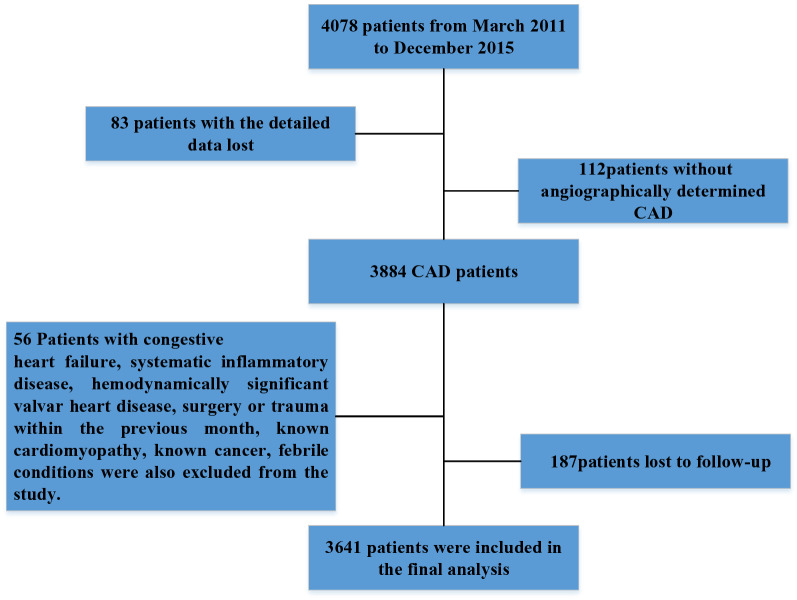
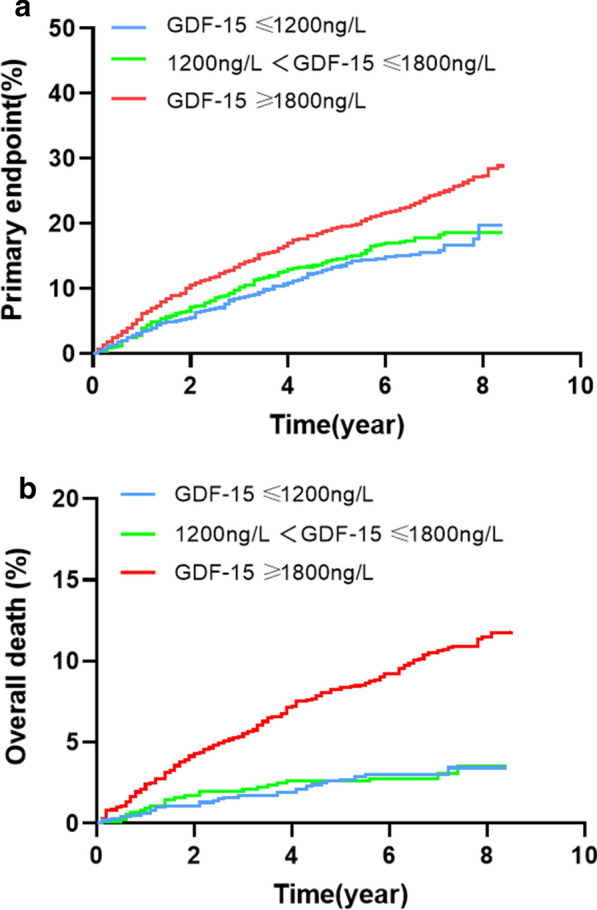
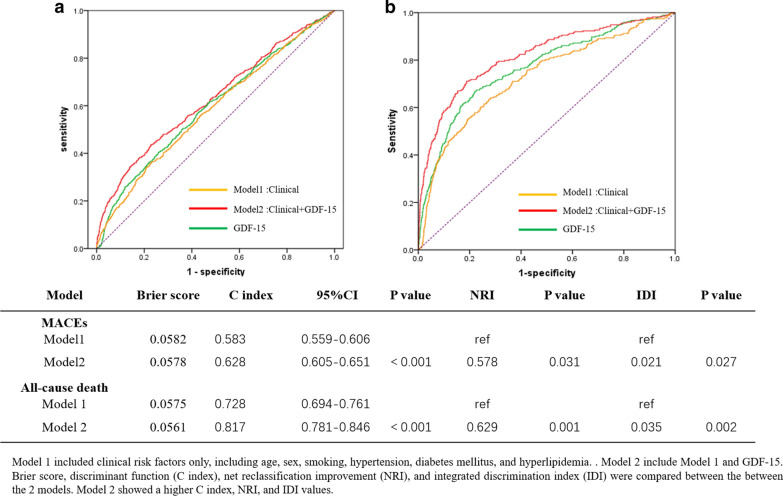
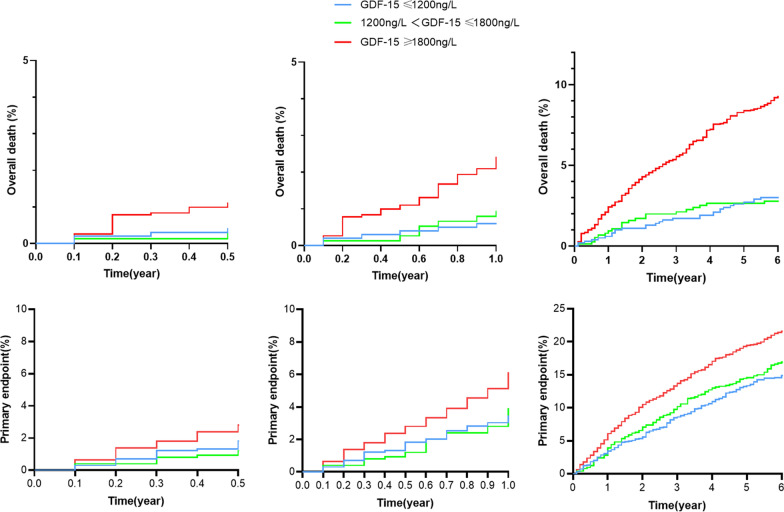
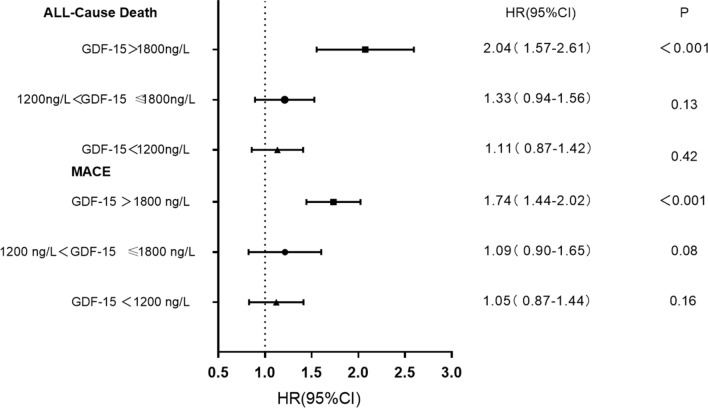
Background: Growth differentiation factor-15 (GDF-15) is a marker of inflammation, oxidative stress and it is associated with adverse prognosis in cardiovascular disease. The aim of the present cohort study is to investigate the prognostic value of GDF-15 in patients with coronary artery disease (CAD) during long-term follow up. Methods: A total of 3641 consecutive patients with CAD were prospectively enrolled into the study and followed up for major adverse cardiovascular events (MACEs) and all-cause death up to 5.3–7.6 years. Plasma GDF-15 was measured and clinical data and long-term events were registered. The patients were subsequently divided into three groups by the levels of GDF-15 and the prognostic value of GDF-15 level with MACEs and all-cause death was evaluated. Results: After a median follow-up at 6.4 years later, 775 patients (event rate of 21%) had developed MACEs and 275 patients died (event rate of 7.55%). Kaplan–Meier analysis indicated that the patients with GDF-15 > 1800 ng/L were significantly associated with an increased risk of MACEs and all-cause death. Cox regression analysis indicated that GDF-15 > 1800 ng/L were independently associated with the composite of MACEs (HR 1.74; 95% CI 1.44–2.02; P < 0.001) and all-cause death (HR 2.04; 95% CI 1.57–2.61; P < 0.001). For MACEs, GDF-15 significantly improved the C-statistic (area under the curve, 0.583 [95% CI 0.559–0.606] to 0.628 [0.605–0.651]; P < 0.001), net reclassification index (0.578; P = 0.031), and integrated discrimination index (0.021; P = 0.027). For all-cause death, GDF-15 significantly improved the C-statistic (0.728 [95% CI 0.694–0.761] to 0.817 [0.781–0.846]; P < 0.001), net reclassification index (0.629; P = 0.001), and integrated discrimination index (0.035; P = 0.002). Conclusions: In the setting of CAD, GDF-15 is associated with long-term MACEs and all-cause death, and provides incremental prognostic value beyond traditional risks factors.
Overview
The claims and statistics of this paper haven’t been checked yet.
Free: it reads the open-access text and checks the first 5 claims that cite a source we can check. Create a free account to check every claim.
Integrity signals
Registry
Cites
Statistics
Figures
Verification
Claims the paper makes
The claims and statistics of this paper haven’t been checked yet.
Free: it reads the open-access text and checks the first 5 claims that cite a source we can check. Create a free account to check every claim.
Claims other papers make about this one
Each is checked against this paper’s own text: does it say what the citing paper says it does?
The source backs part of the claim, not all of it — or backs it for a different population, condition or comparison.
In the citing paper
“As a stress-responsive cytokine, GDF15 is elevated in many cardiac disorders and may reflect underlying valvular pathological processes driven by chronic inflammation and oxidative stress 26-28 .”
From Connecting proteomics and genomics to identify causal biomarkers specific for aortic valve stenosis (2025) · cites this paper as [27]
Experimental — accuracy not yet measured
Self-check
Percentages, sums and reported differences re-computed from the paper’s own numbers.
The self-check needs the paper’s full text.
Citations
Cites
Proceedings of the National Academy of Sciences of the United States of America
Dowling, J. E., & Wald, G. (2009) · Nutrition Reviews · doi:10.1111/j.1753-4887.1981.tb06752.x · Cited by 17,893
2013 ACCF/AHA Guideline for the Management of Heart Failure
Yancy, C. W., Jessup, M., Bozkurt, B., Butler, J., Casey, D. E., Drazner, M. H., Fonarow, G. C., Geraci, S. A., Horwich, T., Januzzi, J. L., et al. (2013) · Journal of the American College of Cardiology · doi:10.1016/j.jacc.2013.05.019 · Cited by 12,536
Prediction of coronary heart disease using risk factor categories
Wilson, P. W. F., D’Agostino, R. B., Levy, D., Belanger, A. M., Silbershatz, H., & Kannel, W. B. (1998) · Circulation · doi:10.1161/01.cir.97.18.1837 · Cited by 9,581
2013 ACC/AHA Guideline on the Assessment of Cardiovascular Risk
Goff, D. C., Lloyd-Jones, D. M., Bennett, G., Coady, S., D’Agostino, R. B., Gibbons, R., Greenland, P., Lackland, D. T., Levy, D., O’Donnell, C. J., et al. (2014) · Journal of the American College of Cardiology · doi:10.1016/j.jacc.2013.11.005 · Cited by 4,945
Kyu, H. H., Abate, D., Abate, K. H., Abay, S. M., Abbafati, C., Abbasi, N., Abbastabar, H., Abd-Allah, F., Abdela, J., Abdelalim, A., et al. (2018) · The Lancet · doi:10.1016/s0140-6736(18)32335-3 · Cited by 4,081
JOURNAL OF CLINICAL ENDOCRINOLOGY AND METABOLISM
HOSKINS, R. G. (1953) · The Journal of Clinical Endocrinology & Metabolism · doi:10.1210/jcem-13-4-473 · Cited by 3,780
Macrophages in the Pathogenesis of Atherosclerosis
Moore, K. J., & Tabas, I. (2011) · Cell · doi:10.1016/j.cell.2011.04.005 · Cited by 2,669
Journal of The American College of Cardiology
(2015) · Wilderness & Environmental Medicine · doi:10.1016/j.wem.2015.03.023 · Cited by 2,584
Multiple Biomarkers for the Prediction of First Major Cardiovascular Events and Death
Wang, T. J., Gona, P., Larson, M. G., Tofler, G. H., Levy, D., Newton-Cheh, C., Jacques, P. F., Rifai, N., Selhub, J., Robins, S. J., et al. (2006) · New England Journal of Medicine · doi:10.1056/nejmoa055373 · Cited by 1,343
The Global Burden of Cardiovascular Diseases and Risk Factors
Mensah, G. A., Roth, G. A., & Fuster, V. (2019) · Journal of the American College of Cardiology · doi:10.1016/j.jacc.2019.10.009 · Cited by 1,324
Cited by
Sjøberg, K. A., Sigvardsen, C. M., Alvarado-Diaz, A., Andersen, N. R., Larance, M., Seeley, R. J., Schjerling, P., Knudsen, J. G., Katzilieris‐Petras, G., Clemmensen, C., et al. (2023) · Cell Metabolism · doi:10.1016/j.cmet.2023.06.016 · Cited by 102
Novel Biomarkers and Their Role in the Diagnosis and Prognosis of Acute Coronary Syndrome
Katsioupa, M., Kourampi, I., Oikonomou, E. K., Tsigkou, V., Theofilis, P., Charalambous, G., Marinos, G., Gialamas, I., Zisimos, K., Anastasiou, A., et al. (2023) · Life · doi:10.3390/life13101992 · Cited by 90
“It is linked to cardiovascular disease and a range of other conditions such as inflammation, oxidative stress, and cellular stress [126].”
BackgroundOmar, M., Jensen, J., Kistorp, C., Højlund, K., Videbæk, L. M., Tuxen, C., Larsen, J. H., Andersen, C. F., Gustafsson, F., Køber, L., et al. (2022) · Cardiovascular Diabetology · doi:10.1186/s12933-022-01463-2 · Cited by 70
Sun, X., Duan, J., Gong, C., Feng, Y., Hu, J., Gu, R., & Xu, B. (2022) · Journal of the American Heart Association · doi:10.1161/jaha.122.025266 · Cited by 70
“22,23 Our results showed that A , ELISA analysis of inflammatory factor interleukin-1, interleukin-6, and tumor necrosis factor-α in murine plasma at the end point of experiment (n=8– 12 each group).”
From Classic to Modern Prognostic Biomarkers in Patients with Acute Myocardial Infarction
Stătescu, C., Anghel, L., Tudurachi, B.-S., Tudurachi, A., Benchea, L.-C., & Sascău, R. A. (2022) · International Journal of Molecular Sciences · doi:10.3390/ijms23169168 · Cited by 59
A Meta-Analysis of Growth Differentiation Factor-15 and Prognosis in Chronic Heart Failure
Luo, J., Duan, W., Song, L., Yu, Y., & Shi, D. (2021) · Frontiers in Cardiovascular Medicine · doi:10.3389/fcvm.2021.630818 · Cited by 44
Li, M., Duan, L., Cai, Y., Hao, B., Chen, J., Li, H., & Liu, H. (2021) · Cardiovascular Diabetology · doi:10.1186/s12933-021-01244-3 · Cited by 43
“The study population The design, details, and primary results of this study have been previously reported [21].”
ResultSelf-citationInflammageing and Cardiovascular System: Focus on Cardiokines and Cardiac-Specific Biomarkers
Perrone, M. A., Aimo, A., Bernardini, S., & Clerico, A. (2023) · International Journal of Molecular Sciences · doi:10.3390/ijms24010844 · Cited by 35
Yazdani, A. N., Pletsch, M. C., Chorbajian, A., Zitser, D., Rai, V., & Agrawal, D. K. (2023) · Expert Review of Cardiovascular Therapy · doi:10.1080/14779072.2023.2264779 · Cited by 36
Emerging Biomarkers for Predicting Clinical Outcomes in Patients with Heart Disease
Pál, K., Mănescu, I. B., Lupu, S., & Dobreanu, M. (2023) · Life · doi:10.3390/life13010230 · Cited by 24
“Growth differentiation factor 15 (GDF-15) belongs to the transforming growth factor-β (TGF-β) superfamily, previously known as the macrophage-inhibiting cytokine, which increases as a consequence of inflammation and oxidative stress [22].”
BackgroundIsola, G., Tartaglia, G. M., Santonocito, S., Chaurasia, A., Marya, A., & Giudice, A. L. (2023) · BMC Oral Health · doi:10.1186/s12903-023-03237-y · Cited by 23
“Evidence suggests that elevated serum GDF-15, together with 1-antitrypsin and glutathione peroxidase 1 (GPx-1) levels, are associated with a high risk of acute coronary syndrome, a phenomenon that occurs just during early heart failure in asymptomatic patients and for the risk stratification of patients with the acute…”
BackgroundXie, R., Vlaški, T., Sha, S., Brenner, H., & Schöttker, B. (2025) · Journal of Advanced Research · doi:10.1016/j.jare.2025.03.034 · Cited by 21
“Elevated levels of GDF15 reflect heightened inflammatory activity and are predictive of adverse cardiovascular outcomes [37].”
Abubakar, M., Irfan, U., Abdelkhalek, A., Javed, I., Khokhar, M. I., Shakil, F., Raza, S., Salim, S. S., Altaf, M. M., Habib, R., et al. (2024) · Journal of Cardiovascular Translational Research · doi:10.1007/s12265-024-10540-8 · Cited by 26
Zhang, S., Hao, P., Li, J., Zhang, Q., Yin, X., Wang, J., & Chen, Y. (2023) · Frontiers in Cardiovascular Medicine · doi:10.3389/fcvm.2023.1054187 · Cited by 16
Cortés, M., Lumpuy‐Castillo, J., García-Talavera, C. S., Rivera, M. B. A., García, L. D. M., Becerra, A. J. B., Romero-Otero, J. M., Chapel, J. A. E., Urquía, M. T., Pello, A. M., et al. (2025) · International Journal of Molecular Sciences · doi:10.3390/ijms26030986 · Cited by 16
Bryk, A. H., Konieczyńska, M., Polak, M., Plicner, D., Bochenek, M., & Undas, A. (2021) · Cardiovascular Diabetology · doi:10.1186/s12933-021-01230-9 · Cited by 19
“Fibrinogen, the main component of fibrin, has been reported to be predictive of major adverse cardiovascular events, especially among diabetic patients, both following acute coronary syndrome [23] and in those with stable coronary disease [24].”
BackgroundDuceppe, E., Borges, F. K., Conen, D., Tiboni, M. E., Chan, M. T. V., Patel, A., Sessler, D. I., Kavsak, P. A., Ofori, S., Srinathan, S. K., et al. (2023) · Anesthesiology · doi:10.1097/aln.0000000000004539 · Cited by 15
Emerging Circulating Biomarkers for Enhanced Cardiovascular Risk Prediction
Lee, D. Y. (2024) · Journal of Lipid and Atherosclerosis · doi:10.12997/jla.2024.13.3.262 · Cited by 18
“69 In a cohort from the Framingham Heart Study involving 3523 participants, GDF-15 was found to be associated with incident HF (hazard ratio [HR], 2.08), CVD death (HR, 1.96), and all-cause mortality (HR, 1.96).”
BackgroundInfluentialChu, X., Feng, B., Ge, J., Guo, L., Huo, Y., Ji, L., Jia, Q., Jiang, S., Li, Y., Liu, F., et al. (2022) · Cardiology Plus · doi:10.1097/cp9.0000000000000029 · Cited by 16
Pan, Y., Chen, Y., Wu, S., Ying, P., Zhang, Z., Tan, X., & Zhu, J. (2024) · BMC Psychiatry · doi:10.1186/s12888-024-06117-z · Cited by 14
“Our re-hospitalization rate for angina pectoris is lower compared to the results of another cohort study that reported the readmission rate is 8.5% after a median follow-up of 64 months [26].”
ResultInfluentialKučerka, O., Blahutová, M., Kosek, V., Mináriková, P., Horáček, J. M., Urbánek, P., & Malý, M. (2024) · Metabolites · doi:10.3390/metabo14040185 · Cited by 11
“The associations of GDF-15 extend across a spectrum of conditions, including diabetes mellitus [24,25], cancer [26], cachexia [27], chronic inflammatory diseases [28–30], cognitive impairment [31,32], heart failure [33], coronary artery disease [34–37], and atrial fibrillation [38].”
BackgroundLogotheti, S., Pavlopoulou, A., Rudsari, H. K., Galow, A.-M., Kafalı, Y., Kyrodimos, E., Giotakis, A. Ι., Marquardt, S., Velalopoulou, A. P., Verginadis, I. I., et al. (2024) · Pharmacology & Therapeutics · doi:10.1016/j.pharmthera.2024.108670 · Cited by 11
Khan, H., Girdharry, N. R., Massin, S. Z., Abu-Raisi, M., Saposnik, G., Mamdani, M., & Qadura, M. (2025) · Metabolites · doi:10.3390/metabo15040224 · Cited by 16
“It has been demonstrated to be a marker of atherosclerosis, vascular stress by hypoxia, as well as associated with adverse cardiovascular outcomes in patients with coronary artery disease [78].”
Andrup, S., Andersen, G. Ø., Hoffmann, P., Eritsland, J., Seljeflot, I., Halvorsen, S., & Vistnes, M. (2024) · PLoS ONE · doi:10.1371/journal.pone.0302732 · Cited by 9
Diagnostic Potential of Metabolomic and Proteomic Biomarkers in Cardiology—A Narrative Review
Zhussupbekova, L., Nurkina, D., Zhussupova, G., Smagulova, A., Rakhmetova, V. S., Akhmedyarova, E., Darybayeva, A., Kurmangaliyeva, K., & Kukes, I. (2026) · Biomedicines · doi:10.3390/biomedicines14020257 · Cited by 6
“All of the markers mentioned—NOTCH1, GDF-15, and IFN γ —are being actively studied as biomarkers and potential therapeutic targets in the context of cardiovascular disease [62–64].”
Emerging Novel Biomarkers in Acute Coronary Syndrome Management: Insights and Future Directions
Mittal, D., Singhal, K., Gomseu, B. E. D., Sharma, Y. P., & Batta, A. (2026) · Cardiovascular Innovations and Applications · doi:10.15212/cvia.2026.0001 · Cited by 10
Kim, K., & Jang, W. (2021) · BioFactors · doi:10.1002/biof.1817 · Cited by 6
Doğan, Z., İleri, Ç., Kay, E. A., Sünbül, M., Gürel, E., Özben, B., Sayar, N., Ergun, T., & Tigen, K. (2023) · Journal of Personalized Medicine · doi:10.3390/jpm13101489 · Cited by 6
The secretome as a biomarker and functional agent in heart failure
Nyarko, O. O., & Sucharov, C. C. (2023) · The Journal of Cardiovascular Aging · doi:10.20517/jca.2023.15 · Cited by 8
“GDF-15 is also associated with major adverse cardiovascular events in patients with coronary artery disease[55].”
BackgroundTian, R., Wang, Z., Zhang, S., Wang, X., Zhang, Y., Yuan, J., Zhang, J., Xu, F., Chen, Y., & Li, C. (2024) · Heliyon · doi:10.1016/j.heliyon.2024.e35476 · Cited by 6
“GDF-15 concentrations exceeding 1800 ng/L are closely linked to an increased risk of long-term major adverse cardiovascular events and all-cause mortality in CAD patients, identifying it as an independent predictor for these outcomes in the CAD population [54].”
Nayak, N., Mukherjee, T., & Pattnaik, A. K. (2024) · Current Pharmaceutical Design · doi:10.2174/0113816128318741240611114448 · Cited by 5
Zhao, W. H., Liu, Y., Cui, Z., Li, X., Guo, H., Chen, X., & Zhang, H. (2025) · Vascular Pharmacology · doi:10.1016/j.vph.2025.107554 · Cited by 4
GDF-15 as an integrative cardiometabolic biomarker
Afzal, O., Afzal, M., Khan, N. H., Altharawi, A., Alamri, M. A., Alossaimi, M. A., Altamimi, A. S., & Goud, P. (2026) · Clinica Chimica Acta · doi:10.1016/j.cca.2026.120839 · Cited by 8
Ali, A., Mounika, N., Nath, B., Johny, E., Kuladhipati, I., Das, R. K., Hussain, M., Bandyopadhyay, A., & Adela, R. (2024) · Cytokine · doi:10.1016/j.cyto.2024.156581 · Cited by 4
A Comprehensive Approach to the Diagnosis of Leigh Syndrome Spectrum
Baldo, M. S., Azevedo, L., Coelho, M. P., Martins, E., & Vilarinho, L. (2024) · Diagnostics · doi:10.3390/diagnostics14192133 · Cited by 5
“These biomarkers are also identified in multiple disorders, such as cardiovascular disorders [71], type 2 diabetes [72], and pediatric headaches [73].”
BackgroundBathina, S., Lopez, V. F., Prado, M., Ballato, E., Colleluori, G., Tetlay, M., Villareal, D. T., Mediwala, S. N., Chen, R., Qualls, C., et al. (2024) · Physiological Reports · doi:10.14814/phy2.70124 · Cited by 4
“However, marked increases in GDF15 levels were re-ported under conditions of cellular stress, such as patients with major cardiovascular events, and kidney failure (Li et al., 2020a; Wang et al., 2021a, b).”
Cianfruglia, L., Pazmay, G. V. B., Fortunato, C., Spezia, P. G., Novazzi, F., Piacenza, F., Malavolta, M., Marchegiani, F., Recchioni, R., Matacchione, G., et al. (2025) · Experimental Gerontology · doi:10.1016/j.exger.2025.112978 · Cited by 6
Mourad, B. H., & El-Sherif, G. H. E.-D. (2022) · Journal of Occupational and Environmental Medicine · doi:10.1097/jom.0000000000002624 · Cited by 4
Behayaa, H. R., Ali, Z. A., Mohammed, S. B., & Al-Qaysi, S. A. (2024) · Medical Journal of Babylon · doi:10.4103/mjbl.mjbl_371_23 · Cited by 3
Growth Differentiation Factor-15: One of the Missing Links between Psoriasis and Metabolic Syndrome
Akl, E. M., Fouad, N. A., Mahmoud, M. S., & Khalil, K. T. (2025) · Indian Dermatology Online Journal · doi:10.4103/idoj.idoj_546_24 · Cited by 3
“[3,4] Therefore, this study aimed to measure the serum level of GDF‑15 and evaluate its link to metabolic syndrome (MetS) in psoriatic patients compared with healthy controls.”
InfluentialShen, X., Sun, J., Long, Q., Sun, Y., Hu, C., Zhu, H., Zhou, M., Wu, Y., Shou, R., Long, M., et al. (2025) · Scientific Reports · doi:10.1038/s41598-025-16134-x · Cited by 2
“For instance, Growth Differentiation Factor-15 is well-established as a potent predictor of adverse outcomes in CAD, yet its clinical interpretation can be confounded by its role as a general marker of systemic inflammation and stress, being elevated in numerous non-cardiac conditions 19,20 .”
Circulating Biomarkers in the Detection of Cardiovascular Toxicity
Stankovic, S. D., Radisavljevic, N. M., Bajić, Z., Polovina, M. M., & Djuric, D. M. (2025) · Advances in biochemistry in health and disease · doi:10.1007/978-3-031-90598-8_32 · Cited by 3
Perioperative Biomarkers: Updates, Utility, and Future Directions
Duceppe, E., Tewfik, G., & Edwards, A. F. (2025) · International Anesthesiology Clinics · doi:10.1097/aia.0000000000000476 · Cited by 2
Karaji, I., Steiro, O., Myrmel, G. M. S., Omland, T., Tjora, H. L., Langørgen, J., Bjørneklett, R. O., Skadberg, Ø., Bonarjee, V., Mjelva, Ø. R., et al. (2025) · Clinical Biochemistry · doi:10.1016/j.clinbiochem.2025.110926 · Cited by 2
Proteomic predictors of mortality among people with Coronary Artery Disease
Liu, C., Hui, Q., Quyyumi, A. A., Vaccarino, V., & Sun, Y. V. (2025) · American Journal of Preventive Cardiology · doi:10.1016/j.ajpc.2025.101347 · Cited by 1
“Consequently, GDF15 emerges as a valuable biomarker for predicting long-term mortality and adverse cardiovascular events in CAD progression and diverse populations [32,33].”
Mohammed, H. H., Ahmed, F. Z. B., & Ahmed, S. N. (2025) · Monaldi Archives for Chest Disease · doi:10.4081/monaldi.2025.3426 · Cited by 1
Lenell, J., Lindahl, B., Erlinge, D., Jernberg, T., Spaak, J., & Baron, T. (2026) · Scientific Reports · doi:10.1038/s41598-026-38905-w · Cited by 1
Jiang, Y., Song, X., Liao, H., Zhou, X., Sun, C. J., Zhang, D., Zhou, R., 杨相杰, Wang, X., Li, D., et al. (2026) · Frontiers in Medicine · doi:10.3389/fmed.2026.1784717 · Cited by 1
Wu, X., Bai, J., Tan, Y. C., Wei, Z., Dai, Q., Kang, L., Wang, L., Chen, J., Yang, Y., Wang, K., et al. (2024) · The International Journal of Cardiovascular Imaging · doi:10.1007/s10554-024-03055-5 · Cited by 1
Self-citationBuchan, E., Harbi, M. H., Rickard, J. J. S., Thomas, M., & Oppenheimer, P. G. (2024) · International Journal of Biological Macromolecules · doi:10.1016/j.ijbiomac.2024.138115 · Cited by 1
A Recent Update on Candidate Biomarkers in the Pathogenesis of Diabetic Retinopathy
Shakthiya, T., Chand, L., & Annamalai, R. (2025) · The Open Biomarkers Journal · doi:10.2174/0118753183372247250213110930 · Cited by 2
Li, M., Liu, H., Duan, L., Cai, Y., Hao, B., Chen, J., & Li, H. (2020) · doi:10.21203/rs.3.rs-36063/v1 · Cited by 1
“The design, details, and primary results of the study have been reported previously [19].”
ResultSelf-citationVastrad, B. M., Pattanashetti, S., & Vastrad, C. M. (2024) · bioRxiv (Cold Spring Harbor Laboratory) · doi:10.1101/2024.10.13.618070 · Cited by 1
Connecting proteomics and genomics to identify causal biomarkers specific for aortic valve stenosis
Zamani, P., Houessou, U., Manikpurage, H. D., Dahmene, M., Li, Z., Gaudreault, N., Clavel, M.-A., Pibarot, P., Mathieu, P., Arsenault, B. J., et al. (2025) · medRxiv · doi:10.1101/2025.11.27.25339923
Mechanisms of SGLT2 inhibition in the kidney: from mechanism towards biomarker guided therapy
Sen, T. (2023) · University of Groningen research database (University of Groningen / Centre for Information Technology) · doi:10.33612/diss.659987622
Growth Differentiation Factor-15 in psoriatic patients: a narrative review
Akl, E. M., Farh, M., Fouad, N. A., & Ibrahim, K. T. (2023) · Benha Journal of Applied Sciences · doi:10.21608/bjas.2023.212060.1173
“[4] .”
Rahmiyanti, R., Wardhani, P., & Fuadi, M. R. (2025) · Salud Ciencia y Tecnología · doi:10.56294/saludcyt20251403
Liu, H., Lyu, Y., Dai, W., & Li, Y. (2025) · medRxiv · doi:10.1101/2025.05.08.25327206
Self-citationTaqi, R. M. M., Al-timimi, R. J. M., & Hamid, M. B. (2025) · Journal of Research in Pharmacy · doi:10.12991/jrespharm.1694344
Taqi, R. M. M., Al-timimi, R. J. M., & Hamid, M. B. (2025) · Journal of Research in Pharmacy · doi:10.12991/jrespharm.1766210
Isola, G., Tartaglia, G. M., Santonocito, S., Chaurasia, A., Marya, A., & LoGiudice, A. (2024) · Figshare · doi:10.6084/m9.figshare.26611718
Liu, H., Lyu, Y., Dai, W., & Li, Y. (2026) · Reviews in Cardiovascular Medicine · doi:10.31083/rcm43150
Self-citationAbdulridha, G. A. O., Hussein, M. A., & Majeed, S. R. (2026) · Current Issues in Pharmacy and Medical Sciences · doi:10.12923/cipms-2026-0004
Cardiac aging and biomarkers of aging-related cardiac diseases
Patel, S., Nigam, S., Knudsen, E., & Rai, V. (2026) · Elsevier eBooks · doi:10.1016/b978-0-443-43986-5.00004-7
Lim, E. T. A., Jardine, D. L., Pemberton, C. J., Frampton, C., Troughton, R., & Khanafer, A. (2026) · JVS Vascular Science · doi:10.1016/j.jvssci.2026.100422
“21,22,37 It seems that BNP and GDF-15 responses to acute myocardial injury, although often synchronous, are not always correlated.”
Dabour, M. S., Blaes, A. H., Jacobson, P. A., Kirstein, M. N., Zordoky, B. N. M., & Shen, C. (2026) · Clinical and Translational Science · doi:10.1111/cts.70595
“A stochastic simulation with 1000 virtual patients was also performed for the assessment of PTA using predefined cardiotoxicity criteria of GDF15 [11, 28].”
InfluentialKalyakulina, A., Yusipov, I., Botasheva, F., Bujlova, N., Вадимовна, З. Е., Franceschi, C., & Ivanchenko, M. (2026) · Clinical Epigenetics · doi:10.1186/s13148-026-02195-w
Huang, J., Liu, C., Sperling, L. S., Quyyumi, A. A., & Sun, Y. V. (2026) · Proteomes · doi:10.3390/proteomes14030038
“GDF15 has been strongly associated with adverse cardiovascular events and cardiovascular mortality across diverse populations [26–28].”
Sharma, Y. P., Mittal, D., Singhal, K., Naveena, N., Hatwal, J., Pradhan, A. K., Singh, A., Mohan, B., & Batta, A. (2026) · Indian Heart Journal · doi:10.1016/j.ihj.2026.08.008
Wittke, C. I., Watt, D. M., Butler, L., Lyons, A. M., Clarke, C. J., Mullen, C., Clements, N., Lawlor, A., Athineos, D., Young, A., et al. (2026) · bioRxiv (Cold Spring Harbor Laboratory) · doi:10.64898/2026.09.02.748892
“GDF15 is a TGF-β superfamily member 71 and established p53 target 72 that has also been implicated as a mediator of MASH 56,73,74 and fibrosis in multiple organs 75–78 .”
Sridhar, S. M., Renuka, P., Mohan, V. V., Simon, H. A., Bojarajan, N. R. R., & Boominathan, A. (2026) · Indian Journal of Thoracic and Cardiovascular Surgery · doi:10.1007/s12055-026-02280-y · Cited by 1
Li, M., & Zhu, P. (2026) · Frontiers in Endocrinology · doi:10.3389/fendo.2026.1982428
Self-citation
Metadata
- Authors
- Li, M., Duan, L., Cai, Y.-L., Li, H.-Y., Hao, B.-C., Chen, J.-Q., & Liu, H.-B.
- Affiliations
- Chinese PLA General Hospital (CN)
- Venue
- Cardiovascular Diabetology
- Published
- 2020-08-03
- Volume
- 19
- Issue
- 1
- Pages
- 120-120
- ISSN
- 1475-2840 (ISSN-L)
- PMC
- PMC7398317
- OpenAlex
- W3047598126
- Cited by
- 71
- References
- 67
- Citations by year
- 2026: 15 · 2025: 18 · 2024: 16 · 2023: 12 · 2022: 5 · 2021: 4 · 2020: 1
- FWCI
- 4.14
- Type
- journal article
- Language
- en
- Open access
- gold
- doi.org
- Licence
- cc-by
- creativecommons.org/licenses/by/4.0 (tdm)
- creativecommons.org/licenses/by/4.0 (vor)
- Locations
- Cardiovascular Diabetology (publishedVersion, cc-by)
- Research Square (acceptedVersion, cc-by)
- PubMed Central (publishedVersion, cc-by)
- PubMed (publishedVersion)
- DOAJ (DOAJ: Directory of Open Access Journals) (submittedVersion, cc-by-sa)
- Funders
- Key Projects of Logistics Scientific Research Project of Chinese PLA (17BJZ48)
- National Key Research Program of China (2017YFC0840103)
- Topics
- Health Sciences › Medicine › Cardiology and Cardiovascular Medicine › GDF15 and Related Biomarkers
- Health Sciences › Medicine › Cardiology and Cardiovascular Medicine › Heart Failure Treatment and Management
- Health Sciences › Medicine › Cardiology and Cardiovascular Medicine › Cardiac Fibrosis and Remodeling
- Keywords
- growth differentiation factor 15, coronary artery disease, major adverse cardiovascular events, all-cause mortality, prognostic factors, inflammation, oxidative stress, risk stratification, risk reclassification, plasma biomarkers, long-term follow-up, cardiovascular risk prediction
- MeSH terms
- Adult, Aged, Aged, 80 and over, Cause of Death, Coronary Artery Disease, Female, Humans, Male, Middle Aged, Predictive Value of Tests, Prognosis, Prospective Studies, Risk Factors, Time Factors, Biomarkers, Risk Assessment, Growth Differentiation Factor 15
About these checks
Registry, retraction, Cites and statistics results are computed, not judged, with one exception: a printed reference that no index lists is read once by a model before it counts as a citation error. Claims are extracted by a model and kept only when their quote appears verbatim in the text; each cited source is then checked, with a model’s help, for whether it says what the claim relies on. Those verdicts can be wrong — read the claim’s quote and the cited source before relying on one.
Statistics and arithmetic are recomputed, not judged.
Confidence bands are shown only for fields calibrated on our annotated test set. None is calibrated yet, so no band is shown.
What counts as a claim ›How we measure confidence ›How we check this ›
Are you an author, or do you see a problem with this page? Request a review
Data sources
Bibliographic data: Semantic Scholar, OpenAlex, Crossref.
Contains information from the Semantic Scholar Academic Graph Datasets, made available under the ODC Attribution License (ODC-BY 1.0).
Semantic Scholar’s data is described in: Kinney, R., et al. (2023). The Semantic Scholar Open Data Platform. arXiv:2301.10140.
