

Gender differences in screening for glucose perturbations, cardiovascular risk factor management and prognosis in patients with dysglycaemia and coronary artery disease: results from the ESC-EORP EUROASPIRE surveys
Open accessThe DOI matches its Crossref record; 45 of the 45 references it cites were found in a registry or an index.
Abstract
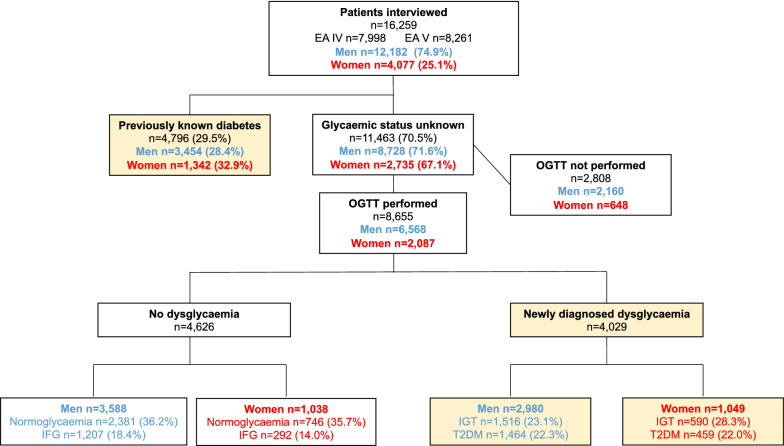
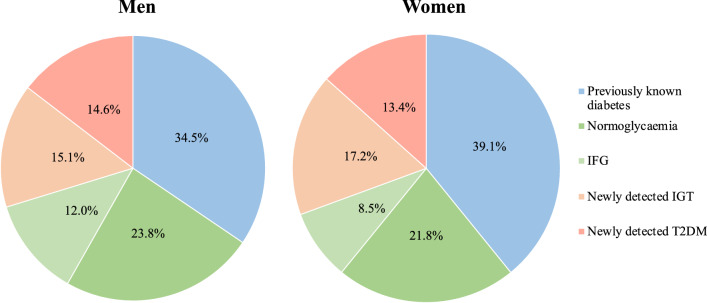
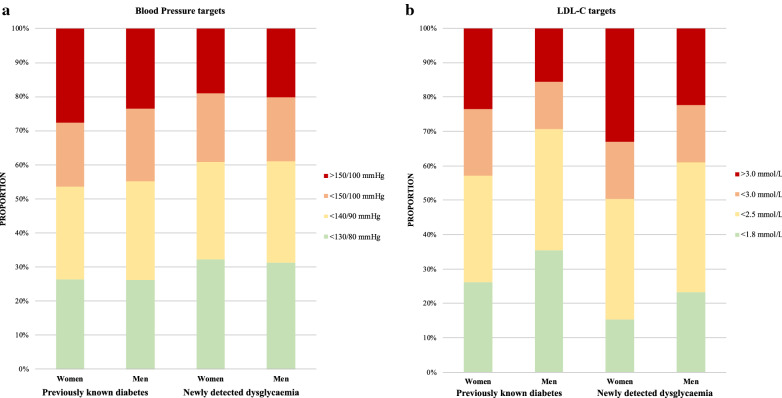
Background: Gender disparities in the management of dysglycaemia, defined as either impaired glucose tolerance (IGT) or type 2 diabetes (T2DM), in coronary artery disease (CAD) patients are a medical challenge. Recent data from two nationwide cohorts of patients suggested no gender difference as regards the risk for diabetes-related CV complications but indicated the presence of a gender disparity in risk factor management. The aim of this study was to investigate gender differences in screening for dysglycaemia, cardiovascular risk factor management and prognosis in dysglycemic CAD patients. Methods: The study population (n = 16,259; 4077 women) included 7998 patients from the ESC-EORP EUROASPIRE IV (EAIV: 2012–2013, 79 centres in 24 countries) and 8261 patients from the ESC-EORP EUROASPIRE V (EAV: 2016–2017, 131 centres in 27 countries) cross-sectional surveys. In each centre, patients were investigated with standardised methods by centrally trained staff and those without known diabetes were offered an oral glucose tolerance test (OGTT). The first of CV death or hospitalisation for non-fatal myocardial infarction, stroke, heart failure or revascularization served as endpoint. Median follow-up time was 1.7 years. The association between gender and time to the occurrence of the endpoint was evaluated using Cox survival modelling, adjusting for age. Results: Known diabetes was more common among women (32.9%) than men (28.4%, p < 0.0001). OGTT (n = 8655) disclosed IGT in 17.2% of women vs. 15.1% of men (p = 0.004) and diabetes in 13.4% of women vs. 14.6% of men (p = 0.078). In both known diabetes and newly detected dysglycaemia groups, women were older, with higher proportions of hypertension, dyslipidaemia and obesity. HbA1c was higher in women with known diabetes. Recommended targets of physical activity, blood pressure and cholesterol were achieved by significantly lower proportions of women than men. Women with known diabetes had higher risk for the endpoint than men (age-adjusted HR 1.22; 95% CI 1.04–1.43). Conclusions: Guideline-recommended risk factor control is poorer in dysglycemic women than men. This may contribute to the worse prognosis in CAD women with known diabetes.
Overview
The claims and statistics of this paper haven’t been checked yet.
Free: it reads the open-access text and checks the first 5 claims that cite a source we can check. Create a free account to check every claim.
Integrity signals
Registry
Cites
Statistics
Figures
Verification
Claims the paper makes
The claims and statistics of this paper haven’t been checked yet.
Free: it reads the open-access text and checks the first 5 claims that cite a source we can check. Create a free account to check every claim.
Claims other papers make about this one
Each is checked against this paper’s own text: does it say what the citing paper says it does?
The source backs part of the claim, not all of it — or backs it for a different population, condition or comparison.
In the citing paper
“Women usually show greater differences in BP and higher proportions of hypertension than men already at diagnosis of T2DM compared with women and men without T2DM, and worse BP control thereafter.191,230”
From 2023 ESC guidelines for the management of cardiovascular disease in patients with diabetes. (2023) · cites this paper as [191]
Experimental — accuracy not yet measured
Self-check
Percentages, sums and reported differences re-computed from the paper’s own numbers.
The self-check needs the paper’s full text.
Citations
Cites
The Hospital Anxiety and Depression Scale
Zigmond, A. S., & Snaith, R. P. (1983) · Acta Psychiatrica Scandinavica · doi:10.1111/j.1600-0447.1983.tb09716.x · Cited by 47,139
Friedewald, W. T., Levy, R. I., & Fredrickson, D. S. (1972) · Clinical Chemistry · doi:10.1093/clinchem/18.6.499 · Cited by 32,423 · cited 1×
“Laboratory investigations Venous blood was drawn after ≥ 10 h of fasting for measuring serum total and high density lipoprotein-cholesterol (HDL-C), triglycerides, and glycated haemoglobin A1c (HbA1c) while low density cholesterol- cholesterol (LDL-C) was calculated by Friedewald’s formula [22].”
MethodEuroQol: a new facility for the measurement of health-related quality of life
(1990) · Health Policy · doi:10.1016/0168-8510(90)90421-9 · Cited by 15,736 · cited 1×
“Generic health status was assessed by means of VASscale of the EuroQoL 5D questionnaire, varying from 0 (the worst possible health status) to 100 (the best possible health status) [29].”
MethodThe Emerging Risk Factors Collaboration (2010) · The Lancet · doi:10.1016/s0140-6736(10)60484-9 · Cited by 5,125
Cosentino, F., Grant, P. J., Aboyans, V., Bailey, C. J., Ceriello, A., Delgado, V., Federici, M., Filippatos, G., Grobbee, D. E., Hansen, T. B., et al. (2020) · European Heart Journal · doi:10.1093/eurheartj/ehz486 · Cited by 4,763
Self-citationAuthors/Task Force Members, Graham, I., Atar, D., Borch-Johnsen, K., Boysen, G., Burell, G., Cifkova, R., Dallongeville, J., De Backer, G., Ebrahim, S., et al. (2007) · European Heart Journal · doi:10.1093/eurheartj/ehm316 · Cited by 3,753
Self-citationDavies, M. J., D’Alessio, D. A., Fradkin, J., Kernan, W. N., Mathieu, C., Mingrone, G., Rossing, P., Tsapas, A., Wexler, D. J., & Buse, J. B. (2018) · Diabetes Care · doi:10.2337/dci18-0033 · Cited by 3,518
(2013) · European Heart Journal · doi:10.1093/eurheartj/eht108 · Cited by 1,955
Self-citationHuxley, R., Barzi, F., & Woodward, M. (2006) · BMJ · doi:10.1136/bmj.38678.389583.7c · Cited by 1,534 · cited 1×
“Screening for glucose perturbations Appropriate screening for glucose metabolism perturbations is of particular importance in women, since it appears that the advantage given by their later CAD presentation compared with men is eliminated by the presence of diabetes [7, 13].”
BackgroundRisk factors, mortality, and cardiovascular outcomes in patients with type 2 diabetes
Rawshani, A., Rawshani, A., Franzén, S., Sattar, N., Eliasson, B., Svensson, A.-M., Zethelius, B., Miftaraj, M., McGuire, D. K., Rosengren, A., et al. (2018) · New England Journal of Medicine · doi:10.1056/nejmoa1800256 · Cited by 1,475 · cited 1×
“Background Dysglycaemia, defined as the presence of either impaired glucose tolerance (IGT) or type 2 diabetes (T2DM), represents a major cause of morbidity and mortality worldwide, mainly due to its high risk of vascular complications, including coronary artery disease (CAD) [1, 2].”
Background
Research works printed but not linked: 1
- Geneva WHO Estimates GH Deaths by cause, age, sex, by country and by Region 2016 2000–2016 2018
Cited by
2023 ESC guidelines for the management of cardiovascular disease in patients with diabetes.
Marx, N., Federici, M., Schütt, K., Müller-Wieland, D., Ajjan, R. A., Antunes, M. J., Christodorescu, R. M., Crawford, C., Di Angelantonio, E., Eliasson, B., et al. (2023) · European Heart Journal · doi:10.1093/eurheartj/ehad192 · Cited by 1,642
Self-citationSex differences in type 2 diabetes
Kautzky-Willer, A., Leutner, M., & Harreiter, J. (2023) · Diabetologia · doi:10.1007/s00125-023-05891-x · Cited by 624
“Similarly, in a recent EUROASPIRE survey, women with type 2 diabetes or IGT were older and less likely to meet the recommended targets for physical activity, BP or LDL-cholesterol than men, probably contributing to their higher CVD risk [71].”
Ramezankhani, A., Azizi, F., & Hadaegh, F. (2022) · Cardiovascular Diabetology · doi:10.1186/s12933-022-01665-8 · Cited by 78
“ANOVA Analysis of variance BMI Body mass index BP Blood pressure CAD Coronary artery disease CHD Coronary heart disease CHF Congestive heart failure CIs Confidence intervals CVD Cardiovascular disease DBP Diastolic blood pressure ECG Electrocardiogram EMR Eastern Mediterranean Region FH-CVD Family history of CVD FPG F…”
BackgroundInfluentialSex and stroke risk factors: A review of differences and impact
Hanna, M., Wabnitz, A., & Grewal, P. (2024) · Journal of Stroke and Cerebrovascular Diseases · doi:10.1016/j.jstrokecerebrovasdis.2024.107624 · Cited by 60
Qu, L., Zuo, X., Yu, J., Duan, R., & Zhao, B. (2023) · BMC Women s Health · doi:10.1186/s12905-023-02631-6 · Cited by 38
“The criteria for central obesity were waist circumference ≥ 88 cm for women and ≥ 102 cm for men [30].”
BackgroundFunck, K. L., Bjerg, L., Isaksen, A. A., Sandbæk, A., & Grove, E. L. (2022) · Cardiovascular Diabetology · doi:10.1186/s12933-022-01713-3 · Cited by 36
“Specifically in patients with type 2 diabetes, it has recently been shown, that female patients have poorer guideline-recommended risk factor control compared with male patients [29].”
BackgroundPerticone, M., Maio, R., Shehaj, E., Gigliotti, S., Caroleo, B., Suraci, E., Sciacqua, A., Andreozzi, F., & Perticone, F. (2023) · Cardiovascular Diabetology · doi:10.1186/s12933-023-02006-z · Cited by 30
“…to draw the attention of regulatory authorities and healthcare systems to the different risk profile of fatal and non-fatal cardiovascular events [40, 41] existing between men and women and, probably, due also to sex steroids that can affect both sympathetic nervous and renin-angiotensin systems…”
BackgroundKautzky‐Willer, A., Leutner, M., Abrahamian, H., Frühwald, L., Hoppichler, F., Lechleitner, M., & Harreiter, J. (2023) · Wiener klinische Wochenschrift · doi:10.1007/s00508-023-02185-5 · Cited by 24
Dinges, S. M.-T., Krotz, J., Gass, F., Treitschke, J., Fegers‐Wustrow, I., Geisberger, M., Esefeld, K., von Korn, P., Duvinage, A., Edelmann, F., et al. (2022) · Diabetes and Vascular Disease Research · doi:10.1177/14791641221113781 · Cited by 19
Li, B., Cheng, X., Huang, Y., Zhou, C., Gu, C., Zhu, X., Li, C., Ma, M., Fan, Y., Xu, X., et al. (2024) · Acta Diabetologica · doi:10.1007/s00592-024-02328-8 · Cited by 12
“But results from the ESC-EORP EUROASPIRE surveys suggested that females with diabetes had higher HbA1c than males [ 28].”
Lim, L., Lau, E. S. H., Kong, A. P. S., Fu, A. W. C., Lau, V., Jia, W., Sheu, W. H., Sobrepeña, L., Yoon, K., Tan, A. T. B., et al. (2022) · The Lancet Regional Health - Western Pacific · doi:10.1016/j.lanwpc.2022.100663 · Cited by 19
Homocysteine concentration in coronary artery disease and severity of coronary lesions
Luo, Z., Tang, K., Huang, G., Wang, X., Zhou, S., Dai, D., Yang, H., & Jiang, W. (2024) · Journal of Cellular and Molecular Medicine · doi:10.1111/jcmm.18474 · Cited by 14
“Whereas cardiometabolic risk factors, such as dyslipidemia, 12,13 dysglycemia, 13,14 and hypertension 13,15 are closely associated with coronary artery disease (CAD) and severity of coronary lesions, 16–18 it indicates that high homocysteine levels or hyperhomocysteinemia may induce CAD and…”
BackgroundGeschlechterspezifische Aspekte kardiovaskulärer Erkrankungen
Baessler, A., Bauer, P., Becker, M., Berrisch-Rahmel, S., Goldmann, B. U., Grünig, E., Hamm, C., Meder, B., Kindermann, I., Ong, P., et al. (2024) · Die Kardiologie · doi:10.1007/s12181-024-00694-9 · Cited by 11
Trends in diabetes prevalence, awareness, treatment, and control in French-speaking Switzerland
Pauli, A., de Mestral, C., & Marques-Vidal, P. M. (2024) · Scientific Reports · doi:10.1038/s41598-024-54856-6 · Cited by 11
“Regarding control levels, an Iranian study reported that women were more likely to achieve diabetes control 27 ; the opposite was reported by a Chinese and an European study 28,29 , while a Pakistani study reported that both genders had similar control levels 30 .”
BackgroundResultRiccio, A., Fortin, E., Mellbin, L., Norhammar, A., Näsman, P., Rydén, L., Sesti, G., & Ferrannini, G. (2024) · Cardiovascular Diabetology · doi:10.1186/s12933-023-02093-y · Cited by 15
“These differences are possibly due to a more pronounced dysglycaemia, with females progressing earlier from NGT to IGT, a greater accumulation of CV risk factors, and a less efficient management of CV risk factors in females than in males [8, 9].”
Self-citationAl‐Salameh, A., Bouzegaoui, N. E., & Saraval, M. (2022) · Annales d Endocrinologie · doi:10.1016/j.ando.2022.09.023 · Cited by 14
How do we treat our male and female patients? – A primer on gender-based health care inequities
Figueroa, M. L., & Hiemstra, L. A. (2024) · Journal of ISAKOS Joint Disorders & Orthopaedic Sports Medicine · doi:10.1016/j.jisako.2024.04.006 · Cited by 9
“There is poor adherence to guideline-recommended risk factor control and initiation of cardioprotective medication for women with type 2 diabetes and coronary artery disease compared to men [13,14].”
BackgroundXing, W., Piao, J. J., Ren, T., Liang, Y., Li, Q., Gu, Y., & Wang, R. (2025) · BMJ Open · doi:10.1136/bmjopen-2024-083909 · Cited by 8
“It is important to note that generalising findings based on age is not appropriate, as age under 45 years did not prove to be a significant factor in our study.”
Chen, Y., Ren, Y., Zhang, X., Zhou, W., Zhang, W., Lv, J., Rao, X.-Y., Zi, R.-X., Wang, S.-J., Wang, L.-S., et al. (2025) · Frontiers in Pharmacology · doi:10.3389/fphar.2025.1659041 · Cited by 2
Hu, Y., Fu, R., Zeng, D., Teng, H., Luo, P., Ying, L., Deng, S., Yang, H., & Ren, J. (2026) · Echocardiography · doi:10.1111/echo.70377 · Cited by 2
Henry, P., Jacqueminet, S., Lemesle, G., Prévost, G., Boccara, Cosson, E., Puymirat, É., Angoulvant, D., Roubille, F., Kownator, S., et al. (2025) · Archives of cardiovascular diseases · doi:10.1016/j.acvd.2025.02.012 · Cited by 2
Henry, P., Jacqueminet, S., Lemesle, G., Prévost, G., Boccara, F., Cosson, E., Puymirat, É., Angoulvant, D., Roubille, F., Kownator, S., et al. (2025) · Diabetes & Metabolism · doi:10.1016/j.diabet.2025.101645 · Cited by 1
Yi, S., & Marques-Vidal, P. M. (2025) · Preventive Medicine · doi:10.1016/j.ypmed.2025.108407 · Cited by 1
Sex-specific angiographic findings and clinical features in patients with myocardial infarction
Khezri, R., Dadaeen, A., Nemati, R., Farhadi, A., Jamshidnezhad, M., Shamsi, K., Eskandari, P., & Daneshi, S. (2025) · Scientific Reports · doi:10.1038/s41598-025-27804-1 · Cited by 1
“Understanding the divergent manifestations of CAD between genders can facilitate more accurate assessments and timely interventions, ultimately improving patient outcomes 7,8 .”
Overgaard, K. S., Mohamed, R. A., Andersen, T. R., Lambrechtsen, J., Egstrup, K., & Auscher, S. (2024) · Cardiovascular Diabetology · doi:10.1186/s12933-024-02340-w · Cited by 3
“This is particularly notable among female patients who show higher rates of guideline non-adherence [21].”
BackgroundThe Gender Gap in the Relationship between Metabolic Syndrome and Restrictive Ventilatory Defects
Chu, Y.-C., Yang, C., Chen, S.-J., Cheng, P.-L., Wu, M.-C., Wu, H.-H., & Lai, J. C. (2024) · Nutrients · doi:10.3390/nu16152548 · Cited by 1
ФАРМАЦЕВТИЧНА ДОПОМОГА ПАЦІЄНТАМ З ІШЕМІЧНОЮ ХВОРОБОЮ СЕРЦЯ: СТАН, ПРОБЛЕМИ ТА ПЕРСПЕКТИВИ
Білоусова, Н. А. (2024) · Фармацевтичний часопис · doi:10.11603/2312-0967.2024.4.14991 · Cited by 1
Білоусова, Н. А., Nesukai, V., Simagina, T. V., Долженко, М. М., Шматенко, О. П., Solomennyi, А. М., & Таrasenko, V. O. (2025) · Ukrainian Journal of Military Medicine · doi:10.46847/ujmm.2025.1(6)-159 · Cited by 4
Coronary Ischemia Study For Patients Admitted To Damascus Hospital Under The Age Of Forty yearsPreprint
Samer Emad, A. J. I., & al-Ghalaini, O. (2022) · Research Square · doi:10.21203/rs.3.rs-2305355/v1
Coronary Ischemia Study For Patients Admitted To Damascus Hospital Under The Age Of Forty yearsPreprint
Samer Emad, A. J. I. (2023) · Research Square · doi:10.21203/rs.3.rs-2305355/v2
The gender gap in the relationship between Metabolic Syndrome and Restrictive Ventilatory DefectPreprint
Chu, Y.-C., Yang, C., Chen, S.-J., Cheng, P.-L., Wu, M.-C., Wu, H.-H., & Lai, J. C. (2023) · medRxiv · doi:10.1101/2023.12.20.23300321
“Elevating hs-CRP amplitude different explained that women with high blood glucose will have a higher risk of cardiovascular disease than men in the future [34].”
BackgroundLi, Q., Zuo, X., Yu, J., Duan, R., & Zhao, B. (2023) · Figshare · doi:10.6084/m9.figshare.24136338
Greenlees, C., Hosseinzadeh, S., Delles, C., & McGinnigle, E. (2024) · Blood Pressure · doi:10.1080/08037051.2024.2387909
“Previous literature has described that there may be a disparity in the number of men and women prescribed ACE inhibitors (ACEis) or angiotensin II receptor blockers (ARBs) due to their teratogenic effects, even when the patient is not pregnant or planning pregnancy [8].”
Deischinger, C., Harreiter, J., & Kautzky‐Willer, A. (2024) · Springer eBooks · doi:10.1007/978-3-031-65952-2_6
Obermüller, N. (2024) · Nephrologie aktuell · doi:10.1055/a-2359-4182
Clinical characteristics of patients hospitalized in the Federal Medical Research Center
Мамедов, М. Н., Mayevskaya, E. G., Kuznetsova, M. V., Kutsenko, V. A., & Drapkina, O. M. (2025) · Russian Journal of Preventive Medicine · doi:10.17116/profmed20252808120
Ábel, T., & Csobod, É. C. (2025) · IntechOpen eBooks · doi:10.5772/intechopen.1010879
Qu, L., Zuo, X., Yu, J., Duan, R., & Zhao, B. (2023) · Figshare · doi:10.6084/m9.figshare.24136335
Riccio, A., Fortin, E., Mellbin, L., Norhammar, A., Näsman, P., Rydén, L., Sesti, G., & Ferrannini, G. (2024) · Figshare · doi:10.6084/m9.figshare.24995588
Self-citationOvergaard, K. S., Mohamed, R. A., Andersen, T. R., Lambrechtsen, J., Egstrup, K., & Auscher, S. (2024) · Figshare · doi:10.6084/m9.figshare.26746697
Funck, K. L., Bjerg, L., Isaksen, A. A., Sandbæk, A., & Grove, E. L. (2024) · Figshare · doi:10.6084/m9.figshare.26552839
Overgaard, K. S., Mohamed, R. A., Andersen, T. R., Lambrechtsen, J., Egstrup, K., & Auscher, S. (2024) · Figshare · doi:10.6084/m9.figshare.26746700
Funck, K. L., Bjerg, L., Isaksen, A. A., Sandbæk, A., & Grove, E. L. (2024) · Figshare · doi:10.6084/m9.figshare.26552836
Funck, K. L., Bjerg, L., Isaksen, A. A., Sandbæk, A., & Grove, E. L. (2024) · Figshare · doi:10.6084/m9.figshare.26552842
Qu, L., Zuo, X., Yu, J., Duan, R., & Zhao, B. (2023) · Figshare · doi:10.6084/m9.figshare.24136332
Riccio, A., Fortin, E., Mellbin, L., Norhammar, A., Näsman, P., Rydén, L., Sesti, G., & Ferrannini, G. (2024) · Figshare · doi:10.6084/m9.figshare.24995475
Self-citationLacín, C. F. R., Enguita, J. M., Diaz, I., García, D., Fernández-Suárez, E., Chiara, M., & Valdés, N. (2026) · Research Square · doi:10.21203/rs.3.rs-8462163/v1
Мамедов, М. Н., Mayevskaya, E. G., Kuznetsova, M. V., Марданов, Б. У., Kutsenko, V. A., & М., Д. О. (2026) · Russian Journal of Preventive Medicine · doi:10.17116/profmed20262901120
Ski, C. F., Thompson, D. R., Jennings, C. S., Kotseva, K., McEvoy, J. W., Backer, G. D., Erlund, I., Ganly, S., Vihervaara, T., Lip, G. Y. H., et al. (2026) · International Journal of Cardiology · doi:10.1016/j.ijcard.2026.134563
Self-citationKonaté, M., Touré, M., Sako, M., Traore, D., Mariko, S., Sidibe, S., Coulibaly, S., & Menta, I. (2026) · World Journal of Cardiovascular Diseases · doi:10.4236/wjcd.2026.166041
Liu, R., Chen, S. H., Song, Y., Yu, Y., Yang, K., Zhang, Q., Pan, J., Zhu, Z., 倪唤春, Li, J., et al. (2026) · British Journal of Hospital Medicine · doi:10.31083/bjhm54927
Pârvu, I., Grigore, M., Pârvu, B. M., Balahura, A.-M., Nicolae, C., CORIU, C., & Ilieșiu, A. M. (2026) · Romanian Journal of Military Medicine · doi:10.55453/rjmm.2026.129.5.3
Ahmed, S., Ahmed, S., Ahmad, E., Ashraf, H., Akram, U., Ahmad, S., Uwishema, O., Hassan, I. N., Ullah, I., Ata, F., et al. (2026) · Health Science Reports · doi:10.1002/hsr2.73314
Metadata
- Authors
- EUROASPIRE IV & V Investigators, Ferrannini, G., De Bacquer, D., Vynckier, P., De Backer, G., Gyberg, V., Kotseva, K., Mellbin, L., Norhammar, A., Tuomilehto, J., Wood, D., & Rydén, L.
- Affiliations
- Karolinska Institutet (SE)
- Ghent University (BE)
- Ollscoil na Gaillimhe – University of Galway (IE)
- Karolinska University Hospital (SE)
- University of Helsinki (FI)
- Corresponding author
- Ferrannini, Giulia
- ORCID
- Venue
- Cardiovascular Diabetology
- Published
- 2021-02-11
- Volume
- 20
- Issue
- 1
- Pages
- 38-38
- ISSN
- 1475-2840 (ISSN-L)
- PMC
- PMC7879645
- OpenAlex
- W3128100027
- Cited by
- 54
- References
- 45
- Citations by year
- 2026: 8 · 2025: 9 · 2024: 20 · 2023: 11 · 2022: 6
- FWCI
- 8.21
- Type
- journal article
- Language
- en
- Open access
- gold
- doi.org
- Licence
- cc-by
- creativecommons.org/licenses/by/4.0/ (tdm)
- creativecommons.org/licenses/by/4.0/ (vor)
- Locations
- Cardiovascular Diabetology (publishedVersion, cc-by)
- PubMed Central (publishedVersion, cc-by)
- PubMed (publishedVersion)
- Ghent University Academic Bibliography (Ghent University) (submittedVersion, cc-by)
- DOAJ (DOAJ: Directory of Open Access Journals) (submittedVersion, cc-by-sa)
- Työväentutkimus Vuosikirja (submittedVersion)
- Funders
- European Society of Cardiology
- Karolinska Institute
- Topics
- Health Sciences › Medicine › Public Health, Environmental and Occupational Health › Sex and Gender in Healthcare
- Health Sciences › Medicine › Endocrinology, Diabetes and Metabolism › Diabetes, Cardiovascular Risks, and Lipoproteins
- Health Sciences › Medicine › Endocrinology, Diabetes and Metabolism › Diabetes Treatment and Management
- Keywords
- gender differences, dysglycemia, coronary artery disease, impaired glucose tolerance, type 2 diabetes, cardiovascular risk management, cardiovascular prognosis, cardiovascular mortality, cardiovascular hospitalization, oral glucose tolerance test, HbA1c, cardiovascular risk stratification, sex differences in cardiovascular care
- MeSH terms
- Heart Disease Risk Factors, Glycemic Control, Aged, Blood Glucose, Coronary Artery Disease, Diabetes Mellitus, Type 2, Europe, Female, Glucose Tolerance Test, Hospitalization, Humans, Male, Middle Aged, Predictive Value of Tests, Primary Prevention, Prognosis, Sex Factors, Time Factors, Biomarkers, Prevalence, Glucose Intolerance, Risk Assessment, Health Care Surveys, Risk Reduction Behavior, Healthcare Disparities, Secondary Prevention
About these checks
Registry, retraction, Cites and statistics results are computed, not judged, with one exception: a printed reference that no index lists is read once by a model before it counts as a citation error. Claims are extracted by a model and kept only when their quote appears verbatim in the text; each cited source is then checked, with a model’s help, for whether it says what the claim relies on. Those verdicts can be wrong — read the claim’s quote and the cited source before relying on one.
Statistics and arithmetic are recomputed, not judged.
Confidence bands are shown only for fields calibrated on our annotated test set. None is calibrated yet, so no band is shown.
What counts as a claim ›How we measure confidence ›How we check this ›
Are you an author, or do you see a problem with this page? Request a review
Data sources
Bibliographic data: Semantic Scholar, OpenAlex, Crossref.
Contains information from the Semantic Scholar Academic Graph Datasets, made available under the ODC Attribution License (ODC-BY 1.0).
Semantic Scholar’s data is described in: Kinney, R., et al. (2023). The Semantic Scholar Open Data Platform. arXiv:2301.10140.
