

Gender differences in screening for glucose perturbations, cardiovascular risk factor management and prognosis in patients with dysglycaemia and coronary artery disease: results from the ESC-EORP EUROASPIRE surveys
Open accessThe DOI matches its Crossref record; 45 of the 45 references it cites were found in a registry or an index.
Abstract
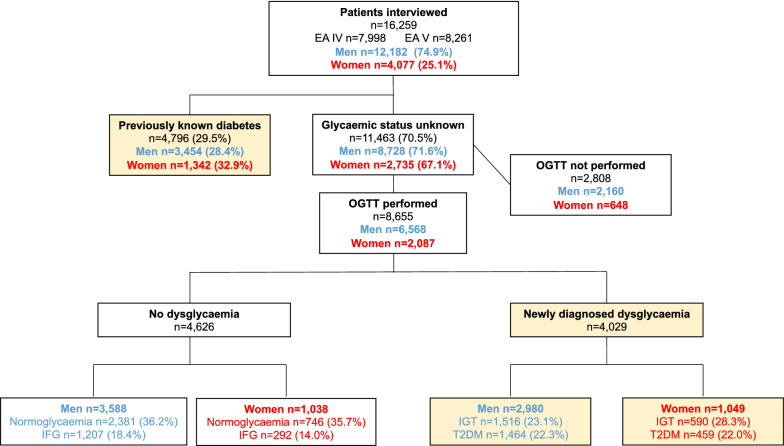
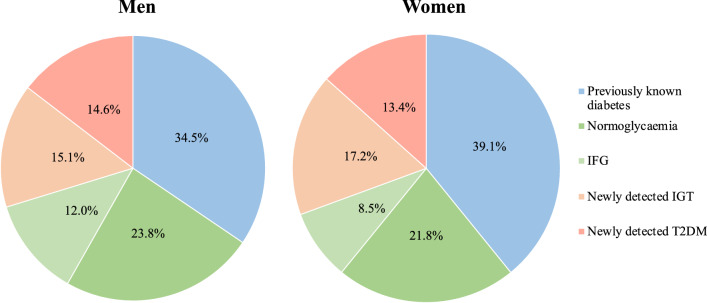
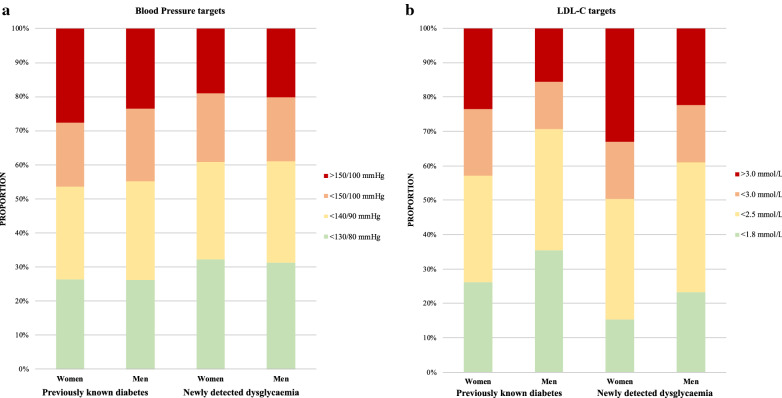
Background: Gender disparities in the management of dysglycaemia, defined as either impaired glucose tolerance (IGT) or type 2 diabetes (T2DM), in coronary artery disease (CAD) patients are a medical challenge. Recent data from two nationwide cohorts of patients suggested no gender difference as regards the risk for diabetes-related CV complications but indicated the presence of a gender disparity in risk factor management. The aim of this study was to investigate gender differences in screening for dysglycaemia, cardiovascular risk factor management and prognosis in dysglycemic CAD patients. Methods: The study population (n = 16,259; 4077 women) included 7998 patients from the ESC-EORP EUROASPIRE IV (EAIV: 2012–2013, 79 centres in 24 countries) and 8261 patients from the ESC-EORP EUROASPIRE V (EAV: 2016–2017, 131 centres in 27 countries) cross-sectional surveys. In each centre, patients were investigated with standardised methods by centrally trained staff and those without known diabetes were offered an oral glucose tolerance test (OGTT). The first of CV death or hospitalisation for non-fatal myocardial infarction, stroke, heart failure or revascularization served as endpoint. Median follow-up time was 1.7 years. The association between gender and time to the occurrence of the endpoint was evaluated using Cox survival modelling, adjusting for age. Results: Known diabetes was more common among women (32.9%) than men (28.4%, p < 0.0001). OGTT (n = 8655) disclosed IGT in 17.2% of women vs. 15.1% of men (p = 0.004) and diabetes in 13.4% of women vs. 14.6% of men (p = 0.078). In both known diabetes and newly detected dysglycaemia groups, women were older, with higher proportions of hypertension, dyslipidaemia and obesity. HbA1c was higher in women with known diabetes. Recommended targets of physical activity, blood pressure and cholesterol were achieved by significantly lower proportions of women than men. Women with known diabetes had higher risk for the endpoint than men (age-adjusted HR 1.22; 95% CI 1.04–1.43). Conclusions: Guideline-recommended risk factor control is poorer in dysglycemic women than men. This may contribute to the worse prognosis in CAD women with known diabetes.
Overview
The claims and statistics of this paper haven’t been checked yet.
Free: it reads the open-access text and checks the first 5 claims that cite a source we can check. Create a free account to check every claim.
Integrity signals
Registry
Cites
Statistics
Figures
Verification
Claims the paper makes
The claims and statistics of this paper haven’t been checked yet.
Free: it reads the open-access text and checks the first 5 claims that cite a source we can check. Create a free account to check every claim.
Claims other papers make about this one
Each is checked against this paper’s own text: does it say what the citing paper says it does?
The source backs part of the claim, not all of it — or backs it for a different population, condition or comparison.
In the citing paper
“Women usually show greater differences in BP and higher proportions of hypertension than men already at diagnosis of T2DM compared with women and men without T2DM, and worse BP control thereafter.191,230”
From 2023 ESC guidelines for the management of cardiovascular disease in patients with diabetes. (2023) · cites this paper as [191]
Experimental — accuracy not yet measured
Self-check
Percentages, sums and reported differences re-computed from the paper’s own numbers.
The self-check needs the paper’s full text.
Citations
Cites
The Hospital Anxiety and Depression Scale
Zigmond, A. S., & Snaith, R. P. (1983) · Acta Psychiatrica Scandinavica · doi:10.1111/j.1600-0447.1983.tb09716.x · Cited by 47,139
Friedewald, W. T., Levy, R. I., & Fredrickson, D. S. (1972) · Clinical Chemistry · doi:10.1093/clinchem/18.6.499 · Cited by 32,423 · cited 1×
“Laboratory investigations Venous blood was drawn after ≥ 10 h of fasting for measuring serum total and high density lipoprotein-cholesterol (HDL-C), triglycerides, and glycated haemoglobin A1c (HbA1c) while low density cholesterol- cholesterol (LDL-C) was calculated by Friedewald’s formula [22].”
MethodEuroQol: a new facility for the measurement of health-related quality of life
(1990) · Health Policy · doi:10.1016/0168-8510(90)90421-9 · Cited by 15,736 · cited 1×
“Generic health status was assessed by means of VASscale of the EuroQoL 5D questionnaire, varying from 0 (the worst possible health status) to 100 (the best possible health status) [29].”
MethodThe Emerging Risk Factors Collaboration (2010) · The Lancet · doi:10.1016/s0140-6736(10)60484-9 · Cited by 5,125
Cosentino, F., Grant, P. J., Aboyans, V., Bailey, C. J., Ceriello, A., Delgado, V., Federici, M., Filippatos, G., Grobbee, D. E., Hansen, T. B., et al. (2020) · European Heart Journal · doi:10.1093/eurheartj/ehz486 · Cited by 4,763
Self-citationAuthors/Task Force Members, Graham, I., Atar, D., Borch-Johnsen, K., Boysen, G., Burell, G., Cifkova, R., Dallongeville, J., De Backer, G., Ebrahim, S., et al. (2007) · European Heart Journal · doi:10.1093/eurheartj/ehm316 · Cited by 3,753
Self-citationDavies, M. J., D’Alessio, D. A., Fradkin, J., Kernan, W. N., Mathieu, C., Mingrone, G., Rossing, P., Tsapas, A., Wexler, D. J., & Buse, J. B. (2018) · Diabetes Care · doi:10.2337/dci18-0033 · Cited by 3,518
(2013) · European Heart Journal · doi:10.1093/eurheartj/eht108 · Cited by 1,955
Self-citationHuxley, R., Barzi, F., & Woodward, M. (2006) · BMJ · doi:10.1136/bmj.38678.389583.7c · Cited by 1,534 · cited 1×
“Screening for glucose perturbations Appropriate screening for glucose metabolism perturbations is of particular importance in women, since it appears that the advantage given by their later CAD presentation compared with men is eliminated by the presence of diabetes [7, 13].”
BackgroundRisk factors, mortality, and cardiovascular outcomes in patients with type 2 diabetes
Rawshani, A., Rawshani, A., Franzén, S., Sattar, N., Eliasson, B., Svensson, A.-M., Zethelius, B., Miftaraj, M., McGuire, D. K., Rosengren, A., et al. (2018) · New England Journal of Medicine · doi:10.1056/nejmoa1800256 · Cited by 1,475 · cited 1×
“Background Dysglycaemia, defined as the presence of either impaired glucose tolerance (IGT) or type 2 diabetes (T2DM), represents a major cause of morbidity and mortality worldwide, mainly due to its high risk of vascular complications, including coronary artery disease (CAD) [1, 2].”
BackgroundDavies, M. J., D’Alessio, D. A., Fradkin, J., Kernan, W. N., Mathieu, C., Mingrone, G., Rossing, P., Tsapas, A., Wexler, D. J., & Buse, J. B. (2018) · Diabetologia · doi:10.1007/s00125-018-4729-5 · Cited by 1,455
Buse, J. B., Wexler, D. J., Tsapas, A., Rossing, P., Mingrone, G., Mathieu, C., D’Alessio, D. A., & Davies, M. J. (2020) · Diabetes Care · doi:10.2337/dci19-0066 · Cited by 1,192
Kotseva, K., Wood, D., De Bacquer, D., De Backer, G., Rydén, L., Jennings, C., Gyberg, V., Amouyel, P., Bruthans, J., Castro Conde, A., et al. (2016) · European Journal of Preventive Cardiology · doi:10.1177/2047487315569401 · Cited by 1,006
Self-citationKotseva, K., De Backer, G., De Bacquer, D., Rydén, L., Hoes, A., Grobbee, D., Maggioni, A., Marques-Vidal, P., Jennings, C., Abreu, A., et al. (2019) · European Journal of Preventive Cardiology · doi:10.1177/2047487318825350 · Cited by 937 · cited 1×
“The main objective of the present study is to investigate gender differences in screening for dysglycaemia, CV risk factor management in a large homogeneous cohort of dysglycemic patients with verified CAD subjected to a standardised examination within the framework of the European Action on Secondary and Primary Prev…”
BackgroundSelf-citationPeters, S. A. E., Huxley, R. R., & Woodward, M. (2014) · The Lancet · doi:10.1016/s0140-6736(14)60040-4 · Cited by 805
European Guidelines on cardiovascular disease prevention in clinical practice (version 2012)
Perk, J., De Backer, G., Gohlke, H., Graham, I., Reiner, Ž., Verschuren, W. M. M., Albus, C., Benlian, P., Boysen, G., Cifkova, R., et al. (2012) · Atherosclerosis · doi:10.1016/j.atherosclerosis.2012.05.007 · Cited by 691
Self-citation(2014) · Revista Española de Cardiología (English Edition) · doi:10.1016/j.rec.2013.10.013 · Cited by 609
Self-citationManagement of Hyperglycemia in Type 2 Diabetes
SKOLNIK, N., & OLSON, C. (2012) · Family Practice News · doi:10.1016/s0300-7073(12)70593-5 · Cited by 519
Sex and gender in cardiovascular medicine: presentation and outcomes of acute coronary syndrome
Haider, A., Bengs, S., Luu, J., Osto, E., Siller-Matula, J. M., Muka, T., & Gebhard, C. (2020) · European Heart Journal · doi:10.1093/eurheartj/ehz898 · Cited by 305 · cited 1×
“Historically, this has been considered to be due to both the attenuating effect of diabetes on the cardiometabolic protection conferred by oestrogens [14] and to the fact that that women, being treated less effectively than men, are less likely to achieve recommended risk factor targets [15, 16].”
BackgroundSex Disparities in the Treatment and Control of Cardiovascular Risk Factors in Type 2 Diabetes
Gouni-Berthold, I., Berthold, H. K., Mantzoros, C. S., Böhm, M., & Krone, W. (2008) · Diabetes Care · doi:10.2337/dc08-0194 · Cited by 190 · cited 2×
“A German population study showed that women with T2DM and CVD were more likely to have blood pressure, LDL-C and HbA1c uncontrolled compared with men [16], as was also reported from more than 8000 Croatian T2DM patients [33].”
BackgroundResultPeters, S. A. E., Huxley, R. R., Sattar, N., & Woodward, M. (2015) · Current Cardiovascular Risk Reports · doi:10.1007/s12170-015-0462-5 · Cited by 176
Ferrara, A., Mangione, C. M., Kim, C., Marrero, D. G., Curb, D., Stevens, M., Selby, J. V., & for the Translating Research Into Action for Diabetes (TRIAD) Study Group (2008) · Diabetes Care · doi:10.2337/dc07-1244 · Cited by 165 · cited 1×
“Historically, this has been considered to be due to both the attenuating effect of diabetes on the cardiometabolic protection conferred by oestrogens [14] and to the fact that that women, being treated less effectively than men, are less likely to achieve recommended risk factor targets [15, 16].”
BackgroundD'Orazio, P., Burnett, R. W., Fogh-Andersen, N., Jacobs, E., Kuwa, K., Külpmann, W. R., Larsson, L., Lewenstam, A., Maas, A. H. J., Mager, G., et al. (2006) · Clinical Chemistry and Laboratory Medicine (CCLM) · doi:10.1515/cclm.2006.275 · Cited by 157
Donahue, R. P., Rejman, K., Rafalson, L. B., Dmochowski, J., Stranges, S., & Trevisan, M. (2007) · Diabetes Care · doi:10.2337/dc06-1772 · Cited by 144
Sex differences in risk factor management of coronary heart disease across three regions
Zhao, M., Vaartjes, I., Graham, I., Grobbee, D., Spiering, W., Klipstein-Grobusch, K., Woodward, M., & Peters, S. A. (2017) · Heart · doi:10.1136/heartjnl-2017-311429 · Cited by 144
Type 2 diabetes and cardiovascular disease in women
Norhammar, A., & Schenck-Gustafsson, K. G. (2012) · Diabetologia · doi:10.1007/s00125-012-2694-y · Cited by 136 · cited 3×
“It has been speculated that females with T2DM are more exposed to metabolic disturbances than males [7, 36], but this does not offset the fact that the risk factor intervention is less well implemented among the women.”
BackgroundSelf-citationShahim, B., De Bacquer, D., De Backer, G., Gyberg, V., Kotseva, K., Mellbin, L., Schnell, O., Tuomilehto, J., Wood, D., & Rydén, L. (2017) · Diabetes Care · doi:10.2337/dc17-0245 · Cited by 114
Self-citationWright, A. K., Kontopantelis, E., Emsley, R., Buchan, I., Mamas, M. A., Sattar, N., Ashcroft, D. M., & Rutter, M. K. (2019) · Circulation · doi:10.1161/circulationaha.118.039100 · Cited by 111 · cited 2×
“patients with recently diagnosed T2DM, were included [17].”
BackgroundGyberg, V., De Bacquer, D., Kotseva, K., De Backer, G., Schnell, O., Sundvall, J., Tuomilehto, J., Wood, D., & Rydén, L. (2015) · European Heart Journal · doi:10.1093/eurheartj/ehv008 · Cited by 100 · cited 1×
“To obtain a large population of women and allow comparisons between genders, we merged the EUROASPIRE IV and EUROASPIRE V surveys, which applied the same research methods and reported similar results about the secondary prevention of CAD in dysglycemic patients [4, 42].”
MethodSelf-citationHambræus, K., Tydén, P., & Lindahl, B. (2015) · European Journal of Preventive Cardiology · doi:10.1177/2047487315585293 · Cited by 91 · cited 1×
“The SWEDEHEART registry has consistently reported that less women than men reached the blood pressure and LDL-C targets one year after an acute MI [34].”
Sara, J. D. S., Taher, R., Kolluri, N., Vella, A. V., Lerman, L. O., & Lerman, A. (2019) · Cardiovascular Diabetology · doi:10.1186/s12933-019-0833-1 · Cited by 81
The prevalence of cardiac autonomic neuropathy in prediabetes: a systematic review
Eleftheriadou, A., Williams, S., Nevitt, S. J., Brown, E. E., Roylance, R., Wilding, J. P. H., Cuthbertson, D. J., & Alam, U. (2020) · Diabetologia · doi:10.1007/s00125-020-05316-z · Cited by 80
Malmborg, M., Schmiegelow, M. D. S., Nørgaard, C. H., Munch, A., Gerds, T., Schou, M., Kistorp, C., Torp-Pedersen, C., Hlatky, M. A., & Gislason, G. (2020) · European Heart Journal · doi:10.1093/eurheartj/ehz913 · Cited by 78 · cited 2×
“More recent data from two nationwide cohorts of patients with atherosclerotic disease manifestations partially revisited these assumptions, suggesting no difference between women and men as regards the risk for diabetes-related CV complications, but confirming the existence of a gender disparity in risk factor managem…”
BackgroundHu, G., Jousilahti, P., Qiao, Q., Peltonen, M., Katoh, S., & Tuomilehto, J. (2005) · Journal of the American College of Cardiology · doi:10.1016/j.jacc.2005.01.039 · Cited by 76
Self-citationFerrannini, G., De Bacquer, D., De Backer, G., Kotseva, K., Mellbin, L., Wood, D., Rydén, L., collaborators, E. V., Gale, C. P., Beleslin, B., et al. (2020) · Diabetes Care · doi:10.2337/dc19-2165 · Cited by 75 · cited 3×
“To obtain a large population of women and allow comparisons between genders, we merged the EUROASPIRE IV and EUROASPIRE V surveys, which applied the same research methods and reported similar results about the secondary prevention of CAD in dysglycemic patients [4, 42].”
BackgroundMethodSelf-citationBallotari, P., Ranieri, S. C., Luberto, F., Caroli, S., Greci, M., Rossi, P. G., & Manicardi, V. (2015) · International Journal of Endocrinology · doi:10.1155/2015/914057 · Cited by 58
Chattopadhyay, S., George, A., John, J., & Sathyapalan, T. (2018) · European Heart Journal · doi:10.1093/eurheartj/ehy233 · Cited by 56 · cited 10×
“Importantly, IGT is a pre-diabetes state prognostically as unfavourable as newly detected T2DM, and only detectable by means of an OGTT [31, 32].”
BackgroundInfluentialWang, C., Zhang, W., Wang, Y., Wan, H., Chen, Y., Xia, F., Zhang, K., Wang, N., & Lu, Y. (2019) · Cardiovascular Diabetology · doi:10.1186/s12933-019-0901-6 · Cited by 48 · cited 1×
“It has been speculated that females with T2DM are more exposed to metabolic disturbances than males [7, 36], but this does not offset the fact that the risk factor intervention is less well implemented among the women.”
BackgroundSardinha, A., Araújo, C. G. S., Soares-Filho, G. L. F., & Nardi, A. E. (2011) · Expert Review of Cardiovascular Therapy · doi:10.1586/erc.10.170 · Cited by 39 · cited 1×
“That their quality of life was lower and that they were more often prescribed antidepressants and antianxiety drugs compared with men is in accordance with the finding that a cluster of CV risk factors including low levels of physical activity, anxiety, depression and unhealthy lifestyles was more common in women [37].”
ResultDiabetes and cardiovascular mortality: the impact of sex
Norhammar, A. (2018) · The Lancet Diabetes & Endocrinology · doi:10.1016/s2213-8587(18)30111-6 · Cited by 27 · cited 1×
“Finally, as discussed in a recent editorial, women and men might have different preferences, compliance and response to lifestyle management, an area in need of further research [38].”
BackgroundSelf-citationŠekerija, M., Poljicanin, T., Erjavec, K., Liberati-Cizmek, A.-M., Prašek, M., & Metelko, Z. (2012) · Internal Medicine · doi:10.2169/internalmedicine.51.6094 · Cited by 24 · cited 2×
“A German population study showed that women with T2DM and CVD were more likely to have blood pressure, LDL-C and HbA1c uncontrolled compared with men [16], as was also reported from more than 8000 Croatian T2DM patients [33].”
ResultSex-related aspects on abnormal glucose regulation in patients with coronary artery disease
Dotevall, A., Rosengren, A., Bartnik, M., Malmberg, K., Öhrvik, J., Simoons, M. L., Rydén, L., & on behalf of the Euro Heart Survey Investigators (2007) · European Heart Journal · doi:10.1093/eurheartj/ehl458 · Cited by 19 · cited 1×
“Indeed, in our population of patients burdened by CAD, a significantly higher proportion of women had previously known T2DM, in keeping with the Euro Heart Survey in 2007 [8].”
ResultSelf-citationSattar, N. A. (2019) · European Heart Journal · doi:10.1093/eurheartj/ehz914 · Cited by 19 · cited 1×
“The results of such studies are, however, partly conflicting and may be diverse among various populations [19].”
ResultBrzezinski, R. Y., Etz-Hadar, I., Grupper, A., Ehrenwald, M., Shapira, I., Zeltser, D., Berliner, S. A., Rogowski, O., Eldor, R., & Shenhar‐Tsarfaty, S. (2017) · Cardiovascular Diabetology · doi:10.1186/s12933-017-0560-4 · Cited by 16
Shahim, B., Kjellström, B., Gyberg, V., Jennings, C. S., Smetana, S., & Rydén, L. (2018) · Diabetes Technology & Therapeutics · doi:10.1089/dia.2018.0157 · Cited by 10 · cited 2×
“Plasma glucose (PG) was analysed locally in the fasting state (FPG) and 2 h after the glucose load (2 h-PG) with a photometric point-of-care technique (Glucose 201 + (EAIV) or Glucose 201RT (EAV); HemoCue, Ängelholm, Sweden) [23].”
MethodSelf-citation
Research works printed but not linked: 1
- Geneva WHO Estimates GH Deaths by cause, age, sex, by country and by Region 2016 2000–2016 2018
Cited by
2023 ESC guidelines for the management of cardiovascular disease in patients with diabetes.
Marx, N., Federici, M., Schütt, K., Müller-Wieland, D., Ajjan, R. A., Antunes, M. J., Christodorescu, R. M., Crawford, C., Di Angelantonio, E., Eliasson, B., et al. (2023) · European Heart Journal · doi:10.1093/eurheartj/ehad192 · Cited by 1,642
Self-citationSex differences in type 2 diabetes
Kautzky-Willer, A., Leutner, M., & Harreiter, J. (2023) · Diabetologia · doi:10.1007/s00125-023-05891-x · Cited by 624
“Similarly, in a recent EUROASPIRE survey, women with type 2 diabetes or IGT were older and less likely to meet the recommended targets for physical activity, BP or LDL-cholesterol than men, probably contributing to their higher CVD risk [71].”
Ramezankhani, A., Azizi, F., & Hadaegh, F. (2022) · Cardiovascular Diabetology · doi:10.1186/s12933-022-01665-8 · Cited by 78
“ANOVA Analysis of variance BMI Body mass index BP Blood pressure CAD Coronary artery disease CHD Coronary heart disease CHF Congestive heart failure CIs Confidence intervals CVD Cardiovascular disease DBP Diastolic blood pressure ECG Electrocardiogram EMR Eastern Mediterranean Region FH-CVD Family history of CVD FPG F…”
BackgroundInfluentialSex and stroke risk factors: A review of differences and impact
Hanna, M., Wabnitz, A., & Grewal, P. (2024) · Journal of Stroke and Cerebrovascular Diseases · doi:10.1016/j.jstrokecerebrovasdis.2024.107624 · Cited by 60
Qu, L., Zuo, X., Yu, J., Duan, R., & Zhao, B. (2023) · BMC Women s Health · doi:10.1186/s12905-023-02631-6 · Cited by 38
“The criteria for central obesity were waist circumference ≥ 88 cm for women and ≥ 102 cm for men [30].”
Background
Metadata
- Authors
- EUROASPIRE IV & V Investigators, Ferrannini, G., De Bacquer, D., Vynckier, P., De Backer, G., Gyberg, V., Kotseva, K., Mellbin, L., Norhammar, A., Tuomilehto, J., Wood, D., & Rydén, L.
- Affiliations
- Karolinska Institutet (SE)
- Ghent University (BE)
- Ollscoil na Gaillimhe – University of Galway (IE)
- Karolinska University Hospital (SE)
- University of Helsinki (FI)
- Corresponding author
- Ferrannini, Giulia
- ORCID
- Venue
- Cardiovascular Diabetology
- Published
- 2021-02-11
- Volume
- 20
- Issue
- 1
- Pages
- 38-38
- ISSN
- 1475-2840 (ISSN-L)
- PMC
- PMC7879645
- OpenAlex
- W3128100027
- Cited by
- 54
- References
- 45
- Citations by year
- 2026: 8 · 2025: 9 · 2024: 20 · 2023: 11 · 2022: 6
- FWCI
- 8.21
- Type
- journal article
- Language
- en
- Open access
- gold
- doi.org
- Licence
- cc-by
- creativecommons.org/licenses/by/4.0/ (tdm)
- creativecommons.org/licenses/by/4.0/ (vor)
- Locations
- Cardiovascular Diabetology (publishedVersion, cc-by)
- PubMed Central (publishedVersion, cc-by)
- PubMed (publishedVersion)
- Ghent University Academic Bibliography (Ghent University) (submittedVersion, cc-by)
- DOAJ (DOAJ: Directory of Open Access Journals) (submittedVersion, cc-by-sa)
- Työväentutkimus Vuosikirja (submittedVersion)
- Funders
- European Society of Cardiology
- Karolinska Institute
- Topics
- Health Sciences › Medicine › Public Health, Environmental and Occupational Health › Sex and Gender in Healthcare
- Health Sciences › Medicine › Endocrinology, Diabetes and Metabolism › Diabetes, Cardiovascular Risks, and Lipoproteins
- Health Sciences › Medicine › Endocrinology, Diabetes and Metabolism › Diabetes Treatment and Management
- Keywords
- gender differences, dysglycemia, coronary artery disease, impaired glucose tolerance, type 2 diabetes, cardiovascular risk management, cardiovascular prognosis, cardiovascular mortality, cardiovascular hospitalization, oral glucose tolerance test, HbA1c, cardiovascular risk stratification, sex differences in cardiovascular care
- MeSH terms
- Heart Disease Risk Factors, Glycemic Control, Aged, Blood Glucose, Coronary Artery Disease, Diabetes Mellitus, Type 2, Europe, Female, Glucose Tolerance Test, Hospitalization, Humans, Male, Middle Aged, Predictive Value of Tests, Primary Prevention, Prognosis, Sex Factors, Time Factors, Biomarkers, Prevalence, Glucose Intolerance, Risk Assessment, Health Care Surveys, Risk Reduction Behavior, Healthcare Disparities, Secondary Prevention
About these checks
Registry, retraction, Cites and statistics results are computed, not judged, with one exception: a printed reference that no index lists is read once by a model before it counts as a citation error. Claims are extracted by a model and kept only when their quote appears verbatim in the text; each cited source is then checked, with a model’s help, for whether it says what the claim relies on. Those verdicts can be wrong — read the claim’s quote and the cited source before relying on one.
Statistics and arithmetic are recomputed, not judged.
Confidence bands are shown only for fields calibrated on our annotated test set. None is calibrated yet, so no band is shown.
What counts as a claim ›How we measure confidence ›How we check this ›
Are you an author, or do you see a problem with this page? Request a review
Data sources
Bibliographic data: Semantic Scholar, OpenAlex, Crossref.
Contains information from the Semantic Scholar Academic Graph Datasets, made available under the ODC Attribution License (ODC-BY 1.0).
Semantic Scholar’s data is described in: Kinney, R., et al. (2023). The Semantic Scholar Open Data Platform. arXiv:2301.10140.
