

Effects of evolocumab in individuals with type 2 diabetes with and without atherogenic dyslipidemia: An analysis from BANTING and BERSON
Open accessThe DOI matches its Crossref record; 48 of the 48 references it cites were found in a registry or an index.
Abstract
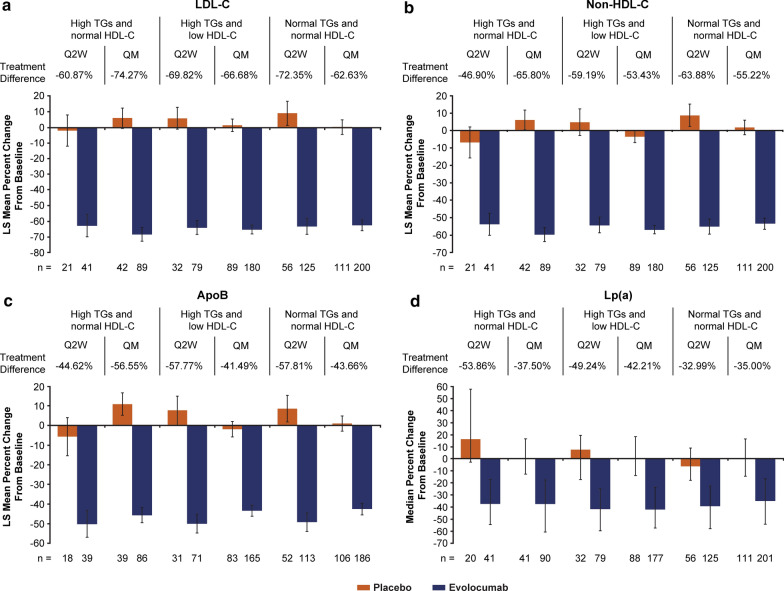
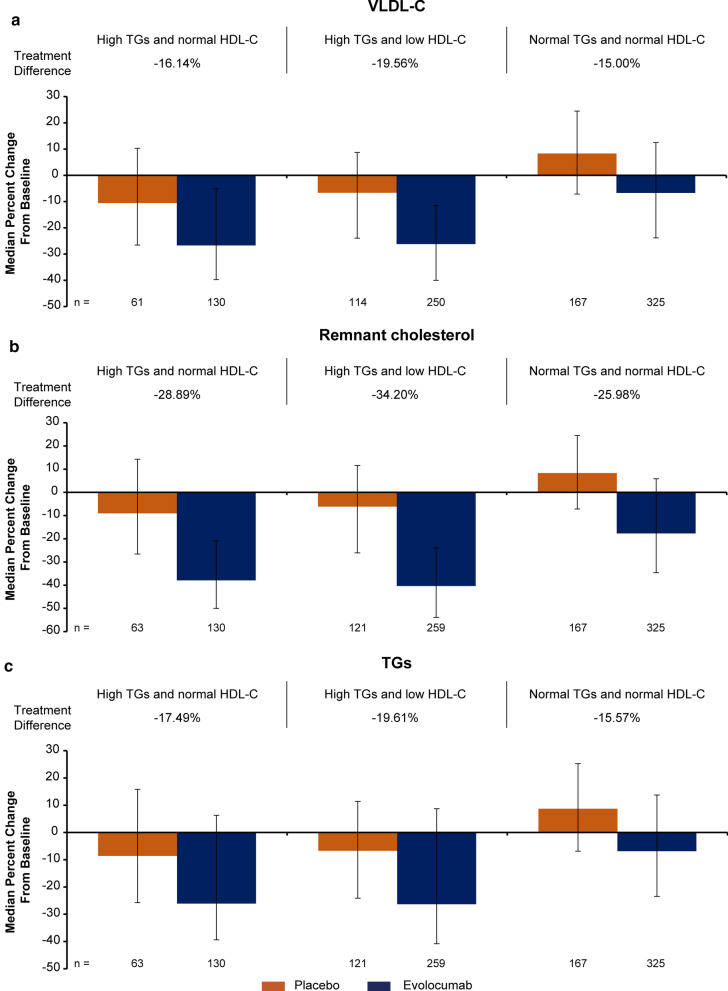
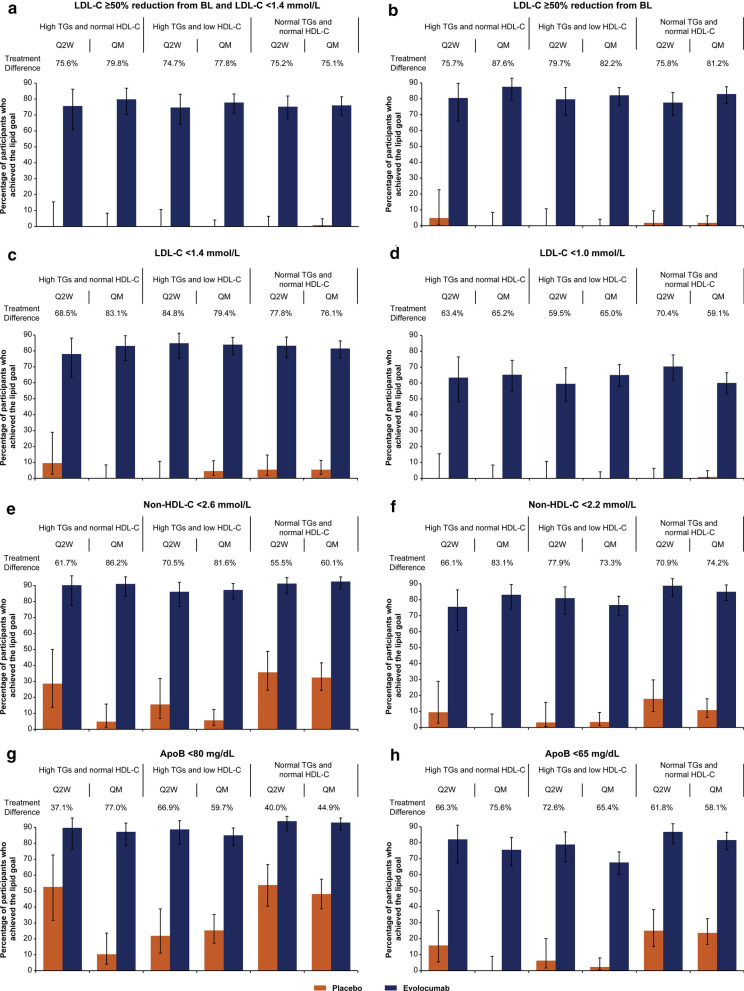
Background: Atherogenic dyslipidemia (AD), characterized by increased concentrations of apolipoprotein B (ApoB)-containing particles, is often present in individuals with type 2 diabetes mellitus (T2DM). Non-high-density lipoprotein cholesterol (non-HDL-C), cholesterol transported by apolipoprotein B (ApoB)-containing particles), and total apoB are considered secondary goals of lipid-lowering therapy to guide treatment of residual cardiovascular risk. The BANTING and BERSON studies demonstrated that evolocumab added to statin therapy reduced atherogenic lipid and lipoproteins concentrations in patients with T2DM. Methods: This post-hoc analysis combined data from two randomized, placebo-controlled trials, BANTING and BERSON, to investigate the effect of evolocumab (140 mg every two weeks [Q2W] or 420 mg monthly [QM]) on atherogenic lipid (LDL-C, non-HDL-C, VLDL-C, remnant cholesterol) and lipoproteins (ApoB, lipoprotein(a) (Lp[a])), and achievement of 2019 European Society of Cardiology/European Atherosclerosis Society lipid treatment goals in individuals with and without AD. Results: In individuals with high TGs with (n = 389) and without (n = 196) AD receiving background statin therapy, evolocumab, compared with placebo, substantially reduced the cholesterol levels from all ApoB atherogenic lipoproteins (least squares (LS) mean LDL-C by 66.7% to 74.3%, non-HDL-C by 53.4% to 65.8%, median remnant cholesterol by 28.9% to 34.2%, VLDL-C by 16.1% to 19.6%) and median TGs levels (by 17.5% to 19.6%) at the mean of weeks 10 and 12. LS mean ApoB was significantly reduced by 41.5% to 56.6% at week 12. Results were consistent in diabetic individuals with normal TGs (n = 519). Evolocumab was also associated with a significant reduction in median Lp(a) by 35.0% to 53.9% at the mean of weeks 10 and 12. A majority (74.7% to 79.8%) of evolocumab-treated individuals achieved the goal of both an LDL-C < 1.4 mmol/L and an LDL-C reduction of at least 50%, > 75% achieved non-HDL-C < 2.2 mmol/L at the mean of weeks 10 and 12, and > 67% achieved ApoB < 65 mg/dL at week 12. Conclusions: Evolocumab effectively reduced LDL-C, non-HDL-C, ApoB, Lp(a), and remnant cholesterol in individuals with T2DM with and without AD. Evolocumab Q2W or QM enabled most individuals at high/very-high cardiovascular disease risk to achieve their LDL-C, non-HDL-C, and ApoB recommended goals.
Overview
The claims and statistics of this paper haven’t been checked yet.
Free: it reads the open-access text and checks the first 5 claims that cite a source we can check. Create a free account to check every claim.
Integrity signals
Registry
Cites
Statistics
Figures
Verification
Claims the paper makes
The claims and statistics of this paper haven’t been checked yet.
Free: it reads the open-access text and checks the first 5 claims that cite a source we can check. Create a free account to check every claim.
Claims other papers make about this one
Each is checked against this paper’s own text: does it say what the citing paper says it does?
In the citing paper
“Compared with placebo, evolocumab also significantly reduced other atherogenic lipids (i.e.TGs, non-HDL-C, apolipoprotein B-containing particles) in patients with diabetes and mixed dyslipidaemia enrolled in the BANTING (Evaluation of Evolocumab Efficacy in Diabetic Adults With Hypercholesterolemia/Mixed Dyslipidemia) and BERSON (Safety and Efficacy of Evolocumab in Combination With Statin Therapy”
From 2023 ESC guidelines for the management of cardiovascular disease in patients with diabetes. (2023) · cites this paper as [266]
Self-check
Percentages, sums and reported differences re-computed from the paper’s own numbers.
The self-check needs the paper’s full text.
Citations
Cites
Grundy, S. M., Bilheimer, D. W., Chait, A., Clark, L. T., Denke, M. A., Havel, R. J., Hazzard, W. R., Hulley, S. B., Hunninghake, D. B., Kreisberg, R. A., et al. (1993) · JAMA · doi:10.1001/jama.269.23.3015 · Cited by 27,947
Expert Panel on Detection, E. (2001) · JAMA: The Journal of the American Medical Association · doi:10.1001/jama.285.19.2486 · Cited by 26,011
Yusuf, S., Hawken, S., Ôunpuu, S., Dans, T., Avezum, A., Lanas, F., McQueen, M., Budaj, A., Pais, P., Varigos, J., et al. (2004) · The Lancet · doi:10.1016/s0140-6736(04)17018-9 · Cited by 12,026
Mach, F., Baigent, C., Catapano, A. L., Koskinas, K. C., Casula, M., Badimon, L., Chapman, M. J., De Backer, G. G., Delgado, V., Ference, B. A., et al. (2020) · European Heart Journal · doi:10.1093/eurheartj/ehz455 · Cited by 8,961
Grundy, S. M., Stone, N. J., Bailey, A. L., Beam, C., Birtcher, K. K., Blumenthal, R. S., Braun, L. T., de Ferranti, S., Faiella-Tommasino, J., Forman, D. E., et al. (2019) · Circulation · doi:10.1161/cir.0000000000000625 · Cited by 6,185
Mach, F., Baigent, C., Catapano, A. L., Koskinas, K. C., Casula, M., Badimon, L., Chapman, M. J., De Backer, G. G., Delgado, V., Ference, B. A., et al. (2019) · Atherosclerosis · doi:10.1016/j.atherosclerosis.2019.08.014 · Cited by 4,854
Cosentino, F., Grant, P. J., Aboyans, V., Bailey, C. J., Ceriello, A., Delgado, V., Federici, M., Filippatos, G., Grobbee, D. E., Hansen, T. B., et al. (2020) · European Heart Journal · doi:10.1093/eurheartj/ehz486 · Cited by 4,763
Atherogenic lipoprotein phenotype. A proposed genetic marker for coronary heart disease risk
Austin, M. A., King, M. C., Vranizan, K. M., & Krauss, R. M. (1990) · Circulation · doi:10.1161/01.cir.82.2.495 · Cited by 1,411 · cited 1×
“The lipoprotein assessment in these patients reveals an increase in triglyceride-rich lipoproteins (TRL) (chylomicrons, verylow-density lipoprotein [VLDL]), accumulation of lipoprotein remnants (chylomicron remnants, small VLDL, and intermediate-density lipoprotein), and predominantly small, dense LDL particles [1, 2].”
BackgroundSarwar, N., Danesh, J., Eiriksdottir, G., Sigurdsson, G., Wareham, N., Bingham, S., Boekholdt, S. M., Khaw, K.-T., & Gudnason, V. (2007) · Circulation · doi:10.1161/circulationaha.106.637793 · Cited by 1,408
Nicholls, S. J., Puri, R., Anderson, T., Ballantyne, C. M., Cho, L., Kastelein, J. J. P., Koenig, W., Somaratne, R., Kassahun, H., Yang, J., et al. (2016) · JAMA · doi:10.1001/jama.2016.16951 · Cited by 1,178
Nordestgaard, B. G. (2016) · Circulation Research · doi:10.1161/circresaha.115.306249 · Cited by 1,116 · cited 1×
“Remnant cholesterol was calculated as total cholesterol minus LDL-C and HDL-C from the same blood sample [9, 32].”
MethodRay, K. K., Molemans, B., Schoonen, W. M., Giovas, P., Bray, S., Kiru, G., Murphy, J., Banach, M., De Servi, S., Gaita, D., et al. (2021) · European Journal of Preventive Cardiology · doi:10.1093/eurjpc/zwaa047 · Cited by 839 · cited 1×
“The DA VINCI study [46], a cross-sectional study that collected data from 18 European countries, showed that less than 30% of patients at high- or very high-risk receiving high-intensity statin monotherapy or a statin in combination with ezetimibe attained their 2019 ESC/EAS risk-based LDL-C goal.”
BackgroundMiller, M., Cannon, C. P., Murphy, S. A., Qin, J., Ray, K. K., & Braunwald, E. (2008) · Journal of the American College of Cardiology · doi:10.1016/j.jacc.2007.10.038 · Cited by 610
Garvey, W. T., Kwon, S., Zheng, D., Shaughnessy, S., Wallace, P., Hutto, A., Pugh, K., Jenkins, A. J., Klein, R. L., & Liao, Y. (2003) · Diabetes · doi:10.2337/diabetes.52.2.453 · Cited by 607
Sabatine, M. S., Leiter, L. A., Wiviott, S. D., Giugliano, R. P., Deedwania, P., De Ferrari, G. M., Murphy, S. A., Kuder, J. F., Gouni-Berthold, I., Lewis, B. S., et al. (2017) · The Lancet Diabetes & Endocrinology · doi:10.1016/s2213-8587(17)30313-3 · Cited by 603 · cited 1×
“In two prespecified analyses of the FOURIER trial (NCT01764633), evolocumab also reduced the risk of major cardiovascular events (myocardial infarction, stroke, and coronary revascularization) with similar efficacy in patients with or without diabetes [26] and in patients with metabolic syndrome with or without diabet…”
BackgroundGarber, A. J., Handelsman, Y., Grunberger, G., Einhorn, D., Abrahamson, M. J., Barzilay, J. I., Blonde, L., Bush, M. A., DeFronzo, R. A., Garber, J. R., et al. (2020) · Endocrine Practice · doi:10.4158/cs-2019-0472 · Cited by 598 · cited 5×
“Similar aggressive goals are recommended by the American Association of Clinical Endocrinologists and the American College of Endocrinology [20] in patients with diabetes and ASCVD.”
BackgroundResultInfluentialStatin therapy increases lipoprotein(a) levels
Tsimikas, S., Gordts, P. L. S. M., Nora, C., Yeang, C., & Witztum, J. L. (2020) · European Heart Journal · doi:10.1093/eurheartj/ehz310 · Cited by 512 · cited 1×
“Statins often increase Lp(a) levels [38], which is aligned with the changes observed in the placebo groups.”
BackgroundJørgensen, A. B., Frikke-Schmidt, R., West, A. S., Grande, P., Nordestgaard, B. G., & Tybjærg-Hansen, A. (2013) · European Heart Journal · doi:10.1093/eurheartj/ehs431 · Cited by 501
Robinson, J. G., Nedergaard, B. S., Rogers, W. J., Fialkow, J., Neutel, J. M., Ramstad, D., Somaratne, R., Legg, J. C., Nelson, P., Scott, R., et al. (2014) · JAMA · doi:10.1001/jama.2014.4030 · Cited by 496 · cited 1×
“The results are consistent with prior evolocumab studies in primary hyperlipidemia [33, 34] and in type 2 diabetes from the BANTING [25] and BERSON [24] studies.”
ResultPoirier, S., Mayer, G., Benjannet, S., Bergeron, E., Marcinkiewicz, J., Nassoury, N., Mayer, H., Nimpf, J., Prat, A., & Seidah, N. G. (2008) · Journal of Biological Chemistry · doi:10.1074/jbc.m708098200 · Cited by 477 · cited 1×
“Since in vitro studies [43, 44] have shown the ability of PCSK9 to also modulate the expression in the liver of VLDL receptor, LRP1, and ApoE receptor, we cannot completely rule out an effect of PCSK9 inhibition on these metabolic pathways for the observed reduction of VLDLC and IDL-C.”
BackgroundBARTER, P. J., BALLANTYNE, C. M., CARMENA, R., CABEZAS, M. C., CHAPMAN, M. J., COUTURE, P., DE GRAAF, J., DURRINGTON, P. N., FAERGEMAN, O., FROHLICH, J., et al. (2006) · Journal of Internal Medicine · doi:10.1111/j.1365-2796.2006.01616.x · Cited by 464
Self-citationSchwartz, G. G., Abt, M., Bao, W., DeMicco, D., Kallend, D., Miller, M., Mundl, H., & Olsson, A. G. (2015) · Journal of the American College of Cardiology · doi:10.1016/j.jacc.2015.03.544 · Cited by 272
Varbo, A., Benn, M., & Nordestgaard, B. G. (2014) · Pharmacology & Therapeutics · doi:10.1016/j.pharmthera.2013.11.008 · Cited by 251 · cited 1×
“remnants Remnant lipoproteins (chylomicron remnants, VLDL, and IDL) are smaller cholesterol-enriched particles that, via intimal deposition of cholesterol, may contribute to atherogenesis and the residual ACVD risk [40].”
BackgroundCanuel, M., Sun, X., Asselin, M.-C., Paramithiotis, E., Prat, A., & Seidah, N. G. (2013) · PLoS ONE · doi:10.1371/journal.pone.0064145 · Cited by 227 · cited 1×
“Since in vitro studies [43, 44] have shown the ability of PCSK9 to also modulate the expression in the liver of VLDL receptor, LRP1, and ApoE receptor, we cannot completely rule out an effect of PCSK9 inhibition on these metabolic pathways for the observed reduction of VLDLC and IDL-C.”
BackgroundSniderman, A. D., St-Pierre, A. C., Cantin, B., Dagenais, G. R., Després, J.-P., & Lamarche, B. (2003) · The American Journal of Cardiology · doi:10.1016/s0002-9149(03)00262-5 · Cited by 224 · cited 1×
“This observation is consistent with prior reports [36, 37] and clinically meaningful because both non-HDL-C and ApoB are considered secondary goals to adjust further or intensify the lipid-lowering therapy [5, 20].”
ResultVarbo, A., Freiberg, J. J., & Nordestgaard, B. G. (2015) · Clinical Chemistry · doi:10.1373/clinchem.2014.234146 · Cited by 209
Contribution of remnant cholesterol to cardiovascular risk
Langsted, A., Madsen, C. M., & Nordestgaard, B. G. (2020) · Journal of Internal Medicine · doi:10.1111/joim.13059 · Cited by 189
Joshi, P. H., Khokhar, A. A., Massaro, J. M., Lirette, S. T., Griswold, M. E., Martin, S. S., Blaha, M. J., Kulkarni, K. R., Correa, A., D'Agostino, R. B., et al. (2016) · Journal of the American Heart Association · doi:10.1161/jaha.115.002765 · Cited by 177
Balling, M., Afzal, S., Varbo, A., Langsted, A., Davey Smith, G., & Nordestgaard, B. G. (2020) · Journal of the American College of Cardiology · doi:10.1016/j.jacc.2020.09.610 · Cited by 175
Clinical Pharmacokinetics and Pharmacodynamics of Evolocumab, a PCSK9 Inhibitor
Kasichayanula, S., Grover, A., Emery, M. G., Gibbs, M. A., Somaratne, R., Wasserman, S. M., & Gibbs, J. P. (2018) · Clinical Pharmacokinetics · doi:10.1007/s40262-017-0620-7 · Cited by 135 · cited 1×
“The maximum reduction of LDL-C occurs approximately 2 weeks after the dose for individuals receiving evolocumab 420 mg QW [31]; therefore, the mean of weeks 10 and 12 incorporates time points that would likely represent maximum LDL-C reduction for some individuals, depending on their dose regimen, combined with a time…”
BackgroundVarbo, A., & Nordestgaard, B. G. (2017) · Current Opinion in Lipidology · doi:10.1097/mol.0000000000000429 · Cited by 135 · cited 1×
“Remnant cholesterol was calculated as total cholesterol minus LDL-C and HDL-C from the same blood sample [9, 32].”
MethodHalcox, J. P., Banegas, J. R., Roy, C., Dallongeville, J., De Backer, G., Guallar, E., Perk, J., Hajage, D., Henriksson, K. M., & Borghi, C. (2017) · BMC Cardiovascular Disorders · doi:10.1186/s12872-017-0591-5 · Cited by 122
Atherogenic Dyslipidemia and Residual Cardiovascular Risk in Statin-Treated Patients
Sirimarco, G., Labreuche, J., Bruckert, E., Goldstein, L. B., Fox, K. M., Rothwell, P. M., Amarenco, P., Bousser, M.-G., Chamorro, A., Ford, I., et al. (2014) · Stroke · doi:10.1161/strokeaha.113.004229 · Cited by 106
Leiter, L. A., Lundman, P., da Silva, P. M., Drexel, H., Jünger, C., Gitt, A. K., & on behalf of the DYSIS investigators (2011) · Diabetic Medicine · doi:10.1111/j.1464-5491.2011.03360.x · Cited by 95 · cited 1×
“A second therapy is needed to attain lipid treatment goals and further reduce the risk of cardiovascular events [22, 23].”
BackgroundHermans, M. P., Sacks, F. M., Ahn, S. A., & Rousseau, M. F. (2011) · Cardiovascular Diabetology · doi:10.1186/1475-2840-10-20 · Cited by 83
Deedwania, P., Murphy, S. A., Scheen, A., Badariene, J., Pineda, A. L., Honarpour, N., Keech, A. C., Sever, P. S., Pedersen, T. R., Sabatine, M. S., et al. (2021) · JAMA Cardiology · doi:10.1001/jamacardio.2020.3151 · Cited by 83 · cited 1×
“In two prespecified analyses of the FOURIER trial (NCT01764633), evolocumab also reduced the risk of major cardiovascular events (myocardial infarction, stroke, and coronary revascularization) with similar efficacy in patients with or without diabetes [26] and in patients with metabolic syndrome with or without diabet…”
BackgroundRosenson, R. S., Daviglus, M. L., Handelsman, Y., Pozzilli, P., Bays, H., Monsalvo, M. L., Elliott-Davey, M., Somaratne, R., & Reaven, P. (2019) · Diabetologia · doi:10.1007/s00125-019-4856-7 · Cited by 73 · cited 7×
“For both studies, detailed methods, participant inclusion/exclusion criteria, and primary results have been previously published [24, 25, 29].”
BackgroundMethodResultInfluentialSelf-citationNew Perspectives on Atherogenic Dyslipidaemia and Cardiovascular Disease
Lorenzatti, A. J., & Toth, P. P. (2020) · European Cardiology Review · doi:10.15420/ecr.2019.06 · Cited by 72 · cited 1×
“The lipoprotein assessment in these patients reveals an increase in triglyceride-rich lipoproteins (TRL) (chylomicrons, verylow-density lipoprotein [VLDL]), accumulation of lipoprotein remnants (chylomicron remnants, small VLDL, and intermediate-density lipoprotein), and predominantly small, dense LDL particles [1, 2].”
BackgroundSelf-citationLorenzatti, A. J., Eliaschewitz, F. G., Chen, Y., Lu, J., Baass, A. W., Monsalvo, M. L., Wang, N., Hamer, A. W., & Ge, J. (2019) · Diabetes Obesity and Metabolism · doi:10.1111/dom.13680 · Cited by 44 · cited 7×
“For both studies, detailed methods, participant inclusion/exclusion criteria, and primary results have been previously published [24, 25, 29].”
BackgroundMethodResultInfluentialSelf-citationEffect of Evolocumab on Complex Coronary Disease Requiring Revascularization
Oyama, K., Furtado, R. H. M., Fagundes, A., Zelniker, T. A., Tang, M., Kuder, J., Murphy, S. A., Hamer, A., Wang, H., Keech, A. C., et al. (2021) · Journal of the American College of Cardiology · doi:10.1016/j.jacc.2020.11.011 · Cited by 41 · cited 1×
“Patients with established ASCVD also had a lower risk of developing complex coronary artery disease requiring revascularization (complex PCI or CABG) when evolocumab was added to statin therapy [28].”
BackgroundSelf-citationEffect of Evolocumab on Lipoprotein Particles
Toth, P. P., Sattar, N. A., Blom, D. J., Martin, S. S., Jones, S. R., Monsalvo, M. L., Elliott, M., Davis, M., Somaratne, R. M., & Preiss, D. (2017) · The American Journal of Cardiology · doi:10.1016/j.amjcard.2017.10.028 · Cited by 40 · cited 1×
“The reported percentage reduction in total LPL-P and small LDL-P in the subset of patients with T2D were similar to the overall population [35].”
ResultSelf-citationLuca, L. D., Arca, M., Temporelli, P. L., Meessen, J. M. T. A., Riccio, C., Bonomo, P., Colavita, A. R., Gabrielli, D., Gulizia, M. M., & Colivicchi, F. (2020) · International Journal of Cardiology · doi:10.1016/j.ijcard.2020.05.055 · Cited by 40 · cited 1×
“By contrast, in a recent Italian registry [45], only 3.”
ResultBreuker, C., Clément, F., Mura, T., Macioce, V., Castet‐Nicolas, A., Audurier, Y., Boegner, C., Morcrette, E., Jalabert, A., Villiet, M., et al. (2018) · International Journal of Cardiology · doi:10.1016/j.ijcard.2018.04.068 · Cited by 35 · cited 1×
“A second therapy is needed to attain lipid treatment goals and further reduce the risk of cardiovascular events [22, 23].”
BackgroundStroes, E. S. G., Robinson, J. G., Raal, F. J., Dufour, R., Sullivan, D., Kassahun, H., Ma, Y., Wasserman, S. M., & Koren, M. J. (2018) · Clinical Cardiology · doi:10.1002/clc.23049 · Cited by 31 · cited 1×
“The results are consistent with prior evolocumab studies in primary hyperlipidemia [33, 34] and in type 2 diabetes from the BANTING [25] and BERSON [24] studies.”
ResultTaskinen, M.-R., Björnson, E., Kahri, J., Söderlund, S., Matikainen, N., Porthan, K., Ainola, M., Hakkarainen, A., Lundbom, N., Fermanelli, V., et al. (2021) · Arteriosclerosis, Thrombosis, and Vascular Biology · doi:10.1161/atvbaha.120.315446 · Cited by 30
Sharma, A., Joshi, P. H., Rinehart, S. J., Thakker, K. M., Lele, A., & Vörös, S. (2014) · Journal of Cardiovascular Translational Research · doi:10.1007/s12265-014-9559-3 · Cited by 19 · cited 1×
“demonstrated that in individuals with mixed dyslipidemia, higher baseline VLDL-C levels were associated with a greater percentage decrease in TGs following 12 weeks of lipid-lowering therapy [41].”
BackgroundLorenzatti, A. J., Eliaschewitz, F. G., Chen, Y., Fialkow, J. A., Lu, J., Baass, A. W., Monsalvo, M. L., Hsu, H., Somaratne, R. M., & Ge, J. (2018) · Clinical Cardiology · doi:10.1002/clc.23018 · Cited by 18 · cited 2×
“Ethics approval and consent to participate As noted in the primary reports of the BERSON [24, 29] and BANTING [25] studies, all participants gave informed consent to participate, and the study protocols and amendments were approved by the appropriate ethics review boards at each study site.”
MethodSelf-citationTackling Residual Atherosclerotic Risk in Statin-Treated Adults: Focus on Emerging Drugs
Takata, K., & Nicholls, S. J. (2018) · American Journal of Cardiovascular Drugs · doi:10.1007/s40256-018-0312-1 · Cited by 4
Cited by
2023 ESC guidelines for the management of cardiovascular disease in patients with diabetes.
Marx, N., Federici, M., Schütt, K., Müller-Wieland, D., Ajjan, R. A., Antunes, M. J., Christodorescu, R. M., Crawford, C., Di Angelantonio, E., Eliasson, B., et al. (2023) · European Heart Journal · doi:10.1093/eurheartj/ehad192 · Cited by 1,642
Lipoprotein (a) and diabetes mellitus
Lamina, C., & Ward, N. C. (2022) · Atherosclerosis · doi:10.1016/j.atherosclerosis.2022.04.016 · Cited by 121
Banach, M., Surma, S., Reiner, Z., Katsiki, N., Penson, P. E., Fras, Z., Sahebkar, A., Paneni, F., Rizzo, M., & Kastelein, J. (2022) · Cardiovascular Diabetology · doi:10.1186/s12933-022-01684-5 · Cited by 100
“Thus, we do not discuss the role of non-HDL-C, which is now an equivalent lipid biomarker to LDL-C [13, 67], the remnants—and their important role in CV risk prediction in patients with atherogenic dyslipidemia [68], as well as apolipoprotein B (ApoB)—which has the largest predictive power, but it is still measured de…”
BackgroundLipoprotein(a): Knowns, unknowns and uncertainties
Ruscica, M., Sirtori, C. R., Corsini, A., Watts, G. F., & Sahebkar, A. (2021) · Pharmacological Research · doi:10.1016/j.phrs.2021.105812 · Cited by 96
Wang, X., Wen, D., Chen, Y., Ma, L., & You, C. (2022) · Cardiovascular Diabetology · doi:10.1186/s12933-022-01542-4 · Cited by 67
“Furthermore, it has been reported that more individuals with type 2 diabetes mellitus (T2DM), with and without atherogenic dyslipidemia, achieve the recommended LDL-C targets compared to those without T2DM [41, 42].”
Background
Metadata
- Authors
- Lorenzatti, A. J., Monsalvo, M. L., López, J. A. G., Wang, H., & Rosenson, R. S.
- Affiliations
- Instituto Médico DAMIC (AR)
- Amgen (United States) (US)
- Icahn School of Medicine at Mount Sinai (US)
- Corresponding author
- Lorenzatti, Alberto J.
- Venue
- Cardiovascular Diabetology
- Published
- 2021-04-30
- Volume
- 20
- Issue
- 1
- Pages
- 94-94
- ISSN
- 1475-2840 (ISSN-L)
- PMC
- PMC8091704
- OpenAlex
- W3158914372
- Cited by
- 34
- References
- 48
- Citations by year
- 2026: 3 · 2025: 5 · 2024: 4 · 2023: 10 · 2022: 10 · 2021: 2
- FWCI
- 6.34
- Type
- journal article
- Language
- en
- Open access
- gold
- doi.org
- Licence
- cc-by
- creativecommons.org/licenses/by/4.0 (tdm)
- creativecommons.org/licenses/by/4.0 (vor)
- Locations
- Cardiovascular Diabetology (publishedVersion, cc-by)
- PubMed Central (publishedVersion, cc-by)
- PubMed (publishedVersion)
- DOAJ (DOAJ: Directory of Open Access Journals) (submittedVersion, cc-by-sa)
- Funders
- Amgen
- Topics
- Health Sciences › Medicine › Cardiology and Cardiovascular Medicine › Lipoproteins and Cardiovascular Health
- Health Sciences › Medicine › Endocrinology, Diabetes and Metabolism › Diabetes, Cardiovascular Risks, and Lipoproteins
- Life Sciences › Biochemistry, Genetics and Molecular Biology › Biochemistry › Cholesterol and Lipid Metabolism
- Keywords
- evolocumab, type 2 diabetes, atherogenic dyslipidemia, apolipoprotein B, non-HDL cholesterol, remnant cholesterol, lipoprotein(a), triglycerides, LDL cholesterol, VLDL cholesterol, PCSK9 inhibition, statin therapy, cardiovascular risk
- MeSH terms
- Proprotein Convertase 9, PCSK9 Inhibitors, Aged, Anticholesteremic Agents, Cholesterol, Diabetes Mellitus, Type 2, Drug Therapy, Combination, Female, Humans, Lipids, Male, Middle Aged, Time Factors, Triglycerides, Biomarkers, Randomized Controlled Trials as Topic, Treatment Outcome, Clinical Trials, Phase III as Topic, Hydroxymethylglutaryl-CoA Reductase Inhibitors, Dyslipidemias, Apolipoprotein B-100, Antibodies, Monoclonal, Humanized
About these checks
Registry, retraction, Cites and statistics results are computed, not judged, with one exception: a printed reference that no index lists is read once by a model before it counts as a citation error. Claims are extracted by a model and kept only when their quote appears verbatim in the text; each cited source is then checked, with a model’s help, for whether it says what the claim relies on. Those verdicts can be wrong — read the claim’s quote and the cited source before relying on one.
Statistics and arithmetic are recomputed, not judged.
Confidence bands are shown only for fields calibrated on our annotated test set. None is calibrated yet, so no band is shown.
What counts as a claim ›How we measure confidence ›How we check this ›
Are you an author, or do you see a problem with this page? Request a review
Data sources
Bibliographic data: Semantic Scholar, OpenAlex, Crossref.
Contains information from the Semantic Scholar Academic Graph Datasets, made available under the ODC Attribution License (ODC-BY 1.0).
Semantic Scholar’s data is described in: Kinney, R., et al. (2023). The Semantic Scholar Open Data Platform. arXiv:2301.10140.
