

Pharmacometabolomic profiles in type 2 diabetic subjects treated with liraglutide or glimepiride
Open accessThe DOI matches its Crossref record; 48 of the 48 references it cites were found in a registry or an index.
Abstract
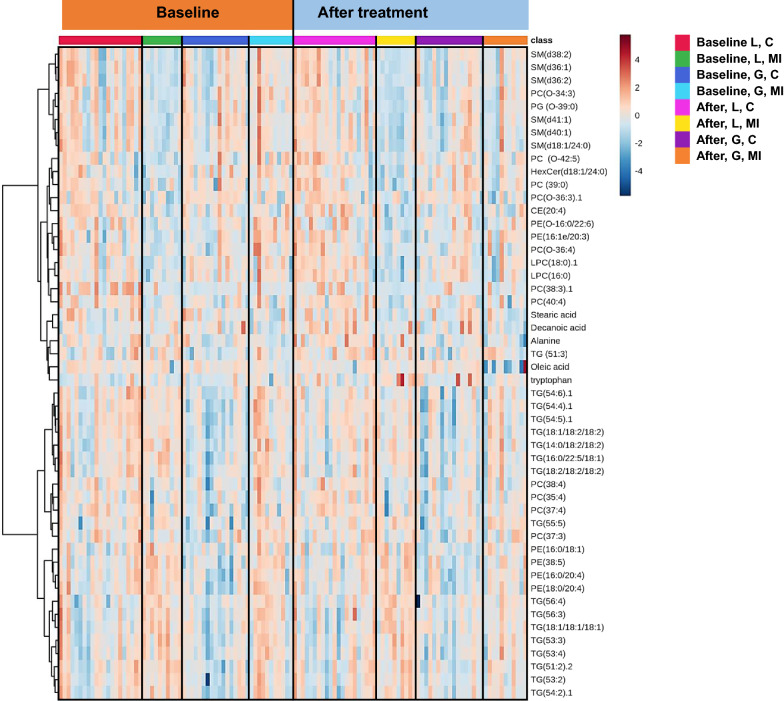
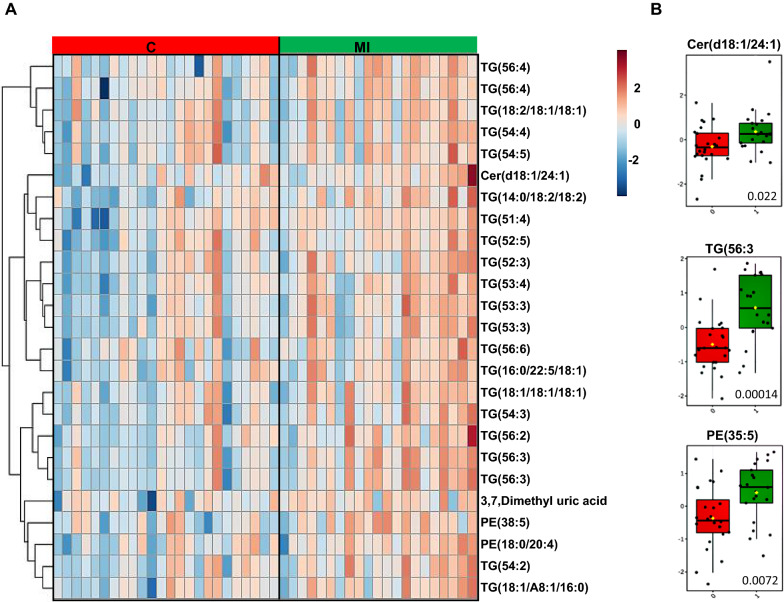
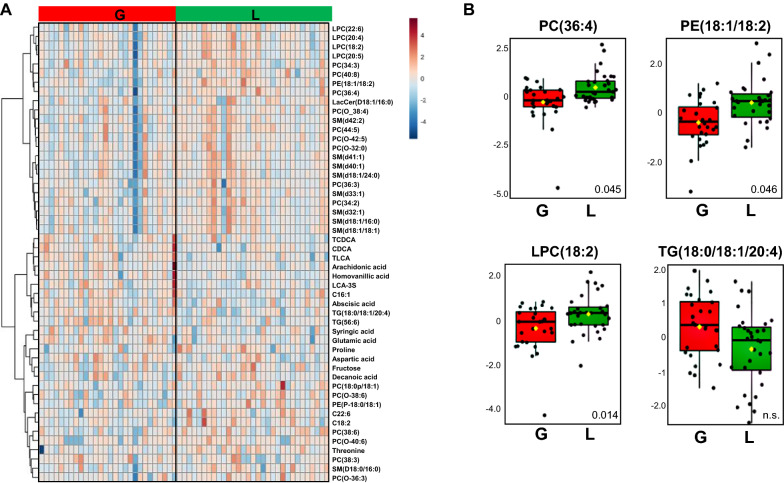
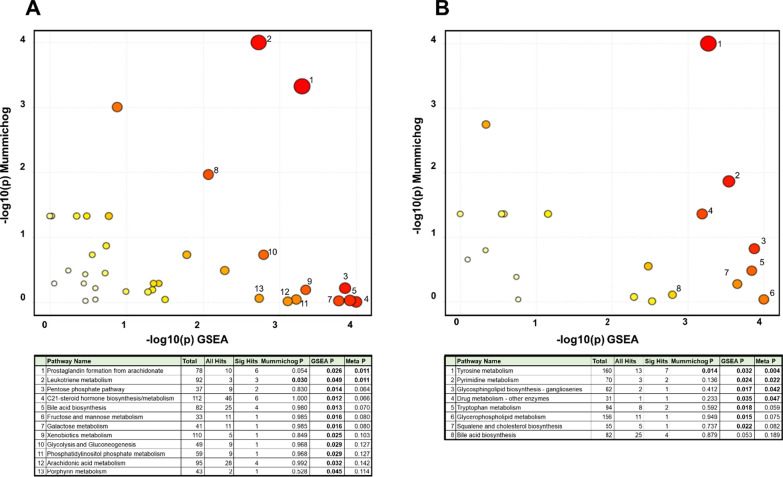
Background: Treatment with glucagon-like peptide-1 receptor agonists (GLP-1 RAs) leads to multiple metabolic changes, reduction in glucose levels and body weight are well established. In people with type 2 diabetes, GLP-1 RAs reduce the risk of cardiovascular (CV) disease and may also potentially represent a treatment for fatty liver disease. The mechanisms behind these effects are still not fully elucidated. The aim of the study was to investigate whether treatment with liraglutide is associated with favourable metabolic changes in cases of both CV disease and fatty liver disease. Methods: In a prespecified post-hoc analysis of a double-blind, placebo-controlled trial in 62 individuals with type 2 diabetes (GLP-1 RA liraglutide or glimepiride, both in combination with metformin), we evaluated the changes in plasma molecular lipids and polar metabolites after 18 weeks of treatment. The lipids and polar metabolites were measured by using ultra-high-performance liquid chromatography quadrupole time-of-flight mass spectrometry (UHPLC-QTOFMS). Results: In total, 340 lipids and other metabolites were identified, covering 14 lipid classes, bile acids, free fatty acids, amino acids and other polar metabolites. We observed more significant changes in the metabolome following liraglutide treatment compared to with glimepiride, particularly as regards decreased levels of cholesterol esters hexocyl-ceramides, lysophosphatidylcholines, sphingolipids and phosphatidylcholines with alkyl ether structure. In the liraglutide-treated group, lipids were reduced by approximately 15% from baseline, compared to a 10% decrease in the glimepiride group. At the pathway level, the liraglutide treatment was associated with lipid, bile acid as well as glucose metabolism, while glimepiride treatment was associated with tryptophan metabolism, carbohydrate metabolism, and glycerophospholipid metabolism. Conclusions: Compared with glimepiride, liraglutide treatment led to greater changes in the circulating metabolome, particularly regarding lipid metabolism involving sphingolipids, including ceramides. Our findings are hypothesis-generating and shed light on the underlying biological mechanisms of the CV benefits observed with GLP-1 RAs in outcome studies. Further studies investigating the role of GLP-1 RAs on ceramides and CV disease including fatty liver disease are warranted. Trial registration: NCT01425580
Overview
The claims and statistics of this paper haven’t been checked yet.
Free: it reads the open-access text and checks the first 5 claims that cite a source we can check. Create a free account to check every claim.
Integrity signals
Registry
Cites
Statistics
Figures
Verification
Claims the paper makes
The claims and statistics of this paper haven’t been checked yet.
Free: it reads the open-access text and checks the first 5 claims that cite a source we can check. Create a free account to check every claim.
Claims other papers make about this one
Each is checked against this paper’s own text: does it say what the citing paper says it does?
In the citing paper
“Similarly, Jendle et al.134 showed that 18 weeks of treatment with liraglutide compared with glimepiride significantly reduced a more significant number of lipid species, including ceramides, PCs, phosphatidylinositol, cholesterol esters, and sphingomyelins.”
From Lipid metabolism in MASLD and MASH: From mechanism to the clinic (2024) · cites this paper as [134]
Self-check
Percentages, sums and reported differences re-computed from the paper’s own numbers.
The self-check needs the paper’s full text.
Citations
Cites
A SIMPLE METHOD FOR THE ISOLATION AND PURIFICATION OF TOTAL LIPIDES FROM ANIMAL TISSUES
Folch, J., Lees, M., & Stanley, G. H. S. (1957) · Journal of Biological Chemistry · doi:10.1016/s0021-9258(18)64849-5 · Cited by 65,189
Liraglutide and Cardiovascular Outcomes in Type 2 Diabetes
Marso, S. P., Daniels, G. H., Brown-Frandsen, K., Kristensen, P., Mann, J. F. E., Nauck, M. A., Nissen, S. E., Pocock, S., Poulter, N. R., Ravn, L. S., et al. (2016) · New England Journal of Medicine · doi:10.1056/nejmoa1603827 · Cited by 7,629 · cited 1×
“In the LEADER (Liraglutide Effect and Action in Diabetes) trial [6] the time-to-event analysis for the composite endpoint, i.”
BackgroundChalasani, N., Younossi, Z., Lavine, J. E., Diehl, A. M., Brunt, E. M., Cusi, K., Charlton, M., & Sanyal, A. J. (2012) · Hepatology · doi:10.1002/hep.25762 · Cited by 3,803 · cited 1×
“A third of people with NAFLD are likely to progress to non-alcoholic steatohepatitis (NASH), defined as the presence of hepatic steatosis and lobular inflammation with hepatocyte injury with or without fibrosis [38].”
BackgroundMetaboAnalyst 4.0: towards more transparent and integrative metabolomics analysis
Chong, J., Soufan, O., Li, C., Caraus, I., Li, S., Bourque, G., Wishart, D. S., & Xia, J. (2018) · Nucleic Acids Research · doi:10.1093/nar/gky310 · Cited by 3,629 · cited 1×
“0 web platform, using the Functional Analysis (MS Peaks) module and using both the Mummichog algorithm as well as the GSEA algorithm [18].”
MethodByrne, C. D., & Targher, G. (2015) · Journal of Hepatology · doi:10.1016/j.jhep.2014.12.012 · Cited by 3,042 · cited 1×
“NAFLD is considered as being related to metabolic syndrome, and is highly associated with peripheral and hepatic insulin resistance, obesity, T2D, dyslipidemia and CV disease [37].”
BackgroundArmstrong, M. J., Gaunt, P., Aithal, G. P., Barton, D., Hull, D., Parker, R., Hazlehurst, J. M., Guo, K., Abouda, G., Aldersley, M. A., et al. (2016) · The Lancet · doi:10.1016/s0140-6736(15)00803-x · Cited by 2,203 · cited 1×
“It was also recently shown that ameliorative effects occur in non-alcoholic steatohepatitis (NASH) in patients treated with liraglutide [7].”
BackgroundMechanisms of Action and Therapeutic Application of Glucagon-like Peptide-1
Drucker, D. J. (2018) · Cell Metabolism · doi:10.1016/j.cmet.2018.03.001 · Cited by 2,170 · cited 1×
“Several clinical studies with the treatment of GLP-1 RAs shown improved lipid metabolism and amelioration of cardiometabolic risk factors [21].”
BackgroundObesity Phenotypes, Diabetes, and Cardiovascular Diseases
Piché, M.-E., Tchernof, A., & Després, J.-P. (2020) · Circulation Research · doi:10.1161/circresaha.120.316101 · Cited by 1,986 · cited 3×
“This supports the hypothesis that these disturbances are related to lipotoxic environment due to dysfunctional adipose tissues and therefore cardiometabolic consequences [2, 4].”
BackgroundMethodGlucagon-like peptide 1 (GLP-1)
Müller, T. D., Finan, B., Bloom, S. R., D'Alessio, D., Drucker, D. J., Flatt, P. R., Fritsche, A., Gribble, F., Grill, H. J., Habener, J. F., et al. (2019) · Molecular Metabolism · doi:10.1016/j.molmet.2019.09.010 · Cited by 1,868 · cited 1×
“Beside the reduction in weight and glucose levels of liraglutide treatment, there are several indirect actions reported regarding heart function and the vessel evoked by activation of GLP-1 receptors (GLP-1 R) [8, 9].”
BackgroundWong, R. J., Aguilar, M., Cheung, R., Perumpail, R. B., Harrison, S. A., Younossi, Z. M., & Ahmed, A. (2015) · Gastroenterology · doi:10.1053/j.gastro.2014.11.039 · Cited by 1,819
Cited by
Lipid metabolism in MASLD and MASH: From mechanism to the clinic
Carli, F., Della Pepa, G., Sabatini, S., Vidal Puig, A., & Gastaldelli, A. (2024) · JHEP Reports · doi:10.1016/j.jhepr.2024.101185 · Cited by 147
Angelidi, A. M., Kokkinos, A. D., Sanoudou, D., Connelly, M. A., Alexandrou, A. P., Mingrone, G., & Mantzoros, C. S. (2022) · Metabolism · doi:10.1016/j.metabol.2022.155346 · Cited by 62
Gao, J., Yang, T., Song, B., Ma, X., Ma, Y., Lin, X., & Wang, H. (2023) · Biomedicine & Pharmacotherapy · doi:10.1016/j.biopha.2023.115395 · Cited by 65
Piccirillo, F., Mastroberardino, S., Nusca, A., Frau, L., Guarino, L., Napoli, N., Ussia, G. P., & Grigioni, F. (2023) · International Journal of Molecular Sciences · doi:10.3390/ijms241210164 · Cited by 58
“Conversely, other findings showed minor or no significant impact on the levels of free fatty acids and glycerol after liraglutide treatment [84,85].”
BackgroundLiraglutide preserves CD34+ stem cells from dysfunction Induced by high glucose exposure
Sforza, A., Vigorelli, V., Rurali, E., Perrucci, G. L., Gambini, E., Arici, M., Metallo, A., Rinaldi, R., Fiorina, P., Barbuti, A., et al. (2022) · Cardiovascular Diabetology · doi:10.1186/s12933-022-01486-9 · Cited by 38
“ceramide) [24] and LDL metabolism, this latter by reduction of plasma PCSK9 level [25].”
BackgroundLiraglutide reduces plasma dihydroceramide levels in patients with type 2 diabetes
Denimal, D., Bergas, V., de Barros, J.-P. P., Simoneau, I., Demizieux, L., Passilly‐Degrace, P., Bouillet, B., Petit, J., Rouland, A., Bataille, A., et al. (2023) · Cardiovascular Diabetology · doi:10.1186/s12933-023-01845-0 · Cited by 33
“recently reported that 18 weeks of a treatment with liraglutide induced no significant change in total plasma Cer levels, like in our study, but unfortunately they did not provide data on individual Cer species [27].”
BackgroundGLP-1 receptor agonists and myocardial metabolism in atrial fibrillation
Zhong, J., Chen, H., Liu, Q., Zhou, S., Liu, Z., & Xiao, Y. (2023) · Journal of Pharmaceutical Analysis · doi:10.1016/j.jpha.2023.12.007 · Cited by 36
“The accumulation of ceramide promotes adipogenesis and insulin resistance, resulting in low-grade in fl ammation [31].”
BackgroundShahisavandi, M., Wang, K., Ghanbari, M., & Ahmadizar, F. (2023) · Genes · doi:10.3390/genes14071464 · Cited by 35
Zhu, Z., Xu, Y., Xia, Y., Jia, X., Chen, Y., Liu, Y., Zhang, L., Chai, H., & Sun, L. (2023) · Life Sciences · doi:10.1016/j.lfs.2023.122304 · Cited by 36
Ramos‐Molina, B., Rossell, J., de, A. P.-M., Pardina, E., Genua, I., Rojo-López, M. I., Julián, M. T., Alonso, N., Julve, J., & Mauricio, D. (2024) · Frontiers in Endocrinology · doi:10.3389/fendo.2024.1400961 · Cited by 33
Microbiota: A potential orchestrator of antidiabetic therapy
Liu, B., Zhang, L., Yang, H., Zheng, H., & Liao, X. (2023) · Frontiers in Endocrinology · doi:10.3389/fendo.2023.973624 · Cited by 31
“The liraglutide treatment was also associated with bile acid metabolism (75).”
BackgroundPepa, G. D., Patrício, B. G., Carli, F., Sabatini, S., Astiarraga, B., Ferrannini, E., Camastra, S., & Gastaldelli, A. (2024) · Diabetes · doi:10.2337/db23-0972 · Cited by 20
Wretlind, A., Curovic, V. R., de Zawadzki, A., Suvitaival, T., Xu, J., Zobel, E. H., von Scholten, B. J., Ripa, R. S., Kjær, A., Hansen, T. W., et al. (2023) · Lipids in Health and Disease · doi:10.1186/s12944-023-01922-z · Cited by 21
Bakkar, N. Z., AlZaim, I., & EL‐Yazbi, A. F. (2022) · Clinical Science · doi:10.1042/cs20220404 · Cited by 20
Metabolite profiles of diabetes mellitus and response to intervention in anti-hyperglycemic drugs
Liu, Y., Wang, D., & Liu, Y. (2023) · Frontiers in Endocrinology · doi:10.3389/fendo.2023.1237934 · Cited by 13
Metabolomics in diabetes mellitus: clinical insight
Aleidi, S. M., Fahmawi, H. A., Masood, A., & Rahman, A. M. A. (2023) · Expert Review of Proteomics · doi:10.1080/14789450.2023.2295866 · Cited by 13
“The alterations in the plasma molecular lipids and metabolites after 18 weeks of treatment of either GLP-1 RA liraglutide or glimepiride, both in combination with metformin, were examined using UHPLC-QTOFMS in a recent double-blind, placebo-controlled trial [106].”
BackgroundMethodInfluentialRegan-Smith, S., Fritzen, R., Hierons, S. J., Ajjan, R., Blindauer, C. A., & Stewart, A. J. (2022) · International Journal of Molecular Sciences · doi:10.3390/ijms231810302 · Cited by 9
Park, S., & Kim, E. (2024) · Metabolites · doi:10.3390/metabo14090483 · Cited by 8
“Numerous metabolic signatures associated with liraglutide treatment have been identified in either clinical or preclinical practice to understand metabolic changes in plasma, serum, urine, and various tissues [11–14 , 34 ].”
BackgroundMao, T., Chen, J., Su, T., Xie, L., Qu, X., Feng, R., Pan, Y., Wan, J., Cui, X., Jia, W., et al. (2024) · Diabetology & Metabolic Syndrome · doi:10.1186/s13098-024-01448-z · Cited by 11
“Nevertheless, certain studies failed to observe significant changes in routinely measured plasma lipid levels [13].”
BackgroundTuerxunyiming, M., Zhao, Q. C., Hu, Q., Zhu, P., & Zhu, S. (2025) · Frontiers in Endocrinology · doi:10.3389/fendo.2025.1588718 · Cited by 6
Li, W., Wang, Y., Liu, C., Yu, Y., Xu, L., & Dong, B. (2025) · Diabetes Therapy · doi:10.1007/s13300-025-01724-9 · Cited by 4
“This improves cardiovascular redox homeostasis and reduces the risk of coronary atherosclerosis and cardiovascular events [30].”
Yang, X., Tang, W., Chan, H., Wang, M., Yang, H., & Li, Q. (2025) · Diabetes Obesity and Metabolism · doi:10.1111/dom.70144 · Cited by 4
“58 Given the low hepatic GLP-1R expression, direct modulation of cholesterol synthesis or LDL receptor activity appears unlikely.”
O RASTREAMENTO DA ESTEATOSE HEPÁTICA NO DIABETES MELLITUS TIPO 2
da Silva, M. C., Carneiro, C. G., Vieira, L. M., França, M. K., Cerqueira, P. A. S., & Ferraz, A. R. (2024) · Revista Ibero-Americana de Humanidades, Ciências e Educação · doi:10.51891/rease.v10i9.15467
Wretlind, A., Curovic, V. R., de Zawadzki, A., Suvitaival, T., Xu, J., Zobel, E. H., von Scholten, B. J., Ripa, R. S., Kjaer, A., Hansen, T. W., et al. (2024) · Figshare · doi:10.6084/m9.figshare.26619862
Glycogen metabolic dysfunction in T2DM with MASLD: linking α-hydroxybutyrate to GYS2 downregulation
Zhang, Z., Chen, N., Yuan, X., Li, J., & Zhou, W. (2026) · Frontiers in Nutrition · doi:10.3389/fnut.2026.1860017
“Concurrently, metabolomics effectively evaluates therapeutic efficacy in T2DM with MASLD patients by detecting changes in human metabolites, providing more direct insights into drug actions and pathways (20).”
Cautela, D., Valeria, I., Lombardi, A., Laratta, B., Castaldo, C. M., Balestrieri, M. L., Mocini, E., Migliaccio, S., & Tardito, D. (2026) · International Journal of Molecular Sciences · doi:10.3390/ijms27188057
“In addition, a modulation of bile acid pathways and arachidonic acid metabolism is observed, with anti-inflammatory and vascular protective implications [54].”
InfluentialInsights from multi-omics on GLP-1 receptor agonists in type 2 diabetes and obesity
Elashi, A. A., Hedaya, L., Maggio, V., Naja, K., Rizzo, M., & Elrayess, M. A. (2026) · Frontiers in Pharmacology · doi:10.3389/fphar.2026.1812193
“Untargeted plasma metabolomics identified relatively small changes in bile-acid-associated metabolites, including taurolithocholic acid-3-O-sulfate, hyodeoxycholic acid and chenodeoxycholic acid-3-glucuronide, after Liraglutide treatment (Jendle et al., 2021).”
Influential
Metadata
- Authors
- Jendle, J., Hyötyläinen, T., Orešič, M., & Nyström, T.
- Affiliations
- Örebro University (SE)
- Karolinska Institutet (SE)
- Corresponding author
- Jendle, J.
- Venue
- Cardiovascular Diabetology
- Published
- 2021-12
- Volume
- 20
- Issue
- 1
- Pages
- 237-237
- ISSN
- 1475-2840 (ISSN-L)
- PMC
- PMC8684205
- OpenAlex
- W4200606167
- Cited by
- 27
- References
- 48
- Citations by year
- 2026: 3 · 2025: 3 · 2024: 7 · 2023: 10 · 2022: 4
- FWCI
- 3.92
- Type
- journal article
- Language
- en
- Open access
- gold
- doi.org
- Licence
- cc-by
- creativecommons.org/licenses/by/4.0 (tdm)
- creativecommons.org/licenses/by/4.0 (vor, 16 d)
- Locations
- Cardiovascular Diabetology (publishedVersion, cc-by)
- PubMed Central (publishedVersion, cc-by)
- PubMed (publishedVersion)
- DOAJ (DOAJ: Directory of Open Access Journals) (submittedVersion, cc-by-sa)
- Funders
- Novo Nordisk
- Örebro University
- Topics
- Health Sciences › Medicine › Endocrinology, Diabetes and Metabolism › Diabetes Treatment and Management
- Life Sciences › Biochemistry, Genetics and Molecular Biology › Molecular Biology › Metabolomics and Mass Spectrometry Studies
- Health Sciences › Medicine › Endocrinology, Diabetes and Metabolism › Diabetes, Cardiovascular Risks, and Lipoproteins
- Keywords
- liraglutide, glimepiride, type 2 diabetes, pharmacometabolomics, GLP-1 receptor agonists, plasma lipid metabolism, sphingolipids, ceramide, lysophosphatidylcholine, bile acids, hepatic steatosis, cardiovascular disease, metformin, tryptophan metabolism, glycerophospholipid metabolism, glucose metabolism
- MeSH terms
- Glucagon-Like Peptide-1 Receptor, Liraglutide, Lipidomics, Glucagon-Like Peptide-1 Receptor Agonists, Aged, Chromatography, High Pressure Liquid, Diabetes Mellitus, Type 2, Double-Blind Method, Drug Therapy, Combination, Female, Humans, Hypoglycemic Agents, Lipids, Male, Metformin, Middle Aged, Sulfonylurea Compounds, Time Factors, Biomarkers, Treatment Outcome, Spectrometry, Mass, Electrospray Ionization, Incretins, Metabolomics, Metabolome
About these checks
Registry, retraction, Cites and statistics results are computed, not judged, with one exception: a printed reference that no index lists is read once by a model before it counts as a citation error. Claims are extracted by a model and kept only when their quote appears verbatim in the text; each cited source is then checked, with a model’s help, for whether it says what the claim relies on. Those verdicts can be wrong — read the claim’s quote and the cited source before relying on one.
Statistics and arithmetic are recomputed, not judged.
Confidence bands are shown only for fields calibrated on our annotated test set. None is calibrated yet, so no band is shown.
What counts as a claim ›How we measure confidence ›How we check this ›
Are you an author, or do you see a problem with this page? Request a review
Data sources
Bibliographic data: Semantic Scholar, OpenAlex, Crossref.
Contains information from the Semantic Scholar Academic Graph Datasets, made available under the ODC Attribution License (ODC-BY 1.0).
Semantic Scholar’s data is described in: Kinney, R., et al. (2023). The Semantic Scholar Open Data Platform. arXiv:2301.10140.
