

Evidence of metabolic mechanisms playing a role in multiple insecticides resistance in Anopheles stephensi populations from Afghanistan
Open accessThe DOI matches its Crossref record; 22 of the 22 references it cites were found in a registry or an index.
Abstract
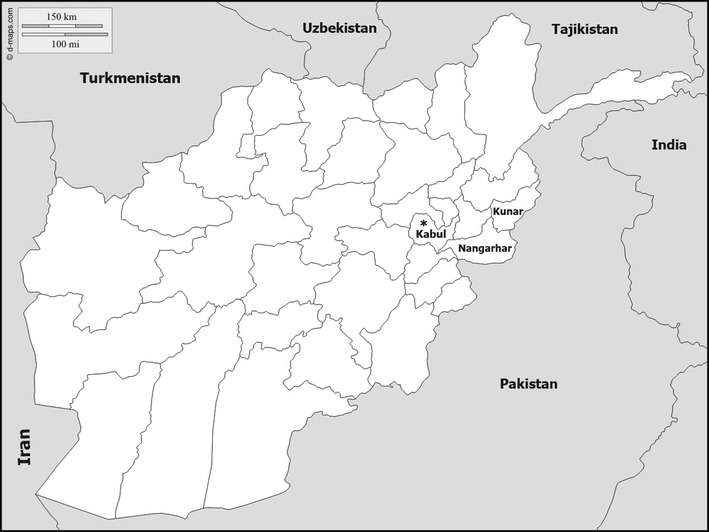
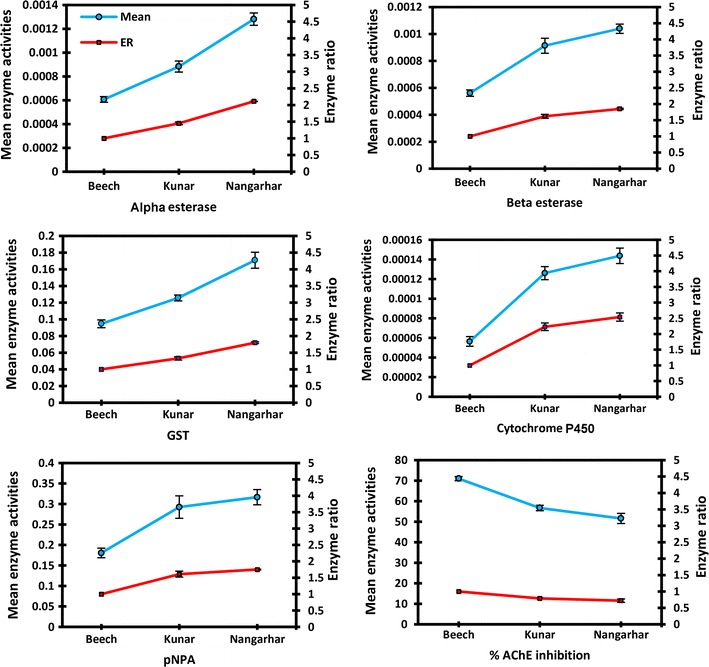
BACKGROUND: Malaria is endemic in most parts of Afghanistan and insecticide-based vector control measures are central in controlling the disease. Insecticide resistance in the main malaria vector Anopheles stephensi from Afghanistan is increasing and attempts should be made to determine the underlying resistance mechanisms for its adequate management. METHODS: The contents of cytochrome P450s, esterases, glutathione S-transferases (GSTs) and acetylcholine esterase (AChE) activities were measured in the Kunar and Nangarhar populations of An. stephensi from Afghanistan and the results were compared with those of the susceptible Beech strain using the World Health Organization approved biochemical assay methods for adult mosquitoes. RESULTS: The cytochrome P450s enzyme ratios were 2.23- and 2.54-fold in the Kunar and Nangarhar populations compared with the susceptible Beech strain. The enzyme ratios for esterases with alpha-naphthyl acetate were 1.45 and 2.11 and with beta-naphthyl acetate were 1.62 and 1.85 in the Kunar and Nangarhar populations respectively compared with the susceptible Beech strain. Esterase ratios with para-nitrophenyl acetate (pNPA) were 1.61 and 1.75 in the Kunar and Nangarhar populations compared with the susceptible Beech strain. The GSTs enzyme ratios were 1.33 and 1.8 in the Kunar and Nangarhar populations compared with the susceptible Beech strain. The inhibition of AChE was 70.9 in the susceptible Beech strain, and 56.7 and 51.5 in the Kunar and Nangarhar populations. The differences between all values of the enzymes activities/contents and AChE inhibition rates in the Kunar and Nangarhar populations were statistically significant when compared with those of the susceptible Beech strain. CONCLUSIONS: Based on the results, the reported resistance to pyrethroid and organophosphate insecticides, and tolerance to bendiocarb in the Kunar and Nangarhar populations of An. stephensi from Afghanistan are likely to be caused by a range of metabolic mechanisms, including esterases, P450s and GSTs combined with target site insensitivity in AChE.
Overview
The claims and statistics of this paper haven’t been checked yet.
Free: it reads the open-access text and checks the first 5 claims that cite a source we can check. Create a free account to check every claim.
Integrity signals
Registry
Cites
Statistics
Figures
Verification
Claims the paper makes
The claims and statistics of this paper haven’t been checked yet.
Free: it reads the open-access text and checks the first 5 claims that cite a source we can check. Create a free account to check every claim.
Claims other papers make about this one
Each is checked against this paper’s own text: does it say what the citing paper says it does?
The source backs part of the claim, not all of it — or backs it for a different population, condition or comparison.
In the citing paper
“Years later, several other studies detected kdr west and east mutations in An. stephensi in India [31, 38, 39, 48, 106] and Afghanistan [26–28].”
From Evolution of insecticide resistance and its mechanisms in Anopheles stephensi in the WHO Eastern Mediterranean Region (2020) · cites this paper as [27]
Experimental — accuracy not yet measuredThe source backs part of the claim, not all of it — or backs it for a different population, condition or comparison.
In the citing paper
“Although there are data supporting the susceptibility of the species to bendiocarb and permethrin in some provinces, resistance or resistance to be confirmed has been detected in An. stephensi to aforementioned insecticides in most provinces of Afghanistan in the follow-up studies performed in 2014, 2016 and 2017 [26–28, 79].”
From Evolution of insecticide resistance and its mechanisms in Anopheles stephensi in the WHO Eastern Mediterranean Region (2020) · cites this paper as [27]
Experimental — accuracy not yet measuredThe source backs part of the claim, not all of it — or backs it for a different population, condition or comparison.
In the citing paper
“Resistance to different OPs and carbamate insecticides in An. stephensi in Iran [87, 115] and Afghanistan [27, 28] can be traced back to aAChE.”
From Evolution of insecticide resistance and its mechanisms in Anopheles stephensi in the WHO Eastern Mediterranean Region (2020) · cites this paper as [27]
Experimental — accuracy not yet measuredThe cited source says what the claim attributes to it.
In the citing paper
“Several mechanisms including metabolic and insecticide target site insensitivity are involved in insecticide resistance in An. stephensi from different countries, each of which has its own operational significance in vector control [26–28, 31, 33–36, 38, 39, 42, 47, 48].”
From Evolution of insecticide resistance and its mechanisms in Anopheles stephensi in the WHO Eastern Mediterranean Region (2020) · cites this paper as [27]
The cited source says what the claim attributes to it.
In the citing paper
“A follow-up study in Afghanistan revealed that reported resistance to pyrethroid and organophosphorus insecticides, and tolerance to bendiocarb are likely to be caused by a range of metabolic mechanisms, including esterases, cytochrome p450s and GSTs combined with insensitivity in AChE [27].”
From Evolution of insecticide resistance and its mechanisms in Anopheles stephensi in the WHO Eastern Mediterranean Region (2020) · cites this paper as [27]
2 more claims about this paper
Create a free account to see every claim other papers make about this one.
Self-check
Percentages, sums and reported differences re-computed from the paper’s own numbers.
The self-check needs the paper’s full text.
Citations
Cites
Insecticide Resistance in Insect Vectors of Human Disease
Hemingway, J., & Ranson, H. (2000) · Annual Review of Entomology · doi:10.1146/annurev.ento.45.1.371 · Cited by 1,558
Self-citationMcGuire, S. (2014) · Advances in Nutrition · doi:10.3945/an.114.007211 · Cited by 1,122
Insect glutathione transferases and insecticide resistance
Enayati, A. A., Ranson, H., & Hemingway, J. (2005) · Insect Molecular Biology · doi:10.1111/j.1365-2583.2004.00529.x · Cited by 1,084 · cited 1×
“Involvement of GSTs in insecticide resistance is evident in many insects including different mosquitoes [19].”
BackgroundSelf-citationThe molecular basis of two contrasting metabolic mechanisms of insecticide resistance
Hemingway, J. (2000) · Insect Biochemistry and Molecular Biology · doi:10.1016/s0965-1748(00)00079-5 · Cited by 345
Self-citationPENILLA, P. R., RODRÍGUEZ, A. D., HEMINGWAY, J., TORRES, J. L., ARREDONDO‐JIMÉNEZ, J. I., & RODRÍGUEZ, M. H. (1998) · Medical and Veterinary Entomology · doi:10.1046/j.1365-2915.1998.00123.x · Cited by 171 · cited 4×
“A similar pattern of AChE insensitivity was seen in Anopheles albimanus in Mexico [26], in Turkish populations of the Anopheles maculipennis [32], and An. stephensi from Iran [16].”
BackgroundInfluentialSelf-citationEnayati, A. A., Vatandoost, H., Ladonni, H., Townson, H., & Hemingway, J. (2003) · Medical and Veterinary Entomology · doi:10.1046/j.1365-2915.2003.00418.x · Cited by 161 · cited 1×
“Esterases can also confer resistance to OPs and cross resistance to pyrethroids [13, 20, 30, 31].”
BackgroundSelf-citationILLUSTRATED KEY TO THE FEMALE ANOPHELES OF SOUTHWESTERN ASIA AND EGYPT (DIPTERA: CULICIDAE)
Glick, J. I. (1992) · Mosquito systematics · Cited by 93
The biochemical nature of malathion resistance in Anopheles stephensi from Pakistan
Hemingway, J. (1982) · Pesticide Biochemistry and Physiology · doi:10.1016/0048-3575(82)90019-0 · Cited by 76 · cited 1×
“Esterases can also confer resistance to OPs and cross resistance to pyrethroids [13, 20, 30, 31].”
BackgroundSelf-citationFenitrothion-deltamethrin cross-resistance conferred by esterases in Guatemalan Anopheles albimanus
Brogdon, W. G., & Barber, A. M. (1990) · Pesticide Biochemistry and Physiology · doi:10.1016/0048-3575(90)90118-l · Cited by 73
Anopheline vectors and malaria transmission in eastern Afghanistan
Rowland, M., Mohammed, N., Rehman, H., Hewitt, S., Mendis, C., Ahmad, M., Kamal, M., & Wirtz, R. (2002) · Transactions of the Royal Society of Tropical Medicine and Hygiene · doi:10.1016/s0035-9203(02)90331-7 · Cited by 72 · cited 1×
“As in many malaria endemic countries the main malaria control intervention was indoor residual spraying (IRS) with DDT (1950s to 1970), continued with organophosphate insecticides (OPs), such as malathion in later years, followed by insecticide-treated nets (ITNs) in the 1990s, and long-lasting insecticidal nets (LLIN…”
Background
Research works printed but not linked: 3
- Safi N Hameed H Sediqi W Himmat E NMLCP annual report 2008 Afghan Annu Malar J 2009 7 8 14
- Enayati AA Ladonni H Mechanism of DDT and permethrin resistance in Anopheles stephensi from Bandar-Abbas, Iran MJMS 1997 6 31 37
- Benedict M Methods in Anopheles research 2014 Atlanta Centers for Disease Control and Prevention
Cited by
Jaffar, S., Ahmad, S., & Lu, Y. (2022) · Frontiers in Microbiology · doi:10.3389/fmicb.2022.979383 · Cited by 141
Insecticide resistance in Anopheles stephensi in Somali Region, eastern Ethiopia
Yared, S., Gebressielasie, A., Damodaran, L., Bonnell, V., Lopez, K., Janies, D., & Carter, T. E. (2020) · Malaria Journal · doi:10.1186/s12936-020-03252-2 · Cited by 111
Invasive Anopheles stephensi in Africa: insights from Asia
Taylor, R., Messenger, L. A., Abeku, T. A., Clarke, S. E., Yadav, R. S., & Lines, J. (2024) · Trends in Parasitology · doi:10.1016/j.pt.2024.06.008 · Cited by 79
Tian, F., Mo, X., Rizvi, S. A. H., Li, C., & Zeng, X. (2018) · Scientific Reports · doi:10.1038/s41598-018-30674-5 · Cited by 73
Enayati, A., Hanafi-Bojd, A. A., Sedaghat, M. M., Zaim, M., & Hemingway, J. (2020) · Malaria Journal · doi:10.1186/s12936-020-03335-0 · Cited by 62
Self-citationWang, X., Xiang, X., Yu, H., Liu, S., Yin, Y., Cui, P., Wu, Y., Yang, J., Jiang, C., & Yang, Q. (2018) · Pesticide Biochemistry and Physiology · doi:10.1016/j.pestbp.2018.02.008 · Cited by 59
Xu, J., Su, X., Bonizzoni, M., Zhong, D., Li, Y., Zhou, G., Nguyen, H. T., Tong, S., Yan, G., & Chen, X. (2018) · PLoS neglected tropical diseases · doi:10.1371/journal.pntd.0006828 · Cited by 42
“were “metabolic process” and “metabolic pathway,” which were widely acknowledged to be involved in insecticide metabolism [40,41].”
BackgroundPersistent susceptibility of Aedes aegypti to eugenol
Adhikari, K., Khanikor, B., & Sarma, R. (2022) · Scientific Reports · doi:10.1038/s41598-022-06302-8 · Cited by 38
Possible potential spread of Anopheles stephensi, the Asian malaria vector
Liu, Q., Wang, M., Du, Y.-T., Xie, J., Yin, Z.-G., Cai, J.-H., Zhao, T., & Zhang, H.-D. (2024) · BMC Infectious Diseases · doi:10.1186/s12879-024-09213-3 · Cited by 37
Osanloo, M., Sedaghat, M. M., Sanei-Dehkordi, A., & Amani, A. (2019) · Galen Medical Journal · doi:10.31661/gmj.v8i.1532 · Cited by 35
Safi, N. H. Z., Ahmadi, A. A., Nahzat, S., Warusavithana, S., Safi, N., Valadan, R., Shemshadian, A., Sharifi, M., Enayati, A., & Hemingway, J. (2019) · Malaria Journal · doi:10.1186/s12936-019-2884-x · Cited by 29
Self-citationAdhikari, K., & Khanikor, B. (2021) · Toxicology Reports · doi:10.1016/j.toxrep.2021.11.013 · Cited by 35
Importance of Metabolic Enzymes and Their Role in Insecticide Resistance
Muthusamy, R., Narayanan, M., & Kumarasamy, S. (2022) · Springer eBooks · doi:10.1007/978-981-16-3989-0_10 · Cited by 32
Kona, M. P., Raghavendra, K., Donnelly, M. J., Bhatt, R. M., Nanda, N., Chourasia, M. K., Swain, D. K., Suman, S., Uragayala, S., Kleinschmidt, I., et al. (2018) · Malaria Journal · doi:10.1186/s12936-018-2557-1 · Cited by 30
Yavaşoğlu, S. İ., Yaylagül, E. Ö., Akıner, M. M., Ülger, C., Çağlar, S. S., & Şimşek, F. M. (2019) · Acta Tropica · doi:10.1016/j.actatropica.2019.02.003 · Cited by 28
Amin Gorouhi, M., Ali Oshaghi, M., Vatandoost, H., Ali Enayati, A., Raeisi, A., Reza Abai, M., Salim-Abadie, Y., Ali Hanafi-Bojd, A., Paksa, A., & Nikpoor, F. (2018) · Journal of Arthropod-Borne Diseases · doi:10.18502/jad.v12i3.82 · Cited by 22
Self-citationSamal, R. R., Panmei, K., Lanbiliu, P., & Kumar, S. (2022) · Frontiers in Physiology · doi:10.3389/fphys.2022.988907 · Cited by 16
Major, K. M., & Brander, S. M. (2020) · The handbook of environmental chemistry · doi:10.1007/698_2019_432 · Cited by 20
Summer, M., Tahir, H. M., & Ali, S. (2023) · Microscopy Research and Technique · doi:10.1002/jemt.24333 · Cited by 14
“bance was measured at 570 nm using spectrophotometer (Safi et al., 2017).”
InfluentialChen, S., Qin, Q., Zhong, D., Xia, F., He, H., Wang, L., Dong, L., Lin, H., Zhang, M., Cui, L., et al. (2019) · Journal of Medical Entomology · doi:10.1093/jme/tjz001 · Cited by 15
The origin, history, and resistance architecture of an invasive urban malaria mosquito in Africa
Dennis, T. P. W., Sulieman, J. E., Nouredayem, M., Ashine, T., Ebstie, Y. A., Eyasu, A., Simma, E. A., Zemene, E., Negash, N., Yigeremu, A., et al. (2026) · Science · doi:10.1126/science.adx6925 · Cited by 14
Self-citationBiochemical Mechanism of Insecticide Resistance in Malaria Vector, Anopheles gambiae s.l in Nigeria
Yusuf, M. A., Vatandoost, H., Oshaghi, M. A., Hanafi‐Bojd, A. A., Manu, A. Y., Enayati, A., Ado, A., Abdullahi, A. S., Jalo, R. I., & Firdausi, A. (2021) · Iranian Journal of Public Health · doi:10.18502/ijph.v50i1.5076 · Cited by 12
“This finding agrees with studies from Nigeria and Ghana (5, 40, 43).”
ResultSelf-citationKhan, H. A. A. (2024) · Ecotoxicology · doi:10.1007/s10646-024-02742-2 · Cited by 12
“Enhanced activities of metabolic enzymes seem to be among the major mechanisms of insecticide resistance in insect pests (Hafeez et al. 2021; Ranganathan et al. 2022; Sa fi et al. 2017).”
Mahanta, S., Khanikor, B., & Sarma, R. (2020) · International Journal of Tropical Insect Science · doi:10.1007/s42690-020-00139-2 · Cited by 15
“Similarly, many authors have also reported the involvement of GST enzymes in resistance development in different mosquitoes (Safi et al. 2017).”
BackgroundMethodSarma, R., Adhikari, K., & Khanikor, B. (2022) · International Journal of Tropical Insect Science · doi:10.1007/s42690-022-00784-9 · Cited by 13
Tabbabi, A., Daaboub, J., Laamari, A., Cheikh, R. B., Feriani, M., Boubaker, C., Jha, I. B., & Cheikh, H. B. (2019) · African Health Sciences · doi:10.4314/ahs.v19i1.8 · Cited by 9
Nawaz, S., Tahir, H. M., Mahmood, M. A., Summer, M., Ali, S., Ali, A., & Gormani, A. H. (2021) · Journal of Medical Entomology · doi:10.1093/jme/tjab137 · Cited by 9
Acford-Palmer, H., Tadesse, F. G., Mańko, E., Phelan, J. E., Higgins, M., Osborne, A. A., Kristan, M., Walker, T., Bousema, T., Messenger, L. A., et al. (2025) · Scientific Reports · doi:10.1038/s41598-025-95814-0 · Cited by 8
“However, there have been examples of pyrethroid resistance in An. stephensi in the absence of this mutation, implying other mechanisms may contribute to the development of resistance 23,34 .”
Symbiotic Fungus Affected the Asian Citrus Psyllid (ACP) Resistance to Imidacloprid and Thiamethoxam
Yi, T., Lei, L., He, L., Yi, J., Li, L., Dai, L., & Hong, Y. (2020) · Frontiers in Microbiology · doi:10.3389/fmicb.2020.522164 · Cited by 8
“…in pesticide excretion rates, and upregulation of ATP binding protein and metabolic enzymes, including general esterase, glutathione S-transferase, and cytochrome P450 mono-oxygenase (Cao et al., 2008; Kikuchi et al., 2012; Wei et al., 2015; Safi et al., 2017; Tian et al., 2018; Wang et al., 2019).”
BackgroundYavaşoğlu, S. İ., Ülger, C., & Şimşek, F. M. (2020) · Pesticide Biochemistry and Physiology · doi:10.1016/j.pestbp.2020.104746 · Cited by 7
Urmia, H. K., Koosha, M., Yakhchali, B., Moosa‐Kazemi, S. H., & Oshaghi, M. A. (2025) · Applied and Environmental Microbiology · doi:10.1128/aem.01840-25 · Cited by 5
Anopheles stephensi: The emerging vector of malaria in the Republic of Djibouti, Horn of Africa
Govoétchan, R., Ibrahim, M. M., Sovi, A., Omar, H., Boulhan, A., & Darar, H. Y. (2023) · International Journal of Biosciences (IJB) · doi:10.12692/ijb/22.1.8-17 · Cited by 9
Xu, Y., Du, J., Zhang, K., Li, J., Zou, F., Li, X., Meng, Y., Chen, Y., Li, T., Zhao, F., et al. (2024) · Journal of Agricultural and Food Chemistry · doi:10.1021/acs.jafc.4c05708 · Cited by 4
Samal, R. R., Panmei, K., Lanbiliu, P., & Kumar, S. (2020) · International Conference and Congress of the Entomological Society of Indonesia (ICCESI) · doi:10.2991/absr.k.200513.030 · Cited by 4
Syahrani, L., Dwiranti, A., Asih, P. B. S., Rozi, I. E., Permana, D. H., Bowolaksono, A., & Syafruddin, D. (2025) · Biodiversitas Journal of Biological Diversity · doi:10.13057/biodiv/d260338 · Cited by 3
“Three major enzyme families are involved: glutathione S-transferases, esterases, and cytochrome P450 monooxygenases, are responsible for breaking down toxic substances (Balabanidou et al. 2016; Safi et al. 2017; Pavlidi et al. 2018).”
Yavaşoğlu, S. İ., Alkhaibari, A. M., & Şimşek, F. M. (2022) · International Journal of Pest Management · doi:10.1080/09670874.2022.2083263 · Cited by 3
“Similarly, the high OP resistance of An. stephensi populations in Afghanistan were associated with insensitive AChE levels (Safi et al. 2017 ).”
Munywoki, D. N., MWANGANGI, J. M., Moise, I. K., Kokwaro, E. D., Odero, J. O., & Muturi, E. J. (2025) · Medical and Veterinary Entomology · doi:10.1111/mve.70042 · Cited by 2
Invasive Vector Species of Malaria in Desert Environments
Tyagi, B. K. (2023) · Springer eBooks · doi:10.1007/978-981-19-7693-3_11 · Cited by 1
Tereshchenko, D. S., Grizanova, E. V., Shelikhova, E. V., Alikina, T. Y., Kabilov, M. R., & Dubovskiy, I. M. (2024) · Journal of Evolutionary Biochemistry and Physiology · doi:10.1134/s0022093024060139 · Cited by 1
Shiyanova, A. E., Константиновна, У. С., Дмитриева, Л. Н., Ivanova, A. V., Топорков, В. П., Kouklev, E. V., & Boiko, A. V. (2017) · Problems of Particularly Dangerous Infections · doi:10.21055/0370-1069-2017-4-15-22 · Cited by 1
“…их устойчиво-сти к инсектицидам. так, для Anopheles stephensi , ши-роко распространенного в ближневосточном регионе (иран, ирак, бахрейн, саудовскую аравию, оман, пакистан, афганистан), сообщается о резистентно-сти к ряду препаратов, включая ддт, дильдрин, ма-латион и более поздние пиретроиды [18].”
Badzohre, A., Oshaghi, M. A., Enayati, A., Moosa‐Kazemi, S. H., Nikookar, S. H., Talebzadeh, F., Naseri-Karimi, N., Hanafi‐Bojd, A. A., & Vatandoost, H. (2024) · Journal of arthropod-borne diseases · doi:10.18502/jad.v17i3.14987 · Cited by 2
Self-citationDalilah, Ramdja, M., Handayani, D., Ambarita, L. P., Pahlepi, R. I., & Ghiffari, A. (2021) · Bioscientia Medicina Journal of Biomedicine and Translational Research · doi:10.32539/bsm.v5i2.222
Tereshchenko, D. S., Grizanova, E. V., Shelikhova, E. V., & Dubovskiy, I. M. (2024) · Журнал эволюционной биохимии и физиологии · doi:10.31857/s0044452924070079
Detoxification Enzymes in the Carmine Spider Mite Tetranychus cinnabarinus Boisduval
Legwaila, M. M., Kgorebutswe, T., Makate, N., & Tiroesele, B. (2025) · Indian Journal of Entomology · doi:10.55446/ije.2025.2979
Additional file 1 of Possible potential spread of Anopheles stephensi, the Asian malaria vector
Liu, Q., Wang, M., Du, Y.-T., Xie, J.-W., Yin, Z.-G., Cai, J.-H., Zhao, T.-Y., & Zhang, H. (2024) · Figshare · doi:10.6084/m9.figshare.25449046
Alyahya, H. S., Al-Solami, H. M. A., Al-Otaibi, W. M., Alghamdi, A. S., Aljameeli, M. M. E., Hashem, A. S., & Mahyoub, J. A. (2026) · Journal of Asia-Pacific Entomology · doi:10.1016/j.aspen.2026.102571
Zaim, M., Parkhideh, S. Z., Zamani, G., Enayati, A., Nikpour, F., Hanafi‐Bojd, A. A., & Sedaghat, M. M. (2026) · Journal of arthropod-borne diseases · doi:10.18502/jad.v20i1.21962
“Later studies confirmed that this resistance persisted across most provinces during 2014 to 2017 (100, 101).”
Self-citationEshetu, D., Gadisa, E., Demissew, A., Hawaria, D., Chaka, E. E., Regassa, B. T., Taye, B., Machani, M. G., Yewhalaw, D., & Yan, G. (2026) · Tropical Medicine and Infectious Disease · doi:10.3390/tropicalmed11110305
Metadata
- Authors
- Safi, N. H. Z., Ahmadi, A. A., Nahzat, S., Ziapour, S. P., Nikookar, S. H., Fazeli-Dinan, M., Enayati, A., & Hemingway, J.
- Affiliations
- Ministry of Public Health (AF)
- Pasteur Institute of Iran (IR)
- Mazandaran University of Medical Sciences (IR)
- Liverpool School of Tropical Medicine (GB)
- Corresponding author
- Enayati, Ahmadali
- Venue
- Malaria Journal
- Published
- 2017-03-03
- Volume
- 16
- Issue
- 1
- Pages
- 100-100
- ISSN
- 1475-2875 (ISSN-L)
- PMC
- PMC5335852
- OpenAlex
- W2592063830
- Cited by
- 45
- References
- 22
- Citations by year
- 2026: 1 · 2025: 5 · 2024: 7 · 2023: 3 · 2022: 6 · 2021: 4 · 2020: 7 · 2019: 6 · 2018: 5 · 2017: 1
- FWCI
- 0.84
- Type
- journal article
- Language
- en
- Open access
- gold
- doi.org
- Licence
- cc-by
- Locations
- Malaria Journal (publishedVersion, cc-by)
- PubMed Central (publishedVersion, cc-by)
- PubMed (publishedVersion)
- LSTM Online Archive (Liverpool School of Tropical Medicine) (acceptedVersion)
- Funders
- Global Environment Facility
- Topics
- Health Sciences › Medicine › Public Health, Environmental and Occupational Health › Malaria Research and Control
- Life Sciences › Biochemistry, Genetics and Molecular Biology › Molecular Biology › Insect Resistance and Genetics
- Life Sciences › Pharmacology, Toxicology and Pharmaceutics › Pharmacology › Pharmacogenetics and Drug Metabolism
- Keywords
- Anopheles stephensi, insecticide resistance, cytochrome P450, esterase, glutathione S-transferase, acetylcholinesterase inhibition, pyrethroid resistance, organophosphate resistance, malaria vector control, Nangarhar, Afghanistan
- MeSH terms
- Afghanistan, Animals, Anopheles, Insect Vectors, Insecticide Resistance, Insecticides, Malaria
About these checks
Registry, retraction, Cites and statistics results are computed, not judged, with one exception: a printed reference that no index lists is read once by a model before it counts as a citation error. Claims are extracted by a model and kept only when their quote appears verbatim in the text; each cited source is then checked, with a model’s help, for whether it says what the claim relies on. Those verdicts can be wrong — read the claim’s quote and the cited source before relying on one.
Statistics and arithmetic are recomputed, not judged.
Confidence bands are shown only for fields calibrated on our annotated test set. None is calibrated yet, so no band is shown.
What counts as a claim ›How we measure confidence ›How we check this ›
Are you an author, or do you see a problem with this page? Request a review
Data sources
Bibliographic data: Semantic Scholar, OpenAlex, Crossref.
Contains information from the Semantic Scholar Academic Graph Datasets, made available under the ODC Attribution License (ODC-BY 1.0).
Semantic Scholar’s data is described in: Kinney, R., et al. (2023). The Semantic Scholar Open Data Platform. arXiv:2301.10140.
