

Research on automatic assessment of the severity of unilateral vocal cord paralysis based on Mel-spectrogram and convolutional neural networks
Open accessThe DOI matches its Crossref record; 50 of the 50 references it cites were found in a registry or an index.
Abstract
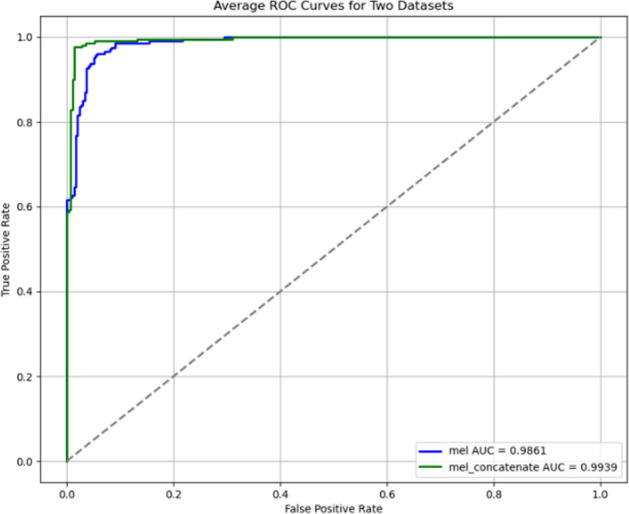
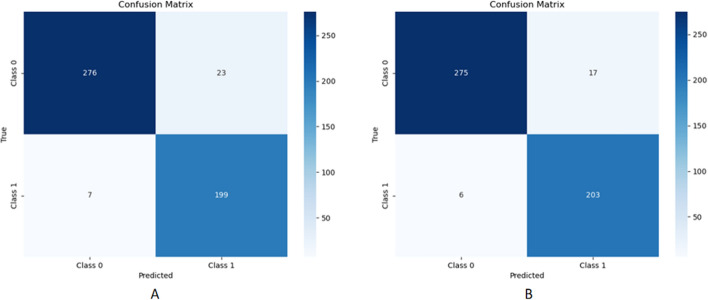
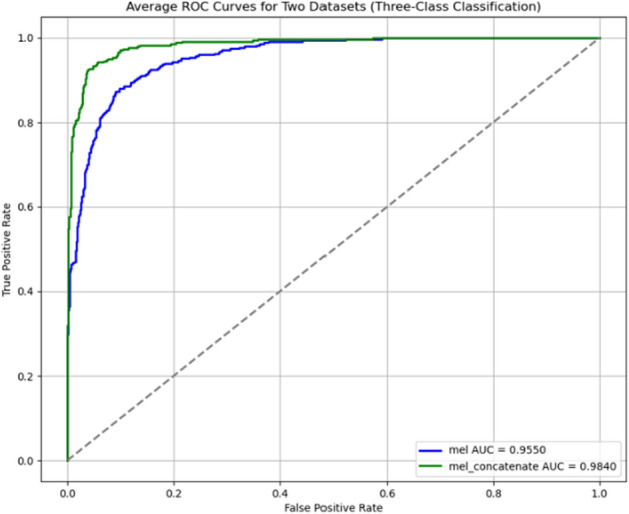
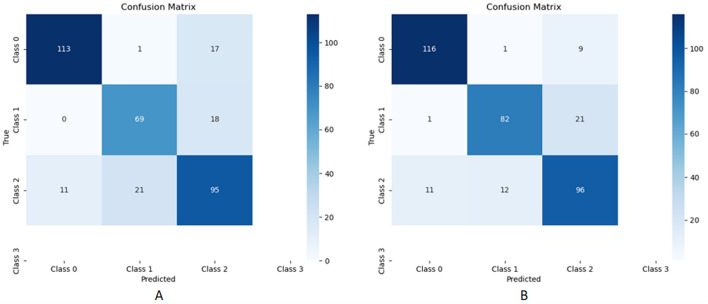
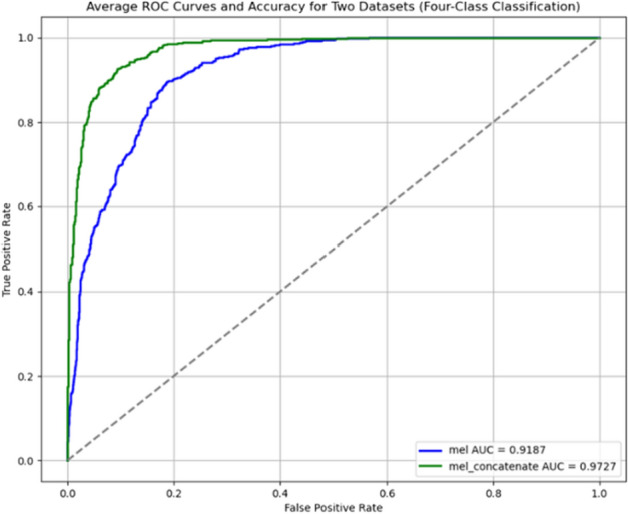
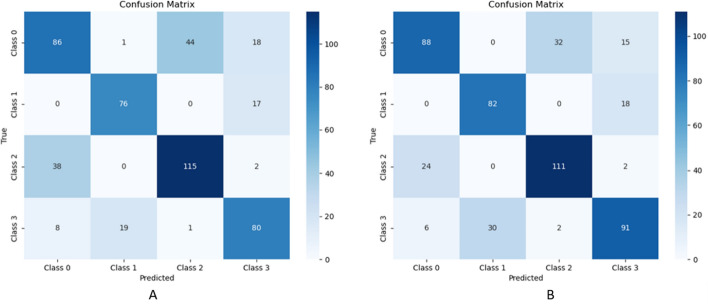
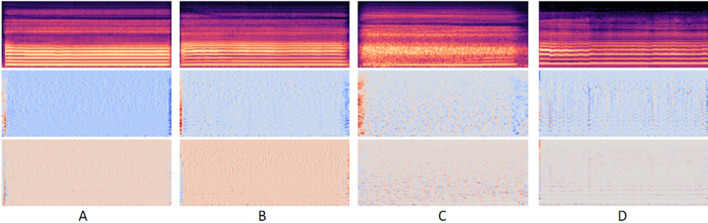
BACKGROUND: This study aims to develop an AI-powered platform using Mel-spectrogram analysis and convolutional neural networks (CNN) to automate the severity assessment of unilateral vocal fold paralysis (UVCP) through voice analysis, providing an objective basis for individualized clinical treatment plans. METHODS: To accurately identify the severity of UVCP, this study developed the CNN model TripleConvNet. Voice samples were collected from 131 healthy individuals and 292 confirmed UVCP patients from the Eye and ENT Hospital of Fudan University. Based on vocal fold compensation function, the patients were divided into three groups: decompensated (84 cases), partially compensated (98 cases), and fully compensated (110 cases). Using Mel-spectrograms and their first- and second-order differential features as inputs, the TripleConvNet model classified patients by severity and was systematically evaluated for its performance in UVCP severity grading tasks. RESULTS: TripleConvNet achieved a classification accuracy of 74.3% in distinguishing between healthy voices and the UVCP decompensated, partially compensated, and fully compensated groups. CONCLUSION: This study demonstrates the potential of deep learning-based non-invasive voice analysis for precise grading of UVCP severity. The proposed method offers a promising clinical tool to assist physicians in disease assessment and personalized treatment planning.
Overview
The claims and statistics of this paper haven’t been checked yet.
Free: it reads the open-access text and checks the first 5 claims that cite a source we can check. Create a free account to check every claim.
Integrity signals
Registry
Cites
Statistics
Figures

Verification
Claims the paper makes
The claims and statistics of this paper haven’t been checked yet.
Free: it reads the open-access text and checks the first 5 claims that cite a source we can check. Create a free account to check every claim.
Claims other papers make about this one
Each is checked against this paper’s own text: does it say what the citing paper says it does?
The source backs part of the claim, not all of it — or backs it for a different population, condition or comparison.
In the citing paper
“Ma et al. showed that a TripleConvNet operating on mel-spectrograms and their temporal derivatives substantially outperformed single-input architectures for UVFP severity grading, reaching 91.5% accuracy compared to 84.5% for baseline CNNs [27].”
From Diagnostic Accuracy of Artificial Intelligence in Laryngeal Disorders: An Integrative Review (2026) · cites this paper as [27]
Experimental — accuracy not yet measuredThe source backs part of the claim, not all of it — or backs it for a different population, condition or comparison.
In the citing paper
“feature-based shallow models suit binary screening and broad category recognition [39,40,48], whereas deep convolutional and self-supervised pipelines are justified for image-based diagnosis and fine-grained multi-pathology classification at the cost of reduced transparency [27,62,63].”
From Diagnostic Accuracy of Artificial Intelligence in Laryngeal Disorders: An Integrative Review (2026) · cites this paper as [27]
Experimental — accuracy not yet measured
Self-check
Percentages, sums and reported differences re-computed from the paper’s own numbers.
The self-check needs the paper’s full text.
Citations
Cites
Deep learning in neural networks: an overview
Schmidhuber, J. (2015) · Neural Networks · doi:10.1016/j.neunet.2014.09.003 · Cited by 18,570 · cited 1×
“It has proven highly effective in tasks like speech recognition, image classification, and natural language processing [14–17].”
Sarker, I. H. (2021) · SN Computer Science · doi:10.1007/s42979-021-00815-1 · Cited by 2,678
Neuroscience-Inspired Artificial Intelligence
Hassabis, D., Kumaran, D., Summerfield, C., & Botvinick, M. (2017) · Neuron · doi:10.1016/j.neuron.2017.06.011 · Cited by 1,557
Accurate telemonitoring of Parkinson’s disease progression by non-invasive speech tests
Tsanas, A., Little, M., McSharry, P., & Ramig, L. (2009) · Nature Precedings · doi:10.1038/npre.2009.3920.1 · Cited by 829 · cited 1×
“Prior research has shown that conditions such as vocal fold paralysis and muscle tension dysphonia lead to increased instability in both pitch and energy, which is reflected in irregular spectral dynamics [52].”
Deep learning in computer vision: A critical review of emerging techniques and application scenarios
Chai, J., Zeng, H., Li, A., & Ngai, E. W. T. (2021) · Machine Learning with Applications · doi:10.1016/j.mlwa.2021.100134 · Cited by 754 · cited 1×
“It has proven highly effective in tasks like speech recognition, image classification, and natural language processing [14–17].”
Automated assessment of psychiatric disorders using speech: A systematic review
Low, D. M., Bentley, K. H., & Ghosh, S. S. (2020) · Laryngoscope Investigative Otolaryngology · doi:10.1002/lio2.354 · Cited by 509 · cited 1×
“Studies show that CNN-based models can identify diseases from speech signals, such as Parkinson’s disease [19], depression, and other mental health conditions [20].”
Diagnosis of recurrent laryngeal nerve palsy after thyroidectomy: a systematic review
Jeannon, J.-P., Orabi, A. A., Bruch, G. A., Abdalsalam, H. A., & Simo, R. (2009) · International Journal of Clinical Practice · doi:10.1111/j.1742-1241.2008.01875.x · Cited by 458
Detection of Pathological Voice Using Cepstrum Vectors: A Deep Learning Approach
Fang, S.-H., Tsao, Y., Hsiao, M.-J., Chen, J.-Y., Lai, Y.-H., Lin, F.-C., & Wang, C.-T. (2019) · Journal of Voice · doi:10.1016/j.jvoice.2018.02.003 · Cited by 278
Randolph, G. W., & Kamani, D. (2006) · Surgery · doi:10.1016/j.surg.2005.08.009 · Cited by 267 · cited 1×
“These tools offer significant advantages over traditional laryngoscopic examinations by enabling remote and frequent assessments, making them especially valuable in settings with limited resources or a shortage of specialized physicians [12].”
Quality-of-Life Impact of Non-Neoplastic Voice Disorders: A Meta-Analysis
Cohen, S. M., Dupont, W. D., & Courey, M. S. (2006) · Annals of Otology, Rhinology & Laryngology · doi:10.1177/000348940611500209 · Cited by 258
Voice Pathology Detection and Classification Using Convolutional Neural Network Model
Mohammed, M. A., Abdulkareem, K. H., Mostafa, S. A., Khanapi Abd Ghani, M., Maashi, M. S., Garcia-Zapirain, B., Oleagordia, I., Alhakami, H., & AL-Dhief, F. T. (2020) · Applied Sciences · doi:10.3390/app10113723 · Cited by 208 · cited 1×
“Additionally, CNNs have shown strong performance in recognizing abnormal voice signals [21–23] and significant progress in classifying voice disorders.”
Traditional and Digital Biomarkers: Two Worlds Apart?
Babrak, L. M., Menetski, J., Rebhan, M., Nisato, G., Zinggeler, M., Brasier, N., Baerenfaller, K., Brenzikofer, T., Baltzer, L., Vogler, C., et al. (2019) · Digital Biomarkers · doi:10.1159/000502000 · Cited by 181 · cited 1×
“Although voice analysis cannot yet fully replace laryngoscopy, its non-invasive nature, simplicity, and low cost [13] make it an effective supplementary tool in primary healthcare.”
Bhattacharyya, N., Kotz, T., & Shapiro, J. (2002) · Annals of Otology, Rhinology & Laryngology · doi:10.1177/000348940211100803 · Cited by 174 · cited 1×
“This condition often manifests as hoarseness and swallowing difficulties, significantly impacting patients’ quality of life [5–9].”
Voice Disorder Identification by Using Machine Learning Techniques
Verde, L., De Pietro, G., & Sannino, G. (2018) · IEEE Access · doi:10.1109/access.2018.2816338 · Cited by 156 · cited 1×
“Traditional acoustic features like fundamental frequency (F0), harmonic-to-noise ratio (HNR), and linear predictive cepstral coefficients (LPCC) are commonly used but often result in information loss or bias [26, 27].”
Robust automated Parkinson disease detection based on voice signals with transfer learning
Karaman, O., Çakın, H., Alhudhaif, A., & Polat, K. (2021) · Expert Systems with Applications · doi:10.1016/j.eswa.2021.115013 · Cited by 148 · cited 1×
“Studies show that CNN-based models can identify diseases from speech signals, such as Parkinson’s disease [19], depression, and other mental health conditions [20].”
Scherer, S., Lucas, G. M., Gratch, J., Skip Rizzo, A., & Morency, L.-P. (2016) · IEEE Transactions on Affective Computing · doi:10.1109/taffc.2015.2440264 · Cited by 127 · cited 1×
“This approach also improves the model’s robustness across varying dialects, emotional states, and speech rates [35, 36].”
Lung Sound Recognition Algorithm Based on VGGish-BiGRU
Shi, L., Du, K., Chaozong, Z., Ma, H., & Yan, W. (2019) · IEEE Access · doi:10.1109/access.2019.2943492 · Cited by 127 · cited 1×
“Convolu-tional neural networks (CNNs), a prominent DL architecture, excel in feature extraction, making them widely applicable for processing acoustic signals [18].”
Time-scale modification of speech based on short-time Fourier analysis
Portnoff, M. (1981) · IEEE Transactions on Acoustics, Speech, and Signal Processing · doi:10.1109/tassp.1981.1163581 · Cited by 126 · cited 1×
“The windowed signal undergoes fast Fourier transform (FFT), converting it from the time domain to the frequency domain to identify frequency contributions [43].”
Francis, D. O., Pearce, E. C., Ni, S., Garrett, C. G., & Penson, D. F. (2014) · Otolaryngology–Head and Neck Surgery · doi:10.1177/0194599814521381 · Cited by 115
Evaluation and treatment of vocal cord paralysis
Maisel, R. H., & Ogura, J. H. (1974) · The Laryngoscope · doi:10.1288/00005537-197402000-00012 · Cited by 104 · cited 1×
“Unilateral vocal cord paralysis (UVCP) occurs when the motor nerve pathways controlling the laryngeal muscles are damaged, causing dysfunction in one vocal cord and impaired glottic closure [1–4].”
A Survey on Signal Processing Based Pathological Voice Detection Techniques
Islam, R., Tarique, M., & Abdel-Raheem, E. (2020) · IEEE Access · doi:10.1109/access.2020.2985280 · Cited by 100 · cited 1×
“The Mel-spectrogram captures the human ear’s nonlinear sensitivity to frequencies, emphasizing high-frequency details and producing spectral representations resembling auditory traits [42].”
Kim, H., Jeon, J., Han, Y. J., Joo, Y., Lee, J., Lee, S., & Im, S. (2020) · Journal of Clinical Medicine · doi:10.3390/jcm9113415 · Cited by 97 · cited 1×
“Similarly, Aseel et al. [28] achieved a 97% accuracy rate in diagnosing COVID-19, Kim et al. [29] reported an 85% accuracy rate in detecting laryngeal cancer, and Peng et al. [30] achieved a remarkable 99.46% accuracy in classifying four voice types: healthy, hyperkinetic dysphonia, hypokinetic…”
InfluentialComparative Analysis of CNN and RNN for Voice Pathology Detection
Syed, S. A., Rashid, M., Hussain, S., & Zahid, H. (2021) · BioMed Research International · doi:10.1155/2021/6635964 · Cited by 84 · cited 1×
“Additionally, CNNs have shown strong performance in recognizing abnormal voice signals [21–23] and significant progress in classifying voice disorders.”
Hu, H.-C., Chang, S.-Y., Wang, C.-H., Li, K.-J., Cho, H.-Y., Chen, Y.-T., Lu, C.-J., Tsai, T.-P., & Lee, O. K.-S. (2021) · Journal of Medical Internet Research · doi:10.2196/25247 · Cited by 82
Bielamowicz, S. A., & Stager, S. V. (2006) · The Laryngoscope · doi:10.1097/01.mlg.0000199743.99527.9f · Cited by 67
Fraile, R., Sáenz-Lechón, N., Godino-Llorente, J. I., Osma-Ruiz, V., & Fredouille, C. (2009) · Folia Phoniatrica et Logopaedica · doi:10.1159/000219950 · Cited by 62 · cited 1×
“For instance, Fraile et al. [38] demonstrated that including gender information significantly enhanced the diagnostic performance for laryngeal diseases.”
Emotion Classification Using Segmentation of Vowel-Like and Non-Vowel-Like Regions
Deb, S., & Dandapat, S. (2019) · IEEE Transactions on Affective Computing · doi:10.1109/taffc.2017.2730187 · Cited by 62 · cited 1×
“This approach also improves the model’s robustness across varying dialects, emotional states, and speech rates [35, 36].”
Deep neural network for automatic classification of pathological voice signals
Chen, L., & Chen, J. (2022) · Journal of Voice · doi:10.1016/j.jvoice.2020.05.029 · Cited by 60 · cited 1×
“Compared to the single vowel (e.g.,/a/) or three-vowel combinations (/a, i, u/) commonly adopted in prior studies [24, 25, 33, 34], the inclusion of multiple vowels offers a more comprehensive representation of the dynamic characteristics of the vocal tract.”
Yamauchi, A., Yokonishi, H., Imagawa, H., Sakakibara, K., Nito, T., Tayama, N., & Yamasoba, T. (2014) · Journal of Voice · doi:10.1016/j.jvoice.2014.01.016 · Cited by 59 · cited 1×
“The breathiness (“B”) component of the GRBAS scale has likewise been shown to effectively reflect glottal closure adequacy, supporting its utility in evaluating vocal fold compensation status [48, 49].”
Convolutional Neural Networks for Pathological Voice Detection
Wu, H., Soraghan, J., Lowit, A., & Di Caterina, G. (2018) · 2018 40th Annual International Conference of the IEEE Engineering in Medicine and Biology Society (EMBC) · doi:10.1109/embc.2018.8513222 · Cited by 57 · cited 2×
“However, the samples were recorded at varying sampling rates (10 kHz, 25 kHz, and 50 kHz) and in two distinct environments for healthy and pathological voices [32], which may affect the consistency of the data and limit its comparability across studies.”
Voice disorder classification using convolutional neural network based on deep transfer learning
Peng, X., Xu, H., Liu, J., Wang, J., & He, C. (2023) · Scientific Reports · doi:10.1038/s41598-023-34461-9 · Cited by 56 · cited 1×
“…achieved a 97% accuracy rate in diagnosing COVID-19, Kim et al. [29] reported an 85% accuracy rate in detecting laryngeal cancer, and Peng et al. [30] achieved a remarkable 99.46% accuracy in classifying four voice types: healthy, hyperkinetic dysphonia, hypokinetic dysphonia, and flux…”
InfluentialAutomatic detection of voice impairments from text-dependent running speech
Godino-Llorente, J. I., Fraile, R., Sáenz-Lechón, N., Osma-Ruiz, V., & Gómez-Vilda, P. (2009) · Biomedical Signal Processing and Control · doi:10.1016/j.bspc.2009.01.007 · Cited by 54 · cited 1×
“These are effectively captured by second-order features, which highlight micro-instabilities such as vocal tremor or voice breaks [53].”
Subjective Breathing Impairment in Unilateral Vocal Fold Paralysis
Brunner, E., Friedrich, G., Kiesler, K., Chibidziura-Priesching, J., & Gugatschka, M. (2011) · Folia Phoniatrica et Logopaedica · doi:10.1159/000316320 · Cited by 49
Kim, H.-B., Song, J., Park, S., & Lee, Y. O. (2024) · Scientific Reports · doi:10.1038/s41598-024-58817-x · Cited by 49
International consensus (ICON) on basic voice assessment for unilateral vocal fold paralysis
Mattei, A., Desuter, G., Roux, M., Lee, B.-J., Louges, M.-A., Osipenko, E. V., Sadoughi, B., Schneider‐Stickler, B., Fanous, A., & Giovanni, A. (2018) · European Annals of Otorhinolaryngology Head and Neck Diseases · doi:10.1016/j.anorl.2017.12.007 · Cited by 48 · cited 1×
“In this study, MPT was adopted as a key indicator for identifying significantly impaired glottal function, based on evidence from previous studies [44, 45].”
Voice Therapy Used to Test a Basic Protocol for Multidimensional Assessment of Dysphonia
Rodríguez-Parra, M. J., Adrián, J. A., & Casado, J. C. (2007) · Journal of Voice · doi:10.1016/j.jvoice.2007.05.001 · Cited by 45
Inagi, K., Khidr, A., Ford, C. N., Bless, D. M., & Heisey, D. M. (1997) · The Laryngoscope · doi:10.1097/00005537-199706000-00012 · Cited by 45
Schiedermayer, B., Kendall, K. A., Stevens, M., Ou, Z., Presson, A. P., & Barkmeier‐Kraemer, J. M. (2019) · The Laryngoscope · doi:10.1002/lary.28401 · Cited by 35 · cited 1×
“Clinical signs such as aspiration and ineffective cough further indicate glottal decom - pensation [50].”
Chen, Z., Zhu, P., Qiu, W., Guo, J., & Li, Y. (2023) · International Journal of Language & Communication Disorders · doi:10.1111/1460-6984.12783 · Cited by 31 · cited 2×
“For instance, Chen et al. [11] reported a 92% recognition accuracy for abnormal voice detection.”
Tsui, S.-Y., Tsao, Y., Lin, C., Fang, S., Lin, F., & Wang, C. (2018) · Folia Phoniatrica et Logopaedica · doi:10.1159/000492327 · Cited by 27
Combining acoustic signals and medical records to improve pathological voice classification
Fang, S.-H., Wang, C.-T., Chen, J.-Y., Tsao, Y., & Lin, F.-C. (2019) · APSIPA Transactions on Signal and Information Processing · doi:10.1017/atsip.2019.7 · Cited by 26 · cited 1×
“Fang et al. [40] further confirmed that combining patient medical records with voice features significantly enhanced the classification performance of voice-based diagnostic models.”
Phonetic Effects of Paralytic Dysphonia
Hartl, D. M., Crevier‐Buchman, L., Vaissière, J., & Brasnu, D. F. (2005) · Annals of Otology Rhinology & Laryngology · doi:10.1177/000348940511401009 · Cited by 25
VIRGILIO, A. D., Chang, M., Jiang, R., Wang, C., Wu, S., Liu, S., & Wang, C. (2014) · Otolaryngology · doi:10.1177/0194599814549740 · Cited by 25
A Voice Disease Detection Method Based on MFCCs and Shallow CNN
Xie, X., Cai, H., Li, C., Wu, Y., & Ding, F. (2026) · Journal of Voice · doi:10.1016/j.jvoice.2023.09.024 · Cited by 21 · cited 1×
“Compared to the single vowel (e.g.,/a/) or three-vowel combinations (/a, i, u/) commonly adopted in prior studies [24, 25, 33, 34], the inclusion of multiple vowels offers a more comprehensive representation of the dynamic characteristics of the vocal tract.”
Daoudi, K., & Bertrac, B. (2014) · Interspeech (USB) · doi:10.21437/interspeech.2014-52 · Cited by 18 · cited 1×
“This database includes 53 healthy voice samples and 662 pathological voice samples [31].”
Low, D. M., Rao, V., Randolph, G., Song, P. C., & Ghosh, S. S. (2024) · PLOS Digital Health · doi:10.1371/journal.pdig.0000516 · Cited by 16 · cited 1×
“Prior studies have demonstrated that using intensity-invariant feature extraction methods can maintain high classification accuracy despite such variability [37].”
Deep Learning Approaches for Pathological Voice Detection Using Heterogeneous Parameters
Lee, J.-Y., & Choi, H. (2020) · IEICE Transactions on Information and Systems · doi:10.1587/transinf.2020edl8031 · Cited by 15 · cited 1×
“Traditional acoustic features like fundamental frequency (F0), harmonic-to-noise ratio (HNR), and linear predictive cepstral coefficients (LPCC) are commonly used but often result in information loss or bias [26, 27].”
Isolated Command Recognition Using MFCC and Clustering Algorithm
Revathi, A. A., Ravichandran, C., Saisiddarth, P., & Prasad, G. S. R. (2020) · SN Computer Science · doi:10.1007/s42979-020-0093-x · Cited by 13 · cited 1×
“This study uses Mel-spectrograms as input features, mapping speech signals to a non-linear scale that aligns with human auditory perception [41], enhancing feature representation.”
Little, M. A., Costello, D. A. E., & Harries, M. L. (2009) · Nature Precedings · doi:10.1038/npre.2009.3106.1 · Cited by 11
Vallur, S., & Jagadeeswaran, V. U. (2025) · Indian Journal of Otolaryngology and Head & Neck Surgery · doi:10.1007/s12070-025-05346-2 · Cited by 4 · cited 1×
“For subjective evaluation of voice disorders, the VHI captures patients’ perceived voice-related impairment [51].”
Research works printed but not linked: 3
- Salhi L, Mourad T, Cherif A. Voice disorders identification using multilayer neural network. Pathology. 2010;2(7):8.
- Alfaidi A, Alshahrani A, Aljohani M. A novel approach to COVID-19 diagnosis based on mel spectrogram features and artificial intelligence techniques. IJCSNS. 2022;22(9):195.
- Sabir B, Touri B, Moussetad M. Correlation between acoustic measures, voice handicap index and GRBAS scales scores among Moroccan students. Curr Pediatr Res. 2017;21(2):343–53.
Cited by
Ma, K., Wang, Y., Zhou, Y., Chen, L., Zhang, T., Xu, F., & Peng, X. (2025) · Digital Health · doi:10.1177/20552076251376264 · Cited by 8
“19 Studies employing machine learning algorithms on acoustic signals have shown promising results in diagnosing conditions such as depression, autism, and Alzheimer ’ s disease.”
Self-citationDiagnostic Accuracy of Artificial Intelligence in Laryngeal Disorders: An Integrative Review
Mairesse, S., Maniaci, A., Briganti, G., & Lechien, J. R. (2026) · Journal of Personalized Medicine · doi:10.3390/jpm16060301 · Cited by 1
“These include patients with multiple concurrent disorders, post-surgical substitute voices following cordectomy or laryngectomy, and longitudinal monitoring of pathology evolution and treatment response over extended time periods [27,41,50,74,76].”
InfluentialMFCC-Based Machine Learning for Noninvasive Detection of Vocal Fold Nodules in Children
Hu, W., Jiang, Y., Li, Z., Kong, Y., Wang, X., Zhan, X., Lu, Y., & Tai, J. (2025) · Journal of Voice · doi:10.1016/j.jvoice.2025.10.045 · Cited by 2
Deep Learning Classification of Multicategory Voice Disorders Using Multi-Vowel Mel Spectrograms
Wang, Y., Ma, S., Zhao, C., Li, D., Lu, Z., Chen, S., Pang, K., Wang, L., & He, P. (2026) · Ear Nose & Throat Journal · doi:10.1177/01455613261428272
Self-citationSegmentation-Driven Deep Learning for Explainable and Automated Vocal Fold Disorder Classification
Hossain, F. S., Datta, A., & Saha, A. (2026) · International Conference on Electrical, Computer & Telecommunication Engineering (ICECTE) · doi:10.1109/icecte69292.2026.11429171
“Equally, Ma et al. (2025) [16] used Mel-spectrograms and convolutional neural networks (CNNs) to automatically measure the severity of unilateral vocal cord paralysis.”
Metadata
- Authors
- Ma, S., Liao, W., Zhang, Y., Zhang, F., Wang, Y., Lu, Z., Zhao, C., Yu, J., & He, P.
- Affiliations
- University of Shanghai for Science and Technology (CN)
- Fudan University (CN)
- Corresponding author
- Yu, Jianbo
- He, Peijie
- Venue
- BioMedical Engineering OnLine
- Published
- 2025-06-21
- Volume
- 24
- Issue
- 1
- Pages
- 76-76
- ISSN
- 1475-925X (ISSN-L)
- PMC
- PMC12181906
- OpenAlex
- W4411516747
- Cited by
- 6
- References
- 50
- Citations by year
- 2026: 4 · 2025: 2
- FWCI
- 3.82
- Type
- journal article
- Language
- en
- Open access
- gold
- doi.org
- Licence
- cc-by-nc-nd
- creativecommons.org/licenses/by-nc-nd/4.0 (tdm)
- creativecommons.org/licenses/by-nc-nd/4.0 (vor)
- Locations
- BioMedical Engineering OnLine (publishedVersion, cc-by-nc-nd)
- PubMed Central (publishedVersion, cc-by-nc-nd)
- PubMed (publishedVersion)
- DOAJ (DOAJ: Directory of Open Access Journals) (submittedVersion, cc-by-sa)
- Funders
- the National Natural Science Foundation of China (81870710)
- the Project of Shanghai Municipal Health Commission (202340219)
- Topics
- Health Sciences › Health Professions › Speech and Hearing › Voice and Speech Disorders
- Health Sciences › Medicine › Pulmonary and Respiratory Medicine › Phonocardiography and Auscultation Techniques
- Health Sciences › Health Professions › Health Information Management › Artificial Intelligence in Healthcare
- Keywords
- unilateral vocal fold paralysis, Mel spectrogram, convolutional neural networks, voice analysis, differential characteristics, automated severity assessment
- MeSH terms
- Deep Learning, Convolutional Neural Networks, Adult, Aged, Automation, Female, Humans, Male, Middle Aged, Severity of Illness Index, Signal Processing, Computer-Assisted, Sound Spectrography, Vocal Cord Paralysis, Neural Networks, Computer, Young Adult
About these checks
Registry, retraction, Cites and statistics results are computed, not judged, with one exception: a printed reference that no index lists is read once by a model before it counts as a citation error. Claims are extracted by a model and kept only when their quote appears verbatim in the text; each cited source is then checked, with a model’s help, for whether it says what the claim relies on. Those verdicts can be wrong — read the claim’s quote and the cited source before relying on one.
Statistics and arithmetic are recomputed, not judged.
Confidence bands are shown only for fields calibrated on our annotated test set. None is calibrated yet, so no band is shown.
What counts as a claim ›How we measure confidence ›How we check this ›
Are you an author, or do you see a problem with this page? Request a review
Data sources
Bibliographic data: Semantic Scholar, OpenAlex, Crossref.
Contains information from the Semantic Scholar Academic Graph Datasets, made available under the ODC Attribution License (ODC-BY 1.0).
Semantic Scholar’s data is described in: Kinney, R., et al. (2023). The Semantic Scholar Open Data Platform. arXiv:2301.10140.
