

Research on subgroups is not research on equity attributes: Evidence from an overview of systematic reviews on vaccination
Open accessThe DOI matches its Crossref record; 39 of the 39 references it cites were found in a registry or an index.
Abstract
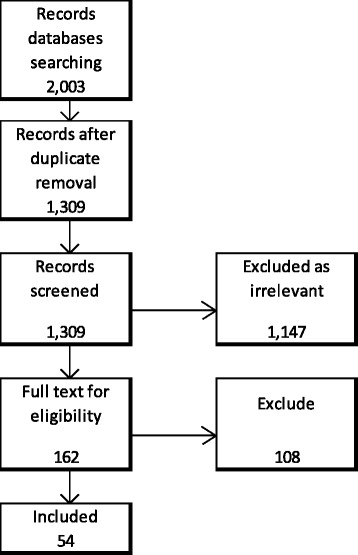
BACKGROUND: Equity remains a priority in the international health development agenda. However, major inequities in vaccination coverage jeopardise the achievement of the Sustainable Development Goals. We aim at comprehensively describing how research has addressed equity issues related to vaccination. METHODS: We carried out an overview of systematic reviews (SRs) that explicitly explored the effects of interventions to improve vaccination in any context; for any vaccine and, in any language. We followed standard research synthesis methods to systematically search for SR, assess them for inclusion and extracting relevant data, particularly on vaccination related outcomes. To gather evidence on equity issues addressed in the SR, we used the PROGRESS-plus framework. FINDINGS: Our search obtained 2,003 hits which resulted in 54 included SRs, published between 1994 and 2014. The quality of SRs was generally poor, with less than half complying with most of the quality criteria. Reported vaccines included, by order of frequency, influenza and Expanded Programme on Immunisation vaccines. The types of interventions more frequently reported were related to vaccination delivery strategies, financial support and information, education and communication. Most of the SRs suggested effects favouring intervention groups as opposed to comparison groups. The most frequently reported equity attribute was 'place of residence' and the least reported equity attributes were sexual orientation and religion. Very few estimates of effects actually measured differences or changes between groups having those attributes and all of them referred to the place of residence. No data was found about reducing equity gaps for vulnerable groups or minorities, or attributes such as sexual orientation, education or specific religious groups. CONCLUSIONS: Although research on vulnerable populations as a subgroup is abundant, it fails to report on the interventions that will actually reduce inequities and consider how redistribution of health care resources could shrink the gap between the privileged and most vulnerable groups including minorities. Research, if aiming at being responsive to global health policy trends, needs to report not only on specific attributes but also on how a better redistribution of health care resources could contribute to alleviating the unjust situation of the most vulnerable populations.
Overview
The claims and statistics of this paper haven’t been checked yet.
Free: it reads the open-access text and checks the first 5 claims that cite a source we can check. Create a free account to check every claim.
Integrity signals
Registry
Cites
Statistics
Figures
Verification
Claims the paper makes
The claims and statistics of this paper haven’t been checked yet.
Free: it reads the open-access text and checks the first 5 claims that cite a source we can check. Create a free account to check every claim.
Claims other papers make about this one
Each is checked against this paper’s own text: does it say what the citing paper says it does?
In the citing paper
“One example is the PROGRESS Plus framework, which focuses on highlighting unfair differences in disease burden and interventions in order to reduce these differential effects, but which does not explicitly involve implementation considerations [37, 42].”
From Conceptual framework of equity-focused implementation research for health programs (EquIR) (2019) · cites this paper as [42]
Self-check
Percentages, sums and reported differences re-computed from the paper’s own numbers.
The self-check needs the paper’s full text.
Citations
Cites
Transforming Our World: The 2030 Agenda for Sustainable Development
(2018) · A New Era in Global Health · doi:10.1891/9780826190123.ap02 · Cited by 19,351 · cited 1×
“With the recent declaration of the Sustainable Development Goals (SDG), communities, social entities, Non-Governmental Organisations, multi-lateral organisations, academia and other actors have repeatedly acknowledged the relevance of equity to ensure sustainable development [3].”
Vos, T., Abajobir, A. A., Abate, K. H., Abbafati, C., Abbas, K. M., Abd-Allah, F., Abdulkader, R. S., Abdulle, A. M., Abebo, T. A., Abera, S. F., et al. (2017) · The Lancet · doi:10.1016/s0140-6736(17)32154-2 · Cited by 13,220
Vos, T., Barber, R. M., Bell, B., Bertozzi-Villa, A., Biryukov, S., Bolliger, I., Charlson, F., Davis, A., Degenhardt, L., Dicker, D., et al. (2015) · The Lancet · doi:10.1016/s0140-6736(15)60692-4 · Cited by 6,414
Closing the gap in a generation: health equity through action on the social determinants of health
Marmot, M., Friel, S., Bell, R., Houweling, T. A., & Taylor, S. (2008) · The Lancet · doi:10.1016/s0140-6736(08)61690-6 · Cited by 3,247
The Concepts and Principles of Equity and Health
Whitehead, M. (1992) · International Journal of Health Services · doi:10.2190/986l-lhq6-2vte-yrrn · Cited by 2,284
O'Neill, J., Tabish, H., Welch, V., Petticrew, M., Pottie, K., Clarke, M., Evans, T., Pardo Pardo, J., Waters, E., White, H., et al. (2014) · Journal of Clinical Epidemiology · doi:10.1016/j.jclinepi.2013.08.005 · Cited by 1,657 · cited 1×
“Data on equity was extracted following PROGRESS‐plus [24], which stands for Place of residence; Race/ethnicity, Occupation, Gender, Religion, Education, Socioeconomic status (SES), Social capital, ‘plus’ age, disability and the sexual orientation.”
MethodBauer, G. R. (2014) · Social Science & Medicine · doi:10.1016/j.socscimed.2014.03.022 · Cited by 1,620 · cited 1×
“We acknowledge that research on equity may pose methodological challenges [43], which could explain the relative lack of comparators in a large proportion of the underlying (observational) studies, confirmed in the findings of a recent review [44]; for example, larger sample sizes may be needed to allow comparisons be…”
What are Health Disparities and Health Equity? We Need to Be Clear
Braveman, P. (2014) · Public Health Reports® · doi:10.1177/00333549141291s203 · Cited by 860 · cited 1×
“Equity in health is a fundamental moral and ethical commitment to reduce and eliminate unfair and unjust disparities in health and its determinants [1].”
BackgroundThe neglected epidemic: road traffic injuries in developing countries
Nantulya, V. M., & Reich, M. R. (2002) · BMJ · doi:10.1136/bmj.324.7346.1139 · Cited by 777 · cited 1×
“Besides, agreement across research areas on critical equity outcomes would benefit further efforts to conduct research synthesis on inequities [48].”
BackgroundTransgender Youth: Invisible and Vulnerable
Grossman, A. H., & D'augelli, A. R. (2006) · Journal of Homosexuality · doi:10.1300/j082v51n01_06 · Cited by 588
Barros, A. J., Ronsmans, C., Axelson, H., Loaiza, E., Bertoldi, A. D., França, G. V., Bryce, J., Boerma, J. T., & Victora, C. G. (2012) · The Lancet · doi:10.1016/s0140-6736(12)60113-5 · Cited by 549 · cited 8×
“However, this progress has been unequal in different countries [6] and a considerable proportion of children remains partially or not fully vaccinated [7].”
BackgroundInfluentialPatient reminder and recall systems to improve immunization rates
Jacobson Vann, J. C., & Szilagyi, P. (2005) · Cochrane Database of Systematic Reviews · doi:10.1002/14651858.cd003941.pub2 · Cited by 352
Welch, V., Petticrew, M., Petkovic, J., Moher, D., Waters, E., White, H., Tugwell, P., Atun, R., Awasthi, S., Barbour, V., et al. (2016) · Journal of Clinical Epidemiology · doi:10.1016/j.jclinepi.2015.09.001 · Cited by 297
(2008) · The Lancet · doi:10.1016/s0140-6736(08)60560-7 · Cited by 294 · cited 7×
“This is not striking as such because, most of the population in the globe are living in LMIC or are poor [33, 34] and it is not difficult to find a study which involves these sectors of the population.”
BackgroundInfluentialInterventions for improving coverage of childhood immunisation in low- and middle-income countries
Oyo-Ita, A., Wiysonge, C. S., Oringanje, C., Nwachukwu, C. E., Oduwole, O., & Meremikwu, M. M. (2016) · Cochrane Database of Systematic Reviews · doi:10.1002/14651858.cd008145.pub3 · Cited by 289
Global Routine Vaccination Coverage — 2017
VanderEnde, K., Gacic-Dobo, M., Diallo, M. S., Conklin, L. M., & Wallace, A. S. (2018) · MMWR. Morbidity and Mortality Weekly Report · doi:10.15585/mmwr.mm6745a2 · Cited by 265
Face to face interventions for informing or educating parents about early childhood vaccination
Kaufman, J., Synnot, A., Ryan, R., Hill, S., Horey, D., Willis, N., Lin, V., & Robinson, P. (2013) · Cochrane Database of Systematic Reviews · doi:10.1002/14651858.cd010038.pub2 · Cited by 255
Tugwell, P., Petticrew, M., Kristjansson, E., Welch, V., Ueffing, E., Waters, E., Bonnefoy, J., Morgan, A., Doohan, E., & Kelly, M. P. (2010) · BMJ · doi:10.1136/bmj.c4739 · Cited by 178 · cited 1×
“Equity can be considered under two perspectives: as interventions specifically targeting vulnerable groups (‘targeted interventions’) or as interventions for the whole population but the effects of which are only measured in vulnerable groups [23].”
BackgroundGlobal Routine Vaccination Coverage, 2014
Subaiya, S., Dumolard, L. B., Lydon, P., Gacic-Dobo, M., Eggers, R., & Conklin, L. M. (2015) · MMWR Morbidity and Mortality Weekly Report · doi:10.15585/mmwr.mm6444a5 · Cited by 140
the PRISMA-Equity Bellagio group, Welch, V., Petticrew, M., Petkovic, J., Moher, D., Waters, E., White, H., & Tugwell, P. (2015) · International Journal for Equity in Health · doi:10.1186/s12939-015-0219-2 · Cited by 114
Hosseinpoor, A. R., Bergen, N., Schlotheuber, A., Gacic-Dobo, M., Hansen, P. M., Senouci, K., Boerma, T., & Barros, A. J. D. (2016) · The Lancet Global Health · doi:10.1016/s2214-109x(16)30141-3 · Cited by 112 · cited 1×
“We are not aware of any other global overview describing how research has reported evidence on interventions to improve vaccination outcomes from an equity perspective, although there are examples of SRs on interventions to reduce inequities in specific groups, such as immigrants [27], or through health systems interv…”
BackgroundCrocker-Buqué, T., Edelstein, M. L., & Mounier‐Jack, S. (2016) · Journal of Epidemiology & Community Health · doi:10.1136/jech-2016-207572 · Cited by 108 · cited 1×
“We acknowledge that research on equity may pose methodological challenges [43], which could explain the relative lack of comparators in a large proportion of the underlying (observational) studies, confirmed in the findings of a recent review [44]; for example, larger sample sizes may be needed to allow comparisons be…”
Bosch‐Capblanch, X., Banerjee, K., & Burton, A. (2012) · Tropical Medicine & International Health · doi:10.1111/j.1365-3156.2012.02989.x · Cited by 101 · cited 1×
“However, this progress has been unequal in different countries [6] and a considerable proportion of children remains partially or not fully vaccinated [7].”
BackgroundSelf-citationChapman, A. R. (2016) · BMC International Health and Human Rights · doi:10.1186/s12914-016-0106-y · Cited by 95
The impacts of decentralisation on health-related equity: A systematic review of the evidence
Sumah, A. M., Baatiema, L., & Abímbọ́lá, Ṣ. (2016) · Health Policy · doi:10.1016/j.healthpol.2016.09.003 · Cited by 94 · cited 1×
“We are not aware of any other global overview describing how research has reported evidence on interventions to improve vaccination outcomes from an equity perspective, although there are examples of SRs on interventions to reduce inequities in specific groups, such as immigrants [27], or through health systems interv…”
BackgroundMerten, S., Martin Hilber, A., Biaggi, C., Secula, F., Bosch-Capblanch, X., Namgyal, P., & Hombach, J. (2015) · PLOS ONE · doi:10.1371/journal.pone.0135222 · Cited by 81 · cited 7×
“This is not striking as such because, most of the population in the globe are living in LMIC or are poor [33, 34] and it is not difficult to find a study which involves these sectors of the population.”
BackgroundInfluentialSelf-citationInterventions for improving coverage of child immunization in low- and middle-income countries
Oyo-Ita, A., Nwachukwu, C. E., Oringanje, C., & Meremikwu, M. M. (2011) · Cochrane Database of Systematic Reviews · doi:10.1002/14651858.cd008145.pub2 · Cited by 71
Alkenbrack, S., Chaitkin, M., Zeng, W., Couture, T., & Sharma, S. (2015) · PLoS ONE · doi:10.1371/journal.pone.0134905 · Cited by 69 · cited 7×
“This is not striking as such because, most of the population in the globe are living in LMIC or are poor [33, 34] and it is not difficult to find a study which involves these sectors of the population.”
BackgroundInfluentialMålqvist, M., Yuan, B., Trygg, N. F., Selling, K. E., & Thomsen, S. C. (2013) · PLoS ONE · doi:10.1371/journal.pone.0066453 · Cited by 56 · cited 7×
“This is not striking as such because, most of the population in the globe are living in LMIC or are poor [33, 34] and it is not difficult to find a study which involves these sectors of the population.”
BackgroundInfluentialPrimary Health Care Models Addressing Health Equity for Immigrants: A Systematic Scoping Review
Batista, R., Pottie, K. C., Bouchard, L., Ng, E., Tanuseputro, P., & Tugwell, P. (2016) · Journal of Immigrant and Minority Health · doi:10.1007/s10903-016-0531-y · Cited by 52 · cited 1×
“We are not aware of any other global overview describing how research has reported evidence on interventions to improve vaccination outcomes from an equity perspective, although there are examples of SRs on interventions to reduce inequities in specific groups, such as immigrants [27], or through health systems interv…”
BackgroundMonitoring equity in immunization coverage.
Delamónica, E., Minujín, A., & Gulaid, J. (2005) · Europe PMC (PubMed Central) · Cited by 51
Applying an equity lens in the Decade of Vaccines
Brearley, L., Eggers, R., Steinglass, R., & Vandelaer, J. (2013) · Vaccine · doi:10.1016/j.vaccine.2012.11.088 · Cited by 46 · cited 1×
“There are four compelling arguments to reduce inequities in vaccination outcomes [11].”
BackgroundValentine, N., & Bonsel, G. J. (2016) · Global Health Action · doi:10.3402/gha.v9.29329 · Cited by 42 · cited 1×
“Recent analyses suggest as well that coverage estimates (including vaccination coverage) are promising indicators to track health determinants nationally and internationally [16].”
Bar‐Zeev, N., Tate, J. E., Pecenka, C. J., Chikafa, J., Mvula, H., Wachepa, R., Mwansambo, C., Mhango, T., Chirwa, G., Crampin, A. C., et al. (2016) · Clinical Infectious Diseases · doi:10.1093/cid/civ1025 · Cited by 36 · cited 2×
“Even for the more recently introduced vaccines [12] vaccines are a costeffective intervention to reduce childhood morbidity and mortality.”
BackgroundBroutet, N. J. N., Lehnertz, N. B., Mehl, G. L., Camacho, A. V., Bloem, P. N., Chandra‐Mouli, V., Ferguson, J., & Dick, B. (2013) · Journal of Adolescent Health · doi:10.1016/j.jadohealth.2013.02.022 · Cited by 33 · cited 1×
“Thirdly, the potential benefit of reaching the unreached would be significantly higher as compared with the general population by making individuals and households healthier [10]; Lastly, other health care interventions can synergise with outreach and inreach vaccination programmes by mutually facilitating access to c…”
BackgroundReducing health inequities in a generation: a dream or reality?
Prinja, S. (2009) · Bulletin of the World Health Organization · doi:10.2471/blt.08.062695 · Cited by 18
Rosa, E. L., Dubois, G., & Tonnellier, F. (2007) · Santé Publique · doi:10.3917/spub.073.0217 · Cited by 12
Mapping global health inequalities: challenges and opportunities
Tugwell, P., Robinson, V. A., & Morris, E. (2007) · University Libraries (University of Maryland) · doi:10.13016/3ox1-jsah · Cited by 11 · cited 1×
“Therefore, equity definitions such PROGRESS-plus need to be urgently complemented with the development of robust and realistic methods to measure inequities in health care [47] both at macro and micro levels.”
BackgroundAddressing the health of vulnerable populations: a call for papers
Tangcharoensathien, V., Kanchanachitra, C., Thomas, R., Pfitzer, J. H., & Whitney, P. (2016) · Bulletin of the World Health Organization · doi:10.2471/blt.16.172783 · Cited by 7 · cited 1×
“Equity (and inequities) is a top priority issue in the human health development agenda [49] and an entry point to install clear ethical directions in the redistribution of health and health care.”
Background
Research works printed but not linked: 2
- Melamed C Samman E Equity, inequality and human development in a post 2015
- WHO Towards a monitoring framework with targets and indicators for the health goals of the post-2015 Sustainable Development Goals 2015
Cited by
Conceptual framework of equity-focused implementation research for health programs (EquIR)
Eslava-Schmalbach, J., Garzón-Orjuela, N., Elias, V., Reveiz, L., Tran, N., & Langlois, E. V. (2019) · International Journal for Equity in Health · doi:10.1186/s12939-019-0984-4 · Cited by 160
“One example is the PROGRESS Plus framework, which focuses on highlighting unfair differences in disease burden and interventions in order to reduce these differential effects, but which does not explicitly involve implementation considerations [37, 42].”
BackgroundHow effects on health equity are assessed in systematic reviews of interventions
Welch, V., Dewidar, O., Ghogomu, E. T., Abdisalam, S., Ameer, A. A., Barbeau, V. I., Brand, K., Kebedom, K., Benkhalti, M., Kristjansson, E., et al. (2022) · Cochrane Database of Systematic Reviews · doi:10.1002/14651858.mr000028.pub3 · Cited by 90
Allan, S., Adetifa, I., & Abbas, K. (2021) · BMC Infectious Diseases · doi:10.1186/s12879-021-06271-9 · Cited by 77
“We need implementation research and evidence on interventions that would reduce inequities in childhood immunisation in Kenya and to inform the redistribution of healthcare resources to protect all children with full immunisation, regardless of location, age, socioeconomic status or gender-related barriers [10, 50].”
MethodBesnier, E., Thomson, K. H., Stonkute, D., Mohammad, T., Akhter, N., Todd, A., Jensen, M. R., Kilvik, A., & Bambra, C. L. (2021) · PLoS ONE · doi:10.1371/journal.pone.0251905 · Cited by 45
“These trends are in line with those from previous global umbrella reviews [14, 16], thus highlighting once again the need for a stronger equity lens and systematic reporting of intervention effects across population groups in systematic reviews.”
Hosking, J., Macmillan, A. K., Jones, R., Ameratunga, S. N., & Woodward, A. J. (2019) · Systematic Reviews · doi:10.1186/s13643-019-1009-5 · Cited by 40
Metadata
- Authors
- Bosch-Capblanch, X., Zuske, M.-K., & Auer, C.
- Affiliations
- Swiss Tropical and Public Health Institute (CH)
- Venue
- International Journal for Equity in Health
- Published
- 2017-06-07
- Volume
- 16
- Issue
- 1
- Pages
- 95-95
- ISSN
- 1475-9276 (ISSN-L)
- PMC
- PMC5463415
- OpenAlex
- W2623985795
- Cited by
- 25
- References
- 39
- Citations by year
- 2026: 1 · 2024: 3 · 2023: 4 · 2022: 3 · 2021: 10 · 2019: 4
- FWCI
- 0.19
- Type
- journal article
- Language
- en
- Open access
- gold
- doi.org
- Licence
- cc-by
- Locations
- International Journal for Equity in Health (publishedVersion, cc-by)
- Europe PMC (PubMed Central) (publishedVersion, cc-by)
- PubMed Central (publishedVersion, cc-by)
- PubMed (publishedVersion)
- edoc (University of Basel) (acceptedVersion)
- DOAJ (DOAJ: Directory of Open Access Journals) (submittedVersion, cc-by-sa)
- Funders
- Federal Office of Public Health of Switzerland
- Global Development Network – International Initiative for Impact Evaluation
- Topics
- Social Sciences › Health › Vaccine Coverage and Hesitancy
- Social Sciences › Health › Public Health and Social Inequalities
- Life Sciences › Immunology and Microbiology › Immunology › Immune responses and vaccinations
- Keywords
- vaccination, health equity, subgroups, vaccination coverage, PROGRESS-Plus framework, vulnerable populations, influenza vaccination, Expanded Programme on Immunization, sexual orientation, place of residence
- MeSH terms
- Health Equity, Humans, Vaccination, Global Health, Randomized Controlled Trials as Topic, Biomedical Research, Population Groups
About these checks
Registry, retraction, Cites and statistics results are computed, not judged, with one exception: a printed reference that no index lists is read once by a model before it counts as a citation error. Claims are extracted by a model and kept only when their quote appears verbatim in the text; each cited source is then checked, with a model’s help, for whether it says what the claim relies on. Those verdicts can be wrong — read the claim’s quote and the cited source before relying on one.
Statistics and arithmetic are recomputed, not judged.
Confidence bands are shown only for fields calibrated on our annotated test set. None is calibrated yet, so no band is shown.
What counts as a claim ›How we measure confidence ›How we check this ›
Are you an author, or do you see a problem with this page? Request a review
Data sources
Bibliographic data: Semantic Scholar, OpenAlex, Crossref.
Contains information from the Semantic Scholar Academic Graph Datasets, made available under the ODC Attribution License (ODC-BY 1.0).
Semantic Scholar’s data is described in: Kinney, R., et al. (2023). The Semantic Scholar Open Data Platform. arXiv:2301.10140.
