

Socially-assigned race and health: a scoping review with global implications for population health equity
Open accessThe DOI matches its Crossref record; 46 of the 46 references it cites were found in a registry or an index.
Abstract
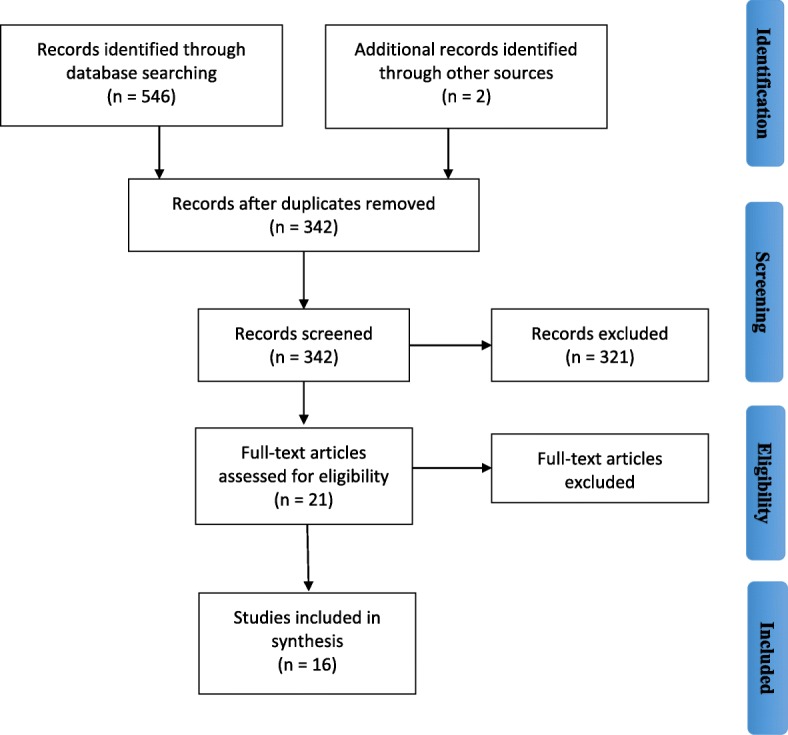
Self-identified race/ethnicity is largely used to identify, monitor, and examine racial/ethnic inequalities. A growing body of work underscores the need to consider multiple dimensions of race – the social construction of race as a function of appearance, societal interactions, institutional dynamics, stereotypes, and social norms. One such multidimensional measure is socially-assigned race, the perception of one’s race by others, that may serve as the basis for differential or unfair treatment and subsequently lead to deleterious health outcomes. We conducted a scoping review to systematically appraise the socially-assigned race and health literature. A systematic search of the PubMed, Web of Science, 28 EBSCO databases and 24 Proquest databases up to September 2019 was conducted and supplemented by a manual search of reference lists and grey literature. Quantitative and qualitative studies that examined socially-assigned race and health or health-related outcomes were considered for inclusion. Eighteen articles were included in the narrative synthesis. Self-rated health and mental health were among the most frequent outcomes studied. The majority of studies were conducted in the United States, with fewer studies conducted in New Zealand, Canada, and Latin America. While most studies demonstrate a positive association between social assignment as a disadvantaged racial or ethnic group and poorer health, some studies did not document an association. We describe key conceptual and methodological considerations that should be prioritized in future studies examining socially-assigned race and health. Socially-assigned race can provide additional insight into observed differential health outcomes among racial/ethnic groups in racialized societies based upon their lived experiences. Studies incorporating socially-assigned race warrants further investigation and may be leveraged to examine nuanced patterns of racial health advantage and disadvantage.
Overview
The claims and statistics of this paper haven’t been checked yet.
Free: it reads the open-access text and checks the first 5 claims that cite a source we can check. Create a free account to check every claim.
Integrity signals
Registry
Cites
Statistics
Figures
Verification
Claims the paper makes
The claims and statistics of this paper haven’t been checked yet.
Free: it reads the open-access text and checks the first 5 claims that cite a source we can check. Create a free account to check every claim.
Claims other papers make about this one
Each is checked against this paper’s own text: does it say what the citing paper says it does?
The source backs part of the claim, not all of it — or backs it for a different population, condition or comparison.
In the citing paper
“Of note, race can be considered as a social construct rather than a biological construct114,134, as race is a socially derived label that can either be self-reported or assigned and might not justify any biological or genetic differences between populations135,136.”
From A global view of hypertensive disorders and diabetes mellitus during pregnancy (2022) · cites this paper as [135]
Experimental — accuracy not yet measured
Self-check
Percentages, sums and reported differences re-computed from the paper’s own numbers.
The self-check needs the paper’s full text.
Citations
Cites
PRISMA Extension for Scoping Reviews (PRISMA-ScR): Checklist and Explanation
Tricco, A. C., Lillie, E., Zarin, W., O'Brien, K. K., Colquhoun, H., Levac, D., Moher, D., Peters, M. D. J., Horsley, T., Weeks, L., et al. (2018) · Annals of Internal Medicine · doi:10.7326/m18-0850 · Cited by 43,565
Scoping studies: towards a methodological framework
Arksey, H., & O'Malley, L. (2005) · International Journal of Social Research Methodology · doi:10.1080/1364557032000119616 · Cited by 36,742
Guidance for conducting systematic scoping reviews
Peters, M. D. J., Godfrey, C. M., Khalil, H., McInerney, P., Parker, D., & Soares, C. B. (2015) · International Journal of Evidence-Based Healthcare · doi:10.1097/xeb.0000000000000050 · Cited by 7,472
Human Nature and the Social Order
Cooley, C. H. (2017) · Routledge eBooks · doi:10.4324/9780203789513 · Cited by 4,821
Racial Formation in the United States
Omi, M., & Winant, H. (2014) · doi:10.4324/9780203076804 · Cited by 3,510
Racism and Health I: Pathways and Scientific Evidence
Williams, D. R., & Mohammed, S. A. (2013) · American Behavioral Scientist · doi:10.1177/0002764213487340 · Cited by 1,336
The public health critical race methodology: praxis for antiracism research.
Ford, C. L., & Airhihenbuwa, C. O. (2010) · Social Science & Medicine · doi:10.1016/j.socscimed.2010.07.030 · Cited by 757 · cited 1×
“, minority versus majority status)” (page 251 [9]) and underscores how this hierarchy differentially affects group well-being and health [40].”
BackgroundThe multiple dimensions of race
Roth, W. D. (2016) · Ethnic and Racial Studies · doi:10.1080/01419870.2016.1140793 · Cited by 445
The cost of color: Skin color, discrimination, and health among African-Americans
Monk, E. P. (2015) · American Journal of Sociology · doi:10.1086/682162 · Cited by 386
Classification of Race and Ethnicity: Implications for Public Health
Mays, V. M., Ponce, N. A., Washington, D. L., & Cochran, S. D. (2003) · Annual Review of Public Health · doi:10.1146/annurev.publhealth.24.100901.140927 · Cited by 333
Research works printed but not linked: 1
- Office of Management and Budget Revisions to the standards for classification of Federal data on race and ethnicity Federal Registry 1997 62 58781 58790
Cited by
A global view of hypertensive disorders and diabetes mellitus during pregnancy
Jiang, L., Tang, K., Magee, L. A., von Dadelszen, P., Ekeroma, A., Li, X., Zhang, E., & Bhutta, Z. A. (2022) · Nature Reviews Endocrinology · doi:10.1038/s41574-022-00734-y · Cited by 314
Johnson, J. D., & Louis, J. M. (2022) · American Journal of Obstetrics and Gynecology · doi:10.1016/j.ajog.2020.07.038 · Cited by 238
“The major limitation of the use of race and ethnicity in medical research is that race is a socially derived label that can either be self-reported or assigned.(13,14)”
BackgroundAbandon “Race.” Focus on Racism
Braveman, P., & Parker Dominguez, T. (2021) · Frontiers in Public Health · doi:10.3389/fpubh.2021.689462 · Cited by 171
“A 2020 review of 18 studies of associations between a range of health indicators and socially assigned “race” reported that most studies have found an association between socially assigned “race” and health (41).”
BackgroundAdvancing Indigenous Mental Health Research: Ethical, conceptual and methodological challenges
Gone, J. P., & Kirmayer, L. J. (2020) · Transcultural Psychiatry · doi:10.1177/1363461520923151 · Cited by 85
“Both may be related to social determinants of mental health and health inequities (White et al., 2020).”
BackgroundPoor Awareness of Liver Disease Among Adults With NAFLD in the United States
Alqahtani, S. A., Paik, J. M., Biswas, R., Arshad, T., Henry, L., & Younossi, Z. M. (2021) · Hepatology Communications · doi:10.1002/hep4.1765 · Cited by 120
Minhas, A., Ogunwole, S. M., Vaught, A. “. J., Wu, P., Mamas, M. A., Gulati, M., Zhao, D., Hays, A. G., & Michos, E. D. (2021) · Hypertension · doi:10.1161/hypertensionaha.121.17104 · Cited by 125
National Burden of Injury and Deaths From Shootings by Police in the United States, 2015‒2020
Ward, J. A., Cepeda, J., Jackson, D. B., Johnson, O., Webster, D. W., & Crifasi, C. K. (2024) · American Journal of Public Health · doi:10.2105/ajph.2023.307560 · Cited by 53
Race against death or starvation? COVID-19 and its impact on African populations
Kassa, M. D., & Grace, J. M. (2020) · Public health reviews · doi:10.1186/s40985-020-00139-0 · Cited by 53
Martschenko, D. O., Wand, H., Young, J. L., & Wojcik, G. L. (2023) · Nature Genetics · doi:10.1038/s41588-023-01394-y · Cited by 33
Examining “race” in physiology
Wolf, S. T., Jablonski, N. G., & Kenney, W. L. (2020) · American Journal of Physiology-Heart and Circulatory Physiology · doi:10.1152/ajpheart.00698.2020 · Cited by 33
Diversity among health care leaders in Canada: a cross-sectional study of perceived gender and race
Sergeant, A., Saha, S., Lalwani, A., Sergeant, A., McNair, A., Larrazabal, E., Yang, K., Bogler, O., Dhoot, A., Werb, D., et al. (2022) · Canadian Medical Association Journal · doi:10.1503/cmaj.211340 · Cited by 33
Association of genetic ancestry with molecular tumor profiles in colorectal cancer
Rhead, B., Hein, D., Pouliot, Y., Guinney, J., Vega, F. M. D. L., & Sanford, N. N. (2024) · Genome Medicine · doi:10.1186/s13073-024-01373-w · Cited by 30
“In our study, we utilized imputed race and ethnicity due to the notable missingness of stated race and ethnicity data in healthcare and clinico-genomic data [15], where this information is not exclusively self-identified but also assigned by healthcare providers [14].”
MethodMcKay, R. R., Gold, T. M., Zarif, J. C., Chowdhury-Paulino, I. M., Friedant, A., Gerke, T. A., Grant, M. P. S., Hawthorne, K., Heath, E. I., Huang, F. W., et al. (2021) · JCO Global Oncology · doi:10.1200/go.20.00571 · Cited by 28
“These race and ethnicity groups are sociopolitical constructs.(8) They are not intended to define scientific or anthropologic classifications and do not encompass the diverse range of peoples.”
BackgroundRaney, J. H., Al-Shoaibi, A. A. A., Shao, I. Y., Ganson, K. T., Testa, A. M., Jackson, D. B., He, J., Glidden, D. V., & Nagata, J. M. (2023) · Journal of Eating Disorders · doi:10.1186/s40337-023-00866-0 · Cited by 27
“Another concerns is that this manuscript’s analyses of racial/ethnic discrimination adjusted for several sociodemographic correlates including race/ethnicity, which is a socially constructed categorization that serves as a proxy for exposure to systemic racism and racial discrimination [57, 58].”
BackgroundFetter, A. K., & Thompson, M. N. (2023) · Journal of Counseling Psychology · doi:10.1037/cou0000686 · Cited by 26
Iyer, H. S., Gomez, S. L., Cheng, I. C., & Rebbeck, T. R. (2022) · PLoS ONE · doi:10.1371/journal.pone.0273735 · Cited by 25
“Race/ethnicity is increasingly understood as a multidimensional construct that reflects both how the individual perceives themselves as well as how they are perceived by others [7, 8].”
BackgroundLam-Hine, T., Forthal, S., Johnson, C. Y., & Chin, H. B. (2024) · Milbank Quarterly · doi:10.1111/1468-0009.12696 · Cited by 24
Aysola, J., Clapp, J. T., Sullivan, P., Brennan, P. J., Higginbotham, E. J., Kearney, M. D., Xu, C., Thomas, R. A., Griggs, S., Abdirisak, M., et al. (2021) · Journal of General Internal Medicine · doi:10.1007/s11606-021-07028-5 · Cited by 23
Alimena, S., Stephenson, B., Webber, J. W., Wollborn, L., Sussman, C. B., Packard, D. G., Williams, M. M., Comrie, C. E., Wang, Y., Markert, T., et al. (2024) · Cancer Prevention Research · doi:10.1158/1940-6207.capr-23-0156 · Cited by 22
Carvajal, D. N., Anaya, Y. B.-M., McLean, I., Aragón, M., Figueroa, E., Plasencia, G., Martínez-Bianchi, V., & Rodríguez, J. E. (2024) · The Annals of Family Medicine · doi:10.1370/afm.3103 · Cited by 22
Experiences of Discrimination Among Native Hawaiians and Pacific Islanders Living in the USA
Andersen, J. A., Willis, D. E., Kaholokula, J. K., Rowland, B., Riklon, S., & McElfish, P. A. (2023) · Journal of Racial and Ethnic Health Disparities · doi:10.1007/s40615-022-01509-x · Cited by 21
“However, socially assigned race—the perception of an individual’s race by others— may be another avenue for understanding the experience of racism [13].”
InfluentialMcConkie‐Rosell, A., Spillmann, R. C., Schoch, K., Sullivan, J. A., Walley, N., McDonald, M., Undiagnosed Diseases Network, Hooper, S. R., & Shashi, V. (2023) · Journal of Genetic Counseling · doi:10.1002/jgc4.1707 · Cited by 17
“…on race/ethnicity, since a narrow focus on race and ethnicity is likely to obscure the underlying factors that may be driving the reasons for non-participation of populations experiencing health disparities in research or clinical services (Martínez-García et al., 2022 ; White et al., 2020 ).”
Mattingly, D. T., Agbonlahor, O., & Hart, J. L. (2024) · Preventive Medicine Reports · doi:10.1016/j.pmedr.2024.102956 · Cited by 17
Re-thinking the inclusion of race in British hypertension guidance
Gopal, D. P., Okoli, G. N., & Rao, M. (2021) · Journal of Human Hypertension · doi:10.1038/s41371-021-00601-9 · Cited by 17
Let’s get critical: bringing Critical Race Theory into cancer research
Roberson, M. L. (2022) · Nature reviews. Cancer · doi:10.1038/s41568-022-00453-6 · Cited by 17
Tam, L. M., Hocker, K., David, T. M., & Williams, E. M. (2024) · International Journal of Environmental Research and Public Health · doi:10.3390/ijerph21050554 · Cited by 15
“Existing public health research has identified the association of social exclusion and higher morbidity risk in populations who are socially marginalized in terms of race, ethnicity, and immigration status [17,192].”
BackgroundTreating Opioid Use Disorder in General Medical Settings
(2021) · Springer eBooks · doi:10.1007/978-3-030-80818-1 · Cited by 15
Moorley, C., Ferrante, J., Jennings, K., & Dangerfield, A. (2020) · Nursing in Critical Care · doi:10.1111/nicc.12537 · Cited by 15
Kinshella, M. W., Pickerill, K., Prasad, S., Campbell, O., Devji, J., Lopes, L. V., Balleny, R., Elawad, T., Craik, R., Volvert, M., et al. (2025) · BJOG An International Journal of Obstetrics & Gynaecology · doi:10.1111/1471-0528.18082 · Cited by 13
“Disparities between groups may be related to how experiences of systemic racism intersect with SES, obesity, and access to care [26, 56, 57, 63–67].”
Javaid, N., Amjad, A., Weiskirchen, R., Abbas, A., Zafar, S., Shah, M., Javed, M. S., Afzal, K., Zafar, U., & Israr, M. (2026) · Foods · doi:10.3390/foods15081389 · Cited by 13
Prostate Cancer Disparities in Hispanics Using the National Cancer Database
Pino, M. D., Abern, M. R., & Moreira, D. M. (2022) · Urology · doi:10.1016/j.urology.2022.02.025 · Cited by 13
Toolkit article: Approaches to measuring social inequities in health in human biology research
Thayer, Z. M., Uwizeye, G., & McKerracher, L. (2022) · American Journal of Human Biology · doi:10.1002/ajhb.23804 · Cited by 11
Campbell, T. J., Kitchen, S. A., Tadrous, M., Damba, C., Johnson, C. H., Smoke, A., Crichlow, F., & Gomes, T. (2024) · BMJ Public Health · doi:10.1136/bmjph-2023-000480 · Cited by 11
“28 We then categorised people into four groups based on the ethno-racial identity determined through the death investigation.”
Armstrong, M. J., & Barnes, L. L. (2024) · Journal of Alzheimer s Disease · doi:10.3233/jad-231177 · Cited by 10
“…of race with health and disease reflect complex relationships between a myriad of factors ranging from individual-level social exposures (e.g., social interactions, discrimination) to structural and systemic determinants (e.g., socioeconomic status, education, and structural racism) [9–11].”
BackgroundPusey‐Reid, E., Mombrun, C., Lugo‐Neris, M. J., Bernhardt, J. M., Berner, K., Wong, J. W., Liu, C. W., King, V. M., Salguero, R., Hunt, K. L., et al. (2024) · Journal of Professional Nursing · doi:10.1016/j.profnurs.2024.08.013 · Cited by 10
Levy, J., Lebeaux, R. M., Hoen, A. G., Christensen, B. C., Vaickus, L. J., & MacKenzie, T. A. (2021) · Frontiers in Public Health · doi:10.3389/fpubh.2021.766707 · Cited by 10
Aspinall, P. J. (2022) · Genealogy · doi:10.3390/genealogy6020052 · Cited by 10
“A recent scoping review of 20 studies (White et al. 2020) mainly found an association between ‘socially assigned race’ and health.”
Insurance Authorization and Access to Proton Therapy for Patients With Head and Neck Cancers
McDonald, M. W., Bates, J. E., McCall, N. S., Goyal, S., Liu, Y., Rudra, S. F., Remick, J. S., Tian, S., El‐Deiry, M. W., Saba, N. F., et al. (2023) · International Journal of Radiation Oncology*Biology*Physics · doi:10.1016/j.ijrobp.2023.02.033 · Cited by 9
Paper 5: a methodological overview of methods and interventions
Welch, V. A., Dewidar, O., Rizvi, A., Bondok, M., Pan, Y., Sabri, H., Irefin, A., Ghogomu, E. T., Terhune, E., Francis, D., et al. (2024) · Journal of Clinical Epidemiology · doi:10.1016/j.jclinepi.2024.111576 · Cited by 9
Newcomer challenges with accessing healthcare services in Saskatchewan, Canada
Lane, G. L., Hengstermann, M., White, J., & Vatanparast, H. (2021) · BORDER CROSSING · doi:10.33182/bc.v11i2.1222 · Cited by 9
Bather, J. R., Cuevas, A. G., Harris, A., Kaphingst, K. A., & Goodman, M. S. (2024) · PEC Innovation · doi:10.1016/j.pecinn.2024.100334 · Cited by 7
“The target racial/ethnic categories included an oversampling of minorities relative to their percentage in the US population: 50% White, 20% Black, 20% Hispanic, and 10% Other.”
BackgroundMethodDunn, M. R., Fridman, I., Kinlaw, A. C., Neslund-Dudas, C. M., Tam, S. H., & Lafata, J. E. (2025) · Health Services Research · doi:10.1111/1475-6773.14461 · Cited by 7
Martin, B. M., Sartorius, B. K. D., Mayfield, H. J., Restrepo, A. C., Kiani, B., Paulino, C. J. T., Etienne, M. C., Skewes-Ramm, R., Aubin, M. D. S., Dumas, D., et al. (2025) · Scientific Reports · doi:10.1038/s41598-025-13413-5 · Cited by 7
“It is important to notice that there is growing evidence associating socially assigned race and health outcomes through discrimination and socioeconomic status 27 and showing that incomplete reporting of ethnic groups and race can limit actions on reducing inequalities 28 .”
A comparison of methods for coding race in linear and logistic regression models
Goodman, M. S., Lopez, A., Murillo, A. L., & Pierce, K. A. (2025) · Annals of Epidemiology · doi:10.1016/j.annepidem.2025.10.005 · Cited by 7
Nguyen, E., Amith, M. “., Nordberg, A., Tang, L., Harris, M. R., & Tao, C. (2023) · PubMed Central · Cited by 7
Rasali, D. P., Woodruff, B. M., Alzyoud, F. A., Kiel, D., Schaffzin, K. T., Osei, W. D., Ford, C. L., & Johnson, S. (2024) · Societies · doi:10.3390/soc14090186 · Cited by 7
Why the Gap in Evaluating the Social Constructs and the Value of Medicines?
McRae, J., & Onukwugha, E. (2021) · PharmacoEconomics · doi:10.1007/s40273-021-01075-w · Cited by 7
Socially Assigned Race and the Health of Racialized Women and Their Infants
Abuelezam, N. N., Cuevas, A. G., Galea, S., & Hawkins, S. S. (2022) · Health Equity · doi:10.1089/heq.2022.0079 · Cited by 7
“While historically most public health research has relied upon self-identified race as a proxy for racism, a growing literature recognizes that socially assigned race (also known as ‘‘socially ascribed’’ or ‘‘what others think you are’’ race) may more closely align with racialized lived experiences that influence heal…”
BackgroundHypertensive Disorders of Pregnancy and Cardiovascular Risk
Chou, J. C. (2022) · Journal of the American College of Cardiology · doi:10.1016/j.jacc.2022.04.013 · Cited by 7
Insights from the Biorepository and Integrative Genomics pediatric resource
Buonaiuto, S., Marsico, F. L., Mohammed, A., Chinthala, L. K., Amos-Abanyie, E. K., Baras, A., Abecasis, G. R., Ferrando, A., Coppola, G., Deubler, A., et al. (2025) · Nature Communications · doi:10.1038/s41467-025-59375-0 · Cited by 6
Malinowska, J. K. (2026) · Medicine Health Care and Philosophy · doi:10.1007/s11019-026-10330-w · Cited by 6
“…a racialised group based on self-identification (e.g. how they identify themselves or believe that others perceive them) or on categorisation by an interviewer or observer – sometimes framed in terms of “socially assigned skin tone” or “perceived appearance” (Cobb et al. 2016; White et al. 2020).”
Reflecting Race and Status: The Dynamics of Material Hardship and How People Are Perceived
Sosina, V. E., & Saperstein, A. (2022) · Socius Sociological Research for a Dynamic World · doi:10.1177/23780231221124578 · Cited by 6
“Similarly, White appraisals are generally associated with better self-reported health among those who self-identified similarly (Campbell and Troyer 2011; Jones et al. 2008; Stepanikova 2010; White et al. 2020).”
BackgroundContested racial identity and the health of women and their infants
Abuelezam, N. N., Cuevas, A. G., Galea, S., & Hawkins, S. S. (2022) · Preventive Medicine · doi:10.1016/j.ypmed.2022.106965 · Cited by 6
Putting risk in its place: The complexity of risk selection in maternal and newborn care
Goodarzi, B. (2023) · doi:10.5463/thesis.86 · Cited by 7
Population Health Management: principles, models and areas of application in public health.
Blandi, L., Pegollo, L., Gentile, L., & Odone, A. (2023) · Acta bio-medica dell'Ateneo parmense/Acta biomedica · doi:10.23750/abm.v94is3.14554 · Cited by 5
Everyday discrimination in later life: A social network approach
Goldman, A. W. (2021) · Social Science Research · doi:10.1016/j.ssresearch.2021.102670 · Cited by 6
Willis, D. E., Kaholokula, J. K., Andersen, J. A., Selig, J. P., BOGULSKI, C. A., Scott, A. J., & McElfish, P. A. (2023) · Journal of Racial and Ethnic Health Disparities · doi:10.1007/s40615-023-01556-y · Cited by 5
“Socially assigned race is the perception of a person’s race by others [6].”
Intentionality Is Needed to Diversify Surgical Leadership
Weaver, M. L., & Kibbe, M. R. (2023) · JAMA Surgery · doi:10.1001/jamasurg.2023.4785 · Cited by 5
Incorporating a Race Equity Framework into Opioid Use Disorder Treatment
Jordan, A., Martinez, C. C. P., & Isom, J. (2021) · Springer eBooks · doi:10.1007/978-3-030-80818-1_13 · Cited by 5
KRAS Variant Frequency and Colorectal Cancer–Specific Survival by Race and Ethnicity
Rodriguez, G. M., Aljehani, M. A., DePuy, D., Patel, S. R., Fisher, G. A., & Lin, A. Y. (2026) · JAMA Network Open · doi:10.1001/jamanetworkopen.2026.1585 · Cited by 4
Equity considerations in COVID-19 vaccine allocation modelling: a methodological study
Rumpler, É., & Lipsitch, M. (2025) · Interface Focus · doi:10.1098/rsfs.2024.0037 · Cited by 4
Coloniality and racism impacts the health of young people
King, P. T., & Robson, B. (2022) · The Lancet · doi:10.1016/s0140-6736(22)01878-5 · Cited by 4
Plasencia, G., Kaalund, K., Gupta, R. P., Martínez-Bianchi, V., Gonzalez-Guarda, R. M., Sperling, J. B., & Thoumi, A. I. (2024) · BMC Public Health · doi:10.1186/s12889-024-19587-3 · Cited by 4
Lawrence, J. A., Kawachi, I. I., White, K., Bassett, M. T., & Williams, D. R. (2023) · American Journal of Epidemiology · doi:10.1093/aje/kwad150 · Cited by 4
Self-citationJung, S. D., Aragon, K., & Anderson, Y. K. (2023) · IAMSE manuals · doi:10.1007/978-3-031-31743-9_2 · Cited by 4
Invisible Populations: The Need for Race and Ethnicity Data in Cancer Control
Yap, M. L., Bhoo‐Pathy, N., Essue, B. M., Nejad, M. N., Batumalai, V., Chukwu, O. A., Dowe, K., Moodley, J., Spence, D., & Stanaway, F. (2025) · JCO Global Oncology · doi:10.1200/go-25-00049 · Cited by 4
Mariko, H., & Uban, K. A. (2023) · Frontiers in Public Health · doi:10.3389/fpubh.2023.1088043 · Cited by 3
Anti-colonial methodology in school psychology research with Latine communities
Santiago, R. T., & Aguayo, D. (2025) · Journal of School Psychology · doi:10.1016/j.jsp.2025.101452 · Cited by 3
Nahle, T., Makram, O., Shah, V., Kunhiraman, H. H., Afzal, M. U., Riaz, I. B., Agarwal, N., Swami, U., Rachoin, J., Weintraub, N., et al. (2025) · JNCI Cancer Spectrum · doi:10.1093/jncics/pkaf113 · Cited by 2
“73 An adequate course of action would be the implementation of and electronic health record triggered cardio-oncology care pathway for men with lower SEP (ICD-10 Z-codes based), which would increase the cardiac specific screening and care in vulnerable patients.”
Deep representation learning for temporal inference in cancer omics: a systematic literature review
Prol-Castelo, G., Cirillo, D., & Valencia, A. (2026) · Briefings in Bioinformatics · doi:10.1093/bib/bbag147 · Cited by 3
“Besides, generative AI relies on the characteristics of the data that it learns from, meaning it could replicate or even amplify potential existing biases [79, 80].”
Gross, A. R., Konys, C., Gentle, C. K., Wilkerson, A. D., Tu, C., Sebikali-Potts, A., & Asfaw, S. H. (2024) · Surgery · doi:10.1016/j.surg.2024.08.056 · Cited by 3
Juvenile Injuries and Deaths From Shootings by Police in the United States, 2015–2020
Jackson, D. B., Testa, A. M., Semenza, D. C., Crifasi, C. K., & Ward, J. A. (2024) · Journal of Adolescent Health · doi:10.1016/j.jadohealth.2024.10.011 · Cited by 3
Emergency department care experiences among 2SLGBTQQIA+ patients: a mixed methods study
Chard, S., Karabelas-Pittman, S., Martin, K., Chapple, E., Messenger, D. W., Bartels, S. A., & Walker, M. (2025) · BMC Health Services Research · doi:10.1186/s12913-025-12684-y · Cited by 3
“This concept has also been cited and reviewed in the literature, especially surrounding Black and Indigenous healthcare [43].”
Discrimination as a Global Paradigm: United Kingdom and United States of America in Focus
Mendy, O. (2023) · Lampung Journal of International Law · doi:10.25041/lajil.v5i2.3030 · Cited by 2
Urology Mythbusters: Does prevalence of vesicoureteral reflux in children vary by race?
Cai, P. Y., Kurtz, M. P., & Nelson, C. P. (2024) · Journal of Pediatric Urology · doi:10.1016/j.jpurol.2024.02.004 · Cited by 2
Vicarious religious ordinance: forcing your faith on the unsuspecting
Spiegel, T. J. (2024) · Bijdragen · doi:10.1080/21692327.2024.2340963 · Cited by 2
Addressing inequities in medical care: A comprehensive examination of global health disparities
Alenizi, E. S., Alharbi, M. N., Alanazi, H. F., Aldhahawi, B. K., Alsuwaydaa, R. H., Shammari, H. A. A., & Alnais, S. A. (2024) · International Journal of Health Sciences · doi:10.53730/ijhs.v8ns1.15091 · Cited by 2
“The review found that while many surveys fail to fully capture the complex and contextual nuances of individual and structural experiences, they still provide valuable insights and reveal patterns in health outcomes based on self-identified race and ethnicity [24].”
BackgroundMethodInfluentialZajdel, R. A., Patterson, E. J., Rodriquez, E. J., Hooper, M. W., & Pérez‐Stable, E. J. (2024) · Journal of Racial and Ethnic Health Disparities · doi:10.1007/s40615-024-02186-8 · Cited by 2
“First, researchers have only considered a narrow set of health outcomes [6].”
InfluentialFlynn, T. J., Jennings, B. M., Wright, D. W., Vigfússon, Ý., Evans, D. D., Hertzberg, V., Burns, E. J., & Yeager, K. A. (2025) · PLoS ONE · doi:10.1371/journal.pone.0325315 · Cited by 2
“Socially assigned race refers to others’ perceptions of one’s race and is the definition associated with race bias, race discrimination, and racism [112].”
Spinner, C., Hopper, L. N., Watson, S., Lewis, J. B., & Dulin, M. (2025) · Journal of Health Equity · doi:10.1080/29944694.2025.2541620 · Cited by 2
Health outcomes among detoxification patients: The role of chronic pain
Woodhead, E. L., Brief, D. J., Below, M., & Timko, C. (2021) · Applied Psychology Health and Well-Being · doi:10.1111/aphw.12279 · Cited by 2
Perspective: National Football League Teams Need Chief Diversity Officers
DeMartini, A. L., & Butler, B. N. (2022) · Frontiers in Sports and Active Living · doi:10.3389/fspor.2022.891516 · Cited by 2
“These classifications largely reflect how perceptions by the dominant or mainstream social groups (White et al., 2020).”
BackgroundMartschenko, D. O., Wand, H., Young, J. L., & Wojcik, G. L. (2022) · arXiv (Cornell University) · doi:10.48550/arxiv.2205.00027 · Cited by 2
Krobath, D. M., Cuevas, A. G., Allen, J. D., Chung, M., Economos, C. D., & Mistry, J. (2023) · Journal of Racial and Ethnic Health Disparities · doi:10.1007/s40615-023-01774-4 · Cited by 1
Shepperson, L., von Rosing, M., & Czichos, H. (2024) · Elsevier eBooks · doi:10.1016/b978-0-323-90110-9.00033-7 · Cited by 1
Okada, H., Stewart, K. E., Shettar, S. S., Kulesus, K. J., Butt, A. L., Farber, M. K., Regens, A. L., & Tanaka, K. A. (2025) · Transfusion · doi:10.1111/trf.18260 · Cited by 1
“This approach does not fully capture the complex dimensions of race as a social construct 37,38 ; oversimplified racial categorization could potentially suggest a misleading statistical association.”
Bather, J. R., Goodman, M. S., Chavez‐Yenter, D., Pagán, J. A., & Kaphingst, K. A. (2026) · Cancer Causes & Control · doi:10.1007/s10552-026-02185-6 · Cited by 1
“For example, we analyzed race/ethnicity as a demographic factor, but this measure is a social construct that serves as a proxy for structural mechanisms such as neighborhood disadvantage [51–53].”
Associations of social and genetic background variables to neuro-cognitive biomarkers of psychosis
Jarrett, P. V., O’Mara, K. L., Berardi, A., Roberts, K. E., Greco, J. T., Trotti, R. L., Parker, D., Keedy, S., Pearlson, G. D., Keshavan, M. S., et al. (2025) · Biomarkers in Neuropsychiatry · doi:10.1016/j.bionps.2025.100134 · Cited by 1
“Social assignment based on others’ perceptions and additional factors are important for understanding the relationships between race and health disparities (White et al., 2020), but such information was not available.”
Adibi, A., Brigham, E. P., Carlsten, C., Sin, D. D., Loewen, P. S., & Sadatsafavi, M. (2025) · European Respiratory Journal · doi:10.1183/13993003.01752-2025 · Cited by 1
Fetter, A. K., Williams, M., & Thompson, M. N. (2026) · Race and Social Problems · doi:10.1007/s12552-026-09493-1 · Cited by 1
“In general, this literature has found associations between RM and PRM and poorer health (Krobath et al., 2024; White et al., 2020; Willis et al., 2024), and perceived race has been found to be more predictive of discrimination experiences than self-assigned race (Stepanikova & Oates, 2016).”
MicroRNAs modify relationships between hemoglobin A1c and race and ethnicity
STROEBEL, B. M., Aouizerat, B. E., Longoria, K. D., Gadgil, M. D., & Flowers, E. (2026) · Diabetes Research and Clinical Practice · doi:10.1016/j.diabres.2026.113165 · Cited by 1
“[ 7–10] Although well-intentioned to enhance precision, incorporating race and ethnicity into clinical models as single-variable proxies reduces the dimensionality of these socially defined constructs, obscuring within-group diversity and limiting insight into contextual influences on health…”
Lanoff, M. R., Fuller, K., More, D., Greeman, E. A., Kyle, M. H., Rodríguez, C., Vega, D. R. Á., Quincoses, S., Isado, M., Hafeez, M., et al. (2026) · Women s Health · doi:10.1177/17455057251414921 · Cited by 1
“21,22 These social and structural factors were reflected in disparities in health outcomes for perinatal women of color and their infants during the pandemic 22–28 with barriers to care rooted in inequities related to race, ethnicity, and language.”
Constructing Post-COVID-19, Resilient, Inclusive, Diverse, Community-Centered Workplaces
Conrad, K. A., Beier, S., & Davis, R. (2022) · Advances in human resources management and organizational development book series · doi:10.4018/978-1-7998-8827-7.ch008 · Cited by 1
Sergeant, A., Saha, S., Lalwani, A., Sergeant, A., McNair, A., Larrazabal, E., Yang, K., Bogler, O., Dhoot, A., Werb, D., et al. (2022) · Canadian Medical Association Journal · doi:10.1503/cmaj.211340-f · Cited by 1
Racism Damages Health Through Many Causal Pathways
Braveman, P. (2023) · Oxford University Press eBooks · doi:10.1093/oso/9780190624118.003.0005 · Cited by 1
Understanding Health Inequality: A Multi-dimensional Perspective
George, S., & Nagesh, P. (2024) · Springer eBooks · doi:10.1007/978-3-030-97417-6_50-1 · Cited by 1
Dor crônica e condições de vida dos idosos: um panorama da maior cidade da América do Sul
de Oliveira, A. M. B. (2021) · Digital Library of Theses and Dissertations (Universidade de São Paulo) · doi:10.11606/t.5.2021.tde-06012022-143439 · Cited by 1
Racism: A Neglected Piece of the Work Disability Management Puzzle
Jetha, A., & Shahidi, F. V. (2023) · Journal of Occupational Rehabilitation · doi:10.1007/s10926-023-10133-3 · Cited by 1
Vega, F. M. D. L., Pouliot, Y., & Rhead, B. (2024) · medRxiv · doi:10.1101/2024.04.17.24305991 · Cited by 1
“19 Furthermore, R/E missingness in RWD can be attributed to issues in data collection and transmission rather than simply patient abstention.”
BackgroundDetermining Women’s Willingness to Screen for Breast Cancer: Does False-Positive Recall Matter?
Pathak, N., & Nadler, M. B. (2024) · Annals of Internal Medicine · doi:10.7326/m24-0893 · Cited by 1
“Further, self-report in isolation is likely insuf fi cient in evaluating race as a social construct and does not capture the intraracial heterogeneity in experience of racism and barriers in access to care (4).”
Metadata
- Authors
- White, K., Lawrence, J. A., Tchangalova, N., Huang, S. J., & Cummings, J. L.
- Affiliations
- University of Maryland, College Park (US)
- Harvard University (US)
- University of South Carolina (US)
- Corresponding author
- White, Kellee
- Venue
- International Journal for Equity in Health
- Published
- 2020-02-10
- Volume
- 19
- Issue
- 1
- Pages
- 25-25
- ISSN
- 1475-9276 (ISSN-L)
- PMC
- PMC7011480
- OpenAlex
- W3011118751
- Cited by
- 111
- References
- 46
- Citations by year
- 2026: 13 · 2025: 22 · 2024: 24 · 2023: 17 · 2022: 16 · 2021: 14 · 2020: 5
- FWCI
- 2.27
- Type
- journal article
- Language
- en
- Open access
- gold
- doi.org
- Licence
- cc-by
- creativecommons.org/licenses/by/4.0/ (tdm)
- creativecommons.org/licenses/by/4.0/ (vor)
- Locations
- International Journal for Equity in Health (publishedVersion, cc-by)
- PubMed Central (publishedVersion, cc-by)
- PubMed (publishedVersion)
- University Libraries (University of Maryland) (submittedVersion, other-oa)
- DOAJ (DOAJ: Directory of Open Access Journals) (submittedVersion, cc-by-sa)
- University Libraries (University of Maryland) (submittedVersion)
- Digital Repository at the University of Maryland (University of Maryland College Park)
- Funders
- South Carolina Research Foundation, University of South Carolina
- Topics
- Social Sciences › Sociology and Political Science › Racial and Ethnic Identity Research
- Social Sciences › Health › Health disparities and outcomes
- Social Sciences › Anthropology › Race, Genetics, and Society
- Keywords
- perceived race, racial disparities in health, self-rated health, mental health, social construction of race, racialized society, population health equity
- MeSH terms
- Health Equity, Population Health, Canada, Ethnicity, Humans, Latin America, Mental Health, New Zealand, Socioeconomic Factors, United States, Racial Groups, Health Status Disparities, Healthcare Disparities, Racism
About these checks
Registry, retraction, Cites and statistics results are computed, not judged, with one exception: a printed reference that no index lists is read once by a model before it counts as a citation error. Claims are extracted by a model and kept only when their quote appears verbatim in the text; each cited source is then checked, with a model’s help, for whether it says what the claim relies on. Those verdicts can be wrong — read the claim’s quote and the cited source before relying on one.
Statistics and arithmetic are recomputed, not judged.
Confidence bands are shown only for fields calibrated on our annotated test set. None is calibrated yet, so no band is shown.
What counts as a claim ›How we measure confidence ›How we check this ›
Are you an author, or do you see a problem with this page? Request a review
Data sources
Bibliographic data: Semantic Scholar, OpenAlex, Crossref.
Contains information from the Semantic Scholar Academic Graph Datasets, made available under the ODC Attribution License (ODC-BY 1.0).
Semantic Scholar’s data is described in: Kinney, R., et al. (2023). The Semantic Scholar Open Data Platform. arXiv:2301.10140.
