

Socially-assigned race and health: a scoping review with global implications for population health equity
Open accessThe DOI matches its Crossref record; 46 of the 46 references it cites were found in a registry or an index.
Abstract
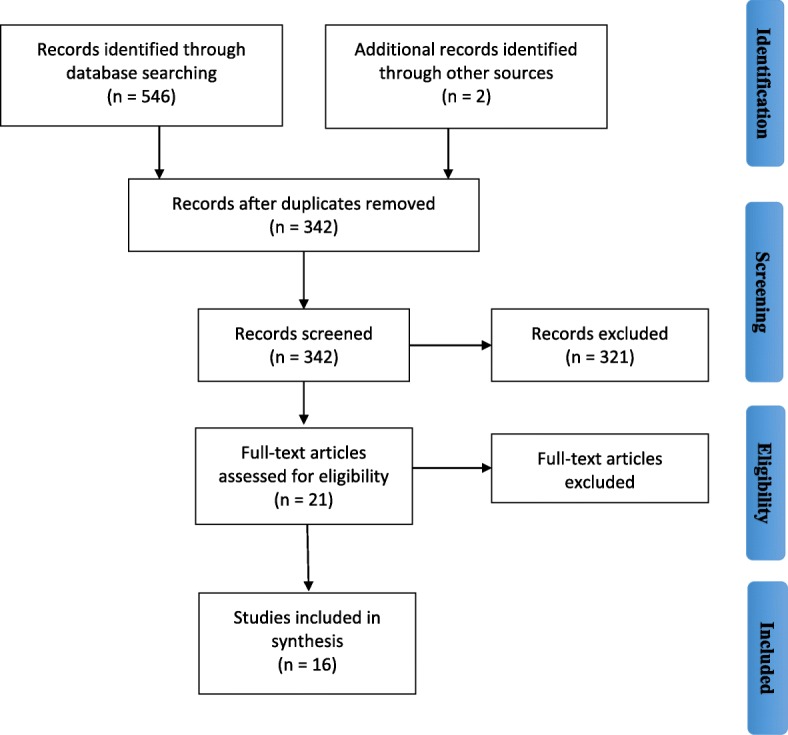
Self-identified race/ethnicity is largely used to identify, monitor, and examine racial/ethnic inequalities. A growing body of work underscores the need to consider multiple dimensions of race – the social construction of race as a function of appearance, societal interactions, institutional dynamics, stereotypes, and social norms. One such multidimensional measure is socially-assigned race, the perception of one’s race by others, that may serve as the basis for differential or unfair treatment and subsequently lead to deleterious health outcomes. We conducted a scoping review to systematically appraise the socially-assigned race and health literature. A systematic search of the PubMed, Web of Science, 28 EBSCO databases and 24 Proquest databases up to September 2019 was conducted and supplemented by a manual search of reference lists and grey literature. Quantitative and qualitative studies that examined socially-assigned race and health or health-related outcomes were considered for inclusion. Eighteen articles were included in the narrative synthesis. Self-rated health and mental health were among the most frequent outcomes studied. The majority of studies were conducted in the United States, with fewer studies conducted in New Zealand, Canada, and Latin America. While most studies demonstrate a positive association between social assignment as a disadvantaged racial or ethnic group and poorer health, some studies did not document an association. We describe key conceptual and methodological considerations that should be prioritized in future studies examining socially-assigned race and health. Socially-assigned race can provide additional insight into observed differential health outcomes among racial/ethnic groups in racialized societies based upon their lived experiences. Studies incorporating socially-assigned race warrants further investigation and may be leveraged to examine nuanced patterns of racial health advantage and disadvantage.
Overview
The claims and statistics of this paper haven’t been checked yet.
Free: it reads the open-access text and checks the first 5 claims that cite a source we can check. Create a free account to check every claim.
Integrity signals
Registry
Cites
Statistics
Figures
Verification
Claims the paper makes
The claims and statistics of this paper haven’t been checked yet.
Free: it reads the open-access text and checks the first 5 claims that cite a source we can check. Create a free account to check every claim.
Claims other papers make about this one
Each is checked against this paper’s own text: does it say what the citing paper says it does?
The source backs part of the claim, not all of it — or backs it for a different population, condition or comparison.
In the citing paper
“Of note, race can be considered as a social construct rather than a biological construct114,134, as race is a socially derived label that can either be self-reported or assigned and might not justify any biological or genetic differences between populations135,136.”
From A global view of hypertensive disorders and diabetes mellitus during pregnancy (2022) · cites this paper as [135]
Experimental — accuracy not yet measured
Self-check
Percentages, sums and reported differences re-computed from the paper’s own numbers.
The self-check needs the paper’s full text.
Citations
Cites
PRISMA Extension for Scoping Reviews (PRISMA-ScR): Checklist and Explanation
Tricco, A. C., Lillie, E., Zarin, W., O'Brien, K. K., Colquhoun, H., Levac, D., Moher, D., Peters, M. D. J., Horsley, T., Weeks, L., et al. (2018) · Annals of Internal Medicine · doi:10.7326/m18-0850 · Cited by 43,565
Scoping studies: towards a methodological framework
Arksey, H., & O'Malley, L. (2005) · International Journal of Social Research Methodology · doi:10.1080/1364557032000119616 · Cited by 36,742
Guidance for conducting systematic scoping reviews
Peters, M. D. J., Godfrey, C. M., Khalil, H., McInerney, P., Parker, D., & Soares, C. B. (2015) · International Journal of Evidence-Based Healthcare · doi:10.1097/xeb.0000000000000050 · Cited by 7,472
Human Nature and the Social Order
Cooley, C. H. (2017) · Routledge eBooks · doi:10.4324/9780203789513 · Cited by 4,821
Racial Formation in the United States
Omi, M., & Winant, H. (2014) · doi:10.4324/9780203076804 · Cited by 3,510
Racism and Health I: Pathways and Scientific Evidence
Williams, D. R., & Mohammed, S. A. (2013) · American Behavioral Scientist · doi:10.1177/0002764213487340 · Cited by 1,336
The public health critical race methodology: praxis for antiracism research.
Ford, C. L., & Airhihenbuwa, C. O. (2010) · Social Science & Medicine · doi:10.1016/j.socscimed.2010.07.030 · Cited by 757 · cited 1×
“, minority versus majority status)” (page 251 [9]) and underscores how this hierarchy differentially affects group well-being and health [40].”
BackgroundThe multiple dimensions of race
Roth, W. D. (2016) · Ethnic and Racial Studies · doi:10.1080/01419870.2016.1140793 · Cited by 445
The cost of color: Skin color, discrimination, and health among African-Americans
Monk, E. P. (2015) · American Journal of Sociology · doi:10.1086/682162 · Cited by 386
Classification of Race and Ethnicity: Implications for Public Health
Mays, V. M., Ponce, N. A., Washington, D. L., & Cochran, S. D. (2003) · Annual Review of Public Health · doi:10.1146/annurev.publhealth.24.100901.140927 · Cited by 333
Does it matter who answers the race question? Racial classification and income inequality in Brazil
Telles, E. E., & Lim, N. (1998) · Demography · doi:10.2307/3004014 · Cited by 280 · cited 3×
“There were 12 studies conducted in the United States, 4 in New Zealand, 1 in Canada, and 1 in Latin America (which comprised of several countries including Brazil, Colombia, Mexico, and Peru).”
BackgroundInfluentialA new conceptualization of ethnicity for social epidemiologic and health equity research
Ford, C. L., & Harawa, N. T. (2010) · Social Science & Medicine · doi:10.1016/j.socscimed.2010.04.008 · Cited by 263 · cited 2×
“upon self-identified race/ethnicity may conceal intraracial heterogeneity in the experience of race and racism [7, 9].”
BackgroundRace and ethnic standards for Federal statistics and administrative reporting.
Kk, W., & Hodgdon, J. A. (1977) · PubMed · Cited by 234
López, N., Vargas, E., Juarez, M., Cacari-Stone, L., & Bettez, S. (2018) · Sociology of Race and Ethnicity · doi:10.1177/2332649217708798 · Cited by 207
Using ''Socially Assigned Race'' to Probe White Advantages in Health Status
Jones, C. P., Truman, B. I., Elam–Evans, L. D., Jones, C. A., Jones, C. Y., Jiles, R. B., Rumisha, S. F., & Perry, G. S. (2008) · PubMed · doi:10.13016/36iu-sc8c · Cited by 194 · cited 8×
“) [20] Disagreement between self-identification and socially-assigned race (discordance), occurs most frequently among Latinx, AI/AN, NHOPI, and multiracial groups [14, 20– 22].”
BackgroundResultInfluentialRacialization and racialization research
Gans, H. J. (2017) · Ethnic and Racial Studies · doi:10.1080/01419870.2017.1238497 · Cited by 190
Measuring Latinos: Racial vs. Ethnic Classification and Self-Understandings
Hitlin, S., Brown, J. S., & Elder, G. H. (2007) · Social Forces · doi:10.1093/sf/86.2.587 · Cited by 190
Perreira, K. M., & Telles, E. E. (2014) · Social Science & Medicine · doi:10.1016/j.socscimed.2014.05.054 · Cited by 180
The Implications of Racial Misclassification by Observers
Campbell, M. E., & Troyer, L. (2007) · American Sociological Review · doi:10.1177/000312240707200505 · Cited by 175
Roth, W. D. (2010) · Social Science Quarterly · doi:10.1111/j.1540-6237.2010.00732.x · Cited by 145
Vargas, N. (2015) · Du Bois Review: Social Science Research on Race · doi:10.1017/s1742058x14000241 · Cited by 100
LaVeist, T. A., Galarraga, J. E., Thorpe, R. J., Bell, C. N., & Austin, C. J. (2011) · Journal of Epidemiology & Community Health · doi:10.1136/jech.2009.103879 · Cited by 93
Capturing complexity in the United States: which aspects of race matter and when?
Saperstein, A. (2012) · Ethnic and Racial Studies · doi:10.1080/01419870.2011.607504 · Cited by 92
Documenting Contested Racial Identities Among Self-Identified Latina/os, Asians, Blacks, and Whites
Vargas, N., & Stainback, K. (2015) · American Behavioral Scientist · doi:10.1177/0002764215613396 · Cited by 88 · cited 8×
“Vargas N, Stainback K. Documenting contested racial identities among selfidentified Latina/os, Asians, Blacks, and Whites.”
BackgroundMethodInfluentialKunz, L. I. Z., Strebus, J., Budulac, S. E., Lapperre, T. S., Sterk, P. J., Postma, D. S., Mauad, T., Timens, W., Hiemstra, P. S., & the GLUCOLD (Groningen Leiden Universities Corticosteroids in Obstructive Lung Disease) Study Group (2013) · PLoS ONE · doi:10.1371/journal.pone.0063430 · Cited by 83
Socially-Assigned Race, Healthcare Discrimination and Preventive Healthcare Services
MacIntosh, T., Desai, M. M., Lewis, T. T., Jones, B. A., & Nunez-Smith, M. (2013) · PLoS ONE · doi:10.1371/journal.pone.0064522 · Cited by 78 · cited 8×
“However, alternative choices for referent groups, for example, being self-identified and sociallyassigned as a non-white racial/ethnic group have also been employed in studies to facilitate interpretation of the outcome [23].”
BackgroundMethodInfluentialCobb, R., Thomas, C. S., Pirtle, W. N. L., & Darity, W. (2016) · SSM: Population Health · doi:10.1016/j.ssmph.2016.06.007 · Cited by 69
Mismatched racial identities, colourism, and health in Toronto and Vancouver
Veenstra, G. (2011) · Social Science & Medicine · doi:10.1016/j.socscimed.2011.07.030 · Cited by 67
Colored Perceptions: Racially Distinctive Names and Assessments of Skin Color
Garcia, D., & Abascal, M. (2016) · American Behavioral Scientist · doi:10.1177/0002764215613395 · Cited by 67
García, J. A., Sánchez, G. R., Sanchez‐Youngman, S., Vargas, E. D., & Ybarra, V. D. (2015) · Du Bois Review Social Science Research on Race · doi:10.1017/s1742058x15000120 · Cited by 64
Harris, R. B., Cormack, D. M., & Stanley, J. (2013) · BMC Public Health · doi:10.1186/1471-2458-13-844 · Cited by 62 · cited 14×
“In 5 of the 7 studies assessing mental health outcomes, a positive association with socially-assigned race and poorer mental health outcomes was detected [8, 25, 29, 30, 36]; however a null relationship was uncovered in one study [33].”
BackgroundResultInfluentialSaperstein, A., Kizer, J. M., & Penner, A. M. (2016) · American Behavioral Scientist · doi:10.1177/0002764215613399 · Cited by 60
Unsettled identities amid settled classifications? Toward a sociology of racial appraisals
Roth, W. D. (2018) · Ethnic and Racial Studies · doi:10.1080/01419870.2018.1417616 · Cited by 59
Reid, J. N. S., Cormack, D. M., & Crowe, M. (2015) · Health An Interdisciplinary Journal for the Social Study of Health Illness and Medicine · doi:10.1177/1363459315568918 · Cited by 58
Vargas, E. D., Winston, N. C., Garcia, J. A., & Sanchez, G. R. (2016) · Sociology of Race and Ethnicity · doi:10.1177/2332649215623789 · Cited by 52
Cormack, D. M., Harris, R. B., & Stanley, J. (2013) · PLoS ONE · doi:10.1371/journal.pone.0084039 · Cited by 37
Arroyo-Johnson, C., Mincey, K. D., Ackermann, N., Milam, L., Goodman, M. S., & Colditz, G. A. (2016) · Preventing Chronic Disease · doi:10.5888/pcd13.150260 · Cited by 37
Dimensions of Racial Identity and Perceived Discrimination in Health Care
Štěpáníková, I., & Oates, G. R. (2016) · Ethnicity & Disease · doi:10.18865/ed.26.4.501 · Cited by 37
Measuring the Diverging Components of Race: An Introduction
Campbell, M. E., Bratter, J. L., & Roth, W. D. (2016) · American Behavioral Scientist · doi:10.1177/0002764215613381 · Cited by 34 · cited 5×
“In 5 of the 7 studies assessing mental health outcomes, a positive association with socially-assigned race and poorer mental health outcomes was detected [8, 25, 29, 30, 36]; however a null relationship was uncovered in one study [33].”
BackgroundInfluentialVargas, E. D., Sánchez, G. R., & Kinlock, B. L. (2014) · Journal of Immigrant and Minority Health · doi:10.1007/s10903-014-0134-4 · Cited by 25
Pirtle, W. N. L., & Brown, T. N. (2015) · Sociological Perspectives · doi:10.1177/0731121415602133 · Cited by 19 · cited 6×
“In 5 of the 7 studies assessing mental health outcomes, a positive association with socially-assigned race and poorer mental health outcomes was detected [8, 25, 29, 30, 36]; however a null relationship was uncovered in one study [33].”
BackgroundMethodInfluentialBorrell, L. N., Crawford, N. D., & Dallo, F. J. (2007) · Public Health Reports · doi:10.1177/003335490712200509 · Cited by 17
Different measures, different mechanisms: A new perspective on racial disparities in health care
Saperstein, A. (2009) · Research in the sociology of health care · doi:10.1108/s0275-4959(2009)0000027004 · Cited by 12
Looking like a smoker, a smokescreen to racism? Māori perceived appearance linked to smoking status
Muriwai, E., Houkamau, C. A., & Sibley, C. G. (2016) · Ethnicity and Health · doi:10.1080/13557858.2016.1263288 · Cited by 9
Lawrence, J. A., White, K., Cummings, J. L., Hardin, J. W., & Torres, M. E. (2019) · Journal of Racial and Ethnic Health Disparities · doi:10.1007/s40615-019-00593-w · Cited by 7
Self-citation(2009) · Research in the sociology of health care · doi:10.1108/s0275-4959(2009)0000027019 · Cited by 7
Research works printed but not linked: 1
- Office of Management and Budget Revisions to the standards for classification of Federal data on race and ethnicity Federal Registry 1997 62 58781 58790
Cited by
A global view of hypertensive disorders and diabetes mellitus during pregnancy
Jiang, L., Tang, K., Magee, L. A., von Dadelszen, P., Ekeroma, A., Li, X., Zhang, E., & Bhutta, Z. A. (2022) · Nature Reviews Endocrinology · doi:10.1038/s41574-022-00734-y · Cited by 314
Johnson, J. D., & Louis, J. M. (2022) · American Journal of Obstetrics and Gynecology · doi:10.1016/j.ajog.2020.07.038 · Cited by 238
“The major limitation of the use of race and ethnicity in medical research is that race is a socially derived label that can either be self-reported or assigned.(13,14)”
BackgroundAbandon “Race.” Focus on Racism
Braveman, P., & Parker Dominguez, T. (2021) · Frontiers in Public Health · doi:10.3389/fpubh.2021.689462 · Cited by 171
“A 2020 review of 18 studies of associations between a range of health indicators and socially assigned “race” reported that most studies have found an association between socially assigned “race” and health (41).”
BackgroundAdvancing Indigenous Mental Health Research: Ethical, conceptual and methodological challenges
Gone, J. P., & Kirmayer, L. J. (2020) · Transcultural Psychiatry · doi:10.1177/1363461520923151 · Cited by 85
“Both may be related to social determinants of mental health and health inequities (White et al., 2020).”
BackgroundPoor Awareness of Liver Disease Among Adults With NAFLD in the United States
Alqahtani, S. A., Paik, J. M., Biswas, R., Arshad, T., Henry, L., & Younossi, Z. M. (2021) · Hepatology Communications · doi:10.1002/hep4.1765 · Cited by 120
Metadata
- Authors
- White, K., Lawrence, J. A., Tchangalova, N., Huang, S. J., & Cummings, J. L.
- Affiliations
- University of Maryland, College Park (US)
- Harvard University (US)
- University of South Carolina (US)
- Corresponding author
- White, Kellee
- Venue
- International Journal for Equity in Health
- Published
- 2020-02-10
- Volume
- 19
- Issue
- 1
- Pages
- 25-25
- ISSN
- 1475-9276 (ISSN-L)
- PMC
- PMC7011480
- OpenAlex
- W3011118751
- Cited by
- 111
- References
- 46
- Citations by year
- 2026: 13 · 2025: 22 · 2024: 24 · 2023: 17 · 2022: 16 · 2021: 14 · 2020: 5
- FWCI
- 2.27
- Type
- journal article
- Language
- en
- Open access
- gold
- doi.org
- Licence
- cc-by
- creativecommons.org/licenses/by/4.0/ (tdm)
- creativecommons.org/licenses/by/4.0/ (vor)
- Locations
- International Journal for Equity in Health (publishedVersion, cc-by)
- PubMed Central (publishedVersion, cc-by)
- PubMed (publishedVersion)
- University Libraries (University of Maryland) (submittedVersion, other-oa)
- DOAJ (DOAJ: Directory of Open Access Journals) (submittedVersion, cc-by-sa)
- University Libraries (University of Maryland) (submittedVersion)
- Digital Repository at the University of Maryland (University of Maryland College Park)
- Funders
- South Carolina Research Foundation, University of South Carolina
- Topics
- Social Sciences › Sociology and Political Science › Racial and Ethnic Identity Research
- Social Sciences › Health › Health disparities and outcomes
- Social Sciences › Anthropology › Race, Genetics, and Society
- Keywords
- perceived race, racial disparities in health, self-rated health, mental health, social construction of race, racialized society, population health equity
- MeSH terms
- Health Equity, Population Health, Canada, Ethnicity, Humans, Latin America, Mental Health, New Zealand, Socioeconomic Factors, United States, Racial Groups, Health Status Disparities, Healthcare Disparities, Racism
About these checks
Registry, retraction, Cites and statistics results are computed, not judged, with one exception: a printed reference that no index lists is read once by a model before it counts as a citation error. Claims are extracted by a model and kept only when their quote appears verbatim in the text; each cited source is then checked, with a model’s help, for whether it says what the claim relies on. Those verdicts can be wrong — read the claim’s quote and the cited source before relying on one.
Statistics and arithmetic are recomputed, not judged.
Confidence bands are shown only for fields calibrated on our annotated test set. None is calibrated yet, so no band is shown.
What counts as a claim ›How we measure confidence ›How we check this ›
Are you an author, or do you see a problem with this page? Request a review
Data sources
Bibliographic data: Semantic Scholar, OpenAlex, Crossref.
Contains information from the Semantic Scholar Academic Graph Datasets, made available under the ODC Attribution License (ODC-BY 1.0).
Semantic Scholar’s data is described in: Kinney, R., et al. (2023). The Semantic Scholar Open Data Platform. arXiv:2301.10140.
