

Cultural adaptation of health interventions including a nutrition component in Indigenous peoples: a systematic scoping review
Open accessThe DOI matches its Crossref record; 111 of the 111 references it cites were found in a registry or an index.
Abstract
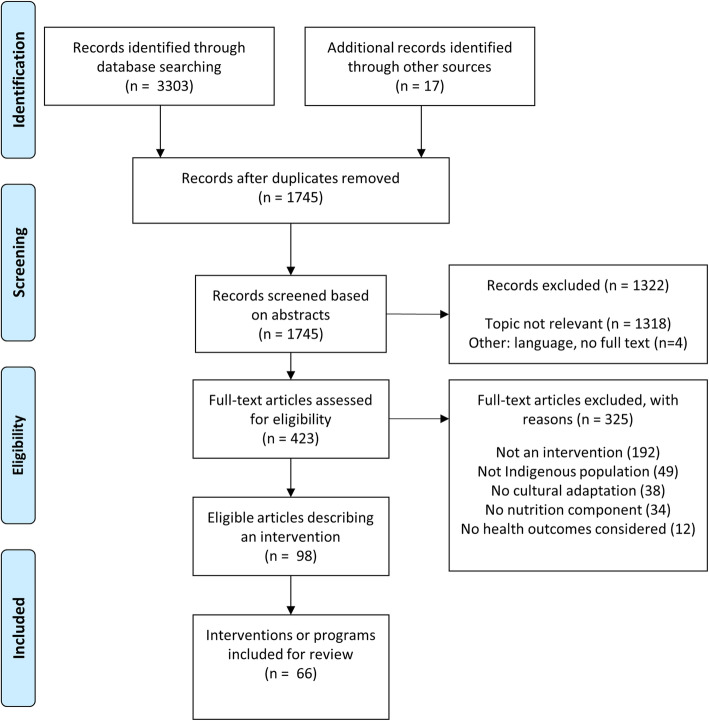
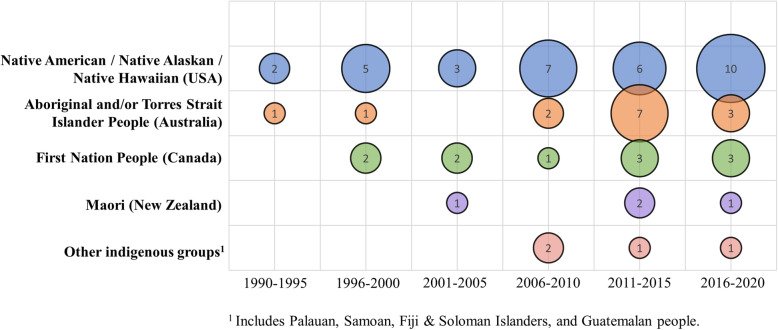
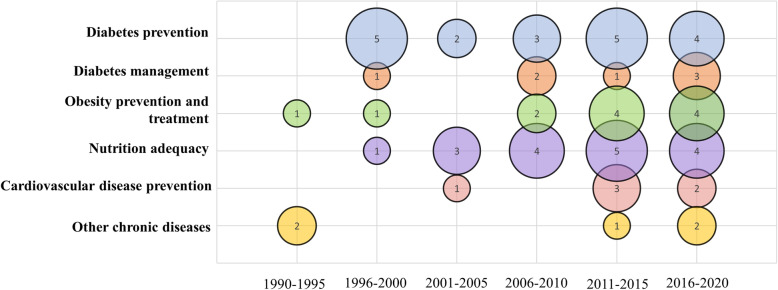
BACKGROUND: Indigenous populations throughout the world experience poorer health outcomes than non-indigenous people. The reasons for the health disparities are complex and due in part to historical treatment of Indigenous groups through colonisation. Evidence-based interventions aimed at improving health in this population need to be culturally safe. However, the extent to which cultural adaptation strategies are incorporated into the design and implementation of nutrition interventions designed for Indigenous peoples is unknown. The aim of this scoping review was to explore the cultural adaptation strategies used in the delivery of nutrition interventions for Indigenous populations worldwide. METHODS: Five health and medical databases were searched to January 2020. Interventions that included a nutrition component aimed at improving health outcomes among Indigenous populations that described strategies to enhance cultural relevance were included. The level of each cultural adaptation was categorised as evidential, visual, linguistic, constituent involving and/or socio-cultural with further classification related to cultural sensitivity (surface or deep). RESULTS: Of the 1745 unique records screened, 98 articles describing 66 unique interventions met the inclusion criteria, and were included in the synthesis. The majority of articles reported on interventions conducted in the USA, Canada and Australia, were conducted in the previous 10 years (n = 36) and focused on type 2 diabetes prevention (n = 19) or management (n = 7). Of the 66 interventions, the majority included more than one strategy to culturally tailor the intervention, combining surface and deep level adaptation approaches (n = 51), however, less than half involved Indigenous constituents at a deep level (n = 31). Visual adaptation strategies were the most commonly reported (n = 57). CONCLUSION: This paper is the first to characterise cultural adaptation strategies used in health interventions with a nutrition component for Indigenous peoples. While the majority used multiple cultural adaptation strategies, few focused on involving Indigenous constituents at a deep level. Future research should evaluate the effectiveness of cultural adaptation strategies for specific health outcomes. This could be used to inform co-design planning and implementation, ensuring more culturally appropriate methods are employed.
Overview
The claims and statistics of this paper haven’t been checked yet.
Free: it reads the open-access text and checks the first 5 claims that cite a source we can check. Create a free account to check every claim.
Integrity signals
Registry
Cites
Statistics
Figures
Verification
Claims the paper makes
The claims and statistics of this paper haven’t been checked yet.
Free: it reads the open-access text and checks the first 5 claims that cite a source we can check. Create a free account to check every claim.
Claims other papers make about this one
Each is checked against this paper’s own text: does it say what the citing paper says it does?
The source backs part of the claim, not all of it — or backs it for a different population, condition or comparison.
In the citing paper
“Individuals or organizations operating from outside a community may be able to adapt health promotion strategies to be culturally sensitive, but they cannot fully implement health promotion that is authentically grounded in the community’s own cultural knowledge and practice (Kreuter et al. 2003, Vincze et al. 2021, White (Q̓íx̌itasu) et al. 2024).”
From An exploration of cultural grounding in Indigenous health promotion: perspectives from First Nations communities in Canada (2025) · cites this paper as Vincze et al. 2021
Experimental — accuracy not yet measured
Self-check
Percentages, sums and reported differences re-computed from the paper’s own numbers.
The self-check needs the paper’s full text.
Citations
Cites
PRISMA Extension for Scoping Reviews (PRISMA-ScR): Checklist and Explanation
Tricco, A. C., Lillie, E., Zarin, W., O'Brien, K. K., Colquhoun, H., Levac, D., Moher, D., Peters, M. D. J., Horsley, T., Weeks, L., et al. (2018) · Annals of Internal Medicine · doi:10.7326/m18-0850 · Cited by 43,565
Scoping studies: towards a methodological framework
Arksey, H., & O'Malley, L. (2005) · International Journal of Social Research Methodology · doi:10.1080/1364557032000119616 · Cited by 36,742
Rayyan-a web and mobile app for systematic reviews.
Ouzzani, M., Hammady, H., Fedorowicz, Z., & Elmagarmid, A. (2016) · Systematic Reviews · doi:10.1186/s13643-016-0384-4 · Cited by 26,092
Munn, Z., Peters, M. D. J., Stern, C., Tufanaru, C., McArthur, A., & Aromataris, E. (2018) · BMC Medical Research Methodology · doi:10.1186/s12874-018-0611-x · Cited by 11,385
Achieving cultural appropriateness in health promotion programs: targeted and tailored approaches
Kreuter, M. W., Lukwago, S. N., Bucholtz, D. C., Clark, E. M., & Sanders-Thompson, V. (2003) · Health Education & Behavior · doi:10.1177/1090198102251021 · Cited by 1,245 · cited 6×
“A strength of this review was the application of an organisational system for categorising cultural adaption by a Kreuter and colleagues [19] which allowed for consistent and clear description of approaches currently used in nutrition interventions for Indigenous populations around the world.”
BackgroundMethodInfluentialCurtis, E., Jones, R., Tipene-Leach, D., Walker, C., Loring, B., Paine, S.-J., & Reid, P. (2019) · International Journal for Equity in Health · doi:10.1186/s12939-019-1082-3 · Cited by 1,214 · cited 1×
“Curtis and colleagues propose a comprehensive definition for cultural safety that references the need for “healthcare organisations to influence healthcare to reduce bias and achieve equity” [17].”
Background(1999) · PubMed · Cited by 1,155
Anderson, I., Robson, B., Connolly, M., Al-Yaman, F., Bjertness, E., King, A., Tynan, M., Madden, R., Bang, A., Coimbra, C. E. A., et al. (2016) · The Lancet · doi:10.1016/s0140-6736(16)00345-7 · Cited by 990
Issues and challenges in the design of culturally adapted evidence-based interventions
Castro, F. G., Barrera, M., & Holleran Steiker, L. K. (2010) · Annual Review of Clinical Psychology · doi:10.1146/annurev-clinpsy-033109-132032 · Cited by 796 · cited 2×
“Cultural adaptation of an intervention involves careful consideration of the needs of the group for whom the intervention is being developed, as well as a meaningful collaboration during intervention design, development, implementation and evaluation [15, 18].”
BackgroundColonisation, racism and indigenous health
Paradies, Y. (2016) · Journal of Population Research · doi:10.1007/s12546-016-9159-y · Cited by 602 · cited 1×
“This may be partly due to the shared experience of European colonization in these countries, and subsequently the need to sensitively adapt health care to improve cultural appropriateness [25, 95, 96].”
BackgroundCyril, S., Smith, B. J., Possamai-Inesedy, A., & Renzaho, A. M. N. (2015) · Global Health Action · doi:10.3402/gha.v8.29842 · Cited by 496
Do biomedical models of illness make for good healthcare systems?
Wade, D. T., & Halligan, P. W. (2004) · BMJ · doi:10.1136/bmj.329.7479.1398 · Cited by 471
Movsisyan, A., Arnold, L., Evans, R., Hallingberg, B., Moore, G., O’Cathain, A., Pfadenhauer, L. M., Segrott, J., & Rehfuess, E. (2019) · Implementation Science · doi:10.1186/s13012-019-0956-5 · Cited by 331 · cited 1×
“Ensuring cultural safety of evidence-based interventions to improve health is therefore an important approach [15, 16].”
BackgroundPrevention of chronic disease by means of diet and lifestyle changes.
Willett, W. C., Koplan, J. P., Nugent, R. A., Dusenbury, C. M., Puska, P., & Gaziano, T. A. (2006) · Cited by 278
Harfield, S. G., Davy, C., McArthur, A., Munn, Z., Brown, A., & Brown, N. (2018) · Globalization and Health · doi:10.1186/s12992-018-0332-2 · Cited by 270 · cited 1×
“A recent systematic scoping review of Indigenous primary healthcare service delivery models identified a preference for healthcare that was accessible, culturally appropriate, holistic and involved community participation [14].”
BackgroundMacaulay, A. C., Paradis, G., Potvin, L., Cross, E. J., Saad-Haddad, C., McComber, A., Desrosiers, S., Kirby, R., Montour, L. T., Lamping, D. L., et al. (1997) · Preventive Medicine · doi:10.1006/pmed.1997.0241 · Cited by 234
Indigenous peoples' health—why are they behind everyone, everywhere?
Stephens, C., Nettleton, C., Porter, J., Willis, R., & Clark, S. (2005) · The Lancet · doi:10.1016/s0140-6736(05)66801-8 · Cited by 218
Hutchinson, R. N., & Shin, S. (2014) · PLoS ONE · doi:10.1371/journal.pone.0080973 · Cited by 210
Rowley, K. G., Daniel, M., Skinner, K., Skinner, M., White, G. A., & O'Dea, K. (2000) · Australian and New Zealand Journal of Public Health · doi:10.1111/j.1467-842x.2000.tb00133.x · Cited by 207 · cited 1×
“Most interventions aimed to change health outcomes for diabetes prevention (n = 19) [27, 28, 36, 38, 44, 55, 56, 60, 62, 67, 69, 70, 79, 81, 82, 88, 89, 92, 93], obesity prevention or treatment (n = 11) [32, 34, 42, 50, 57, 59, 65, 72, 80, 83, 90], and diabetes management (n = 7) [31, 33, 39, 48, 51, 58, 63, 68, 71, 8…”
BackgroundMaori healers' views on wellbeing: The importance of mind, body, spirit, family and land
Mark, G. T., & Lyons, A. C. (2010) · Social Science & Medicine · doi:10.1016/j.socscimed.2010.02.001 · Cited by 201 · cited 1×
“Indigenous peoples hold an holistic view of health incorporating community, environment, spiritual, emotional and physical wellbeing [11, 12].”
BackgroundSaksvig, B. I., Gittelsohn, J., Harris, S. B., Hanley, A. J. G., Valente, T. W., & Zinman, B. (2005) · The Journal of Nutrition · doi:10.1093/jn/135.10.2392 · Cited by 197
Cultural Adaptation of Interventions in Real Practice Settings
Marsiglia, F. F., & Booth, J. M. (2015) · Research on Social Work Practice · doi:10.1177/1049731514535989 · Cited by 197
The double burden of malnutrition in indigenous and nonindigenous Guatemalan populations
Ramírez‐Zea, M., Kroker-Lobos, M. F., Close-Fernandez, R., & Kanter, R. (2014) · American Journal of Clinical Nutrition · doi:10.3945/ajcn.114.083857 · Cited by 157
Translating the Diabetes Prevention Program Into American Indian and Alaska Native Communities
Jiang, L., Manson, S. M., Beals, J., Henderson, W. G., Huang, H., Acton, K. J., Roubideaux, Y., & the Special Diabetes Program for Indians Diabetes Prevention Demonstration Project (2013) · Diabetes Care · doi:10.2337/dc12-1250 · Cited by 156
Mitrou, F., Cooke, M., Lawrence, D., Povah, D., Mobilia, E., Guimond, E., & Zubrick, S. R. (2014) · BMC Public Health · doi:10.1186/1471-2458-14-201 · Cited by 154
Daniel, M., Green, L. W., Marion, S. A., Gamble, D., Herbert, C. P., Hertzman, C., & Sheps, S. B. (1999) · Social Science & Medicine · doi:10.1016/s0277-9536(98)00403-1 · Cited by 152
Gittelsohn, J., Kim, E. M., He, S., & Pardilla, M. (2013) · Journal of Nutrition · doi:10.3945/jn.112.165266 · Cited by 135
Allen, P. M., Thompson, J. L., Herman, C. J., Whyte, A. N., Wolfe, V. K., Qualls, C., & Helitzer, D. (2008) · Europe PMC (PubMed Central) · Cited by 131
Shintani, T. T., Hughes, C., Beckham, S., & O'Connor, H. K. (1991) · American Journal of Clinical Nutrition · doi:10.1093/ajcn/53.6.1647s · Cited by 130
Randomized clinical trial of lifestyle interventions in Pima Indians: a pilot study
Venkat Narayan, K. M., Hoskin, M., Kozak, D., Kriska, A. M., Hanson, R. L., Pettitt, D. J., Nagi, D. K., Bennett, P. H., & Knowler, W. C. (1998) · Diabetic Medicine · doi:10.1002/(sici)1096-9136(199801)15:1<66::aid-dia515>3.0.co;2-a · Cited by 123
A Family-based Intervention to Promote Healthy Lifestyles in an Aboriginal Community in Canada
behalf of the SHARE-AP ACTION Investigators, Anand, S. S., Davis, A. D., Ahmed, R. J., Jacobs, R., Xie, C., Hill, A., SOWDEN, J. A., Atkinson, S. A., Blimkie, C. J. R., et al. (2007) · Canadian Journal of Public Health · doi:10.1007/bf03405436 · Cited by 120
Double-burden of malnutrition among the indigenous peoples (Orang Asli) of Peninsular Malaysia
Wong, C. Y., Shariff, Z. M., Chua, E., Norhasmah, S., Chin, Y. S., & Adznam, S. N. (2015) · BMC Public Health · doi:10.1186/s12889-015-2058-x · Cited by 106
Gittelsohn, J., & Rowan, M. (2011) · American Journal of Clinical Nutrition · doi:10.3945/ajcn.110.003509 · Cited by 106
Formative Research and Stakeholder Participation in Intervention Development
Vastine, A. E., Gittelsohn, J., Ethelbah, B., Anliker, J. A., & Caballero, B. H. (2005) · American Journal of Health Behavior · doi:10.5993/ajhb.29.1.5 · Cited by 101
Mendenhall, T. J., Berge, J. M., Harper, P., GreenCrow, B. A., LittleWalker, E. “., WhiteEagle, S., & BrownOwl, S. (2010) · Nursing Inquiry · doi:10.1111/j.1440-1800.2010.00508.x · Cited by 98
Development of a Primary Prevention Program: Insight Gained in the Zuni Diabetes Prevention Program
Teufel, N. I., & Ritenbaugh, C. K. (1998) · Clinical Pediatrics · doi:10.1177/000992289803700211 · Cited by 98
Implementation effectiveness of health interventions for indigenous communities: a systematic review
Harding, T., & Oetzel, J. (2019) · Implementation Science · doi:10.1186/s13012-019-0920-4 · Cited by 95
Story, M., Hannan, P. J., Fulkerson, J. A., Rock, B. H., Smyth, M., Arcan, C., & Himes, J. H. (2012) · Obesity · doi:10.1038/oby.2012.89 · Cited by 91
Rigby, R. R., MITCHELL, L. J., Hamilton, K., & Williams, L. T. (2020) · Journal of the Academy of Nutrition and Dietetics · doi:10.1016/j.jand.2020.03.019 · Cited by 91
Self-citationBrowne, J., Lock, M., Walker, T., Egan, M., & Backholer, K. (2020) · BMJ Global Health · doi:10.1136/bmjgh-2020-002442 · Cited by 88
Transforming institutional racism at an Australian hospital
Bourke, C., Marrie, H., & Marrie, A. (2018) · Australian Health Review · doi:10.1071/ah18062 · Cited by 86
Randall, D., Lujic, S., Havard, A., Eades, S., & Jorm, L. R. (2018) · The Medical Journal of Australia · doi:10.5694/mja17.00878 · Cited by 77
Battersby, M., Kit, J. A., Prideaux, C., Harvey, P. W., Collins, J. P., & Mills, P. D. (2008) · Australian Journal of Primary Health · doi:10.1071/py08009 · Cited by 76
Pathways: a school-based program for the primary prevention of obesity in american indian children
Caballero, B., Davis, S., Davis, C. E., Ethelbah, B., Evans, M., Lohman, T., Stephenson, L., Story, M., & White, J. (1998) · The Journal of Nutritional Biochemistry · doi:10.1016/s0955-2863(98)00049-7 · Cited by 74
Survival tucker: improved diet and health indicators in an Aboriginal community
Lee, A., Bailey, A. P. V., Yarmirr, D., O’Dea, K., & Mathews, J. D. (1994) · Australian Journal of Public Health · doi:10.1111/j.1753-6405.1994.tb00245.x · Cited by 74
Pulver, L. J., Haswell, M., Ring, I. T., Waldon, J., Clark, W., Whetung, V., Kinnon, D., Graham, C., Chino, M., LaValley, J., et al. (2010) · Research Online (University of Wollongong) · Cited by 72
Reaching the Hispanic Community About COVID-19 Through Existing Chronic Disease Prevention Programs
Calo, W. A., Murray, A. E., Francis, E. B., Bermudez, M., & Kraschnewski, J. L. (2020) · Preventing Chronic Disease · doi:10.5888/pcd17.200165 · Cited by 72
Merrick, J., Chong, A., Parker, E. J., Roberts‐Thomson, K., Misan, G., Spencer, J., Broughton, J. R., Lawrence, H. P., & Jamieson, L. (2012) · BMC Public Health · doi:10.1186/1471-2458-12-323 · Cited by 68
Jiang, L., Johnson, A., Pratte, K., Beals, J., Bullock, A., Manson, S. M., & Program, T. S. D. P. F. I. D. P. (2018) · Diabetes Care · doi:10.2337/dc17-2685 · Cited by 66
Gwynn, J., Sim, K. A., Searle, T., Senior, A. M., Lee, A., & Brimblecombe, J. K. (2019) · BMJ Open · doi:10.1136/bmjopen-2018-025291 · Cited by 66
Ronsley, R. J., Lee, A. S., Kuzeljevic, B., & Panagiotopoulos, C. (2013) · Journal of School Health · doi:10.1111/josh.12072 · Cited by 65
Karanja, N., Lutz, T., Ritenbaugh, C., Maupome, G., Jones, J., Becker, T., & Aickin, M. (2010) · Journal of Community Health · doi:10.1007/s10900-010-9270-5 · Cited by 64
Schumacher, C., Ferucci, E. D., Lanier, A. P., Slattery, M. L., Schraer, C. D., Raymer, T. W., Dillard, D., Murtaugh, M. A., & Tom-Orme, L. (2008) · Metabolic Syndrome and Related Disorders · doi:10.1089/met.2008.0021 · Cited by 61
Kattelmann, K. K., Conti, K., & Ren, C. (2010) · Journal of the American Dietetic Association · doi:10.1016/j.jada.2010.03.003 · Cited by 61
Brown, B., Noonan, C., Harris, K. J., Parker, M., Gaskill, S., Ricci, C., Cobbs, G., & Gress, S. (2013) · The Diabetes Educator · doi:10.1177/0145721712465343 · Cited by 60
DeBruyn, L. M., Fullerton, L., Satterfield, D. W., & Frank, M. (2020) · Preventing Chronic Disease · doi:10.5888/pcd17.190213 · Cited by 60
Coppell, K. J., Tipene-Leach, D. C., Pahau, H. L. R., Williams, S. M., Abel, S., Iles, M., Hindmarsh, J. H., & Mann, J. I. (2009) · Diabetes Research and Clinical Practice · doi:10.1016/j.diabres.2009.05.009 · Cited by 59
Hanbazaza, M. A., Triador, L., Ball, G. D. C., Farmer, A., Maximova, K., Nation, A. F., & Willows, N. D. (2015) · Canadian Journal of Dietetic Practice and Research · doi:10.3148/cjdpr-2015-007 · Cited by 55
Emerging diabetes and metabolic conditions among Aboriginal and Torres Strait Islander young people
Titmuss, A., Davis, E. A., Brown, A., & Maple‐Brown, L. J. (2019) · Medical Journal of Australia · doi:10.5694/mja2.13002 · Cited by 54 · cited 1×
“This is consistent with the known prevalence of metabolic disease which occurs at higher rates in Indigenous compared with non-indigenous populations [97–99], and important given these conditions are responsible for much of the gap in life expectancy and burden of disease between Indigenous and non-indigenous peoples…”
ResultPulver, L. J., Haswell, M., Ring, I. T., Waldon, J., Clark, W., Whetung, V., Kinnon, D., Graham, C., Chino, M., LaValley, J., et al. (2010) · Digital Scholarship - UNLV (University of Nevada Reno) · Cited by 53
Kattelmann, K. K., Conti, K., & Ren, C. (2009) · Journal of the American Dietetic Association · doi:10.1016/j.jada.2009.06.362 · Cited by 53
Women-Centered and Culturally Responsive Heart Health Promotion Among Indigenous Women in Canada
Ziabakhsh, S., Pederson, A., Prodan‐Bhalla, N., Middagh, D., & Jinkerson-Brass, S. (2016) · Health Promotion Practice · doi:10.1177/1524839916633238 · Cited by 52
Schembri, L., Curran, J. T., Collins, L., Pelinovskaia, M., Bell, H. S., Richardson, C., & Palermo, C. E. (2015) · Australian and New Zealand Journal of Public Health · doi:10.1111/1753-6405.12392 · Cited by 49
LaRowe, T. L., Wubben, D. P., Cronin, K. A., Vannatter, S. M., & Adams, A. (2007) · Preventing Chronic Disease · Cited by 49
Effective Nutrition Education for Aboriginal Australians: Lessons from a Diabetes Cooking Course
Abbott, P., Davison, J., Moore, L. F., & Rubinstein, R. (2011) · Journal of Nutrition Education and Behavior · doi:10.1016/j.jneb.2010.10.006 · Cited by 49
Nelson, R. G., Pankratz, V. S., GHAHATE, D. M., Bobelu, J., Faber, T., & Shah, V. O. (2018) · Clinical Journal of the American Society of Nephrology · doi:10.2215/cjn.06910618 · Cited by 49
Wali, S., Superina, S., Mashford‐Pringle, A., Ross, H. J., & Cafazzo, J. A. (2021) · International Journal for Equity in Health · doi:10.1186/s12939-020-01346-6 · Cited by 48
Brimblecombe, J. K., Ferguson, M., Liberato, S., Ball, K., Moodie, M., Magnus, A., Miles, E. W., Leach, A. J., Chatfield, M. D., Mhurchú, C. N., et al. (2013) · BMC Public Health · doi:10.1186/1471-2458-13-744 · Cited by 46
Gracey, M. S., Bridge, E., Martin, D. D., Jones, T. W., Spargo, R. M., Shephard, M. D. S., & Davis, E. A. (2006) · PubMed · Cited by 46
Heart Disease Prevention for Alaska Native Women: A Review of Pilot Study Findings
Witmer, J. M., Hensel, M. R., Holck, P. S., Ammerman, A. S., & Will, J. C. (2004) · Journal of Women's Health · doi:10.1089/1540999041280981 · Cited by 45
Sauder, K. A., Dabelea, D., Bailey‐Callahan, R., Lambert, S. K., Powell, J., James, R. A., Percy, C. A., Jenks, B. F., Testaverde, L., Thomas, J. M., et al. (2017) · Pediatric Obesity · doi:10.1111/ijpo.12223 · Cited by 45
Bertilone, C., & McEvoy, S. (2015) · The Medical Journal of Australia · doi:10.5694/mja14.01754 · Cited by 44
Jernigan, V. B. B., Williams, M., Wetherill, M., Taniguchi, T., Jacob, T., Cannady, T., Grammar, M., Standridge, J., Fox, J., Wiley, A., et al. (2018) · Preventive Medicine Reports · doi:10.1016/j.pmedr.2018.06.012 · Cited by 41
DePue, J. D., Rosen, R. K., Seiden, A., Bereolos, N., Chima, M. L., Goldstein, M. G., Nu’usolia, O., Tuitele, J., & McGarvey, S. T. (2013) · The Science of Diabetes Self-Management and Care · doi:10.1177/0145721713504630 · Cited by 39
Canuto, K. J., McDermott, R. A., Cargo, M., & Esterman, A. (2011) · BMC Public Health · doi:10.1186/1471-2458-11-655 · Cited by 37
Nu, J., & Bersamin, A. (2017) · Progress in Community Health Partnerships: Research, Education, and Action · doi:10.1353/cpr.2017.0009 · Cited by 36
Primary Prevention of Obesity in American Indian Childrena
DAVIS, S., GOMEZ, Y., LAMBERT, L., & SKIPPER, B. (1993) · Annals of the New York Academy of Sciences · doi:10.1111/j.1749-6632.1993.tb18848.x · Cited by 35
Foley, W. L., Spurr, S., LENOY, L., JONG, M. D., & Fichera, R. (2011) · Nutrition & Dietetics · doi:10.1111/j.1747-0080.2011.01551.x · Cited by 34
The həli?dxw Intervention Team, Walters, K. L., LaMarr, J., Levy, R. L., Pearson, C. R., Maresca, T., Mohammed, S. A., Simoni, J. M., Evans‐Campbell, T., Fredriksen‐Goldsen, K. I., et al. (2012) · The Journal of Primary Prevention · doi:10.1007/s10935-012-0274-z · Cited by 31
Chambers, R. A., Rosenstock, S., Neault, N. B., Kenney, A., Richards, J. R., Begay, K., Blackwater, T., Laluk, O., Duggan, C., Reid, R., et al. (2015) · The Science of Diabetes Self-Management and Care · doi:10.1177/0145721715608953 · Cited by 31
STOP Diabetes! An Educational Model for Native American Adolescents in the Prevention of Diabetes
Marlow, E., Melkus, G. D., & Bosma, A. M. (1998) · The Science of Diabetes Self-Management and Care · doi:10.1177/014572179802400403 · Cited by 30
Govula, C., Kattelman, K., & Ren, C. (2007) · Topics in Clinical Nutrition · doi:10.1097/01.tin.0000285378.01218.67 · Cited by 30
Quinn, E., O'Hara, B. J., Ahmed, N., Winch, S., McGill, B., Banovic, D., Maxwell, M., & Rissel, C. E. (2017) · International Journal for Equity in Health · doi:10.1186/s12939-017-0641-8 · Cited by 29
Jamison, D. T. T., Jg, B., Ar, M., Alleyne, G. A. O., Claeson, M., Db, E., Jha, P., MILLS, A. J., & Musgrove, P. (2006) · Cited by 28
Robertson, C., Kattelmann, K. K., & Ren, C. (2007) · Topics in Clinical Nutrition · doi:10.1097/01.tin.0000270137.00099.91 · Cited by 28
Redmond, L. C., Jock, B., Gadhoke, P., Chiu, D. T., Christiansen, K., Pardilla, M., Swartz, J., Platero, H., Caulfield, L. E., & Gittelsohn, J. (2019) · Current Developments in Nutrition · doi:10.1093/cdn/nzz009 · Cited by 27
Murphy, E., McAuley, K. A., Bell, D. A., McLay-Cooke, R. T., Chisholm, A. W., Hurley, R., Story, G., Mann, J. I., Thomson, R., & Williams, S. (2003) · PubMed · Cited by 23
Rolleston, A. K., Doughty, R. N., & Poppe, K. (2016) · Journal of Primary Health Care · doi:10.1071/hc15034 · Cited by 23
Lee, E. T., Jobe, J. B., Yeh, J. L., Ali, T., Rhoades, E. R., KNEHANS, A. W., Willis, D. J., Johnson, M. R., Zhang, Y., Poolaw, B., et al. (2012) · The Journal of Primary Prevention · doi:10.1007/s10935-012-0273-0 · Cited by 22
Gates, A., Hanning, R. M., Gates, M., & Tsuji, L. J. S. (2016) · Journal of Hunger & Environmental Nutrition · doi:10.1080/19320248.2016.1157552 · Cited by 22
Seear, K. H., Atkinson, D. N., Lelievre, M. P., Henderson-Yates, L. M., & Marley, J. V. (2019) · Australian Journal of Primary Health · doi:10.1071/py19024 · Cited by 21
Brooking, L. A., Williams, S., & Mann, J. I. (2011) · Diabetes Research and Clinical Practice · doi:10.1016/j.diabres.2011.11.021 · Cited by 20
Effectiveness of a Mexican Health Education Program in a Poverty-Stricken Rural Area of Guatemala
Leenen, I., Givaudan, M., Pick, S., Venguer, T., Vera, J., & Poortinga, Y. H. (2008) · Journal of Cross-Cultural Psychology · doi:10.1177/0022022107312588 · Cited by 18
Prevention and treatment of childhood obesity
Frelut, M., & Isnard, P. (1994) · Cited by 18
Kenny, T., MacLean, J., Gale, P., Keats, S., Chan, H. M., & Wesche, S. D. (2018) · Journal of Hunger & Environmental Nutrition · doi:10.1080/19320248.2017.1420330 · Cited by 18
Developing leaflets to give dental health advice to Aboriginal families with young children
Blinkhorn, F. A., Wallace, J. P., Smith, L., & Blinkhorn, A. S. (2014) · International Dental Journal · doi:10.1111/idj.12108 · Cited by 17
Indigenous peoples and the MDGs
Nations, U. (2008) · United Nations chronicle/UN chronicle · doi:10.18356/ef03e611-en · Cited by 16
Mercer, C. J., Riini, D., Hamerton, H., Morrison, L., & McPherson, B. (2012) · Australian Journal of Primary Health · doi:10.1071/py11096 · Cited by 15
Developing an obesity intervention in Micronesia: From needs assessment to planning
Collier, A. F., Daiss, S. R., Temengil, E. J., Russel, S. C., Miller, J. C., & Renguul, F. M. (2018) · Evaluation and Program Planning · doi:10.1016/j.evalprogplan.2018.04.003 · Cited by 14
Murphy, S. A., & Wilson, C. (2008) · Journal of Human Lactation · doi:10.1177/0890334408317434 · Cited by 13
Counil, É., Gauthier, M.-J., Blouin, V., Grey, M., Angiyou, E., Kauki, T., & Dewailly, É. (2012) · International Journal of Circumpolar Health · doi:10.3402/ijch.v71i0.18833 · Cited by 13
Mattingly, J. A., & Andresen, P. A. (2016) · Journal of Community Health Nursing · doi:10.1080/07370016.2016.1191871 · Cited by 13
Indigenous health: a worldwide focus
Lancet, T. (2016) · The Lancet · doi:10.1016/s0140-6736(16)31020-0 · Cited by 13
State of the World’s Indigenous Peoples
Nations, U. (2019) · State of the world's indigenous peoples · doi:10.18356/5cb401e7-en · Cited by 13
Uli'eo Koa Program: incorporating a traditional Hawaiian dietary component.
Leslie, J. H. (2001) · PubMed · Cited by 12
Guidelines for Making Existing Health Education Programs More Culturally Appropriate
Davis, P. C., & Rankin, L. L. (2006) · American Journal of Health Education · doi:10.1080/19325037.2006.10598912 · Cited by 10
Balmer, L., & Foster, V. (1997) · Collegian Journal of the Royal College of Nursing Australia · doi:10.1016/s1322-7696(08)60218-8 · Cited by 9
Kagie, R., Lin, S., Hussain, M. A., & Thompson, S. (2019) · Nutrients · doi:10.3390/nu11030510 · Cited by 9
American Indian Youth: A Residential Camp Program for Wellness
Gachupin, F. C., & Joe, J. R. (2017) · Digital Scholarship - UNLV (University of Nevada Reno) · Cited by 6
Hemmingson, K., Lucchesi, R., Droke, E. A., & Kattelmann, K. K. (2015) · Health Education Journal · doi:10.1177/0017896915607909 · Cited by 5
Quispe, S. N. C. (2022) · Edinburgh University Press eBooks · doi:10.1515/9781474492164-048 · Cited by 1
Research works printed but not linked: 4
- United Nations Indigenous peoples at the UN 2021
- United Nations United Nations Permanent Forum on Indigenous Issues. Indigenous People Indigenous Voice Fact Sheet 2008
- Lawrence HP Romanetz M Rutherford L Cappel L Binguis D Rogers JB Effects of a community-based prenatal nutrition program on the oral health of Aboriginal preschool children in northern Ontario Probe. 2004 38 4 172 188
- United Nations Statistical division. State of the World's indigenous peoples Department of Economic and Social Affairs 2009 New York United Nations Publications
Cited by
Afzal, M., Siddiqi, N., Ahmad, B., Afsheen, N., Aslam, F., Ali, A., Ayesha, R., Bryant, M., Holt, R., Khalid, H., et al. (2021) · Frontiers in Endocrinology · doi:10.3389/fendo.2021.769309 · Cited by 163
Livingstone, K. M., Love, P., Mathers, J. C., Kirkpatrick, S. I., & Olstad, D. L. (2023) · Proceedings of The Nutrition Society · doi:10.1017/s002966512300304x · Cited by 74
Fischer, R. D., Bailey, Y., Shankar, M., Safaeinili, N., Karl, J. A., Daly, A., Johnson, F. N., Winter, T. J., Arahanga‐Doyle, H., Fox, R., et al. (2024) · Clinical Psychology Review · doi:10.1016/j.cpr.2024.102425 · Cited by 50
Liheluka, E., Gibore, N. S., Lusingu, J., Gesase, S., Minja, D. T. R., Lamshöft, M., Dekker, D. M., & Bali, T. A. L. (2023) · Tropical Medicine and Health · doi:10.1186/s41182-023-00537-5 · Cited by 36
Marshall, S. K., Taki, S., Laird, Y., Love, P., Wen, L. M., & Rissel, C. E. (2021) · Obesity Reviews · doi:10.1111/obr.13402 · Cited by 35
Metadata
- Authors
- Vincze, L., Barnes, K., Somerville, M., Littlewood, R., Atkins, H., Rogany, A., & Williams, L. T.
- Affiliations
- Griffith University (AU)
- Queensland Government (AU)
- Corresponding author
- Vincze, Lisa
- Venue
- International Journal for Equity in Health
- Published
- 2021-05-22
- Volume
- 20
- Issue
- 1
- Pages
- 125-125
- ISSN
- 1475-9276 (ISSN-L)
- PMC
- PMC8140502
- OpenAlex
- W3165825499
- Cited by
- 62
- References
- 111
- Citations by year
- 2026: 19 · 2025: 12 · 2024: 13 · 2023: 10 · 2022: 5 · 2021: 3
- FWCI
- 0.83
- Type
- journal article
- Language
- en
- Open access
- gold
- doi.org
- Licence
- cc-by
- creativecommons.org/licenses/by/4.0 (tdm)
- creativecommons.org/licenses/by/4.0 (vor)
- Locations
- International Journal for Equity in Health (publishedVersion, cc-by)
- PubMed Central (publishedVersion, cc-by)
- PubMed (publishedVersion)
- DOAJ (DOAJ: Directory of Open Access Journals) (submittedVersion, cc-by-sa)
- Griffith Research Online (submittedVersion, cc-by)
- Funders
- Children's Hospital Foundation
- Topics
- Social Sciences › Health › Indigenous Health, Education, and Rights
- Health Sciences › Medicine › Public Health, Environmental and Occupational Health › Cultural Competency in Health Care
- Health Sciences › Medicine › Public Health, Environmental and Occupational Health › Indigenous Health and Education
- Keywords
- cultural adaptation, indigenous peoples, nutrition interventions, type 2 diabetes prevention, type 2 diabetes management, health disparities, visual adaptation, language adaptation, sociocultural adaptation, co-design
- MeSH terms
- Indigenous Peoples, Adult, Canada, Child, Delivery of Health Care, Diabetes Mellitus, Type 2, Female, Humans, Population Groups, Culturally Competent Care
About these checks
Registry, retraction, Cites and statistics results are computed, not judged, with one exception: a printed reference that no index lists is read once by a model before it counts as a citation error. Claims are extracted by a model and kept only when their quote appears verbatim in the text; each cited source is then checked, with a model’s help, for whether it says what the claim relies on. Those verdicts can be wrong — read the claim’s quote and the cited source before relying on one.
Statistics and arithmetic are recomputed, not judged.
Confidence bands are shown only for fields calibrated on our annotated test set. None is calibrated yet, so no band is shown.
What counts as a claim ›How we measure confidence ›How we check this ›
Are you an author, or do you see a problem with this page? Request a review
Data sources
Bibliographic data: Semantic Scholar, OpenAlex, Crossref.
Contains information from the Semantic Scholar Academic Graph Datasets, made available under the ODC Attribution License (ODC-BY 1.0).
Semantic Scholar’s data is described in: Kinney, R., et al. (2023). The Semantic Scholar Open Data Platform. arXiv:2301.10140.
