

Natural killer cells in cancer biology and therapy
Open accessThe DOI matches its Crossref record; 267 of the 268 references it cites were found in a registry or an index.
Abstract
The tumor microenvironment is highly complex, and immune escape is currently considered an important hallmark of cancer, largely contributing to tumor progression and metastasis. Named for their capability of killing target cells autonomously, natural killer (NK) cells serve as the main effector cells toward cancer in innate immunity and are highly heterogeneous in the microenvironment. Most current treatment options harnessing the tumor microenvironment focus on T cell-immunity, either by promoting activating signals or suppressing inhibitory ones. The limited success achieved by T cell immunotherapy highlights the importance of developing new-generation immunotherapeutics, for example utilizing previously ignored NK cells. Although tumors also evolve to resist NK cell-induced cytotoxicity, cytokine supplement, blockade of suppressive molecules and genetic engineering of NK cells may overcome such resistance with great promise in both solid and hematological malignancies. In this review, we summarized the fundamental characteristics and recent advances of NK cells within tumor immunometabolic microenvironment, and discussed potential application and limitations of emerging NK cell-based therapeutic strategies in the era of presicion medicine.
Overview
The claims and statistics of this paper haven’t been checked yet.
Free: it reads the open-access text and checks the first 5 claims that cite a source we can check. Create a free account to check every claim.
Integrity signals
Registry
Cites
Statistics
Figures
Verification
Claims the paper makes
The claims and statistics of this paper haven’t been checked yet.
Free: it reads the open-access text and checks the first 5 claims that cite a source we can check. Create a free account to check every claim.
Claims other papers make about this one
Each is checked against this paper’s own text: does it say what the citing paper says it does?
The source backs part of the claim, not all of it — or backs it for a different population, condition or comparison.
In the citing paper
“Due to this difference in cytokine secretion profile, NK cells have the potential to be developed as “off-the-shelf” CAR products with a lower risk of inducing CRS compared to CAR-T cells.”
From Multiple myeloma: signaling pathways and targeted therapy (2024) · cites this paper as [267]
Experimental — accuracy not yet measuredThe source backs part of the claim, not all of it — or backs it for a different population, condition or comparison.
In the citing paper
“Importantly, NK cells do not produce IL-1 and IL-6, which are key cytokines involved in the development of CRS [266, 267].”
From Multiple myeloma: signaling pathways and targeted therapy (2024) · cites this paper as [267]
Experimental — accuracy not yet measured
Self-check
Percentages, sums and reported differences re-computed from the paper’s own numbers.
The self-check needs the paper’s full text.
Citations
Cites
1 retracted
Items 201–269 of 269
CD1high B cells: a population of mixed origin
Makowska, A., Faizunnessa, N. N., Anderson, P. O., Midtvedt, T., & Cardell, S. (1999) · European Journal of Immunology · doi:10.1002/(sici)1521-4141(199910)29:10<3254::aid-immu3254>3.0.co;2-0 · Cited by 86
Sáez-Borderías, A., Romo, N., Magri, G., Gumá, M., Angulo, A., & López-Botet, M. (2009) · The Journal of Immunology · doi:10.4049/jimmunol.182.2.829 · Cited by 84
Re-organization of mitochondria at the NK cell immune synapse
Abarca‐Rojano, E., Muñiz‐Hernández, S., Moreno‐Altamirano, M. M. B., Mondragón‐Flores, R., Enríquez-Rincón, F., & Sánchez‐García, F. J. (2008) · Immunology Letters · doi:10.1016/j.imlet.2008.10.008 · Cited by 80
Glycoengineering of Natural Killer Cells with CD22 Ligands for Enhanced Anticancer Immunotherapy
Wang, X., Lang, S., Tian, Y., Zhang, J., Yan, X., Fang, Z., Weng, J., Lu, N., Wu, X., Li, T., et al. (2020) · ACS Central Science · doi:10.1021/acscentsci.9b00956 · Cited by 80
Sciumè, G., De Angelis, G., Benigni, G., Ponzetta, A., Morrone, S., Santoni, A., & Bernardini, G. (2011) · Blood · doi:10.1182/blood-2010-07-297101 · Cited by 78 · cited 1×
“α4 integrin Vascular cell adhesion molecule 1 [39]”
Caetano, M. S., Younes, A. I. A., Barsoumian, H. B., Quigley, M. M., Menon, H., Gao, C., Spires, T. E., Reilly, T. P., Cadena, A. P., Cushman, T. R., et al. (2019) · Clinical Cancer Research · doi:10.1158/1078-0432.ccr-19-0795 · Cited by 77
Activin-A attenuates several human natural killer cell functions
Robson, N. C., Wei, H., McAlpine, T., Kirkpatrick, N., Cebon, J. S., & Maraskovsky, E. (2009) · Blood · doi:10.1182/blood-2008-07-166926 · Cited by 76
Lee, S. C., Shimasaki, N., Lim, J. S. J., Wong, A. L., Yadav, K., Yong, W. P., Tan, L. K., Koh, L. P., Poon, M. L. M., Tan, S. H., et al. (2020) · Clinical Cancer Research · doi:10.1158/1078-0432.ccr-20-0768 · Cited by 74
Mitochondrial hypoxic stress induces widespread RNA editing by APOBEC3G in natural killer cells
Sharma, S., Wang, J., Alqassim, E., Portwood, S., Cortes Gomez, E., Maguire, O., Basse, P. H., Wang, E. S., Segal, B. H., & Baysal, B. E. (2019) · Genome Biology · doi:10.1186/s13059-019-1651-1 · Cited by 73
Brennan, T. V., Lin, L., Brandstadter, J. D., Rendell, V. R., Dredge, K. S., Huang, X., & Yang, Y. (2015) · Journal of Clinical Investigation · doi:10.1172/jci76566 · Cited by 73
Salzberger, W., Martrus, G., Bachmann, K., Goebels, H., Heß, L., Koch, M., Langeneckert, A., Lunemann, S., Oldhafer, K. J., Pfeifer, C., et al. (2018) · PLOS ONE · doi:10.1371/journal.pone.0201170 · Cited by 71
Gulati, P., Rühl, J., Kannan, A., Pircher, M., Schuberth, P., Nytko, K. J., Pruschy, M., Sulser, S., Haefner, M., Jensen, S., et al. (2018) · Clinical Cancer Research · doi:10.1158/1078-0432.ccr-17-1788 · Cited by 71
Intratumoral CD56bright natural killer cells are associated with improved survival in bladder cancer
Mukherjee, N. Z., Ji, N., Hurez, V. J., Curiel, T. J., Montgomery, M. O., Braun, A. J., Nicolas, M. M., Aguilera, M., Kaushik, D., Liu, Q., et al. (2018) · Oncotarget · doi:10.18632/oncotarget.26362 · Cited by 71 · cited 2×
“Bladder cancer Tumor Flow cytometry CD45CD14CD19CD3ILT3cKITCD56 Favorable OS and CSS [129]”
BackgroundAdipose invariant natural killer T cells
Lynch, L. (2014) · Immunology · doi:10.1111/imm.12269 · Cited by 69
CD28 Homolog Is a Strong Activator of Natural Killer Cells for Lysis of B7H7+ Tumor Cells
Zhuang, X., & Long, E. O. (2019) · Cancer Immunology Research · doi:10.1158/2326-6066.cir-18-0733 · Cited by 68 · cited 1×
“Originally proven important in the two-signal activation model of T cells, CD28 is also necessary for optimal cytokine secretion and proliferation of NK cells both in vitro and in vivo [155].”
BackgroundInoue, T., Adachi, K., Kawana, K., Taguchi, A., Nagamatsu, T., Fujimoto, A., Tomio, K., Yamashita, A., Eguchi, S., Nishida, H., et al. (2016) · International Journal of Oncology · doi:10.3892/ijo.2016.3631 · Cited by 65 · cited 1×
“Fibroblasts in TME suppress function of NK cells through downregulating ligands of NK cell activating receptors [145], enhancing tumor-associated macrophages enrichment [146], and producing extracelluar matrix components such as IDO and PGE2 [147].”
BackgroundThe proto-oncogene Myc drives expression of the NK cell-activating NKp30 ligand B7-H6 in tumor cells
Textor, S., Bossler, F., Henrich, K., Gartlgruber, M., Pollmann, J., Fiegler, N., Arnold, A., Westermann, F., Waldburger, N., Breuhahn, K., et al. (2016) · OncoImmunology · doi:10.1080/2162402x.2015.1116674 · Cited by 64 · cited 2×
“NKp46), and NKp30 was shown to be capable of recognizing B7-H6 expressed on tumor cells, and could be used as a novel treatment option in the future [35].”
BackgroundSliz, A., Locker, K. C. S., Lampe, K., Godarova, A., Plas, D. R., Janssen, E. M., Jones, H. N., Herr, A. B., & Hoebe, K. H. N. (2019) · Science Immunology · doi:10.1126/sciimmunol.aav3866 · Cited by 64 · cited 1×
“GRB2-associated binding protein 3 (GAB3) is essential for IL-2 and IL-15-mediated, and its deficiency leads to impaired NK cell expansion [21].”
BackgroundSpreu, J., Kuttruff, S., Stejfova, V., Dennehy, K. M., Schittek, B., & Steinle, A. (2010) · Proceedings of the National Academy of Sciences · doi:10.1073/pnas.0913108107 · Cited by 63 · cited 1×
“Nkp65 Keratinocyte-associated C-type lectin [36]”
Molecular Basis for LLT1 Protein Recognition by Human CD161 Protein (NKRP1A/KLRB1)
Kamishikiryo, J., Fukuhara, H., Okabe, Y., Kuroki, K., & Maenaka, K. (2011) · Journal of Biological Chemistry · doi:10.1074/jbc.m110.214254 · Cited by 59
Hüber, C. M., Doisne, J., & Colucci, F. (2015) · European Journal of Immunology · doi:10.1002/eji.201445200 · Cited by 57
KIR, LILRB and their Ligands’ Genes as Potential Biomarkers in Recurrent Implantation Failure
Nowak, I., Wilczyńska, K., Wilczyński, J. R., Malinowski, A., Radwan, P., Radwan, M., & Kuśnierczyk, P. (2017) · Archivum Immunologiae et Therapiae Experimentalis · doi:10.1007/s00005-017-0474-6 · Cited by 56
Aguilera, A. R., Lutzky, V. P., Mittal, D., Li, X.-Y., Stannard, K. A., Takeda, K., Bernhardt, G., Teng, M. W. L., Dougall, W. C., & Smyth, M. J. (2018) · OncoImmunology · doi:10.1080/2162402x.2018.1424677 · Cited by 55
Infection, modulation and responses of antigen-presenting cells to African swine fever viruses
Franzoni, G., Giudici, S. D., & Oggiano, A. (2018) · Virus Research · doi:10.1016/j.virusres.2018.10.007 · Cited by 54 · cited 1×
“Besides established cytotoxic cNK cells, it has been demonstrated that NK cells could differentiate into antigen-presenting NK (AP-NK) cells [83], helper NK (NKh) cells [84] and regulatory NK (NKreg) cells, each defined by surface molecules and individual functions.”
BackgroundHaraguchi, K., Takahashi, T., Nakahara, F., Matsumoto, A., Kurokawa, M., Ogawa, S., Oda, H., Hirai, H., & Chiba, S. (2006) · Leukemia & lymphoma/Leukemia and lymphoma · doi:10.1080/10428190600682688 · Cited by 53 · cited 1×
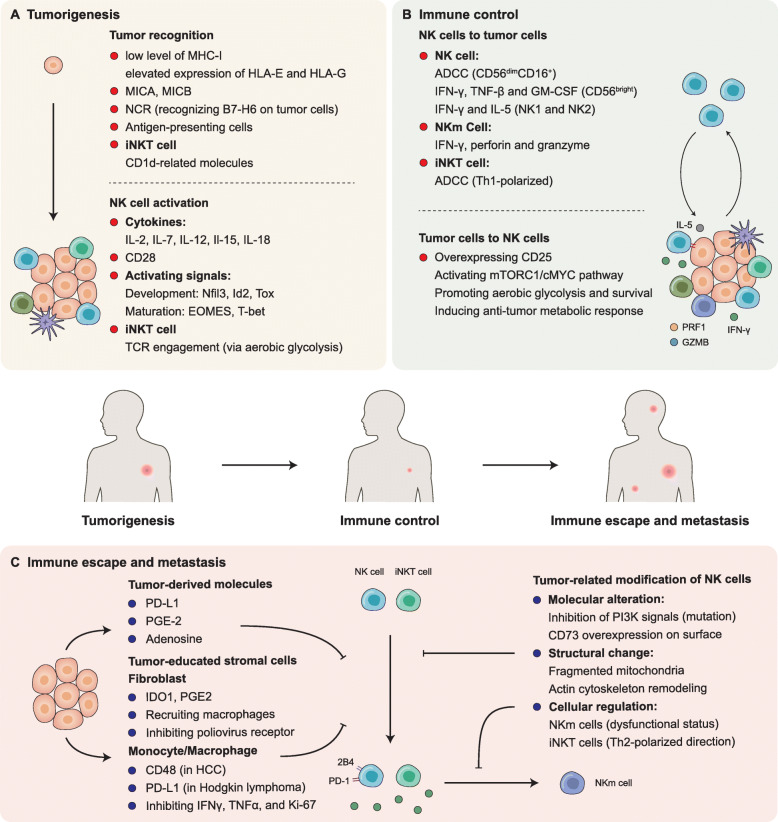
“Consistent with cNK cells, as a newly-found subgroup of NK cells, activated NKT cells directly detect and kill CD1d tumor cells in several types of cancer [132, 133].”
Amin, P. J., & Shankar, B. S. (2015) · Life Sciences · doi:10.1016/j.lfs.2015.01.026 · Cited by 53 · cited 8×
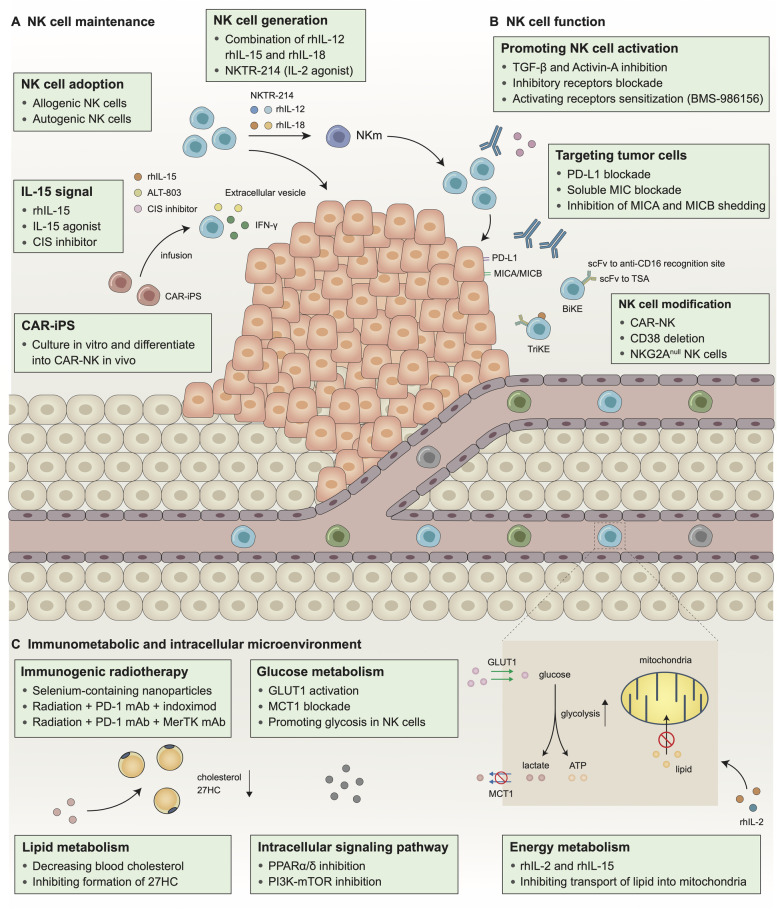
“Furthermore, combination treatment targeting soluble MIC, e.g., MICA and MICB, and PD-L1 shows better effect than monotherapy in vivo [225].”
BackgroundInfluentialPhenotype and functions of conventional and non-conventional NK cells
Erick, T. K., & Brossay, L. (2015) · Current Opinion in Immunology · doi:10.1016/j.coi.2015.11.007 · Cited by 52 · cited 2×
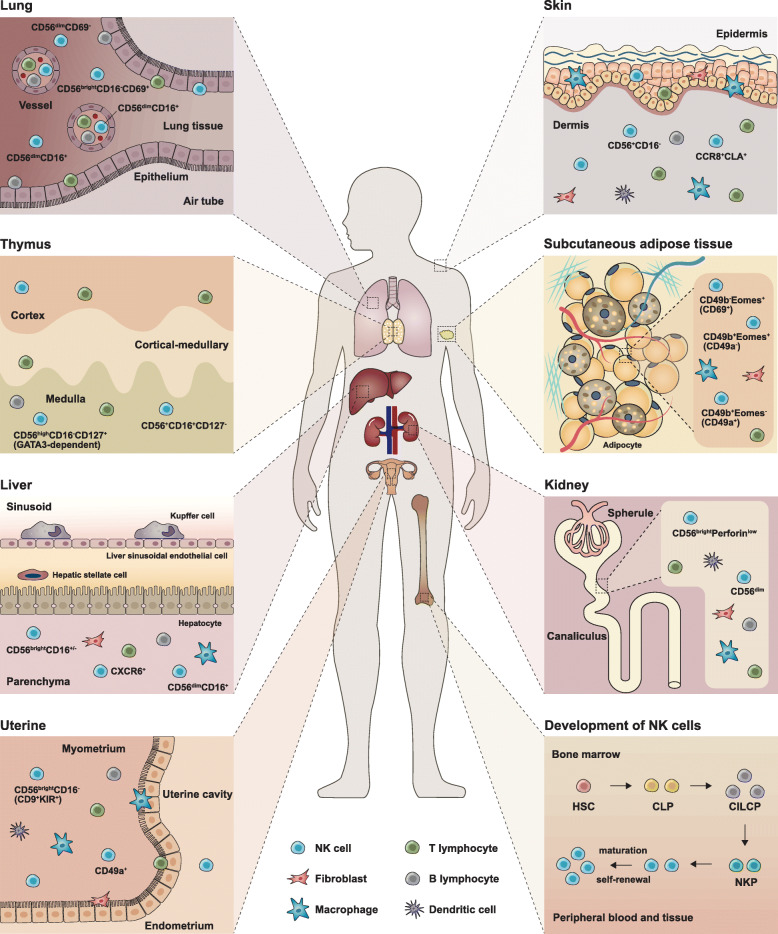
“Similar to the phenotypic features in humans, skin NK cells in the mouse can be generally divided into two types: CD49a+DX5− and CD49a−DX5+ [68, 69].”
ResultDuhan, V., Hamdan, T. A., Xu, H. C., Shinde, P. V., Bhat, H., Li, F., Al-Matary, Y. S., Häussinger, D., Bezgovsek, J., Friedrich, S.-K., et al. (2019) · PLoS Pathogens · doi:10.1371/journal.ppat.1007797 · Cited by 51
Hypoxia Regulates Lymphoid Development of Human Hematopoietic Progenitors
Chabi, S., Uzan, B., Naguibneva, I., Rucci, J., Fahy, L., Calvo, J., Arcangeli, M.-L., Mazurier, F., Pflumio, F., & Haddad, R. (2019) · Cell Reports · doi:10.1016/j.celrep.2019.10.050 · Cited by 49
Shafer, D. A., Smith, M. R., Borghaei, H., Millenson, M. M., Li, T., Litwin, S., Anad, R., & Al‐Saleem, T. (2013) · Leukemia Research · doi:10.1016/j.leukres.2013.07.038 · Cited by 48 · cited 1×
“Follicular lymphoma Blood Flow cytometry CD3CD56 and/or CD16 Favorable OS [118]”
BackgroundFend, L., Rusakiewicz, S., Adam, J., Bastien, B., Caignard, A., Messaoudene, M., Iribarren, C., Cremer, I., Marabelle, A., Borg, C., et al. (2016) · OncoImmunology · doi:10.1080/2162402x.2016.1163456 · Cited by 48 · cited 1×
“Blood qRT-PCR NKp30 Adverse OS and PFS [124]”
IL-21 promotes the development of a CD73-positive Vγ9Vδ2 T cell regulatory population
Barjon, C., Michaud, H., Fages, A., Déjou, C., Zampieri, A., They, L., Gennetier, A., Sanchez, F., Gros, L., Eliaou, J., et al. (2017) · OncoImmunology · doi:10.1080/2162402x.2017.1379642 · Cited by 48
Wang, W., Zhu, H., Wu, Y., Xia, Y., Wu, J., Wu, W., Liang, J., Wang, L., Fan, L., Li, J., et al. (2018) · Journal of Cancer Research and Clinical Oncology · doi:10.1007/s00432-017-2568-2 · Cited by 48 · cited 1×
“Chronic lymphocytic leukemia Blood Flow cytometry CD3CD16 and/or CD56 Favorable OS [117]”
BackgroundLiver-resident NK cells suppress autoimmune cholangitis and limit the proliferation of CD4+ T cells
Zhao, Z.-B., Lu, F.-T., Ma, H.-D., Wang, Y., Yang, W., Long, J., Miao, Q., Zhang, W., Tian, Z., Ridgway, W. M., et al. (2019) · Cellular and Molecular Immunology · doi:10.1038/s41423-019-0199-z · Cited by 48
Joyee, A. G., Uzonna, J. E., & Yang, X. (2010) · The Journal of Immunology · doi:10.4049/jimmunol.0901348 · Cited by 47 · cited 1×
“In addition, by expressing high levels of CD40, NKT cells induce DC maturation, thus activating CTL and cNK cells to enhance their anti-tumor effects [134, 135].”
BackgroundGeurtsvanKessel, C. H., Bergen, I. M., Muskens, F., Boon, L., Hoogsteden, H. C., Osterhaus, A. D. M. E., Rimmelzwaan, G. F., & Lambrecht, B. N. (2009) · PLoS ONE · doi:10.1371/journal.pone.0007187 · Cited by 46 · cited 1×
“1 cells have antigen-presenting capacity like DC, hence their name interferon-producing killer DC [87, 88].”
BackgroundExpression of the Activating Receptor, NKp46 (CD335), in Human Natural Killer and T-Cell Neoplasia
Freud, A. G., Zhao, S., Wei, S., Gitana, G., Molina-Kirsch, H. F., Atwater, S. K., & Natkunam, Y. (2013) · American Journal of Clinical Pathology · doi:10.1309/ajcpwgg69mczowmm · Cited by 46 · cited 1×
“In recent studies, the notion that natural cytotoxicity receptor 46 (NKp46), belonging to natural cytotoxicity receptors (NCRs), should also be included in this panel has been proposed based on the consensus of adding more functional proteins rather than surface molecules into the classification system of NK cells [24…”
BackgroundSegal, N. H., Naidoo, J., Curigliano, G., Patel, S. P., Sahebjam, S., Papadopoulos, K. P., Gordon, M. S., Wang, D., Rueda, A. G., Song, X., et al. (2018) · Journal of Clinical Oncology · doi:10.1200/jco.2018.36.15_suppl.3540 · Cited by 46
Picard, E., Godet, Y., Laheurte, C., Dosset, M., Galaine, J., Beziaud, L., Loyon, R., Boullerot, L., Joseph, E. L. M., Spehner, L., et al. (2018) · OncoImmunology · doi:10.1080/2162402x.2018.1527498 · Cited by 45 · cited 1×
“Lung cancer Blood Flow cytometry CD56CD16NKp46 Favorable OS [123]”
BackgroundMurine natural killer cell licensing and regulation by T regulatory cells in viral responses
Sungur, C. M., Tang-Feldman, Y. J., Ames, E., Álvarez, M., Chen, M., Longo, D. L., Pomeroy, C., & Murphy, W. J. (2013) · Proceedings of the National Academy of Sciences · doi:10.1073/pnas.1218767110 · Cited by 43 · cited 1×
“, eliminating murine cytomegalovirus (MCMV) infection and MHC-I cells [15].”
BackgroundBasher, F., Dhar, P., Wang, X., Wainwright, D. A., Zhang, B., Sosman, J., Ji, Z., & Wu, J. D. (2020) · Journal of Hematology & Oncology · doi:10.1186/s13045-020-00896-0 · Cited by 43
Impact of β2 integrin deficiency on mouse natural killer cell development and function
Crozat, K., Eidenschenk, C., Jaeger, B. N., Krebs, P., Guia, S., Beutler, B., Vivier, É., & Ugolini, S. (2011) · Blood · doi:10.1182/blood-2010-10-315457 · Cited by 42 · cited 1×
“LFA-1 (αLβ2 integrin) Intercellular cell adhesion molecule 1 [37, 38]”
BackgroundKiller dendritic cells: IKDC and the others
Bonmort, M., Dalod, M., Mignot, G., Ullrich, E., Chaput, N., & Zitvogel, L. (2008) · Current Opinion in Immunology · doi:10.1016/j.coi.2008.04.006 · Cited by 41 · cited 1×
“1 cells have antigen-presenting capacity like DC, hence their name interferon-producing killer DC [87, 88].”
BackgroundTumor-priming converts NK cells to memory-like NK cells
Pal, M., Schwab, L., Yermakova, A., Mace, E. M., Claus, R., Krahl, A.-C., Woiterski, J., Hartwig, U. F., Orange, J. S., Handgretinger, R., et al. (2017) · OncoImmunology · doi:10.1080/2162402x.2017.1317411 · Cited by 40
Cohen, R. B., Bauman, J. R., Salas, S., Colevas, A. D., Even, C., Cupissol, D., Posner, M. R., Lefebvre, G., Saâda-Bouzid, E., Bernadach, M., et al. (2020) · Journal of Clinical Oncology · doi:10.1200/jco.2020.38.15_suppl.6516 · Cited by 40
RIG-I Resists Hypoxia-Induced Immunosuppression and Dedifferentiation
Engel, C., Brügmann, G., Lambing, S., Mühlenbeck, L. H., Marx, S., Hagen, C., Horváth, D., Goldeck, M., Ludwig, J., Herzner, A., et al. (2017) · Cancer Immunology Research · doi:10.1158/2326-6066.cir-16-0129-t · Cited by 35
Rathore, A. S., Goel, M. M., Makker, A., Kumar, S., & Srivastava, A. N. (2014) · Asian Pacific Journal of Cancer Prevention · doi:10.7314/apjcp.2014.15.8.3757 · Cited by 33
CD1d-restricted peripheral T cell lymphoma in mice and humans
Bachy, E., Urb, M., Chandra, S., Robinot, R., Bricard, G., de Bernard, S., Traverse‐Glehen, A., Gazzo, S., Blond, O., Khurana, A., et al. (2016) · The Journal of Experimental Medicine · doi:10.1084/jem.20150794 · Cited by 32 · cited 1×
“Consistent with cNK cells, as a newly-found subgroup of NK cells, activated NKT cells directly detect and kill CD1d tumor cells in several types of cancer [132, 133].”
BackgroundDistinct CD1d docking strategies exhibited by diverse Type II NKT cell receptors
Almeida, C. F., Sundararaj, S., Nours, J. L., Praveena, T., Cao, B., Burugupalli, S., Smith, D. G. M., Patel, O., Brigl, M., Pellicci, D. G., et al. (2019) · Nature Communications · doi:10.1038/s41467-019-12941-9 · Cited by 32 · cited 1×
“Activated by CD1d-presenting antigens, NKT could secrete not only Th1-type but also Th2-type cytokines to participate in immunity [89, 90].”
BackgroundCell-mediated immunity to leukemia virus- and tumor-associated antigens in mice.
Herberman, R. B., Holden, H. T., Ting, C., Lavrin, D. L., & Kirchner, H. (1976) · PubMed · Cited by 30
Watanabe, T., Gaedicke, S., Guffart, E., Firat, E., & Niedermann, G. (2020) · Clinical Cancer Research · doi:10.1158/1078-0432.ccr-19-0476 · Cited by 30
NK cells suppress CD8+ T cell immunity via NKG2D in severe aplastic anemia
Chen, T., Zhang, T., Liu, C., Wang, C., Ding, S., Shao, Z., & Fu, R. (2018) · Cellular Immunology · doi:10.1016/j.cellimm.2018.10.004 · Cited by 28
Self-citationKamei, R., Yoshimura, K., Yoshino, S., Inoue, M., Asao, T., Fuse, M., Wada, S., Kuramasu, A., Furuya‐Kondo, T., Oga, A., et al. (2017) · Oncology Letters · doi:10.3892/ol.2017.7354 · Cited by 27 · cited 1×
“Gastric cancer Tumor IHC NKG2D Favorable OS [128]”
BackgroundBalaji, G. R., Aguilar, O. A., Tanaka, M., Shingú-Vázquez, M., Fu, Z., Gully, B. S., Lanier, L. L., Carlyle, J. R., Rossjohn, J., & Berry, R. (2018) · Nature Communications · doi:10.1038/s41467-018-06989-2 · Cited by 27
Immunometabolism regulates TCR recycling and iNKT cell functions
Fu, S., Zhu, S., Tian, C., Bai, S., Zhang, J., Zhan, C., Xie, D., Wang, L., Li, Z., Li, J., et al. (2019) · Science Signaling · doi:10.1126/scisignal.aau1788 · Cited by 27 · cited 14×
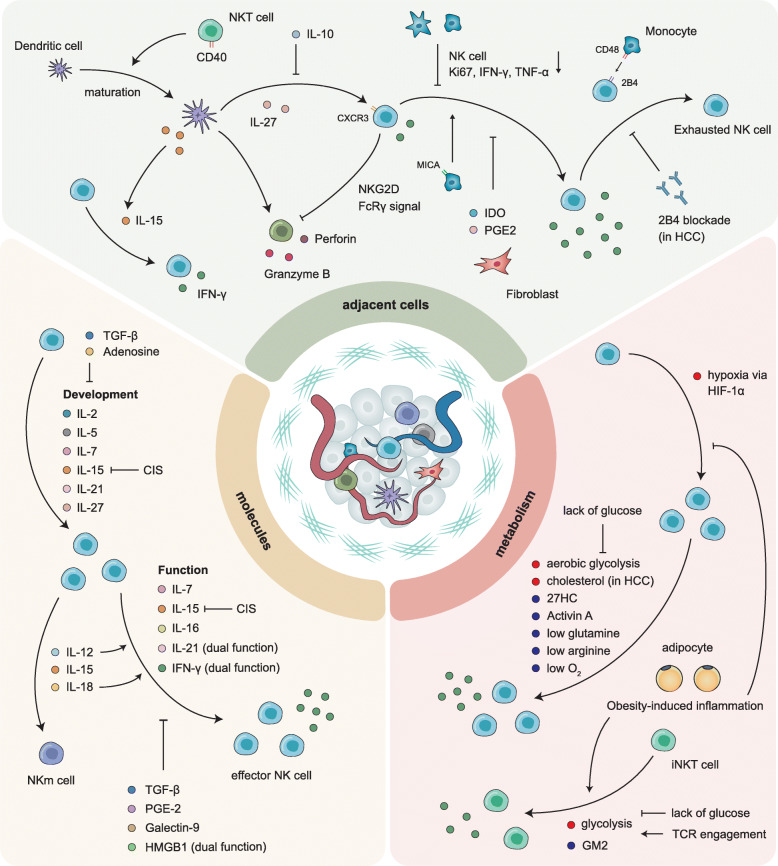
“Besides, blocking CIS could promote IL-15-type cytotoxicity and thus results in increased production of IFN-γ [22].”
BackgroundInfluentialIL-21 Is Important for Induction of KLRG1+ Effector CD8 T Cells during Acute Intracellular Infection
Moretto, M. M., & Khan, I. A. (2015) · The Journal of Immunology · doi:10.4049/jimmunol.1501258 · Cited by 26
Integrin receptors on tumor cells facilitate NK cell‐mediated antibody‐dependent cytotoxicity
Anikeeva, N., Steblyanko, M. A., Fayngerts, S., Kopylova, N., Marshall, D. J., Powers, G. D., Sato, T., Campbell, K. S., & Sykulev, Y. K. (2014) · European Journal of Immunology · doi:10.1002/eji.201344179 · Cited by 25 · cited 1×
“LFA-1 (αLβ2 integrin) Intercellular cell adhesion molecule 1 [37, 38]”
BackgroundYang, C., He, C., Zhang, Y., Fan, K., Luo, G., Fan, Z., Huang, Q., Yu, L., Jin, K., Wang, Z., et al. (2018) · Cancer Immunology Immunotherapy · doi:10.1007/s00262-018-2235-8 · Cited by 25 · cited 1×
“Pancreatic cancer Blood Flow cytometry CD3CD16CD56 Adverse OS [112]”
BackgroundCD33 (Siglec-3) Inhibitory Function: Role in the NKG2D/DAP10 Activating Pathway
Hernández‐Caselles, T., Corral-San-Miguel, R., Ruiz‐Alcaraz, A. J., & García–Peñarrubia, P. (2019) · Journal of Immunology Research · doi:10.1155/2019/6032141 · Cited by 24
Hoya, M., Nagamatsu, T., Fujii, T., Schust, D. J., Oda, H., Akiba, N., Iriyama, T., Kawana, K., Osuga, Y., & Fujii, T. (2018) · American Journal of Reproductive Immunology · doi:10.1111/aji.12813 · Cited by 24 · cited 1×
“Th1-polarized iNKT cells exhibit a tumor-depletion phenotype, and Th2-polarized iNKT cells contribute to tumor progression, similar to polarized T cells [91, 92].”
BackgroundPiątkiewicz, P., Bernat-Karpińska, M., Miłek, T., Rabijewski, M., & Rosiak, E. (2016) · Diabetology & Metabolic Syndrome · doi:10.1186/s13098-016-0152-6 · Cited by 23
Okada, K., Sadahiro, S., Chan, L. F., Ogimi, T., Miyakita, H., Saito, G., Tanaka, A., & Suzuki, T. (2018) · Oncology · doi:10.1159/000491019 · Cited by 19
Bommarito, D., Martin, A. M., Forcade, É., Nastke, M.-D., Ritz, J., & Bellucci, R. (2016) · Cancer Immunology Immunotherapy · doi:10.1007/s00262-016-1804-y · Cited by 18 · cited 16×
“This long-term effect truly helps researchers better modulate the function of NK cells in protecting against tumors, and emerging results suggest that NK cells not only rely on MHC-I recognition but also depend on many other signals, shedding light on the use of NK cells and related signaling pathways as future treatm…”
BackgroundInfluentialMICA-Expressing Monocytes Enhance Natural Killer Cell Fc Receptor-Mediated Antitumor Functions
Campbell, A. R., Duggan, M. C., Suarez‐Kelly, L. P., Bhave, N. S., Opheim, K. S., McMichael, E. L., Trikha, P., Parihar, R., Luedke, E. A., Lewis, A., et al. (2017) · Cancer Immunology Research · doi:10.1158/2326-6066.cir-16-0005 · Cited by 18 · cited 1×
“Similar to other innate immune cells that are unable to accurately recognize target cells, NK cells rely on other stromal cells, including DC, which trans-presents IL-15 for NK cell activation [96], and MICA-expressing monocytes, which bind to Fc receptor to enhance antitumor function [97], to fully differentiate and…”
BackgroundFelices, M., Sarhan, D., Brandt, L., Guldevall, K., McElmurry, R. T., Lenvik, A. J., Chu, S., Tolar, J., Taras, E. P., Spellman, S. R., et al. (2016) · Blood · doi:10.1182/blood.v128.22.4291.4291 · Cited by 11
Zhou, X., Zhang, X., Liang, J., Zhu, H., Wang, L., Xia, Y., Cao, L., Wu, W., Fan, L., Li, J., et al. (2019) · Cancer Biomarkers · doi:10.3233/cbm-182193 · Cited by 9 · cited 1×
“Mantle cell lymphoma Blood Flow cytometry CD3CD16 and/or CD56 Adverse OS and PFS [119]”
BackgroundSarkar, R., Mitra, D., & Chakrabarti, S. (2013) · PLoS ONE · doi:10.1371/annotation/136a68f8-9038-4124-b7b8-1808d0461c86 · Cited by 7
The GM2 ganglioside inhibits iNKT cell responses in a CD1d-dependent manner
Pereira, C. S., Ribeiro, H., Pérez‐Cabezas, B., Cardoso, M. T., Alegrete, N., Gaspar, A. M. C., Teles, E. L., & Macedo, M. F. (2018) · Molecular Genetics and Metabolism · doi:10.1016/j.ymgme.2018.07.005 · Cited by 6
Wu, J. G., Carlock, C., Ross, A., Shim, J., & Lou, Y. (2016) · The Journal of Immunology · doi:10.4049/jimmunol.1601207 · Cited by 2 · cited 1×
“A new CD8ααMHC-II phenotype with professional APC capacity was considered to represent unusual AP-NK cells, recognizing and eliminating autoreactive T cells and finally killing them like cNK cells [85].”
Background
Research works printed but not linked: 1
- Chiossone L Dumas P-Y Vienne M Vivier E Natural killer cells and other innate lymphoid cells in cancer Nature Reviews Immunol 2018 18 671 688 30209347 · DOI · Paper page
Cited by
RNA modifications: importance in immune cell biology and related diseases
Cui, L., Ma, R., Cai, J., Guo, C., Chen, Z., Yao, L., Wang, Y., Fan, R., Wang, X., & Shi, Y. (2022) · Signal Transduction and Targeted Therapy · doi:10.1038/s41392-022-01175-9 · Cited by 405
Epigenetic regulation in the tumor microenvironment: molecular mechanisms and therapeutic targets
Yang, J., Xu, J., Wang, W., Zhang, B., Yu, X., & Shi, S. (2023) · Signal Transduction and Targeted Therapy · doi:10.1038/s41392-023-01480-x · Cited by 388
“H3K27 trimethylation inhibition by EZH2 inhibitors (UNC1999 and EPZ005687) enhanced the expression of genes associated with NK cell cytotoxic function, such as Klrk1 (encoding NKG2D), and the in vitro cytotoxic activity of NK cells.(363) In HCC, EZH2 inhibition with a small molecule (GSK126) may simultaneously upregul…”
BackgroundTumor microenvironment: barrier or opportunity towards effective cancer therapy
Tiwari, A., Trivedi, R., & Lin, S.-Y. (2022) · Journal of Biomedical Science · doi:10.1186/s12929-022-00866-3 · Cited by 377
“Therefore, enhancing the NK cells activity within the TME is a promising direction in cancer therapy [153, 154] Fig.”
BackgroundCurrent Perspectives on “Off-The-Shelf” Allogeneic NK and CAR-NK Cell Therapies
Heipertz, E. L., Zynda, E. R., Stav-Noraas, T. E., Hungler, A. D., Boucher, S. E., Kaur, N., & Vemuri, M. C. (2021) · Frontiers in Immunology · doi:10.3389/fimmu.2021.732135 · Cited by 211
“Most clinical trials of NK cells require large numbers of cells for infusion, ranging from 5×10(6) to 1×10(8) CD3CD56 NK cells per kilogram body weight (5).”
BackgroundInfluentialLiu, K., Zhang, X., Xie, L., Deng, M., Chen, H., Song, J., Long, J., Li, X., & Luo, J. (2021) · Pharmacological Research · doi:10.1016/j.phrs.2020.105373 · Cited by 198
Metadata
- Authors
- Wu, S.-Y., Fu, T., Jiang, Y.-Z., & Shao, Z.-M.
- Affiliations
- Shanghai Medical College of Fudan University (CN)
- Corresponding author
- Jiang, Yi-Zhou
- Shao, Zhi-Ming
- Venue
- Molecular Cancer
- Published
- 2020-08-06
- Volume
- 19
- Issue
- 1
- Pages
- 120-120
- ISSN
- 1476-4598 (ISSN-L)
- PMC
- PMC7409673
- OpenAlex
- W3046958019
- Cited by
- 863
- References
- 268
- Citations by year
- 2026: 77 · 2025: 199 · 2024: 219 · 2023: 170 · 2022: 122 · 2021: 70 · 2020: 5
- FWCI
- 8.96
- Type
- journal article
- Language
- en
- Open access
- gold
- doi.org
- Licence
- cc-by
- creativecommons.org/licenses/by/4.0 (tdm)
- creativecommons.org/licenses/by/4.0 (vor)
- Locations
- Molecular Cancer (publishedVersion, cc-by)
- PubMed Central (publishedVersion, cc-by)
- PubMed (publishedVersion)
- DOAJ (DOAJ: Directory of Open Access Journals) (submittedVersion, cc-by-sa)
- Funders
- National Natural Science Foundation of China (81572583, 81874112, 81874113, 81502278, 81922048)
- Shanghai Education Development Foundation (17CG01)
- Fudan University
- Shanghai Municipal Education Commission (17CG01)
- Topics
- Life Sciences › Immunology and Microbiology › Immunology › Immune Cell Function and Interaction
- Health Sciences › Medicine › Oncology › Cancer Immunotherapy and Biomarkers
- Life Sciences › Immunology and Microbiology › Immunology › Immune cells in cancer
- Keywords
- natural killer cells, tumor microenvironment, immune evasion, NK cell therapy, NK cell resistance, tumor immunometabolism, NK cell engineering, innate immunity, hematologic malignancies, solid tumors, precision medicine
- MeSH terms
- Animals, Disease Susceptibility, Energy Metabolism, Humans, Immunity, Innate, Immunotherapy, Killer Cells, Natural, Neoplasms, Signal Transduction, Biomarkers, Disease Progression, Disease Management, Immunomodulation, Tumor Microenvironment
About these checks
Registry, retraction, Cites and statistics results are computed, not judged, with one exception: a printed reference that no index lists is read once by a model before it counts as a citation error. Claims are extracted by a model and kept only when their quote appears verbatim in the text; each cited source is then checked, with a model’s help, for whether it says what the claim relies on. Those verdicts can be wrong — read the claim’s quote and the cited source before relying on one.
Statistics and arithmetic are recomputed, not judged.
Confidence bands are shown only for fields calibrated on our annotated test set. None is calibrated yet, so no band is shown.
What counts as a claim ›How we measure confidence ›How we check this ›
Are you an author, or do you see a problem with this page? Request a review
Data sources
Bibliographic data: Semantic Scholar, OpenAlex, Crossref.
Contains information from the Semantic Scholar Academic Graph Datasets, made available under the ODC Attribution License (ODC-BY 1.0).
Semantic Scholar’s data is described in: Kinney, R., et al. (2023). The Semantic Scholar Open Data Platform. arXiv:2301.10140.
