

Natural killer cells in cancer biology and therapy
Open accessThe DOI matches its Crossref record; 267 of the 268 references it cites were found in a registry or an index.
Abstract
The tumor microenvironment is highly complex, and immune escape is currently considered an important hallmark of cancer, largely contributing to tumor progression and metastasis. Named for their capability of killing target cells autonomously, natural killer (NK) cells serve as the main effector cells toward cancer in innate immunity and are highly heterogeneous in the microenvironment. Most current treatment options harnessing the tumor microenvironment focus on T cell-immunity, either by promoting activating signals or suppressing inhibitory ones. The limited success achieved by T cell immunotherapy highlights the importance of developing new-generation immunotherapeutics, for example utilizing previously ignored NK cells. Although tumors also evolve to resist NK cell-induced cytotoxicity, cytokine supplement, blockade of suppressive molecules and genetic engineering of NK cells may overcome such resistance with great promise in both solid and hematological malignancies. In this review, we summarized the fundamental characteristics and recent advances of NK cells within tumor immunometabolic microenvironment, and discussed potential application and limitations of emerging NK cell-based therapeutic strategies in the era of presicion medicine.
Overview
The claims and statistics of this paper haven’t been checked yet.
Free: it reads the open-access text and checks the first 5 claims that cite a source we can check. Create a free account to check every claim.
Integrity signals
Registry
Cites
Statistics
Figures
Verification
Claims the paper makes
The claims and statistics of this paper haven’t been checked yet.
Free: it reads the open-access text and checks the first 5 claims that cite a source we can check. Create a free account to check every claim.
Claims other papers make about this one
Each is checked against this paper’s own text: does it say what the citing paper says it does?
The source backs part of the claim, not all of it — or backs it for a different population, condition or comparison.
In the citing paper
“Due to this difference in cytokine secretion profile, NK cells have the potential to be developed as “off-the-shelf” CAR products with a lower risk of inducing CRS compared to CAR-T cells.”
From Multiple myeloma: signaling pathways and targeted therapy (2024) · cites this paper as [267]
Experimental — accuracy not yet measuredThe source backs part of the claim, not all of it — or backs it for a different population, condition or comparison.
In the citing paper
“Importantly, NK cells do not produce IL-1 and IL-6, which are key cytokines involved in the development of CRS [266, 267].”
From Multiple myeloma: signaling pathways and targeted therapy (2024) · cites this paper as [267]
Experimental — accuracy not yet measured
Self-check
Percentages, sums and reported differences re-computed from the paper’s own numbers.
The self-check needs the paper’s full text.
Citations
Cites
1 retracted
Meyaard, L., de Vries, A.-R. V. D. V., Ruiter, T. E.-D., Lanier, L. L., Phillips, J. H., & Clevers, H. C. (2001) · The Journal of Experimental Medicine · doi:10.1084/jem.194.1.107 · Cited by 43
RetractedHallmarks of Cancer: The Next Generation
Hanahan, D., & Weinberg, R. A. (2011) · Cell · doi:10.1016/j.cell.2011.02.013 · Cited by 66,590 · cited 2×
“Background The diversity of infiltrating stromal cells occurring in human cancers exceeds 30 distinct subgroups, reflecting the huge complexity of the tumor microenvironment (TME), thereby deeply affecting the treatment option for each patient [1].”
BackgroundRobust enumeration of cell subsets from tissue expression profiles
Newman, A. M., Liu, C. L., Green, M. R., Gentles, A. J., Feng, W., Xu, Y., Hoang, C. D., Diehn, M., & Alizadeh, A. A. (2015) · Nature Methods · doi:10.1038/nmeth.3337 · Cited by 13,224
Axicabtagene Ciloleucel CAR T-Cell Therapy in Refractory Large B-Cell Lymphoma
Neelapu, S. S., Locke, F. L., Bartlett, N. L., Lekakis, L. J., Miklos, D. B., Jacobson, C. A., Braunschweig, I., Oluwole, O. O., Siddiqi, T., Lin, Y., et al. (2017) · New England Journal of Medicine · doi:10.1056/nejmoa1707447 · Cited by 6,030
Self-citationTisagenlecleucel in children and young adults with B-cell lymphoblastic leukemia
Maude, S. L., Laetsch, T. W., Buechner, J., Rives, S., Boyer, M., Bittencourt, H., Bader, P., Verneris, M. R., Stefanski, H. E., Myers, G. D., et al. (2018) · New England Journal of Medicine · doi:10.1056/nejmoa1709866 · Cited by 5,735
Chimeric Antigen Receptor T Cells for Sustained Remissions in Leukemia
Maude, S. L., Frey, N., Shaw, P. A., Aplenc, R., Barrett, D. M., Bunin, N. J., Chew, A., Gonzalez, V. E., Zheng, Z., Lacey, S. F., et al. (2014) · New England Journal of Medicine · doi:10.1056/nejmoa1407222 · Cited by 5,413
TGFβ attenuates tumour response to PD-L1 blockade by contributing to exclusion of T cells
Mariathasan, S., Turley, S. J., Nickles, D., Castiglioni, A., Yuen, K., Wang, Y., Kadel III, E. E., Koeppen, H., Astarita, J. L., Cubas, R., et al. (2018) · Nature · doi:10.1038/nature25501 · Cited by 5,400
IFN-γ–related mRNA profile predicts clinical response to PD-1 blockade
Ayers, M., Lunceford, J., Nebozhyn, M., Murphy, E., Loboda, A., Kaufman, D. R., Albright, A., Cheng, J. D., Kang, S. P., Shankaran, V., et al. (2017) · Journal of Clinical Investigation · doi:10.1172/jci91190 · Cited by 3,788
The Tumor Microenvironment Innately Modulates Cancer Progression
Hinshaw, D. C., & Shevde, L. A. (2019) · Cancer Research · doi:10.1158/0008-5472.can-18-3962 · Cited by 3,270 · cited 1×
“However, the specific role of NK cells remains controversial and largely depends on distinct cancer types [109].”
BackgroundEmerging Biological Principles of Metastasis
Lambert, A. W., Pattabiraman, D. R., & Weinberg, R. A. (2017) · Cell · doi:10.1016/j.cell.2016.11.037 · Cited by 3,067 · cited 1×
“Apart from primary tumor proliferation, metastasis remains lethal, accounting for the majority of cancerassociated deaths, and invasion-metastasis cascade is largely attributable to the immune escape [136].”
BackgroundActivation of NK Cells and T Cells by NKG2D, a Receptor for Stress-Inducible MICA
Bauer, S., Groh, V., Wu, J., Steinle, A., Phillips, J. H., Lanier, L. L., & Spies, T. (1999) · Science · doi:10.1126/science.285.5428.727 · Cited by 2,999 · cited 9×
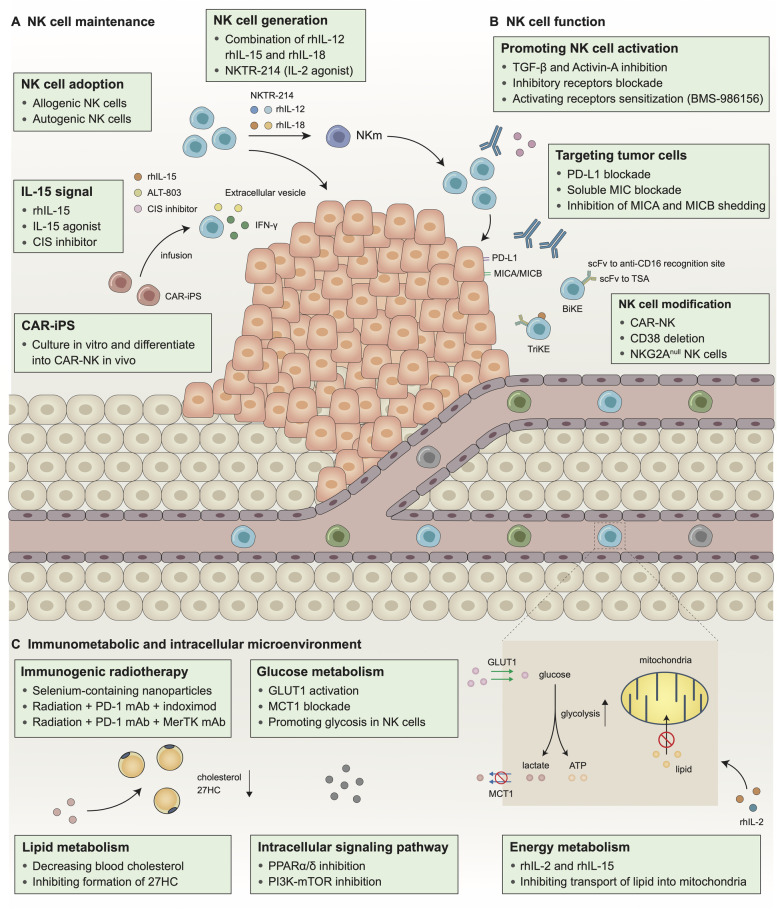
“Furthermore, combination treatment targeting soluble MIC, e.g., MICA and MICB, and PD-L1 shows better effect than monotherapy in vivo [225].”
BackgroundInfluentialInnate or adaptive immunity? The example of natural killer cells
Vivier, E., Raulet, D. H., Moretta, A., Caligiuri, M. A., Zitvogel, L., Lanier, L. L., Yokoyama, W. M., & Ugolini, S. (2011) · Science · doi:10.1126/science.1198687 · Cited by 2,824 · cited 11×
“In recent phase I and II trials, iC9/CAR-CD19/IL-15 NK cells were prepared ex vivo and infused into patients with relapsed or refractory CD19-positive cancers after lymphodepleting chemotherapy.”
BackgroundInfluentialTrained immunity: A program of innate immune memory in health and– disease
Netea, M. G., Joosten, L. A. B., Latz, E., Mills, K. H. G., Natoli, G., Stunnenberg, H. G., O’Neill, L. A. J., & Xavier, R. J. (2016) · Science · doi:10.1126/science.aaf1098 · Cited by 2,768 · cited 1×
“The immune system can be generally divided into the innate and adaptive immune systems, both contributing to the recognition and removal of foreign pathogens as well as tumors [2].”
BackgroundUse of CAR-Transduced Natural Killer Cells in CD19-Positive Lymphoid Tumors
Liu, E., Marin, D., Banerjee, P., Macapinlac, H. A., Thompson, P., Basar, R., Nassif Kerbauy, L., Overman, B., Thall, P., Kaplan, M., et al. (2020) · New England Journal of Medicine · doi:10.1056/nejmoa1910607 · Cited by 2,217
Checkpoint blockade cancer immunotherapy targets tumour-specific mutant antigens
Gubin, M. M., Zhang, X., Schuster, H., Caron, E., Ward, J. P., Noguchi, T., Ivanova, Y., Hundal, J., Arthur, C. D., Krebber, W.-J., et al. (2014) · Nature · doi:10.1038/nature13988 · Cited by 1,974 · cited 1×
“An example of such approach is immunecheckpoint blockade, with blocking of receptors or ligands that inhibit the activation of CTLs, including programmed cell death protein 1 (PD-1), its main ligand PD-L1, cytotoxic T-lymphocyte antigen 4 (CTLA-4) and lymphocyte-activation gene-3 (LAG-3), by monoclonal neutralizing an…”
BackgroundInhibitory effect of tumor cell-derived lactic acid on human T cells
Fischer, K., Hoffmann, P., Voelkl, S., Meidenbauer, N., Ammer, J., Edinger, M., Gottfried, E., Schwarz, S., Rothe, G., Hoves, S., et al. (2007) · Blood · doi:10.1182/blood-2006-07-035972 · Cited by 1,946
Miller, J. S., Soignier, Y., Panoskaltsis-Mortari, A., McNearney, S. A., Yun, G. H., Fautsch, S. K., McKenna, D., Le, C., Defor, T. E., Burns, L. J., et al. (2005) · Blood · doi:10.1182/blood-2004-07-2974 · Cited by 1,903
Böttcher, J. P., Bonavita, E., Chakravarty, P., Blees, H., Cabeza-Cabrerizo, M., Sammicheli, S., Rogers, N. C., Sahai, E., Zelenay, S., & Reis e Sousa, C. (2018) · Cell · doi:10.1016/j.cell.2018.01.004 · Cited by 1,857 · cited 1×
“To date, NK cell survival and development is thought to mainly rely on cytokines (especially IL-2 and IL-15) [16–19] and transcription factors (Nfil3, Id2 and Tox for development, and EOMES and T-bet for maturation) [16, 20].”
BackgroundTGFβ drives immune evasion in genetically reconstituted colon cancer metastasis
Tauriello, D. V. F., Palomo-Ponce, S., Stork, D., Berenguer-Llergo, A., Badia-Ramentol, J., Iglesias, M., Sevillano, M., Ibiza, S., Cañellas, A., Hernando-Momblona, X., et al. (2018) · Nature · doi:10.1038/nature25492 · Cited by 1,851
Adaptive immune features of natural killer cells
Sun, J. C., Beilke, J. N., & Lanier, L. L. (2009) · Nature · doi:10.1038/nature07665 · Cited by 1,619 · cited 5×
“However, in addition to beating tumor cells, the risk of long-lived NK cells should not be ignored where their “brake” is lost and they might also kill normal cells, even worse, finally increasing the possibilities of NK lymphoma [95, 238].”
BackgroundInfluentialNorelli, M., Camisa, B., Barbiera, G., Falcone, L., Purevdorj, A., Genua, M., Sanvito, F., Ponzoni, M., Doglioni, C., Cristofori, P., et al. (2018) · Nature Medicine · doi:10.1038/s41591-018-0036-4 · Cited by 1,406
Toxicities of chimeric antigen receptor T cells: recognition and management
Brudno, J. N., & Kochenderfer, J. N. (2016) · Blood · doi:10.1182/blood-2016-04-703751 · Cited by 1,283
Innate Immune Landscape in Early Lung Adenocarcinoma by Paired Single-Cell Analyses
Lavin, Y., Kobayashi, S., Leader, A., Amir, E.-A. D., Elefant, N., Bigenwald, C., Remark, R., Sweeney, R., Becker, C. D., Levine, J. H., et al. (2017) · Cell · doi:10.1016/j.cell.2017.04.014 · Cited by 1,209
Imai, K., Matsuyama, S., Miyake, S., Suga, K., & Nakachi, K. (2000) · The Lancet · doi:10.1016/s0140-6736(00)03231-1 · Cited by 1,190 · cited 1×
“In 2000, an 11-year follow-up study of the Japanese general population, with rigorous use of various related biochemical and immunological markers, indicated that elevated cytotoxic activity of peripheral NK cells is positively associated with reduced cancer risk and vice versa, suggesting the certain importance of na…”
BackgroundZhang, Q., Bi, J., Zheng, X., Chen, Y., Wang, H., Wu, W., Wang, Z., Wu, Q., Peng, H., Wei, H., et al. (2018) · Nature Immunology · doi:10.1038/s41590-018-0132-0 · Cited by 1,122 · cited 2×
“In addition to already-well-defined PD-1 and PD-L1, NK cells with reduced amounts of T-cell immunoglobulins and ITIM domain (TIGIT) show higher levels of cytokine secretion, degranulation activity and cytotoxicity [217], and blockade of TIGIT could prevent exhaustion in NK cells [20].”
BackgroundTargeting natural killer cells in cancer immunotherapy
Guillerey, C., Huntington, N. D., & Smyth, M. J. (2016) · Nature Immunology · doi:10.1038/ni.3518 · Cited by 1,066 · cited 2×
“In addition, as documented in multiple models and experiments, NK cells could distinguish abnormal cells from healthy ones, leading to more specific anti-tumor cytotoxicity and reduced off-target complications [9, 10].”
BackgroundPitt, J. M., Vétizou, M., Daillère, R., Roberti, M. P., Yamazaki, T., Routy, B., Lepage, P., Boneca, I. G., Chamaillard, M., Kroemer, G., et al. (2016) · Immunity · doi:10.1016/j.immuni.2016.06.001 · Cited by 1,041 · cited 1×
“An example of such approach is immunecheckpoint blockade, with blocking of receptors or ligands that inhibit the activation of CTLs, including programmed cell death protein 1 (PD-1), its main ligand PD-L1, cytotoxic T-lymphocyte antigen 4 (CTLA-4) and lymphocyte-activation gene-3 (LAG-3), by monoclonal neutralizing an…”
BackgroundNatural killer cells and other innate lymphoid cells in cancer
Chiossone, L., Dumas, P.-Y., Vienne, M., & Vivier, E. (2018) · Nature Reviews Immunology · doi:10.1038/s41577-018-0061-z · Cited by 1,007 · cited 5×
“As mentioned above, NK cells are considered a subgroup of ILC1s [6].”
BackgroundInfluentialLi, Y., Hermanson, D. L., Moriarity, B. S., & Kaufman, D. S. (2018) · Cell Stem Cell · doi:10.1016/j.stem.2018.06.002 · Cited by 981
Romee, R., Rosario, M., Berrien-Elliott, M. M., Wagner, J. A., Jewell, B. A., Schappe, T., Leong, J. W., Abdel-Latif, S., Schneider, S. E., Willey, S., et al. (2016) · Science Translational Medicine · doi:10.1126/scitranslmed.aaf2341 · Cited by 942 · cited 2×
“Memory-like NK cells supplemented with IL-12, IL-15 and IL-18 also show enhanced responses against acute myeloid leukemia both in vitro and in vivo [107], and are currently assessed in a first-in-human clinical trial.”
BackgroundFuchs, A., Vermi, W., Lee, J. S., Lonardi, S., Gilfillan, S., Newberry, R. D., Cella, M., & Colonna, M. (2013) · Immunity · doi:10.1016/j.immuni.2013.02.010 · Cited by 907 · cited 1×
“Although ILC1s are not detectable in many tissues, intra-epithelial ILC1 (ieILC1)-like cells, which highly express IFN-γ, integrins and other cytotoxic molecules similar to the ieILC1s previously described by Fuchs except for different NKp44 expression, could represent the majority of NK cells in the mucosal tissue [6…”
BackgroundDendritic Cells Prime Natural Killer Cells by trans-Presenting Interleukin 15
Lucas, M., Schachterle, W., Oberle, K., Aichele, P., & Diefenbach, A. (2007) · Immunity · doi:10.1016/j.immuni.2007.03.006 · Cited by 887 · cited 1×
“Similar to other innate immune cells that are unable to accurately recognize target cells, NK cells rely on other stromal cells, including DC, which trans-presents IL-15 for NK cell activation [96], and MICA-expressing monocytes, which bind to Fc receptor to enhance antitumor function [97], to fully differentiate and…”
BackgroundBengsch, B., Johnson, A. L., Kurachi, M., Odorizzi, P. M., Pauken, K. E., Attanasio, J., Stelekati, E., McLane, L. M., Paley, M. A., Delgoffe, G. M., et al. (2016) · Immunity · doi:10.1016/j.immuni.2016.07.008 · Cited by 868
Targeting natural killer cells and natural killer T cells in cancer
Vivier, E., Ugolini, S., Blaise, D., Chabannon, C., & Brossay, L. (2012) · Nature Reviews Immunology · doi:10.1038/nri3174 · Cited by 850 · cited 2×
“Although sharing many similarities, compared with effector T cells, NK cells are more cytotoxic to tumors and possess lower immunogenicity [10].”
Background27-Hydroxycholesterol Links Hypercholesterolemia and Breast Cancer Pathophysiology
Nelson, E. R., Wardell, S. E., Jasper, J. S., Park, S., Suchindran, S., Howe, M. K., Carver, N. J., Pillai, R. V., Sullivan, P. M., Sondhi, V., et al. (2013) · Science · doi:10.1126/science.1241908 · Cited by 839
Liu, E., Tong, Y., Dotti, G., Shaim, H., Savoldo, B., Mukherjee, M., Orange, J., Wan, X., Lu, X., Reynolds, A., et al. (2018) · Leukemia · doi:10.1038/leu.2017.226 · Cited by 824
Coca, S., Perez-Piqueras, J., Martinez, D., Colmenarejo, A., Saez, M. A., Vallejo, C., Martos, J. A., & Moreno, M. (1997) · Cancer · doi:10.1002/(sici)1097-0142(19970615)79:12<2320::aid-cncr5>3.0.co;2-p · Cited by 716 · cited 1×
“Colorectal cancer Tumor IHC CD57 Favorable OF and DFS [113]”
BackgroundConlon, K. C., Lugli, E., Welles, H. C., Rosenberg, S. A., Fojo, A. T., Morris, J. C., Fleisher, T. A., Dubois, S. P., Perera, L. P., Stewart, D. M., et al. (2015) · Journal of Clinical Oncology · doi:10.1200/jco.2014.57.3329 · Cited by 711
Paust, S., Gill, H. S., Wang, B.-Z., Flynn, M. P., Moseman, E. A., Senman, B., Szczepanik, M., Telenti, A., Askenase, P. W., Compans, R. W., et al. (2010) · Nature Immunology · doi:10.1038/ni.1953 · Cited by 694 · cited 2×
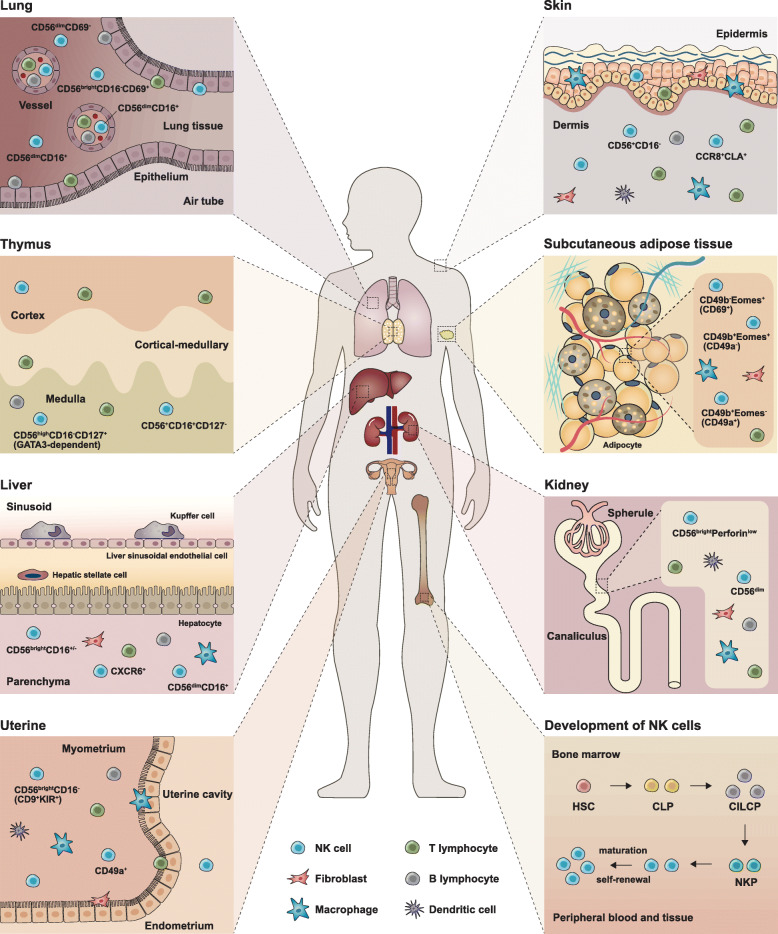
“CLA, cutaneous lymphocyte-associated antigen; CCR8, C-C motif chemokine receptor 8; GATA3, GATA binding protein 3; CXCR6, C-XC motif chemokine receptor 6; KIR, killer cell immunoglobulin-like receptor; CILCP, common innate-like cell precursor NKp44), receptors recognizing non-self-antigens (Ly49H) and other receptors…”
BackgroundCytokine activation induces human memory-like NK cells
Romee, R., Schneider, S. E., Leong, J. W., Chase, J. M., Keppel, C. R., Sullivan, R. P., Cooper, M. A., & Fehniger, T. A. (2012) · Blood · doi:10.1182/blood-2012-04-419283 · Cited by 684
PD-1:PD-L inhibitory pathway affects both CD4+ and CD8+ T cells and is overcome by IL-2
Carter, L. L., Fouser, L. A., Jussif, J., Fitz, L., Deng, B., Wood, C. R., Collins, M., Honjo, T., Freeman, G. J., & Carreno, B. M. (2002) · European Journal of Immunology · doi:10.1002/1521-4141(200203)32:3<634::aid-immu634>3.0.co;2-9 · Cited by 673
TGF-β inhibits the activation and functions of NK cells by repressing the mTOR pathway
Viel, S., Marçais, A., Guimaraes, F. S.-F., Loftus, R., Rabilloud, J., Grau, M., Degouve, S., Djebali, S., Sanlaville, A., Charrier, E., et al. (2016) · Science Signaling · doi:10.1126/scisignal.aad1884 · Cited by 672
Metabolic reprogramming of natural killer cells in obesity limits antitumor responses
Michelet, X., Dyck, L., Hogan, A., Loftus, R. M., Duquette, D., Wei, K., Beyaz, S., Tavakkoli, A., Foley, C., Donnelly, R., et al. (2018) · Nature Immunology · doi:10.1038/s41590-018-0251-7 · Cited by 621
Fujii, S.-I., Liu, K., Smith, C., Bonito, A. J., & Steinman, R. M. (2004) · The Journal of Experimental Medicine · doi:10.1084/jem.20040317 · Cited by 605 · cited 1×
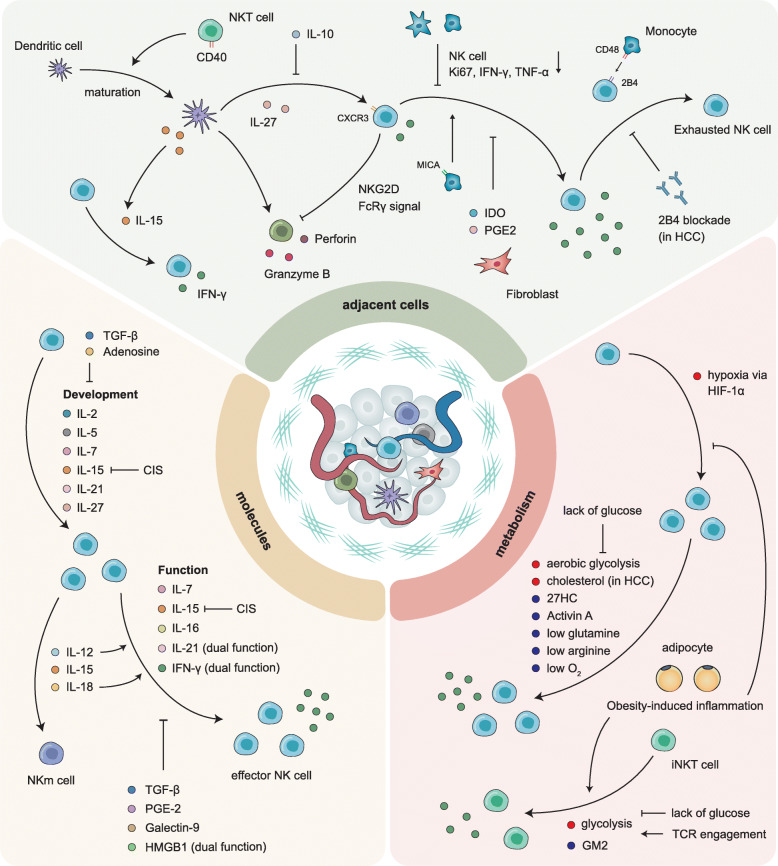
“In addition, by expressing high levels of CD40, NKT cells induce DC maturation, thus activating CTL and cNK cells to enhance their anti-tumor effects [134, 135].”
BackgroundNatural killer cell memory in infection, inflammation and cancer
Cerwenka, A., & Lanier, L. L. (2016) · Nature Reviews Immunology · doi:10.1038/nri.2015.9 · Cited by 576 · cited 1×
“However, concerning to tumors, dysfunction of NK and NKm cells is emerging as an indispensable and undeniable event, leading to not only proliferation of tumor cells but also the formation of distant metastases [101].”
BackgroundLuci, C., Reynders, A., Ivanov, I. I., Cognet, C., Chiche, L., Chasson, L., Hardwigsen, J., Anguiano, E., Banchereau, J., Chaussabel, D., et al. (2009) · Nature Immunology · doi:10.1038/ni.1681 · Cited by 554 · cited 2×
“Similar to the phenotypic features in humans, skin NK cells in the mouse can be generally divided into two types: CD49a+DX5− and CD49a−DX5+ [68, 69].”
ResultThe receptors CD96 and CD226 oppose each other in the regulation of natural killer cell functions
Chan, C. J., Martinet, L., Gilfillan, S., Souza-Fonseca-Guimaraes, F., Chow, M. T., Town, L., Ritchie, D. S., Colonna, M., Andrews, D. M., & Smyth, M. J. (2014) · Nature Immunology · doi:10.1038/ni.2850 · Cited by 492
IL-21 Limits NK Cell Responses and Promotes Antigen-Specific T Cell Activation
Kasaian, M. T., Whitters, M. J., Carter, L. L., Lowe, L. D., Jussif, J. M., Deng, B., Johnson, K. A., Witek, J. S., Senices, M., Konz, R. F., et al. (2002) · Immunity · doi:10.1016/s1074-7613(02)00295-9 · Cited by 481
Steggerda, S. M., Bennett, M. K., Chen, J., Emberley, E., Huang, T., Janes, J. R., Li, W., MacKinnon, A. L., Makkouk, A., Marguier, G., et al. (2017) · Journal for ImmunoTherapy of Cancer · doi:10.1186/s40425-017-0308-4 · Cited by 476
Vosshenrich, C. A. J., García-Ojeda, M. E., Samson-Villéger, S. I., Pasqualetto, V., Enault, L., Goff, O. R.-L., Corcuff, E., Guy-Grand, D., Rocha, B., Cumano, A., et al. (2006) · Nature Immunology · doi:10.1038/ni1395 · Cited by 474 · cited 13×
“Besides, blocking CIS could promote IL-15-type cytotoxicity and thus results in increased production of IFN-γ [22].”
BackgroundInfluentialCrinier, A., Milpied, P., Escalière, B., Piperoglou, C., Galluso, J., Balsamo, A., Spinelli, L., Cervera-Marzal, I., Ebbo, M., Girard-Madoux, M., et al. (2018) · Immunity · doi:10.1016/j.immuni.2018.09.009 · Cited by 470 · cited 1×
“revealed the heterogeneity of human and mouse NK cells in spleen and blood and identified several subpopulations of NK cells, respectively [76].”
BackgroundRadiotherapy and Immunogenic Cell Death
Golden, E. B., & Apetoh, L. (2015) · Seminars in Radiation Oncology · doi:10.1016/j.semradonc.2014.07.005 · Cited by 463
Developmental pathways that generate natural-killer-cell diversity in mice and humans
Huntington, N. D., Vosshenrich, C. A. J., & Di Santo, J. P. (2007) · Nature Reviews Immunology · doi:10.1038/nri2154 · Cited by 461 · cited 7×
“Memory-like NK cells supplemented with IL-12, IL-15 and IL-18 also show enhanced responses against acute myeloid leukemia both in vitro and in vivo [107], and are currently assessed in a first-in-human clinical trial.”
BackgroundInfluentialTissue Determinants of Human NK Cell Development, Function, and Residence
Dogra, P., Rancan, C., Ma, W., Toth, M., Senda, T., Carpenter, D. J., Kubota, M., Matsumoto, R., Thapa, P., Szabo, P. A., et al. (2020) · Cell · doi:10.1016/j.cell.2020.01.022 · Cited by 439 · cited 1×
“In bone marrow, blood, spleen and lungs, NK cells are fully differentiated, while that in lymph nodes and intestines are immature and precursory [62].”
BackgroundGeller, M. A., Cooley, S., Judson, P. L., Ghebre, R., Carson, L. F., Argenta, P. A., Jonson, A. L., Panoskaltsis-Mortari, A., Curtsinger, J., McKenna, D., et al. (2011) · Cytotherapy · doi:10.3109/14653249.2010.515582 · Cited by 436
An Integrated View of Immunometabolism
Lee, Y. S., Wollam, J., & Olefsky, J. M. (2018) · Cell · doi:10.1016/j.cell.2017.12.025 · Cited by 436
Simoni, Y., Fehlings, M., Kløverpris, H. N., McGovern, N., Koo, S.-L., Loh, C. Y., Lim, S., Kurioka, A., Fergusson, J. R., Tang, C.-L., et al. (2017) · Immunity · doi:10.1016/j.immuni.2016.11.005 · Cited by 431 · cited 3×
“Although ILC1s are not detectable in many tissues, intra-epithelial ILC1 (ieILC1)-like cells, which highly express IFN-γ, integrins and other cytotoxic molecules similar to the ieILC1s previously described by Fuchs except for different NKp44 expression, could represent the majority of NK cells in the mucosal tissue [6…”
BackgroundHLA-C–Dependent Prevention of Leukemia Relapse by Donor Activating KIR2DS1
Venstrom, J. M., Pittari, G., Gooley, T. A., Chewning, J. H., Spellman, S., Haagenson, M., Gallagher, M. M., Malkki, M., Petersdorf, E., Dupont, B., et al. (2012) · New England Journal of Medicine · doi:10.1056/nejmoa1200503 · Cited by 429 · cited 1×
“MHC-I specific receptor KIR2DS1, 2DS3, 3DS5 MHC I [28]”
BackgroundBaek, A. E., Yu, Y.-R. A., He, S., Wardell, S. E., Chang, C.-Y., Kwon, S., Pillai, R. V., McDowell, H. B., Thompson, J. W., Dubois, L. G., et al. (2017) · Nature Communications · doi:10.1038/s41467-017-00910-z · Cited by 427
Sustained effector function of IL-12/15/18–preactivated NK cells against established tumors
Ni, J., Miller, M., Stojanovic, A., Garbi, N., & Cerwenka, A. (2012) · Journal of Experimental Medicine · doi:10.1084/jem.20120944 · Cited by 419 · cited 2×
“However, IL-15 alone does not exert such effects [104].”
BackgroundWrangle, J. M., Velcheti, V., Patel, M. R., Garrett-Mayer, E., Hill, E. G., Ravenel, J. G., Miller, J. S., Farhad, M., Anderton, K., Lindsey, K., et al. (2018) · The Lancet Oncology · doi:10.1016/s1470-2045(18)30148-7 · Cited by 412
Romee, R., Cooley, S., Berrien-Elliott, M. M., Westervelt, P., Verneris, M. R., Wagner, J. E., Weisdorf, D. J., Blazar, B. R., Ustun, C., DeFor, T. E., et al. (2018) · Blood · doi:10.1182/blood-2017-12-823757 · Cited by 409
Curti, A., Ruggeri, L., D'Addio, A., Bontadini, A., Dan, E., Motta, M. R., Trabanelli, S., Giudice, V., Urbani, E., Martinelli, G., et al. (2011) · Blood · doi:10.1182/blood-2011-01-329508 · Cited by 406
A2AR Adenosine Signaling Suppresses Natural Killer Cell Maturation in the Tumor Microenvironment
Young, A., Ngiow, S. F., Gao, Y., Patch, A.-M., Barkauskas, D. S., Messaoudene, M., Lin, G., Coudert, J. D., Stannard, K. A., Zitvogel, L., et al. (2018) · Cancer Research · doi:10.1158/0008-5472.can-17-2826 · Cited by 391 · cited 1×
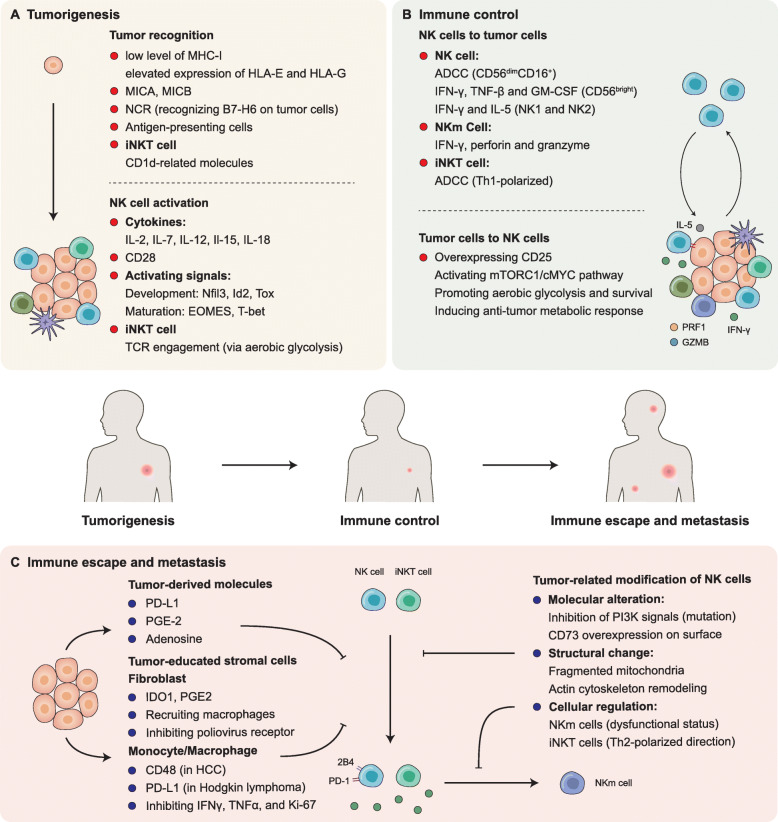
“Tumorderived prostaglandin E2 [139], extracellular adenosine [140], fragmented mitochondria in the cytoplasm of tumor-infiltrating NK cells [141] and actin cytoskeleton remodeling [142] also lead to immunosuppression and help potentially metastatic cancer cells to avoid NK cell elimination.”
BackgroundAbsence of NKG2D ligands defines leukaemia stem cells and mediates their immune evasion
Paczulla, A. M., Rothfelder, K., Raffel, S., Konantz, M., Steinbacher, J., Wang, H., Tandler, C., Mbarga, M., Schaefer, T., Falcone, M., et al. (2019) · Nature · doi:10.1038/s41586-019-1410-1 · Cited by 391 · cited 1×
“Moreover, absence of NKG2D is a common feature of functionally suppressed NK cells, which is achieved through many different pathways [105, 143], thus could be used as a marker to guide NK cell-related therapies [144].”
BackgroundLoss of IFN-γ Production by Invariant NK T Cells in Advanced Cancer
Muhammad Ali Tahir, S., Cheng, O., Shaulov, A., Koezuka, Y., Bubley, G. J., Wilson, S. B., Balk, S. P., & Exley, M. A. (2001) · The Journal of Immunology · doi:10.4049/jimmunol.167.7.4046 · Cited by 386
CIS is a potent checkpoint in NK cell–mediated tumor immunity
Delconte, R. B., Kolesnik, T. B., Dagley, L. F., Rautela, J., Shi, W., Putz, E. M., Stannard, K., Zhang, J.-G., Teh, C., Firth, M., et al. (2016) · Nature Immunology · doi:10.1038/ni.3470 · Cited by 384 · cited 14×
“Besides, blocking CIS could promote IL-15-type cytotoxicity and thus results in increased production of IFN-γ [22].”
BackgroundInfluentialLoftus, R. M., Assmann, N., Kedia-Mehta, N., O’Brien, K. L., Garcia, A., Gillespie, C., Hukelmann, J. L., Oefner, P. J., Lamond, A. I., Gardiner, C. M., et al. (2018) · Nature Communications · doi:10.1038/s41467-018-04719-2 · Cited by 381
Lymphocyte-activation gene 3 (LAG3): The next immune checkpoint receptor
Ruffo, E., Wu, R. C., Bruno, T. C., Workman, C. J., & Vignali, D. A. A. (2019) · Seminars in Immunology · doi:10.1016/j.smim.2019.101305 · Cited by 381
Zhang, Y., Wallace, D. L., De Lara, C. M., Ghattas, H., Asquith, B., Worth, A., Griffin, G. E., Taylor, G. P., Tough, D. F., Beverley, P. C. L., et al. (2007) · Immunology · doi:10.1111/j.1365-2567.2007.02573.x · Cited by 376 · cited 2×
“Largely circulating in blood and counting for about 5–10% of peripheral blood mononuclear cells (PBMCs), NK cells are found in bone marrow and lymphoid tissues such as the spleen [11, 12].”
BackgroundSrebp-controlled glucose metabolism is essential for NK cell functional responses
Assmann, N., O'Brien, K. L., Donnelly, R. P., Dyck, L., Zaiatz-Bittencourt, V., Loftus, R. M., Heinrich, P., Oefner, P. J., Lynch, L., Gardiner, C. M., et al. (2017) · Nature Immunology · doi:10.1038/ni.3838 · Cited by 375
The Natural Cytotoxicity Receptors in Health and Disease
Barrow, A. D., Martin, C. J., & Colonna, M. (2019) · Frontiers in Immunology · doi:10.3389/fimmu.2019.00909 · Cited by 370 · cited 2×
“CLA, cutaneous lymphocyte-associated antigen; CCR8, C-C motif chemokine receptor 8; GATA3, GATA binding protein 3; CXCR6, C-XC motif chemokine receptor 6; KIR, killer cell immunoglobulin-like receptor; CILCP, common innate-like cell precursor NKp44), receptors recognizing non-self-antigens (Ly49H) and other receptors…”
Tissue-specific functions of invariant natural killer T cells
Crosby, C. M., & Kronenberg, M. (2018) · Nature Reviews Immunology · doi:10.1038/s41577-018-0034-2 · Cited by 367 · cited 2×
“Th1-polarized iNKT cells exhibit a tumor-depletion phenotype, and Th2-polarized iNKT cells contribute to tumor progression, similar to polarized T cells [91, 92].”
BackgroundLiu, Y., Cheng, Y., Xu, Y., Wang, Z., Du, X., Li, C., Peng, J., Gao, L., Liang, X., & Ma, C. (2017) · Oncogene · doi:10.1038/onc.2017.209 · Cited by 366 · cited 1×
“Liver cancer Tumor IF CD56PD1 Adverse survival [120]”
BackgroundPresumed guilty: natural killer T cell defects and human disease
Berzins, S. P., Smyth, M. J., & Baxter, A. G. (2011) · Nature Reviews Immunology · doi:10.1038/nri2904 · Cited by 365
Marrack, P., & Kappler, J. (2004) · Annual Review of Immunology · doi:10.1146/annurev.immunol.22.012703.104554 · Cited by 362
Mueller, K. T., Maude, S. L., Porter, D. L., Frey, N., Wood, P., Han, X., Waldron, E., Chakraborty, A., Awasthi, R., Levine, B. L., et al. (2017) · Blood · doi:10.1182/blood-2017-06-786129 · Cited by 362
27-Hydroxycholesterol Promotes Cell-Autonomous, ER-Positive Breast Cancer Growth
Wu, Q., Ishikawa, T., Sirianni, R., Tang, H., McDonald, J. G., Yuhanna, I. S., Thompson, B., Girard, L., Mineo, C., Brekken, R. A., et al. (2013) · Cell Reports · doi:10.1016/j.celrep.2013.10.006 · Cited by 358
Zhu, H., Blum, R. H., Bernareggi, D., Ask, E. H., Wu, Z., Hoel, H. J., Meng, Z., Wu, C., Guan, K.-L., Malmberg, K.-J., et al. (2020) · Cell Stem Cell · doi:10.1016/j.stem.2020.05.008 · Cited by 346
Baginska, J., Viry, E., Berchem, G., Poli, A., Noman, M. Z., van Moer, K., Medves, S., Zimmer, J., Oudin, A., Niclou, S. P., et al. (2013) · Proceedings of the National Academy of Sciences · doi:10.1073/pnas.1304790110 · Cited by 344
Zhang, R., Qi, F., Zhao, F., Li, G., Shao, S., Zhang, X., Yuan, L., & Feng, Y. (2019) · Cell Death & Disease · doi:10.1038/s41419-019-1435-2 · Cited by 343 · cited 1×
“Fibroblasts in TME suppress function of NK cells through downregulating ligands of NK cell activating receptors [145], enhancing tumor-associated macrophages enrichment [146], and producing extracelluar matrix components such as IDO and PGE2 [147].”
BackgroundBlocking expression of inhibitory receptor NKG2A overcomes tumor resistance to NK cells
Kamiya, T., Seow, S. V., Wong, D., Robinson, M., & Campana, D. (2019) · Journal of Clinical Investigation · doi:10.1172/jci123955 · Cited by 342
Hepatocellular carcinoma-associated fibroblasts trigger NK cell dysfunction via PGE2 and IDO
Li, T., Yang, Y., Hua, X., Wang, G., Liu, W., Jia, C., Tai, Y., Zhang, Q., & Chen, G. (2012) · Cancer Letters · doi:10.1016/j.canlet.2011.12.020 · Cited by 328 · cited 1×
“Fibroblasts in TME suppress function of NK cells through downregulating ligands of NK cell activating receptors [145], enhancing tumor-associated macrophages enrichment [146], and producing extracelluar matrix components such as IDO and PGE2 [147].”
BackgroundMetabolic Reprogramming Supports IFN-γ Production by CD56bright NK Cells
Keating, S. E., Zaiatz-Bittencourt, V., Loftus, R. M., Keane, C., Brennan, K., Finlay, D. K., & Gardiner, C. M. (2016) · The Journal of Immunology · doi:10.4049/jimmunol.1501783 · Cited by 325
IL-7-Induced Glycerol Transport and TAG Synthesis Promotes Memory CD8+ T Cell Longevity
Cui, G., Staron, M. M., Gray, S. M., Ho, P.-C., Amezquita, R. A., Wu, J., & Kaech, S. M. (2015) · Cell · doi:10.1016/j.cell.2015.03.021 · Cited by 324
Ferris, R. L., Jaffee, E. M., & Ferrone, S. (2010) · Journal of Clinical Oncology · doi:10.1200/jco.2009.27.6360 · Cited by 320 · cited 2×
“CD16 is a key receptor mediating antibody-dependent cell cytotoxicity (ADCC), inducing the phosphorylation of immunoreceptor tyrosine-based activation motif (ITAM) [40, 79, 80].”
BackgroundMitochondrial fragmentation limits NK cell-based tumor immunosurveillance
Zheng, X., Qian, Y., Fu, B., Jiao, D., Jiang, Y., Chen, P., Shen, Y., Zhang, H., Sun, R., Tian, Z., et al. (2019) · Nature Immunology · doi:10.1038/s41590-019-0511-1 · Cited by 316 · cited 1×
“Tumorderived prostaglandin E2 [139], extracellular adenosine [140], fragmented mitochondria in the cytoplasm of tumor-infiltrating NK cells [141] and actin cytoskeleton remodeling [142] also lead to immunosuppression and help potentially metastatic cancer cells to avoid NK cell elimination.”
BackgroundSelf-citationActivation-Specific Metabolic Requirements for NK Cell IFN-γ Production
Keppel, M. P., Saucier, N., Mah, A. Y., Vogel, T. P., & Cooper, M. A. (2015) · The Journal of Immunology · doi:10.4049/jimmunol.1402099 · Cited by 313
Vari, F., Arpon, D., Keane, C., Hertzberg, M. S., Talaulikar, D., Jain, S., Cui, Q., Han, E., Tobin, J., Bird, R., et al. (2018) · Blood · doi:10.1182/blood-2017-07-796342 · Cited by 313 · cited 1×
“Meanwhile, the interaction of PD-1 NK cells and PD-L1 monoctyes/macrophages in Hodgkin lymphoma results in immune evasion, which can be reversed by PD-1 blockade [149].”
BackgroundEducation of human natural killer cells by activating killer cell immunoglobulin-like receptors
Fauriat, C., Ivarsson, M. A., Ljunggren, H.-G., Malmberg, K.-J., & Michaëlsson, J. (2010) · Blood · doi:10.1182/blood-2009-09-245746 · Cited by 305
Yang, C., Siebert, J. R., Burns, R., Gerbec, Z. J., Bonacci, B., Rymaszewski, A., Rau, M., Riese, M. J., Rao, S., Carlson, K.-S., et al. (2019) · Nature Communications · doi:10.1038/s41467-019-11947-7 · Cited by 304 · cited 1×
“For example, high expreesion of TIM-3, CX3CR1 and ZEB2 represents a more mature status [63].”
BackgroundIL-21 Induces the Functional Maturation of Murine NK Cells
Brady, J., Hayakawa, Y., Smyth, M. J., & Nutt, S. L. (2004) · The Journal of Immunology · doi:10.4049/jimmunol.172.4.2048 · Cited by 303
Sun, H., Huang, Q., Huang, M., Wen, H., Lin, R., Zheng, M., Qu, K., Li, K., Wei, H., Xiao, W., et al. (2019) · Hepatology · doi:10.1002/hep.30347 · Cited by 300 · cited 2×
“Meanwhile, CD96, which shares the same ligand CD155 with CD226 and TIGIT, negatively controls the immune response by NK cells [220] and predicts adverse survival in human hepatocellular carcinoma [56].”
BackgroundGao, S., Li, T., Guo, Y., Sun, C., Xianyu, B., & Xu, H. (2020) · Advanced Materials · doi:10.1002/adma.201907568 · Cited by 300
CD56bright NK cells exhibit potent antitumor responses following IL-15 priming
Wagner, J. A., Rosario, M., Romee, R., Berrien-Elliott, M. M., Schneider, S. E., Leong, J. W., Sullivan, R. P., Jewell, B. A., Becker-Hapak, M., Schappe, T., et al. (2017) · Journal of Clinical Investigation · doi:10.1172/jci90387 · Cited by 297 · cited 4×
“cytokines such as IFN-γ, TNF-β and GM-CSF [23].”
BackgroundInfluentialAdipose-resident group 1 innate lymphoid cells promote obesity-associated insulin resistance
O’Sullivan, T. E., Rapp, M., Fan, X., Weizman, O.-E., Bhardwaj, P., Adams, N. M., Walzer, T., Dannenberg, A. J., & Sun, J. C. (2016) · Immunity · doi:10.1016/j.immuni.2016.06.016 · Cited by 293 · cited 1×
“Interestingly, trNK cells are distinct between subcutaneous (CD56) and visceral (CD56) adipose tissues, and can be generally divided into three groups according to CD49b and Eomes, showing different expression levels of CD49a (CD49bEomes subgroup) and CD69 (CD49bEomes subgroup) [74, 75].”
BackgroundSun, C., Xu, J., Huang, Q., Huang, M., Wen, H., Zhang, C., Wang, J., Song, J., Zheng, M., Sun, H., et al. (2017) · OncoImmunology · doi:10.1080/2162402x.2016.1264562 · Cited by 288 · cited 1×
“Tumor IHC NKG2A Adverse OS and DFS [46]”
BackgroundLeong, J. W., Chase, J. M., Romee, R., Schneider, S. E., Sullivan, R. P., Cooper, M. A., & Fehniger, T. A. (2014) · Biology of Blood and Marrow Transplantation · doi:10.1016/j.bbmt.2014.01.006 · Cited by 285
Balsamo, M., Manzini, C., Pietra, G., Raggi, F., Blengio, F., Mingari, M. C., Varesio, L., Moretta, L., Bosco, M. C., & Vitale, M. (2013) · European Journal of Immunology · doi:10.1002/eji.201343448 · Cited by 282
Brigl, M., Tatituri, R. V. V., Watts, G. F. M., Bhowruth, V., Leadbetter, E. A., Barton, N., Cohen, N. R., Hsu, F.-F., Besra, G. S., & Brenner, M. B. (2011) · Journal of Experimental Medicine · doi:10.1084/jem.20102555 · Cited by 281 · cited 7×
“Memory-like NK cells supplemented with IL-12, IL-15 and IL-18 also show enhanced responses against acute myeloid leukemia both in vitro and in vivo [107], and are currently assessed in a first-in-human clinical trial.”
BackgroundInfluentialKobayashi, H., Dubois, S., Sato, N., Sabzevari, H., Sakai, Y., Waldmann, T. A., & Tagaya, Y. (2005) · Blood · doi:10.1182/blood-2003-12-4187 · Cited by 275
Natural cytotoxicity receptors and their ligands
Kruse, P. H., Matta, J., Ugolini, S., & Vivier, E. (2014) · Immunology & Cell Biology · doi:10.1038/icb.2013.98 · Cited by 273 · cited 2×
“CLA, cutaneous lymphocyte-associated antigen; CCR8, C-C motif chemokine receptor 8; GATA3, GATA binding protein 3; CXCR6, C-XC motif chemokine receptor 6; KIR, killer cell immunoglobulin-like receptor; CILCP, common innate-like cell precursor NKp44), receptors recognizing non-self-antigens (Ly49H) and other receptors…”
Huntington, N. D., Puthalakath, H., Gunn, P., Naik, E., Michalak, E. M., Smyth, M. J., Tabarias, H., Degli-Esposti, M. A., Dewson, G., Willis, S. N., et al. (2007) · Nature Immunology · doi:10.1038/ni1487 · Cited by 268
Wu, Y., Kuang, D.-M., Pan, W.-D., Wan, Y.-L., Lao, X.-M., Wang, D., Li, X.-F., & Zheng, L. (2013) · Hepatology · doi:10.1002/hep.26192 · Cited by 266 · cited 1×
“In human gastric cancer, tumor infiltrating monoctyes/macrophages can reduce IFNγ, TNFα, and Ki-67 expression of NK cells via TGFβ1, thus impairing NK cell function [148].”
Backgroundde Kruijf, E. M., Sajet, A., van Nes, J. G. H., Natanov, R., Putter, H., Smit, V. T. H. B. M., Liefers, G. J., van den Elsen, P. J., van de Velde, C. J. H., & Kuppen, P. J. K. (2010) · The Journal of Immunology · doi:10.4049/jimmunol.1002629 · Cited by 266
Ito, M., Maruyama, T., Saito, N., Koganei, S., Yamamoto, K., & Matsumoto, N. (2006) · The Journal of Experimental Medicine · doi:10.1084/jem.20051986 · Cited by 260 · cited 1×
“MHC-I non-related receptor KLRG1 E-, N-, and R- cadherins [49]”
A shed NKG2D ligand that promotes natural killer cell activation and tumor rejection
Deng, W., Gowen, B. G., Zhang, L., Wang, L., Lau, S., Iannello, A., Xu, J., Rovis, T. L., Xiong, N., & Raulet, D. H. (2015) · Science · doi:10.1126/science.1258867 · Cited by 255 · cited 3×
“As mentioned above, Th2-polarized iNKT cells in the TME contribute to tumor progression through immunosuppressive effects [91], and continuous exposure to ligands expressed on the surface of tumor cells induces the dysfunction of NKm cells that are engaged in long-term anti-tumor immunity [106].”
BackgroundCutting Edge: Identification and Characterization of Human Intrahepatic CD49a+ NK Cells
Marquardt, N., Béziat, V., Nyström, S., Hengst, J., Ivarsson, M. A., Kekäläinen, E., Johansson, H., Mjösberg, J., Westgren, M., Lankisch, T. O., et al. (2015) · The Journal of Immunology · doi:10.4049/jimmunol.1402756 · Cited by 254 · cited 1×
“In addition, CD49aCD56CD3CD19 NK cells have been identified in liver biopsies [70].”
BackgroundUterine Natural Killer Cells: Functional Distinctions and Influence on Pregnancy in Humans and Mice
Gaynor, L. M., & Colucci, F. (2017) · Frontiers in Immunology · doi:10.3389/fimmu.2017.00467 · Cited by 250 · cited 5×
“Moreover, MHC-I specific inhibitory receptors can be generally divided into three types according to structure and function: killer cell immunoglobulin-like receptors (KIRs), killer lectin-like receptors (KLRs) and leukocyte immunoglobulin-like receptors (LILRs).”
BackgroundInfluentialNatural killer group 2D receptor and its ligands in cancer immune escape
Duan, S., Guo, W., Xu, Z., He, Y., Liang, C., Mo, Y., Wang, Y., Xiong, F., Guo, C., Li, Y., et al. (2019) · Molecular Cancer · doi:10.1186/s12943-019-0956-8 · Cited by 244 · cited 1×
“Moreover, absence of NKG2D is a common feature of functionally suppressed NK cells, which is achieved through many different pathways [105, 143], thus could be used as a marker to guide NK cell-related therapies [144].”
BackgroundHoming and Function of Human Skin γδ T Cells and NK Cells: Relevance for Tumor Surveillance
Ebert, L. M., Meuter, S., & Moser, B. (2006) · The Journal of Immunology · doi:10.4049/jimmunol.176.7.4331 · Cited by 243
Suppression of Metastases Using a New Lymphocyte Checkpoint Target for Cancer Immunotherapy
Blake, S. J., Stannard, K., Liu, J., Allen, S., Yong, M. C. R., Mittal, D., Aguilera, A. R., Miles, J. J., Lutzky, V. P., de Andrade, L. F., et al. (2016) · Cancer Discovery · doi:10.1158/2159-8290.cd-15-0944 · Cited by 243
Interplay between the immune system and adipose tissue in obesity
Exley, M. A., Hand, L., O'Shea, D., & Lynch, L. (2014) · Journal of Endocrinology · doi:10.1530/joe-13-0516 · Cited by 242
Vance, R. E., Jamieson, A. M., & Raulet, D. H. (1999) · The Journal of Experimental Medicine · doi:10.1084/jem.190.12.1801 · Cited by 238
(2019) · doi:10.1158/2159-8290.cd-18-1495 · Cited by 231
Signaling by Antibodies: Recent Progress
Bournazos, S., Wang, T. T., Dahan, R., Maamary, J., & Ravetch, J. V. (2017) · Annual Review of Immunology · doi:10.1146/annurev-immunol-051116-052433 · Cited by 229 · cited 2×
“CD16 is a key receptor mediating antibody-dependent cell cytotoxicity (ADCC), inducing the phosphorylation of immunoreceptor tyrosine-based activation motif (ITAM) [40, 79, 80].”
BackgroundNext generation natural killer cells for cancer immunotherapy: the promise of genetic engineering
Daher, M., & Rezvani, K. (2018) · Current Opinion in Immunology · doi:10.1016/j.coi.2018.03.013 · Cited by 224
Romanski, A., Uherek, C., Bug, G., Seifried, E., Klingemann, H., Wels, W. S., Ottmann, O. G., & Tonn, T. (2016) · Journal of Cellular and Molecular Medicine · doi:10.1111/jcmm.12810 · Cited by 220
Killers 2.0: NK cell therapies at the forefront of cancer control
Hodgins, J. J., Khan, S. T., Park, M. M., Auer, R. C., & Ardolino, M. (2019) · Journal of Clinical Investigation · doi:10.1172/jci129338 · Cited by 217
Sarkar, S., Germeraad, W. T. V., Rouschop, K. M. A., Steeghs, E. M. P., Gelder, M. V., Bos, G. M. J., & Wieten, L. (2013) · PLoS ONE · doi:10.1371/journal.pone.0064835 · Cited by 215
Dolstra, H., Roeven, M. W. H., Spanholtz, J., Hangalapura, B. N., Tordoir, M., Maas, F., Leenders, M., Bohme, F., Kok, N., Trilsbeek, C., et al. (2017) · Clinical Cancer Research · doi:10.1158/1078-0432.ccr-16-2981 · Cited by 210
Yamaji, T., Teranishi, T., Alphey, M. S., Crocker, P. R., & Hashimoto, Y. (2002) · Journal of Biological Chemistry · doi:10.1074/jbc.m110146200 · Cited by 209 · cited 1×
“siglec-3, siglec-7, siglec-9 Sialic acid [50, 51]”
Qin, W.-H., Yang, Z.-S., Li, M., Chen, Y., Zhao, X.-F., Qin, Y.-Y., Song, J.-Q., Wang, B.-B., Yuan, B., Cui, X.-L., et al. (2020) · Gastroenterology · doi:10.1053/j.gastro.2020.01.028 · Cited by 209
CD73 immune checkpoint defines regulatory NK cells within the tumor microenvironment
Neo, S. Y., Yang, Y., Record, J., Ma, R., Chen, X., Chen, Z., Tobin, N. P., Blake, E., Seitz, C., Thomas, R., et al. (2020) · Journal of Clinical Investigation · doi:10.1172/jci128895 · Cited by 206 · cited 1×
“Similar to the inhibitory role of CD73 in T cell-immunity, tumors can train normal NK cells into CD73 NK cells which express high levels of checkpoint molecules, including LAG-3, PD-1, and PDL1, finally resulting in immune escape [57].”
BackgroundNatural killer cell specificity for viral infections
Hammer, Q., Rückert, T., & Romagnani, C. (2018) · Nature Immunology · doi:10.1038/s41590-018-0163-6 · Cited by 202 · cited 1×
“This was evidently observed in response to viral infection in humans, prompting the development of NK cellbased vaccines to generate potent effects toward diseases [102, 103].”
BackgroundSarhan, D., Cichocki, F., Zhang, B., Yingst, A., Spellman, S. R., Cooley, S., Verneris, M. R., Blazar, B. R., & Miller, J. S. (2016) · Cancer Research · doi:10.1158/0008-5472.can-16-0839 · Cited by 200
Pasero, C., Gravis, G., Granjeaud, S., Guerin, M., Thomassin-Piana, J., Rocchi, P., Salem, N., Walz, J., Moretta, A., & Olive, D. (2015) · Oncotarget · doi:10.18632/oncotarget.3965 · Cited by 195 · cited 1×
“Prostate cancer Blood Flow cytometry CD3CD56 NKp30 or NKp46 Favorable OS [122]”
BackgroundAdipose Type One Innate Lymphoid Cells Regulate Macrophage Homeostasis through Targeted Cytotoxicity
Boulenouar, S., Michelet, X., Duquette, D., Alvarez, D., Hogan, A. E., Dold, C., O’Connor, D., Stutte, S., Tavakkoli, A., Winters, D., et al. (2017) · Immunity · doi:10.1016/j.immuni.2017.01.008 · Cited by 192 · cited 1×
“Interestingly, trNK cells are distinct between subcutaneous (CD56) and visceral (CD56) adipose tissues, and can be generally divided into three groups according to CD49b and Eomes, showing different expression levels of CD49a (CD49bEomes subgroup) and CD69 (CD49bEomes subgroup) [74, 75].”
BackgroundKornblum, N., Zhao, F., Manola, J., Klein, P., Ramaswamy, B., Brufsky, A., Stella, P. J., Burnette, B., Telli, M., Makower, D. F., et al. (2018) · Journal of Clinical Oncology · doi:10.1200/jco.2017.76.9331 · Cited by 189
Innate immunodeficiency following genetic ablation of Mcl1 in natural killer cells
Sathe, P., Delconte, R. B., Souza-Fonseca-Guimaraes, F., Seillet, C., Chopin, M., Vandenberg, C. J., Rankin, L. C., Mielke, L. A., Vikstrom, I., Kolesnik, T. B., et al. (2014) · Nature Communications · doi:10.1038/ncomms5539 · Cited by 187
Sustained NKG2D engagement induces cross-tolerance of multiple distinct NK cell activation pathways
Coudert, J. D., Scarpellino, L., Gros, F., Vivier, E., & Held, W. (2008) · Blood · doi:10.1182/blood-2007-07-100057 · Cited by 185 · cited 2×
“Moreover, absence of NKG2D is a common feature of functionally suppressed NK cells, which is achieved through many different pathways [105, 143], thus could be used as a marker to guide NK cell-related therapies [144].”
BackgroundInnate Lymphoid Cell Development: A T Cell Perspective
Cherrier, D. E., Serafini, N., & Di Santo, J. P. (2018) · Immunity · doi:10.1016/j.immuni.2018.05.010 · Cited by 181 · cited 1×
“Largely circulating in blood and counting for about 5–10% of peripheral blood mononuclear cells (PBMCs), NK cells are found in bone marrow and lymphoid tissues such as the spleen [11, 12].”
BackgroundBenson, D. M., Cohen, A. D., Jagannath, S., Munshi, N. C., Spitzer, G., Hofmeister, C. C., Efebera, Y. A., Andre, P., Zerbib, R., & Caligiuri, M. A. (2015) · Clinical Cancer Research · doi:10.1158/1078-0432.ccr-15-0304 · Cited by 180
Chan, C. J., Andrews, D. M., McLaughlin, N. M., Yagita, H., Gilfillan, S., Colonna, M., & Smyth, M. J. (2010) · The Journal of Immunology · doi:10.4049/jimmunol.0903225 · Cited by 180 · cited 2×
“MHC-I non-related receptor DNAM1 Nectin-2, CD155 [32]”
Markel, G., Lieberman, N., Katz, G., Arnon, T. I., Lotem, M., Drize, O., Blumberg, R. S., Bar-Haim, E., Mader, R., Eisenbach, L., et al. (2002) · The Journal of Immunology · doi:10.4049/jimmunol.168.6.2803 · Cited by 178
NKT cell subsets as key participants in liver physiology and pathology
Bandyopadhyay, K., Marrero, I., & Kumar, V. (2016) · Cellular & Molecular Immunology · doi:10.1038/cmi.2015.115 · Cited by 175
Tumor-Associated Monocytes/Macrophages Impair NK-Cell Function via TGFβ1 in Human Gastric Cancer
Peng, L.-S., Zhang, J.-Y., Teng, Y.-S., Zhao, Y.-L., Wang, T.-T., Mao, F.-Y., Lv, Y.-P., Cheng, P., Li, W.-H., Chen, N., et al. (2017) · Cancer Immunology Research · doi:10.1158/2326-6066.cir-16-0152 · Cited by 172 · cited 1×
“The monocytes from hepatocellular carcinoma express CD48, which could block 2B4 on NK cells and induce NK cell dysfunction [150].”
BackgroundIL15 Stimulation with TIGIT Blockade Reverses CD155-mediated NK-Cell Dysfunction in Melanoma
Chauvin, J.-M., Ka, M. B., Pagliano, O., Menna, C., Ding, Q., Deblasio, R. N., Sander, C., Hou, J., Li, X.-Y., Ferrone, S., et al. (2020) · Clinical Cancer Research · doi:10.1158/1078-0432.ccr-20-0575 · Cited by 170 · cited 2×
“Hence, NK cells can be rarely seen in metastatic melanoma and are mainly TIGI TCD226 which are deprived of cytotoxicity toward MHC-I-defient malignant cells [153].”
BackgroundHuman natural killer cells mediate adaptive immunity to viral antigens
Nikzad, R., Angelo, L. S., Aviles-Padilla, K., Le, D. T., Singh, V. K., Bimler, L., Vukmanovic-Stejic, M., Vendrame, E., Ranganath, T., Simpson, L., et al. (2019) · Science Immunology · doi:10.1126/sciimmunol.aat8116 · Cited by 168 · cited 1×
“This was evidently observed in response to viral infection in humans, prompting the development of NK cellbased vaccines to generate potent effects toward diseases [102, 103].”
BackgroundCarlsten, M., Korde, N., Kotecha, R., Reger, R., Bor, S., Kazandjian, D., Landgren, O., & Childs, R. W. (2016) · Clinical Cancer Research · doi:10.1158/1078-0432.ccr-16-1108 · Cited by 166
Sojka, D. K., Yang, L., & Yokoyama, W. M. (2019) · Frontiers in Immunology · doi:10.3389/fimmu.2019.00960 · Cited by 165
Human immunodeficiency-causing mutation defines CD16 in spontaneous NK cell cytotoxicity
Grier, J. T., Forbes, L. R., Monaco-Shawver, L., Oshinsky, J., Atkinson, T. P., Moody, C., Pandey, R., Campbell, K. S., & Orange, J. S. (2012) · Journal of Clinical Investigation · doi:10.1172/jci64837 · Cited by 163
Park, A., Lee, Y., Kim, M. S., Kang, Y. J., Park, Y.-J., Jung, H., Kim, T.-D., Lee, H. G., Choi, I., & Yoon, S. R. (2018) · Frontiers in Immunology · doi:10.3389/fimmu.2018.01859 · Cited by 163 · cited 1×
“Tumorderived prostaglandin E2 [139], extracellular adenosine [140], fragmented mitochondria in the cytoplasm of tumor-infiltrating NK cells [141] and actin cytoskeleton remodeling [142] also lead to immunosuppression and help potentially metastatic cancer cells to avoid NK cell elimination.”
BackgroundMarquardt, N., Kekäläinen, E., Chen, P., Kvedaraite, E., Wilson, J. N., Ivarsson, M. A., Mjösberg, J., Berglin, L., Säfholm, J., Manson, M. L., et al. (2016) · Journal of Allergy and Clinical Immunology · doi:10.1016/j.jaci.2016.07.043 · Cited by 161 · cited 1×
“In the lung, trNK cells show a different phenotype from that of circulating NK cells (mainly CD56) and are considered to express different levels of CD16, CD49a and CD69, with CD56CD16 cells representing the majority of the whole NK family there [64, 65].”
BackgroundRea, D., Henry, G., Khaznadar, Z., Etienne, G., Guilhot, F., Nicolini, F., Guilhot, J., Rousselot, P., Huguet, F., Legros, L., et al. (2017) · Haematologica · doi:10.3324/haematol.2017.165001 · Cited by 161 · cited 1×
“Chronic myeloid leukemia Blood Flow cytometry CD3CD16CD56 Favorable molecular RFS after imatinib discontinuation [116]”
BackgroundSeo, H., Jeon, I., Kim, B.-S., Park, M., Bae, E.-A., Song, B., Koh, C.-H., Shin, K.-S., Kim, I.-K., Choi, K., et al. (2017) · Nature Communications · doi:10.1038/ncomms15776 · Cited by 161
PD-L1 Mediates Dysfunction in Activated PD-1+ NK Cells in Head and Neck Cancer Patients
Concha-Benavente, F., Kansy, B., Moskovitz, J., Moy, J., Chandran, U., & Ferris, R. L. (2018) · Cancer Immunology Research · doi:10.1158/2326-6066.cir-18-0062 · Cited by 161 · cited 21×
“After cetuximab treatment, PD-1 NK cells are more enriched in the TME and are correlated with favorable clinical outcome in head and neck cancer patients, which was further demonstrated by in vivo experiments and a stage III/IVA clinical trial assessing neoadjuvant cetuximab (NCT01218048) [58].”
BackgroundInfluentialWang, Z., Guan, D., Wang, S., Chai, L. Y. A., Xu, S., & Lam, K.-P. (2020) · Frontiers in Immunology · doi:10.3389/fimmu.2020.00202 · Cited by 160
Human CD56dimCD16dim Cells As an Individualized Natural Killer Cell Subset
Amand, M., Iserentant, G., Poli, A., Sleiman, M., Fiévez, V., Sánchez, I. P., Sauvageot, N., Michel, T., Aouali, N., Janji, B., et al. (2017) · Frontiers in Immunology · doi:10.3389/fimmu.2017.00699 · Cited by 156 · cited 2×
“CD16 is a key receptor mediating antibody-dependent cell cytotoxicity (ADCC), inducing the phosphorylation of immunoreceptor tyrosine-based activation motif (ITAM) [40, 79, 80].”
BackgroundBlockade of CD112R and TIGIT signaling sensitizes human natural killer cell functions
Xu, F., Sunderland, A., Zhou, Y., Schulick, R. D., Edil, B. H., & Zhu, Y. (2017) · Cancer Immunology, Immunotherapy · doi:10.1007/s00262-017-2031-x · Cited by 152
Glycolytic requirement for NK cell cytotoxicity and cytomegalovirus control
Mah-Som, A. Y., Rashidi, A., Keppel, M. P., Saucier, N., Moore, E. K., Alinger, J. B., Tripathy, S. K., Agarwal, S. K., Jeng, E. K., Wong, H. C., et al. (2017) · JCI Insight · doi:10.1172/jci.insight.95128 · Cited by 152
A distinct innate lymphoid cell population regulates tumor-associated T cells
Crome, S. Q., Nguyen, L. T., López‐Vergès, S., Yang, S. Y. C., Martin, B. G., Yam, J. Y., Johnson, D. J., Nie, J., Pniak, M., Yen, P. H., et al. (2017) · Nature Medicine · doi:10.1038/nm.4278 · Cited by 151 · cited 1×
“In recent studies, the notion that natural cytotoxicity receptor 46 (NKp46), belonging to natural cytotoxicity receptors (NCRs), should also be included in this panel has been proposed based on the consensus of adding more functional proteins rather than surface molecules into the classification system of NK cells [24…”
BackgroundAbsi, A. A., Wurzer, H., Guérin, C. L., Hoffmann, C., Moreau, F., Mao, X., Brown-Clay, J. D., Petrolli, R., Casellas, C. P., Dieterle, M., et al. (2018) · Cancer Research · doi:10.1158/0008-5472.can-18-0441 · Cited by 150 · cited 2×
“Interestingly, in a breast cancer cell line, CDC42 or WASP knockdown does not change the activation status of NK cells but obviously increases the expression of effective granzyme B and overcomes resistance to NK cell-mediated attack [142].”
BackgroundDavis, Z., Vallera, D. A., Miller, J. S., & Felices, M. (2017) · Seminars in Immunology · doi:10.1016/j.smim.2017.07.011 · Cited by 150
Conlon, K. C., Potter, E. L., Pittaluga, S., Lee, C. R., Miljković, M. D., Fleisher, T. A., Dubois, S. P., Bryant, B. R., Petrus, M. N., Perera, L. P., et al. (2019) · Clinical Cancer Research · doi:10.1158/1078-0432.ccr-18-3468 · Cited by 150
Wang, F., Hou, H., Wu, S., Tang, Q., Liu, W., Huang, M., Yin, B., Huang, J., Mao, L., Lu, Y., et al. (2015) · European Journal of Immunology · doi:10.1002/eji.201545480 · Cited by 144
Self-citationSun, J. C., Beilke, J. N., Bezman, N. A., & Lanier, L. L. (2011) · Journal of Experimental Medicine · doi:10.1084/jem.20100479 · Cited by 144
Dorner, B. G., Smith, H. R. C., French, A. R., Kim, S., Poursine-Laurent, J., Beckman, D. L., Pingel, J. T., Kroczek, R. A., & Yokoyama, W. M. (2004) · The Journal of Immunology · doi:10.4049/jimmunol.172.5.3119 · Cited by 143 · cited 1×
“Even in the same type of cancer, NK cells are highly heterogeneous, characterized by the abundance of surface receptors and the complexity of tumor intrinsic signaling pathways [95, 110].”
BackgroundBeloueche-Babari, M., Casals Galobart, T., Delgado-Goni, T., Wantuch, S., Parkes, H. G., Tandy, D., Harker, J. A., & Leach, M. O. (2020) · British Journal of Cancer · doi:10.1038/s41416-019-0717-x · Cited by 143
Natural Killer Cells Suppress T Cell-Associated Tumor Immune Evasion
Freeman, A. J., Vervoort, S. J., Ramsbottom, K. M., Kelly, M. J., Michie, J., Pijpers, L., Johnstone, R. W., Kearney, C. J., & Oliaro, J. (2019) · Cell Reports · doi:10.1016/j.celrep.2019.08.017 · Cited by 141
Bergamaschi, C., Pandit, H., Nagy, B. A., Stellas, D., Jensen, S. M., Bear, J., Cam, M., Valentin, A., Fox, B. A., Felber, B. K., et al. (2020) · Journal for ImmunoTherapy of Cancer · doi:10.1136/jitc-2020-000599 · Cited by 141
Mamessier, E., Sylvain, A., Bertucci, F., Castellano, R., Finetti, P., Houvenaeghel, G., Charaffe-Jaufret, E., Birnbaum, D., Moretta, A., & Olive, D. (2011) · Cancer Research · doi:10.1158/0008-5472.can-11-0792 · Cited by 140 · cited 1×
“, obviously elevated NKG2D in luminal tumors [131].”
BackgroundKararoudi, M. N., Nagai, Y., Elmas, E., Pereira, M. D. S. F., Ali, S. A., Imus, P. H., Wethington, D., Borrello, I., Lee, D. A., & Ghiaur, G. (2020) · Blood · doi:10.1182/blood.2020006200 · Cited by 140
NKp80 Defines a Critical Step during Human Natural Killer Cell Development
Freud, A. G., Keller, K. A., Scoville, S. D., Mundy-Bosse, B. L., Cheng, S., Youssef, Y., Hughes, T. L., Zhang, X., Mo, X. M., Porcu, P., et al. (2016) · Cell Reports · doi:10.1016/j.celrep.2016.05.095 · Cited by 140
NK cells gain higher IFN ‐γ competence during terminal differentiation
Luetke-Eversloh, M. V., Cicek, B. B., Siracusa, F., Thom, J. T., Hamann, A., Frischbutter, S., Baumgrass, R., Chang, H., Thiel, A., Dong, J., et al. (2014) · European Journal of Immunology · doi:10.1002/eji.201344072 · Cited by 138
Boudreau, J. E., Giglio, F., Gooley, T. A., Stevenson, P. A., Le Luduec, J.-B., Shaffer, B. C., Rajalingam, R., Hou, L., Hurley, C. K., Noreen, H., et al. (2017) · Journal of Clinical Oncology · doi:10.1200/jco.2016.70.7059 · Cited by 137 · cited 1×
“MHC-I specific receptor KIR3DL1 MHC I [44]”
Mattiola, I., Tomay, F., De Pizzol, M., Silva-Gomes, R., Savino, B., Gulic, T., Doni, A., Lonardi, S., Astrid Boutet, M., Nerviani, A., et al. (2019) · Nature Immunology · doi:10.1038/s41590-019-0417-y · Cited by 137 · cited 2×
“NK cell-mediated metastasis control was found dependent on dectin-1-mediated activation of macrophages, especially the plasma membrane tetraspan molecule MS4A4A [151].”
BackgroundHanna, J. H., & Mandelboim, O. (2007) · Trends in Immunology · doi:10.1016/j.it.2007.03.005 · Cited by 135 · cited 1×
“Besides established cytotoxic cNK cells, it has been demonstrated that NK cells could differentiate into antigen-presenting NK (AP-NK) cells [83], helper NK (NKh) cells [84] and regulatory NK (NKreg) cells, each defined by surface molecules and individual functions.”
BackgroundComplement factor P is a ligand for the natural killer cell–activating receptor NKp46
Narni-Mancinelli, E., Gauthier, L., Baratin, M., Guia, S., Fenis, A., Deghmane, A.-E., Rossi, B., Fourquet, P., Escalière, B., Kerdiles, Y. M., et al. (2017) · Science Immunology · doi:10.1126/sciimmunol.aam9628 · Cited by 133
Theurich, S., Tsaousidou, E., Hanßen, R., Lempradl, A. M., Mauer, J., Timper, K., Schilbach, K., Folz‐Donahue, K., Heilinger, C., Sexl, V., et al. (2017) · Cell Metabolism · doi:10.1016/j.cmet.2017.05.018 · Cited by 131
Matsumoto, M., Tatematsu, M., Nishikawa, F., Azuma, M., Ishii, N., Morii-Sakai, A., Shime, H., & Seya, T. (2015) · Nature Communications · doi:10.1038/ncomms7280 · Cited by 130 · cited 1×
“TLR3 Microbial constituents, adjuvant [42]”
Muntasell, A., Rojo, F., Servitja, S., Rubio-Perez, C., Cabo, M., Tamborero, D., Costa-García, M., Martínez-Garcia, M., Menéndez, S., Vazquez, I., et al. (2019) · Clinical Cancer Research · doi:10.1158/1078-0432.ccr-18-2365 · Cited by 126 · cited 1×
“Breast cancer Tumor IHC CD3CD56 Favorable DFS [126]”
BackgroundIL-21 Enhances Tumor Rejection through a NKG2D-Dependent Mechanism
Takaki, R., Hayakawa, Y., Nelson, A., Sivakumar, P. V., Hughes, S., Smyth, M. J., & Lanier, L. L. (2005) · The Journal of Immunology · doi:10.4049/jimmunol.175.4.2167 · Cited by 126
Herrera, L., Santos, S., Vesga, M. Á., Anguíta, J., Martín‐Ruiz, I., Carrascosa, T., Juan, M., & Eguizábal, C. (2019) · Scientific Reports · doi:10.1038/s41598-019-55239-y · Cited by 125
Williams, J. B., Li, S., Higgs, E. F., Cabanov, A., Wang, X., Huang, H., & Gajewski, T. F. (2020) · Nature Communications · doi:10.1038/s41467-020-14290-4 · Cited by 122
Bone marrow versus thymic pathways of natural killer cell development
Di Santo, J. P., & Vosshenrich, C. A. J. (2006) · Immunological Reviews · doi:10.1111/j.1600-065x.2006.00461.x · Cited by 119 · cited 12×
“Besides, blocking CIS could promote IL-15-type cytotoxicity and thus results in increased production of IFN-γ [22].”
BackgroundInfluentialSiewiera, J., Gouilly, J., Hocine, H. R., Cartron, G., Levy, C., Al‐Daccak, R., & Jabrane‐Ferrat, N. (2015) · Nature Communications · doi:10.1038/ncomms10183 · Cited by 118 · cited 1×
“NKp44 (NCR2) HS GAGs, MLL5, NKp44L, PCNA, BAT3, PDGF-DD, Nidogen-1 [34]”
Niavarani, S. R., Lawson, C., Bakos, O., Boudaud, M., Batenchuk, C., Rouleau, S., & Tai, L.-H. (2019) · BMC Cancer · doi:10.1186/s12885-019-6045-y · Cited by 114 · cited 1×
“In colorectal cancer, lipid accumulation is common for postoperative patients and facilitates the formation of metastasis by impairing NK cell function, by elevating CD36 expression [152].”
BackgroundMcNerney, M. E., Lee, K., & Kumar, V. (2004) · Molecular Immunology · doi:10.1016/j.molimm.2004.07.032 · Cited by 112
Huenecke, S., Zimmermann, S. Y., Kloeß, S., Esser, R., Brinkmann, A., Tramsen, L., Koenig, M., Erben, S., Seidl, C., Tonn, T., et al. (2010) · Journal of Immunotherapy · doi:10.1097/cji.0b013e3181bb46f7 · Cited by 111
Prognostic value of peripheral blood natural killer cells in colorectal cancer
Tang, Y., Xie, M., Li, K., Li, J., Cai, Z.-M., & Hu, B.-L. (2020) · BMC Gastroenterology · doi:10.1186/s12876-020-1177-8 · Cited by 109 · cited 1×
“Blood Flow cytometry CD3CD16CD56 Favorable OS [115]”
Gill, S., Olson, J. A., & Negrin, R. S. (2009) · Biology of Blood and Marrow Transplantation · doi:10.1016/j.bbmt.2009.01.019 · Cited by 108
Min-Oo, G., & Lanier, L. L. (2014) · Journal of Experimental Medicine · doi:10.1084/jem.20141172 · Cited by 108
The unconventional expression of IL‐15 and its role in NK cell homeostasis
Huntington, N. D. (2014) · Immunology and Cell Biology · doi:10.1038/icb.2014.1 · Cited by 105
Replicative potential of human natural killer cells
Fujisaki, H., Kakuda, H., Imai, C., Mullighan, C. G., & Campana, D. (2009) · British Journal of Haematology · doi:10.1111/j.1365-2141.2009.07667.x · Cited by 105
Human plasmacytoid dendritic cells are equipped with antigen-presenting and tumoricidal capacities
Tel, J., Smits, E. L., Anguille, S., Joshi, R. N., Figdor, C. G., & de Vries, I. J. M. (2012) · Blood · doi:10.1182/blood-2012-06-435941 · Cited by 104 · cited 1×
“Human plasmacytoid dendritic cells (DCs) activated by the preventive vaccine FSME upregulate CD56 expression on their surface [86]; in mice, B220CD11cNK1.”
BackgroundNK Cell Phenotypic Modulation in Lung Cancer Environment
Jin, S., Deng, Y., Hao, J.-W., Li, Y., Liu, B., Yu, Y., Shi, F.-D., & Zhou, Q.-H. (2014) · PLoS ONE · doi:10.1371/journal.pone.0109976 · Cited by 101 · cited 1×
“Tumor IF CD56 and/or CD16 Favorable OS [125]”
BackgroundJérusalem, G., Boer, R. H. D., Hurvitz, S. A., Yardley, D. A., Kovalenko, E. I., Ejlertsen, B., Blau, S. H., Özgüroğlu, M., Landherr, L., Ewertz, M., et al. (2018) · JAMA Oncology · doi:10.1001/jamaoncol.2018.2262 · Cited by 100
Sun, H., Liu, L., Huang, Q., Liu, H., Huang, M., Wang, J., Wen, H., Lin, R., Qu, K., Li, K., et al. (2019) · Cancer Immunology Research · doi:10.1158/2326-6066.cir-18-0757 · Cited by 100 · cited 1×
“Tumor Flow cytometry CD3CD56CD49a Adverse OS and DFS [121]”
BackgroundBackes, C. S., Friedmann, K. S., Mang, S., Knörck, A., Hoth, M., & Kummerow, C. (2018) · Journal of Biological Chemistry · doi:10.1074/jbc.ra118.004549 · Cited by 93 · cited 1×
“As a result, FasL/FasR interaction, perforin/granzyme release and Ca2 influx are all important for NK cell function [81].”
BackgroundHeinhuis, K. M., Carlino, M. S., Joerger, M., Nicola, M. D., Meniawy, T. M., Rottey, S., Moreno, V., Gazzah, A., Delord, J., Paz-Ares, L. G., et al. (2019) · JAMA Oncology · doi:10.1001/jamaoncol.2019.3848 · Cited by 92
Granzin, M., Stojanovic, A., Miller, M., Childs, R., Huppert, V., & Cerwenka, A. (2016) · OncoImmunology · doi:10.1080/2162402x.2016.1219007 · Cited by 91
Khatua, S., Cooper, L. J. N., Sandberg, D. I., Ketonen, L., Johnson, J. M., Rytting, M., Liu, D. D., Meador, H. B., Trikha, P., Nakkula, R. J., et al. (2020) · Neuro-Oncology · doi:10.1093/neuonc/noaa047 · Cited by 90
Harnessing Natural Killer Immunity in Metastatic SCLC
Best, S. A., Hess, J. B., Souza-Fonseca-Guimarães, F., Cursons, J., Kersbergen, A. J., Dong, X., Rautela, J., Hyslop, S. R., Ritchie, M. E., Davis, M. J., et al. (2020) · Journal of Thoracic Oncology · doi:10.1016/j.jtho.2020.05.008 · Cited by 90 · cited 1×
“Interestingly, proved by convincing genetically engineered models, it is the absence of NK cells but not CD8 T cells that evidently leads to the metastatic dissemination of small cell lung cancer, pushing us to better define the pivotal role of NK cells in both initial progression and later metastasis of cancer [154].”
BackgroundClénet, M., Gagnon, F., Moratalla, A. C., Viel, É. C., & Arbour, N. (2017) · Scientific Reports · doi:10.1038/s41598-017-11926-2 · Cited by 88
Synergized regulation of NK cell education by NKG2A and specific Ly49 family members
Zhang, X., Jin, F., Chen, S., Yang, H., & Dong, Z. (2019) · Nature Communications · doi:10.1038/s41467-019-13032-5 · Cited by 87
CD1high B cells: a population of mixed origin
Makowska, A., Faizunnessa, N. N., Anderson, P. O., Midtvedt, T., & Cardell, S. (1999) · European Journal of Immunology · doi:10.1002/(sici)1521-4141(199910)29:10<3254::aid-immu3254>3.0.co;2-0 · Cited by 86
Hervier, B., Russick, J., Cremer, I., & Vieillard, V. (2019) · Frontiers in Immunology · doi:10.3389/fimmu.2019.01263 · Cited by 86 · cited 1×
“In the lung, trNK cells show a different phenotype from that of circulating NK cells (mainly CD56) and are considered to express different levels of CD16, CD49a and CD69, with CD56CD16 cells representing the majority of the whole NK family there [64, 65].”
BackgroundSáez-Borderías, A., Romo, N., Magri, G., Gumá, M., Angulo, A., & López-Botet, M. (2009) · The Journal of Immunology · doi:10.4049/jimmunol.182.2.829 · Cited by 84
Verma, C., Kaewkangsadan, V., Eremin, J. M., Cowley, G., Ilyas, M., El‐Sheemy, M., & Eremin, O. (2015) · Journal of Translational Medicine · doi:10.1186/s12967-015-0535-8 · Cited by 83
Research works printed but not linked: 1
- Chiossone L Dumas P-Y Vienne M Vivier E Natural killer cells and other innate lymphoid cells in cancer Nature Reviews Immunol 2018 18 671 688 30209347 · DOI · Paper page
Cited by
RNA modifications: importance in immune cell biology and related diseases
Cui, L., Ma, R., Cai, J., Guo, C., Chen, Z., Yao, L., Wang, Y., Fan, R., Wang, X., & Shi, Y. (2022) · Signal Transduction and Targeted Therapy · doi:10.1038/s41392-022-01175-9 · Cited by 405
Epigenetic regulation in the tumor microenvironment: molecular mechanisms and therapeutic targets
Yang, J., Xu, J., Wang, W., Zhang, B., Yu, X., & Shi, S. (2023) · Signal Transduction and Targeted Therapy · doi:10.1038/s41392-023-01480-x · Cited by 388
“H3K27 trimethylation inhibition by EZH2 inhibitors (UNC1999 and EPZ005687) enhanced the expression of genes associated with NK cell cytotoxic function, such as Klrk1 (encoding NKG2D), and the in vitro cytotoxic activity of NK cells.(363) In HCC, EZH2 inhibition with a small molecule (GSK126) may simultaneously upregul…”
BackgroundTumor microenvironment: barrier or opportunity towards effective cancer therapy
Tiwari, A., Trivedi, R., & Lin, S.-Y. (2022) · Journal of Biomedical Science · doi:10.1186/s12929-022-00866-3 · Cited by 377
“Therefore, enhancing the NK cells activity within the TME is a promising direction in cancer therapy [153, 154] Fig.”
BackgroundCurrent Perspectives on “Off-The-Shelf” Allogeneic NK and CAR-NK Cell Therapies
Heipertz, E. L., Zynda, E. R., Stav-Noraas, T. E., Hungler, A. D., Boucher, S. E., Kaur, N., & Vemuri, M. C. (2021) · Frontiers in Immunology · doi:10.3389/fimmu.2021.732135 · Cited by 211
“Most clinical trials of NK cells require large numbers of cells for infusion, ranging from 5×10(6) to 1×10(8) CD3CD56 NK cells per kilogram body weight (5).”
BackgroundInfluentialLiu, K., Zhang, X., Xie, L., Deng, M., Chen, H., Song, J., Long, J., Li, X., & Luo, J. (2021) · Pharmacological Research · doi:10.1016/j.phrs.2020.105373 · Cited by 198
Metadata
- Authors
- Wu, S.-Y., Fu, T., Jiang, Y.-Z., & Shao, Z.-M.
- Affiliations
- Shanghai Medical College of Fudan University (CN)
- Corresponding author
- Jiang, Yi-Zhou
- Shao, Zhi-Ming
- Venue
- Molecular Cancer
- Published
- 2020-08-06
- Volume
- 19
- Issue
- 1
- Pages
- 120-120
- ISSN
- 1476-4598 (ISSN-L)
- PMC
- PMC7409673
- OpenAlex
- W3046958019
- Cited by
- 863
- References
- 268
- Citations by year
- 2026: 77 · 2025: 199 · 2024: 219 · 2023: 170 · 2022: 122 · 2021: 70 · 2020: 5
- FWCI
- 8.96
- Type
- journal article
- Language
- en
- Open access
- gold
- doi.org
- Licence
- cc-by
- creativecommons.org/licenses/by/4.0 (tdm)
- creativecommons.org/licenses/by/4.0 (vor)
- Locations
- Molecular Cancer (publishedVersion, cc-by)
- PubMed Central (publishedVersion, cc-by)
- PubMed (publishedVersion)
- DOAJ (DOAJ: Directory of Open Access Journals) (submittedVersion, cc-by-sa)
- Funders
- National Natural Science Foundation of China (81572583, 81874112, 81874113, 81502278, 81922048)
- Shanghai Education Development Foundation (17CG01)
- Fudan University
- Shanghai Municipal Education Commission (17CG01)
- Topics
- Life Sciences › Immunology and Microbiology › Immunology › Immune Cell Function and Interaction
- Health Sciences › Medicine › Oncology › Cancer Immunotherapy and Biomarkers
- Life Sciences › Immunology and Microbiology › Immunology › Immune cells in cancer
- Keywords
- natural killer cells, tumor microenvironment, immune evasion, NK cell therapy, NK cell resistance, tumor immunometabolism, NK cell engineering, innate immunity, hematologic malignancies, solid tumors, precision medicine
- MeSH terms
- Animals, Disease Susceptibility, Energy Metabolism, Humans, Immunity, Innate, Immunotherapy, Killer Cells, Natural, Neoplasms, Signal Transduction, Biomarkers, Disease Progression, Disease Management, Immunomodulation, Tumor Microenvironment
About these checks
Registry, retraction, Cites and statistics results are computed, not judged, with one exception: a printed reference that no index lists is read once by a model before it counts as a citation error. Claims are extracted by a model and kept only when their quote appears verbatim in the text; each cited source is then checked, with a model’s help, for whether it says what the claim relies on. Those verdicts can be wrong — read the claim’s quote and the cited source before relying on one.
Statistics and arithmetic are recomputed, not judged.
Confidence bands are shown only for fields calibrated on our annotated test set. None is calibrated yet, so no band is shown.
What counts as a claim ›How we measure confidence ›How we check this ›
Are you an author, or do you see a problem with this page? Request a review
Data sources
Bibliographic data: Semantic Scholar, OpenAlex, Crossref.
Contains information from the Semantic Scholar Academic Graph Datasets, made available under the ODC Attribution License (ODC-BY 1.0).
Semantic Scholar’s data is described in: Kinney, R., et al. (2023). The Semantic Scholar Open Data Platform. arXiv:2301.10140.
