

Radiotherapy-sensitized cancer immunotherapy via cGAS-STING immune pathway by activatable nanocascade reaction
Open accessThe DOI matches its Crossref record; 39 of the 39 references it cites were found in a registry or an index.
Abstract
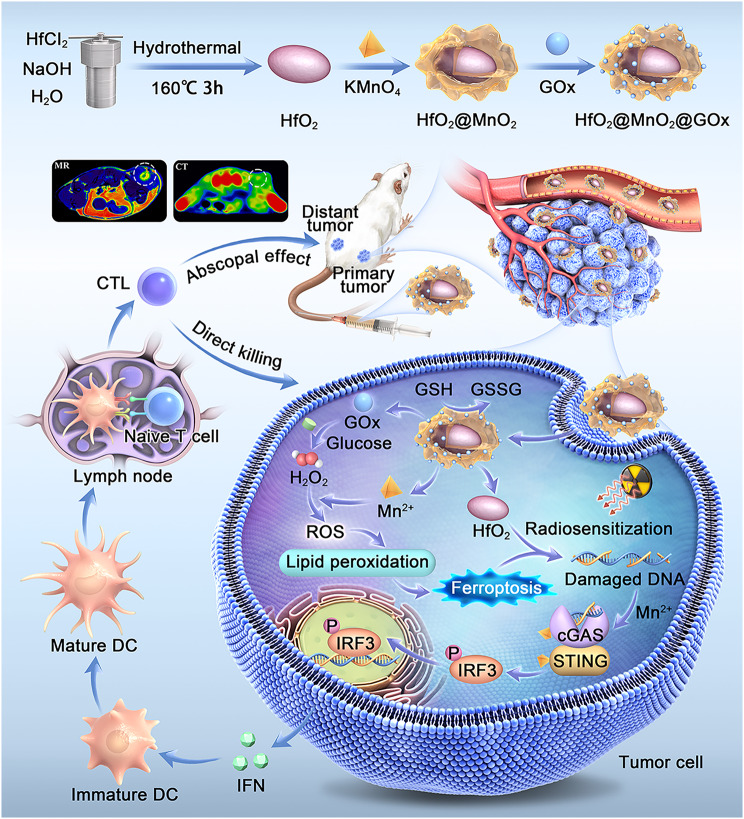
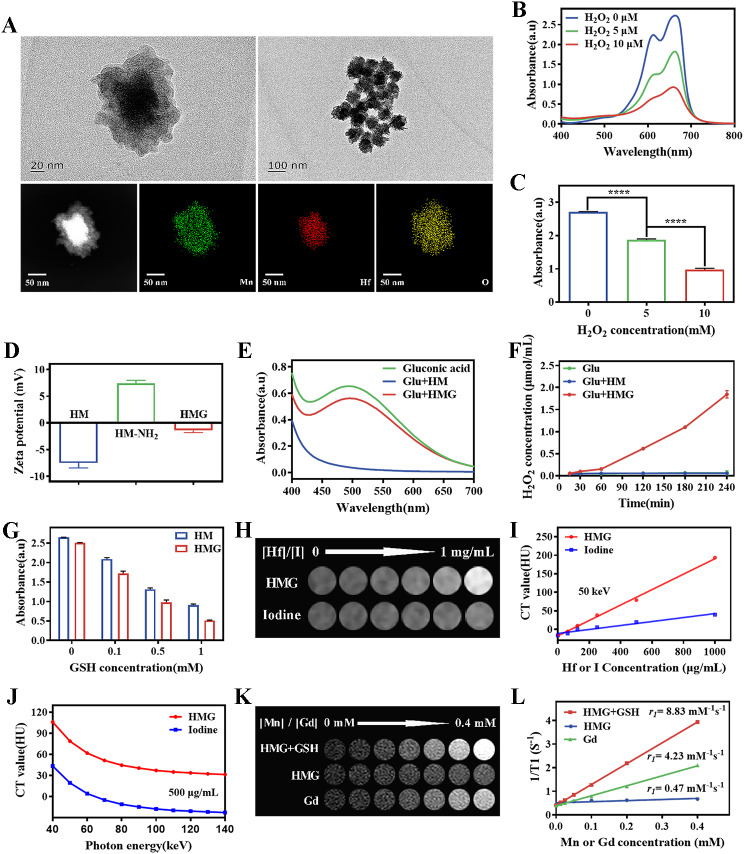
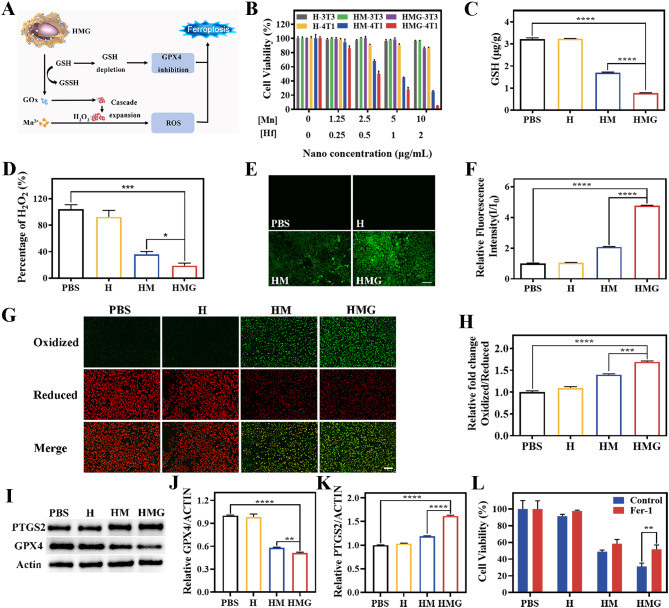
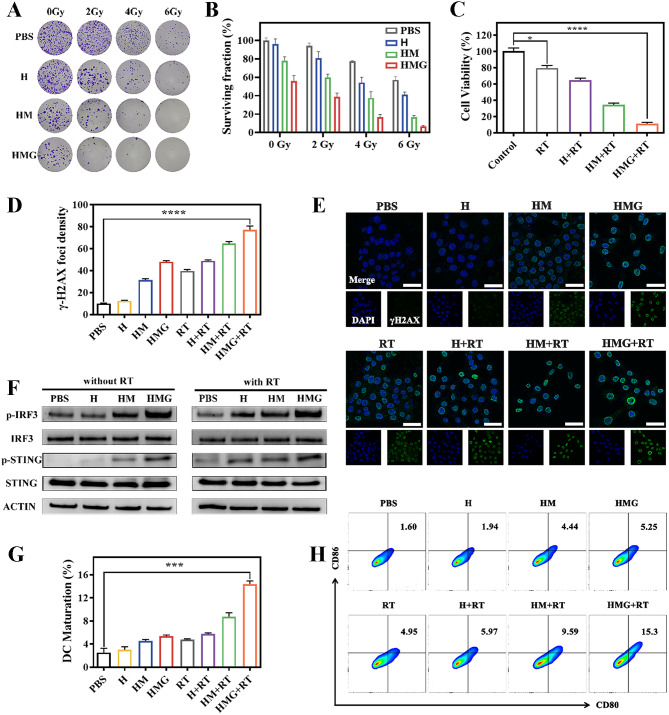
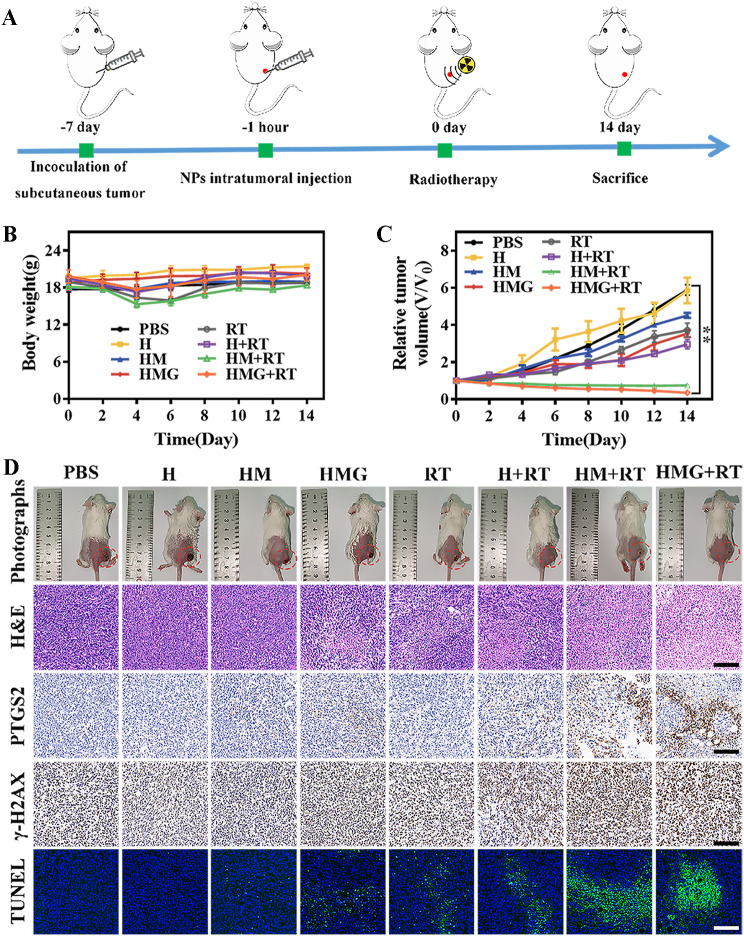
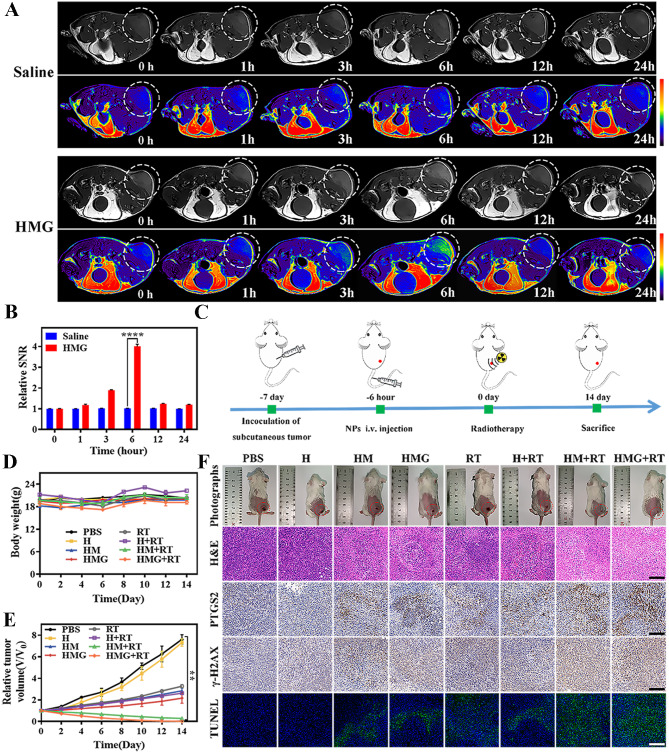
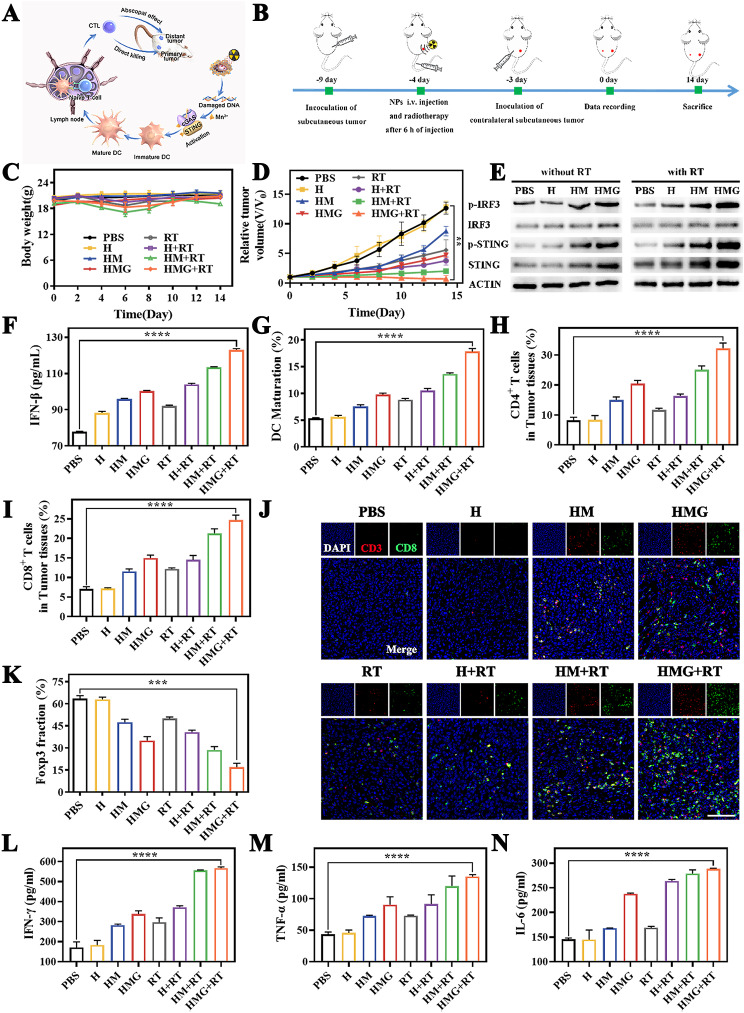
Radiotherapy-induced immune activation holds great promise for optimizing cancer treatment efficacy. Here, we describe a clinically used radiosensitizer hafnium oxide (HfO 2 ) that was core coated with a MnO 2 shell followed by a glucose oxidase (GOx) doping nanoplatform (HfO 2 @MnO 2 @GOx, HMG) to trigger ferroptosis adjuvant effects by glutathione depletion and reactive oxygen species production. This ferroptosis cascade potentiation further sensitized radiotherapy by enhancing DNA damage in 4T1 breast cancer tumor cells. The combination of HMG nanoparticles and radiotherapy effectively activated the damaged DNA and Mn 2+ -mediated cGAS-STING immune pathway in vitro and in vivo. This process had significant inhibitory effects on cancer progression and initiating an anticancer systemic immune response to prevent distant tumor recurrence and achieve long-lasting tumor suppression of both primary and distant tumors. Furthermore, the as-prepared HMG nanoparticles “turned on” spectral computed tomography (CT)/magnetic resonance dual-modality imaging signals, and demonstrated favorable contrast enhancement capabilities activated by under the GSH tumor microenvironment. This result highlighted the potential of nanoparticles as a theranostic nanoplatform for achieving molecular imaging guided tumor radiotherapy sensitization induced by synergistic immunotherapy.
Overview
The claims and statistics of this paper haven’t been checked yet.
Free: it reads the open-access text and checks the first 5 claims that cite a source we can check. Create a free account to check every claim.
Integrity signals
Registry
Cites
Statistics
Figures
Verification
Claims the paper makes
The claims and statistics of this paper haven’t been checked yet.
Free: it reads the open-access text and checks the first 5 claims that cite a source we can check. Create a free account to check every claim.
Claims other papers make about this one
Each is checked against this paper’s own text: does it say what the citing paper says it does?
The source backs part of the claim, not all of it — or backs it for a different population, condition or comparison.
In the citing paper
“X-ray irradiation was the most frequently reported modality [17,20,27,34,54], whereas megavoltage radiation and radionuclide-based approaches were less commonly used [20,24,61,62].”
From Nanoparticle-Mediated Radiosensitization in Breast Cancer: A Systematic Review of Preclinical Evidence and Translational Challenges (2026) · cites this paper as [17]
Experimental — accuracy not yet measuredThe source backs part of the claim, not all of it — or backs it for a different population, condition or comparison.
In the citing paper
“However, the overall magnitude of radiotherapy enhancement is not determined by atomic number alone but is also influenced by nanoparticle composition, size, surface functionalization, intracellular localization, and other physicochemical and biological characteristics [17,21,31,87].”
From Nanoparticle-Mediated Radiosensitization in Breast Cancer: A Systematic Review of Preclinical Evidence and Translational Challenges (2026) · cites this paper as [17]
Experimental — accuracy not yet measuredThe source backs part of the claim, not all of it — or backs it for a different population, condition or comparison.
In the citing paper
“Microenvironment-responsive functionalization targeting hypoxia, pH, and redox conditions was reported in multiple studies [17,19,53,67].”
From Nanoparticle-Mediated Radiosensitization in Breast Cancer: A Systematic Review of Preclinical Evidence and Translational Challenges (2026) · cites this paper as [17]
Experimental — accuracy not yet measuredThe source backs part of the claim, not all of it — or backs it for a different population, condition or comparison.
In the citing paper
“Immune-modulating strategies, including checkpoint-related approaches, were described in combination with radiotherapy in selected nanoplatforms [17,21,23,26,39,56].”
From Nanoparticle-Mediated Radiosensitization in Breast Cancer: A Systematic Review of Preclinical Evidence and Translational Challenges (2026) · cites this paper as [17]
Experimental — accuracy not yet measuredThe source backs part of the claim, not all of it — or backs it for a different population, condition or comparison.
In the citing paper
“In some studies, marked tumor regression or complete tumor responses were described in a subset of treated animals [13,17,62,67].”
From Nanoparticle-Mediated Radiosensitization in Breast Cancer: A Systematic Review of Preclinical Evidence and Translational Challenges (2026) · cites this paper as [17]
Experimental — accuracy not yet measured
33 more claims about this paper
Create a free account to see every claim other papers make about this one.
Self-check
Percentages, sums and reported differences re-computed from the paper’s own numbers.
The self-check needs the paper’s full text.
Citations
Cites
Siegel, R. L., Giaquinto, A. N., & Jemal, A. (2024) · CA: A Cancer Journal for Clinicians · doi:10.3322/caac.21820 · Cited by 9,533 · cited 1×
“Breast cancer is one of the most common malignant tumors in women, with its incidence rate increasing annually [1, 2].”
BackgroundFerroptosis turns 10: Emerging mechanisms, physiological functions, and therapeutic applications
Stockwell, B. R. (2022) · Cell · doi:10.1016/j.cell.2022.06.003 · Cited by 3,056
Broadening horizons: the role of ferroptosis in cancer
Chen, X., Kang, R., Kroemer, G., & Tang, D. (2021) · Nature Reviews Clinical Oncology · doi:10.1038/s41571-020-00462-0 · Cited by 2,897
Breast Cancer Statistics, 2022
Giaquinto, A. N., Sung, H., Miller, K. D., Kramer, J. L., Newman, L. A., Minihan, A., Jemal, A., & Siegel, R. L. (2022) · CA: A Cancer Journal for Clinicians · doi:10.3322/caac.21754 · Cited by 2,286
Molecular mechanisms and cellular functions of cGAS–STING signalling
Hopfner, K.-P., & Hornung, V. (2020) · Nature Reviews Molecular Cell Biology · doi:10.1038/s41580-020-0244-x · Cited by 2,052 · cited 1×
“In tumor cells, the released DNA in the cytoplasm can be sensed by cGAS, which triggers the activation of the cGAS-STING pathway activation and subsequently induces an immune response [12–14].”
BackgroundTargeting HER2-positive breast cancer: advances and future directions
Swain, S. M., Shastry, M., & Hamilton, E. (2023) · Nature Reviews Drug Discovery · doi:10.1038/s41573-022-00579-0 · Cited by 1,160
Inflammatory microenvironment remodelling by tumour cells after radiotherapy
McLaughlin, M., Patin, E. C., Pedersen, M., Wilkins, A., Dillon, M. T., Melcher, A. A., & Harrington, K. J. (2020) · Nature Reviews Cancer · doi:10.1038/s41568-020-0246-1 · Cited by 883
Targeting DNA damage response pathways in cancer
Groelly, F. J., Fawkes, M., Dagg, R. A., Blackford, A. N., & Tarsounas, M. (2023) · Nature Reviews Cancer · doi:10.1038/s41568-022-00535-5 · Cited by 836
Engineering nanomedicine for glutathione depletion-augmented cancer therapy
Xiong, Y., Xiao, C., Li, Z., & Yang, X. (2021) · Chemical Society Reviews · doi:10.1039/d0cs00718h · Cited by 692
Bonvalot, S., Rutkowski, P. L., Thariat, J., Carrère, S., Ducassou, A., Sunyach, M.-P., Agoston, P., Hong, A., Mervoyer, A., Rastrelli, M., et al. (2019) · The Lancet Oncology · doi:10.1016/s1470-2045(19)30326-2 · Cited by 536
Cited by
Ying, X., Chen, Q., Yang, Y., Wu, Z., Zeng, W., Miao, C., Huang, Q., & Ai, K. (2024) · Molecular Cancer · doi:10.1186/s12943-024-02186-6 · Cited by 95
Self-citationEnhancing radiotherapy-induced anti-tumor immunity via nanoparticle-mediated STING agonist synergy
Zeng, Q., Liu, M., Wang, Z., Zhou, R., & Ai, K. (2025) · Molecular Cancer · doi:10.1186/s12943-025-02366-y · Cited by 95
Enhancing Ferroptosis-Mediated Radiosensitization via Synergistic Disulfidptosis Induction
Li, Q., Wu, Z., Chen, S., Liang, Y., Zhu, K., Su, N., Liu, T., & Zhao, B. (2024) · ACS Nano · doi:10.1021/acsnano.4c15932 · Cited by 75
Self-citationTargeting the interplay of cGAS-STING and ferroptosis by nanomedicine in the treatment of cancer
Li, C., Zhao, W., Geng, D., Jin, Y., & Guan, W. (2025) · Journal of Experimental & Clinical Cancer Research · doi:10.1186/s13046-025-03520-6 · Cited by 36
Xu, Z., Gao, Y., Zhang, L., Gao, Y., Liao, Y., Liang, Y., Yuan, Z., Li, Y., Zhao, B., & Wen, G. (2025) · Journal of Nanobiotechnology · doi:10.1186/s12951-025-03608-3 · Cited by 19
Self-citationAdvances in nanomaterials for enhancing cGAS-STING pathway mediated anti-tumor treatment
Wu, R., Wang, J., Li, D., Li, A., Yoo, K. H., Liu, Z., Wei, W., Wang, Z., & Feng, D. (2025) · Materials Today Bio · doi:10.1016/j.mtbio.2025.102190 · Cited by 17
Gan, L., Lin, X., Zhong, Z., Zheng, Y., Chen, X., Chen, J., Xiao, Y., Liu, Y., Pan, X., Wu, C., et al. (2025) · Acta Pharmaceutica Sinica B · doi:10.1016/j.apsb.2025.09.043 · Cited by 17
Self-citationMechanisms of Tumor Radiosensitization: A Perspective of Nano‐Radiotherapy
Zhou, J., Zhang, Y., Dong, F., Matsuyama, K., Tanaka, Y., & Wu, L. (2025) · Wiley Interdisciplinary Reviews Nanomedicine and Nanobiotechnology · doi:10.1002/wnan.70035 · Cited by 16
Wang, T., Zhou, X., Yin, X., Zhang, A., Fan, Y., Chen, K., Tao, H., Tang, Z., Zhang, P., He, X., et al. (2025) · International Journal of Oncology · doi:10.3892/ijo.2025.5781 · Cited by 14
Li, Q., Shi, J., Ruan, X., Zhang, L., Fu, R., Hidayat, K., Qin, L., Xu, J., Chong, Y., & Hu, C. (2025) · Advanced Functional Materials · doi:10.1002/adfm.202510798 · Cited by 13
Gong, B., Zhang, Q., Qu, Y., Zheng, X., & Wang, W. (2025) · Pharmaceutics · doi:10.3390/pharmaceutics17070883 · Cited by 13
Tarawneh, M. H., Dheyab, M. A., Rahman, A. A., Alsardi, M. M., Aziz, A. A., Alanezi, S. T., Abdullah, W., Abdulwahab, S., & Ghasemlou, M. (2026) · Rare Metals · doi:10.1002/rar2.70204 · Cited by 12
Therapeutic application of nanosystems-based metalloptosis for enhanced tumor radiotherapy
Chen, M., Chen, L., Mao, K., Shi, Y.-B., Sun, M., Zhou, Y., Li, Z., & Luo, G. (2025) · Coordination Chemistry Reviews · doi:10.1016/j.ccr.2025.216666 · Cited by 9
Du, Q., Wu, G., Xie, A., Wu, D., Hu, W., Lu, Q., Liu, J., Wang, J., Yang, Y., Hu, B., et al. (2025) · Journal of Materials Chemistry B · doi:10.1039/d5tb00926j · Cited by 8
Self-citationHullo, M., Mathé, C., Fonknechten, N., Lacrouts, C., Piton, G., Noireaux, J., Chevillard, S., Campalans, A., & Bourneuf, E. (2025) · ACS Nano · doi:10.1021/acsnano.5c02886 · Cited by 8
Zhou, D., Zhang, G., Zhu, J., Ai, C., Wang, W., Zhao, Y., Han, X., Qi, Y., Duan, J., & Yu, D. (2025) · Chemical Engineering Journal · doi:10.1016/j.cej.2025.162048 · Cited by 7
The emerging Nexus of STING signaling and ferroptosis: from mechanisms to therapeutic opportunities
Lin, X., Wen, Y., Lang, J., Zhu, Z., Guo, Z., Wang, L., Ji, F., Zhi, L., & Zhou, J. (2026) · Cell Death Discovery · doi:10.1038/s41420-026-03214-8 · Cited by 7
Application of nanoparticles with activating STING pathway function in tumor synergistic therapy
Yang, Y., Fang, Y., Du, X., Ying, Z., Lu, X., & Zhou, J. (2025) · International Immunopharmacology · doi:10.1016/j.intimp.2025.114013 · Cited by 6
Nanomedicine-enabled disruption of glucose metabolism and synergistic antitumor therapy
Ni, J., Ma, A., Gao, Q., Li, C., Li, D., Wang, R., Ding, Y., & Cao, H. (2026) · Journal of Nanobiotechnology · doi:10.1186/s12951-025-03984-w · Cited by 6
Deciphering Radiotherapy Resistance: A Proteomic Perspective
Perico, D., & Mauri, P. (2025) · Proteomes · doi:10.3390/proteomes13020025 · Cited by 6
Zhang, L., Chen, H., Jiang, Z., Xu, Z., Gao, Y., Gao, Y., Liang, Y., Li, Q., Lan, H., Liu, M., et al. (2024) · Chemical Engineering Journal · doi:10.1016/j.cej.2024.159096 · Cited by 5
Self-citationChen, D., Liu, A., Wang, Z., Wang, C., Hu, J., Wang, D., & Yao, D. (2026) · Coordination Chemistry Reviews · doi:10.1016/j.ccr.2026.217976 · Cited by 4
Bao, X., Zheng, Z., Li, M., Wang, X., Zhao, Q., Wang, H., Xin, Y., & Jiang, X. M. (2025) · Coordination Chemistry Reviews · doi:10.1016/j.ccr.2025.217234 · Cited by 4
Wu, W., Xiaoyang, G., Tian, H., Wei, H., Ding, Z., Ming, Q., Liang, X., & Wang, C. (2025) · Nano Today · doi:10.1016/j.nantod.2025.102656 · Cited by 3
Lunca, S., Morarasu, S., & Dimofte, G. M. (2026) · International Journal of Molecular Sciences · doi:10.3390/ijms27146522 · Cited by 2
“Many nanoplatforms incorporated targeting ligands, therapeutic payloads, and microenvironment-responsive components [16,17,26,27,45,49,51–53].”
InfluentialFerroptosis in breast cancer: From adipocyte–immune–iron regulation to therapeutic application
Sun, J., Qu, Y., Ru, Y., & Zhou, Y. (2026) · Clinical and Translational Medicine · doi:10.1002/ctm2.70707 · Cited by 2
pH responsive nanoplatforms for radiosensitization and radioprotection in cancer therapy
Dai, E., Qiu, Y., Xu, H., Zhong, G., & Feng, W. (2026) · Discover Oncology · doi:10.1007/s12672-026-05781-9 · Cited by 2
Tang, S., Wang, X., Li, J., Wen, X., Chen, H., Yan, M., Chen, X., & Guo, C. (2026) · International Journal of Biological Macromolecules · doi:10.1016/j.ijbiomac.2026.150785 · Cited by 2
Wang, X., Daojia, L., Luo, X., Feng, Y., Tang, L., Li, S., Chen, Q., Song, J., & Chen, J. (2026) · Aggregate · doi:10.1002/agt2.70352 · Cited by 1
Chen, Y., Zhou, Z., Wang, D., Liu, C., Mo, C., Tian, S., Wu, Y., & Song, J. (2025) · Biomaterials · doi:10.1016/j.biomaterials.2025.123918 · Cited by 1
Manganese Ion‐Based NanoPlatforms for Tumor Theranostics
Xiangzhou, L., Xie, W., Jin, X., Sun, T. R., Shang, Y., Deng, Z., & Peng, H. (2026) · Advanced Healthcare Materials · doi:10.1002/adhm.71519 · Cited by 1
Gao, Z., Xue, J., Qi, Z., Hu, K., Wang, J., Chen, X., Zhang, Y., Xu, J., Zhang, C., Xiong, L., et al. (2025) · Analytical Chemistry · doi:10.1021/acs.analchem.5c04000 · Cited by 1
Systematic evidence review on radiosensitizers and the abscopal effects of radiotherapy
El‐Sehrawy, A. A. M. A., Oudah, D. M., Baig, M. R., Roopashree, R., Kaur, I., Nematov, O. N., Sapaev, I. B., Arora, V., Smerat, A., & Mohapatra, S. S. G. (2026) · International Journal of Radiation Biology · doi:10.1080/09553002.2026.2704757 · Cited by 1
Lan, H., Wu, Z., 夏京华, Li, Q., Gao, M., Cai, Z., Tan, W., Liu, M., Xu, Z., Gao, Y., et al. (2026) · Journal of Nanobiotechnology · doi:10.1186/s12951-026-04482-3 · Cited by 1
Self-citationRihan, Bano, L., Alam, M., Anas, M., Yahya, H., Alam, M. N., Prasad, S., & Sameer, M. (2026) · Chemical Papers · doi:10.1007/s11696-026-04852-z · Cited by 1
Wang, L., Li, Y., Qi, G., Pan, W., Li, Y., Dai, S., & Zhang, Y. (2025) · Biochemical and Biophysical Research Communications · doi:10.1016/j.bbrc.2025.152545 · Cited by 1
Zhu, G., Li, D., Zhang, H., Wang, J., Li, X., Zeng, L., Zhang, L., & Yu, L. (2026) · International Journal of Nanomedicine · doi:10.2147/ijn.s598118
Nano-Radiosensitizers for Radiotherapy: Design Strategies and Antitumor Immune Responses
Song, R., & Lin, W. (2026) · ACS Nano Medicine · doi:10.1021/acsnanomed.6c00136
Luncă, S., Morărașu, Ș., & Dimofte, G. M. (2026) · International Journal of Molecular Sciences · doi:10.3390/ijms27198928
Gu, Y., Qu, P., Li, X., Shi, J., Zhou, M., Bai, Z., Li, G., Cheng, P., Li, X., Chen, F., et al. (2026) · Critical Reviews in Oncology/Hematology · doi:10.1016/j.critrevonc.2026.105612
Harnessing Trace Elements: Novel Radiosensitization Strategies for Enhanced Cancer Radiotherapy
Zhang, Y., Ge, Y., Xiang, H., Liu, J. Z., Tian, Y., Shen, Y., & Zong, D. (2026) · Rare Metals · doi:10.1002/rar2.70347
Ding, X., Zhu, Y., Fang, J., Deng, J., Wang, J., Mei, Z., Zhao, X., Lu, H., Chen, A., & Wang, Z. (2026) · ACS Applied Bio Materials · doi:10.1021/acsabm.6c00454
David, S. R., Kifli, A. A. A., & Rajabalaya, R. (2026) · Journal of Drug Delivery Science and Technology · doi:10.1016/j.jddst.2026.108966
Qu, N., Zhang, M., Ji, Y., Liu, M., Liu, M., & Chen, L. J. (2026) · Immunological Investigations · doi:10.1080/08820139.2025.2590048
Enkhtaivan, K., Kim, J., Son, J., Jang, J., Choi, Y., Lee, H., Kang, S. H., & Choi, J. H. (2026) · Tissue and Cell · doi:10.1016/j.tice.2026.103901
Atomic approaches in cancer therapy: advances, mechanisms, and clinical applications
Akbari, B., Kalantari, A., & Salehi, M. E. (2025) · Ghalib Medical Journal · doi:10.58342/ghalibmj.v.2.i.2.10
Huang, M., Yang, L., Peng, G., Zhang, J., Gong, C., Fan, B., Huang, Y., Tang, B., Xu, Y., Wu, C., et al. (2026) · ChemNanoMat · doi:10.1002/cnma.70326
Self-citationYe, X. F., Tao, Y. C., Min, Y., Yang, L., Wu, W., Liu, Z., Wei, Z., & Peng, X. (2026) · Journal of Nanobiotechnology · doi:10.1186/s12951-026-04770-y
Reactive Oxygen Species as Central Coordinators of Organelle Stress and Tumor Radiosensitivity
Ju, G., Wang, Z., Xiao, J., Wu, Q., Yang, Z., Miao, Y., Yuan, S., & Qian, J. (2026) · Cell Biochemistry and Function · doi:10.1002/cbf.70324
Xie, Y., Xiang, Q., Luo, B., Wang, S., Xu, Y., & Tian, J. (2026) · Materials Today Bio · doi:10.1016/j.mtbio.2026.103796
Self-citationLiu, H., Chen, L., Liu, M., Liu, Y., Jia, R., Liu, H., Liang, J., Li, X., Fauzia, R. P., Yu, X., et al. (2026) · International Journal of Nanomedicine · doi:10.2147/ijn.s612052
Metadata
- Authors
- Hu, H., Zheng, S., He, C., Zheng, Y., Wei, Q., Chen, S., Wu, Z., Xu, Y., Zhao, B., & Yan, C.
- Affiliations
- Second Affiliated Hospital of Guangzhou Medical University (CN)
- Nanfang Hospital (CN)
- Guangdong Provincial Hospital of Chinese Medicine (CN)
- Southern Medical University (CN)
- Corresponding author
- Xu, Yikai
- Zhao, Bingxia
- Yan, Chenggong
- Venue
- Journal of Nanobiotechnology
- Published
- 2024-05-09
- Volume
- 22
- Issue
- 1
- Pages
- 234-234
- ISSN
- 1477-3155 (ISSN-L)
- PMC
- PMC11080188
- OpenAlex
- W4396765487
- Cited by
- 43
- References
- 39
- Citations by year
- 2026: 20 · 2025: 20 · 2024: 3
- FWCI
- 4.70
- Type
- journal article
- Language
- en
- Open access
- gold
- doi.org
- Licence
- cc-by
- creativecommons.org/licenses/by/4.0 (tdm)
- creativecommons.org/licenses/by/4.0 (vor)
- Locations
- Journal of Nanobiotechnology (publishedVersion, cc-by)
- PubMed Central (publishedVersion, cc-by)
- PubMed (publishedVersion)
- DOAJ (DOAJ: Directory of Open Access Journals) (submittedVersion, cc-by-sa)
- Funders
- the National Natural Science Foundation of China (81871334, 82072056, 81801764)
- Guangdong Basic and Applied Basic Research Foundation (2021A1515011882, 2017A050506011)
- Medical Scientific Research Foundation of Guangdong Province (A2018014)
- the Pearl River Talented Young Scholar Program (2017GC010282)
- Topics
- Physical Sciences › Engineering › Biomedical Engineering › Nanoplatforms for cancer theranostics
- Physical Sciences › Physics and Astronomy › Radiation › Radiation Therapy and Dosimetry
- Life Sciences › Biochemistry, Genetics and Molecular Biology › Cancer Research › Ferroptosis and cancer prognosis
- Keywords
- radiosensitization, cancer immunotherapy, cGAS-STING pathway, hafnium oxide nanoparticles, glucose oxidase, ferroptosis, glutathione depletion, reactive oxygen species, DNA damage, 4T1 breast cancer, theranostic nanoplatform, tumor microenvironment
- MeSH terms
- Ferroptosis, STING Protein, Cyclic Guanosine Monophosphate-Adenosine Monophosphate Synthase, Animals, DNA Damage, Female, Glucose Oxidase, Humans, Immunotherapy, Membrane Proteins, Mice, Inbred BALB C, Nucleotidyltransferases, Oxides, Radiation-Sensitizing Agents, Reactive Oxygen Species, Manganese Compounds, Cell Line, Tumor, Mice, Nanoparticles, Tumor Microenvironment
About these checks
Registry, retraction, Cites and statistics results are computed, not judged, with one exception: a printed reference that no index lists is read once by a model before it counts as a citation error. Claims are extracted by a model and kept only when their quote appears verbatim in the text; each cited source is then checked, with a model’s help, for whether it says what the claim relies on. Those verdicts can be wrong — read the claim’s quote and the cited source before relying on one.
Statistics and arithmetic are recomputed, not judged.
Confidence bands are shown only for fields calibrated on our annotated test set. None is calibrated yet, so no band is shown.
What counts as a claim ›How we measure confidence ›How we check this ›
Are you an author, or do you see a problem with this page? Request a review
Data sources
Bibliographic data: Semantic Scholar, OpenAlex, Crossref.
Contains information from the Semantic Scholar Academic Graph Datasets, made available under the ODC Attribution License (ODC-BY 1.0).
Semantic Scholar’s data is described in: Kinney, R., et al. (2023). The Semantic Scholar Open Data Platform. arXiv:2301.10140.
