

The impact of preterm birth <37 weeks on parents and families: a cross-sectional study in the 2 years after discharge from the neonatal intensive care unit
Open accessThe DOI matches its Crossref record; 73 of the 73 references it cites were found in a registry or an index.
Abstract
BACKGROUND: Little is known about the quality of life of parents and families of preterm infants after discharge from the neonatal intensive care unit (NICU). Our aims were (1) to describe the impact of preterm birth on parents and families and (2) and to identify potentially modifiable determinants of parent and family impact. METHODS: We surveyed 196 parents of preterm infants <24 months corrected age in 3 specialty clinics (82% response rate). Primary outcomes were: (1) the Impact on Family Scale total score; and (2) the Infant Toddler Quality of Life parent emotion and (3) time limitations scores. Potentially modifiable factors were use of community-based services, financial burdens, and health-related social problems. We estimated associations of potentially modifiable factors with outcomes, adjusting for socio-demographic and infant characteristics using linear regression. RESULTS: Median (inter-quartile range) infant gestational age was 28 (26-31) weeks. Higher Impact on Family scores (indicating worse effects on family functioning) were associated with taking ≥3 unpaid hours/week off from work, increased debt, financial worry, unsafe home environment and social isolation. Lower parent emotion scores (indicating greater impact on the parent) were also associated with social isolation and unpaid time off from work. Lower parent time limitations scores were associated with social isolation, unpaid time off from work, financial worry, and an unsafe home environment. In contrast, higher parent time limitations scores (indicating less impact) were associated with enrollment in early intervention and Medicaid. CONCLUSIONS: Interventions to reduce social isolation, lessen financial burden, improve home safety, and increase enrollment in early intervention and Medicaid all have the potential to lessen the impact of preterm birth on parents and families.
Overview
The claims and statistics of this paper haven’t been checked yet.
Free: it reads the open-access text and checks the first 5 claims that cite a source we can check. Create a free account to check every claim.
Integrity signals
Registry
Cites
Statistics
Figures
Verification
Claims the paper makes
The claims and statistics of this paper haven’t been checked yet.
Free: it reads the open-access text and checks the first 5 claims that cite a source we can check. Create a free account to check every claim.
Claims other papers make about this one
Each is checked against this paper’s own text: does it say what the citing paper says it does?
The source backs part of the claim, not all of it — or backs it for a different population, condition or comparison.
In the citing paper
“A stressful perinatal experience for these parents and infants may begin during pregnancy and can persist for months to years after NICU discharge (Ghetti et al., 2021; Lakshmanan et al., 2017).”
From Scoping review of interventions to support families with preterm infants post-NICU discharge (2022) · cites this paper as Lakshmanan et al., 2017
Experimental — accuracy not yet measuredThe cited source says what the claim attributes to it.
In the citing paper
“The intensity of care needed by the growing premature baby and the high level of vigilance required can adversely affect the parents' and family's quality of life (Lakshmanan et al., 2017).”
From The transition home of extremely premature babies: An integrative review (2021) · cites this paper as Lakshmanan et al., 2017
Self-check
Percentages, sums and reported differences re-computed from the paper’s own numbers.
The self-check needs the paper’s full text.
Citations
Cites
An overview of mortality and sequelae of preterm birth from infancy to adulthood
Saigal, S., & Doyle, L. W. (2008) · The Lancet · doi:10.1016/s0140-6736(08)60136-1 · Cited by 2,818
A framework for the study of access to medical care.
(1974) · PubMed Central · Cited by 2,419
Meta-Analysis of Neurobehavioral Outcomes in Very Preterm and/or Very Low Birth Weight Children
Aarnoudse-Moens, C. S. H., Weisglas-Kuperus, N., van Goudoever, J. B., & Oosterlaan, J. (2009) · Pediatrics · doi:10.1542/peds.2008-2816 · Cited by 1,587
Housing and Health: Time Again for Public Health Action
Krieger, J., & Higgins, D. L. (2002) · American Journal of Public Health · doi:10.2105/ajph.92.5.758 · Cited by 1,550 · cited 1×
“Prior studies have demonstrated the impact of substandard housing on child health such as increased infectious disease and injury [65].”
BackgroundVohr, B. R., Wright, L. L., Dusick, A. M., Mele, L., Verter, J., Steichen, J. J., Simon, N. P., Wilson, D. C., Broyles, S., Bauer, C. R., et al. (2000) · Pediatrics · doi:10.1542/peds.105.6.1216 · Cited by 1,142
Phillips, K. A., Morrison, K., Andersen, R., & Aday, L. A. (1998) · PubMed Central · Cited by 733
Caregiving process and caregiver burden: Conceptual models to guide research and practice
Raina, P., O'Donnell, M., Schwellnus, H., Rosenbaum, P., King, G., Brehaut, J., Russell, D., Swinton, M., King, S., Wong, M., et al. (2004) · BMC Pediatrics · doi:10.1186/1471-2431-4-1 · Cited by 538 · cited 1×
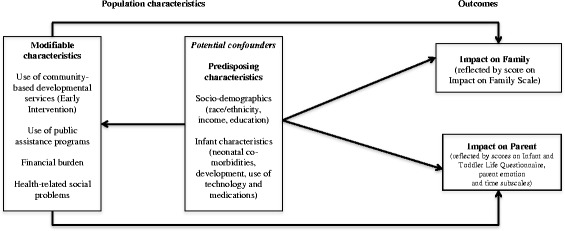
“Our main research question was, “Are modifiable characteristics (such as the use of community based and public assistance programs, financial burden, and health related social problems) associated with the impact of preterm birth on parents and families after NICU discharge?” The Anderson and Aday health utilization m…”
BackgroundHospital Discharge of the High-Risk Neonate
Committee on Fetus and Newborn (2008) · Pediatrics · doi:10.1542/peds.2008-2174 · Cited by 537
de Kieviet, J. F., Piek, J. P., Aarnoudse-Moens, C. S., & Oosterlaan, J. (2009) · JAMA · doi:10.1001/jama.2009.1708 · Cited by 523
Hack, M., Taylor, H. G., Drotar, D., Schluchter, M., Cartar, L., Andreias, L., Wilson-Costello, D., & Klein, N. (2005) · JAMA · doi:10.1001/jama.294.3.318 · Cited by 504
Hunger: Its Impact on Children’s Health and Mental Health
Weinreb, L., Wehler, C., Perloff, J., Scott, R., Hosmer, D., Sagor, L., & Gundersen, C. (2002) · Pediatrics · doi:10.1542/peds.110.4.e41 · Cited by 452 · cited 2×
“Most questions about these domains were adapted from previous surveys (e.g. National Health Interview Survey [49], the American Housing Survey [50], the Philadelphia Survey of Work and Family [51] and the Childhood Community Hunger Identification Project [52]), while a few newly written items were also incorporated in…”
BackgroundBenzies, K. M., Magill-Evans, J. E., Hayden, K., & Ballantyne, M. (2013) · BMC Pregnancy and Childbirth · doi:10.1186/1471-2393-13-s1-s10 · Cited by 385 · cited 1×
“A recent meta-analysis suggests that community-based developmental programs had beneficial pooled effects on maternal anxiety, depressive symptoms, and self-efficacy [71].”
BackgroundAnnual Summary of Vital Statistics: 2010–2011
Hamilton, B. E., Hoyert, D. L., Martin, J. A., Strobino, D. M., & Guyer, B. (2013) · Pediatrics · doi:10.1542/peds.2012-3769 · Cited by 375
de KIEVIET, J. F., ZOETEBIER, L., van ELBURG, R. M., VERMEULEN, R. J., & OOSTERLAAN, J. (2012) · Developmental Medicine & Child Neurology · doi:10.1111/j.1469-8749.2011.04216.x · Cited by 322
Hospital discharge of the high-risk neonate
Zarbock, S. F. (1998) · Home Care Provider · doi:10.1016/s1084-628x(98)90006-5 · Cited by 282
Fathers’ Experiences in the Neonatal Intensive Care Unit: A Search for Control
Arockiasamy, V., Holsti, L., & Albersheim, S. (2008) · Pediatrics · doi:10.1542/peds.2007-1005 · Cited by 280
From alienation to familiarity: experiences of mothers and fathers of preterm infants
Jackson, K., Ternestedt, B., & Schollin, J. (2003) · Journal of Advanced Nursing · doi:10.1046/j.1365-2648.2003.02686.x · Cited by 279 · cited 2×
“Other studies that have examined families of premature infants have found that “alienation” [67] and social isolation may have profound impact on parental emotion [68].”
BackgroundThe Impact on Family Scale Revisited: Further Psychometric Data
STEIN, R. E. K., & JESSOP, D. J. (2003) · Journal of Developmental & Behavioral Pediatrics · doi:10.1097/00004703-200302000-00004 · Cited by 277
Executive Function in Very Preterm Children at Early School Age
Aarnoudse-Moens, C. S. H., Smidts, D. P., Oosterlaan, J., Duivenvoorden, H. J., & Weisglas-Kuperus, N. (2009) · Journal of Abnormal Child Psychology · doi:10.1007/s10802-009-9327-z · Cited by 217
Cost, causes and rates of rehospitalization of preterm infants
Underwood, M. A., Danielsen, B., & Gilbert, W. M. (2007) · Journal of Perinatology · doi:10.1038/sj.jp.7211801 · Cited by 206
What diagnosis does not tell: The case for a noncategorical approach to chronic illness in childhood
Stein, R. E. K., & Jessop, D. J. (1989) · Social Science & Medicine · doi:10.1016/0277-9536(89)90157-3 · Cited by 204
Economic consequences of preterm birth and low birthweight
PETROU, S. (2003) · BJOG: An International Journal of Obstetrics and Gynaecology · doi:10.1016/s1470-0328(03)00013-2 · Cited by 193 · cited 1×
“Specifically, the use of medications and medical equipment may contribute to the substantial out-of-pocket expenditures that families may incur [61, 62].”
BackgroundRaat, H., Landgraf, J. M., Oostenbrink, R., Moll, H. A., & Essink-Bot, M.-L. (2007) · Quality of Life Research · doi:10.1007/s11136-006-9134-8 · Cited by 187
Li, J. S. M., Peat, J. K., Xuan, W., & Berry, G. (1999) · Pediatric Pulmonology · doi:10.1002/(sici)1099-0496(199901)27:1<5::aid-ppul3>3.0.co;2-5 · Cited by 184
Birthweight and gestational age effects on motor and social development
Hediger, M. L., Overpeck, M. D., Ruan, W. J., & Troendle, J. F. (2002) · Paediatric and Perinatal Epidemiology · doi:10.1046/j.1365-3016.2002.00393.x · Cited by 179 · cited 6×
“Additionally, having an infant with a low developmental score (MSD 85) was associated with greater impact on the family and parent emotion.”
BackgroundMethodInfluentialHodek, J.-M., von der Schulenburg, J.-M., & Mittendorf, T. (2011) · Health Economics Review · doi:10.1186/2191-1991-1-6 · Cited by 145 · cited 3×
“We also found that the use of prescription medications and durable medical equipment affected both parental impact scores and impact on family scores, which was consistent with other publications [20, 60].”
BackgroundResultRehospitalization in the First Two Weeks After Discharge From the Neonatal Intensive Care Unit
Escobar, G. J., Joffe, S., Gardner, M. N., Armstrong, M. A., Folck, B. F., & Carpenter, D. M. (1999) · Pediatrics · doi:10.1542/peds.104.1.e2 · Cited by 144
National Health Interview Survey
&NA; (1997) · Medicine& Science in Sports & Exercise · doi:10.1097/00005768-199706001-00029 · Cited by 144
Families' Health-Related Social Problems and Missed Referral Opportunities
Fleegler, E. W., Lieu, T. A., Wise, P. H., & Muret-Wagstaff, S. (2007) · Pediatrics · doi:10.1542/peds.2006-1505 · Cited by 143
Self-citationRehospitalization for Respiratory Syncytial Virus Among Premature Infants
Joffe, S., Escobar, G. J., BLACK, S. B., Armstrong, M. A., & Lieu, T. A. (1999) · PEDIATRICS · doi:10.1542/peds.104.4.894 · Cited by 138
Self-citationThe Impact of Very Low-Birth-Weight Infants on the Family Is Long Lasting: A Matched Control Study
Cronin, C. M. G. (1995) · Archives of Pediatrics & Adolescent Medicine · doi:10.1001/archpedi.1995.02170140033005 · Cited by 131
Impact of extreme prematurity on families of adolescent children
Saigal, S., Burrows, E., Stoskopf, B. L., Rosenbaum, P., & Streiner, D. L. (2000) · The Journal of Pediatrics · doi:10.1067/mpd.2000.109001 · Cited by 130
Jessop, D. J., & Stein, R. E. K. (1985) · Social Science & Medicine · doi:10.1016/0277-9536(85)90255-2 · Cited by 121
Wang, C. J., McGlynn, E. A., Brook, R. H., Leonard, C. H., Piecuch, R. E., Hsueh, S. I., & Schuster, M. A. (2006) · Pediatrics · doi:10.1542/peds.2005-1904 · Cited by 119 · cited 1×
“7% of all live births, are born preterm (<37 weeks’ gestation) each year [1, 2].”
BackgroundImproving Social Determinants of Health
Hassan, A., Scherer, E. A., Pikcilingis, A., Krull, E., McNickles, L., Marmon, G., Woods, E. R., & Fleegler, E. W. (2015) · American Journal of Preventive Medicine · doi:10.1016/j.amepre.2015.04.023 · Cited by 111 · cited 1×
“HelpSteps is highly effective in identifying problems that can be addressed by referral to appropriate social services [46, 47] and a qualitative study revealed that over 2/3 of participants found the HealthSteps questions to be highly relevant to their own problems [48].”
BackgroundSelf-citationLong-term Family Outcomes for Children With Very Low Birth Weights
Taylor, H. G., Klein, N., Minich, N. M., & Hack, M. (2001) · Archives of Pediatrics & Adolescent Medicine · doi:10.1001/archpedi.155.2.155 · Cited by 107
Parenting stress in families with very low birth weight preterm infants in early infancy
Howe, T.-H., Sheu, C.-F., Wang, T.-N., & Hsu, Y.-W. (2014) · Research in Developmental Disabilities · doi:10.1016/j.ridd.2014.02.015 · Cited by 103
Garfield, L., Holditch-Davis, D., Carter, C. S., McFarlin, B. L., Schwertz, D., Seng, J. S., Giurgescu, C., & White-Traut, R. (2015) · Advances in Neonatal Care · doi:10.1097/anc.0000000000000131 · Cited by 89
Carswell, A. T. (2012) · Sage eBooks · doi:10.4135/9781452218380.n7 · Cited by 83
Youths' Health-Related Social Problems: Concerns Often Overlooked During the Medical Visit
Hassan, A., Blood, E., Pikcilingis, A., Krull, E., McNickles, L., Marmon, G., Wylie, S. A., Woods, E. R., & Fleegler, E. W. (2013) · Journal of Adolescent Health · doi:10.1016/j.jadohealth.2013.02.024 · Cited by 80 · cited 1×
“HelpSteps is highly effective in identifying problems that can be addressed by referral to appropriate social services [46, 47] and a qualitative study revealed that over 2/3 of participants found the HealthSteps questions to be highly relevant to their own problems [48].”
BackgroundSelf-citationMcCormick, M. C., Bembaum, J. C., Eisenberg, J. M., Kustra, S., & Finnegan, E. (1991) · PEDIATRICS · doi:10.1542/peds.88.3.533 · Cited by 78 · cited 1×
“Specifically, the use of medications and medical equipment may contribute to the substantial out-of-pocket expenditures that families may incur [61, 62].”
BackgroundSelf-citationLandgraf, J. M., Vogel, I., Oostenbrink, R., van Baar, M. E., & Raat, H. (2012) · Quality of Life Research · doi:10.1007/s11136-012-0177-8 · Cited by 74 · cited 2×
“In this study, we used the Family Burden scales of the ITQOL, which cover two parent-focused concept subscales, impact-emotion and impact-time, due to caring for their infant or toddler [30, 32, 33].”
MethodExecutive Function in Adolescents Born <1000 g or <28 Weeks: A Prospective Cohort Study
Burnett, A., Scratch, S. E., Lee, K. J., Cheong, J. L. Y., Searle, K., Hutchinson, E. A., Luca, C. D., Davey, M., Roberts, G., Doyle, L. W., et al. (2015) · PEDIATRICS · doi:10.1542/peds.2014-3188 · Cited by 71
Long-term neuropsychological outcomes in children and adolescents after cardiac arrest
van Zellem, L., Buysse, C., Madderom, M. J., Legerstee, J. S., Aarsen, F. K., Tibboel, D., & Utens, E. M. W. J. (2015) · Intensive Care Medicine · doi:10.1007/s00134-015-3789-y · Cited by 69
The Impact of Extremely Low Birth Weight on the Families of School-Aged Children
Drotar, D., Hack, M., Taylor, G., Schluchter, M., Andreias, L., & Klein, N. (2006) · Pediatrics · doi:10.1542/peds.2005-2118 · Cited by 68 · cited 4×
“Impact on family The Impact on Family (IOF) [26–28] measures the global impact of pediatric disability on the family and has been validated on samples of children with chronic health conditions, including preterm birth [25].”
BackgroundMethodResultInfluentialEarly childhood neurodevelopment in very low birth weight infants with predischarge apnea
Cheung, P., Barrington, K. J., Finer, N. N., & Robertson, C. M. T. (1999) · Pediatric Pulmonology · doi:10.1002/(sici)1099-0496(199901)27:1<14::aid-ppul4>3.0.co;2-0 · Cited by 63 · cited 1×
“For example, compared with normal birth weight children, VLBW children face a 2–3 fold greater risk for visual and hearing impairment, speech delays and attention disorders [10, 11]; may have poor feeding and growth, respiratory complications, and face neurocognitive difficulties [12–16].”
BackgroundHealth‐related quality of life of preterm children and their caregivers
Donohue, P. (2002) · Mental Retardation and Developmental Disabilities Research Reviews · doi:10.1002/mrdd.10041 · Cited by 62
Learning from parents' stories about what works in early intervention
Pighini, M. J., Goelman, H., Buchanan, M. J., Schonert-Reichl, K. A., & Brynelsen, D. (2013) · International Journal of Psychology · doi:10.1002/ijop.12024 · Cited by 57 · cited 1×
“Moreover, other studies have suggested that these programs can also empower families because of the collaborative process that EI offers; in turn, they have a deeper understanding of their child’s developmental needs [72].”
BackgroundWylie, S. A., Hassan, A., Krull, E. G., Pikcilingis, A. B., Corliss, H. L., Woods, E. R., & Fleegler, E. W. (2012) · Journal of Telemedicine and Telecare · doi:10.1258/jtt.2012.120214 · Cited by 54 · cited 1×
“HelpSteps is highly effective in identifying problems that can be addressed by referral to appropriate social services [46, 47] and a qualitative study revealed that over 2/3 of participants found the HealthSteps questions to be highly relevant to their own problems [48].”
BackgroundSelf-citationMeijssen, D. E., Wolf, M. J., Koldewijn, K., van Wassenaer, A. G., Kok, J. H., & van Baar, A. L. (2011) · Child: Care, Health and Development · doi:10.1111/j.1365-2214.2010.01119.x · Cited by 53 · cited 1×
“Other studies that have examined families of premature infants have found that “alienation” [67] and social isolation may have profound impact on parental emotion [68].”
BackgroundThe COPE program: a strategy to improve outcomes of critically ill young children and their parents.
Melnyk, B. M., & Alpert‐Gillis, L. J. (1998) · PubMed · Cited by 46
McCormick, M. C., & Richardson, D. K. (2002) · New England Journal of Medicine · doi:10.1056/nejm200201173460310 · Cited by 46 · cited 1×
“For example, compared with normal birth weight children, VLBW children face a 2–3 fold greater risk for visual and hearing impairment, speech delays and attention disorders [10, 11]; may have poor feeding and growth, respiratory complications, and face neurocognitive difficulties [12–16].”
BackgroundSelf-citationValidation and Psychometric Properties of the Neonatal Intensive Care Unit Parental Beliefs Scale
Melnyk, B. M., Oswalt, K., & Sidora‐Arcoleo, K. (2014) · Nursing Research · doi:10.1097/nnr.0000000000000023 · Cited by 41 · cited 7×
“While this result was unexpected, it has been speculated that parents with a higher socioeconomic status and private insurance may have higher expectations for themselves [69] and therefore may perceive an increased parental impact on their time versus those who utilize Medicaid.”
BackgroundInfluentialThygesen, S. K., Olsen, M., Østergaard, J. R., & Sørensen, H. T. (2016) · BMJ Open · doi:10.1136/bmjopen-2016-011643 · Cited by 38 · cited 1×
“All preterm infants are at risk for re-hospitalization, as well as medical and neurodevelopmental complications, even moderate to late preterm infants (born at 32 to <37 weeks’ gestation) [6].”
BackgroundFamily Burden After Out-of-Hospital Cardiac Arrest in Children
Meert, K. L., Slomine, B. S., Christensen, J. R., Telford, R., Holubkov, R., Dean, J. M., & Moler, F. W. (2016) · Pediatric Critical Care Medicine · doi:10.1097/pcc.0000000000000726 · Cited by 37
National Health Interview Survey, 1992
United States Department of Health and Human Services. National Center for Health Statistics (1994) · ICPSR Data Holdings · doi:10.3886/icpsr06343 · Cited by 34
Measuring health variables among Hispanic and non-Hispanic children with chronic conditions.
Stein, R. E. K., & Jessop, D. J. (1989) · Europe PMC (PubMed Central) · Cited by 33
Women at Risk: Why Many Women Are Forgoing Needed Health Care
Rustgi, S. D., Doty, M. M., & Collins, S. R. (2009) · Cited by 31
Experience of Families with Very Low Birthweight Children with Neurologic Sequelae
RIVERS, A., Caron, B., & Hack, M. (1987) · Clinical Pediatrics · doi:10.1177/000992288702600502 · Cited by 30
Rustgi, S. D., Doty, M. M., & Collins (2009) · PubMed · Cited by 28
Healthcare Navigation Service in 2-1-1 San Diego
Rodgers, J. T., & Purnell, J. Q. (2012) · American Journal of Preventive Medicine · doi:10.1016/j.amepre.2012.08.012 · Cited by 28 · cited 1×
“Timely receipt of public housing has been associated with improved health in other medical condtions [66].”
Backgroundvan Baar, M. E., Essink‐Bot, M., Oen, I. M. M. H., Dokter, J., Boxma, H., Hinson, M. I., Loey, N. E. E. V., Faber, A. W., & van Beeck, E. F. (2006) · Burns · doi:10.1016/j.burns.2005.10.004 · Cited by 23
Using Parent Questionnaires to Assess Neurodevelopment in Former Preterm Infants: A Validation Study
Belfort, M. B., Santo, E., & McCormick, M. C. (2013) · Paediatric and Perinatal Epidemiology · doi:10.1111/ppe.12025 · Cited by 21 · cited 2×
“88) and is modestly correlated with Bayley Scales of Infant and Toddler Devleopment, 3 edition, a gold standard professionally administered neurodevelopmental test [56].”
BackgroundMethodSelf-citationOostenbrink, R., Jongman, H., Landgraf, J. M., Raat, H., & Moll, H. A. (2010) · Quality of Life Research · doi:10.1007/s11136-009-9583-y · Cited by 21
The severity of acute bronchiolitis in infants was associated with quality of life nine months later
Rolfsjord, L. B., Skjerven, H. O., Carlsen, K., Mowinckel, P., Bains, K. E. S., Bakkeheim, E., & Carlsen, K. C. L. (2016) · Acta Paediatrica · doi:10.1111/apa.13396 · Cited by 17
Flink, I. J. E., Prins, R., Mackenbach, J., Jaddoe, V. W. V., Hofman, A., Verhulst, F. C., Tiemeier, H. W., & Raat, H. (2013) · PLoS ONE · doi:10.1371/journal.pone.0070070 · Cited by 15 · cited 1×
“In this study, we used the Family Burden scales of the ITQOL, which cover two parent-focused concept subscales, impact-emotion and impact-time, due to caring for their infant or toddler [30, 32, 33].”
MethodHealth-related quality of life of infants from ethnic minority groups: the Generation R Study
Flink, I. J. E., Beirens, T. M. J., Looman, C. W. N., Landgraf, J. M., Tiemeier, H. W., Mol, H. A., Jaddoe, V. W. V., Albert Hofman, D., Mackenbach, J. P., & Raat, H. (2012) · Quality of Life Research · doi:10.1007/s11136-012-0184-9 · Cited by 14 · cited 2×
“In this study, we used the Family Burden scales of the ITQOL, which cover two parent-focused concept subscales, impact-emotion and impact-time, due to caring for their infant or toddler [30, 32, 33].”
MethodKruizinga, I., Jansen, W., van Sprang, N. C., Carter, A. S., & Raat, H. (2015) · PLoS ONE · doi:10.1371/journal.pone.0136488 · Cited by 11 · cited 1×
“It has been used both in randomized clinical trials [31] and observational studies, and is accepted favorably for its ease of use and understandability [32].”
MethodDoty, M. M., Collins, Nicholson, J. L., & Rustgi, S. D. (2009) · PubMed · Cited by 10
Als, H., Behrman, R. E., Checchia, P. A., Denne, S. C., Dennery, P. A., Hall, C. B., Martin, R., Panitch, H. B., Schmidt, B., Stevenson, D. K., et al. (2007) · PubMed · Cited by 8
Doty, M. M., Collins, S. R., Rustgi, S. D., & Nicholson, J. L. (2009) · PubMed · Cited by 7
Doty, M. M., Rustgi, S. D., Schoen, C., & Collins, S. R. (2009) · PubMed · Cited by 6
Doty, M. M., Collins, S. R., Rustgi, S. D., & Nicholson, J. L. (2009) · Cited by 4
Research works printed but not linked: 3
- Behrman RaB, AS. 2007. Washington D.C.: National Academies Press (US); Preterm Birth: Causes, Consequences, and Prevention. 20669423
- Cress JFJ The Philadelphia Survey of Child Care and Work 2003 Philadelphia, PA Temple University
- Schiffman JK Dukhovny D Mowitz M Kirpalani H Mao W Roberts R Nyberg A Zupancic J Quantifying the Economic Burden of Neonatal Illness on Families of Preterm Infants in the U.S. and Canada 2015 San Diego, CA Pediatric Academic Societies
Cited by
Malouf, R., Harrison, S., Burton, H. A. L., Gale, C., Stein, A., Franck, L. S., & Alderdice, F. (2022) · eClinicalMedicine · doi:10.1016/j.eclinm.2021.101233 · Cited by 172
Lakshmanan, A., Kubicek, K., Williams, R., Robles, M., Vanderbilt, D. L., Mirzaian, C. B., Friedlich, P. S., & Kipke, M. (2019) · BMC Pediatrics · doi:10.1186/s12887-019-1604-6 · Cited by 89
Self-citationExperiences of Mothers of Extremely Preterm Infants after Hospital Discharge
Granero-Molina, J., Fernández Medina, I. M., Fernández-Sola, C., Hernández-Padilla, J. M., Jiménez Lasserrotte, M. D. M., & López Rodríguez, M. D. M. (2019) · Journal of Pediatric Nursing · doi:10.1016/j.pedn.2018.12.003 · Cited by 85
Preterm birth and maternal mental health: longitudinal trajectories and predictors
Yaari, M., Treyvaud, K., Lee, K. J., Doyle, L. W., & Anderson, P. J. (2019) · Journal of Pediatric Psychology · doi:10.1093/jpepsy/jsz019 · Cited by 83
“An association between the child’s neurodevelopmental impairment and maternal psychological distress has been documented in cohorts of children born preterm at the child age of 2 and 11 years (Cacciani et al., 2013; Lakshmanan et al, 2017; Taylor et al., 2001).”
BackgroundResultSurvive and thrive: transforming care for every small and sick newborn
Britto, P., Chai, V., Day, L. T., Durairaj, A. E., Franck, L. S., Kak, L. P., Kinney, M. V., Lawn, J. E., Lincetto, O., Maclennan, C., et al. (2019) · LSHTM Research Online (London School of Hygiene and Tropical Medicine) · Cited by 83
Metadata
- Authors
- Lakshmanan, A., Agni, M., Lieu, T., Fleegler, E., Kipke, M., Friedlich, P. S., McCormick, M. C., & Belfort, M. B.
- Affiliations
- University of Southern California (US)
- Drexel University (US)
- Kaiser Permanente (US)
- Boston Children's Hospital (US)
- Children's Hospital Los Angeles (US)
- Brigham and Women's Hospital (US)
- Corresponding author
- Lakshmanan, Ashwini
- ORCID
- Venue
- Health and Quality of Life Outcomes
- Published
- 2017-01
- Volume
- 15
- Issue
- 1
- Pages
- 38-38
- ISSN
- 1477-7525 (ISSN-L)
- PMC
- PMC5312577
- OpenAlex
- W2589003479
- Cited by
- 132
- References
- 72
- Citations by year
- 2026: 5 · 2025: 8 · 2024: 25 · 2023: 20 · 2022: 25 · 2021: 17 · 2020: 11 · 2019: 11 · 2018: 7 · 2017: 2
- FWCI
- 9.25
- Type
- journal article
- Language
- en
- Open access
- gold
- doi.org
- Licence
- cc-by
- Locations
- Health and Quality of Life Outcomes (publishedVersion, cc-by)
- Europe PMC (PubMed Central) (publishedVersion, cc-by)
- PubMed Central (publishedVersion, cc-by)
- PubMed (publishedVersion)
- Digital Access to Scholarship at Harvard (DASH) (Harvard University) (submittedVersion, cc-by)
- Funders
- Boston Children's Hospital (Patient Safety and Quality Grant, Medical Staff Organization)
- Beth Israel Deaconess Medical Center (Doug Richardson Grant)
- National Center for Advancing Translational Science (NCATS) of the U.S. National Institutes of Health (KL2TR001854)
- Topics
- Health Sciences › Medicine › Pediatrics, Perinatology and Child Health › Infant Development and Preterm Care
- Social Sciences › Psychology › Clinical Psychology › Family and Disability Support Research
- Health Sciences › Medicine › Pediatrics, Perinatology and Child Health › Maternal and Neonatal Healthcare
- Keywords
- preterm birth, parents of preterm infants, family functioning, quality of life, neonatal intensive care unit discharge, social isolation, financial burden, home safety, early intervention, Medicaid, modifiable determinants
- MeSH terms
- Adult, Cross-Sectional Studies, Female, Follow-Up Studies, Humans, Infant, Infant, Newborn, Infant, Premature, Intensive Care Units, Neonatal, Male, Parent-Child Relations, Parents, Patient Discharge, Pregnancy, Quality of Life, Premature Birth
About these checks
Registry, retraction, Cites and statistics results are computed, not judged, with one exception: a printed reference that no index lists is read once by a model before it counts as a citation error. Claims are extracted by a model and kept only when their quote appears verbatim in the text; each cited source is then checked, with a model’s help, for whether it says what the claim relies on. Those verdicts can be wrong — read the claim’s quote and the cited source before relying on one.
Statistics and arithmetic are recomputed, not judged.
Confidence bands are shown only for fields calibrated on our annotated test set. None is calibrated yet, so no band is shown.
What counts as a claim ›How we measure confidence ›How we check this ›
Are you an author, or do you see a problem with this page? Request a review
Data sources
Bibliographic data: Semantic Scholar, OpenAlex, Crossref.
Contains information from the Semantic Scholar Academic Graph Datasets, made available under the ODC Attribution License (ODC-BY 1.0).
Semantic Scholar’s data is described in: Kinney, R., et al. (2023). The Semantic Scholar Open Data Platform. arXiv:2301.10140.
