

A pilot study on the validity and psychometric properties of the electronic EQ-5D-5L in routine clinical practice.
Open accessThe DOI matches its Crossref record; 44 of the 44 references it cites were found in a registry or an index.
Abstract
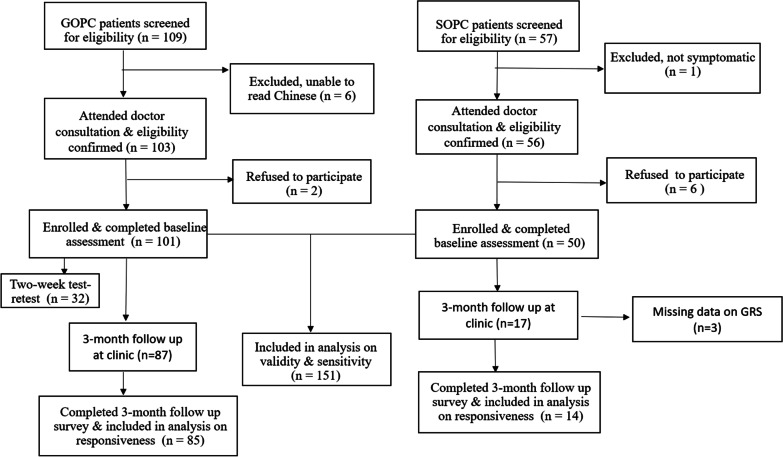
BACKGROUND: Electronic measurement of health-related quality of life (HRQOL) may facilitate timely and regular assessments in routine clinical practice. This study evaluated the validity and psychometric properties of an electronic version of the EQ-5D-5L (e-EQ-5D-5L) in Chinese patients with chronic knee and/or back problems. METHODS: 151 Chinese subjects completed an electronic version of the Chinese (Hong Kong) EQ-5D-5L when they attended a primary care or orthopedics specialist out-patient clinic in Hong Kong. They also completed the Chinese Western Ontario and McMaster University Osteoarthritis Index (WOMAC), a Pain Rating Scale, and a structured questionnaire on socio-demographics, co-morbidities and health service utilization. 32 subjects repeated the e-EQ-5D-5L two weeks after the baseline. 102 subjects completed e-EQ-5D-5L and 99 completed the Global Rating on Change Scale at three-month clinic follow up. Construct validity was assessed by the association of EQ-5D-5L scores with external criterion of WOMAC scores. We tested mean differences of WOMAC scores between adjacent response levels of the EQ-5D-5L dimensions by one-way ANOVA, test-retest reliability by intra-class correlation, sensitivity by known group comparisons and responsiveness by changes in EQ-5D-5L scores over 3 months. RESULTS: There was an association between EQ-5D-5L and WOMAC scores. Mean WOMAC scores increased with the increase in adjacent response levels of EQ-5D-5L dimensions. Test-retest intraclass correlation coefficient (ICC) of EQ-5D-5L utility and EQ-VAS scores were 0.76 and 0.83, respectively, indicating good reliability. There were significant differences in the proportions reporting limitations in the EQ-5D-5L dimensions, the utility and VAS scores between the mild and severe pain groups (utility = 0.28, p = 0.001; VAS = 11.46, p < 0.001), and between primary care and specialist out-patient clinic patients (utility = 0.15, p = 0.001; VAS = 10.21, p < 0.001), supporting sensitivity. Among those reporting 'better' global health at three-months, their EQ-5D-5L utility and EQ-VAS scores were significantly increased from baseline (utility = 0.18, p < 0.001; VAS = 10.75, p = 0.005). CONCLUSIONS: The electronic version of the EQ-5D-5L is valid, reliable, sensitive and responsive in the measurement of HRQOL in Chinese patients with chronic knee or back pain in routine clinical practice.
Overview
The claims and statistics of this paper haven’t been checked yet.
Free: it reads the open-access text and checks the first 5 claims that cite a source we can check. Create a free account to check every claim.
Integrity signals
Registry
Cites
Statistics
Figures
Verification
Claims the paper makes
The claims and statistics of this paper haven’t been checked yet.
Free: it reads the open-access text and checks the first 5 claims that cite a source we can check. Create a free account to check every claim.
Claims other papers make about this one
Each is checked against this paper’s own text: does it say what the citing paper says it does?
The source backs part of the claim, not all of it — or backs it for a different population, condition or comparison.
In the citing paper
“The reliability of the scale has been demonstrated with a Cronbach’s α of 0.83 among Chinese [89].”
From Effectiveness of a videoconferencing group-based dyad acceptance and commitment therapy on the quality of life of chronic heart failure patients and their family caregivers: A study protocol for a randomized controlled trial (2024) · cites this paper as [89]
Experimental — accuracy not yet measured
Self-check
Percentages, sums and reported differences re-computed from the paper’s own numbers.
The self-check needs the paper’s full text.
Citations
Cites
The Measurement of Observer Agreement for Categorical Data
Landis, J. R., & Koch, G. G. (1977) · Biometrics · doi:10.2307/2529310 · Cited by 81,148
Statistical Power Analysis for the Behavioral Sciences
Cohen, J. (2013) · doi:10.4324/9780203771587 · Cited by 25,373
EuroQol: a new facility for the measurement of health-related quality of life
(1990) · Health Policy · doi:10.1016/0168-8510(90)90421-9 · Cited by 15,736
Development and preliminary testing of the new five-level version of EQ-5D (EQ-5D-5L)
Herdman, M., Gudex, C., Lloyd, A., Janssen, M., Kind, P., Parkin, D., Bonsel, G., & Badia, X. (2011) · Quality of Life Research · doi:10.1007/s11136-011-9903-x · Cited by 9,795 · cited 2×
“In 2011, the EQ-5D-3L was updated to the EQ-5D five level (EQ-5D-5L), which increased the response options from three to five (‘no problems’, ‘slight problems’, ‘moderate problems’, ‘severe problems’, ‘extreme problems/unable to’) to enhance sensitivity [16, 17].”
BackgroundMethodSelf-citationEQ-SD: a measure of health status from the EuroQol Group
Rabin, R., & Charro, F. D. (2001) · Annals of Medicine · doi:10.3109/07853890109002087 · Cited by 5,613 · cited 1×
“The responses to the five EQ-5D-5L items have a combination of 3125 (55) health states [5, 16].”
BackgroundJaeschke, R., Singer, J., & Guyatt, G. H. (1989) · Controlled Clinical Trials · doi:10.1016/0197-2456(89)90005-6 · Cited by 4,982 · cited 1×
“The Global Rating Scale on change in health (GRS) was used to assess the patient’s perception of any change in their overall health condition on a 7-point scale, ranging from much worse [1] to much better [7] at their 3-month follow up [39].”
MethodNorman, G. R., Sloan, J. A., & Wyrwich, K. W. (2003) · Medical Care · doi:10.1097/01.mlr.0000062554.74615.4c · Cited by 4,700 · cited 1×
“14), suggesting they were likely to be clinically important [46].”
Background(1997) · doi:10.1097/00005650-199711000-00002 · Cited by 4,544 · cited 1×
“The original version, the EQ-5D three-level (EQ-5D-3L), contains three response options: ‘no problems’, ‘some/ moderate problems’ and ‘extreme problems/unable to’ for each of the five items [14, 15].”
BackgroundHurst, N. P., Kind, P., Ruta, D., Hunter, M., & Stubbings, A. (1997) · Rheumatology · doi:10.1093/rheumatology/36.5.551 · Cited by 826 · cited 2×
“Our test–retest ICC results were similar to findings on the paper versions of EQ-5D in Korea [45] and the UK [44].”
BackgroundResultSelf-citationEstimating an EQ-5D-5L Value Set for China
Luo, N., Liu, G., Li, M., Guan, H., Jin, X., & Rand-Hendriksen, K. (2017) · Value in Health · doi:10.1016/j.jval.2016.11.016 · Cited by 693
The applications of PROs in clinical practice: what are they, do they work, and why?
Greenhalgh, J. (2009) · Quality of Life Research · doi:10.1007/s11136-008-9430-6 · Cited by 635 · cited 1×
“Given these barriers, there have been calls for ways in which HRQOL data can be more effectively integrated into routine clinical practice [4, 25].”
BackgroundGreenhalgh, J., Gooding, K., Gibbons, E., Dalkin, S., Wright, J., Valderas, J., & Black, N. (2018) · Journal of Patient-Reported Outcomes · doi:10.1186/s41687-018-0061-6 · Cited by 588 · cited 1×
“In addition, the completion of HRQOL measures has been found to enable patients to be more aware of their health conditions and how the diseases affect them, which empower them to raise any issues or concerns with their clinicians [22, 23].”
BackgroundIncorporating Patient-Reported Outcomes Into Health Care To Engage Patients And Enhance Care
Lavallee, D. C., Chenok, K. E., Love, R. M., Petersen, C., Holve, E., Segal, C. D., & Franklin, P. D. (2016) · Health Affairs · doi:10.1377/hlthaff.2015.1362 · Cited by 550 · cited 3×
“There have been increasing attempts to incorporate HRQOL measures in routine clinical care [18–20], however many barriers have been encountered, including high workload of staff [3, 4, 23] and a lack of time to collect, analyze and interpret the data [24].”
BackgroundBoyce, M. B., Browne, J. P., & Greenhalgh, J. (2014) · BMJ Quality & Safety · doi:10.1136/bmjqs-2013-002524 · Cited by 505 · cited 3×
“Aside from the benefit of reducing workload and time burden on staff, it can also allow clinician’s immediate access to the results and tracking of changes [3, 18].”
BackgroundHealth-related quality of life measured using the EQ-5D–5L: South Australian population norms
McCaffrey, N., Kaambwa, B., Currow, D. C., & Ratcliffe, J. (2016) · Health and Quality of Life Outcomes · doi:10.1186/s12955-016-0537-0 · Cited by 472
Janssen, M. F., Bonsel, G. J., & Luo, N. (2018) · PharmacoEconomics · doi:10.1007/s40273-018-0623-8 · Cited by 378 · cited 1×
“In 2011, the EQ-5D-3L was updated to the EQ-5D five level (EQ-5D-5L), which increased the response options from three to five (‘no problems’, ‘slight problems’, ‘moderate problems’, ‘severe problems’, ‘extreme problems/unable to’) to enhance sensitivity [16, 17].”
MethodKim, M.-H., Cho, Y.-S., Uhm, W.-S., Kim, S., & Bae, S.-C. (2005) · Quality of Life Research · doi:10.1007/s11136-004-5681-z · Cited by 309 · cited 2×
“Our test–retest ICC results were similar to findings on the paper versions of EQ-5D in Korea [45] and the UK [44].”
ResultNolan, C. M., Longworth, L., Lord, J., Canavan, J. L., Jones, S. E., Kon, S. S. C., & Man, W. D.-C. (2016) · Thorax · doi:10.1136/thoraxjnl-2015-207782 · Cited by 300
Evaluation of health-related quality of life using EQ-5D in China during the COVID-19 pandemic
Ping, W., Zheng, J., Niu, X., Guo, C., Zhang, J., Yang, H., & Shi, Y. (2020) · PLOS ONE · doi:10.1371/journal.pone.0234850 · Cited by 276
Validity of EQ-5D-5L in stroke
Golicki, D., Niewada, M., Buczek, J., Karlińska, A., Kobayashi, A., Janssen, M. F., & Pickard, A. S. (2015) · Quality of Life Research · doi:10.1007/s11136-014-0834-1 · Cited by 254
Can The EQ-5D Detect Meaningful Change? A Systematic Review
Payakachat, N., Ali, M. M., & Tilford, J. M. (2015) · PharmacoEconomics · doi:10.1007/s40273-015-0295-6 · Cited by 249 · cited 1×
“in that the EQ-5D was responsive to changes in musculoskeletal and pain conditions more consistently in detecting improvement than deterioration [47].”
BackgroundVAN DER WEES, P. J., NIJHUIS‐VAN DER SANDEN, M. W. G., AYANIAN, J. Z., BLACK, N., WESTERT, G. P., & SCHNEIDER, E. C. (2014) · The Milbank Quarterly · doi:10.1111/1468-0009.12091 · Cited by 242 · cited 3×
“Given these barriers, there have been calls for ways in which HRQOL data can be more effectively integrated into routine clinical practice [4, 25].”
BackgroundMethodRolfson, O., Kärrholm, J., Dahlberg, L. E., & Garellick, G. (2011) · The Journal of Bone and Joint Surgery. British volume · doi:10.1302/0301-620x.93b7.25737 · Cited by 241 · cited 1×
“The EQ-5D has been shown to be a useful HRQOL measure in providing a more holistic picture of the health of patients [11, 18], for monitoring responses to treatment/surgery [19, 20], assessing the quality of care [21] and for health-economic evaluation [19].”
MethodBilbao, A., García-Pérez, L., Arenaza, J. C., García, I., Ariza-Cardiel, G., Trujillo-Martín, E., Forjaz, M. J., & Martín-Fernández, J. (2018) · Quality of Life Research · doi:10.1007/s11136-018-1929-x · Cited by 211
Is Health Related Quality of Life (HRQoL) a valid indicator for health systems evaluation?
Romero, M. C. C., Vivas-Consuelo, D., & Alvis‐Guzmán, N. (2013) · SpringerPlus · doi:10.1186/2193-1801-2-664 · Cited by 191
EQ-5D-5L norms for the urban Chinese population in China
Yang, Z., Busschbach, J., Liu, G., & Luo, N. (2018) · Health and Quality of Life Outcomes · doi:10.1186/s12955-018-1036-2 · Cited by 180 · cited 1×
“The Global Rating Scale on change in health (GRS) was used to assess the patient’s perception of any change in their overall health condition on a 7-point scale, ranging from much worse [1] to much better [7] at their 3-month follow up [39].”
MethodRoutine Collection of Patient-Reported Outcomes in an HIV Clinic Setting:The First 100 Patients
Crane, H., Lober, W., Webster, E., Harrington, R., Crane, P., Davis, T., & Kitahata, M. (2007) · Current HIV Research · doi:10.2174/157016207779316369 · Cited by 155 · cited 2×
“Aside from the benefit of reducing workload and time burden on staff, it can also allow clinician’s immediate access to the results and tracking of changes [3, 18].”
BackgroundMethodHernández, G., Garín, O., Dima, A. L., Pont, À., Marti-Pastor, M., Alonso, J., Ganse, E. H. V., Laforest, L., de Bruin, M., Mayoral, K., et al. (2019) · Journal of Medical Internet Research · doi:10.2196/10178 · Cited by 131 · cited 1×
“Our literature search found one recent study in English and French asthma patients reporting the validity and psychometric properties of e-EQ-5D-5L [34] but no study in the Chinese population.”
BackgroundEQ-5D Scores for Diabetes-Related Comorbidities
Sullivan, P. W., & Ghushchyan, V. H. (2016) · Value in Health · doi:10.1016/j.jval.2016.05.018 · Cited by 125
Wong, E. L.-Y., Cheung, A. W.-L., Wong, A. Y.-K., Xu, R. H., Ramos-Goñi, J. M., & Rivero-Arias, O. (2019) · Value in Health · doi:10.1016/j.jval.2019.02.014 · Cited by 106 · cited 1×
“The Chinese-Traditional (Hong Kong) translation of the EQ5D-5L and the Hong Kong population specific EQ-5D-5L value set have been developed and normed on the local population [6, 8].”
MethodCheung, P. W. H., Wong, C. K. H., Samartzis, D., Luk, K. D. K., Lam, C. L. K., Cheung, K., & Cheung, J. P. Y. (2016) · Scoliosis and Spinal Disorders · doi:10.1186/s13013-016-0083-x · Cited by 96
Self-citationLiang, Z., Zhang, T., Lin, T.-F., Liu, L., Wang, B., Fu, A. Z., Wang, X., Xu, X., Luo, N., & Jiang, J. (2019) · Quality of Life Research · doi:10.1007/s11136-019-02139-3 · Cited by 90
Turner, G., Litchfield, I. J., Finnikin, S., Aiyegbusi, O. L., & Calvert, M. (2020) · BMC Family Practice · doi:10.1186/s12875-019-1077-6 · Cited by 87 · cited 2×
“There have been increasing attempts to incorporate HRQOL measures in routine clinical care [18–20], however many barriers have been encountered, including high workload of staff [3, 4, 23] and a lack of time to collect, analyze and interpret the data [24].”
BackgroundResultSymonds, T. L., Hughes, B., Liao, S., Ang, Q., & Bellamy, N. (2015) · Arthritis Care & Research · doi:10.1002/acr.22631 · Cited by 83 · cited 1×
“A Chinese version of WOMAC is available and has been shown to be valid, reliable and sensitive in Chinese patients [37, 38].”
MethodWong, E. L., Xu, R. H., & Cheung, A. W. L. (2019) · BMJ Open · doi:10.1136/bmjopen-2019-032544 · Cited by 74 · cited 1×
“The EQ-5D has been shown to be a useful HRQOL measure in providing a more holistic picture of the health of patients [11, 18], for monitoring responses to treatment/surgery [19, 20], assessing the quality of care [21] and for health-economic evaluation [19].”
MethodImpact of osteoarthritis on quality of life in a Hong Kong Chinese population.
Woo, J., Lau, E. M. C., Lee, P., Kwok, T. C. Y., Lau, W. C. S., Chan, C., Chiu, P., Li, E., Sham, A., & Lam, D. (2004) · PubMed · Cited by 56
Using Patient-Reported Outcomes in Routine Practice: Three Novel Use Cases and Implications
Forsberg, H. H., Nelson, E. C., Reid, R. J., Grossman, D. C., Mastanduno, M. P., Weiss, L. T., Fisher, E. S., & Weinstein, J. N. (2015) · Journal of Ambulatory Care Management · doi:10.1097/jac.0000000000000052 · Cited by 36 · cited 1×
“The EQ-5D has been shown to be a useful HRQOL measure in providing a more holistic picture of the health of patients [11, 18], for monitoring responses to treatment/surgery [19, 20], assessing the quality of care [21] and for health-economic evaluation [19].”
MethodBagattini, Â. M., Camey, S. A., Miguel, S. R. P. D. S., Andrade, M. V., Noronha, K., Teixeira, M. A. D. C., Lima, A. F. B. D. S., Santos, M., Polanczyk, C. A., & Cruz, L. N. (2018) · Value in Health Regional Issues · doi:10.1016/j.vhri.2017.11.002 · Cited by 23 · cited 1×
“As HRQOL measures are often used to monitor change over time, or with intervention, it is essential for the instrument to have inter-rater/test–retest reliability so that any difference on repeated measurements is a true change in the person’s HRQOL but not measurement variations [29].”
BackgroundWong, E. L., Yeoh, E., Slaap, B., Tam, W., Cheung, A. W. L., Wong, A., & Chan, D. C. C. (2015) · Value in Health · doi:10.1016/j.jval.2015.03.167 · Cited by 17 · cited 1×
“The Chinese-Traditional (Hong Kong) translation of the EQ5D-5L and the Hong Kong population specific EQ-5D-5L value set have been developed and normed on the local population [6, 8].”
MethodKlotsche, J., Reese, J. P., Winter, Y., Oertel, W. H., Irving, H. M., Wïttchen, H., Rehm, J., & Dodel, R. C. (2011) · Value in Health · doi:10.1016/j.jval.2010.10.005 · Cited by 12 · cited 2×
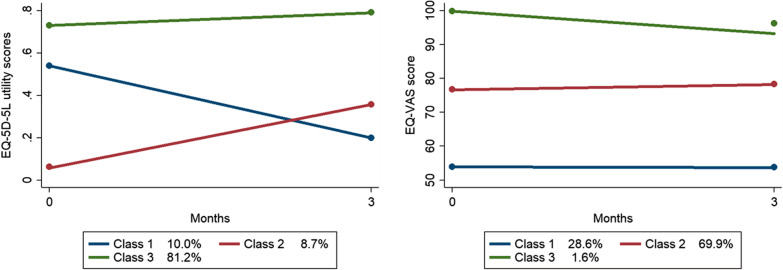
“The best model with up to five classes was selected using the Bayesian Information Criteria (BIC) [43].”
MethodAnchoring Vignettes in EQ-5D-5L Questionnaire: Validation of a New Instrument
Azzolina, D., Minto, C., Boschetto, S., Martinato, M., Bauce, B., Iliceto, S., & Gregori, D. (2017) · The Open Nursing Journal · doi:10.2174/1874434601711010144 · Cited by 4
(1988) · PubMed
(1994)
Cited by
Riecke, F., Bauer, L., Polzer, H. W., Baumbach, S. F., Neuerburg, C., Böcker, W., Grill, E., & Saller, M. M. (2024) · Frontiers in Public Health · doi:10.3389/fpubh.2024.1313685 · Cited by 15
Sharma, K., Berry, L., Vryonis, E., Ali, A., Lara, B., Noufaily, A., Parsons, N., Bradley, C. J., Haley, B., Tabuso, M., et al. (2022) · BMJ Open · doi:10.1136/bmjopen-2021-055205 · Cited by 10
Ng, A. P. P., Liu, K. S. N., Cheng, W. H. G., Wong, C. K. H., Cheng, J. K. Y., Lam, J. S. M., Or, C. K., Tse, E. T. Y., & Lam, C. L. K. (2022) · Health and Quality of Life Outcomes · doi:10.1186/s12955-022-02047-0 · Cited by 7
“Prospective longitudinal cohort study Patient recruitment This study is part of a larger single-blind cluster randomized controlled trial (RCT) to evaluate the effectiveness of measuring and reporting HRQOL in routine clinical practice and the protocol has been published [20].”
BackgroundMethodInfluentialSelf-citationTran, V., Winters, E. M., Stroulia, E., & Hadjistavropoulos, T. (2022) · Aging & Mental Health · doi:10.1080/13607863.2022.2158307 · Cited by 5
“In line with other work focusing on implementation of electronic measurement of health-related data (e.g. Lam et al., 2021; Ng et al., 2022), an app version of the PACSLAC-II has been developed and allows for easy tracking of pain fluctuations over time (Zahid et al., 2020).”
Ponsford, J. L., Hicks, A. J., Bagg, M. K., Phyland, R. K., Carrier, S. L., James, A. C., Lannin, N. A., Rushworth, N., O'Brien, T. J., Cameron, P. A., et al. (2024) · Neurotrauma Reports · doi:10.1089/neur.2023.0127 · Cited by 5
Metadata
- Authors
- Lam, C. L. K., Tse, E. T. Y., Wong, C. K. H., Lam, J. S. M., Chen, S. S., Bedford, L. E., Cheung, J. P. Y., Or, C. K., & Kind, P.
- Affiliations
- University of Hong Kong - Shenzhen Hospital (CN)
- University of Hong Kong (HK)
- University College London (GB)
- Corresponding author
- Tse, Emily Tsui Yee
- ORCID
- Venue
- Health and Quality of Life Outcomes
- Published
- 2021-12-18
- Volume
- 19
- Issue
- 1
- Pages
- 266-266
- ISSN
- 1477-7525 (ISSN-L)
- PMC
- PMC8684117
- OpenAlex
- W4200541179
- Cited by
- 14
- References
- 44
- Citations by year
- 2026: 4 · 2025: 2 · 2024: 3 · 2022: 5
- FWCI
- 1.52
- Type
- journal article
- Language
- en
- Open access
- gold
- doi.org
- Licence
- cc-by
- creativecommons.org/licenses/by/4.0 (tdm)
- creativecommons.org/licenses/by/4.0 (vor)
- Locations
- Health and Quality of Life Outcomes (publishedVersion, cc-by)
- PubMed Central (publishedVersion, cc-by)
- PubMed (publishedVersion)
- DOAJ (DOAJ: Directory of Open Access Journals) (submittedVersion, cc-by-sa)
- Funders
- Hong Kong Research Grant Council (17100119)
- Topics
- Social Sciences › Economics, Econometrics and Finance › Economics and Econometrics › Health Systems, Economic Evaluations, Quality of Life
- Health Sciences › Health Professions › Physical Therapy, Sports Therapy and Rehabilitation › Musculoskeletal pain and rehabilitation
- Health Sciences › Medicine › Surgery › Total Knee Arthroplasty Outcomes
- Keywords
- EQ-5D-5L, osteoarthritis, WOMAC, test-retest reliability, responsiveness, construct validity, health utility, patient-reported outcomes, routine clinical practice, Chinese patients, pain intensity, health care utilization, comorbidities
- MeSH terms
- Electronics, Humans, Pilot Projects, Psychometrics, Quality of Life, Reproducibility of Results
About these checks
Registry, retraction, Cites and statistics results are computed, not judged, with one exception: a printed reference that no index lists is read once by a model before it counts as a citation error. Claims are extracted by a model and kept only when their quote appears verbatim in the text; each cited source is then checked, with a model’s help, for whether it says what the claim relies on. Those verdicts can be wrong — read the claim’s quote and the cited source before relying on one.
Statistics and arithmetic are recomputed, not judged.
Confidence bands are shown only for fields calibrated on our annotated test set. None is calibrated yet, so no band is shown.
What counts as a claim ›How we measure confidence ›How we check this ›
Are you an author, or do you see a problem with this page? Request a review
Data sources
Bibliographic data: Semantic Scholar, OpenAlex, Crossref.
Contains information from the Semantic Scholar Academic Graph Datasets, made available under the ODC Attribution License (ODC-BY 1.0).
Semantic Scholar’s data is described in: Kinney, R., et al. (2023). The Semantic Scholar Open Data Platform. arXiv:2301.10140.
