

The role and scope of practice of midwives in humanitarian settings: a systematic review and content analysis
Open accessThe DOI matches its Crossref record; 48 of the 49 references it cites were found in a registry or an index; 31 of the 87 sources its claims cite were checked for support.
Abstract
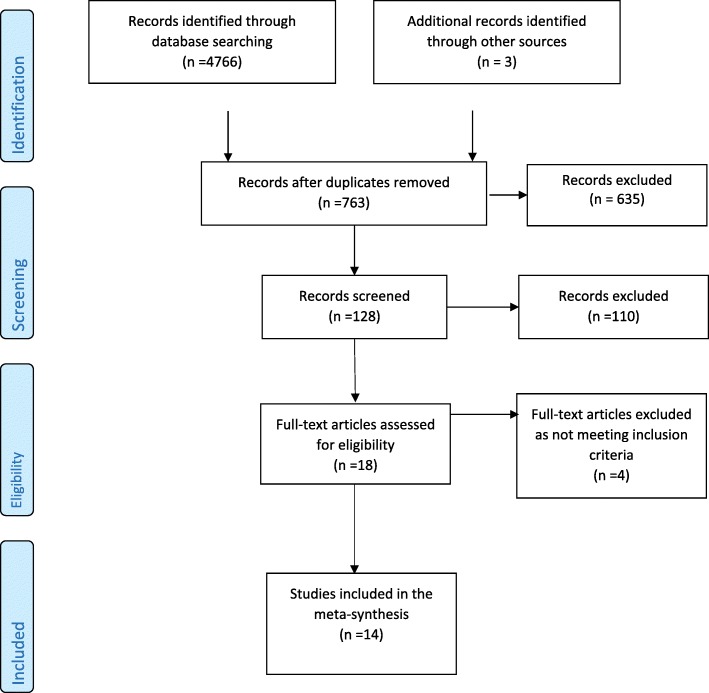
BACKGROUND: Midwives have an essential role to play in preparing for and providing sexual and reproductive health (SRH) services in humanitarian settings due to their unique knowledge and skills, position as frontline providers and geographic and social proximity to the communities they serve. There are considerable gaps in the international guidance that defines the scope of practice of midwives in crises, particularly for the mitigation and preparedness, and recovery phases. We undertook a systematic review to provide further clarification of this scope of practice and insights to optimise midwifery performance. The review aimed to determine what SRH services midwives are involved in delivering across the emergency management cycle in humanitarian contexts, and how they are working with other professionals to deliver health care. METHODS: Four electronic databases and the websites of 33 organisations were searched between January and March 2017. Papers were eligible for inclusion if they were published in English between 2007 and 2017 and reported primary research pertaining to the role of midwives in delivering and performing any component of sexual and/or reproductive health in humanitarian settings. Content analysis was used to map the study findings to the Minimum Initial Service Package (MISP) for SRH across the three phases of the disaster management cycle and identify how midwives work with other members of the health care team. RESULTS: Fourteen studies from ten countries were included. Twelve studies were undertaken in conflict settings, and two were conducted in the context of the aftermath of natural disasters. We found a paucity of evidence from the research literature that examines the activities and roles undertaken by midwives across the disaster management cycle. This lack of evidence was more apparent during the mitigation and preparedness, and recovery phases than the response phase of the disaster management cycle. CONCLUSION: Research-informed guidelines and strategies are required to better align the scope of practice of midwives with the objectives of multi-agency guidelines and agreements, as well as the activities of the MISP, to ensure that the potential of midwives can be acknowledged and optimised across the disaster management cycle.
Overview
CoChat Summary
## TL;DR
This systematic review found that midwives in humanitarian settings are documented mainly in response-phase maternal and newborn care, with much less evidence for mitigation/preparedness or recovery. The authors conclude that guidance and research are insufficient to define and support midwifery scope of practice across the disaster management cycle.
## Key findings
- The review included 14 studies from 10 countries; 12 were in conflict settings and 2 in the aftermath of natural disasters.
- Evidence showed midwives involved in routine maternal-newborn care, basic emergency obstetric care, family planning, and adolescent SRH services, but this covered only 4 of the 6 MISP objectives.
- For the response phase, the review found 8 papers with midwives delivering these services; for recovery, 7 papers reported activities, but only 1 of the 4 Granada Consensus recovery strands was evidenced.
- Only one area of mitigation/preparedness work was found in the literature: preparedness training of midwives; the authors state evidence gaps were especially marked in mitigation/preparedness and recovery.
## Methods
- Systematic review with content analysis, conducted using an a priori protocol and PRISMA guidance.
- Searched 4 electronic databases and the websites of 33 organisations between January and March 2017; included English-language primary research from 2007–2017 on midwives’ roles in SRH in humanitarian settings.
- Extracted findings from the 14 included papers and used content analysis to map them to the MISP, the three emergency management phases, and related guidance on midwifery scope of practice and collaboration.
## Limitations
- The paper explicitly states language bias because it included only English-language papers.
- The review says the search returned few papers, reflecting the emerging nature of the field, and that some included studies were methodologically “weak” but retained for contextual data.
- The authors state the review did not allow for theorising because the data were largely descriptive.
- Evident from the text: the evidence base is small and uneven across phases and settings, so conclusions about practice are limited by the available studies rather than direct measurement of midwives’ full scope.
Model-written summary. Check it against the paper before relying on it.
Integrity signals
Registry
Cites
Statistics
Figures
Verification
Claims the paper makes
21 Valid · 1 Not valid · 28 Not checked · 34 Own results and interpretations
The sources with a verdict support this claim; the rest weren’t checked yet, have no full text we could read, or their verdicts aren’t rated yet.
In the paper
“Two studies reported training of midwives in different humanitarian settings [53, 54].”
§ The role and scope of practice of midwives in humanitarian settings: a systematic review and content analysis > Findings > Before an emergency: mitigation and preparedness
What the sources say
- Not checked — no full text of the sourcecites [53] O'Malley Floyd B Lessons learned preparing volunteer midwives for service in Haiti: after the earthquake J Midwifery Women’s Health 2013 58 5 558 568 26251862 source
- Supportedcites [54] Turkmani S Currie S Mungia J Assefi N Rahmanzai AJ Azfar P Bartlett L ‘Midwives are the backbone of our health system’: lessons from Afghanistan to guide expansion of midwifery in challenging settings Midwifery 2013 29 10 1166 1172 23916402 source
The Strengths of the midwifery education programme section describes the midwives’ training in Afghanistan. The Discussion places the programme in a post-conflict setting, so this paper is an example of a study reporting midwife training in a challenging setting. The other study cited in the sentence is not assessed here. (LLM, conf=0.92)
plain- Asserted: passes — The authors put it forward as true.
- Checkable: passes — It can be checked against evidence.
- Load-bearing: unclear — It is unclear whether the paper’s conclusions depend on it.
- Based: passes — The paper gives a reason why it holds.
Every source the paper cites for this claim was checked and supports it.
In the paper
“The only reference to activity related to preventing or responding to sexual violence in humanitarian settings concerned the low level of knowledge about the use of emergency contraception for both survivors of sexual violence and broader populations among midwives, on the Thailand-Burma border [45].”
§ The role and scope of practice of midwives in humanitarian settings: a systematic review and content analysis > Findings > During an emergency: the Minimum Initial Service Package
What the sources say
- Supportedcites [45] Hobstetter M Sietstra C Walsh M Leigh J Foster AM “In rape cases we can use this pill”: a multimethods assessment of emergency contraception knowledge, access, and needs on the Thailand− Burma border Int J Gynecol Obstet 2015 130 E37 E41 26140949 source
Section 3.2 reports that program managers, midwives, and healthcare workers were misinformed about emergency contraception and that some organizations limited access to rape survivors rather than women with other needs. Section 3.3 also records an informant’s observation that midwives lacked knowledge of emergency contraceptive pills. The phrase “only reference” describes the citing authors’ review, not a finding attributed to this source. (LLM, conf=0.91)
plain- Asserted: passes — The authors put it forward as true.
- Checkable: passes — It can be checked against evidence.
- Load-bearing: passes — The paper’s conclusions depend on it.
- Based: passes — The paper gives a reason why it holds.
- Supported
The cited sources support only part of this claim — read each source’s verdict below.
In the paper
“Six of the seven papers reporting on the response phase of an emergency [43, 48–51] and a paper which detailed the response and recovery phases [49] discussed the role of midwives in providing maternal and newborn health services.”
§ The role and scope of practice of midwives in humanitarian settings: a systematic review and content analysis > Findings > During an emergency: the Minimum Initial Service Package
What the sources say
- Partly supportedcites [43] Chi PC Bulage P Urdal H Sundby J Barriers in the delivery of emergency obstetric and neonatal care in post-conflict Africa: qualitative case studies of Burundi and northern Uganda PLoS One 2015 10 9 e0139120 26405800 PMC4583460 sourceExperimental — accuracy not yet measured
The Results (Northern Uganda; page unavailable) describe a midwife handling antenatal care, deliveries and other services, so this paper does discuss midwives’ role in maternal and newborn care. But the Introduction places the study in post-conflict recovery, not the response phase of an emergency. The six-of-seven count is the citing authors’ synthesis, not a finding this individual paper can establish. (LLM, conf=0.82)
- Not checked — no full text of the sourcecites [48] Sugino M Dwi Hapsari E Madyaningrum E Haryant F Warsini S Takada S Matsuo H Issues raised by nurses and midwives in a post-disaster Bantul community Disaster Prev Manag 2014 23 4 420 436 source
- Not checked — no full text of the sourcecites [49] Tappis H Koblinsky M Winch PJ Turkmani S Bartlett L Context matters: successes and challenges of intrapartum care scale-up in four districts of Afghanistan Global Public Health 2016 11 4 387 406 26645366 source
- Not checked — no full text of the sourcecites [50] Wick L Hassan S No safe place for childbirth: women and midwives bearing witness, Gaza 2008–09 Reprod Health Matters 2012 20 40 7 15 23245403 source
- Supportedcites [51] McGready R Boel M Rijken MJ Ashley EA Cho T Moo O Paw MK Pimanpanarak M Hkirijareon L Carrara VI Effect of early detection and treatment on malaria related maternal mortality on the north-western border of Thailand 1986–2010 PLoS One 2012 7 7 e40244 22815732 PMC3399834 source
The Methods section (Antenatal Care and Delivery; page unavailable) describes trained midwives assisting deliveries at SMRU and lists midwives among its staff. This supports citing the paper as one that discusses midwives’ role in maternal and newborn health services; the six-of-seven count is the citing review’s own synthesis. (LLM, conf=0.87)
plain- Asserted: passes — The authors put it forward as true.
- Checkable: passes — It can be checked against evidence.
- Load-bearing: unclear — It is unclear whether the paper’s conclusions depend on it.
- Based: passes — The paper gives a reason why it holds.
- Partly supported
Every source the paper cites for this claim was checked and supports it.
In the paper
“Chi et al. [43] reported a lack of coordination between key emergency obstetric and neonatal care personnel in post-conflict Northern Uganda, particularly when needing to assemble a team of skilled providers to perform an emergency caesarean section, causing delays in important lifesaving services.”
§ The role and scope of practice of midwives in humanitarian settings: a systematic review and content analysis > Findings > Midwifery collaboration with other health cadre
What the sources say
- Supportedcites [43] Chi PC Bulage P Urdal H Sundby J Barriers in the delivery of emergency obstetric and neonatal care in post-conflict Africa: qualitative case studies of Burundi and northern Uganda PLoS One 2015 10 9 e0139120 26405800 PMC4583460 source
Split into 2 atoms — 2 confirmed, 0 partially supported, 0 disputed, 0 misattributed, 0 unverifiable. Expand the claim to see per-atom verdicts.
plainstates a cause- Asserted: passes — The authors put it forward as true.
- Checkable: passes — It can be checked against evidence.
- Load-bearing: unclear — It is unclear whether the paper’s conclusions depend on it.
- Based: passes — The paper gives a reason why it holds.
- Supported
The cited sources support only part of this claim — read each source’s verdict below.
In the paper
“Midwives were reported as being involved in births at both health facilities and in women’s homes [42, 46, 48, 50, 51].”
§ The role and scope of practice of midwives in humanitarian settings: a systematic review and content analysis > Findings > During an emergency: the Minimum Initial Service Package
What the sources say
- Not checked — no full text of the sourcecites [42] Bosmans M Nasser D Khammash U Claeys P Temmerman M Palestinian women’s sexual and reproductive health rights in a longstanding humanitarian crisis Reprod Health Matters 2008 16 31 103 111 18513612 source
- Partly supportedcites [46] Lee RB Delivering maternal health care services in an internal conflict setting in Maguindanao, Philippines Reprod Health Matters 2008 16 31 65 74 18513608 sourceExperimental — accuracy not yet measured
The section on the Cooperative describes a delivery-service team that included a midwife, and the Discussion lists hospital or facility-based delivery among the services provided. Neither passage reports midwives attending births in women’s homes, so the home-birth part of the claim is unsupported by our copy. (LLM, conf=0.76)
- Not checked — no full text of the sourcecites [48] Sugino M Dwi Hapsari E Madyaningrum E Haryant F Warsini S Takada S Matsuo H Issues raised by nurses and midwives in a post-disaster Bantul community Disaster Prev Manag 2014 23 4 420 436 source
- Not checked — no full text of the sourcecites [50] Wick L Hassan S No safe place for childbirth: women and midwives bearing witness, Gaza 2008–09 Reprod Health Matters 2012 20 40 7 15 23245403 source
- Partly supportedcites [51] McGready R Boel M Rijken MJ Ashley EA Cho T Moo O Paw MK Pimanpanarak M Hkirijareon L Carrara VI Effect of early detection and treatment on malaria related maternal mortality on the north-western border of Thailand 1986–2010 PLoS One 2012 7 7 e40244 22815732 PMC3399834 sourceExperimental — accuracy not yet measured
The Methods section (Antenatal Care and Delivery; page unavailable) reports that trained midwives assisted deliveries at SMRU, a health facility. It describes home deliveries as attended by traditional birth attendants, not midwives, so the home-birth part of the claim is not supported. (LLM, conf=0.88)
plain- Asserted: passes — The authors put it forward as true.
- Checkable: passes — It can be checked against evidence.
- Load-bearing: unclear — It is unclear whether the paper’s conclusions depend on it.
- Based: passes — The paper gives a reason why it holds.
32 more claims · 4 with their cited sources checked
Create a free account to see all 84 claims and to verify the 3 references still open.
- It may state two separate claims as one. 32
- Probably not a substantial claim. 22
Self-check
Percentages, sums and reported differences re-computed from the paper’s own numbers.
Each contradiction between two passages listed here was confirmed by an independent check.
Rated minor: it would not touch a result — a value no result rests on, a p-value that stays on the same side of the significance level, or a conflict that is clerical, resolved elsewhere in the paper, or outside its own findings.
In the paper
§ The role and scope of practice of midwives in humanitarian settings: a systematic review and content analysis > Introduction
“The Minimum Initial Service Package (MISP) for Reproductive Health in Humanitarian Settings [6] outlines five objectives, activities and resources to address the SRH needs of people in humanitarian emergencies.”
§ The role and scope of practice of midwives in humanitarian settings: a systematic review and content analysis > Findings > During an emergency: the Minimum Initial Service Package
“These activities represent action in only four of the six objectives of the MISP (Table 5).”
Citations
Cites
Preferred Reporting Items for Systematic Reviews and Meta-Analyses: the PRISMA statement
Moher, D., Liberati, A., Tetzlaff, J., Altman, D. G., & for the PRISMA Group (2009) · BMJ · doi:10.1136/bmj.b2535 · Cited by 83,823
Preferred reporting items for systematic reviews and meta-analyses: the PRISMA Statement.
(2009) · PubMed Central · Cited by 44,859
Preferred reporting items for systematic reviews and meta-analyses: The PRISMA statement
Moher, D., Liberati, A., Tetzlaff, J., Altman, D. G., & the PRISMA Group* (2009) · Annals of Internal Medicine · doi:10.7326/0003-4819-151-4-200908180-00135 · Cited by 37,554
Sendai Framework for Disaster Risk Reduction 2015-2030
(2018) · Human Rights Documents Online · doi:10.1163/2210-7975_hrd-9813-2015016 · Cited by 3,392
The World Health report 2006 1 : Working together for health 2
Guilbert, J.-J. (2006) · Education for Health: Change in Learning & Practice · doi:10.1080/13576280600937911 · Cited by 2,654
Synthesising qualitative and quantitative evidence: A review of possible methods
Dixon-Woods, M., Agarwal, S., Jones, D., Young, B., & Sutton, A. (2005) · Journal of Health Services Research & Policy · doi:10.1177/135581960501000110 · Cited by 2,132 · cited 1×
“We applied content analysis to categorise data in a systematic and replicable way [41].”
MethodRenfrew, M. J., McFadden, A., Bastos, M. H., Campbell, J., Channon, A. A., Cheung, N. F., Silva, D. R. A. D., Downe, S., Kennedy, H. P., Malata, A., et al. (2014) · The Lancet · doi:10.1016/s0140-6736(14)60789-3 · Cited by 1,297 · cited 4×
“Midwives, trained to international standards and competencies, are associated with improved quality of care and efficient use of resources [12] and can potentially meet some of the shortfall of skilled health workers in humanitarian crises.”
BackgroundInfluentialSelf-citationPluye, P., Gagnon, M.-P., Griffiths, F., & Johnson-Lafleur, J. (2009) · International Journal of Nursing Studies · doi:10.1016/j.ijnurstu.2009.01.009 · Cited by 1,119 · cited 1×
“’s [35] scoring system for appraising mixed methods research, and the National Institute for Health and Care Excellence (NICE) guidelines [36] for survey and cross-sectional studies.”
MethodMonitoring emergency obstetric care : a handbook
Disability (2009) · Cited by 986
Improvement of maternal and newborn health through midwifery
ten Hoope-Bender, P., de Bernis, L., Campbell, J., Downe, S., Fauveau, V., Fogstad, H., Homer, C. S. E., Kennedy, H. P., Matthews, Z., McFadden, A., et al. (2014) · The Lancet · doi:10.1016/s0140-6736(14)60930-2 · Cited by 435 · cited 4×
“However, considerable investment is needed globally to prioritise midwifery and build capacity so that midwives are a highly competent, qualified workforce as per ICM standards [18, 27, 58].”
BackgroundInfluentialSelf-citation
Research works printed but not linked: 22
- UNHCR Statistical yearbook 2015 2017 Geneva United Nations High Commissioner for Refugees
- UNFPA UNFPA Humanitarian Action 2017 2017 New York UNFPA
- WHO Integrating sexual and reproductive health into health emergency and disaster risk management: policy brief 2012 Geneva World Health Organisation
- UNFPA State of the world population report 2015: shelter from the storm - a transformative agenda for women and girls in the crisis-prone world 2015 New York UNFPA
- WRC Minimum Initial Service Package (MISP) for Reproductive Health in Crisis Situations: A Distance Learning Module 2011 New York Women’s Refugee Commission
- WHO A universal truth: no health without a workforce 2014 Geneva World Health Organization
- UNFPA-ICM Midwifery in the community: lessons learned 1st International Forum on Midwifery in the Community 2006 Hammamet UNFPA-ICM
- WHO Bangladesh expands training of midwives to improve maternal and neonatal health 2014 Geneva WHO
- WHO Rebuilding midwifery in Sierra Leone to save the lives of women and newborns 2018 Geneva WHO
- WHO Global strategic directions for strengthening nursing and midwifery 2016–2020 2016 Geneva WHO
- IAWG Inter-agency field manual on reproductive health in humanitarian settings: 2010 revision for field review 2010 New York Inter-agency Working Group on Reproductive Health in Crises 26203479
- WHO The contribution of nursing and midwifery in emergencies. Report of a WHO consultation 2006 Geneva World Health Organization
- ICM Position Statement: Role of the midwife in disaster/emergency preparedness PS2014_003 2015 The Hague International Confederation of Midwives
- ICM ICM International Definition of the Midwife 2017 The Hague International Confederation of Midwives
- WHO, UNPFA, Escuela Andaluza de Salud Pública Sexual and reproductive health during protracted crises and recovery Granada report 2011 Geneva WHO, UNPFA, Escuela Andaluza de Salud Pública
- WHO Disaster risk management for health: Sexual and reproductive health 2011 Geneva World Health Orgnanization
- UNISDR UNISDR terminology on disaster risk reduction 2009 Geneva United Nations International Strategy on Disaster Reduction
- NICE Interim methods guide for developing service guidance 2014 London National Institute for Health and Care Excellence 28230952
- ICM Education, Regulation and Association 2017 The Hague International Confederation of Midwives
- ICM Health of Women and Children in Disasters: PS2011_008 V2017 2011 The Hague International Confederation of Midwives
- ICM Human Immunodeficiency Virus and Acquired Immunodeficiency Syndrome (HIV and AIDS): PS2008_006 V2014 2008 The Hague International Confederation of Midwives
- ICM Planned pregnancies and parenthood: PS2011_016 2011 The Hague International Confederation of Midwives
Cited by
Nove, A., Friberg, I. K., de Bernis, L., McConville, F., Moran, A. C., Najjemba, M., ten Hoope-Bender, P., Tracy, S., & Homer, C. S. E. (2021) · The Lancet Global Health · doi:10.1016/s2214-109x(20)30397-1 · Cited by 393
Homer, C. S., Turkmani, S., Wilson, A. N., Vogel, J. P., Shah, M. G., Fogstad, H., & Langlois, E. V. (2022) · BMJ Global Health · doi:10.1136/bmjgh-2021-006872 · Cited by 48
A critical interpretive synthesis of the roles of midwives in health systems
Mattison, C. A., Lavis, J. N., Wilson, M. G., Hutton, E. K., & Dion, M. L. (2020) · Health Research Policy and Systems · doi:10.1186/s12961-020-00590-0 · Cited by 64
Ahmed, S. A. E., Mahimbo, A., & Dawson, A. J. (2023) · BMC Pregnancy and Childbirth · doi:10.1186/s12884-022-05319-1 · Cited by 53
“Evidence shows that investments in improving the quality of midwifery education and regulations are cost-efficient and can enhance the quality of maternity care and woman-centred outcomes in humanitarian settings and stable developing settings [67, 68].”
BackgroundSelf-citationThe role of the physician associate: an overview
Malone, R. (2021) · Irish Journal of Medical Science (1971 -) · doi:10.1007/s11845-021-02661-9 · Cited by 19
Tallam, E., Kaura, D., & Mash, R. J. (2021) · International Journal of Africa Nursing Sciences · doi:10.1016/j.ijans.2021.100387 · Cited by 17
Responding to Humanitarian Crises: Midwifery Care in Bangladesh
Purno, N. H., Biswas, A., Anderson, R., & Hoque, D. M. E. (2023) · Journal of Midwifery & Women s Health · doi:10.1111/jmwh.13524 · Cited by 19
Ximba, S. W., Baloyi, O. B., & Jarvis, M. A. (2021) · Health SA Gesondheid · doi:10.4102/hsag.v26i0.1546 · Cited by 12
Begum, F., Ara, R., Islam, A., Marriott, S., Williams, A. E., & Anderson, R. (2023) · Global Health Science and Practice · doi:10.9745/ghsp-d-23-00081 · Cited by 22
Maregn, R. T., Bourret, K., Egal, J. A., Esse, A., Mattison, C. A., & Klingberg‐Allvin, M. (2023) · BMJ Open · doi:10.1136/bmjopen-2022-067315 · Cited by 11
Odlum, A., James, R., Mahieu, A., Blanchet, K., Altare, C., Singh, N., & Spiegel, P. B. (2021) · Conflict and Health · doi:10.1186/s13031-021-00418-w · Cited by 17
“’s review identified a lack of research on how the actual front-line practices of humanitarian responders map onto the objectives of multi-agency guidelines and agreements such as the MISP [16].”
BackgroundInfluentialAchu, L., Tran, N. T., Nzee, A., Kabeya, A., Mukumpuri, G., Eke, H., Kini, B., Greer, A., & Hounton, S. (2021) · Nurse Education in Practice · doi:10.1016/j.nepr.2021.103173 · Cited by 12
Gu, C., Wang, X., Li, L., Ding, Y. H., & Qian, X. (2020) · Global Health Journal · doi:10.1016/j.glohj.2020.08.001 · Cited by 13
Carbonell, S. K., Ogba, P., Vanstone, M. G., Gombay, C., & Darling, E. (2024) · Midwifery · doi:10.1016/j.midw.2024.104065 · Cited by 15
“The midwifery workforce has been recognized as essential to respond to SRHS needs during humanitarian crises (Beek et al., 2019; Kutz, 2022; Lordfred et al., 2021; Yalahow et al., 2017).”
Şimşek, P., Kako, M., Harada, N., Abrahams, J., & Tayfur, İ. (2024) · Progress in Disaster Science · doi:10.1016/j.pdisas.2024.100339 · Cited by 13
Experiência de mulheres imigrantes no processo de parto e nascimento
Supimpa, L. S., Souza, S. R. R. K., Prandini, N. R., Andreatta, D., Trigueiro, T. H., & Paviani, B. A. (2023) · Revista da Escola de Enfermagem da USP · doi:10.1590/1980-220x-reeusp-2022-0444pt · Cited by 8
Zhang, Q., & Zhang, J. (2023) · IEEE Access · doi:10.1109/access.2023.3322320 · Cited by 6
“The impact of factors on the value of HR is not a simple linear relationship, but a complex relationship of interdependence and restriction, and an unknown nonlinear and complex mapping relationship, which brings difficulties to the evaluation of HR middle office capacity [30].”
BackgroundSaus‐Ortega, C., Sierra-García, E., Martínez‐Sabater, A., Chover‐Sierra, E., & Ballestar‐Tarín, M. L. (2023) · Nursing Open · doi:10.1002/nop2.1826 · Cited by 8
Midwifery workforce preparedness and competence in disaster situations: a qualitative study
BULGULU, Ö. Ş., Gökçay, G., Akkuş, Y., & Bağiş, K. O. (2025) · BMC Nursing · doi:10.1186/s12912-025-04103-8 · Cited by 6
“…birth control, safeguarding maternal and neonatal health, reducing mortality rates, providing care to victims of sexual assault, primary care, medication support, psychological and emotional care, caring for vulnerable groups, and collaboration with other healthcare professionals [26, 30, 31].”
Cheney, K., Mignacca, E., Black, K. I., Homer, C., & Bradfield, Z. (2024) · Midwifery · doi:10.1016/j.midw.2024.103948 · Cited by 5
Szlendak, B., Baranowska, B. M., Nenko, I., Sahraoui, N., Tataj–Puzyna, U., Durka, A., & Węgrzynowska, M. (2025) · Midwifery · doi:10.1016/j.midw.2025.104464 · Cited by 4
Current Resources for Evidence-Based Practice, January 2020
Bovbjerg, M. L. (2019) · Journal of Obstetric, Gynecologic & Neonatal Nursing · doi:10.1016/j.jogn.2019.11.009 · Cited by 4
Scope, significance and sustaining the midwifery profession in Indonesia: Commentary
Adnani, Q. E. S., Okinarum, G. Y., Muchlis, M., Susanti, A. I., Gumilang, L., Adepoju, V. A., & McKenna, L. (2025) · Midwifery · doi:10.1016/j.midw.2025.104286 · Cited by 4
Biton, S. J. (2020) · Asian Journal of Women s Studies · doi:10.1080/12259276.2019.1690778 · Cited by 3
Midwives as Drivers of Contraceptive Uptake: Evidence From Indonesia Demographic and Health Surveys
Lai, S. L., & Tey, N. P. (2021) · Asia Pacific Journal of Public Health · doi:10.1177/10105395211058810 · Cited by 7
Mashayekh‐Amiri, S., Nourizadeh, R., Mohammad‐Alizadeh‐Charandabi, S., Vaezi, M., Meedya, S., & Mirghafourvand, M. (2023) · Nursing Open · doi:10.1002/nop2.1901 · Cited by 3
“Based on the WHO, access to the highest standard of health care is a natural right of all human beings (Beek & McFadden, 2019).”
BackgroundTallam, E., Kaura, D., & Mash, R. J. (2025) · BMC Nursing · doi:10.1186/s12912-025-03589-6 · Cited by 8
“…resonates with findings which have indicated that workplace collaboration, peer support, appropriate and an acceptable internal communication process and collegiality are essential in creating positive workplace environments for the midwives to optimise care to the women and their families [43–45].”
Disaster preparedness and management
Barton, C. C., Locke, E. P., & Mohapatra, A. (2020) · Elsevier eBooks · doi:10.1016/b978-0-12-813724-6.00025-6 · Cited by 3
Asiedu, C., Akoto-Buabeng, W., Erzuah, I. A., Quansah, P., Yankey, B. E., Yankyera, D., & Asiedu, E. F. O. (2025) · Reproductive Health · doi:10.1186/s12978-025-02205-9 · Cited by 4
“They play a critical role in emergency risk reduction, preparedness and response to obstetric complications while providing antenatal, high-risk labour, postnatal and neonatal care [14, 17, 20].”
Agbenohevi, U. D., Ani–Amponsah, M., Donkor, E., Klutse, K. D., Appiah, E. A., Agbenu, I., Annan, E. A., & Ali-Mustapha, S. (2024) · Journal of Neonatal Nursing · doi:10.1016/j.jnn.2024.06.011 · Cited by 2
Calderón‐Jaramillo, M., Murad, R., Guerrero, N. A., Forero, L. J., & Rivillas, J. C. (2021) · La Manzana de la Discordia · doi:10.25100/lamanzanadeladiscordia.v16i1.10735 · Cited by 8
Exclusive breastfeeding after breast cancer. Case study
Martins, M. A. P., & Sim-Sim, M. (2023) · Investigación y Educación en Enfermería · doi:10.17533/udea.iee.v41n1e05 · Cited by 3
“The EESMOs have and advocate a professional profile of care guardians, in favour of expanding families,(22) and their clinical potential may also be reflected in PHC.(23) Some authors consider that these professionals even master an exercise space, the so-called birth territory.”
Immigrant women’s experience of labor and birth
Supimpa, L. S., Souza, S. R. R. K., Prandini, N. R., Andreatta, D., Trigueiro, T. H., & Paviani, B. A. (2023) · Revista da Escola de Enfermagem da USP · doi:10.1590/1980-220x-reeusp-2022-0444en · Cited by 6
“However, despite the pertinency and urgency of this topic, there are gaps in the production of studies relating the experience of pregnancy, childbirth and birth among immigrant women, with knowledge of cultural competencies among the health team that assists them (6) .”
BackgroundHalse, I., Leach, M., & Oates, L. (2026) · Complementary Therapies in Clinical Practice · doi:10.1016/j.ctcp.2026.102043 · Cited by 2
Birth in shelters: Midwives’ lived experiences in providing childbirth care amidst war in Gaza
Hassan, S., Baloushah, S., & Mortensen, B. M. (2026) · PLoS ONE · doi:10.1371/journal.pone.0339551 · Cited by 1
“Such responses align with previous research revealing that, midwives within communities are often the first and only professional to reach out to women in labour when they are prevented from accessing hospitals during warfare [34].”
Optimizing the role of midwives in humanitarian and developmental settings
Seyoum, T., & Egal, J. A. (2024) · Sexual & Reproductive Healthcare · doi:10.1016/j.srhc.2024.101014 · Cited by 1
Shonzenba, N. Y., Solomon, C., Azuonwu, G., et al. (2023) · Student s Journal of Health Research Africa · doi:10.51168/sjhrafrica.v4i6.480 · Cited by 1
Sewnunan, A. (2021) · DUT Open Scholar (Durban University of Technology) · doi:10.51415/10321/3821 · Cited by 2
Enhancing Midwifery and lactation support for women in natural disasters and humanitarian crises
Adnani, Q. E. S., O’Connell, M. A., Chase, J., Mankani, N., Kaya, G. D., & Homer, C. (2025) · Women and Birth · doi:10.1016/j.wombi.2025.101884 · Cited by 1
Tallam, E., Kaura, D. M., & Mash, R. J. (2022) · Research Square · doi:10.21203/rs.3.rs-2199981/v1
Magfirah, M., Veri, N., Fazdria, F., et al. (2022) · JURNAL KREATIVITAS PENGABDIAN KEPADA MASYARAKAT (PKM) · doi:10.33024/jkpm.v5i12.7666
The role of midwives in implementing reproductive health services in Islamic Republic of Iran
Rad, M. K., Ehsani‐Chimeh, E., Mosadeghrad, A. M., et al. (2023) · Eastern Mediterranean Health Journal · doi:10.26719/emhj.23.023
The Role And Strategy Of Midwife Independent Practice (Tpmb) In Anticipation Of Virus Transmission
Rahmadyanti, R., & Petralina, B. (2023) · JKM (Jurnal Kebidanan Malahayati) · doi:10.33024/jkm.v9i1.8983
“…the lack of guidelines for MCH; family planning and reproductive health services; and the need to prioritise health services over all else (Beek et al., 2019; Shaban et al., 2012), as evidenced by the need for midwives' independent judgement in this regard, Midwifery during the Covid-19…”
BackgroundAnalyzing Legal Frameworks in Emergency Care: Insights for Midwifery Education - A Scoping Review
Saskarani, N. M. A., Purwani, S. P. M. E., Dharmawan, N. K. S., et al. (2023) · Jurnal Penelitian Pendidikan IPA · doi:10.29303/jppipa.v9i9.4407
Gültekin, S., & Uçtu, A. K. (2024) · KTO Karatay Üniversitesi Sağlık Bilimleri Dergisi · doi:10.59244/ktokusbd.1342776 · Cited by 3
Yücel, Y. D. D. N., Erkek, Z. Y., & Kır, E. (2024) · TOGÜ Sağlık Bilimleri Dergisi · doi:10.52369/togusagbilderg.1419553
Halse, I., Leach, M., & Oates, L. (2025) · SSRN Electronic Journal · doi:10.2139/ssrn.5246659
Afetlerde Göçmen ve Mülteci Kadınlara Yönelik Ebelik Bakım Modeli Geliştirme Önerisi: Derleme
Döner, Ş. İ., & Uçtu, A. K. (2025) · Afet ve Risk Dergisi · doi:10.35341/afet.1422072
Ouma, E. A., Chepchirchir, A., & Pulei, A. (2025) · African Journal of Midwifery and Women s Health · doi:10.12968/ajmw.2023.0035
Collaboration Between Nurses and Midwives in Managing High-Risk Pregnancies
Almotairi, M. A., Alruwailyi, B. S., Alruwaili, Z. N. M., Alruwaili Taghreed Naeem, M., Alshamri, M. B. T., Alanazi, S. M. D., Alshammari, N. W. I., Alenazi, M. K. M., Al-Ruwaili, H. M. F., Albalawi, G. M. S., et al. (2024) · International Journal of Computational and Experimental Science and Engineering · doi:10.22399/ijcesen.4023
“These models are not ad-hoc; they are designed into the service delivery framework, making collaboration a mandatory component of the workflow rather than an optional extra [74].”
Impact of Nurse–Midwife Collaboration on Reducing Maternal Morbidity and Mortality
Al-Anzi, D. H. K., Alanazi, W., Alruwaili, N. A. M., Alenezi, M. S. O., Alrashidi, A., AlRawili, N. A. Q., Altarfawi, N. R., Alruwaili, M. S. O., Alharbi, T. F., Alruwaili, L. K. M., et al. (2024) · International Journal of Computational and Experimental Science and Engineering · doi:10.22399/ijcesen.4234
“…(WHO) defines maternal death as "the death of a woman while pregnant or within 42 days of termination of pregnancy, irrespective of the duration and site of the pregnancy, from any cause related to or aggravated by the pregnancy or its management but not from accidental or incidental causes" [1].”
Ntayi, J. M., Nantongo, N., & Namagembe, S. (2026) · Journal of Humanitarian Logistics and Supply Chain Management · doi:10.1108/jhlscm-05-2025-0065
RetractedBaunach, S. (2026) · Hebamme · doi:10.1055/a-2812-0457
“In vielen Ländern sind Hebammen systematisch in Katastro- phenschutz-und Notfallpläne eingebunden und in alle Pha-sen des Krisenmanagements – von Vorbereitung und Reaktion bis zur Erholung – integriert [29].”
Adnani, Q. E. S., Chase, J., & O’Connell, M. A. (2026) · Women and Birth · doi:10.1016/j.wombi.2026.102379
Metadata
- Authors
- Beek, K., McFadden, A., & Dawson, A.
- Affiliations
- University of Technology Sydney (AU)
- University of Dundee (GB)
- Corresponding author
- McFadden, Alison
- Venue
- Human Resources for Health
- Published
- 2019-01-14
- Volume
- 17
- Issue
- 1
- Pages
- 5-5
- ISSN
- 1478-4491 (ISSN-L)
- PMC
- PMC6333021
- OpenAlex
- W2910344817
- Cited by
- 58
- References
- 49
- Citations by year
- 2026: 5 · 2025: 9 · 2024: 9 · 2023: 19 · 2022: 2 · 2021: 8 · 2020: 5 · 2019: 1
- FWCI
- 0.73
- Type
- journal article
- Language
- en
- Open access
- gold
- doi.org
- Licence
- cc-by
- creativecommons.org/licenses/by/4.0/ (tdm)
- Locations
- Human Resources for Health (publishedVersion, cc-by)
- Europe PMC (PubMed Central) (publishedVersion, other-oa)
- PubMed Central (publishedVersion, cc-by)
- PubMed (publishedVersion)
- Discovery Research Portal (University of Dundee) (submittedVersion, cc-by)
- DOAJ (DOAJ: Directory of Open Access Journals) (submittedVersion, cc-by-sa)
- UTS ePRESS (University of Technology Sydney) (submittedVersion)
- Funders
- University of Technology Sydney
- Topics
- Health Sciences › Health Professions › General Health Professions › Health and Conflict Studies
- Health Sciences › Health Professions › Emergency Medical Services › Disaster Response and Management
- Health Sciences › Medicine › Pediatrics, Perinatology and Child Health › Global Maternal and Child Health
- Keywords
- midwives, scope of practice, humanitarian settings, sexual and reproductive health services, disaster management cycle, conflict settings, natural disasters, inter-agency cooperation, healthcare workers
- MeSH terms
- Sexual Health, Altruism, Delivery of Health Care, Disasters, Female, Health Personnel, Health Services, Humans, Midwifery, Nurse Midwives, Patient Care Team, Pregnancy, Relief Work, Professional Role, Reproductive Health Services, Reproductive Health
About these checks
Registry, retraction, Cites and statistics results are computed, not judged, with one exception: a printed reference that no index lists is read once by a model before it counts as a citation error. Claims are extracted by a model and kept only when their quote appears verbatim in the text; each cited source is then checked, with a model’s help, for whether it says what the claim relies on. Those verdicts can be wrong — read the claim’s quote and the cited source before relying on one.
The claim verdicts this report counts are experimental: their accuracy is not yet measured.
A language model drew the claims from the paper on 2026-10-10, under version 3 of the claim definition (model deepseek-v4.1-flash, prompt extract-v3).
A second model labelled each claim on 2026-10-10 (model jev-1.13-20260917, definition revision gold-guideline-v0.2).
Cited sources are checked with a language model’s help (gpt-6-sol).
Statistics and arithmetic are recomputed, not judged.
Confidence bands are shown only for fields calibrated on our annotated test set. None is calibrated yet, so no band is shown.
What counts as a claim ›How we measure confidence ›How we check this ›
Are you an author, or do you see a problem with this page? Request a review
Data sources
Bibliographic data: Semantic Scholar, OpenAlex, Crossref.
Contains information from the Semantic Scholar Academic Graph Datasets, made available under the ODC Attribution License (ODC-BY 1.0).
Semantic Scholar’s data is described in: Kinney, R., et al. (2023). The Semantic Scholar Open Data Platform. arXiv:2301.10140.
