

The role and scope of practice of midwives in humanitarian settings: a systematic review and content analysis
Open accessThe DOI matches its Crossref record; 48 of the 49 references it cites were found in a registry or an index; 31 of the 87 sources its claims cite were checked for support.
Abstract
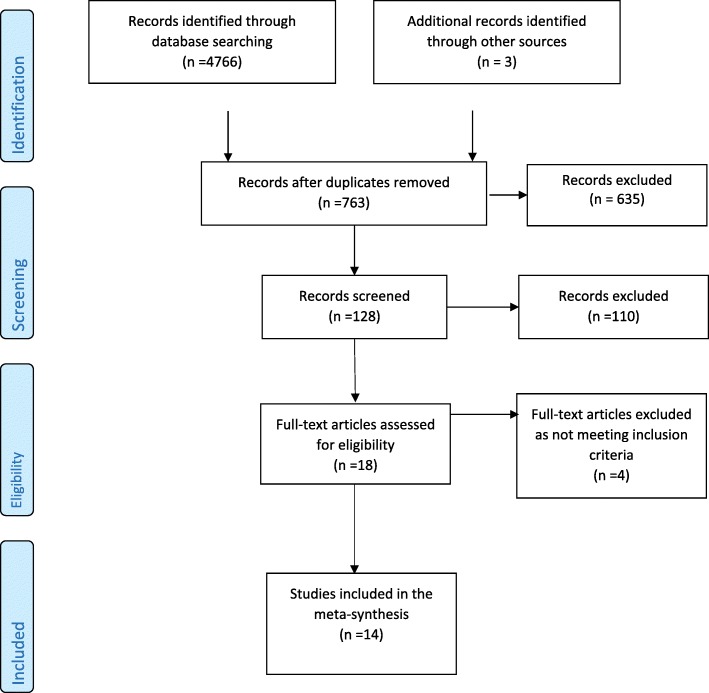
BACKGROUND: Midwives have an essential role to play in preparing for and providing sexual and reproductive health (SRH) services in humanitarian settings due to their unique knowledge and skills, position as frontline providers and geographic and social proximity to the communities they serve. There are considerable gaps in the international guidance that defines the scope of practice of midwives in crises, particularly for the mitigation and preparedness, and recovery phases. We undertook a systematic review to provide further clarification of this scope of practice and insights to optimise midwifery performance. The review aimed to determine what SRH services midwives are involved in delivering across the emergency management cycle in humanitarian contexts, and how they are working with other professionals to deliver health care. METHODS: Four electronic databases and the websites of 33 organisations were searched between January and March 2017. Papers were eligible for inclusion if they were published in English between 2007 and 2017 and reported primary research pertaining to the role of midwives in delivering and performing any component of sexual and/or reproductive health in humanitarian settings. Content analysis was used to map the study findings to the Minimum Initial Service Package (MISP) for SRH across the three phases of the disaster management cycle and identify how midwives work with other members of the health care team. RESULTS: Fourteen studies from ten countries were included. Twelve studies were undertaken in conflict settings, and two were conducted in the context of the aftermath of natural disasters. We found a paucity of evidence from the research literature that examines the activities and roles undertaken by midwives across the disaster management cycle. This lack of evidence was more apparent during the mitigation and preparedness, and recovery phases than the response phase of the disaster management cycle. CONCLUSION: Research-informed guidelines and strategies are required to better align the scope of practice of midwives with the objectives of multi-agency guidelines and agreements, as well as the activities of the MISP, to ensure that the potential of midwives can be acknowledged and optimised across the disaster management cycle.
Overview
CoChat Summary
## TL;DR
This systematic review found that midwives in humanitarian settings are documented mainly in response-phase maternal and newborn care, with much less evidence for mitigation/preparedness or recovery. The authors conclude that guidance and research are insufficient to define and support midwifery scope of practice across the disaster management cycle.
## Key findings
- The review included 14 studies from 10 countries; 12 were in conflict settings and 2 in the aftermath of natural disasters.
- Evidence showed midwives involved in routine maternal-newborn care, basic emergency obstetric care, family planning, and adolescent SRH services, but this covered only 4 of the 6 MISP objectives.
- For the response phase, the review found 8 papers with midwives delivering these services; for recovery, 7 papers reported activities, but only 1 of the 4 Granada Consensus recovery strands was evidenced.
- Only one area of mitigation/preparedness work was found in the literature: preparedness training of midwives; the authors state evidence gaps were especially marked in mitigation/preparedness and recovery.
## Methods
- Systematic review with content analysis, conducted using an a priori protocol and PRISMA guidance.
- Searched 4 electronic databases and the websites of 33 organisations between January and March 2017; included English-language primary research from 2007–2017 on midwives’ roles in SRH in humanitarian settings.
- Extracted findings from the 14 included papers and used content analysis to map them to the MISP, the three emergency management phases, and related guidance on midwifery scope of practice and collaboration.
## Limitations
- The paper explicitly states language bias because it included only English-language papers.
- The review says the search returned few papers, reflecting the emerging nature of the field, and that some included studies were methodologically “weak” but retained for contextual data.
- The authors state the review did not allow for theorising because the data were largely descriptive.
- Evident from the text: the evidence base is small and uneven across phases and settings, so conclusions about practice are limited by the available studies rather than direct measurement of midwives’ full scope.
Model-written summary. Check it against the paper before relying on it.
Integrity signals
Registry
Cites
Statistics
Figures
Verification
Claims the paper makes
21 Valid · 1 Not valid · 28 Not checked · 34 Own results and interpretations
The sources with a verdict support this claim; the rest weren’t checked yet, have no full text we could read, or their verdicts aren’t rated yet.
In the paper
“Two studies reported training of midwives in different humanitarian settings [53, 54].”
§ The role and scope of practice of midwives in humanitarian settings: a systematic review and content analysis > Findings > Before an emergency: mitigation and preparedness
What the sources say
- Not checked — no full text of the sourcecites [53] O'Malley Floyd B Lessons learned preparing volunteer midwives for service in Haiti: after the earthquake J Midwifery Women’s Health 2013 58 5 558 568 26251862 source
- Supportedcites [54] Turkmani S Currie S Mungia J Assefi N Rahmanzai AJ Azfar P Bartlett L ‘Midwives are the backbone of our health system’: lessons from Afghanistan to guide expansion of midwifery in challenging settings Midwifery 2013 29 10 1166 1172 23916402 source
The Strengths of the midwifery education programme section describes the midwives’ training in Afghanistan. The Discussion places the programme in a post-conflict setting, so this paper is an example of a study reporting midwife training in a challenging setting. The other study cited in the sentence is not assessed here. (LLM, conf=0.92)
plain- Asserted: passes — The authors put it forward as true.
- Checkable: passes — It can be checked against evidence.
- Load-bearing: unclear — It is unclear whether the paper’s conclusions depend on it.
- Based: passes — The paper gives a reason why it holds.
Every source the paper cites for this claim was checked and supports it.
In the paper
“The only reference to activity related to preventing or responding to sexual violence in humanitarian settings concerned the low level of knowledge about the use of emergency contraception for both survivors of sexual violence and broader populations among midwives, on the Thailand-Burma border [45].”
§ The role and scope of practice of midwives in humanitarian settings: a systematic review and content analysis > Findings > During an emergency: the Minimum Initial Service Package
What the sources say
- Supportedcites [45] Hobstetter M Sietstra C Walsh M Leigh J Foster AM “In rape cases we can use this pill”: a multimethods assessment of emergency contraception knowledge, access, and needs on the Thailand− Burma border Int J Gynecol Obstet 2015 130 E37 E41 26140949 source
Section 3.2 reports that program managers, midwives, and healthcare workers were misinformed about emergency contraception and that some organizations limited access to rape survivors rather than women with other needs. Section 3.3 also records an informant’s observation that midwives lacked knowledge of emergency contraceptive pills. The phrase “only reference” describes the citing authors’ review, not a finding attributed to this source. (LLM, conf=0.91)
plain- Asserted: passes — The authors put it forward as true.
- Checkable: passes — It can be checked against evidence.
- Load-bearing: passes — The paper’s conclusions depend on it.
- Based: passes — The paper gives a reason why it holds.
- Supported
The cited sources support only part of this claim — read each source’s verdict below.
In the paper
“Six of the seven papers reporting on the response phase of an emergency [43, 48–51] and a paper which detailed the response and recovery phases [49] discussed the role of midwives in providing maternal and newborn health services.”
§ The role and scope of practice of midwives in humanitarian settings: a systematic review and content analysis > Findings > During an emergency: the Minimum Initial Service Package
What the sources say
- Partly supportedcites [43] Chi PC Bulage P Urdal H Sundby J Barriers in the delivery of emergency obstetric and neonatal care in post-conflict Africa: qualitative case studies of Burundi and northern Uganda PLoS One 2015 10 9 e0139120 26405800 PMC4583460 sourceExperimental — accuracy not yet measured
The Results (Northern Uganda; page unavailable) describe a midwife handling antenatal care, deliveries and other services, so this paper does discuss midwives’ role in maternal and newborn care. But the Introduction places the study in post-conflict recovery, not the response phase of an emergency. The six-of-seven count is the citing authors’ synthesis, not a finding this individual paper can establish. (LLM, conf=0.82)
- Not checked — no full text of the sourcecites [48] Sugino M Dwi Hapsari E Madyaningrum E Haryant F Warsini S Takada S Matsuo H Issues raised by nurses and midwives in a post-disaster Bantul community Disaster Prev Manag 2014 23 4 420 436 source
- Not checked — no full text of the sourcecites [49] Tappis H Koblinsky M Winch PJ Turkmani S Bartlett L Context matters: successes and challenges of intrapartum care scale-up in four districts of Afghanistan Global Public Health 2016 11 4 387 406 26645366 source
- Not checked — no full text of the sourcecites [50] Wick L Hassan S No safe place for childbirth: women and midwives bearing witness, Gaza 2008–09 Reprod Health Matters 2012 20 40 7 15 23245403 source
- Supportedcites [51] McGready R Boel M Rijken MJ Ashley EA Cho T Moo O Paw MK Pimanpanarak M Hkirijareon L Carrara VI Effect of early detection and treatment on malaria related maternal mortality on the north-western border of Thailand 1986–2010 PLoS One 2012 7 7 e40244 22815732 PMC3399834 source
The Methods section (Antenatal Care and Delivery; page unavailable) describes trained midwives assisting deliveries at SMRU and lists midwives among its staff. This supports citing the paper as one that discusses midwives’ role in maternal and newborn health services; the six-of-seven count is the citing review’s own synthesis. (LLM, conf=0.87)
plain- Asserted: passes — The authors put it forward as true.
- Checkable: passes — It can be checked against evidence.
- Load-bearing: unclear — It is unclear whether the paper’s conclusions depend on it.
- Based: passes — The paper gives a reason why it holds.
- Partly supported
Every source the paper cites for this claim was checked and supports it.
In the paper
“Chi et al. [43] reported a lack of coordination between key emergency obstetric and neonatal care personnel in post-conflict Northern Uganda, particularly when needing to assemble a team of skilled providers to perform an emergency caesarean section, causing delays in important lifesaving services.”
§ The role and scope of practice of midwives in humanitarian settings: a systematic review and content analysis > Findings > Midwifery collaboration with other health cadre
What the sources say
- Supportedcites [43] Chi PC Bulage P Urdal H Sundby J Barriers in the delivery of emergency obstetric and neonatal care in post-conflict Africa: qualitative case studies of Burundi and northern Uganda PLoS One 2015 10 9 e0139120 26405800 PMC4583460 source
Split into 2 atoms — 2 confirmed, 0 partially supported, 0 disputed, 0 misattributed, 0 unverifiable. Expand the claim to see per-atom verdicts.
plainstates a cause- Asserted: passes — The authors put it forward as true.
- Checkable: passes — It can be checked against evidence.
- Load-bearing: unclear — It is unclear whether the paper’s conclusions depend on it.
- Based: passes — The paper gives a reason why it holds.
- Supported
The cited sources support only part of this claim — read each source’s verdict below.
In the paper
“Midwives were reported as being involved in births at both health facilities and in women’s homes [42, 46, 48, 50, 51].”
§ The role and scope of practice of midwives in humanitarian settings: a systematic review and content analysis > Findings > During an emergency: the Minimum Initial Service Package
What the sources say
- Not checked — no full text of the sourcecites [42] Bosmans M Nasser D Khammash U Claeys P Temmerman M Palestinian women’s sexual and reproductive health rights in a longstanding humanitarian crisis Reprod Health Matters 2008 16 31 103 111 18513612 source
- Partly supportedcites [46] Lee RB Delivering maternal health care services in an internal conflict setting in Maguindanao, Philippines Reprod Health Matters 2008 16 31 65 74 18513608 sourceExperimental — accuracy not yet measured
The section on the Cooperative describes a delivery-service team that included a midwife, and the Discussion lists hospital or facility-based delivery among the services provided. Neither passage reports midwives attending births in women’s homes, so the home-birth part of the claim is unsupported by our copy. (LLM, conf=0.76)
- Not checked — no full text of the sourcecites [48] Sugino M Dwi Hapsari E Madyaningrum E Haryant F Warsini S Takada S Matsuo H Issues raised by nurses and midwives in a post-disaster Bantul community Disaster Prev Manag 2014 23 4 420 436 source
- Not checked — no full text of the sourcecites [50] Wick L Hassan S No safe place for childbirth: women and midwives bearing witness, Gaza 2008–09 Reprod Health Matters 2012 20 40 7 15 23245403 source
- Partly supportedcites [51] McGready R Boel M Rijken MJ Ashley EA Cho T Moo O Paw MK Pimanpanarak M Hkirijareon L Carrara VI Effect of early detection and treatment on malaria related maternal mortality on the north-western border of Thailand 1986–2010 PLoS One 2012 7 7 e40244 22815732 PMC3399834 sourceExperimental — accuracy not yet measured
The Methods section (Antenatal Care and Delivery; page unavailable) reports that trained midwives assisted deliveries at SMRU, a health facility. It describes home deliveries as attended by traditional birth attendants, not midwives, so the home-birth part of the claim is not supported. (LLM, conf=0.88)
plain- Asserted: passes — The authors put it forward as true.
- Checkable: passes — It can be checked against evidence.
- Load-bearing: unclear — It is unclear whether the paper’s conclusions depend on it.
- Based: passes — The paper gives a reason why it holds.
32 more claims · 4 with their cited sources checked
Create a free account to see all 84 claims and to verify the 3 references still open.
- It may state two separate claims as one. 32
- Probably not a substantial claim. 22
Self-check
Percentages, sums and reported differences re-computed from the paper’s own numbers.
Each contradiction between two passages listed here was confirmed by an independent check.
Rated minor: it would not touch a result — a value no result rests on, a p-value that stays on the same side of the significance level, or a conflict that is clerical, resolved elsewhere in the paper, or outside its own findings.
In the paper
§ The role and scope of practice of midwives in humanitarian settings: a systematic review and content analysis > Introduction
“The Minimum Initial Service Package (MISP) for Reproductive Health in Humanitarian Settings [6] outlines five objectives, activities and resources to address the SRH needs of people in humanitarian emergencies.”
§ The role and scope of practice of midwives in humanitarian settings: a systematic review and content analysis > Findings > During an emergency: the Minimum Initial Service Package
“These activities represent action in only four of the six objectives of the MISP (Table 5).”
Citations
Cites
Preferred Reporting Items for Systematic Reviews and Meta-Analyses: the PRISMA statement
Moher, D., Liberati, A., Tetzlaff, J., Altman, D. G., & for the PRISMA Group (2009) · BMJ · doi:10.1136/bmj.b2535 · Cited by 83,823
Preferred reporting items for systematic reviews and meta-analyses: the PRISMA Statement.
(2009) · PubMed Central · Cited by 44,859
Preferred reporting items for systematic reviews and meta-analyses: The PRISMA statement
Moher, D., Liberati, A., Tetzlaff, J., Altman, D. G., & the PRISMA Group* (2009) · Annals of Internal Medicine · doi:10.7326/0003-4819-151-4-200908180-00135 · Cited by 37,554
Sendai Framework for Disaster Risk Reduction 2015-2030
(2018) · Human Rights Documents Online · doi:10.1163/2210-7975_hrd-9813-2015016 · Cited by 3,392
The World Health report 2006 1 : Working together for health 2
Guilbert, J.-J. (2006) · Education for Health: Change in Learning & Practice · doi:10.1080/13576280600937911 · Cited by 2,654
Synthesising qualitative and quantitative evidence: A review of possible methods
Dixon-Woods, M., Agarwal, S., Jones, D., Young, B., & Sutton, A. (2005) · Journal of Health Services Research & Policy · doi:10.1177/135581960501000110 · Cited by 2,132 · cited 1×
“We applied content analysis to categorise data in a systematic and replicable way [41].”
MethodRenfrew, M. J., McFadden, A., Bastos, M. H., Campbell, J., Channon, A. A., Cheung, N. F., Silva, D. R. A. D., Downe, S., Kennedy, H. P., Malata, A., et al. (2014) · The Lancet · doi:10.1016/s0140-6736(14)60789-3 · Cited by 1,297 · cited 4×
“Midwives, trained to international standards and competencies, are associated with improved quality of care and efficient use of resources [12] and can potentially meet some of the shortfall of skilled health workers in humanitarian crises.”
BackgroundInfluentialSelf-citationPluye, P., Gagnon, M.-P., Griffiths, F., & Johnson-Lafleur, J. (2009) · International Journal of Nursing Studies · doi:10.1016/j.ijnurstu.2009.01.009 · Cited by 1,119 · cited 1×
“’s [35] scoring system for appraising mixed methods research, and the National Institute for Health and Care Excellence (NICE) guidelines [36] for survey and cross-sectional studies.”
MethodMonitoring emergency obstetric care : a handbook
Disability (2009) · Cited by 986
Improvement of maternal and newborn health through midwifery
ten Hoope-Bender, P., de Bernis, L., Campbell, J., Downe, S., Fauveau, V., Fogstad, H., Homer, C. S. E., Kennedy, H. P., Matthews, Z., McFadden, A., et al. (2014) · The Lancet · doi:10.1016/s0140-6736(14)60930-2 · Cited by 435 · cited 4×
“However, considerable investment is needed globally to prioritise midwifery and build capacity so that midwives are a highly competent, qualified workforce as per ICM standards [18, 27, 58].”
BackgroundInfluentialSelf-citationThe projected effect of scaling up midwifery
Homer, C. S. E., Friberg, I. K., Dias, M. A. B., ten Hoope-Bender, P., Sandall, J., Speciale, A. M., & Bartlett, L. A. (2014) · The Lancet · doi:10.1016/s0140-6736(14)60790-x · Cited by 323 · cited 1×
“[31] highlighted the unexploited potential of collaborative practice to improve SRH.”
BackgroundFilby, A., McConville, F., & Portela, A. (2016) · PLOS ONE · doi:10.1371/journal.pone.0153391 · Cited by 323 · cited 1×
“Such tensions were reported in Afghanistan, possibly reflecting a lack of recognition of the role of midwives who are re-emerging as a profession in Afghanistan, as well as gender inequality [55, 56].”
BackgroundVu, A., Adam, A., Wirtz, A., Pham, K., Rubenstein, L., Glass, N., Beyrer, C., & Singh, S. (2014) · PLoS Currents · doi:10.1371/currents.dis.835f10778fd80ae031aac12d3b533ca7 · Cited by 300 · cited 1×
“Sixty percent of preventable maternal deaths and 45% of neonatal deaths take place in displacement settings [4] and more than one in five refugees or displaced women in humanitarian settings experience sexual violence [5] placing them at risk of unplanned pregnancies, HIV and other sexually transmitted infections (STI…”
BackgroundWannous, C., & Velasquez, G. (2017) · Advancing Culture of Living with Landslides · doi:10.1007/978-3-319-59469-9_6 · Cited by 229
Dawson, A. J., Buchan, J., Duffield, C., Homer, C. S. E., & Wijewardena, K. (2014) · Health Policy and Planning · doi:10.1093/heapol/czt026 · Cited by 168 · cited 1×
“In contexts where there is a lack of midwives, a short-term solution could be to train other healthcare workers such as nurses, doctors and community health workers to provide aspects of SRH [57].”
BackgroundSelf-citationCasey, S. E., Chynoweth, S. K., Cornier, N., Gallagher, M. C., & Wheeler, E. E. (2015) · Conflict and Health · doi:10.1186/1752-1505-9-s1-s3 · Cited by 157
The state of the world's midwifery: a universal pathway, a woman's right to health
ten Hoope‐Bender, P., Homer, C., Matthews, Z., Nove, A., Sochas, L., Campbell, J., & deBernis, L. (2014) · ePrints Soton (University of Southampton) · Cited by 143
Homer, C. S. E., Foureur, M. J., Allende, T., Pekin, F., Caplice, S., & Catling-Paull, C. (2012) · Midwifery · doi:10.1016/j.midw.2011.06.004 · Cited by 112
McGready, R., Boel, M., Rijken, M. J., Ashley, E. A., Cho, T., Moo, O., Paw, M. K., Pimanpanarak, M., Hkirijareon, L., Carrara, V. I., et al. (2012) · PLoS ONE · doi:10.1371/journal.pone.0040244 · Cited by 101 · cited 3×
“Although outside the scope of the MISP, examples of midwives working within multi-disciplinary teams in the Philippines and Thailand to provide antenatal care (ANC) during periods of conflict were described in two papers [46, 51].”
BackgroundMethodHuman resource management in post-conflict health systems: review of research and knowledge gaps
Roome, E., Raven, J., & Martineau, T. (2014) · Conflict and Health · doi:10.1186/1752-1505-8-18 · Cited by 93 · cited 1×
“In this context, it is unsurprising that there is also a dearth of skilled health workers during humanitarian crises [9, 10].”
BackgroundEvaluations of reproductive health programs in humanitarian settings: a systematic review
Casey, S. E. (2015) · Conflict and Health · doi:10.1186/1752-1505-9-s1-s1 · Cited by 92
Maternal and child health in the occupied Palestinian territory
Rahim, H. F. A., Wick, L., Halileh, S., Hassan-Bitar, S., Chekir, H., Watt, G., & Khawaja, M. (2009) · The Lancet · doi:10.1016/s0140-6736(09)60108-2 · Cited by 92
Lund, S., Boas, I. M., Bedesa, T., Fekede, W., Nielsen, H. S., & Sørensen, B. L. (2016) · JAMA Pediatrics · doi:10.1001/jamapediatrics.2016.0687 · Cited by 85 · cited 1×
“However, while there are excellent clinical packages available to assist the training of midwives to deliver the MISP including the SRH clinical outreach refresher training (S-CORT) [60] and m-health applications [61], supportive strategies such as supervision are necessary to enable midwives to transfer their learnin…”
BackgroundReproductive Health Concerns in Six Conflict-Affected Areas of Sri Lanka
Kottegoda, S., Samuel, K., & Emmanuel, S. (2008) · Reproductive Health Matters · doi:10.1016/s0968-8080(08)31359-7 · Cited by 74
Olu, O., Usman, A., Woldetsadik, S., Chamla, D., & Walker, O. (2015) · Conflict and Health · doi:10.1186/1752-1505-9-1 · Cited by 72
Turkmani, S., Currie, S., Mungia, J., Assefi, N., Javed Rahmanzai, A., Azfar, P., & Bartlett, L. (2013) · Midwifery · doi:10.1016/j.midw.2013.06.015 · Cited by 71
Health systems research in fragile and conflict-affected states: a research agenda-setting exercise
Woodward, A., Sondorp, E., Witter, S., & Martineau, T. (2016) · Health Research Policy and Systems · doi:10.1186/s12961-016-0124-1 · Cited by 66 · cited 1×
“Finally, these need to be adequately costed so that financing benchmarks can be established to mobilise, accumulate and allocate money to cover the SRH needs [64].”
BackgroundPalestinian Women’s Sexual and Reproductive Health Rights in a Longstanding Humanitarian Crisis
Bosmans, M., Nasser, D., Khammash, U., Claeys, P., & Temmerman, M. (2008) · Reproductive Health Matters · doi:10.1016/s0968-8080(08)31343-3 · Cited by 54 · cited 8×
“As detailed in Table 4, eight papers reported findings from the response phase of the disaster, including one instance of immediate response within protracted humanitarian settings [42].”
BackgroundInfluentialChi, P. C., Bulage, P., Urdal, H., & Sundby, J. (2015) · PLOS ONE · doi:10.1371/journal.pone.0139120 · Cited by 54 · cited 4×
“[43] reported a lack of coordination between key emergency obstetric and neonatal care personnel in post-conflict Northern Uganda, particularly when needing to assemble a team of skilled providers to perform an emergency caesarean section, causing delays in important lifesaving services.”
BackgroundInfluentialBarriers to developing midwifery as a primary health-care strategy: A Jordanian study
Shaban, I., Barclay, L., Lock, L., & Homer, C. (2012) · Midwifery · doi:10.1016/j.midw.2010.11.012 · Cited by 53
Miyake, S., Speakman, E. M., Currie, S., & Howard, N. (2017) · Health Policy and Planning · doi:10.1093/heapol/czw093 · Cited by 46 · cited 1×
“One review examined community midwifery workforce issues such as recruitment and retention in fragile and conflict-affected countries, drawn largely from grey literature [19].”
BackgroundDeJong, J., Akik, C., El Kak, F., Osman, H., & El-Jardali, F. (2010) · Midwifery · doi:10.1016/j.midw.2010.06.012 · Cited by 41
Speakman, E. M., Shafi, A., Sondorp, E., Atta, N., & Howard, N. (2014) · BMC Women's Health · doi:10.1186/1472-6874-14-111 · Cited by 36 · cited 4×
“[47] discuss the consistently positive contribution the Community Midwifery Education programme in Afghanistan has had on the reduction of maternal mortality and the increase in skilled attendance at birth.”
BackgroundInfluentialThe status of maternal and newborn care services in Sierra Leone 8 years after ceasefire
Oyerinde, K., Harding, Y., Amara, P., Kanu, R., Shoo, R., & Daoh, K. (2011) · International Journal of Gynecology & Obstetrics · doi:10.1016/j.ijgo.2011.05.006 · Cited by 36 · cited 3×
“[52] described signal functions that state-registered midwives performed in post-conflict Sierra Leone: administering parenteral antibiotics, oxytocics and anticonvulsants, manual removal of placenta, removal of retained products, assisted vaginal delivery and blood transfusion.”
BackgroundMethodData collection tools for maternal and child health in humanitarian emergencies: a systematic review
Pyone, T., Dickinson, F. M., Kerr, R. S., Boschi-Pinto, C., Mathai, M., & van den Broek, N. R. (2015) · Bulletin of the World Health Organization · doi:10.2471/blt.14.148429 · Cited by 31 · cited 1×
“Workforce interventions need to be assessed alongside interventions to strengthen the health information system to generate data to inform immediate and future responses to SRH in crisis [63].”
BackgroundReproductive health services for refugees by refugees: an example from Guinea
Von Roenne, A., Von Roenne, F., Kollie, S., Swaray, Y., Sondorp, E., & Borchert, M. (2010) · Disasters · doi:10.1111/j.1467-7717.2009.01112.x · Cited by 30
Delivering Maternal Health Care Services in an Internal Conflict Setting in Maguindanao, Philippines
Lee, R. B. (2008) · Reproductive Health Matters · doi:10.1016/s0968-8080(08)31346-9 · Cited by 28 · cited 6×
“Midwives were reported as being involved in births at both health facilities and in women’s homes [42, 46, 48, 50, 51].”
BackgroundInfluentialFuruta, M., & Mori, R. (2008) · Health Care For Women International · doi:10.1080/07399330802269600 · Cited by 26 · cited 5×
“[43] and Furuta and Mori [44] reported that midwives are trusted to attend births and to recognise the signs of obstetric emergencies and, as such, are in high demand.”
BackgroundInfluentialHobstetter, M., Sietstra, C., Walsh, M., Leigh, J., & Foster, A. M. (2015) · International Journal of Gynecology & Obstetrics · doi:10.1016/j.ijgo.2015.05.008 · Cited by 25
Purnamasari, C. C. (2018) · Universitas Pasundan institutional repositories & scientific journals (Universitas Pasundan) · Cited by 25
Bouchghoul, H., Hornez, E., Duval‐Arnould, X., Philippe, H., & Nizard, J. (2015) · Acta Obstetricia et Gynecologica Scandinavica · doi:10.1111/aogs.12638 · Cited by 23 · cited 1×
“[39] evaluated a pre-service competency-based midwifery curriculum comprising clinical components for antenatal, labour and postnatal care, and family planning services.”
Beek, K., Dawson, A. J., & Whelan, A. K. (2017) · Conflict and Health · doi:10.1186/s13031-017-0118-9 · Cited by 20
Self-citationNo safe place for childbirth: women and midwives bearing witness, Gaza 2008–09
Wick, L., & Hassan, S. (2012) · Reproductive Health Matters · doi:10.1016/s0968-8080(12)40648-6 · Cited by 17 · cited 4×
“Birthing at home was often supported by midwifery staff when access to facilities was compromised by ongoing conflict [42, 49, 50].”
BackgroundInfluentialTappis, H., Koblinsky, M., Winch, P. J., Turkmani, S., & Bartlett, L. (2016) · Global Public Health · doi:10.1080/17441692.2015.1114657 · Cited by 15 · cited 4×
“[49] reported examples from Afghanistan of midwives lacking skills, e.”
BackgroundInfluentialTran, N. T., Harker, K., Yaméogo, W. M. E., Kouanda, S., Millogo, T., Menna, E. D., Lohani, J., Maharjan, O., Sake, J., Odinga, E. A., et al. (2017) · Reproductive Health Matters · doi:10.1080/09688080.2017.1405678 · Cited by 14 · cited 2×
“However, while there are excellent clinical packages available to assist the training of midwives to deliver the MISP including the SRH clinical outreach refresher training (S-CORT) [60] and m-health applications [61], supportive strategies such as supervision are necessary to enable midwives to transfer their learnin…”
BackgroundIssues raised by nurses and midwives in a post-disaster Bantul community
Sugino, M., Dwi Hapsari, E., Madyaningrum, E., Haryant, F., Warsini, S., Takada, S., & Matsuo, H. (2014) · Disaster Prevention and Management · doi:10.1108/dpm-05-2013-0086 · Cited by 11 · cited 4×
“Midwives and nurses expressed that they were not adequately informed of the activities of relief medical operations in the area [48].”
BackgroundInfluentialLessons Learned Preparing Volunteer Midwives for Service in Haiti: After the Earthquake
O'Malley Floyd, B. (2013) · Journal of Midwifery & Women's Health · doi:10.1111/jmwh.12021 · Cited by 9 · cited 8×
“O’Malley Floyd [53] and Turkmani et al. [54] report training of midwives before the crisis or in the aftermath of an emergency with the purpose of strengthening the health system.”
BackgroundMethodInfluentialTaghizadeh, Z., Khoshnam Rad, M., & Montazeri, A. (2017) · Nurse Education Today · doi:10.1016/j.nedt.2017.01.010 · Cited by 5
Research works printed but not linked: 22
- UNHCR Statistical yearbook 2015 2017 Geneva United Nations High Commissioner for Refugees
- UNFPA UNFPA Humanitarian Action 2017 2017 New York UNFPA
- WHO Integrating sexual and reproductive health into health emergency and disaster risk management: policy brief 2012 Geneva World Health Organisation
- UNFPA State of the world population report 2015: shelter from the storm - a transformative agenda for women and girls in the crisis-prone world 2015 New York UNFPA
- WRC Minimum Initial Service Package (MISP) for Reproductive Health in Crisis Situations: A Distance Learning Module 2011 New York Women’s Refugee Commission
- WHO A universal truth: no health without a workforce 2014 Geneva World Health Organization
- UNFPA-ICM Midwifery in the community: lessons learned 1st International Forum on Midwifery in the Community 2006 Hammamet UNFPA-ICM
- WHO Bangladesh expands training of midwives to improve maternal and neonatal health 2014 Geneva WHO
- WHO Rebuilding midwifery in Sierra Leone to save the lives of women and newborns 2018 Geneva WHO
- WHO Global strategic directions for strengthening nursing and midwifery 2016–2020 2016 Geneva WHO
- IAWG Inter-agency field manual on reproductive health in humanitarian settings: 2010 revision for field review 2010 New York Inter-agency Working Group on Reproductive Health in Crises 26203479
- WHO The contribution of nursing and midwifery in emergencies. Report of a WHO consultation 2006 Geneva World Health Organization
- ICM Position Statement: Role of the midwife in disaster/emergency preparedness PS2014_003 2015 The Hague International Confederation of Midwives
- ICM ICM International Definition of the Midwife 2017 The Hague International Confederation of Midwives
- WHO, UNPFA, Escuela Andaluza de Salud Pública Sexual and reproductive health during protracted crises and recovery Granada report 2011 Geneva WHO, UNPFA, Escuela Andaluza de Salud Pública
- WHO Disaster risk management for health: Sexual and reproductive health 2011 Geneva World Health Orgnanization
- UNISDR UNISDR terminology on disaster risk reduction 2009 Geneva United Nations International Strategy on Disaster Reduction
- NICE Interim methods guide for developing service guidance 2014 London National Institute for Health and Care Excellence 28230952
- ICM Education, Regulation and Association 2017 The Hague International Confederation of Midwives
- ICM Health of Women and Children in Disasters: PS2011_008 V2017 2011 The Hague International Confederation of Midwives
- ICM Human Immunodeficiency Virus and Acquired Immunodeficiency Syndrome (HIV and AIDS): PS2008_006 V2014 2008 The Hague International Confederation of Midwives
- ICM Planned pregnancies and parenthood: PS2011_016 2011 The Hague International Confederation of Midwives
Cited by
Nove, A., Friberg, I. K., de Bernis, L., McConville, F., Moran, A. C., Najjemba, M., ten Hoope-Bender, P., Tracy, S., & Homer, C. S. E. (2021) · The Lancet Global Health · doi:10.1016/s2214-109x(20)30397-1 · Cited by 393
A critical interpretive synthesis of the roles of midwives in health systems
Mattison, C. A., Lavis, J. N., Wilson, M. G., Hutton, E. K., & Dion, M. L. (2020) · Health Research Policy and Systems · doi:10.1186/s12961-020-00590-0 · Cited by 64
Homer, C. S., Turkmani, S., Wilson, A. N., Vogel, J. P., Shah, M. G., Fogstad, H., & Langlois, E. V. (2022) · BMJ Global Health · doi:10.1136/bmjgh-2021-006872 · Cited by 48
Ahmed, S. A. E., Mahimbo, A., & Dawson, A. J. (2023) · BMC Pregnancy and Childbirth · doi:10.1186/s12884-022-05319-1 · Cited by 53
“Evidence shows that investments in improving the quality of midwifery education and regulations are cost-efficient and can enhance the quality of maternity care and woman-centred outcomes in humanitarian settings and stable developing settings [67, 68].”
BackgroundSelf-citationThe role of the physician associate: an overview
Malone, R. (2021) · Irish Journal of Medical Science (1971 -) · doi:10.1007/s11845-021-02661-9 · Cited by 19
Metadata
- Authors
- Beek, K., McFadden, A., & Dawson, A.
- Affiliations
- University of Technology Sydney (AU)
- University of Dundee (GB)
- Corresponding author
- McFadden, Alison
- Venue
- Human Resources for Health
- Published
- 2019-01-14
- Volume
- 17
- Issue
- 1
- Pages
- 5-5
- ISSN
- 1478-4491 (ISSN-L)
- PMC
- PMC6333021
- OpenAlex
- W2910344817
- Cited by
- 58
- References
- 49
- Citations by year
- 2026: 5 · 2025: 9 · 2024: 9 · 2023: 19 · 2022: 2 · 2021: 8 · 2020: 5 · 2019: 1
- FWCI
- 0.73
- Type
- journal article
- Language
- en
- Open access
- gold
- doi.org
- Licence
- cc-by
- creativecommons.org/licenses/by/4.0/ (tdm)
- Locations
- Human Resources for Health (publishedVersion, cc-by)
- Europe PMC (PubMed Central) (publishedVersion, other-oa)
- PubMed Central (publishedVersion, cc-by)
- PubMed (publishedVersion)
- Discovery Research Portal (University of Dundee) (submittedVersion, cc-by)
- DOAJ (DOAJ: Directory of Open Access Journals) (submittedVersion, cc-by-sa)
- UTS ePRESS (University of Technology Sydney) (submittedVersion)
- Funders
- University of Technology Sydney
- Topics
- Health Sciences › Health Professions › General Health Professions › Health and Conflict Studies
- Health Sciences › Health Professions › Emergency Medical Services › Disaster Response and Management
- Health Sciences › Medicine › Pediatrics, Perinatology and Child Health › Global Maternal and Child Health
- Keywords
- midwives, scope of practice, humanitarian settings, sexual and reproductive health services, disaster management cycle, conflict settings, natural disasters, inter-agency cooperation, healthcare workers
- MeSH terms
- Sexual Health, Altruism, Delivery of Health Care, Disasters, Female, Health Personnel, Health Services, Humans, Midwifery, Nurse Midwives, Patient Care Team, Pregnancy, Relief Work, Professional Role, Reproductive Health Services, Reproductive Health
About these checks
Registry, retraction, Cites and statistics results are computed, not judged, with one exception: a printed reference that no index lists is read once by a model before it counts as a citation error. Claims are extracted by a model and kept only when their quote appears verbatim in the text; each cited source is then checked, with a model’s help, for whether it says what the claim relies on. Those verdicts can be wrong — read the claim’s quote and the cited source before relying on one.
The claim verdicts this report counts are experimental: their accuracy is not yet measured.
A language model drew the claims from the paper on 2026-10-10, under version 3 of the claim definition (model deepseek-v4.1-flash, prompt extract-v3).
A second model labelled each claim on 2026-10-10 (model jev-1.13-20260917, definition revision gold-guideline-v0.2).
Cited sources are checked with a language model’s help (gpt-6-sol).
Statistics and arithmetic are recomputed, not judged.
Confidence bands are shown only for fields calibrated on our annotated test set. None is calibrated yet, so no band is shown.
What counts as a claim ›How we measure confidence ›How we check this ›
Are you an author, or do you see a problem with this page? Request a review
Data sources
Bibliographic data: Semantic Scholar, OpenAlex, Crossref.
Contains information from the Semantic Scholar Academic Graph Datasets, made available under the ODC Attribution License (ODC-BY 1.0).
Semantic Scholar’s data is described in: Kinney, R., et al. (2023). The Semantic Scholar Open Data Platform. arXiv:2301.10140.
