

Remote health workforce turnover and retention: what are the policy and practice priorities?
The DOI matches its Crossref record; 62 of the 62 references it cites were found in a registry or an index.
Abstract
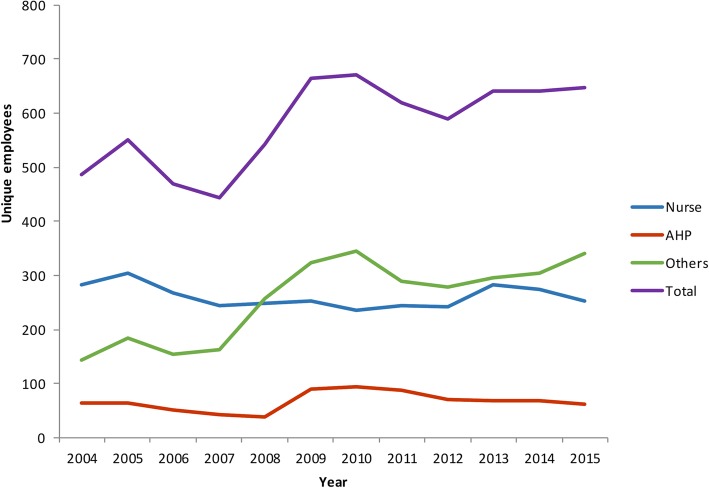
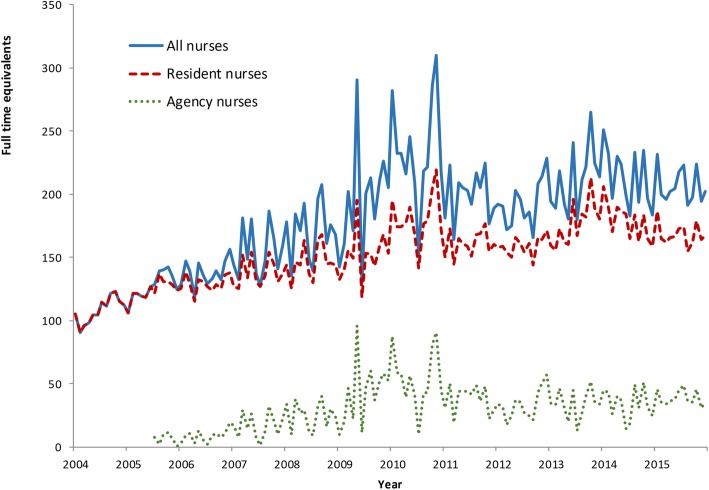
Background: Residents of remote communities in Australia and other geographically large countries have comparatively poorer access to high-quality primary health care. To inform ongoing policy development and practice in relation to remote area health service delivery, particularly in remote Indigenous communities, this review synthesizes the key findings of (1) a comprehensive study of workforce turnover and retention in remote Northern Territory (NT) of Australia and (2) a narrative review of relevant international literature on remote and rural health workforce retention strategies. This synthesis provides a valuable summary of the current state of international knowledge about improving remote health workforce retention. Main text: Annual turnover rates of NT remote area nurses (148%) and Aboriginal health practitioners (80%) are very high and 12-month stability rates low (48% and 76%, respectively). In remote NT, use of agency nurses has increased substantially. Primary care costs are high and proportional to staff turnover and remoteness. Effectiveness of care decreases with higher turnover and use of short-term staff, such that higher staff turnover is always less cost-effective. If staff turnover in remote clinics were halved, the potential savings would be approximately A$32 million per annum. Staff turnover and retention were affected by management style and effectiveness, and employment of Indigenous staff. Review of the international literature reveals three broad themes: Targeted enrolment into training and appropriate education designed to produce a competent, accessible, acceptable and ‘fit-for-purpose’ workforce; addressing broader health system issues that ensure a safe and supportive work environment ; and providing ongoing individual and family support . Key educational initiatives include prioritising remote origin and Indigenous students for university entry; maximising training in remote areas; contextualising curricula; providing financial, pedagogical and pastoral support; and ensuring clear, supported career pathways and continuing professional development. Health system initiatives include ensuring adequate funding; providing adequate infrastructure including fit-for-purpose clinics, housing, transport and information technology; offering flexible employment arrangements whilst ensuring a good ‘fit’ between individual staff and the community (especially with regard to cultural skills); optimising co-ordination and management of services that empower staff and create positive practice environments; and prioritising community participation and employment of locals. Individual and family supports include offering tailored financial incentives, psychological support and ‘time out’. Conclusion: Optimal remote health workforce stability and preventing excessive ‘avoidable’ turnover mandates alignment of government and health authority policies with both health service requirements and individual health professional and community needs. Supportive underpinning policies include: Strong intersectoral collaboration between the health and education sectors to ensure a fit-for-purpose workforce; A funding policy which mandates the development and implementation of an equitable, needs-based formula for funding remote health services; Policies that facilitate transition to community control, prioritise Indigenous training and employment, and mandate a culturally safe work context; and An employment policy which provides flexibility of employment conditions in order to be able to offer individually customised retention packages There is considerable extant evidence from around the world about effective retention strategies that contribute to slowing excessive remote health workforce turnover, resulting in significant cost savings and improved continuity of care. The immediate problem comprises an ‘implementation gap’ in translating empirical research evidence into actions designed to resolve existing problems. If we wish to ameliorate the very high turnover of staff in remote areas, in order to provide an equitable service to populations with arguably the highest health needs, we need political and executive commitment to get the policy settings right and ensure the coordinated implementation of multiple strategies, including better linking existing strategies and ‘filling the gaps’ where necessary.
Overview
The claims and statistics of this paper haven’t been checked yet.
Free: it reads the open-access text and checks the first 5 claims that cite a source we can check. Create a free account to check every claim.
Integrity signals
Registry
Cites
Statistics
Figures
Verification
Claims the paper makes
The claims and statistics of this paper haven’t been checked yet.
Free: it reads the open-access text and checks the first 5 claims that cite a source we can check. Create a free account to check every claim.
Claims other papers make about this one
Each is checked against this paper’s own text: does it say what the citing paper says it does?
The source backs part of the claim, not all of it — or backs it for a different population, condition or comparison.
In the citing paper
“Lack of provider cultural sensitivity has been found to compound chronic disease pathogenesis in patients, and impede provider to patient communication, care use, and health outcomes (Wakerman et al., 2019; Yashadhana et al., 2020).”
From On race, human variation, and who gets and dies of sepsis (2022) · cites this paper as Wakerman et al., 2019
Experimental — accuracy not yet measured
Self-check
Percentages, sums and reported differences re-computed from the paper’s own numbers.
The self-check needs the paper’s full text.
Citations
Cites
Macinko, J., Starfield, B., & Shi, L. (2003) · Health Services Research · doi:10.1111/1475-6773.00149 · Cited by 1,039
Anderson, I., Robson, B., Connolly, M., Al-Yaman, F., Bjertness, E., King, A., Tynan, M., Madden, R., Bang, A., Coimbra, C. E. A., et al. (2016) · The Lancet · doi:10.1016/s0140-6736(16)00345-7 · Cited by 990
A comparative review of nurse turnover rates and costs across countries
Duffield, C. M., Roche, M. A., Homer, C., Buchan, J., & Dimitrelis, S. (2014) · Journal of Advanced Nursing · doi:10.1111/jan.12483 · Cited by 384
Buykx, P., Humphreys, J., Wakerman, J., & Pashen, D. (2010) · Australian Journal of Rural Health · doi:10.1111/j.1440-1584.2010.01139.x · Cited by 358
Self-citationBehrendt, L., Larkin, S. K., Griew, R., & Kelly, P. A. (2012) · UTS ePRESS (University of Technology Sydney) · Cited by 315
Leadership practices and staff nurses’ intent to stay: a systematic review
COWDEN, T., CUMMINGS, G., & PROFETTO-MCGRATH, J. (2011) · Journal of Nursing Management · doi:10.1111/j.1365-2834.2011.01209.x · Cited by 280
RURAL DOCTORS AND RURAL BACKGROUNDS: HOW STRONG IS THE EVIDENCE? A SYSTEMATIC REVIEW
Laven, G., & Wilkinson, D. (2003) · Australian Journal of Rural Health · doi:10.1111/j.1440-1584.2003.00534.x · Cited by 280
Guthrie, B., Saultz, J. W., Freeman, G. K., & Haggerty, J. L. (2008) · BMJ · doi:10.1136/bmj.a867 · Cited by 272
Rabinowitz, H. K., Diamond, J. J., Markham, F. W., & Hazelwood, C. E. (1999) · JAMA · doi:10.1001/jama.281.3.255 · Cited by 250
Aboriginal community controlled health services: leading the way in primary care
Panaretto, K. S., Wenitong, M., Button, S., & Ring, I. T. (2014) · Medical Journal of Australia · doi:10.5694/mja13.00005 · Cited by 218
Twigg, D., & McCullough, K. (2014) · International Journal of Nursing Studies · doi:10.1016/j.ijnurstu.2013.05.015 · Cited by 213
Rural background and clinical rural rotations during medical training: effect on practice location.
Easterbrook, M., Godwin, M. S., Wilson, R., Hodgetts, G., Brown, G., Pong, R., & Najgebauer, E. (1999) · PubMed · Cited by 187
Kroezen, M., Dussault, G., Craveiro, I., Dieleman, M., Jansen, C., Buchan, J., Barriball, L., Rafferty, A. M., Bremner, J., & Sermeus, W. (2015) · Health Policy · doi:10.1016/j.healthpol.2015.08.003 · Cited by 158
A scoping review of the association between rural medical education and rural practice location
Farmer, J., Kenny, A. J., McKinstry, C., & Huysmans, R. (2015) · Human Resources for Health · doi:10.1186/s12960-015-0017-3 · Cited by 148
Curtis, E., Wikaire, E., Stokes, K., & Reid, P. (2012) · International Journal for Equity in Health · doi:10.1186/1475-9276-11-13 · Cited by 139
Russell, D. J., Zhao, Y., Guthridge, S., Ramjan, M., Jones, M. P., Humphreys, J. S., & Wakerman, J. (2017) · Human Resources for Health · doi:10.1186/s12960-017-0229-9 · Cited by 138
Self-citationBuchan, J., Couper, I. D., Tangcharoensathien, V., Thepannya, K., Jaskiewicz, W., Perfilieva, G., & Dolea, C. (2013) · Bulletin of the World Health Organization · doi:10.2471/blt.13.119008 · Cited by 129
Preparing and retaining rural physicians through medical education
Pathman, D. E., Steiner, B., Jones, B. D., & Konrad, T. R. (1999) · Academic Medicine · doi:10.1097/00001888-199907000-00016 · Cited by 124
A systematic review of what factors attract and retain nurses in aged and dementia care
Chenoweth, L., Jeon, Y., Merlyn, T., & Brodaty, H. (2010) · Journal of Clinical Nursing · doi:10.1111/j.1365-2702.2009.02955.x · Cited by 120
Salt, J., Cummings, G. G., & Profetto-McGrath, J. (2008) · JONA: The Journal of Nursing Administration · doi:10.1097/01.nna.0000312788.88093.2e · Cited by 118
Rourke, J. T. B., Incitti, F., Rourke, L. L., & Kennard, M. (2005) · PubMed · Cited by 116
Zhao, Y., Thomas, S. L., Guthridge, S. L., & Wakerman, J. (2014) · BMC Health Services Research · doi:10.1186/1472-6963-14-463 · Cited by 113
Self-citationKondalsamy‐Chennakesavan, S., Eley, D. S., Ranmuthugala, G., Chater, B., Toombs, M. R., Darshan, D., & Nicholson, G. C. (2015) · The Medical Journal of Australia · doi:10.5694/mja14.00236 · Cited by 112
Lartey, S., Cummings, G., & Profetto-McGrath, J. (2014) · Journal of Nursing Management · doi:10.1111/jonm.12105 · Cited by 107
Impact of community participation in primary health care: what is the evidence?
Bath, J., & Wakerman, J. (2015) · Australian Journal of Primary Health · doi:10.1071/py12164 · Cited by 104
Self-citationInterventions for supporting nurse retention in rural and remote areas: an umbrella review
Mbemba, G., Gagnon, M.-P., Paré, G., & Côté, J. (2013) · Human Resources for Health · doi:10.1186/1478-4491-11-44 · Cited by 99
McGrail, M. R., Russell, D., & Campbell, D. G. (2016) · The Medical Journal of Australia · doi:10.5694/mja16.00063 · Cited by 98
Self-citationZink, T., Finstad, D. A., Boulger, J. G., Repesh, L. A., Westra, R., Christensen, R., & Brooks, K. D. (2010) · Academic Medicine · doi:10.1097/acm.0b013e3181d2b537 · Cited by 93
Halaas, G. W., Zink, T., Finstad, D. A., & Bolin, K. (2008) · The Journal of Rural Health · doi:10.1111/j.1748-0361.2008.00180.x · Cited by 93
Zhao, Y., Russell, D. J., Guthridge, S., Ramjan, M., Jones, M. P., Humphreys, J. S., Carey, T. A., & Wakerman, J. (2017) · BMC Health Services Research · doi:10.1186/s12913-017-2803-1 · Cited by 93
Self-citationThe rural pipeline to longer-term rural practice: General practitioners and specialists
Kwan, M. M. S., Kondalsamy‐Chennakesavan, S., Ranmuthugala, G., Toombs, M. R., & Nicholson, G. C. (2017) · PLoS ONE · doi:10.1371/journal.pone.0180394 · Cited by 92
Which Medical Schools Produce Rural Physicians? A 15-Year Update
Chen, F. M., Fordyce, M. A., Andes, S., & Hart, L. G. (2010) · Academic Medicine · doi:10.1097/acm.0b013e3181d280e9 · Cited by 91
Humphreys, J. S., Wakerman, J., Wells, R., Kuipers, P., Jones, J. A., & Entwistle, P. (2008) · Medical Journal of Australia · doi:10.5694/j.1326-5377.2008.tb01751.x · Cited by 79
Self-citationFamily practice residency programs and the graduation of rural family physicians.
Bowman, R. C., & Penrod, J. D. (1998) · PubMed · Cited by 71
Sustainable workforce and sustainable health systems for rural and remote Australia
Wakerman, J., & Humphreys, J. S. (2012) · The Medical Journal of Australia · doi:10.5694/mja11.11639 · Cited by 71
Self-citationNursing workforce in very remote Australia, characteristics and key issues
Lenthall, S., Wakerman, J., Opie, T., Dunn, S. V., MacLeod, M., Dollard, M. F., Rickard, G., & Knight, S. M. (2011) · Australian Journal of Rural Health · doi:10.1111/j.1440-1584.2010.01174.x · Cited by 65
Self-citationGarnett, S. T., Coe, K. L., Golebiowska, K., Walsh, H., Zander, K. K., Guthridge, S. L., Li, S. Q., & Malyon, R. (2008) · Charles Darwin University Press eBooks · Cited by 61
Self-citationCost impact of high staff turnover on primary care in remote Australia
Zhao, Y., Russell, D., Guthridge, S. L., Ramjan, M., Jones, M. P., Humphreys, J. S., & Wakerman, J. (2018) · Australian Health Review · doi:10.1071/ah17262 · Cited by 57
Self-citationGardiner, M., Kearns, H., & Tiggemann, M. (2013) · Australian Journal of Rural Health · doi:10.1111/ajr.12033 · Cited by 52
Anonson, J., Desjarlais, J., Nixon, J., Whiteman, L., & Bird, A. (2008) · Journal of Transcultural Nursing · doi:10.1177/1043659608317095 · Cited by 50
Zhao, Y., Russell, D., Guthridge, S. L., Ramjan, M., Jones, M. P., Humphreys, J. S., & Wakerman, J. (2019) · BMJ Open · doi:10.1136/bmjopen-2018-023906 · Cited by 50
Self-citationRussell, D., Wakerman, J., & Humphreys, J. S. (2013) · Australian Health Review · doi:10.1071/ah12184 · Cited by 48
Self-citationHogenbirk, J. C., Timony, P. E., French, M. G., Strasser, R. P., Pong, R., Cervin, C., & Graves, L. E. (2016) · PubMed · Cited by 45
Fly in/fly out health services: the panacea or the problem?
Wakerman, J., Curry, R., & McEldowney, R. (2012) · Rural and Remote Health · doi:10.22605/rrh2268 · Cited by 41
Self-citationIs remote health different to rural health?
Wakerman, J., Bourke, L., Humphreys, J., & Taylor, J. (2017) · Rural and Remote Health · doi:10.22605/rrh3832 · Cited by 41
Self-citationJones, M., Humphreys, J. S., & McGrail, M. R. (2012) · Australian Journal of Rural Health · doi:10.1111/j.1440-1584.2011.01242.x · Cited by 38
Self-citationGraduates of northern Ontario family medicine residency programs practise where they train.
Heng, D., Pong, R., Chan, B. T. B., Degani, N., Crichton, T., Goertzen, J., McCready, W. G., & Rourke, J. (2007) · PubMed · Cited by 35
Playford, D. E., & Puddey, I. B. (2016) · Australian Journal of Rural Health · doi:10.1111/ajr.12324 · Cited by 33
Realist review and synthesis of retention studies for health workers in rural and remote areas
Dieleman, M. A., Kane, S. S., Zwanikken, P. A. C., & Gerretsen, B. (2011) · Data Archiving and Networked Services (DANS) · Cited by 33
Jamieson, J. L., Kernahan, J., Calam, B., & Sivertz, K. S. (2013) · Rural and Remote Health · doi:10.22605/rrh2496 · Cited by 30
Sustainable workforce and sustainable health systems for rural and remote Australia
Wakerman, J., & Humphreys, J. S. (2012) · The Medical Journal of Australia · doi:10.5694/mjao11.11639 · Cited by 27
Self-citationAddressing provider turnover to improve health outcomes in Nunavut
Cherba, M., Akearok, G. K. H., & Macdonald, W. A. (2019) · Canadian Medical Association Journal · doi:10.1503/cmaj.180908 · Cited by 24
Urban washout: How strong is the rural-background effect?
Hogenbirk, J. C., McGrail, M. R., Strasser, R. P., Lacarte, S., Kevat, A., & Lewenberg, M. (2015) · Australian Journal of Rural Health · doi:10.1111/ajr.12183 · Cited by 22
Dunbar, T., Bourke, L., & Murakami‐Gold, L. (2019) · Australian Journal of Rural Health · doi:10.1111/ajr.12513 · Cited by 21
Self-citationWakerman, J., Humphreys, J. S., Bourke, L., Dunbar, T., Jones, M., Carey, T. A., Guthridge, S. L., Russell, D., Lyle, D. M., Zhao, Y., et al. (2016) · JMIR Research Protocols · doi:10.2196/resprot.5831 · Cited by 18
Self-citationHaaren, M. V., & Williams, G. (2000) · Australian Journal of Rural Health · doi:10.1046/j.1440-1584.2000.81247.x · Cited by 12
Fly in/fly out health workers: a barrier to quality in health care
Busbridge, M. J., & Smith, A. (2015) · Rural and Remote Health · doi:10.22605/rrh3339 · Cited by 11
Pulver, L. J., Fitzpatrick, S., Ritchie, J., & Norrie, M. (2010) · ResearchOnline at James Cook University (James Cook University) · Cited by 10
EPIDEMIOLOGY OF INFLUENZA IN AUSTRALIA AND PAPUA NEW GUINEA
Warburton, M. F. (1973) · The Medical Journal of Australia · doi:10.5694/j.1326-5377.1973.tb111169.x · Cited by 10
Tyrrell, M. S., Carey, T. A., & Wakerman, J. (2018) · Australian Journal of Psychology · doi:10.1111/ajpy.12218 · Cited by 9
Self-citationThe Relationship of Rural Clinical Rotations to Where Registered Nurses Practice
Gordon, H. T., & Denton, D. (1992) · The Journal of Rural Health · doi:10.1111/j.1748-0361.1992.tb00371.x · Cited by 8
Remote Area Health Corps: Nurses making a contribution to primary health services in the NT
Studdert, L. (2010) · Australasian Emergency Nursing Journal · doi:10.1016/j.aenj.2010.08.277 · Cited by 3
Research works printed but not linked: 4
- Mason J Review of Australian Government Health Workforce Programs 2013 Australian Government Department of Health Canberra
- World Health Organisation. Increasing access to health workers in remote and rural areas through improved retention: Global policy recommendations. WHO: Geneva;2010. Available from: http://www.who.int/hrh/retention/guidelines/en/index.html 23741785
- Department of Families Housing Community Services and Indigenous Affairs: Northern Territory Emergency Response. Evaluation Report 2011. Canberra: FaHCSIA;2011. Available from: http://hdl.handle.net/10070/252540
- Fleming PM Sinnot ML Rural physician supply and retention: factors in the Canadian context Can J Rural Med. 2018 23 15 20
Cited by
Interventions for health workforce retention in rural and remote areas: a systematic review
Russell, D., Mathew, S., Fitts, M., Liddle, Z., Murakami-Gold, L., Campbell, N., Ramjan, M., Zhao, Y., Hines, S., Humphreys, J. S., et al. (2021) · Human Resources for Health · doi:10.1186/s12960-021-00643-7 · Cited by 268
Self-citationSchults, J. A., Calleja, P., Slaughter, E., Paterson, R., Rickard, C. M., Booker, C., Marsh, N., Fenn, M., Kelly, J., Snelling, P. J., et al. (2022) · PLOS ONE · doi:10.1371/journal.pone.0269788 · Cited by 35
Needs-led human resource planning for Sierra Leone in support of oral health
Ghotane, S. G., Don-Davis, P., Kamara, D., Harper, P. R., Challacombe, S. J., & Gallagher, J. E. (2021) · Human Resources for Health · doi:10.1186/s12960-021-00623-x · Cited by 22
On race, human variation, and who gets and dies of sepsis
Brinkworth, J. F., & Shaw, J. G. (2022) · American Journal of Biological Anthropology · doi:10.1002/ajpa.24527 · Cited by 9
“Lack of provider cultural sensitivity has been found to compound chronic disease pathogenesis in patients, and impede provider to patient communication, care use, and health outcomes (Wakerman et al., 2019; Yashadhana et al., 2020).”
Background
Metadata
- Authors
- Wakerman, J., Humphreys, J., Russell, D., Guthridge, S., Bourke, L., Dunbar, T., Zhao, Y., Ramjan, M., Murakami-Gold, L., & Jones, M. P.
- ORCID
- Wakerman, John
- Venue
- Human Resources for Health
- Published
- 2019-12
- Volume
- 17
- Issue
- 1
- ISSN
- 1478-4491
- PMC
- PMC6915930
- Cited by
- 182
- References
- 62
- Language
- en
- Licence
- creativecommons.org/licenses/by/4.0/ (tdm)
- creativecommons.org/licenses/by/4.0/ (vor, 15 d)
- Funders
- Discovery Project Australian Research Council (DP150102227)
About these checks
Registry, retraction, Cites and statistics results are computed, not judged, with one exception: a printed reference that no index lists is read once by a model before it counts as a citation error. Claims are extracted by a model and kept only when their quote appears verbatim in the text; each cited source is then checked, with a model’s help, for whether it says what the claim relies on. Those verdicts can be wrong — read the claim’s quote and the cited source before relying on one.
Statistics and arithmetic are recomputed, not judged.
Confidence bands are shown only for fields calibrated on our annotated test set. None is calibrated yet, so no band is shown.
What counts as a claim ›How we measure confidence ›How we check this ›
Are you an author, or do you see a problem with this page? Request a review
Data sources
Bibliographic data: Semantic Scholar, OpenAlex, Crossref.
Contains information from the Semantic Scholar Academic Graph Datasets, made available under the ODC Attribution License (ODC-BY 1.0).
Semantic Scholar’s data is described in: Kinney, R., et al. (2023). The Semantic Scholar Open Data Platform. arXiv:2301.10140.
