

A systematic mapping review of factors associated with willingness to work under emergency condition
Open accessThe DOI matches its Crossref record; 37 of the 37 references it cites were found in a registry or an index.
Abstract
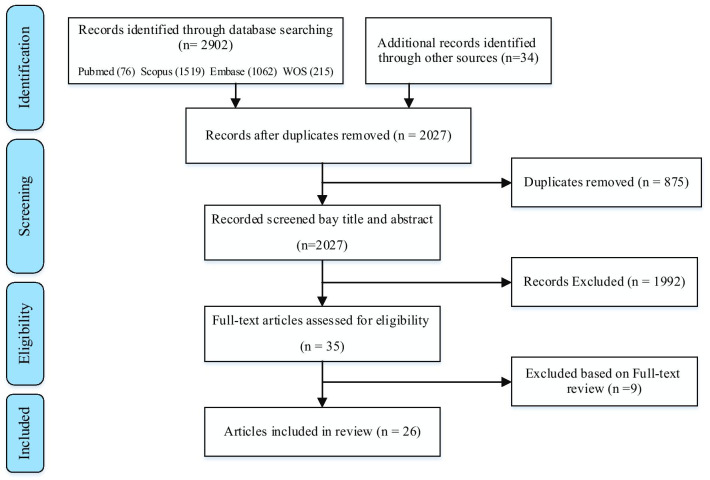
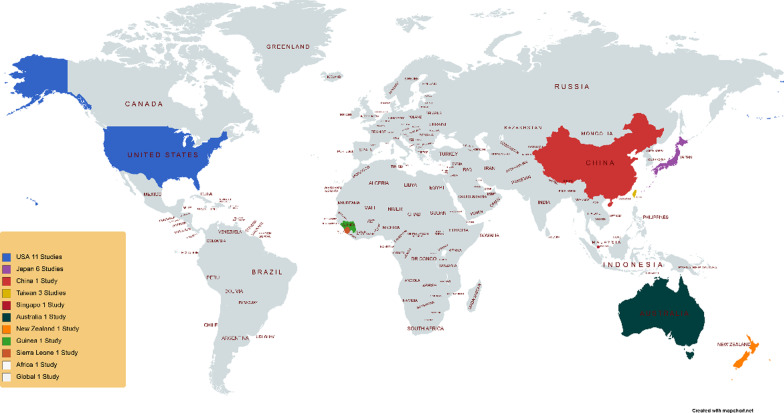
Introduction: An effective response to an emergency situation relies on health care workers’ preparedness. The main purpose of this study was to provide a comprehensive overview of relevant studies regarding the willingness to work in emergency and disaster situations, describe and classify the most important challenges and solutions, identifying knowledge gaps in the literature which could inform future research. Methods: In this Systematic Mapping Review required information was searched from PubMed, Scopus, the web of science, Embase databases, and Google scholar search engine in the period 2000–2020. Data were analyzed using a content framework analysis. Results: From 2902 article search results, 26 articles met the inclusion criteria. The studies varied in terms of aim, study design, and detail of reporting. The results showed that nearly three-quarters of studies were conducted in high and middle-income countries. Most of the studies were published in 2020 due to the COVID-19 pandemic. Also, the most common types of crises reported in the included studies were emerging and re-emerging infectious diseases. The results show that most of the problems were in the dimension of mental and psychological issues, personnel health concerns, and management relationship with personnel. Conclusion: This mapping review illustrated a big picture of health workers' resilience in disaster conditions. This review presents an overview of different kinds of strategies that address the challenges. One of the most important challenges in health workforce retention is poor communication between managers and staff. Being away from family, which leads to mental fatigue, puts staff in moral dilemmas. Attracting adequate health professionals, especially volunteers and regulating the shifts of health personnel in crisis time will largely prevent burnout.
Overview
The claims and statistics of this paper haven’t been checked yet.
Free: it reads the open-access text and checks the first 5 claims that cite a source we can check. Create a free account to check every claim.
Integrity signals
Registry
Cites
Statistics
Figures
Verification
Claims the paper makes
The claims and statistics of this paper haven’t been checked yet.
Free: it reads the open-access text and checks the first 5 claims that cite a source we can check. Create a free account to check every claim.
Claims other papers make about this one
Each is checked against this paper’s own text: does it say what the citing paper says it does?
In the citing paper
“Similarly, in another systematic review that identified barriers to manpower retention during health emergencies, poor leadership communication, emotional support and family worries were most commonly reported, while lacking budget in training, salaries and compensation of personnel were least reported [89].”
From A global overview of healthcare workers’ turnover intention amid COVID-19 pandemic: a systematic review with future directions (2022) · cites this paper as [89]
Self-check
Percentages, sums and reported differences re-computed from the paper’s own numbers.
The self-check needs the paper’s full text.
Citations
Cites
Gale, N. K., Heath, G., Cameron, E., Rashid, S., & Redwood, S. (2013) · BMC Medical Research Methodology · doi:10.1186/1471-2288-13-117 · Cited by 10,865 · cited 1×
“The absence of personnel in hospital disaster and emergencies is an issue that has not been discussed sufficiently [11].”
BackgroundKang, L., Ma, S., Chen, M., Yang, J., Wang, Y., Li, R., Yao, L., Bai, H., Cai, Z., Xiang Yang, B., et al. (2020) · Brain, Behavior, and Immunity · doi:10.1016/j.bbi.2020.03.028 · Cited by 1,516
Reducing and meta-analysing estimates from distributed lag non-linear models
Gasparrini, A., & Armstrong, B. (2013) · BMC Medical Research Methodology · doi:10.1186/1471-2288-13-1 · Cited by 1,081
Framework Analysis: A Qualitative Methodology for Applied Policy ResearchPreprint
Srivastava, A., & Thomson, S. B. (2009) · SSRN Electronic Journal · Cited by 825
COVID-19 in Africa: care and protection for frontline healthcare workers
Chersich, M. F., Gray, G., Fairlie, L., Eichbaum, Q., Mayhew, S., Allwood, B., English, R., Scorgie, F., Luchters, S., Simpson, G., et al. (2020) · Globalization and Health · doi:10.1186/s12992-020-00574-3 · Cited by 474 · cited 1×
“Psychological care and improving the working conditions of healthcare providers play an important role in staff sustainability [14, 15]”
BackgroundKoh, D., Lim, M. K., Chia, S. E., Ko, S. M., Qian, F., Ng, V., Tan, B. H., Wong, K. S., Chew, W. M., Tang, H. K., et al. (2005) · Medical Care · doi:10.1097/01.mlr.0000167181.36730.cc · Cited by 454 · cited 1×
“Separation from family, which consequently leads to mental fatigue, can put personnel in a dilemma and cause their absence [22, 37, 38].”
BackgroundHealth Care Workers' Ability and Willingness to Report to Duty During Catastrophic Disasters
Qureshi, K. (2005) · Journal of Urban Health: Bulletin of the New York Academy of Medicine · doi:10.1093/jurban/jti086 · Cited by 437 · cited 1×
“To illustrate this, in highincome countries the corporeal and mental support of personnel at the time of disaster or emergency is considered the first priority but in low-income countries the financial issues are raised as priorities [14, 18, 32].”
BackgroundRangachari, P., & L. Woods, J. (2020) · International Journal of Environmental Research and Public Health · doi:10.3390/ijerph17124267 · Cited by 343 · cited 1×
“Separation from family, which consequently leads to mental fatigue, can put personnel in a dilemma and cause their absence [22, 37, 38].”
BackgroundImai, H., Matsuishi, K., Ito, A., Mouri, K., Kitamura, N., Akimoto, K., Mino, K., Kawazoe, A., Isobe, M., Takamiya, S., et al. (2010) · BMC Public Health · doi:10.1186/1471-2458-10-672 · Cited by 309
Nurses’ Preparedness and Perceived Competence in Managing Disasters
Baack, S., & Alfred, D. (2013) · Journal of Nursing Scholarship · doi:10.1111/jnu.12029 · Cited by 265 · cited 2×
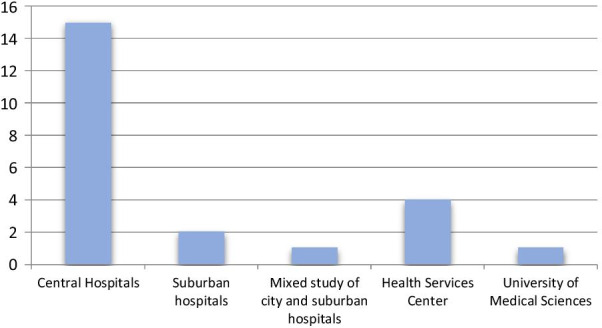
“The results of the study also show that most of the researches have been conducted in hospital environments which shows that hospitals are the main centers and the front line confronting disasters [13, 21, 23, 25, 26, 35, 36].”
BackgroundResult
Research works printed but not linked: 2
- Clapton J, Rutter D, Sharif N. SCIE systematic mapping guidance. London: SCIE; 2009.
- Blaxter M. Criteria for the evaluation of qualitative research papers. Med Sociol News. 1996;22(1):68-71.
Cited by
Poon, Y.-S. R., Lin, Y. P., Griffiths, P., Yong, K. K., Seah, B., & Liaw, S. Y. (2022) · Human Resources for Health · doi:10.1186/s12960-022-00764-7 · Cited by 394
Ayenew, T., Tassew, S. F., & Workneh, B. S. (2022) · African Journal of Emergency Medicine · doi:10.1016/j.afjem.2022.05.007 · Cited by 48
Choi, W.-S., Hyun, S. Y., & Oh, H. (2022) · International Journal of Environmental Research and Public Health · doi:10.3390/ijerph191811812 · Cited by 46
“Literature on the willingness to work in a disaster showed that the responsibility and concerns regarding caring for family (children and the elderly), a lack of adequate means of transportation, and individual safety issues were important factors [15,25].”
BackgroundHuman resource management (HRM) strategies of medical staff during the COVID-19 pandemic
Mahdavi, A., Atlasi, R., Ebrahimi, M., Azimian, E., & Naemi, R. (2023) · Heliyon · doi:10.1016/j.heliyon.2023.e20355 · Cited by 47
“One of the challenges of the COVID-19 pandemic has been poor communication [4,42,43].”
Jurado, M. D. M. M., Martínez, Á. M., Fuentes, M. D. C. P., López, H. C., & Linares, J. J. G. (2022) · Human Resources for Health · doi:10.1186/s12960-022-00776-3 · Cited by 29
Jevtić, M., Cvetković, V. M., Gačić, J., & Raonić, Z. (2025) · International Journal of Disaster Risk Management · doi:10.18485/ijdrm.2025.7.1.6 · Cited by 24
Cohen, S., Amit, I., Barenboim, E., & Roitman, A. (2023) · Human Resources for Health · doi:10.1186/s12960-023-00866-w · Cited by 26
“However, employees who experience mental exhaustion need emotional support to be able to face the hurdles that can lead to absenteeism [9].”
BackgroundObe, M. M., Kpadé, C. P., & Singbo, A. G. (2025) · Climatic Change · doi:10.1007/s10584-025-03892-w · Cited by 18
“The entire systematic review process was performed by the three authors, and any disagreements were resolved by a third party (Nafar et al. 2021 ).”
Ghavami, V., Saghi, F. K., Asghari, A., & Shabanikiya, H. (2021) · Journal of Nursing Scholarship · doi:10.1111/jnu.12746 · Cited by 12
Samei, B., Babaie, J., Tabrizi, J. S., Sadeghi‐Bazargani, H., Aghdash, S. A., Derakhshani, N., & Rezapour, R. (2024) · BMC Health Services Research · doi:10.1186/s12913-024-10630-y · Cited by 14
“In these forty years Disasters result in infrastructure disruption and increased human needs [15].”
BackgroundSelf-citationOmar, A. S., Labib, A., Hanoura, S. E., Rahhal, A. A. A., Kaddoura, R., Chughtai, T. S., Karic, E., Shaikh, M. S., Hamad, W. J., Elhassan, M., et al. (2022) · Journal of Cardiothoracic and Vascular Anesthesia · doi:10.1053/j.jvca.2022.02.018 · Cited by 11
Koca, M., Deniz, S., & İnceoğlu, F. (2025) · Healthcare · doi:10.3390/healthcare13030301 · Cited by 9
Strengthening primary health care for effective response to pandemics: a systematic review
Bajoulvand, R., Ramezanlou, M., Derakhshani, N., Goharinezhad, S., Gholami, M., Toranjizadeh, F., & Saniee, N. (2023) · Eastern Mediterranean Health Journal · doi:10.26719/emhj.23.080 · Cited by 8
Self-citationJoachim, M. V., Joachim, D. A., Korn, L., Shapiro, Y., Laviv, A., & Zigdon, A. (2024) · Israel Journal of Health Policy Research · doi:10.1186/s13584-024-00655-3 · Cited by 7
Mohammaddokht, S., Saadati, M., Kashefimehr, B., & Aghdash, S. A. (2022) · Iranian Journal of Public Health · doi:10.18502/ijph.v51i11.11158 · Cited by 6
“Because elders normally plan their place of residence and shopping, considering they continue to drive, many psychological and social problems can be generated for them if they are deprived of driving (54, 55).”
BackgroundEmirza, E. G., Uzun, S., & Şenses, M. (2024) · International Journal of Social Psychiatry · doi:10.1177/00207640241298901 · Cited by 5
“Lack of personal willingness to accept the risk of fulfilling one’s duty, being away from one’s family, inadequacies in meeting daily needs, and mental fatigue negatively affect mental health (Nafar et al., 2021; Sehlikoglu et al., 2023).”
Attitude of Healthcare workers towards Disaster Management practices in a Hospital of Gujarat
Patel, K. K., Ramavat, M., Bhojak, N. P., & Vora, P. J. (2022) · Indian Journal of Public Health Research & Development · doi:10.37506/ijphrd.v14i4.18544 · Cited by 5
Slettmyr, A., Schandl, A. R., Arman, M., & Hugelius, K. (2025) · BMC Nursing · doi:10.1186/s12912-025-02956-7 · Cited by 4
Fallah, R., Maleki, M., Aryankhesal, A., & Haghdoost, A. A. (2023) · International Journal of Preventive Medicine · doi:10.4103/ijpvm.ijpvm_1_22 · Cited by 4
Santoso, J., Bintarsari, N. K., & Lestari, S. (2024) · Humanities and Social Science Research · doi:10.30560/hssr.v7n2p1 · Cited by 4
“The debate surrounding the most effective methods for empowerment in different situations highlights the necessity for a fundamental change in research approaches (Nafar et al., 2021).”
BackgroundФОРМУВАННЯ ПСИХОЛОГІЧНОЇ ГОТОВНОСТІ РЯТУВАЛЬНИКІВ ДО ДІЯЛЬНОСТІ В ОСОБЛИВИХ УМОВАХ
Козяр, М. М. (2025) · Modern Information Technologies and Innovation Methodologies of Education in Professional Training Methodology Theory Experience Problems · doi:10.31652/2412-1142-2025-78-249-256 · Cited by 2
Zarchi, M. K. R., Heidari, E., Montazeralfaraj, R., & Farajkhoda, T. (2023) · Emergency Care Journal · doi:10.4081/ecj.2023.11644 · Cited by 2
Healthcare Workers and Infectious Disease Outbreaks: A Review.
Antunes, J. (2024) · Clinical Medicine And Health Research Journal · doi:10.18535/cmhrj.v4i2.319 · Cited by 2
“Human resource is one of the main elements that affect the efficiency of systems and has a key role in healthcare systems when comparing to other elements (Nafar et al., 2021).”
BackgroundBrydon, M., Sponagle, M., Avery, J., Ross, N., & Gilbert, R. W. (2023) · Journal of medical imaging and radiation sciences · doi:10.1016/j.jmir.2023.01.005 · Cited by 2
“For instance, social ecological resilience (" An individual’s capacity to navigate psychological, social, cultural, and physical resources that maintains well-being") sustains workers’ drive and determines their willingness to continue in the face of discomfort and distress [5 , 10 , 11 , 16 , 28 , 29] .”
BackgroundKanadlı, K. A., Aşkar, S. E., & Sazak, Y. (2025) · Journal of Radiology Nursing · doi:10.1016/j.jradnu.2025.04.003 · Cited by 1
Vulakh, G., Roth, J. F., & Freedman, S. (2025) · Israel Journal of Health Policy Research · doi:10.1186/s13584-025-00717-0 · Cited by 1
“The interview guide was developed based on existing literature surrounding volunteerism and healthcare worker resilience during disasters [4, 26].”
Nursing Students’ Willingness and Ability to Care in Disasters: Based on All Hazard Scenarios
Sharifian, S., & Amini, S. B. (2022) · Medical Journal of the Islamic Republic of Iran · doi:10.47176/mjiri.36.43 · Cited by 1
Self-citationEmirza, E. G., Uzun, S., & Şenses, M. (2024) · Psikiyatride Guncel Yaklasimlar - Current Approaches in Psychiatry · doi:10.18863/pgy.1522618 · Cited by 1
Crompton, D., Kohleis, P., Shakespeare‐Finch, J., FitzGerald, G., & Young, R. M. (2025) · Australian Journal of Rural Health · doi:10.1111/ajr.70002 · Cited by 1
Working in Emergency Conditions and COVID-19 Pandemic in Hospitals and Health Workforce Retentions
Nafar, H., Goharinezhad, S., Derakhshani, N., & Aghdam, E. T. (2022) · Health Scope · doi:10.5812/jhealthscope-130983
Self-citationTajari, F., Mahmoudi, G., Dabbaghi, F., YAZDANI-CHARATI, J., & Safikhani, H. (2023) · Family Medicine & Primary Care Review · doi:10.5114/fmpcr.2023.125496
Leadership, Organisation, and Implementation of Emergency Preparedness
Schilling, S., Williams, R., Kemp, V., Healing, T., & Alexander, D. E. (2024) · Cambridge University Press eBooks · doi:10.1017/9781009019330.052
Akiyama, N., Hayami, K., Murakami, E., Imai, K., Takahashi, A., Ito, T., & Yamada, M. (2025) · Journal of Disaster Research · doi:10.20965/jdr.2025.p1080
Samei, B., Babaie, J., Tabrizi, J. S., Sadeghi-bazargani, H., Aghdash, S. A., Derakhshani, N., & Rezapour, R. (2024) · Figshare · doi:10.6084/m9.figshare.25216878
Self-citationMagana, R., Cheng, D. C., Tychingco, F., Magana, S., Magana, D. A., & Santos, B. D. (2026) · Research and Analysis Journal · doi:10.18535/raj.v9i05.602
Farah, B., Pavlova, M., & Groot, W. N. J. (2026) · Research in Health Services & Regions · doi:10.1007/s43999-026-00098-0
Amling, L., Beyer, I., Hambitzer, F., Neu, N., Rickermann, J., Weidt, J., & Ulrichs, T. (2026) · BMC Public Health · doi:10.1186/s12889-026-29675-1
Almalki, M. (2026) · Saudi Journal of Health Systems Research · doi:10.1159/sjh/aeqag001
Willingness to serve is high, but task expectations diverge in disastersPreprint
Franzen, K. F., Ries, M., Ziegmann, T., Batsios, A., Fischer, F., Edwards, V., Klapproth, A., Schneider, E., Elsner, B., Wunderlich, R., et al. (2026) · Research Square · doi:10.21203/rs.3.rs-10917491/v1
Metadata
- Authors
- Nafar, H., Tahmazi Aghdam, E., Derakhshani, N., Sani’ee, N., Sharifian, S., & Goharinezhad, S.
- Affiliations
- Iran University of Medical Sciences (IR)
- Corresponding author
- Goharinezhad, Salime
- Venue
- Human Resources for Health
- Published
- 2021-06-24
- Volume
- 19
- Issue
- 1
- Pages
- 76-76
- ISSN
- 1478-4491 (ISSN-L)
- PMC
- PMC8222953
- OpenAlex
- W3174523154
- Semantic Scholar
- 970915292f9813393f87dd3ed4a05610fb183ef3
- Cited by
- 37
- References
- 37
- Citations by year
- 2026: 4 · 2025: 8 · 2024: 8 · 2023: 7 · 2022: 9 · 2021: 1
- FWCI
- 1.53
- Type
- journal article
- Language
- en
- Open access
- gold
- doi.org
- Licence
- cc-by
- creativecommons.org/licenses/by/4.0 (tdm)
- creativecommons.org/licenses/by/4.0 (vor)
- Locations
- Human Resources for Health (publishedVersion, cc-by)
- PubMed Central (publishedVersion, cc-by)
- PubMed (publishedVersion)
- DOAJ (DOAJ: Directory of Open Access Journals) (submittedVersion, cc-by-sa)
- Topics
- Health Sciences › Health Professions › Emergency Medical Services › Disaster Response and Management
- Health Sciences › Medicine › Public Health, Environmental and Occupational Health › Global Health Workforce Issues
- Social Sciences › Sociology and Political Science › Disaster Management and Resilience
- Keywords
- healthcare workers, willingness to work, disaster preparedness, disaster response, health workforce retention, burnout, psychological well-being, superior-subordinate communication, ethical dilemmas, family separation, health workforce shortage, volunteers, shift scheduling, emerging infectious diseases, COVID-19 pandemic
- MeSH terms
- COVID-19, Attitude of Health Personnel, Disasters, Health Personnel, Humans
About these checks
Registry, retraction, Cites and statistics results are computed, not judged, with one exception: a printed reference that no index lists is read once by a model before it counts as a citation error. Claims are extracted by a model and kept only when their quote appears verbatim in the text; each cited source is then checked, with a model’s help, for whether it says what the claim relies on. Those verdicts can be wrong — read the claim’s quote and the cited source before relying on one.
Statistics and arithmetic are recomputed, not judged.
Confidence bands are shown only for fields calibrated on our annotated test set. None is calibrated yet, so no band is shown.
What counts as a claim ›How we measure confidence ›How we check this ›
Are you an author, or do you see a problem with this page? Request a review
Data sources
Bibliographic data: Semantic Scholar, OpenAlex, Crossref.
Contains information from the Semantic Scholar Academic Graph Datasets, made available under the ODC Attribution License (ODC-BY 1.0).
Semantic Scholar’s data is described in: Kinney, R., et al. (2023). The Semantic Scholar Open Data Platform. arXiv:2301.10140.
