

Individual, health system, and contextual barriers and facilitators for the implementation of clinical practice guidelines: a systematic metareview
Open accessThe DOI matches its Crossref record; 37 of the 37 references it cites were found in a registry or an index.
Abstract
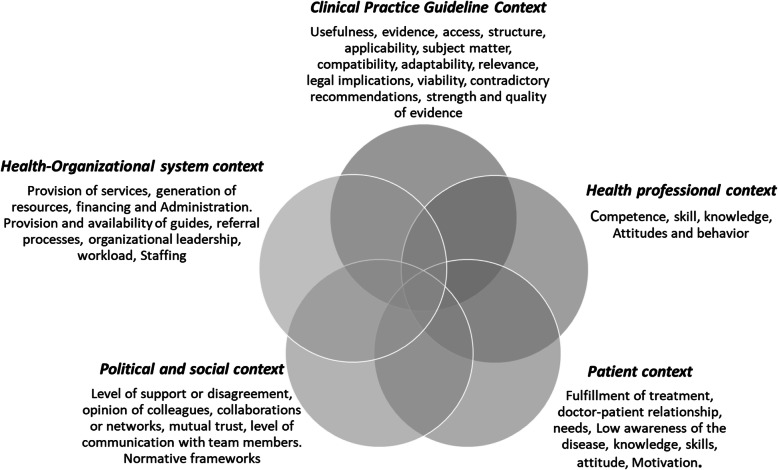
Introduction: Clinical practice guidelines (CPGs) are designed to improve the quality of care and reduce unjustified individual variation in clinical practice. Knowledge of the barriers and facilitators that influence the implementation of the CPG recommendations is the first step in creating strategies to improve health outcomes. The present systematic meta-review sought to explore the barriers and facilitators for the implementation of CPGs. Methods: A search was conducted in the PubMed, Embase, Cochrane, Health System Evidence and International Guideline Library (G-I-N) databases. Systematic reviews of qualitative, quantitative or mixed-methods studies that identified barriers or facilitators for the implementation of CPGs were included. The selection of the title and abstract, the evaluation of the full text, extraction of the data and the quality assessment were carried out by two independent reviewers. To summarise the evidence, we grouped the barriers and facilitators according to the following contexts: political and social, health organisational system, guidelines, health professionals and patients. Results: Overall, 25 systematic reviews were selected. The relevant barriers in the social-political context were the absence of a leader, difficulties with teamwork and a lack of agreement with colleagues. Relevant barriers in the health system were a lack of time, financial problems and a lack of specialised personnel. Barriers of the CPGs included a lack of clarity and a lack of credibility in the evidence. Regarding the health professional, a lack of knowledge about the CPG and confidence in oneself were relevant. Regarding patients, a negative attitude towards implementation, a lack of knowledge about the CPG and sociocultural beliefs played a role. Some of the most frequent facilitators were consistent leadership, commitment of the members of the team, administrative support of the institution, existence of multidisciplinary teams, application of technology to improve the practice and education regarding the guidelines. Conclusions: The barriers and facilitators described in this review are factors that influence the implementation of evidence in clinical practice. Knowledge of these factors should contribute to the development of a theoretical basis for the creation of CPG implementation strategies to improve professional practice and health outcomes for patients.
Overview
The claims and statistics of this paper haven’t been checked yet.
Free: it reads the open-access text and checks the first 5 claims that cite a source we can check. Create a free account to check every claim.
Integrity signals
Registry
Cites
Statistics
Figures
Verification
Claims the paper makes
The claims and statistics of this paper haven’t been checked yet.
Free: it reads the open-access text and checks the first 5 claims that cite a source we can check. Create a free account to check every claim.
Claims other papers make about this one
Each is checked against this paper’s own text: does it say what the citing paper says it does?
The source backs part of the claim, not all of it — or backs it for a different population, condition or comparison.
In the citing paper
“Contextual barriers (such as lack of supporting policies and regulations), health system barriers (such as the hospital’s lack of administrative support and resources to build up and maintain the program), and individual barriers (such as health care professionals’ lack of time, interest, and motivation in engaging in the program) may hinder the widespread adoption of the program [71].”
From Effectiveness of an Internet-Based Acceptance and Commitment Therapy Intervention for Reducing Psychological Distress in Health Care Professionals: Randomized Controlled Trial (2024) · cites this paper as [71]
Experimental — accuracy not yet measured
Self-check
Percentages, sums and reported differences re-computed from the paper’s own numbers.
The self-check needs the paper’s full text.
Citations
Cites
Preferred Reporting Items for Systematic Reviews and Meta-Analyses: the PRISMA statement
Moher, D., Liberati, A., Tetzlaff, J., Altman, D. G., & for the PRISMA Group (2009) · BMJ · doi:10.1136/bmj.b2535 · Cited by 83,823
Preferred Reporting Items for Systematic Reviews and Meta-Analyses: The PRISMA Statement
Moher, D., Liberati, A., Tetzlaff, J., Altman, D. G., & The PRISMA Group (2009) · PLoS Medicine · doi:10.1371/journal.pmed.1000097 · Cited by 64,042
Preferred reporting items for systematic reviews and meta-analyses: the PRISMA Statement.
(2009) · PubMed Central · Cited by 44,859
From best evidence to best practice: effective implementation of change in patients' care
Grol, R., & Grimshaw, J. (2003) · The Lancet · doi:10.1016/s0140-6736(03)14546-1 · Cited by 4,531
Aromataris, E., Fernandez, R., Godfrey, C. M., Holly, C., Khalil, H., & Tungpunkom, P. (2015) · International Journal of Evidence-Based Healthcare · doi:10.1097/xeb.0000000000000055 · Cited by 2,587
Synthesising qualitative and quantitative evidence: A review of possible methods
Dixon-Woods, M., Agarwal, S., Jones, D., Young, B., & Sutton, A. (2005) · Journal of Health Services Research & Policy · doi:10.1177/135581960501000110 · Cited by 2,132
What drives change? Barriers to and incentives for achieving evidence‐based practice
Grol, R., & Wensing, M. (2004) · Medical Journal of Australia · doi:10.5694/j.1326-5377.2004.tb05948.x · Cited by 1,378
Flottorp, S. A., Oxman, A. D., Krause, J., Musila, N. R., Wensing, M., Godycki-Cwirko, M., Baker, R., & Eccles, M. P. (2013) · Implementation Science · doi:10.1186/1748-5908-8-35 · Cited by 1,138
Francke, A. L., Smit, M. C., de Veer, A. J., & Mistiaen, P. (2008) · BMC Medical Informatics and Decision Making · doi:10.1186/1472-6947-8-38 · Cited by 1,134
Gravel, K., Légaré, F., & Graham, I. D. (2006) · Implementation Science · doi:10.1186/1748-5908-1-16 · Cited by 755
Research works printed but not linked: 2
- Centro Cochrane Iberoamericano T Manual Cochrane de Revisiones Sistemáticas de Intervenciones, versión 5.1. 0 2012 Barcelona Centro Cochrane Iberoamericano 1 639
- The Joanna Briggs Institute Checklist for Systematic Reviews and Research Syntheses 2016 Adelaide Joanna Briggs Institute
Cited by
Gibbs, A. J., Gray, B., Wallis, J. A., Taylor, N. F., Kemp, J. L., Hunter, D. J., & Barton, C. J. (2023) · Osteoarthritis and Cartilage · doi:10.1016/j.joca.2023.05.015 · Cited by 277
Wang, T., Tan, J.-Y. (., Liu, X.-L., & Zhao, I. (2023) · BMJ Open · doi:10.1136/bmjopen-2022-062158 · Cited by 261
Huo, Y., Couzner, L., Windsor, T. D., Laver, K., Dissanayaka, N. N., & Cations, M. (2023) · Implementation Science Communications · doi:10.1186/s43058-023-00428-0 · Cited by 220
“These facilitating factors are commonly reported as essential in efforts to implement innovation in healthcare [57–59], and staff who report having inadequate time for change (whether this is real or perceived) are less likely to implement innovation [58].”
BackgroundWorld Heart Federation Cholesterol Roadmap 2022
Ray, K. K., Ference, B. A., Séverin, T., Blom, D., Nicholls, S. J., Shiba, M. H., Almahmeed, W., Alonso, R., Daccord, M., Ezhov, M., et al. (2022) · Global Heart · doi:10.5334/gh.1154 · Cited by 146
Core Recommendations for Osteoarthritis Care: A Systematic Review of Clinical Practice Guidelines
Conley, B., Bunzli, S., Bullen, J., O’Brien, P., Persaud, J., Gunatillake, T., Dowsey, M. M., Choong, P., & Lin, I. B. (2023) · Arthritis Care & Research · doi:10.1002/acr.25101 · Cited by 179
“require clear, consistent management recommendations (31).”
Zhou, P., Chen, L., Wu, Z., Wang, E., Yan, Y., Guan, X., Zhai, S., & Yang, K. (2023) · Journal of Clinical Epidemiology · doi:10.1016/j.jclinepi.2023.08.017 · Cited by 98
Hospital falls clinical practice guidelines: a global analysis and systematic review
McKercher, J. P., Peiris, C. L., Hill, A., Peterson, S., Thwaites, C. K., Fowler‐Davis, S., & Morris, M. E. (2024) · Age and Ageing · doi:10.1093/ageing/afae149 · Cited by 80
“Effective implementation of evidence-based hospital falls guidelines into clinical practice was recognised as a critical gap in healthcare and occurred at individual and systemic levels [78, 79].”
Davies, B. M., Khan, D. Z., Barzangi, K., Ali, A. M. E.-S., Mowforth, O. D., Nouri, A., Harrop, J. S., Aarabi, B., Rahimi‐Movaghar, V., Kurpad, S. N., et al. (2022) · Global Spine Journal · doi:10.1177/21925682221111780 · Cited by 62
“60,61 However, additional measures will likely be crucial, such as its integration within ICD framework.”
BackgroundPhysical activity guidelines in oncology: A systematic review of the current recommendations
Avancini, A., Borsati, A., Toniolo, L., Ciurnelli, C., Belluomini, L., Budolfsen, T., Lillelund, C., Milella, M., Quist, M., & Pilotto, S. (2025) · Critical Reviews in Oncology/Hematology · doi:10.1016/j.critrevonc.2025.104718 · Cited by 86
Almazrou, S. H., Alfaifi, S. I., Alfaifi, S. H., Hakami, L. E., & Al-Aqeel, S. (2020) · Healthcare · doi:10.3390/healthcare8040564 · Cited by 64
“[8] conducted a systematic metareview and identified barriers in the social-political context (i.”
BackgroundResultInfluentialConley, B., Bunzli, S., Bullen, J., O’Brien, P., Persaud, J., Gunatillake, T., Nikpour, M., Grainger, R., Barnabe, C. C. M., & Lin, I. B. (2023) · Clinical Rheumatology · doi:10.1007/s10067-023-06654-0 · Cited by 57
“[59], which include insufficient high quality evidence, contradictory CPG, and patient and physician factors [59].”
BackgroundChapman, A., Buccheri, A., Mohotti, D., Shee, A. W., Huggins, C. E., Alston, L. V., Hutchinson, A. M., Yoong, S. L., Beks, H., Namara, K. M., et al. (2025) · BMC Health Services Research · doi:10.1186/s12913-025-12480-8 · Cited by 68
“However, the consistency of themes across studies and their alignment with existing literature [11, 12] suggest that the key findings remain robust.”
Creating the ICU of the future: patient-centred design to optimise recovery
Tronstad, O., Flaws, D., Patterson, S., Holdsworth, R., & Fraser, J. F. (2023) · Critical Care · doi:10.1186/s13054-023-04685-2 · Cited by 50
“Moreover, frequently while harm of current practice is considered "acceptable" or "inevitable", potential harm from change is "unacceptable" and "avoidable" [19].”
BackgroundBarriers and facilitators to the implementation of guidelines in rare diseases: a systematic review
Gittus, M., Chong, J., Sutton, A., Ong, A. C. M., & Fotheringham, J. (2023) · Orphanet Journal of Rare Diseases · doi:10.1186/s13023-023-02667-9 · Cited by 40
“Influencing factors at the organisational level include the absence of leadership/senior support [13, 16, 17], difficulties with teamwork [13, 17], disagreements with colleagues [13, 14] and insufficient communication [13].”
BackgroundneuroGPT-X: toward a clinic-ready large language model
Guo, E., Gupta, M., Sinha, S., Rössler, K., Tatagiba, M. S., Akagami, R., Al‐Mefty, O., Sugiyama, T., Stieg, P. E., Pickett, G. E., et al. (2023) · Journal of neurosurgery · doi:10.3171/2023.7.jns23573 · Cited by 54
Clark, E., Burnett, T., Blair, R., Traynor, R. L., Hagerman, L., & Dobbins, M. (2024) · BMC Health Services Research · doi:10.1186/s12913-024-10841-3 · Cited by 58
“The use of reminders for organizational behaviour change and implementation of clinical practice guidelines has been shown to be an effective strategy across many contexts [92–95].”
MethodMoreno‐Poyato, A. R., Garrigós, G. C., Roldán-Merino, J. F., Rodríguez‐Nogueira, Ó., & MiRTCIME.CAT working group (2020) · Journal of Advanced Nursing · doi:10.1111/jan.14715 · Cited by 42
Sugalski, A., Lo, T., Beauchemin, M., Grimes, A., Robinson, P. D., Walsh, A. M., Santesso, N. A., Dang, H. M., Fisher, B. T., Wrightson, A. R., et al. (2021) · Implementation Science Communications · doi:10.1186/s43058-021-00200-2 · Cited by 39
Kaplan, L. J., Martínez-Casas, I., Mohseni, S., Cimino, M., Kurihara, H., Lee, M. J., Bass, G. A., Collaborators, S., Dogjani, A., Subashi, K., et al. (2025) · British journal of surgery · doi:10.1093/bjs/znaf080 · Cited by 34
Rajit, D., Johnson, A. T., Callander, E. J., Teede, H. J., & Enticott, J. (2024) · Health Research Policy and Systems · doi:10.1186/s12961-023-01095-2 · Cited by 31
“Traditionally, hierarchical stances on the “best external evidence” which upholds the randomized controlled trial (RCT) as the gold standard have led to downstream challenges in evidence-based guideline adherence [6], especially in cases of complex morbidity and diverse patient groups [7].”
BackgroundInfluentialRemskar, M., Theophanous, R. G., Bowman, A. L., Simonson, L. E., Koehler, J. L., Basrai, Z., Manohar, C. M., Mader, M. J., Nathanson, R., & Soni, N. J. (2023) · Journal of Cardiothoracic and Vascular Anesthesia · doi:10.1053/j.jvca.2023.03.042 · Cited by 28
Cross, A. J., Haines, T. P., Ooi, C. E., Caze, A. L., Karavesovska, S., Lee, E. J., Siu, S. C., Sareen, S., Jones, C. A. S., Steeper, M., et al. (2023) · BMJ Quality & Safety · doi:10.1136/bmjqs-2022-015595 · Cited by 35
Thoonsen, A. C., Schoten, S. M. V., Merten, H., van Beusekom, I., Schoonmade, L. J., Delnoij, D. M. J., & de Bruijne, M. C. (2024) · Health Policy · doi:10.1016/j.healthpol.2024.105135 · Cited by 38
Dzando, G., Akpeke, H., Kumah, A., Agada, E., Lartey, A. A., Nortu, J., Nutakor, H. S., Donyi, A. B., & Dordunu, R. (2022) · Journal of Public Health in Africa · doi:10.4081/jphia.2022.2024 · Cited by 24
Lu, Y., Arowojolu, O., Qiu, X., Liu, Y., Curry, L. A., & Krumholz, H. M. (2024) · JAMA Network Open · doi:10.1001/jamanetworkopen.2024.26135 · Cited by 30
Raghunathan, K., East, C. E., & Poudel, K. (2024) · PLoS ONE · doi:10.1371/journal.pone.0315588 · Cited by 33
Alexander, K. M., Butts, C. C., Lee, Y.-L. L., Kutcher, M., Polite, N. M., Haut, E. R., Spain, D. A., Berndtson, A. E., Costantini, T. W., & Simmons, J. D. (2023) · Trauma Surgery & Acute Care Open · doi:10.1136/tsaco-2022-001070 · Cited by 27
Li, J., Smyth, S. S., Clouser, J. M., McMullen, C. A., Gupta, V. A., & Williams, M. V. (2021) · Medicina · doi:10.3390/medicina57060570 · Cited by 24
“However, the uneven implementation of evidence-based CPGs is widely recognized as a continuing challenge to improving healthcare delivery and public health [50,51].”
BackgroundImplementation of guidelines in clinical practice; barriers and strategies
Hert, S. G. D., & Garcia, W. N. D. P. (2024) · Current Opinion in Anaesthesiology · doi:10.1097/aco.0000000000001344 · Cited by 24
Matson-Koffman, D. M., Robinson, S. J., Jakhmola, P., Fochtmann, L. J., Willett, D. L., Lubin, I. M., Burton, M. M., Tailor, A., Pitts, D. L., Casey, D. E., et al. (2023) · American Journal of Medical Quality · doi:10.1097/jmq.0000000000000137 · Cited by 26
Salley, C. G., Bakula, D. M., Driscoll, C., Flanagan-Priore, C., Kapke, T. L., Moore, R. M., Parris, K. R., & Sharkey, C. M. (2024) · Clinical Practice in Pediatric Psychology · doi:10.1037/cpp0000514 · Cited by 26
“Even when a concern is identi fi ed by the medical team, barriers can include poor or inopportune communication about accessing caregiver mental health support, language and literacy access for the family, and the family ’ s own sociocultural beliefs about mental health (Correa et al., 2020).”
Ng, N. M., Ng, Y. S., Chu, T. K., & Lau, P. M.-Y. (2022) · BMC Family Practice · doi:10.1186/s12875-022-01928-z · Cited by 29
“Future strategies should be in place to address some of the common individual (including a lack of awareness of the evidence), health system (including time constraints), and contextual barriers (including a lack of agreement with the evidence) for the implementation of clinical practice guidelines [35].”
BackgroundHolliday, R. P., Desai, A., Stimmel, M. A., Liu, S., Monteith, L. L., & Stewart, K. E. (2022) · Current Treatment Options in Psychiatry · doi:10.1007/s40501-022-00275-1 · Cited by 21
Rethfeldt, W. S., McNeilly, L. G., Laasonen, M. R., Meir, N., Abutbul-Oz, H., Smolander, S., de Goulart, B. N. G., & Hunt, E. F. (2023) · Folia Phoniatrica et Logopaedica · doi:10.1159/000533139 · Cited by 27
Castéra, L., Alazawi, W., Bugianesi, E., Caussy, C., Federici, M., Romero‐Gómez, M., Schattenberg, J. M., Basuroy, R., Prasad, P., Estulin, D., et al. (2025) · Liver International · doi:10.1111/liv.16224 · Cited by 20
“The review concluded that public policy improvements and removing common barriers in the health-care system (e.g., time, available resources, etc.) could benefit increased implementation in practice [28].”
Thoonsen, A. C., Gans, A., Broeders, T. T., van Beusekom, I., Delnoij, D. M. J., de Bruijne, M. C., & Merten, H. (2025) · BMC Health Services Research · doi:10.1186/s12913-025-12270-2 · Cited by 25
Boltena, M. T., Woldie, M. K., Siraneh, Y., Steck, V., El‐Khatib, Z., & Sudhakar, M. (2023) · Journal of Pharmaceutical Policy and Practice · doi:10.1186/s40545-023-00634-0 · Cited by 22
Verweij, L., Oesch, S., & Naef, R. (2023) · BMC Health Services Research · doi:10.1186/s12913-023-10285-1 · Cited by 25
Gallione, C., Barisone, M., Molon, A., Pavani, M., Torgano, C., Bassi, E., & Molin, A. D. (2022) · Acta bio-medica dell'Ateneo parmense/Acta biomedica · doi:10.23750/abm.v93i3.12942 · Cited by 42
“Similarly, in McIntosh et al. (70) working collectively at a provincial level was the main theme identified by the health providers to overcome the barrier to paediatric diabetes CPGs adherence.”
BackgroundInfluentialSharp, M. K., Baki, D. A. B. A., Quigley, J. M., Tyner, B., Devane, D., Mahtani, K. R., Smith, S. M., O’Neill, M., Ryan, M., & Clyne, B. (2022) · Implementation Science · doi:10.1186/s13012-022-01243-2 · Cited by 19
Reid, N., Shanley, D. C., Logan, J., White, C., Liu, W., & Hawkins, E. (2022) · International Journal of Environmental Research and Public Health · doi:10.3390/ijerph192315663 · Cited by 21
Chong, M. C., Sharp, M. K., Smith, S. M., O’Neill, M., Ryan, M., Lynch, R., Mahtani, K. R., & Clyne, B. (2023) · BMC Medical Research Methodology · doi:10.1186/s12874-023-01895-8 · Cited by 22
“In particular, communicating the guideline content, both the message of the recommendations themselves and the perception of the evidence being correct and sufficient, deeply affect a guideline’s implementability [15, 16].”
BackgroundSengar, M., Pramesh, C. S., Mehndiratta, A., Shah, S. R., Munshi, A., Vijaykumar, D. K., Puri, A., Mathew, B. S., Arora, R. S., Priya Kumari, T., et al. (2022) · BMJ Global Health · doi:10.1136/bmjgh-2022-009584 · Cited by 19
Kadom, N., Venkatesh, A. K., Shugarman, S. A., Burleson, J., Moore, C. L., & Seidenwurm, D. J. (2022) · Journal of the American College of Radiology · doi:10.1016/j.jacr.2022.03.017 · Cited by 23
“Guidelines may be locally developed or adapted given the number of conditions for which evidence and formal evidence-based guidance are lacking [33] and given many barriers to accepting formal evidence-based guidelines [13,34].”
BackgroundNavigating the Complexity of Scoring Systems in Sepsis Management: A Comprehensive Review
Reddy, V., Reddy, H., Gemnani, R. R., Kumar, S., & Acharya, S. (2024) · Cureus · doi:10.7759/cureus.54030 · Cited by 31
“This complexity can make it difficult for healthcare professionals to navigate and apply the guidelines in their day-to-day practice [51].”
BackgroundPapatzikis, E., Agapaki, M., Selvan, R. N., Hanson-Abromeit, D., Gold, C., Epstein, S., Lok, U. W. V., Barda, E., & Pandey, V. (2024) · BMC Pediatrics · doi:10.1186/s12887-024-05275-z · Cited by 16
“This clinical orientation, however, may not fully address the broader considerations necessary for policy development, such as accessibility, cost-effectiveness, and integration into existing health systems, a concern that is also reflected in other conjoining domains in the same context [9].”
Odom, J. N., Young, H. M., Sterba, K., Sannes, T. S., Reinhard, S., Nightingale, C. L., Meier, D., Gray, T. F., Ferrell, B., Fernandez, M. E., et al. (2024) · Psycho-Oncology · doi:10.1002/pon.6221 · Cited by 15
“27,28 Qualitative interviews validated and further elaborated on the survey findings by high-lighting the role that demonstrating outcomes like cost ‐ savings and better patient outcomes can have on compelling these various constituencies to extend support and resources.”
BackgroundGómez-Salgado, J. C., Rodríguez‐Almagro, J., Molina‐Alarcón, M., Martínez‐Galiano, J. M., Ruiz, M. C. S., & Hernández‐Martínez, A. (2022) · Journal of Clinical Nursing · doi:10.1111/jocn.16280 · Cited by 15
“…seems to be very different since neither most healthcare professionals nor organisations seem eager to follow an EBP culture in their daily work (Correa et al., 2020; Moreno- Poyato et al., 2020); in this sense, we need to take into account that clinical practice is often associated to ‘what we…”
BackgroundGeneral healthcare policy and its influence on management practices: A review
Omaghomi, T. T., Elufioye, O. A., Onwumere, C., Arowoogun, J. O., Odilibe, I. P., & Owolabi, O. R. (2023) · World Journal of Advanced Research and Reviews · doi:10.30574/wjarr.2024.21.2.0477 · Cited by 24
“Limited budgets can restrict the acquisition of new technologies, the expansion of services, and the hiring of additional staff needed to meet policy mandates (Correa et al., 2020).”
BackgroundAlsaqer, K., Ireifij, A., Al-Maghaireh, D., Kawafha, M., Nsour, A. A., Farraj, R. S., Hashish, S. A., Fakhoury, S., Farajat, R., Khresat, A., et al. (2025) · BMC Nursing · doi:10.1186/s12912-025-03046-4 · Cited by 24
“Prior research has identified barriers such as time constraints, limited access to resources, and insufficient institutional support as significant obstacles to professional development for HCPs [17].”
Schwartz, H. E. M., Stark, N. R., Sowa, C. S., Singh, M. K., & Peabody, C. R. (2021) · Journal of Emergency Medicine · doi:10.1016/j.jemermed.2021.03.014 · Cited by 14
Hospital-Based Health Professionals’ Perceptions of Frailty in Older People
Manuel, K., Crotty, M., Kurrle, S. E., Cameron, I. D., Lane, R., Lockwood, K. A., Block, H., Sherrington, C., Pond, D. C., Nguyen, T. A., et al. (2024) · The Gerontologist · doi:10.1093/geront/gnae041 · Cited by 14
“This is in keeping with evidence that a leader or champion can be effective in increasing implementation of interventions in organizations (Correa et al., 2020).”
BackgroundSmith, A. B., Girgis, A., Taylor, N. J., Pearce, A. M., Liu, J., Shepherd, H. L., Wu, V. S., Garvey, G., Kirsten, L. T., Zakhary, I., et al. (2024) · Journal of Cancer Survivorship · doi:10.1007/s11764-024-01685-1 · Cited by 22
“…as noted in the Canadian FCR guidelines [14], there was less supporting evidence for some clinical pathway elements (e.g. timing of FCR screening and treatments for moderate FCR), which seemingly contributed to greater disagreement that could negatively impact on pathway implementation [52].”
An Overview of the Use of Precision Population Medicine in Cancer Care: First of a Series
Yang, J. J., Nittala, M. R., Velazquez, A. E., Buddala, V., & Vijayakumar, S. (2023) · Cureus · doi:10.7759/cureus.37889 · Cited by 21
“[2] and is available via Creative Commons Attribution 4.”
BackgroundMethodConley, B., Bunzli, S., Bullen, J., O’Brien, P., Persaud, J., Gunatillake, T., Dowsey, M. M., Choong, P., Nikpour, M., Grainger, R., et al. (2023) · BMC Rheumatology · doi:10.1186/s41927-023-00335-w · Cited by 22
“People with gout report rarely receiving clear guidance on these topics possibly due to a lack of detail and clarity of these recommendations [40, 41].”
BackgroundSinnappan, S., Forte, A., & Ermann, J. (2024) · The Journal of Rheumatology · doi:10.3899/jrheum.2023-0894 · Cited by 14
Brockmeyer, M., Wies, E., Joerges, J., Sommer, J., Borgmann, S. O., Chernyak, N., Lin, Y., Parco, C., Schulze, V., Heinen, Y., et al. (2022) · Clinical Cardiology · doi:10.1002/clc.23948 · Cited by 19
“Complex interactions including patient and physician side contribute to unsatisfactory control of risk factors of dyslipidemia in secondary prevention.(29) On the physician side, we found a substantial lack of implementation of guideline‐recommended therapy with low rates of LDL‐C treatment attainment in this very hig…”
Ramos‐Morcillo, A. J., Harillo‐Acevedo, D., Armero‐Barranco, D., Leal‐Costa, C., García, J. E. M., & Ruzafa‐Martínez, M. (2020) · International Journal of Environmental Research and Public Health · doi:10.3390/ijerph17176248 · Cited by 13
“A systematic meta-review which included 25 systematic reviews published until 2017 [9] and three systematic reviews published posteriorly [10–12] underline as the main barriers the aspects related to: political and social context, such as lack of leadership and lack of coordination by the team; health organizational s…”
BackgroundKinney, A. R., Bahraini, N. H., Forster, J. E., & Brenner, L. A. (2022) · Archives of Physical Medicine and Rehabilitation · doi:10.1016/j.apmr.2022.01.164 · Cited by 12
Michaels, M., Hangsleben, M., Sherwood, A., Skapik, J. L., & Larsen, K. L. (2023) · American Journal of Medical Quality · doi:10.1097/jmq.0000000000000133 · Cited by 17
Evidence-based medical treatment of peripheral arterial disease: A rapid review
Chan, S. L., Rajesh, R., & Tang, T. Y. (2021) · Annals of the Academy of Medicine Singapore · doi:10.47102/annals-acadmedsg.2020649 · Cited by 13
Pearson, E. J. M., Denehy, L., & Edbrooke, L. (2023) · BMC Health Services Research · doi:10.1186/s12913-023-09377-9 · Cited by 12
“Reasons why effective interventions recommended in guidelines are not used include lack of leadership on treatment policy, lack of awareness of or trust in the guideline and complexity of guideline recommendations [4].”
BackgroundInpatients' experiences of falls: A qualitative meta‐synthesis
Jarden, R., Cherry, K., Sparham, E., Brockenshire, N., Nichols‐Boyd, M., Burgess, S., Grieve, K., Twomey, B., Walters, J., & Rickard, N. (2024) · Journal of Advanced Nursing · doi:10.1111/jan.16244 · Cited by 14
Oesch, S., Verweij, L., Riguzzi, M., Finch, T. L., & Naef, R. (2024) · Journal of Advanced Nursing · doi:10.1111/jan.16544 · Cited by 15
Rajit, D., McDonald, S. J., Tay, C. T., Du, L., Enticott, J., & Teede, H. J. (2025) · Journal of Clinical Epidemiology · doi:10.1016/j.jclinepi.2025.111789 · Cited by 15
Cangadis‐Douglass, H., Jung, M., Xia, T., Buchbinder, R., Lalic, S., Russell, G. M., Andrew, N. E., Pearce, C., Bell, J. S., Ilomäki, J., et al. (2022) · Research in Social and Administrative Pharmacy · doi:10.1016/j.sapharm.2022.07.041 · Cited by 11
Symptom management care pathway adaptation process and specific adaptation decisions
Vettese, E., Sherani, F., King, A. A., Yu, L. C., Aftandilian, C. C., Baggott, C., Agarwal, V., Nagasubramanian, R., Kelly, K. M., Freyer, D. R., et al. (2023) · BMC Cancer · doi:10.1186/s12885-023-10835-0 · Cited by 14
Implementation of High and Intensive Care (HIC) in the Netherlands: a Process Evaluation
van Melle, A. L., van der Ham, A. J., Widdershoven, G. A. M., & Voskes, Y. (2021) · Psychiatric Quarterly · doi:10.1007/s11126-021-09906-x · Cited by 18
neuroGPT-X: Towards an Accountable Expert Opinion Tool for Vestibular SchwannomaPreprint
Guo, E., Gupta, M., Sinha, S., Rössler, K., Tatagiba, M. S., Akagami, R., Al‐Mefty, O., Sugiyama, T., Stieg, P. E., Pickett, G. E., et al. (2023) · medRxiv · doi:10.1101/2023.02.25.23286117 · Cited by 11
Abboud, J., Rahman, A. A., Shaikh, N. A., Dempster, M., & Adair, P. (2022) · Archives of Public Health · doi:10.1186/s13690-022-00820-7 · Cited by 13
“Repeatedly, the workload was highlighted as one of the barriers that prevented physicians from following the clinical practice guidelines [43].”
BackgroundStrategies for the implementation of the living guidelines for cochlear implantation in adults
Macías, Á. R., Raeve, L. D., Holcomb, M. A., Connor, E., Taylor, A., Deltetto, I., & Taylor, C. B. (2023) · Frontiers in Public Health · doi:10.3389/fpubh.2023.1272437 · Cited by 10
Gooey, M., Hailu, H., Sturgiss, E. A., Advocat, J. R., Bergmeier, H. J., & Skouteris, H. (2024) · Family Practice · doi:10.1093/fampra/cmae013 · Cited by 15
“14,15 Specifically in the context of childhood obesity prevention, challenges to following guideline recommendations in the primary care setting have been identified 16 , and implementation support can be lacking.”
BackgroundGrant, A. R., Westhorp, G., Murray, C. M., de la Perrelle, L., Dettwiller, P. Y., Davey, A., Norrish, A., Walsh, S., Scinta, G., Karran, E. L., et al. (2025) · Pain · doi:10.1097/j.pain.0000000000003482 · Cited by 13
Jia, Y., Cheng, G., Wang, H., Ma, B., Cai, Y., Ren, X., Guo, Y., Gu, J., & Chen, O. (2025) · Health Research Policy and Systems · doi:10.1186/s12961-025-01330-y · Cited by 13
“Despite motivation for the guidelines, some HCPs raised concerns about their capability of providing PR to patients with CRDs, in line with previous findings [58].”
Kamel, D., Youssef, V., Hopman, W. M., & Mates, M. (2021) · Current Oncology · doi:10.3390/curroncol28030203 · Cited by 11
“Some of the most frequent facilitators to implementing guidelines were consistent leadership, commitment of the members of the team, existence of multidisciplinary teams and education regarding the guidelines [24] Another study conducted at the University of Alabama at Birmingham Health System Cancer Community Network…”
BackgroundMadar, R., Ugon, A., Ivanković, D., & Tsopra, R. (2021) · Journal of Medical Internet Research · doi:10.2196/25741 · Cited by 14
“This noncompliance with recommendations may be due to the GPs misunderstanding the CPGs or their lack of confidence in these guidelines [9,10].”
BackgroundShin, H. D., Cassidy, C. E., Weeks, L. E., Campbell, L. A., Drake, E. K., Wong, H., Donnelly, L., Dorey, R., Kang, H., & Curran, J. (2021) · JBI Evidence Synthesis · doi:10.11124/jbies-21-00149 · Cited by 11
Zhang, L., Huang, S., Liu, S., Huang, Y., Chen, S., Hu, J., & Xu, M. (2024) · Journal of Medical Internet Research · doi:10.2196/59093 · Cited by 9
Fahim, C., Prashad, A., Silveira, K., Chandraraj, A., Thombs, B. D., Tonelli, M. A., Thériault, G., Grad, R. M., Riva, J. J., Colquhoun, H. L., et al. (2023) · CMAJ Open · doi:10.9778/cmajo.20220121 · Cited by 10
Goal Setting for Aging Adults and Care Partners: A Scoping Review
Perepezko, K. M., Toto, P. E., Hitchcock, M., & Fields, B. (2023) · Innovation in Aging · doi:10.1093/geroni/igad135 · Cited by 10
“This approach will likely need to address existing barriers in health care that hinder routine involvement of care partners like limited time in visits and insufficient communication skills (39–41,55,67).”
BackgroundJiménez-Díaz, G., Aune, A., Elizarrarás-Rivas, J., Gierman, L. M., Keitsch, M. M., Marcuzzi, A., & Infanti, J. J. (2024) · BMC Health Services Research · doi:10.1186/s12913-024-11141-6 · Cited by 11
“Recommendations to overcome these barriers include dissemination of guideline materials, education and training on their content, access to relevant guidelines at the point of care and regulatory and financial incentives [41, 42].”
BackgroundSalari, H., Najm, F., Yazdankhahfard, M., & Esfandiari, A. (2024) · BMJ Open Quality · doi:10.1136/bmjoq-2023-002595 · Cited by 15
“Also, Correa et al 39 conducted a similar study.”
BackgroundLoneliness and Cognitive Function in Older Adults Living in Latin America: A Systematic Review
Camacho, D., Tella‐Vega, P., Wagner, F. A., Santamaría‐Ulloa, C., Lehning, A. J., Gallo, J. J., & García‐Peña, C. (2025) · Archives of Medical Research · doi:10.1016/j.arcmed.2025.103182 · Cited by 9
Prediger, B., Heu-Parvaresch, A., Polus, S., Bühn, S., Neugebauer, E. A. M., & Dawid, P. (2021) · Systematic Reviews · doi:10.1186/s13643-021-01718-1 · Cited by 10
Uwizeye, C. B., Zomahoun, H. T. V., Bussières, A., Thomas, A., Kairy, D., Massougbodji, J., Rhéault, N., Tchoubi, S., Philibert, L., Gaye, S. A., et al. (2022) · Interactive Journal of Medical Research · doi:10.2196/38419 · Cited by 15
Scheffler, B., Schimböck, F., Schöler, A., Rösner, K., Spallek, J., & Kopkow, C. (2022) · Frontiers in Neurology · doi:10.3389/fneur.2022.828521 · Cited by 9
Brooman‐White, R., Blakeman, T., McNab, D., & Deaton, C. (2023) · BMJ Quality & Safety · doi:10.1136/bmjqs-2023-016583 · Cited by 12
“40 41 Heart failure guidelines and evidence to date recommend a multidisciplinary approach.”
BackgroundBarnes, R. A., Morrison, M., Flack, J. R., Ross, G. P., Smart, C. E., Collins, C. E., & MacDonald‐Wicks, L. K. (2022) · Journal of Human Nutrition and Dietetics · doi:10.1111/jhn.13013 · Cited by 9
López, B., Raya, Ò., Baykova, E., Sáez, M., Comas, D. R., Cunill, R., Mayoral, S., Carrión, C., Serrano, D., & Cervelló, X. C. (2023) · Heliyon · doi:10.1016/j.heliyon.2023.e13074 · Cited by 10
“These limitations may explain why non-adherence to the CPGs’ recommendations can be as high as 65% [9,10]).”
BackgroundFasugba, O., McInnes, E., Baye, J., Cheng, H., Gordon, R., & Middleton, S. (2021) · Journal of Hospital Infection · doi:10.1016/j.jhin.2021.03.028 · Cited by 10
Choufani, M., & Ermann, J. (2024) · Current Rheumatology Reports · doi:10.1007/s11926-024-01170-9 · Cited by 9
The implementation of guidelines in palliative care – a scoping review
Ernst, A., Schade, F., Stiel, S., van Baal, K., & Herbst, F. A. (2025) · BMC Palliative Care · doi:10.1186/s12904-025-01729-y · Cited by 9
“Correa et al. [50], in their systematic meta-review of barriers and facilitators for the implementation of clinical practice guidelines, reported similar findings, also identifying barriers when guidelines were perceived as overly rigid or significantly conflicting with existing healthcare…”
The Use of Clinical Pathways in Emergency Departments: A Scoping Review
Mudzingwa, I. T., Prior, S. J., Griffin, P., Tavender, E. J., & Tran, V. (2025) · Health Services Insights · doi:10.1177/11786329251328527 · Cited by 12
“The three main categories of barriers that emerged in our review are consistent with other studies 86-88, 96 , 97, 100, 101 and they incorporate issues like time constraints , workload, poor communication , limited availability of resources”
Daud, M. H., Yusoff, F. H., Abdul-Razak, S., Baharudin, N., Mohamed-Yassin, M.-S., Badlishah-Sham, S. F., Nikmat, A. W., Isa, M. R., Jamil, N., Nawawi, H. M., et al. (2023) · Digital Health · doi:10.1177/20552076231176645 · Cited by 11
“95 Studies have shown that mobile health apps which were based on CPG improved clinical outcomes and self-management among users.”
BackgroundWahab, S. N., Ahmed, N., & Uzir, M. U. H. (2023) · Operations and Supply Chain Management An International Journal · doi:10.31387/oscm0530381 · Cited by 11
Riguzzi, M., Thaqi, Q., Peng‐Keller, S., Lorch, A., Blum, D., & Naef, R. (2024) · Journal of Clinical Nursing · doi:10.1111/jocn.17033 · Cited by 9
Mah, S., Teare, G. F., Law, J., & Adhikari, K. (2024) · BMC Health Services Research · doi:10.1186/s12913-024-10676-y · Cited by 10
“Other studies have also found healthcare providers often lacked sufficient SBIR related knowledge and SBIR training to reduce the stigma associated with substance use [33, 40, 41].”
BackgroundSchladitz, K., Weitzel, E. C., Löbner, M., Soltmann, B., Jessen, F., Schmitt, J. M., Pfennig, A., Riedel-Heller, S. G., & Gühne, U. (2022) · International Journal of Environmental Research and Public Health · doi:10.3390/ijerph192114262 · Cited by 14
“literature shows a low level of awareness of CPGs in general [31,34] and especially among”
BackgroundCampione, E., Wampler, M., Bolch, C., & Krzak, J. J. (2023) · Journal of Cancer Survivorship · doi:10.1007/s11764-023-01475-1 · Cited by 7
“Knowledge has been cited as a facilitator to the use of CPGs including education about the CPGs and specific training or educational programs [9, 31].”
InfluentialImproving Antibiotic Use in Pediatric Preseptal Cellulitis Using a Clinical Practice Guideline
Cooper, B. J., Mitchell, M. L., Melamed, S., Liegl, M., Pan, A. Y., & Burek, A. G. (2024) · Hospital Pediatrics · doi:10.1542/hpeds.2023-007581 · Cited by 7
Metadata
- Authors
- Correa, V. C., Lugo-Agudelo, L. H., Aguirre-Acevedo, D. C., Contreras, J. A. P., Borrero, A. M. P., Patiño-Lugo, D. F., & Valencia, D. A. C.
- Affiliations
- Universidad de Antioquia (CO)
- Corresponding author
- Patiño-Lugo, Daniel F.
- ORCID
- Venue
- Health Research Policy and Systems
- Published
- 2020-06-29
- Volume
- 18
- Issue
- 1
- Pages
- 74-74
- ISSN
- 1478-4505 (ISSN-L)
- PMC
- PMC7322919
- OpenAlex
- W3037023615
- Cited by
- 407
- References
- 36
- Citations by year
- 2026: 44 · 2025: 98 · 2024: 102 · 2023: 91 · 2022: 42 · 2021: 25 · 2020: 4
- FWCI
- 6.78
- Type
- journal article
- Language
- en
- Open access
- gold
- doi.org
- Licence
- cc-by
- creativecommons.org/licenses/by/4.0 (tdm)
- creativecommons.org/licenses/by/4.0 (vor)
- Locations
- Health Research Policy and Systems (publishedVersion, cc-by)
- PubMed Central (publishedVersion, cc-by)
- PubMed (publishedVersion)
- Institutional Repository University of Antioquia (University of Antioquia) (submittedVersion, cc-by)
- DOAJ (DOAJ: Directory of Open Access Journals) (submittedVersion, cc-by-sa)
- Funders
- Colciencias (829-2015)
- Topics
- Health Sciences › Medicine › Public Health, Environmental and Occupational Health › Clinical practice guidelines implementation
- Health Sciences › Health Professions › General Health Professions › Health Policy Implementation Science
- Health Sciences › Health Professions › General Health Professions › Health Sciences Research and Education
- Keywords
- guideline implementation, barriers and facilitators, health system factors, health professionals' knowledge, patient attitudes, leadership, multidisciplinary team, administrative support, guideline credibility, implementation strategies
- MeSH terms
- Government Programs, Health Personnel, Humans, Leadership, Professional Practice, Qualitative Research
About these checks
Registry, retraction, Cites and statistics results are computed, not judged, with one exception: a printed reference that no index lists is read once by a model before it counts as a citation error. Claims are extracted by a model and kept only when their quote appears verbatim in the text; each cited source is then checked, with a model’s help, for whether it says what the claim relies on. Those verdicts can be wrong — read the claim’s quote and the cited source before relying on one.
Statistics and arithmetic are recomputed, not judged.
Confidence bands are shown only for fields calibrated on our annotated test set. None is calibrated yet, so no band is shown.
What counts as a claim ›How we measure confidence ›How we check this ›
Are you an author, or do you see a problem with this page? Request a review
Data sources
Bibliographic data: Semantic Scholar, OpenAlex, Crossref.
Contains information from the Semantic Scholar Academic Graph Datasets, made available under the ODC Attribution License (ODC-BY 1.0).
Semantic Scholar’s data is described in: Kinney, R., et al. (2023). The Semantic Scholar Open Data Platform. arXiv:2301.10140.
