

Cytochrome P450 1A1 enhances inflammatory responses and impedes phagocytosis of bacteria in macrophages during sepsis
Open accessThe DOI matches its Crossref record; 58 of the 58 references it cites were found in a registry or an index.
Abstract
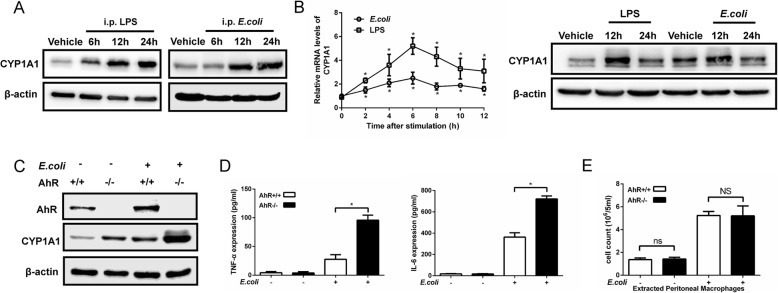
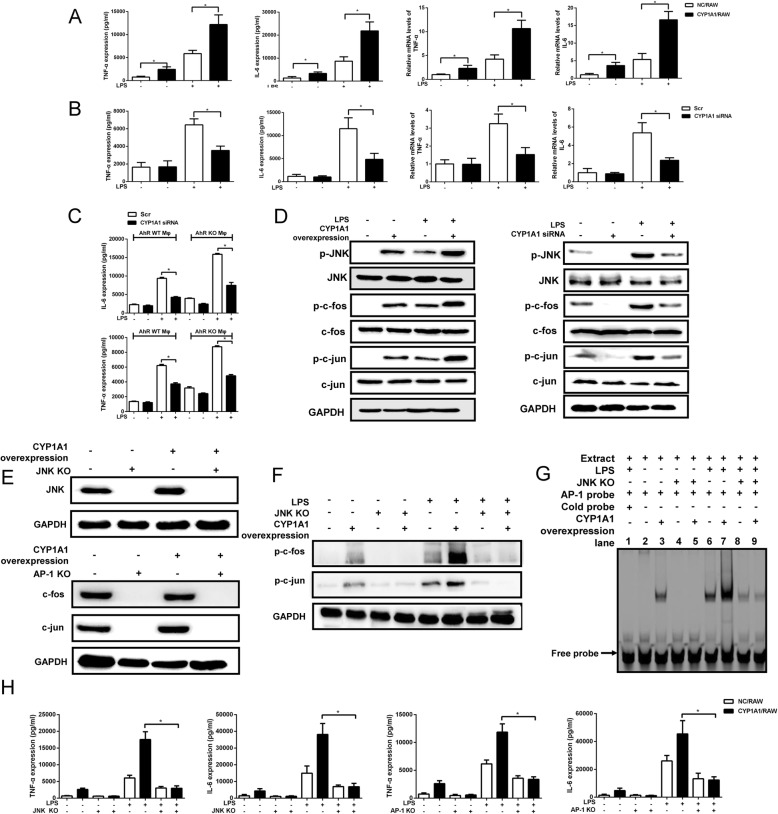
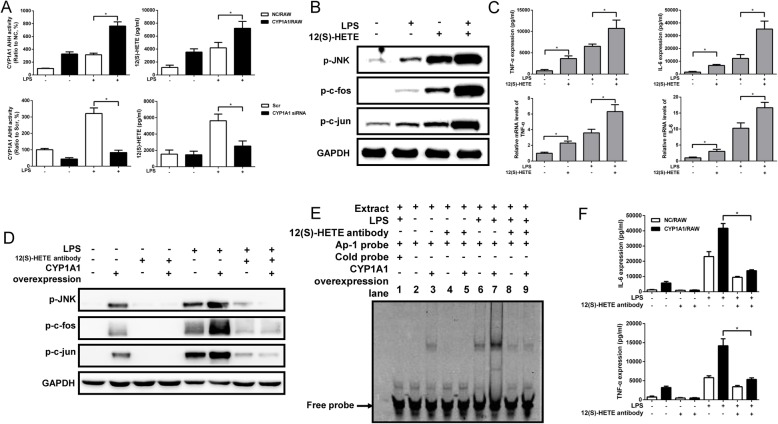
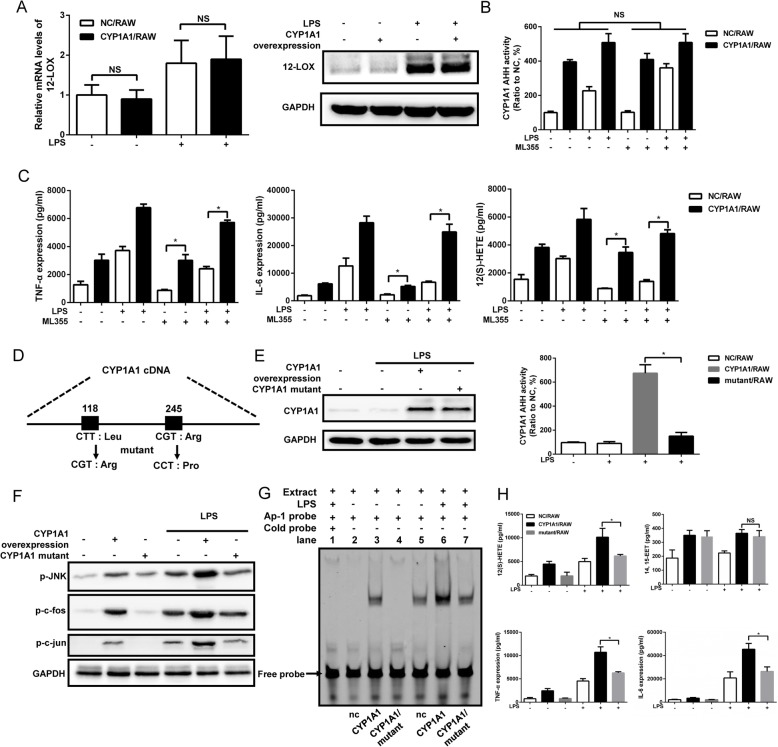
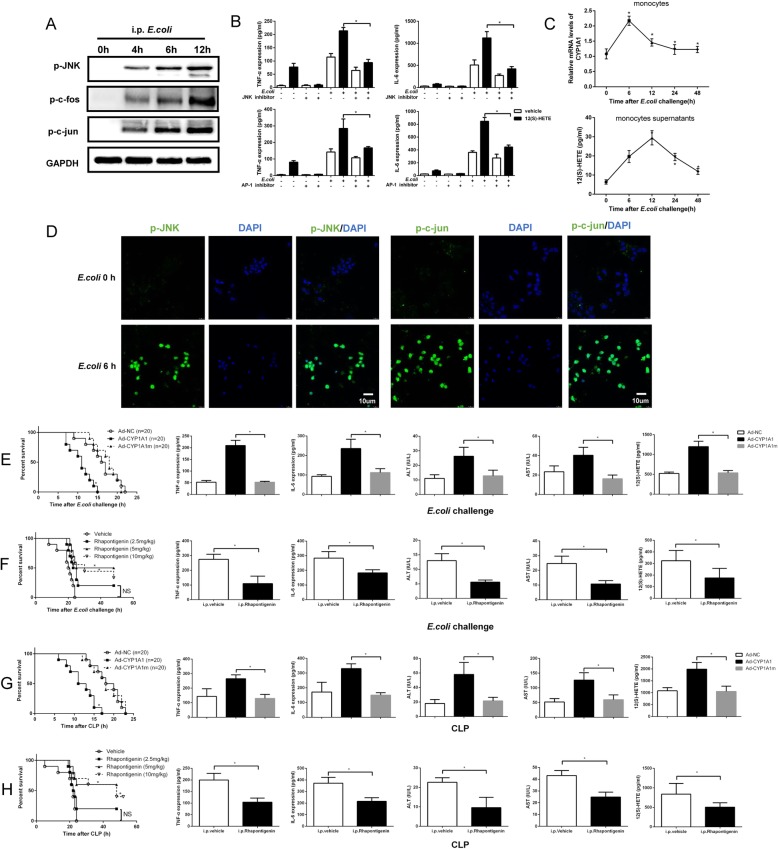
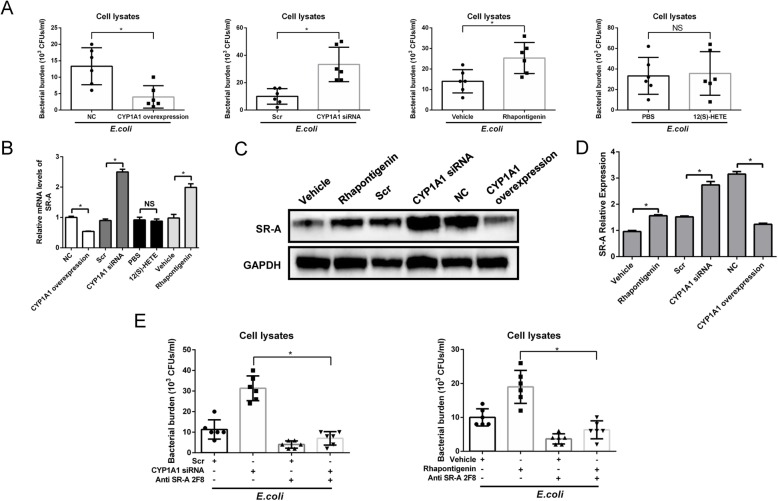
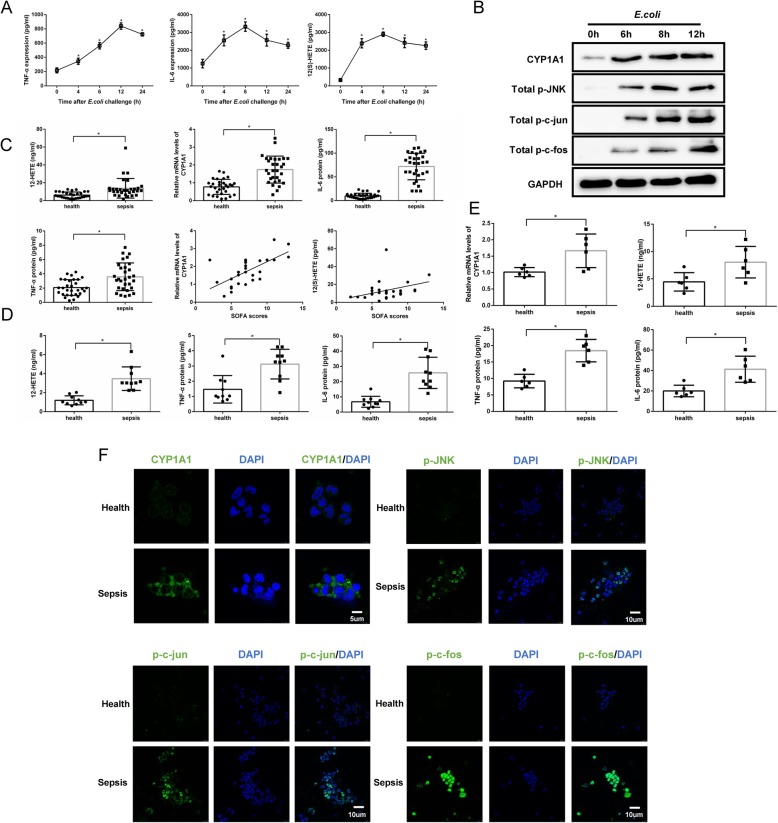
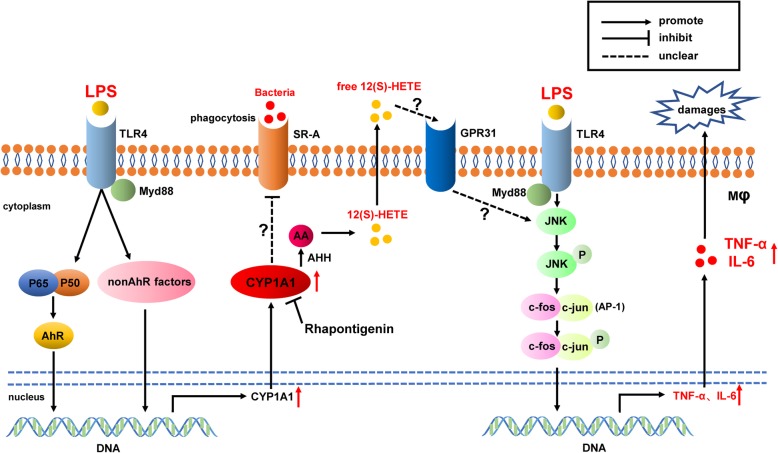
The hydroxylase cytochrome P450 1A1 (CYP1A1) is regulated by the inflammation-limiting aryl hydrocarbon receptor (AhR), but CYP1A1 immune functions remain unclear. We observed CYP1A1 overexpression in peritoneal macrophages (PMs) isolated from mice following LPS or heat-killed Escherichia. coli(E. coli) challenge. CYP1A1 overexpression augmented TNF-α and IL-6 production in RAW264.7 cells (RAW) by enhancing JNK/AP-1 signalling. CYP1A1 overexpression also promoted 12S-hydroxy-5Z,8Z,10E,14Z-eicosatetraenoic acid (12(S)-HETE) production in activated RAW, while a 12(S)-HETE antibody attenuated and 12(S)-HETE alone induced inflammatory responses. Macrophages harbouring hydroxylase-deficient CYP1A1 demonstrated reduced 12(S)-HETE generation and LPS-induced TNF-α/IL-6 secretion. CYP1A1 overexpression also impaired phagocytosis of bacteria via decreasing the expression of scavenger receptor A (SR-A) in PMs. Mice injected with CYP1A1-overexpressing PMs were more susceptible to CLP- or E. coli-induced mortality and bacteria invading, while Rhapontigenin, a selective CYP1A1 inhibitor, improved survival and bacteria clearance of mice in sepsis. CYP1A1 and 12(S)-HETE were also elevated in monocytes and plasma of septic patients and positively correlated with SOFA scores. Macrophage CYP1A1 disruption could be a promising strategy for treating sepsis. Graphical abstract:
Overview
The claims and statistics of this paper haven’t been checked yet.
Free: it reads the open-access text and checks the first 5 claims that cite a source we can check. Create a free account to check every claim.
Integrity signals
Registry
Cites
Statistics
Figures
Verification
Claims the paper makes
The claims and statistics of this paper haven’t been checked yet.
Free: it reads the open-access text and checks the first 5 claims that cite a source we can check. Create a free account to check every claim.
Claims other papers make about this one
Each is checked against this paper’s own text: does it say what the citing paper says it does?
In the citing paper
“however, reports of roles for CYP enzymes in inflammatory responses of macrophages are rare [217,218] and address the regulatory intermediates generated by CYP rather than the role of CYP-mediated ROS generation.”
From Functions of ROS in Macrophages and Antimicrobial Immunity (2021) · cites this paper as [218]
Self-check
Percentages, sums and reported differences re-computed from the paper’s own numbers.
The self-check needs the paper’s full text.
Citations
Cites
Macrophage activation and polarization: nomenclature and experimental guidelines
Murray, P. J., Allen, J. E., Biswas, S. K., Fisher, E. A., Gilroy, D. W., Goerdt, S., Gordon, S., Hamilton, J. A., Ivashkiv, L. B., Lawrence, T., et al. (2014) · Immunity · doi:10.1016/j.immuni.2014.06.008 · Cited by 6,337
Hoshino, K., Takeuchi, O., Kawai, T., Sanjo, H., Ogawa, T., Takeda, Y., Takeda, K., & Akira, S. (1999) · The Journal of Immunology · doi:10.4049/jimmunol.162.7.3749 · Cited by 3,374
Takeuchi, O., Hoshino, K., Kawai, T., Sanjo, H., Takada, H., Ogawa, T., Takeda, K., & Akira, S. (1999) · Immunity · doi:10.1016/s1074-7613(00)80119-3 · Cited by 3,362
LPS induction of gene expression in human monocytes
Guha, M., & Mackman, N. (2001) · Cellular Signalling · doi:10.1016/s0898-6568(00)00149-2 · Cited by 2,304
Prostaglandin Endoperoxides. Novel Transformations of Arachidonic Acid in Human Platelets
Hamberg, M., & Samuelsson, B. (1974) · Proceedings of the National Academy of Sciences · doi:10.1073/pnas.71.9.3400 · Cited by 1,407
Mechanisms and treatment of organ failure in sepsis
Lelubre, C., & Vincent, J.-L. (2018) · Nature Reviews Nephrology · doi:10.1038/s41581-018-0005-7 · Cited by 852
The Cytochrome P450 Superfamily: Biochemistry, Evolution and Drug Metabolism in Humans
P.B. Danielson, B. S. P. (2002) · Current Drug Metabolism · doi:10.2174/1389200023337054 · Cited by 772
Sepsis definitions: time for change
Vincent, J.-L., Opal, S. M., Marshall, J. C., & Tracey, K. J. (2013) · The Lancet · doi:10.1016/s0140-6736(12)61815-7 · Cited by 734
Information processing during phagocytosis
Underhill, D. M., & Goodridge, H. S. (2012) · Nature Reviews Immunology · doi:10.1038/nri3244 · Cited by 616
Arachidonate lipoxygenase in blood platelets
Nugteren, D. H. (1975) · Biochimica et Biophysica Acta (BBA) - Lipids and Lipid Metabolism · doi:10.1016/0005-2760(75)90016-8 · Cited by 613
Feedback control of AHR signalling regulates intestinal immunity
Schiering, C., Wincent, E., Metidji, A., Iseppon, A., Li, Y., Potocnik, A. J., Omenetti, S., Henderson, C. J., Wolf, C. R., Nebert, D. W., et al. (2017) · Nature · doi:10.1038/nature21080 · Cited by 540
Regulation of cytochrome p450 by inflammatory mediators: why and how?
Morgan, E. T. (2001) · PubMed · Cited by 408
Early innate immune responses to bacterial LPS
Rosadini, C. V., & Kagan, J. C. (2017) · Current Opinion in Immunology · doi:10.1016/j.coi.2016.10.005 · Cited by 323
Cytochromes P450 and experimental models of drug metabolism
Zuber, R., Anzenbacherová, E., & Anzenbacher, P. (2002) · Journal of Cellular and Molecular Medicine · doi:10.1111/j.1582-4934.2002.tb00186.x · Cited by 283
An ALOX12–12-HETE–GPR31 signaling axis is a key mediator of hepatic ischemia–reperfusion injury
Zhang, X.-J., Cheng, X., Yan, Z.-Z., Fang, J., Wang, X., Wang, W., Liu, Z.-Y., Shen, L.-J., Zhang, P., Wang, P.-X., et al. (2018) · Nature Medicine · doi:10.1038/nm.4451 · Cited by 239
Self-citationVoorhees, J. J. (1983) · Archives of Dermatology · doi:10.1001/archderm.119.7.541 · Cited by 238
Peiser, L., Gough, P. J., Kodama, T., & Gordon, S. (2000) · Infection and Immunity · doi:10.1128/iai.68.4.1953-1963.2000 · Cited by 235
Selectivity of Polycyclic Inhibitors for Human Cytochrome P450s 1A1, 1A2, and 1B1
Shimada, T., Yamazaki, H., Foroozesh, M., Hopkins, N. E., Alworth, W. L., & Guengerich, F. P. (1998) · Chemical Research in Toxicology · doi:10.1021/tx980090+ · Cited by 223
CYP1A Induction and Human Risk Assessment: An Evolving Tale of in Vitro and in Vivo Studies
Ma, Q., & Lu, A. Y. H. (2007) · Drug Metabolism and Disposition · doi:10.1124/dmd.107.015826 · Cited by 215
Guo, Y., Zhang, W., Giroux, C., Cai, Y., Ekambaram, P., Dilly, A.-K., Hsu, A., Zhou, S., Maddipati, K. R., Liu, J., et al. (2011) · Journal of Biological Chemistry · doi:10.1074/jbc.m110.216564 · Cited by 204
Self-citationDeng, Y., Theken, K. N., & Lee, C. R. (2010) · Journal of Molecular and Cellular Cardiology · doi:10.1016/j.yjmcc.2009.10.022 · Cited by 193
Role of Cytochromes P45O in Drug Metabolism and Hepatotoxicity
Watkins, P. (1990) · Seminars in Liver Disease · doi:10.1055/s-2008-1040480 · Cited by 188
Totlandsdal, A. I., Cassee, F. R., Schwarze, P., Refsnes, M., & Låg, M. (2010) · Particle and Fibre Toxicology · doi:10.1186/1743-8977-7-41 · Cited by 187
Dioxin Induces Transcription ofandGenes byReceptor-Dependent and -Independent Pathways
Hoffer, A., Chang, C., & Puga, A. (1996) · Toxicology and Applied Pharmacology · doi:10.1016/s0041-008x(96)80029-9 · Cited by 158
Hussain, T., Al-Attas, O. S., Al‐Daghri, N. M., Mohammed, A. A., Rosas, E. D., Ibrahim, S., Vinodson, B., Ansari, M. G. A., & El-Din, K. I. A. (2014) · Molecular and Cellular Biochemistry · doi:10.1007/s11010-014-1995-5 · Cited by 128
Lee, Y., Lin, C., Hsu, P., Sun, Y., Huang, Y., Zhuo, J., Wang, C., Gan, Y., Hung, C., Kuan, C., et al. (2015) · Glia · doi:10.1002/glia.22805 · Cited by 124
The importance of the lipoxygenase-hepoxilin pathway in the mammalian epidermal barrier
Muñoz-Garcia, A., Thomas, C. P., Keeney, D. S., Zheng, Y., & Brash, A. R. (2014) · Biochimica et Biophysica Acta (BBA) - Molecular and Cell Biology of Lipids · doi:10.1016/j.bbalip.2013.08.020 · Cited by 123
Epoxyeicosatrienoic acids enhance embryonic haematopoiesis and adult marrow engraftment
Li, P., Lahvic, J. L., Binder, V., Pugach, E. K., Riley, E. B., Tamplin, O. J., Panigrahy, D., Bowman, T. V., Barrett, F. G., Heffner, G. C., et al. (2015) · Nature · doi:10.1038/nature14569 · Cited by 113
Puga, A., Barnes, S., Chang, C., Zhu, H., Nephew, K. P., Khan, S., & Shertzer, H. G. (2000) · Biochemical Pharmacology · doi:10.1016/s0006-2952(99)00406-2 · Cited by 113
Bone Marrow Injury Induced via Oxidative Stress in Mice by Inhalation Exposure to Formaldehyde
Zhang, Y., Liu, X., McHale, C. M., Li, R., Zhang, L., Wu, Y., Ye, X., Yang, X., & Ding, S. (2013) · PLoS ONE · doi:10.1371/journal.pone.0074974 · Cited by 92
Self-citationLuci, D. K., Jameson, J. B., Yasgar, A., Diaz, G., Joshi, N., Kantz, A., Markham, K. A., Perry, S., Kuhn, N. S., Yeung, J., et al. (2014) · Journal of Medicinal Chemistry · doi:10.1021/jm4016476 · Cited by 92
Taylor, F. B., Wada, H., & Kinasewitz, G. T. (2000) · Critical Care Medicine · doi:10.1097/00003246-200009001-00004 · Cited by 89
Mechanism-based inhibition of human cytochrome P450 1A1 by rhapontigenin.
Chun, Y., Ryu, S. Y., Jeong, T. C., & Kim, M. Y. (2001) · PubMed · Cited by 85
S1PR3 Signaling Drives Bacterial Killing and Is Required for Survival in Bacterial Sepsis
Hou, J., Chen, Q., Wu, X., Zhao, D., Reuveni, H., Licht, T., Xu, M., Hu, H., Hoeft, A., Ben‐Sasson, S. A., et al. (2017) · American Journal of Respiratory and Critical Care Medicine · doi:10.1164/rccm.201701-0241oc · Cited by 78
Kimura, S., Smith, H. H., Hankinson, O., & Nebert, D. W. (1987) · The EMBO Journal · doi:10.1002/j.1460-2075.1987.tb02453.x · Cited by 69
Divanovic, S., Dalli, J., Jorge-Nebert, L. F., Flick, L. M., Gálvez‐Peralta, M., Boespflug, N. D., Stankiewicz, T. E., Fitzgerald, J. M., Somarathna, M. S., Karp, C. L., et al. (2013) · The Journal of Immunology · doi:10.4049/jimmunol.1300699 · Cited by 65
Lingappan, K., Jiang, W., Wang, L., Wang, G., Couroucli, X. I., Shivanna, B., Welty, S. E., Barrios, R. J., Khan, M. F., Nebert, D. W., et al. (2014) · Toxicological Sciences · doi:10.1093/toxsci/kfu106 · Cited by 63
Regulation of Human Cytochrome P4501A1 (hCYP1A1): A Plausible Target for Chemoprevention?
Santes-Palacios, R., Ornelas-Ayala, D., Cabañas, N., Marroquín-Pérez, A., Hernández-Magaña, A., del Rosario Olguín-Reyes, S., Camacho-Carranza, R., & Espinosa-Aguirre, J. J. (2016) · BioMed Research International · doi:10.1155/2016/5341081 · Cited by 60
Lipid Mediators in Cerebral Spinal Fluid of Traumatic Brain Injured Patients
Farias, S., Heidenreich, K. A., Wohlauer, M. V., Murphy, R. C., & Moore, E. E. (2011) · The Journal of Trauma: Injury, Infection, and Critical Care · doi:10.1097/ta.0b013e3182092c62 · Cited by 57 · cited 1×
“12(S)-HETE is involved in many immune-related diseases [49–54], trauma [55] and JNK/AP-1 activation [22– 24].”
BackgroundLingappan, K., Jiang, W., Wang, L., Couroucli, X. I., Barrios, R. J., & Moorthy, B. (2013) · Toxicology and Applied Pharmacology · doi:10.1016/j.taap.2013.06.007 · Cited by 55
Glycine N-Methyltransferase Is an Example of Functional Diversity
Bhat, R., & Bresnick, E. (1997) · Journal of Biological Chemistry · doi:10.1074/jbc.272.34.21221 · Cited by 47
El-Sherbeni, A. A., & El‐Kadi, A. O. S. (2016) · Molecular Pharmaceutics · doi:10.1021/acs.molpharmaceut.5b00873 · Cited by 47
Wu, Z., Uchi, H., Morino‐Koga, S., Nakamura‐Satomura, A., Kita, K., Shi, W., & Furue, M. (2014) · Experimental Dermatology · doi:10.1111/exd.12360 · Cited by 42
Wollard, P. M., Cunnigham, R. M., MURPHY, G. M., Camp, R. D. R., Derm, F. F., & Greaves, M. W. (1989) · Prostaglandins · doi:10.1016/0090-6980(89)90129-9 · Cited by 34
Xu, B., Yang, H., Sun, M., Chen, H., Jiang, L., Zheng, X., Ding, G., Liu, Y., Sheng, Y., Cui, D., et al. (2015) · Toxicological Sciences · doi:10.1093/toxsci/kfv235 · Cited by 34
Bleich, D., Chen, S., Wen, Y., & Nadler, J. L. (1997) · Biochemical and Biophysical Research Communications · doi:10.1006/bbrc.1996.5981 · Cited by 32
Activation of Cyp1a1 and Cyp1a2 Genes in Adult Mouse Hepatocytes in Primary Culture
Nemoto, N., & Sakurai, J. (1993) · Japanese Journal of Cancer Research · doi:10.1111/j.1349-7006.1993.tb02867.x · Cited by 29
Nguyen, C. H., Brenner, S., Huttary, N., Atanasov, A. G., Dirsch, V. M., Chatuphonprasert, W., Holzner, S., Stadler, S., Riha, J., Krieger, S., et al. (2016) · Human Molecular Genetics · doi:10.1093/hmg/ddw329 · Cited by 26
Carrière, V., Rodolosse, A., Lacasa, M., Cambier, D., Zweibaum, A., & Rousset, M. (1998) · American Journal of Physiology-Gastrointestinal and Liver Physiology · doi:10.1152/ajpgi.1998.274.6.g1101 · Cited by 25 · cited 1×
“Several studies have also found that AP-1 can be activated by various CYP1A1 inducers including TCDD, benzo [a] pyrene [25, 47] betanaphthoflavone [48].”
BackgroundFang, X., Zhao, W., Xu, J., Tu, F., Wang, X., Li, B., Fu, Y., & Ren, S. (2016) · Developmental & Comparative Immunology · doi:10.1016/j.dci.2016.06.023 · Cited by 24
Lysz, T. W., Arora, J., Lin, C., & Zelenka, P. S. (1994) · PubMed · Cited by 23
Dysregulated Heme Oxygenase–Ferritin System in Pterygium Pathogenesis
Fox, T. P., Gotlinger, K. H., Dunn, M. W., Lee, O. L., Milman, T., Zaidman, G. W., Schwartzman, M. L., & Bellner, L. (2013) · Cornea · doi:10.1097/ico.0b013e3182936915 · Cited by 22
CYP1A1 Relieves Lipopolysaccharide-Induced Inflammatory Responses in Bovine Mammary Epithelial Cells
Zhang, W.-Y., Wang, H., Qi, S., Wang, X., Li, X., Zhou, K., Zhang, Y., & Gao, M. (2018) · Mediators of Inflammation · doi:10.1155/2018/4093285 · Cited by 22 · cited 2×
“CYP1A1 suppressed inflammatory responses in parenchymal cells, pulmonary macrophages and epithelial cells [16, 40, 44, 45], but also increased inflammatory responses in some cases.”
BackgroundSelf-citationFretland, D. J., Anglin, C. P., Bremer, M., Isakson, P. C., Widomski, D. L., Paulson, S. K., Docter, S. H., Djurić, S. W., Penning, T. D., Yu, S. S., et al. (1995) · Inflammation · doi:10.1007/bf01534461 · Cited by 19
Sidorova, Y. A., Perepechaeva, M. L., Pivovarova, E. N., Львович, М. А., Lyakhovich, V. V., & Grishanova, A. Y. (2016) · PLoS ONE · doi:10.1371/journal.pone.0155135 · Cited by 18
Salnikova, L. E., Валерьевна, С. Т., Golubev, A. M., Rubanovich, A. V., & Moroz, V. V. (2013) · Molecular Biology Reports · doi:10.1007/s11033-013-2727-8 · Cited by 16
Yang, T., Jia, Y., Ma, Y., Cao, L., Chen, X., & Qiao, B. (2016) · The American Journal of the Medical Sciences · doi:10.1016/j.amjms.2016.11.021 · Cited by 14
Arachidonic acid in psoriasis. Pathogenic role and pharmacological regulation.
Kragballe, K., & Jj, V. (1985) · PubMed · Cited by 12
Cited by
Functions of ROS in Macrophages and Antimicrobial Immunity
Herb, M., & Schramm, M. (2021) · Antioxidants · doi:10.3390/antiox10020313 · Cited by 633
“Expression of various CYP enzymes in macrophages was shown over 20 years ago [216], however, reports of roles for CYP enzymes in inflammatory responses of macrophages are rare [217,218] and address the regulatory intermediates generated by CYP rather than the role of CYP-mediated ROS generation.”
BackgroundYang, X., Liu, H., Ye, T., Duan, C., Lv, P., Wu, X., Liu, J., Jiang, K., Lu, H., Yang, H., et al. (2020) · Theranostics · doi:10.7150/thno.51144 · Cited by 133
“DNA binding activity of nuclear factor-kappaB (NF-κB) and activator protein-1 (AP-1) in macrophages during inflammation or sepsis [50, 51].”
BackgroundSelf-citationBiological roles of cytochrome P450 1A1, 1A2, and 1B1 enzymes
Kwon, Y., Shin, S., & Chun, Y. (2021) · Archives of Pharmacal Research · doi:10.1007/s12272-021-01306-w · Cited by 118
Kwon, Y. H., Banskota, S., Wang, H., Rossi, L., Grondin, J. A., Syed, S. A., Yousefi, Y., Schertzer, J. D., Morrison, K. M., Wade, M. G., et al. (2022) · Nature Communications · doi:10.1038/s41467-022-35309-y · Cited by 95
Miranda, F., Prazeres, H., Mendes, F., Martins, D. F., & Schmitt, F. C. (2021) · Molecular Biology Reports · doi:10.1007/s11033-021-06863-3 · Cited by 57
Metadata
- Authors
- Tian, L.-X., Tang, X., Zhu, J.-Y., Luo, L., Ma, X.-Y., Cheng, S.-W., Zhang, W., Tang, W.-Q., Ma, W., Yang, X., Lv, C.-Z., & Liang, H.-P.
- Affiliations
- Army Medical University (CN)
- Hainan Medical University (CN)
- Venue
- Cell Communication and Signaling
- Published
- 2020-05-04
- Volume
- 18
- Issue
- 1
- Pages
- 70-70
- ISSN
- 1478-811X (ISSN-L)
- PMC
- PMC7199371
- OpenAlex
- W3023357195
- Cited by
- 50
- References
- 58
- Citations by year
- 2026: 3 · 2025: 10 · 2024: 8 · 2023: 9 · 2022: 8 · 2021: 8 · 2020: 4
- FWCI
- 6.40
- Type
- journal article
- Language
- en
- Update notices
- correction (2020-05-18)
- Open access
- gold
- doi.org
- Licence
- cc-by
- creativecommons.org/licenses/by/4.0 (tdm)
- creativecommons.org/licenses/by/4.0 (vor)
- Locations
- Cell Communication and Signaling (publishedVersion, cc-by)
- PubMed Central (publishedVersion, cc-by)
- PubMed (publishedVersion)
- DOAJ (DOAJ: Directory of Open Access Journals) (submittedVersion, cc-by-sa)
- Funders
- National Natural Science Foundation of China (81871612)
- Topics
- Life Sciences › Pharmacology, Toxicology and Pharmaceutics › Pharmacology › Pharmacogenetics and Drug Metabolism
- Health Sciences › Medicine › Critical Care and Intensive Care Medicine › Sepsis Diagnosis and Treatment
- Life Sciences › Immunology and Microbiology › Immunology › Immune Response and Inflammation
- Keywords
- CYP1A1, sepsis, macrophages, aryl hydrocarbon receptor, 12(S)-HETE, scavenger receptor A, phagocytosis, TNF-α, interleukin-6, Escherichia coli, lipopolysaccharide, rhapontigenin, monocytes, SOFA score
- MeSH terms
- RAW 264.7 Cells, Adult, Aged, Animals, Escherichia coli, Humans, Inflammation, Male, Mice, Inbred C57BL, Middle Aged, Phagocytosis, Macrophages, Peritoneal, Sepsis, Cytochrome P-450 CYP1A1, 12-Hydroxy-5,8,10,14-eicosatetraenoic Acid, MAP Kinase Kinase 4, Mice, Young Adult
About these checks
Registry, retraction, Cites and statistics results are computed, not judged, with one exception: a printed reference that no index lists is read once by a model before it counts as a citation error. Claims are extracted by a model and kept only when their quote appears verbatim in the text; each cited source is then checked, with a model’s help, for whether it says what the claim relies on. Those verdicts can be wrong — read the claim’s quote and the cited source before relying on one.
Statistics and arithmetic are recomputed, not judged.
Confidence bands are shown only for fields calibrated on our annotated test set. None is calibrated yet, so no band is shown.
What counts as a claim ›How we measure confidence ›How we check this ›
Are you an author, or do you see a problem with this page? Request a review
Data sources
Bibliographic data: Semantic Scholar, OpenAlex, Crossref.
Contains information from the Semantic Scholar Academic Graph Datasets, made available under the ODC Attribution License (ODC-BY 1.0).
Semantic Scholar’s data is described in: Kinney, R., et al. (2023). The Semantic Scholar Open Data Platform. arXiv:2301.10140.
