

Regulation of anoikis by extrinsic death receptor pathways
Open accessThe DOI matches its Crossref record; 107 of the 109 references it cites were found in a registry or an index.
Abstract
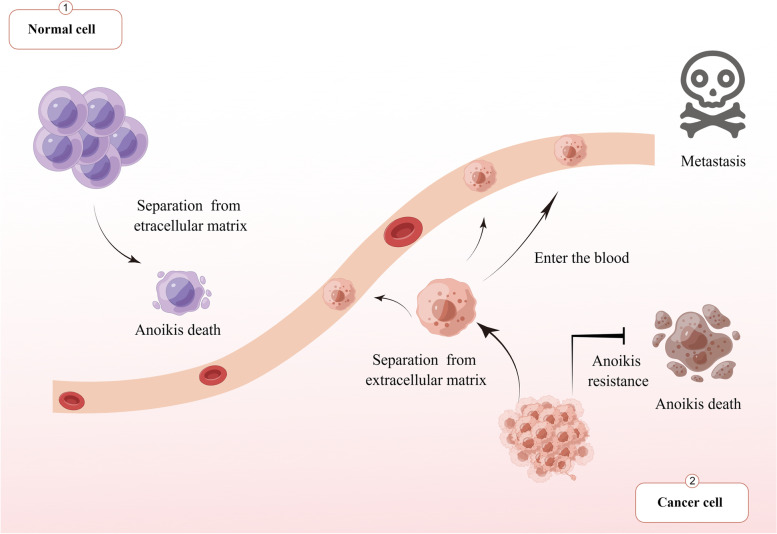
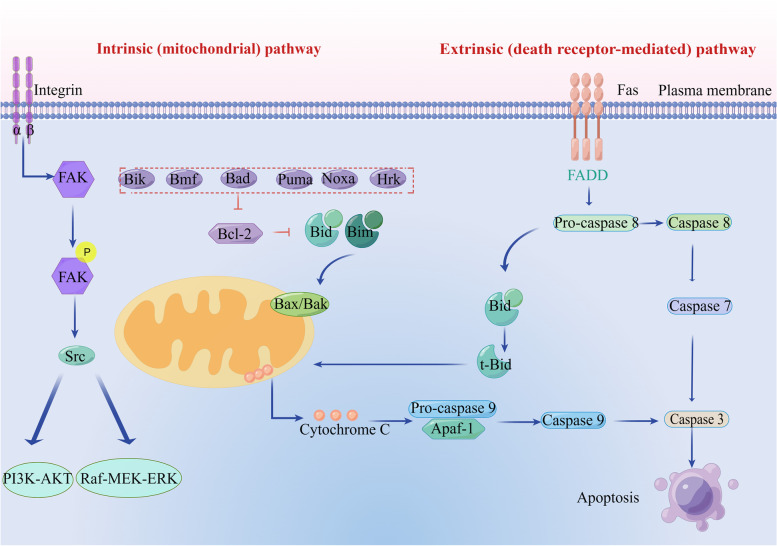
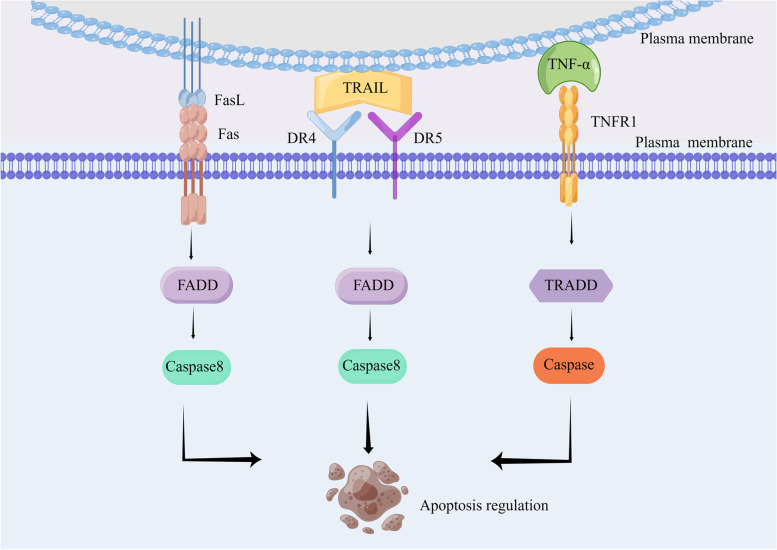
Metastatic cancer cells can develop anoikis resistance in the absence of substrate attachment and survive to fight tumors. Anoikis is mediated by endogenous mitochondria-dependent and exogenous death receptor pathways, and studies have shown that caspase-8-dependent external pathways appear to be more important than the activity of the intrinsic pathways. This paper reviews the regulation of anoikis by external pathways mediated by death receptors. Different death receptors bind to different ligands to activate downstream caspases. The possible mechanisms of Fas-associated death domain (FADD) recruitment by Fas and TNF receptor 1 associated-death domain (TRADD) recruitment by tumor necrosis factor receptor 1 (TNFR1), and DR4- and DR5-associated FADD to induce downstream caspase activation and regulate anoikis were reviewed. This review highlights the possible mechanism of the death receptor pathway mediation of anoikis and provides new insights and research directions for studying tumor metastasis mechanisms.
Overview
The claims and statistics of this paper haven’t been checked yet.
Free: it reads the open-access text and checks the first 5 claims that cite a source we can check. Create a free account to check every claim.
Integrity signals
Registry
Cites
Statistics
Figures
Verification
Claims the paper makes
The claims and statistics of this paper haven’t been checked yet.
Free: it reads the open-access text and checks the first 5 claims that cite a source we can check. Create a free account to check every claim.
Claims other papers make about this one
Each is checked against this paper’s own text: does it say what the citing paper says it does?
The source backs part of the claim, not all of it — or backs it for a different population, condition or comparison.
In the citing paper
“Snake venom metalloproteases (SVMPs) enzymatically degrade the structural components of the extracellular matrix and basement membranes, and this results in the detachment of cells from the basement membrane support, leading to apoptosis by a specialized mechanism called anoikis (Figure 2) [49,50,51].”
From Role of Regulated Cell Death Pathways in Snakebite Envenomation: Mechanisms, Crosstalk, and Therapeutic Opportunities (2026) · cites this paper as [50]
Experimental — accuracy not yet measured
Self-check
Percentages, sums and reported differences re-computed from the paper’s own numbers.
The self-check needs the paper’s full text.
Citations
Cites
Ferroptosis: mechanisms, biology and role in disease
Jiang, X., Stockwell, B. R., & Conrad, M. (2021) · Nature Reviews Molecular Cell Biology · doi:10.1038/s41580-020-00324-8 · Cited by 7,505 · cited 1×
“The signaling pathways of fer-roptosis have been found to involve proteins such as iron ion regulators, the production of reactive oxygen species (ROS), and protein kinases associated with cell death [14, 15].”
BackgroundFerroptosis: past, present and future
Li, J., Cao, F., Yin, H.-L., Huang, Z.-J., Lin, Z.-T., Mao, N., Sun, B., & Wang, G. (2020) · Cell Death & Disease · doi:10.1038/s41419-020-2298-2 · Cited by 4,171 · cited 1×
“The signaling pathways of fer-roptosis have been found to involve proteins such as iron ion regulators, the production of reactive oxygen species (ROS), and protein kinases associated with cell death [14, 15].”
BackgroundTwo CD95 (APO‐1/Fas) signaling pathways
Scaffidi, C., Fulda, S., Srinivasan, A., Friesen, C., Li, F., Tomaselli, K. J., Debatin, K., Krammer, P. H., & Peter, M. E. (1998) · The EMBO Journal · doi:10.1093/emboj/17.6.1675 · Cited by 3,000 · cited 1×
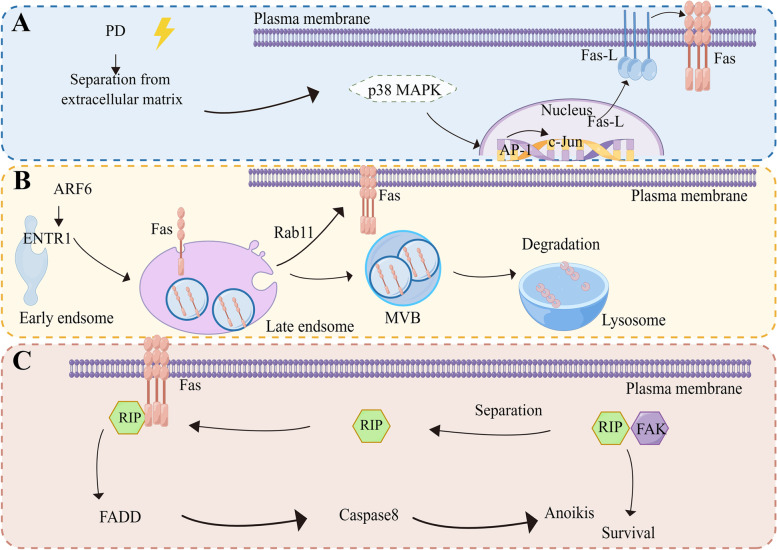
“Fas receptor activation triggers two distinct exter-nal pathways [43]: type I, leading to direct proteolysis of the target dependent on caspase 7 activation.”
BackgroundInduction of TNF receptor I-mediated apoptosis via two sequential signaling complexes
Micheau, O., & Tschopp, J. (2003) · Cell · doi:10.1016/s0092-8674(03)00521-x · Cited by 2,738 · cited 1×
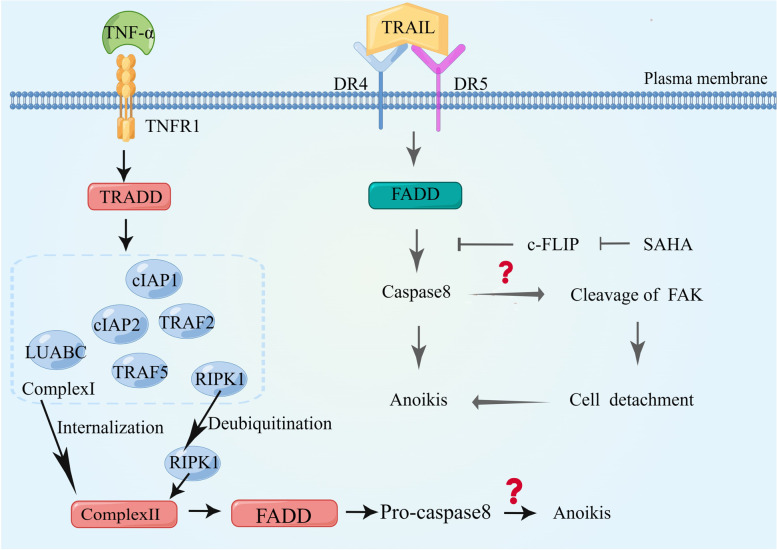
“Whether RIPK1 deubiquitination causes anoikis remains unclear [97].”
BackgroundBorst, O., Walker, B., Münzer, P., Russo, A., Schmid, E., Faggio, C., Bigalke, B., Laufer, S., Gawaz, M., & Lang, F. (2013) · Cellular Physiology and Biochemistry · doi:10.1159/000350110 · Cited by 1,860
Pistritto, G., Trisciuoglio, D., Ceci, C., Garufi, A., & D'Orazi, G. (2016) · Aging · doi:10.18632/aging.100934 · Cited by 1,658 · cited 1×
“…the extracellular matrix due to its metastasis characteristics, tumor cells develop resistance, survive without adhesion to the extracellular matrix, and can flow to other tissues and organs through blood and lymph for adhesion and metastasis membrane rupture, ultimately leading to cell death [17].”
BackgroundEvery step of the way: integrins in cancer progression and metastasis
Hamidi, H., & Ivaska, J. (2018) · Nature Reviews Cancer · doi:10.1038/s41568-018-0038-z · Cited by 1,493 · cited 1×
“These multifunctional receptors play a pivotal role in orchestrating various cellular events, ensuring cellular homeostasis and tissue integrity [20–22], and differ from other receptors in their ability to transmit signals in both directions [23].”
BackgroundTNF? and the TNF receptor superfamily: Structure-function relationship(s)
Idriss, H. T., & Naismith, J. H. (2000) · Microscopy Research and Technique · doi:10.1002/1097-0029(20000801)50:3<184::aid-jemt2>3.0.co;2-h · Cited by 1,183 · cited 2×
“By binding with its receptors, such as TNFR1 and TNFR2, it triggers intracellular signaling pathways that regulate apoptosis and other biological processes [77].”
BackgroundPyroptosis: A new frontier in cancer
Fang, Y., Tian, S., Pan, Y., Li, W., Wang, Q., Tang, Y., Yu, T., Wu, X., Shi, Y., Ma, P., et al. (2020) · Biomedicine & Pharmacotherapy · doi:10.1016/j.biopha.2019.109595 · Cited by 1,049 · cited 1×
“The activation of these proteinases leads to the release of inflammatory factors and the occurrence of inflammatory reactions, ultimately resulting in cell death [16].”
BackgroundNecroptosis in development, inflammation and disease
Weinlich, R., Oberst, A., Beere, H. M., & Green, D. R. (2017) · Nature Reviews Molecular Cell Biology · doi:10.1038/nrm.2016.149 · Cited by 1,016 · cited 1×
“Necrosis is an irregular and passive form of cell death, typically caused by external factors such as trauma, infection, or ischemia [12].”
Background
Cited by
Zheng, J., She, H., Han, R., Tang, J., Dou, Y., Lu, C., Huang, D., Lin, C., Wu, D., He, C., et al. (2025) · Developmental Cell · doi:10.1016/j.devcel.2025.07.014 · Cited by 80
Self-citationChoi, J. Y., Boo, M. Y., & Boo, Y. C. (2024) · Molecules · doi:10.3390/molecules29102288 · Cited by 75
“The extrinsic receptor-dependent apoptosis pathway is mediated by death receptors, such as tumor necrosis factor receptor 1 (TNFR-1) and FAS, and an adaptor, FAS-associated protein with death domain (FADD) [138,139].”
BackgroundMethylglyoxal Formation—Metabolic Routes and Consequences
Vašková, J., Sabolová, G., Pudelský, J., Palenčár, D., & Mičková, H. (2025) · Antioxidants · doi:10.3390/antiox14020212 · Cited by 71
“This pathway is initiated when ligands bind to specific receptors on the cell surface, such as the death receptor (Fas) or the tumor necrosis factor (TNF) receptor [247,248].”
Mechanisms of action of the BCL-2 inhibitor venetoclax in multiple myeloma: a literature review
Cao, Q., Wu, X., Zhang, Q., Gong, J., Chen, Y., You, Y., Shen, J., Qiang, Y., & Cao, G. (2023) · Frontiers in Pharmacology · doi:10.3389/fphar.2023.1291920 · Cited by 61
Liu, F., Yang, Z., Li, J., Wu, T., Li, X., Zhao, L., Wang, W., Yu, W., Zhang, G., & Xu, Y. (2024) · Molecular Medicine · doi:10.1186/s10020-024-01020-5 · Cited by 53
Shaw, P., Bhowmik, A. D., Pillai, M. S. G., Robbins, N., Dwivedi, S. K. D., & Rao, G. (2025) · Cancer Letters · doi:10.1016/j.canlet.2025.217750 · Cited by 42
Zhang, Z., Chen, X., Li, Y., Zhang, F., Quan, Z., Wang, Z., Yang, Y., Si, W., Xiong, Y., Ju, J., et al. (2024) · APOPTOSIS · doi:10.1007/s10495-024-01994-x · Cited by 33
Li, L., Zhu, Z., Jiang, X., Tang, Y. J., Li, J., Zhang, Z., Ding, B., Li, X., Yu, M., & Gan, Y. (2025) · Journal of Controlled Release · doi:10.1016/j.jconrel.2025.114059 · Cited by 26
Stimuli-responsive supramolecular hydrogels for paclitaxel delivery: Progress and prospects
Qutub, M., Tatode, A., Taksande, J., Premchandani, T., Umekar, M. J., Hussain, U., Biyani, D., & Mane, D. (2025) · Aspects of Molecular Medicine · doi:10.1016/j.amolm.2024.100062 · Cited by 25
Camptothecin in Cancer Therapy: Current Challenges and Emerging Strategies with Nanoemulsions
Pérez-Ortega, H. U., Córdova-Espíritu, R. R., Cano-Serrano, S., García-González, E., Bravo-Sánchez, M. G., Orozco-Mosqueda, M. D. C., Jiménez‐Islas, H., Luna‐Bárcenas, G., & Villaseñor‐Ortega, F. (2025) · Pharmaceutics · doi:10.3390/pharmaceutics17111414 · Cited by 21
“Additionally, FADD associates with TRADD in TNFR1 signaling, promoting caspase-8 activation [76,77].”
Chen, C.-H., Wu, N., & Tsai, T. (2025) · International Journal of Molecular Sciences · doi:10.3390/ijms26083747 · Cited by 18
“While sharing features with apoptosis, anoikis demonstrates unique signaling mechanisms following ECM detachment, involving integrin-mediated signaling, PI3K-AkT signaling cascade, and Fas-dependent pathways [8].”
Anoikis resistance in gastric cancer: a comprehensive review
D’Amore, T., Bravoco, D., Paola, G. D., Albano, F., Brancaccio, M., Sabato, C., Cesta, G., Zolfanelli, C., Lauciello, V., Falco, G., et al. (2025) · Cell Death and Disease · doi:10.1038/s41419-025-07860-1 · Cited by 16
“It is a multifactorial process involving intrinsic genetic changes and extrinsic pathways [42, 43].”
Programmed Cell Death in Heart Failure: Mechanisms, Impacts, and Therapeutic Prospects
Wu, D., Deng, D., & Tang, B. (2025) · Reviews in Cardiovascular Medicine · doi:10.31083/rcm38407 · Cited by 17
“Activated Activated caspase-8 can directly cleave and activate down-stream effector caspases, leading to apoptosis [11].”
Extracellular Vesicles in Ovarian Cancer: From Chemoresistance Mediators to Therapeutic Vectors
Barathan, M., Fuad, N. D. M., Jaafar, F., & Abdullah, N. A. H. (2024) · Biomedicines · doi:10.3390/biomedicines12081806 · Cited by 18
“A different method of resistance includes the disruption of downstream signaling pathways to hinder caspase activation or enhance pro-survival signals, allowing cell survival even when death receptors are activated [60–62].”
MethodWang, Y., Hu, Q., Cao, Y., Li, Y., Liu, H., Wen, Y., Bao, Y., Zhang, S., Lv, C., & Zhao, G. (2024) · International Journal of Molecular Medicine · doi:10.3892/ijmm.2024.5418 · Cited by 16
“Anoikis is not only an important process to prevent normal cells from colonizing the wrong site in the body, but also provides a strong barrier against cancer metastasis (14).”
BackgroundSelf-citationNavigating the complexities of cell death: Insights into accidental and programmed cell death
Lotfi, M.-S., & Rassouli, F. B. (2024) · Tissue and Cell · doi:10.1016/j.tice.2024.102586 · Cited by 15
Xiang, Y., Zhou, X., Zhou, H., Li, D., Zhong, M., Xue, H., Song, D., Long, Y., Zeng, X., Chen, Y., et al. (2023) · Biomedicine & Pharmacotherapy · doi:10.1016/j.biopha.2023.115680 · Cited by 12
Transcriptomic features of programmed and inflammatory cell death in gingival tissues
Ebersole, J. L., Kirakodu, S. S., Nguyen, L. M., & González, O. A. (2024) · Oral Diseases · doi:10.1111/odi.14939 · Cited by 12
Exploring the Role of GITR/GITRL Signaling: From Liver Disease to Hepatocellular Carcinoma
Papadakos, S. P., Chatzikalil, E., Vakadaris, G., Reppas, L., Arvanitakis, K., Koufakis, T., Siakavellas, S. I., Manolakopoulos, S., Germanidis, G. S., & Theocharis, S. E. (2024) · Cancers · doi:10.3390/cancers16142609 · Cited by 13
“The extrinsic pathway is regulated by death receptors, including tumor necrosis factors receptors (TNF-TNFR1), Fas ligand (FasL-Fas), and TNF-related apoptosis inducing-ligand [34,35].”
BackgroundHarnessing Dietary Phytochemicals to Modulate Signaling Pathways in Cancer Chemoprevention—A Review
Pandit, K., Garg, C., Bhat, A. H., Bhardwaj, R., & Kaur, S. (2025) · Phytotherapy Research · doi:10.1002/ptr.8524 · Cited by 14
“This pathway is triggered by TNF family death factors, including Fas ligand (FasL), TNF-α, and TNF-related apoptosis-inducing ligand (TRAIL) (Han et al. 2023).”
Xiong, F., Xiao, B.-L., Wang, Q., Liu, K., Wu, H.-W., Jing, C., Tong, K.-N., Zhang, Z., & Guo, W. (2025) · Molecular Medicine · doi:10.1186/s10020-025-01333-z · Cited by 12
“Another receptor, p75NTR, is a member of the tumour necrosis factor (TNF) receptor superfamily. p75NTR contains four cysteine-rich domains (CRDs) and glycosylation sites in the ECD, a linker segment in the TM, and a p75 death domain in the ICD (Han et al. 2023).”
Apoptotic mechanism of development inhibition in zebrafish induced by esketamine
Yuan, W., Xiao, Y., Zhang, Y., Xiang, K., Huang, T., Diaby, M., & Gao, J. (2023) · Toxicology and Applied Pharmacology · doi:10.1016/j.taap.2023.116789 · Cited by 11
Naveed, T., Ali, S., & Summer, M. (2025) · Medical Oncology · doi:10.1007/s12032-025-02894-z · Cited by 11
The Duality of Collagens in Metastases of Solid Tumors
Carnazza, M. A., Quaranto, D., DeSouza, N. R., Li, X.-M., Tiwari, R. K., Martino, J. S. D., & Geliebter, J. (2025) · International Journal of Molecular Sciences · doi:10.3390/ijms26199745 · Cited by 10
Żyła, D., Dubaj, M., Słomczyńska, K., Kułak, K., Tarkowski, R., & Furtak-Niczyporuk, M. (2025) · Cancer Management and Research · doi:10.2147/cmar.s515514 · Cited by 10
“38 42 The phenomenon of resistance primarily affects gynecological cancers, including high-grade epithelial ovarian, endometrial or cervical cancer.”
FASN promotes anoikis resistance in colorectal liver metastases through the ERK1/2 pathway
Wu, J., Liu, F., Guo, X., & Cui, C. (2024) · Biochemical and Biophysical Research Communications · doi:10.1016/j.bbrc.2024.150494 · Cited by 10
Li, G., Jin, B., Zhou, J., Sun, T., Wang, S., & Fan, Z. (2025) · International Journal of Nanomedicine · doi:10.2147/ijn.s533797 · Cited by 9
“60 The death-inducing signaling complex is formed, adaptor proteins including the Fas-associated death domain are recruited, and caspase-8 and its downstream apoptotic proteins are activated.”
Anoikis: To Die or Not to Die?
Koltai, T., & Fliegel, L. (2026) · International Journal of Molecular Sciences · doi:10.3390/ijms27020579 · Cited by 11
Arsenic Nanoparticles Trigger Apoptosis via Anoikis Induction in OECM-1 Cells
Covarrubias, A. A., Reyna‐Jeldes, M., Pedroso‐Santana, S., Marín, S., Madero-Mendoza, C., Demergasso, C. S., & Coddou, C. (2024) · International Journal of Molecular Sciences · doi:10.3390/ijms25126723 · Cited by 8
“The Erk1/2 pathway is capable of inhibiting apoptosis in response to a wide variety of stimuli, such as tumor necrosis factor (TNF), Fas ligand, TNF-related apoptosis-inducing ligand (TRAIL), radiation, osmotic stress, hypoxia, among others [52].”
BackgroundPeng, R., Ma, X., Jiang, Z., Duan, Y., Lv, S., & Wei, J. (2024) · Heliyon · doi:10.1016/j.heliyon.2024.e34029 · Cited by 9
“Anoikis, translated as “ programmed cell death induced by loss of extracellular adhesion, ” refers to a form of programmed cell death triggered when cells lose normal adhesion to surrounding cells or the extracellular matrix [27 – 29].”
BackgroundXian, C., Zhong, H., Yang, Y., Yi, Q., Li, Y., Liang, G., Chen, J., Chen, M., & Huang, W. (2025) · Ecotoxicology and Environmental Safety · doi:10.1016/j.ecoenv.2025.119011 · Cited by 8
Kim, T. W., & Ko, S. (2025) · Phytotherapy Research · doi:10.1002/ptr.70111 · Cited by 8
“Various receptors related to the tumor necrosis factor (TNF), including TNF receptor, FAS, death receptor 3 (DR3), TRAIL-R1 (DR4), and TRAIL-R2 (DR5), induce many programmed cell death types in various types of cancer (Han et al. 2023).”
Sharma, M., Shetty, S. S., Soi, S., & Radhakrishnan, R. A. (2024) · Journal of Oral Biology and Craniofacial Research · doi:10.1016/j.jobcr.2024.10.008 · Cited by 8
“25,27,28 mFasL + lymphocytes induce apoptosis in cancer cells by interacting with the surface Fas receptor on cancer cells.”
BackgroundEffect of Apoptosis and Autophagy on Recombinant Protein Expression in Chinese Hamster Ovary Cells
Zhang, H., Zhao, Q., Abiti, J., Gao, Y., Han, M., Wang, H., Zhang, X., Wang, J., Guo, J., Wang, X., et al. (2025) · Biotechnology Journal · doi:10.1002/biot.70069 · Cited by 7
Is SIRT3 and Mitochondria a Reliable Target for Parkinson’s Disease and Aging? A Narrative Review
Kandy, A. T., Chand, J., Baba, M. Z., & Subramanian, G. (2024) · Molecular Neurobiology · doi:10.1007/s12035-024-04486-w · Cited by 7
“It is essential to comprehend the mechanisms governing anoikis resistance in order to inhibit tumor growth and stop metastasis [80, 81].”
Monavarian, M., Rajkarnikar, R., Page, E. F., Kumari, A., Quintero-Macías, L., Massicano, F., Lee, N. Y., Sahoo, S., Hempel, N., Jolly, M. K., et al. (2026) · JCI Insight · doi:10.1172/jci.insight.192113 · Cited by 7
Zhang, B., Li, Z., Ye, G., & Hu, K. (2024) · Frontiers in Oncology · doi:10.3389/fonc.2024.1393670 · Cited by 6
“The process of anoikis represents a speci fi c form of PCD that actively contributes to maintaining homeostasis by eliminating cancer cells exhibiting metastatic behavior in the absence of cellular adhesion and loss of extracellular matrix (39).”
BackgroundBindu, S., Ash, A., & Sarkar, K. (2025) · Pathology - Research and Practice · doi:10.1016/j.prp.2025.156113 · Cited by 6
Diao, W., Huang, X., Huang, W., Jiang, J., Li, W., Liu, H., Yan, B., & Shen, L. (2025) · Journal of Inflammation Research · doi:10.2147/jir.s509659 · Cited by 5
“4 When cells are stimulated by factors such as inflammation and oxidative stress, these stimuli lead to a reduction in mitochondrial membrane potential and the subsequent release of oxygen radicals.”
Soliman, A. M., & Abdelmawgood, I. A. (2026) · Pesticide Biochemistry and Physiology · doi:10.1016/j.pestbp.2026.107063 · Cited by 5
Zhang, Z., Xu, H., Gong, C., Li, Y., Song, X., Li, Y., Zhang, D., & Wang, R. (2025) · Chemistry & Biodiversity · doi:10.1002/cbdv.202402398 · Cited by 8
“The DR signaling pathway plays a pivotal role in antitumor mechanisms [212].”
Oktavia, S., Wahyuni, F. S., Hasmiwati, H. H., & Amir, A. (2024) · Tropical Journal of Natural Product Research · doi:10.26538/tjnpr/v8i2.11 · Cited by 7
Zhang, Y., Hu, Z., Cai, Z., Lai, J., & Zeng, H. (2025) · Reproductive Sciences · doi:10.1007/s43032-025-01917-4 · Cited by 4
“Anoikis is a specific form of programmed apop - tosis that is triggered by the loss of cell-ECM interactions [6 ].”
Identification of STAT3 and BIRC5 as anoikis-related biomarkers in psoriasis
Bai, W., Wang, K., Wu, S., Zhou, X., Liu, L., Liu, M., & Chen, C. (2025) · Scientific Reports · doi:10.1038/s41598-025-13992-3 · Cited by 4
Liu, S., Huang, W., Hou, F., Wang, Q., Saqib, F., Zhang, J., Xie, J., Xu, C., Zhao, W., Ma, A., et al. (2025) · Ecotoxicology and Environmental Safety · doi:10.1016/j.ecoenv.2025.118988 · Cited by 4
Mitochondrial metabolic vulnerabilities in high-grade serous ovarian cancer
Prasad, A., Kaufmann, S. H., & Kanakkanthara, A. (2026) · Biochimica et Biophysica Acta (BBA) - Reviews on Cancer · doi:10.1016/j.bbcan.2026.189570 · Cited by 4
Alkhammash, A., & Alotaibi, G. (2026) · Molecular Biology Reports · doi:10.1007/s11033-026-11738-6 · Cited by 4
Regulated cell death: a multidimensional regulatory network in the pathogenesis of renal fibrosis
Li, W., Zhou, L., Zhang, J., Sun, J., Feng, Q., Wu, K., & Wu, K. (2026) · APOPTOSIS · doi:10.1007/s10495-026-02358-3 · Cited by 4
A Comprehensive Review of Phytochemistry and Anticancer of the Genus Goniothalamus
Xie, F., Zhang, Z., Zheng, X., Li, Y., Wang, R., & Li, W. (2025) · Chemistry & Biodiversity · doi:10.1002/cbdv.202402461 · Cited by 6
“Thedeathreceptor(DR)signalingpathwayispivotalinregulating extrinsic apoptosis, a process that eliminates cells in response to external signals [124].”
Won, Y., Kim, H. H., Jeong, S.-H., Bhosale, P. B., Abusaliya, A., Heo, J.-D., Seong, J. K., Ahn, M., Kim, H. J., & Kim, G. S. (2025) · International Journal of Molecular Sciences · doi:10.3390/ijms26062390 · Cited by 4
Mechanisms of apoptosis-related non-coding RNAs in ovarian cancer: a narrative review
Wang, Y., Wang, S., He, H., Bai, Y., Liu, Z., & Sabihi, S.-S. (2025) · APOPTOSIS · doi:10.1007/s10495-024-02074-w · Cited by 4
“These receptors, such as Fas, tumor necrosis factor recep - tor-1 (TNFR1), and TRAIL receptors (DR4 and DR5), are part of the TNF receptor superfamily [ 126].”
Self-citationZhang, J., Cheng, L. L., Jiang, S., & Zhu, D. (2025) · Scientific Reports · doi:10.1038/s41598-025-99395-w · Cited by 4
Kumar, S., Sarma, M., Khan, E., & Dubey, V. K. (2025) · International Journal of Biological Macromolecules · doi:10.1016/j.ijbiomac.2025.145847 · Cited by 3
Pan, P., Zhao, T., Zhang, J., Zhou, Y., Zhang, X., Li, Q., & Zhou, Y. (2025) · Frontiers in Pharmacology · doi:10.3389/fphar.2025.1605214 · Cited by 3
Ayash, R., Kabalan, Y., & Chamaa, S. (2025) · BMC Endocrine Disorders · doi:10.1186/s12902-025-02001-3 · Cited by 3
“The main three death receptors being most important in the process include TNF receptor-1 (TNFR1), CD95 (Fas or APO-1), and TNF-related apoptosis-inducing ligand receptor 2 (TRAILR-2) [7].”
Qu, Y., He, S., Shen, L., Liao, Y., Qiu, X., Tan, L., Song, C., Tang, N., Sun, Y., & Ding, C. (2025) · Virologica Sinica · doi:10.1016/j.virs.2025.10.004 · Cited by 3
Alabaş, E., & Özçimen, A. A. (2025) · Molecular Biology Reports · doi:10.1007/s11033-025-11284-7 · Cited by 3
“This enables caspase-3 to be activated after caspase-7, which has a role in inducing apoptosis, and thus cell death occurs [ 39 , 40 ].”
STC2 promotes anoikis resistance by modulating TGIF1 mRNA stability in colorectal cancer
Hu, F., He, Q., Ding, Z., Cheng, J., & Lin, J. (2026) · Frontiers in Cell and Developmental Biology · doi:10.3389/fcell.2025.1695361 · Cited by 3
“Several studies have indicated that anoikis is closely associated with the occurrence and development of cancer (Han et al., 2023; Ye et al., 2020; Jin et al., 2018; Buchheit et al., 2015).”
Focused ultrasound-induced cell apoptosis for the treatment of tumours
Wang, N., Luo, L., Xu, X., Zhou, H., & Li, F. (2024) · PeerJ · doi:10.7717/peerj.17886 · Cited by 4
“The mitochondrial apoptotic pathway is described in the following sections and is reiterated here ( Kantari & Walczak, 2011 ; Kaufmann, Strasser & Jost, 2012 ; Lavrik & Krammer, 2012 ; Han et al., 2023 ; Mahadevan et al., 2023 ; Sahoo et al., 2023 ; Haymour et al., 2023 ; Ma et al., 2024 ).”
BackgroundRole of PDGFRα-mediated signalling in anoikis resistance in glioblastoma: in vitro study
Raut, S., Makwana, M., & Pillai, P. P. (2025) · In Vitro Cellular & Developmental Biology - Animal · doi:10.1007/s11626-025-01075-6 · Cited by 2
“Many mechanisms are involved in promoting anoikis resistance, among which is the involvement of growth factors and their receptors and cell adhesion receptors such as integrins (Han et al .”
Anoikis-related genes predicts prognosis and therapeutic response in renal cell carcinoma
Zhou, L., Lu, H., Fu, B., & Fu, J. (2025) · Annals of Medicine · doi:10.1080/07853890.2025.2548042 · Cited by 2
Tsai, P., Wu, S., Lee, Y.-J., Hsieh, Y.-T., Ho, Y., Lee, S. H., & Kuan, Y. (2026) · Journal of Trace Elements in Medicine and Biology · doi:10.1016/j.jtemb.2026.127852 · Cited by 2
Self-citationZou, Y., Zou, C., Huang, X., Zhu, Y., & Wang, Q. (2026) · Biochimica et Biophysica Acta (BBA) - Reviews on Cancer · doi:10.1016/j.bbcan.2026.189608 · Cited by 2
Boaru, D. L., Castro-Martinez, P. D., García-Montero, C., Fraile‐Μartinez, O., Alhaddadin, M. N. M., Barrena-Blázquez, S., López-González, L., Tasende, C., Hurtado, R. A., Giménez, T. R., et al. (2026) · MedComm · doi:10.1002/mco2.70844 · Cited by 2
“Pyroptosis exemplifies how inflammatory cell death can be protective or pathological depending on its molecular control and context. leading to caspase activation and cell death [ 27, 28 ].”
Huang, D., Chen, L., Liu, Y., Wu, W., Liu, Y., & Pan, Y. (2024) · Combinatorial Chemistry & High Throughput Screening · doi:10.2174/0113862073305357240719070044 · Cited by 1
Necroptosis in neurodegenerative disorders
Roy, T., Chatterjee, A., & Swarnakar, S. (2025) · Elsevier eBooks · doi:10.1016/b978-0-443-32852-7.00014-0 · Cited by 2
MK3 Gene Upregulates Granulosa Cell Apoptosis Through the TNF/P38 MAPK Pathway in Chicken
Chen, L., Liu, J., Zhang, Y., Pi, J., & Wu, Y. (2025) · Cells · doi:10.3390/cells14201630 · Cited by 1
“Upon stimulation by external factors such as cytokines, these receptors initiate caspase activation and induce apoptosis [20].”
Wang, L., Xu, Z., Zhou, X., Liu, Y., & Wang, M. (2025) · Frontiers in Medicine · doi:10.3389/fmed.2025.1661259 · Cited by 1
“In SS, epithelial cells of exocrine glands (e.g., salivary and lacrimal glands) exhibit reduced adhesion to the ECM due to altered ECM components and abnormal expression of integrins and other matrix receptors, leading to detachment from their normal microenvironment.”
InfluentialZhang, R., Zhang, C., Jia, Y., Lu, J., & Guan, S. (2026) · Journal of Agricultural and Food Chemistry · doi:10.1021/acs.jafc.5c15259 · Cited by 1
Merghany, R. M., Osman, S. M., Reda, B., & Ezzat, S. M. (2026) · Oriental Pharmacy and Experimental Medicine · doi:10.1007/s13596-026-00892-8 · Cited by 2
Mao, J., Habibul, A., Bai, Y., Xin, S., Zhang, J., Fu, S., Song, W., Song, X., & Tang, K. (2026) · Journal of Nanobiotechnology · doi:10.1186/s12951-026-04514-y · Cited by 1
“Integrins, heterodimeric transmembrane receptors, transduce signals between the ECM and the cell interior [74, 76–79].”
Crosstalk of metabolic cell death pathways in colorectal cancer: implications for precision therapy
Li, Y., & Li, C. (2026) · APOPTOSIS · doi:10.1007/s10495-026-02378-z · Cited by 1
Alangode, A., Rajasekhar, A., Sabu, J. J., Krishna, S., Anuja, D., Sreeja, A., Remesh, G., Kaladevi, A., & Nair, B. G. (2026) · International Journal of Molecular Sciences · doi:10.3390/ijms27156830
Ox-LDL Induces Neuron Apoptosis and Worsens Neurological Outcomes in aSAH via Fas/FADD Pathway
Song, Y., Chen, Y., Bo, D., Sun, J., Wang, Y., Chen, P., Wu, H., Hong, L., Ye, Z.-N., Zhang, L., et al. (2025) · Molecular Neurobiology · doi:10.1007/s12035-025-04912-7
“By activating the receptor of OLR1, Ox-LDL activates Fas and Fas-associated protein with death domain (FADD) in the cytoplasm, which mobi-lizes and translocates to Fas death function areas, cleaves pro-caspase 8 into cleaved caspase 8 and stimulates downstream components of caspase 3 [35, 36].”
Self-citationCell Death Mechanisms, Associated Toxicity and Therapeutic Applications
Davila, J. C., Kovalova, N., & Radi, Z. A. (2025) · Elsevier eBooks · doi:10.1016/b978-0-323-95488-4.00265-5
Knowing cell death mechanisms and their applications in the management of disease
Salinas-García, M. C., Sánchez‐Toro, A., & Hernandez-Valladares, M. (2025) · Progress in molecular biology and translational science · doi:10.1016/bs.pmbts.2025.06.022
Research progress on Anoikis in hematological diseases: a literature review
Luo, W., Chen, Y., Yao, X., Huang, Y., & Wang, J. (2025) · Hematology · doi:10.1080/16078454.2025.2538320
Wang, R., Feng, J., Meng, F., Chen, Y., Chen, S., Wang, X., Dai, X., Guo, Q., Sun, J., & Yang, L. (2025) · Molecular Pharmacology · doi:10.1016/j.molpha.2025.100078
Akt/PKB Functions in Cell Migration and Invasion
Gorman, J. L., & Woodgett, J. R. (2025) · Current topics in microbiology and immunology · doi:10.1007/82_2025_333
Lam, C. B., Phan, T. V., Kesdangsakonwut, S., Tummaruk, P., Chaisuparat, R., Yodmuang, S., Lim, J., & Ferreira, J. N. (2025) · Engineered Regeneration · doi:10.1016/j.engreg.2025.11.002 · Cited by 1
Chougoni, K. K., West, J. L., Martin, N. S., Dcona, D. T., Kose, I., Kim, N., Dcona, M. M., Drapkin, R., Carlson, J. W., Walts, A. E., et al. (2025) · Scientific Reports · doi:10.1038/s41598-025-30990-7
Wang, J., Zhang, X., Chen, L., Du, J., Wu, X., Chen, L., Wu, Y., & Li, Y. (2025) · Fitoterapia · doi:10.1016/j.fitote.2025.107069
Mebendazole inhibits PELI3-mediated ubiquitination of TRADD in non-small cell lung cancer cells
Li, F., Li, X., Li, H., Li, S., Liu, Y., Bai, X., Qi, T., Zhao, X., & He, Y. (2026) · Frontiers in Oncology · doi:10.3389/fonc.2025.1728170
Zhang, X. (2026) · American Journal of Cancer Research · doi:10.62347/dwtv3761
WWP1 gain-of-function drives developmental anoikis through TGFβ pathway during neurodevelopment
So, K. H., Lee, S., Wong, J., Lee, H., Yun, E.-J., Jang, S. S., Choi, H., Chae, J., & Baek, S. T. (2026) · Cell Death Discovery · doi:10.1038/s41420-026-02977-4
Self-citationFerreira, B. Z. F., Pereira, D. M. C., Onyeisi, J. O. S., Machado, R. S., Tamura, R. E., Nader, H. B., & Lopes, C. C. (2026) · Cytotechnology · doi:10.1007/s10616-026-00931-x
“…pathways: the intrinsic pathway, triggered by cellular stress; and the extrinsic pathway, activated by extracellular signals such as Fas Ligand (FasL), Tumor Necrosis Factor-α (TNF-α), and TNF-related Apoptosis-inducing Ligand (TRAIL) (Paoli et al. 2013 ; Chen et al. 2023 ; Han et al. 2023).”
Kouspou, M., Zhu, A., Martires, L. C. M., Tewari, A. K., Mehrazin, R., & Kyprianou, N. (2026) · Endocrinology · doi:10.1210/endocr/bqag046
Protein Palmitoylation as a Molecular Switch Linking Regulated Cell Death and Disease
Liu, X., Cheng, L., Liu, M. Y., Zhou, M., Jiao, B., Liu, X., Hu, J., Li, Y., & Xia, X. (2026) · Biomolecules · doi:10.3390/biom16060853
“…death receptors such as Fas, tumor necrosis factor receptor (TNFR), and TNF-related apoptosis-inducing ligand receptor (TRAIL-R) require clustering within membrane microdomains for efficient signal transduction, with the Fas/FasL axis being one of the most extensively studied models [35].”
The Role of Long Noncoding RNAs in Modulation of Stress Granules in Cancer
Menemenli, N. Ş., & Akgül, B. (2026) · Journal of Cellular and Molecular Medicine · doi:10.1111/jcmm.71261
Lu, X., Li, M., Yu, Y., Pan, M., Wang, Y. L., He, J., Tan, J., Yin, H., Lin, H., & Li, M. (2026) · Translational Oncology · doi:10.1016/j.tranon.2026.102917
Self-citationDu, Y., Ning, X., Ma, J., Su, L.-S., Ge, Z., & Wang, X. (2026) · Eurasian Journal of Medicine and Oncology · doi:10.36922/ejmo026260302
Han, M., Wang, Y., Chen, P., Li, X., An, J., Xie, X., Yang, J., 蒲爽, Zhang, L., Zhang, H., et al. (2026) · SSRN Electronic Journal · doi:10.2139/ssrn.7326028
Self-citationXiao, D., 罗炎洲, Liu, L., Lu, Y., Xie, X., Zhou, Z., Ma, B., & Peng, F. (2026) · Frontiers in Pharmacology · doi:10.3389/fphar.2026.1862213
Metadata
- Authors
- Han, Y.-H., Wang, Y., Lee, S.-J., Jin, M.-H., Sun, H.-N., & Kwon, T.
- Affiliations
- Heilongjiang Bayi Agricultural University (CN)
- Korea Research Institute of Bioscience and Biotechnology (KR)
- Corresponding author
- Han, Ying-Hao
- Sun, Hu-Nan
- Kwon, Taeho
- Venue
- Cell Communication and Signaling
- Published
- 2023-09-04
- Volume
- 21
- Issue
- 1
- Pages
- 227-227
- ISSN
- 1478-811X (ISSN-L)
- PMC
- PMC10478316
- OpenAlex
- W4386424302
- Cited by
- 84
- References
- 109
- Citations by year
- 2026: 19 · 2025: 44 · 2024: 18 · 2023: 3
- FWCI
- 2.22
- Type
- journal article
- Language
- en
- Open access
- gold
- doi.org
- Licence
- cc-by
- creativecommons.org/licenses/by/4.0 (tdm)
- creativecommons.org/licenses/by/4.0 (vor)
- Locations
- Cell Communication and Signaling (publishedVersion, cc-by)
- PubMed Central (publishedVersion, cc-by)
- PubMed (publishedVersion)
- DOAJ (DOAJ: Directory of Open Access Journals) (submittedVersion, cc-by-sa)
- Funders
- KRIBB Research Initiative Program (KGM5162322)
- Topics
- Life Sciences › Biochemistry, Genetics and Molecular Biology › Molecular Biology › Cell death mechanisms and regulation
- Health Sciences › Medicine › Oncology › Cancer-related Molecular Pathways
- Life Sciences › Biochemistry, Genetics and Molecular Biology › Cancer Research › NF-κB Signaling Pathways
- Keywords
- anoikis, death receptor signaling, anoikis resistance, caspase-8, FADD, TRADD, Fas, TNF receptor 1, DR4, DR5, metastasis, extrinsic apoptotic pathway, mitochondrial apoptosis
- MeSH terms
- Mitochondria, Protein Processing, Post-Translational, Caspases, Anoikis, Proteolysis
About these checks
Registry, retraction, Cites and statistics results are computed, not judged, with one exception: a printed reference that no index lists is read once by a model before it counts as a citation error. Claims are extracted by a model and kept only when their quote appears verbatim in the text; each cited source is then checked, with a model’s help, for whether it says what the claim relies on. Those verdicts can be wrong — read the claim’s quote and the cited source before relying on one.
Statistics and arithmetic are recomputed, not judged.
Confidence bands are shown only for fields calibrated on our annotated test set. None is calibrated yet, so no band is shown.
What counts as a claim ›How we measure confidence ›How we check this ›
Are you an author, or do you see a problem with this page? Request a review
Data sources
Bibliographic data: Semantic Scholar, OpenAlex, Crossref.
Contains information from the Semantic Scholar Academic Graph Datasets, made available under the ODC Attribution License (ODC-BY 1.0).
Semantic Scholar’s data is described in: Kinney, R., et al. (2023). The Semantic Scholar Open Data Platform. arXiv:2301.10140.
