

Testing for baseline differences in randomized controlled trials: an unhealthy research behavior that is hard to eradicate
Open accessThe DOI matches its Crossref record; 22 of the 22 references it cites were found in a registry or an index.
Abstract
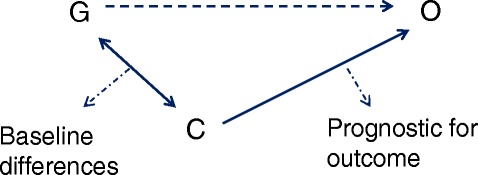
BACKGROUND: According to the CONSORT statement, significance testing of baseline differences in randomized controlled trials should not be performed. In fact, this practice has been discouraged by numerous authors throughout the last forty years. During that time span, reporting of baseline differences has substantially decreased in the leading general medical journals. Our own experience in the field of nutrition behavior research however, is that co-authors, reviewers and even editors are still very persistent in their demand for these tests. The aim of this paper is therefore to negate this demand by providing clear evidence as to why testing for baseline differences between intervention groups statistically is superfluous and why such results should not be published. DISCUSSION: Testing for baseline differences is often propagated because of the belief that it shows whether randomization was successful and it identifies real or important differences between treatment arms that should be accounted for in the statistical analyses. Especially the latter argument is flawed, because it ignores the fact that the prognostic strength of a variable is also important when the interest is in adjustment for confounding. In addition, including prognostic variables as covariates can increase the precision of the effect estimate. This means that choosing covariates based on significance tests for baseline differences might lead to omissions of important covariates and, less importantly, to inclusion of irrelevant covariates in the analysis. We used data from four supermarket trials on the effects of pricing strategies on fruit and vegetables purchases, to show that results from fully adjusted analyses sometimes do appreciably differ from results from analyses adjusted for significant baseline differences only. We propose to adjust for known or anticipated important prognostic variables. These could or should be pre-specified in trial protocols. Subsequently, authors should report results from the fully adjusted as well as crude analyses, especially for dichotomous and time to event data. Based on our arguments, which were illustrated by our findings, we propose that journals in and outside the field of nutrition behavior actively adopt the CONSORT 2010 statement on this topic by not publishing significance tests for baseline differences anymore.
Overview
The claims and statistics of this paper haven’t been checked yet.
Free: it reads the open-access text and checks the first 5 claims that cite a source we can check. Create a free account to check every claim.
Integrity signals
Registry
Cites
Statistics
Figures
Verification
Claims the paper makes
The claims and statistics of this paper haven’t been checked yet.
Free: it reads the open-access text and checks the first 5 claims that cite a source we can check. Create a free account to check every claim.
Claims other papers make about this one
Each is checked against this paper’s own text: does it say what the citing paper says it does?
The cited source doesn’t support the claim as written.
In the citing paper
“Following CONSORT recommendations, potential baseline differences in sociodemographic characteristics are considered irrelevant and therefore were not included as covariates in the analyses of study outcomes.70”
From Efficacy of Videoconference Group Acceptance and Commitment Therapy (ACT) and Behavioral Activation Therapy for Depression (BATD) for Chronic Low Back Pain (CLBP) Plus Comorbid Depressive Symptoms: A Randomized Controlled Trial (IMPACT Study) (2023) · cites this paper as [70]
Checked by a reasoning model — may be wrong.
Experimental — accuracy not yet measured
Self-check
Percentages, sums and reported differences re-computed from the paper’s own numbers.
The self-check needs the paper’s full text.
Citations
Cites
Tabachnick, B. G., & Fidell, L. S. (1983) · Cited by 80,058
(2007) · Cited by 10,092
Moher, D., Hopewell, S., Schulz, K. F., Montori, V., Gotzsche, P. C., Devereaux, P. J., Elbourne, D., Egger, M., & Altman, D. G. (2010) · BMJ · doi:10.1136/bmj.c869 · Cited by 8,883
Moher, D., Hopewell, S., Schulz, K. F., Montori, V., Gøtzsche, P. C., Devereaux, P. J., Elbourne, D., Egger, M., & Altman, D. G. (2010) · Journal of Clinical Epidemiology · doi:10.1016/j.jclinepi.2010.03.004 · Cited by 1,858
Subgroup analysis and other (mis)uses of baseline data in clinical trials
Assmann, S. F., Pocock, S. J., Enos, L. E., & Kasten, L. E. (2000) · The Lancet · doi:10.1016/s0140-6736(00)02039-0 · Cited by 1,167
Pocock, S. J., Assmann, S. E., Enos, L. E., & Kasten, L. E. (2002) · Statistics in Medicine · doi:10.1002/sim.1296 · Cited by 1,077
Confounding and Collapsibility in Causal Inference
Greenland, S., Pearl, J., & Robins, J. M. (1999) · Statistical Science · doi:10.1214/ss/1009211805 · Cited by 933 · cited 3×
“This means that crude and adjusted effect estimates have different interpretations when analyzing OR’s or HR’s [6,17].”
BackgroundRandomisation and baseline comparisons in clinical trials
Altman, D. G., & Doré, C. J. (1990) · The Lancet · doi:10.1016/0140-6736(90)90014-v · Cited by 508
Moher, D., Hopewell, S., Schulz, K. F., Montori, V., Gøtzsche, P. C., Devereaux, P. J., Elbourne, D., Egger, M., & Altman, D. G. (2012) · Journal of Clinical Epidemiology · doi:10.1016/j.jclinepi.2011.10.006 · Cited by 414
Comparability of Randomised Groups
Altman, D. G. (1985) · The Statistician · doi:10.2307/2987510 · Cited by 328
Cited by
Different ways to estimate treatment effects in randomised controlled trials
J, T., L, B., T, H., J, R., M, W., & M, H. (2018) · Contemporary Clinical Trials Communications · doi:10.1016/j.conctc.2018.03.008 · Cited by 532
CONSORT 2025 explanation and elaboration: updated guideline for reporting randomised trials
Hopewell, S., Chan, A.-W., Collins, G. S., Hróbjartsson, A., Moher, D., Schulz, K. F., Tunn, R., Aggarwal, R., Berkwits, M., Berlin, J. A., et al. (2025) · BMJ · doi:10.1136/bmj-2024-081124 · Cited by 205
Dimairo, M., Pallmann, P., Wason, J., Todd, S., Jaki, T., Julious, S. A., Mander, A. P., Weir, C. J., Koenig, F., Walton, M. K., et al. (2020) · BMJ · doi:10.1136/bmj.m115 · Cited by 149
Fulkerson, J. A., Friend, S., Horning, M., Flattum, C., Draxten, M., Neumark-Sztainer, D., Gurvich, O., Garwick, A., Story, M., & Kubik, M. Y. (2018) · Journal of the Academy of Nutrition and Dietetics · doi:10.1016/j.jand.2017.04.006 · Cited by 143
The effects of once- versus twice-weekly sessions on psychotherapy outcomes in depressed patients
Bruijniks, S. J. E., Lemmens, L. H. J. M., Hollon, S. D., Peeters, F. P. M. L., Cuijpers, P., Arntz, A., Dingemanse, P., Willems, L., van Oppen, P., Twisk, J. W. R., et al. (2020) · The British Journal of Psychiatry · doi:10.1192/bjp.2019.265 · Cited by 124
Self-citation
Metadata
- Authors
- de Boer, M. R., Waterlander, W. E., Kuijper, L. D., Steenhuis, I. H., & Twisk, J. W.
- Affiliations
- University of Auckland (NZ)
- Amsterdam Public Health (NL)
- Amsterdam UMC Location Vrije Universiteit Amsterdam (NL)
- Venue
- International Journal of Behavioral Nutrition and Physical Activity
- Published
- 2015-01-24
- Volume
- 12
- Issue
- 1
- Pages
- 4-4
- ISSN
- 1479-5868 (ISSN-L)
- PMC
- PMC4310023
- OpenAlex
- W2015026786
- Cited by
- 370
- References
- 21
- Citations by year
- 2026: 41 · 2025: 41 · 2024: 34 · 2023: 47 · 2022: 46 · 2021: 28 · 2020: 44 · 2019: 29 · 2018: 27 · 2017: 20 · 2016: 11 · 2015: 2
- FWCI
- 17.80
- Type
- journal article
- Language
- en
- Open access
- gold
- doi.org
- Locations
- International Journal of Behavioral Nutrition and Physical Activity (publishedVersion, cc-by)
- PubMed Central (publishedVersion, cc-by)
- PubMed (publishedVersion)
- Amsterdam UMC (VU Amsterdam) - Institutional Repository (publishedVersion)
- VU Research Portal (submittedVersion, other-oa)
- Data Archiving and Networked Services (DANS) (submittedVersion, other-oa)
- Data Archiving and Networked Services (DANS) (submittedVersion)
- Topics
- Physical Sciences › Mathematics › Statistics and Probability › Statistical Methods in Clinical Trials
- Social Sciences › Decision Sciences › Statistics, Probability and Uncertainty › Meta-analysis and systematic reviews
- Physical Sciences › Mathematics › Statistics and Probability › Advanced Causal Inference Techniques
- Keywords
- baseline differences, randomized controlled trials, CONSORT statement, covariate selection, confounding adjustment, prognostic factors, pricing strategy, reporting practices
- MeSH terms
- Humans, Male, Publishing, Research Design, Randomized Controlled Trials as Topic
About these checks
Registry, retraction, Cites and statistics results are computed, not judged, with one exception: a printed reference that no index lists is read once by a model before it counts as a citation error. Claims are extracted by a model and kept only when their quote appears verbatim in the text; each cited source is then checked, with a model’s help, for whether it says what the claim relies on. Those verdicts can be wrong — read the claim’s quote and the cited source before relying on one.
Statistics and arithmetic are recomputed, not judged.
Confidence bands are shown only for fields calibrated on our annotated test set. None is calibrated yet, so no band is shown.
What counts as a claim ›How we measure confidence ›How we check this ›
Are you an author, or do you see a problem with this page? Request a review
How to cite
Cite CoChat for the checks on this page, and the paper for its own findings.
- This page
- CoChat. (2026). Citation check: Testing for baseline differences in randomized controlled trials: an unhealthy research behavior that is hard to eradicate. https://app.cochat.ai/papers/10.1186/s12966-015-0162-z
- The paper
- de Boer, M. R., Waterlander, W. E., Kuijper, L. D., Steenhuis, I. H., & Twisk, J. W. (2015). Testing for baseline differences in randomized controlled trials: an unhealthy research behavior that is hard to eradicate. International Journal of Behavioral Nutrition and Physical Activity. https://doi.org/10.1186/s12966-015-0162-z
Data sources
Bibliographic data: Semantic Scholar, OpenAlex, Crossref.
Contains information from the Semantic Scholar Academic Graph Datasets, made available under the ODC Attribution License (ODC-BY 1.0).
Semantic Scholar’s data is described in: Kinney, R., et al. (2023). The Semantic Scholar Open Data Platform. arXiv:2301.10140.
