

Testing for baseline differences in randomized controlled trials: an unhealthy research behavior that is hard to eradicate
Open accessThe DOI matches its Crossref record; 22 of the 22 references it cites were found in a registry or an index.
Abstract
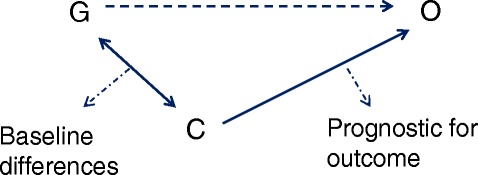
BACKGROUND: According to the CONSORT statement, significance testing of baseline differences in randomized controlled trials should not be performed. In fact, this practice has been discouraged by numerous authors throughout the last forty years. During that time span, reporting of baseline differences has substantially decreased in the leading general medical journals. Our own experience in the field of nutrition behavior research however, is that co-authors, reviewers and even editors are still very persistent in their demand for these tests. The aim of this paper is therefore to negate this demand by providing clear evidence as to why testing for baseline differences between intervention groups statistically is superfluous and why such results should not be published. DISCUSSION: Testing for baseline differences is often propagated because of the belief that it shows whether randomization was successful and it identifies real or important differences between treatment arms that should be accounted for in the statistical analyses. Especially the latter argument is flawed, because it ignores the fact that the prognostic strength of a variable is also important when the interest is in adjustment for confounding. In addition, including prognostic variables as covariates can increase the precision of the effect estimate. This means that choosing covariates based on significance tests for baseline differences might lead to omissions of important covariates and, less importantly, to inclusion of irrelevant covariates in the analysis. We used data from four supermarket trials on the effects of pricing strategies on fruit and vegetables purchases, to show that results from fully adjusted analyses sometimes do appreciably differ from results from analyses adjusted for significant baseline differences only. We propose to adjust for known or anticipated important prognostic variables. These could or should be pre-specified in trial protocols. Subsequently, authors should report results from the fully adjusted as well as crude analyses, especially for dichotomous and time to event data. Based on our arguments, which were illustrated by our findings, we propose that journals in and outside the field of nutrition behavior actively adopt the CONSORT 2010 statement on this topic by not publishing significance tests for baseline differences anymore.
Overview
The claims and statistics of this paper haven’t been checked yet.
Free: it reads the open-access text and checks the first 5 claims that cite a source we can check. Create a free account to check every claim.
Integrity signals
Registry
Cites
Statistics
Figures
Verification
Claims the paper makes
The claims and statistics of this paper haven’t been checked yet.
Free: it reads the open-access text and checks the first 5 claims that cite a source we can check. Create a free account to check every claim.
Claims other papers make about this one
Each is checked against this paper’s own text: does it say what the citing paper says it does?
The cited source doesn’t support the claim as written.
In the citing paper
“Following CONSORT recommendations, potential baseline differences in sociodemographic characteristics are considered irrelevant and therefore were not included as covariates in the analyses of study outcomes.70”
From Efficacy of Videoconference Group Acceptance and Commitment Therapy (ACT) and Behavioral Activation Therapy for Depression (BATD) for Chronic Low Back Pain (CLBP) Plus Comorbid Depressive Symptoms: A Randomized Controlled Trial (IMPACT Study) (2023) · cites this paper as [70]
Checked by a reasoning model — may be wrong.
Experimental — accuracy not yet measured
Self-check
Percentages, sums and reported differences re-computed from the paper’s own numbers.
The self-check needs the paper’s full text.
Citations
Cites
Tabachnick, B. G., & Fidell, L. S. (1983) · Cited by 80,054
(2007) · Cited by 10,092
Moher, D., Hopewell, S., Schulz, K. F., Montori, V., Gotzsche, P. C., Devereaux, P. J., Elbourne, D., Egger, M., & Altman, D. G. (2010) · BMJ · doi:10.1136/bmj.c869 · Cited by 8,883
Moher, D., Hopewell, S., Schulz, K. F., Montori, V., Gøtzsche, P. C., Devereaux, P. J., Elbourne, D., Egger, M., & Altman, D. G. (2010) · Journal of Clinical Epidemiology · doi:10.1016/j.jclinepi.2010.03.004 · Cited by 1,858
Subgroup analysis and other (mis)uses of baseline data in clinical trials
Assmann, S. F., Pocock, S. J., Enos, L. E., & Kasten, L. E. (2000) · The Lancet · doi:10.1016/s0140-6736(00)02039-0 · Cited by 1,167
Pocock, S. J., Assmann, S. E., Enos, L. E., & Kasten, L. E. (2002) · Statistics in Medicine · doi:10.1002/sim.1296 · Cited by 1,077
Confounding and Collapsibility in Causal Inference
Greenland, S., Pearl, J., & Robins, J. M. (1999) · Statistical Science · doi:10.1214/ss/1009211805 · Cited by 933 · cited 3×
“This means that crude and adjusted effect estimates have different interpretations when analyzing OR’s or HR’s [6,17].”
BackgroundRandomisation and baseline comparisons in clinical trials
Altman, D. G., & Doré, C. J. (1990) · The Lancet · doi:10.1016/0140-6736(90)90014-v · Cited by 508
Moher, D., Hopewell, S., Schulz, K. F., Montori, V., Gøtzsche, P. C., Devereaux, P. J., Elbourne, D., Egger, M., & Altman, D. G. (2012) · Journal of Clinical Epidemiology · doi:10.1016/j.jclinepi.2011.10.006 · Cited by 414
Comparability of Randomised Groups
Altman, D. G. (1985) · The Statistician · doi:10.2307/2987510 · Cited by 328
Cited by
Items 201–300 of 369
Dealing with Possible Baseline Inequalities Between Experimental Groups – The Case of Motor Learning
Ziv, G., Lidor, R., & Netz, Y. (2019) · Journal of Motor Behavior · doi:10.1080/00222895.2019.1649996 · Cited by 5
MacBride‐Stewart, S., Marwick, C., Ryan, M., & Guthrie, B. (2022) · British Journal of General Practice · doi:10.3399/bjgp.2021.0695 · Cited by 4
Helping on Social Media: Self-Persuasion and Question–Behavior Effects
van Steen, T., Müller, B. C. N., Li, S., Loman, J. G. B., & Buijzen, M. (2022) · Journal of Media Psychology Theories Methods and Applications · doi:10.1027/1864-1105/a000346 · Cited by 6
Purtle, J., Nelson, K. L., Lê‐Scherban, F., & Gollust, S. E. (2023) · Implementation Research and Practice · doi:10.1177/26334895231172807 · Cited by 6
Is early caffeine therapy safe and effective for ventilated preterm infants?
Jain, V. G., Saroha, V., Patel, R. M., & Jobe, A. H. (2019) · Journal of Perinatology · doi:10.1038/s41372-019-0336-7 · Cited by 6
Riera-Navarro, C., Schwartz, C., Ducrot, P., Noirot, L., Delamaire, C., Salès-Wuillemin, É., Semama, D. S., Lioret, S., & Nicklaus, S. (2024) · BMC Public Health · doi:10.1186/s12889-024-20057-z · Cited by 9
Keuppens, L., Marten, F., Baeyens, D., Boyer, B. E., Roose, A., Becker, S. P., Danckaerts, M., & der Oord, S. V. (2025) · European Child & Adolescent Psychiatry · doi:10.1007/s00787-025-02755-0 · Cited by 5
Thomas, J. G., Goldstein, C. M., Bond, D. S., Lillis, J., Hekler, E. B., Goldstein, S. P., Butryn, M. L., Cao, Z., & Wing, R. R. (2025) · Obesity · doi:10.1002/oby.70039 · Cited by 6
Verhagen, A., Stubbs, P., Mehta, P., Kennedy, D. S., Nasser, A., de Oliveira, C. Q., Pate, J. W., Skinner, I. W., & McCambridge, A. (2022) · BMJ Open · doi:10.1136/bmjopen-2021-054875 · Cited by 5
Brooker, P. G., Gomersall, S. R., King, N. A., McMahon, N. F., & LEVERITT, M. D. (2022) · Journal of Behavioral Medicine · doi:10.1007/s10865-022-00370-x · Cited by 5
Sullivan, A. J., Anderson, J., Beatty, M., Choi, J., Jaccard, J. J., Hawkins, K. A., Pearlson, G. D., & Stevens, M. C. G. (2024) · Behaviour Research and Therapy · doi:10.1016/j.brat.2024.104615 · Cited by 7
Saeed, A., Niazi, I. K., Alzahrani, A., Trager, R. J., Haavik, H., & Amjad, I. (2024) · Mental health and physical activity · doi:10.1016/j.mhpa.2024.100637 · Cited by 7
Kanaan, M. F., Nait-Yahia, S., & Doucet, É. (2025) · European Journal of Clinical Nutrition · doi:10.1038/s41430-025-01585-2 · Cited by 6
Statistical reporting in the BJH : some dos and don'ts
Hills, R. K. (2016) · British Journal of Haematology · doi:10.1111/bjh.14426 · Cited by 5
Testing for baseline differences in clinical trials
Chen, H., Lu, Y., & Slye, N. (2020) · International Journal of Clinical Trials · doi:10.18203/2349-3259.ijct20201720 · Cited by 4
Gill, L.-N., Tabry, V., Taylor, V. A., Lussier, M., Martinu, K., Bherer, L., Roy, M., & Rainville, P. (2021) · Frontiers in Pain Research · doi:10.3389/fpain.2021.673027 · Cited by 6
James, J., Selfe, J., & Goodwin, P. C. (2021) · Physiotherapy Practice and Research · doi:10.3233/ppr-210529 · Cited by 9
Rinne, J., Leino‐Kilpi, H., Saaranen, T. K., Tarvainen, M. P., Pasanen, M., Koskinen, S., & Salminen, L. (2023) · Nurse Educator · doi:10.1097/nne.0000000000001482 · Cited by 7
Effects of a Soft Baby Carrier on Fathers’ Behavior and Hormones: A Randomized Controlled Trial
Verhees, M. W. F. T., Lotz, A. M., de Moor, M. H. M., van IJzendoorn, M. H., Fidder, A. A. E. J., Buisman, R. S. M., & Bakermans‐Kranenburg, M. J. (2023) · Journal of Child and Family Studies · doi:10.1007/s10826-023-02678-x · Cited by 5
Peiris, D. L. I. H. K., Duan, Y., Vandelanotte, C., Liang, W., & Baker, J. S. (2024) · Frontiers in Public Health · doi:10.3389/fpubh.2024.1360210 · Cited by 8
Eight reasons not to test for baseline group equivalence in a parallel groups pretest-posttest study
Lindstromberg, S. (2025) · Research Methods in Applied Linguistics · doi:10.1016/j.rmal.2025.100254 · Cited by 12
Azar, M. M., Shirazinia, M., Nematy, M., Rahimi, V. B., Bateni, M., Gheibi, F. T. P., Rajabzadeh, F., Goshayeshi, L., Honari, S., Mottahedi, M., et al. (2025) · Inflammopharmacology · doi:10.1007/s10787-025-01919-3 · Cited by 5
Dubord, M. G., Gagné, M., Dubreuil, P., & Forest, J. (2025) · European Journal of Work and Organizational Psychology · doi:10.1080/1359432x.2025.2566811 · Cited by 4
Velzeboer, R., Wei, S., & Lai, W. W. K. (2025) · SLEEP · doi:10.1093/sleep/zsaf396 · Cited by 5
Wade, L., Beauchamp, M. R., Nathan, N., Smith, J. J., Leahy, A. A., Bao, R., Kennedy, S. G., Boyer, J., Diallo, T. M. O., Beacroft, S., et al. (2026) · Contemporary Educational Psychology · doi:10.1016/j.cedpsych.2026.102444 · Cited by 5
Houben, M., Rief, W., Gärtner, T., & Κube, T. (2024) · Cognitive Therapy and Research · doi:10.1007/s10608-024-10550-5 · Cited by 4
Lee, H., Wang, G., Curley, L. E., Kydd, R. R., Kirk, I. J., & Russell, B. R. (2016) · Psychopharmacology · doi:10.1007/s00213-016-4335-5 · Cited by 4
Pelz, P., Genauck, A., Lorenz, R. C., Wüstenberg, T., Wackerhagen, C., Charlet, K., Gleich, T., Geisel, O., Heinz, A., Müller, C. A., et al. (2022) · Psychopharmacology · doi:10.1007/s00213-022-06291-6 · Cited by 4
The impact of lower caseloads in public employment services on the unemployed
Böheim, R., Eppel, R., & Mahringer, H. (2023) · Journal for Labour Market Research · doi:10.1186/s12651-023-00357-4 · Cited by 9
Adamis, A. M., Jessup, S. C., & Olatunji, B. O. (2024) · Cognitive Therapy and Research · doi:10.1007/s10608-024-10521-w · Cited by 5
Avoid significance tests for background variables in randomised controlled trials
Lydersen, S. (2020) · Tidsskrift for Den norske legeforening · doi:10.4045/tidsskr.19.0684 · Cited by 3
Emami‐Sahebi, A., Elyasi, F., Charati, J. Y., Zamaniyan, M., Rahmani, Z., & Shahhosseini, Z. (2020) · Advances in Integrative Medicine · doi:10.1016/j.aimed.2020.05.006 · Cited by 4
Clancy, A., O’Connor, M., Murphy, E., Connaughton, L., & O’Reilly, G. (2024) · School Psychology International · doi:10.1177/01430343231216971 · Cited by 2
“The process of randomization in a randomized trial indicates that testing is occurring between two samples from the same population, and any resulting p -value can be considered to be random (De Boer et al., 2015).”
Endersby, S., Billy, C., & Jaeger, X. D. (2024) · Frontiers in Veterinary Science · doi:10.3389/fvets.2024.1468634 · Cited by 2
Al-Mahrouqi, T., Al-Ghailani, F. A., Maqbali, M. A., Saidi, M. A., & Prashanth, G. P. (2025) · Scientific Reports · doi:10.1038/s41598-025-00165-5 · Cited by 3
Kleszewski, E., Wehrt, W., Otto, K., Matick, E., & Kottwitz, M. U. (2025) · Journal of Business and Psychology · doi:10.1007/s10869-025-10033-8 · Cited by 3
Freeman, S. E., Reznik, J., Jain, M., Sokol, E. E., Manning, D., Rohde, H., Loverich, T. M., & Lawler, J. M. (2025) · Clinical Child and Family Psychology Review · doi:10.1007/s10567-025-00535-5 · Cited by 4
Bonnesen, C. T., Rasmussen, M., Kierkegaard, L., Carlsson, R. R., Jensen, M. P., Ubbesen, T. R., Madsen, K. R., Thygesen, L. C., Krølner, R. F., Brautsch, L. A. S., et al. (2025) · BMC Public Health · doi:10.1186/s12889-025-24352-1 · Cited by 3
Saeed, A., Amjad, I., Niazi, I. K., Alzahrani, A. I. A., Shafiq, M., & Haavik, H. (2025) · JMIR Serious Games · doi:10.2196/74092 · Cited by 3
Nikolin, S., Massaneda‐Tuneu, C., Brettell, L., & Loo, C. K. A. (2026) · Translational Psychiatry · doi:10.1038/s41398-026-03806-z · Cited by 4
Laulan, P., & Rimmele, U. (2026) · International Journal of Psychophysiology · doi:10.1016/j.ijpsycho.2026.113418 · Cited by 3
Vagedes, J., Kuderer, S., Vagedes, K., Szőke, H., Kohl, M., Joos, S., Beißner, F., & Wolf, U. (2022) · Evidence-based Complementary and Alternative Medicine · doi:10.1155/2022/5034572 · Cited by 5
Alduwaisan, A., Hirst, L., Cobourne, M. T., Pandis, N., & Seehra, J. (2023) · American Journal of Orthodontics and Dentofacial Orthopedics · doi:10.1016/j.ajodo.2022.12.005 · Cited by 2
Sandnes, K., Berg‐Nielsen, T. S., Lydersen, S., & Kårstad, S. B. (2023) · Frontiers in Psychiatry · doi:10.3389/fpsyt.2023.1232816 · Cited by 2
Beigmohammadi, M. T., Amoozadeh, L., Naghibi, N., Eslami, B., Ghazi, S. F., Javaherian, M., Khajeh-Azad, M.-A., Tabatabaei, B., Abdollahi, A., & Nazar, E. (2023) · Science Progress · doi:10.1177/00368504231203130 · Cited by 2
Kleeren, L., Mailleux, L., McLean, B., Elliott, C. M., Dequeker, G., Campenhout, A. V., de Xivry, J. O., Verheyden, G., Ortibus, E., Klingels, K., et al. (2024) · Trials · doi:10.1186/s13063-024-07967-4 · Cited by 6
Witte, A. M., Runze, J., van IJzendoorn, M. H., & Bakermans‐Kranenburg, M. J. (2024) · Journal of Applied Developmental Psychology · doi:10.1016/j.appdev.2024.101651 · Cited by 4
Horning, M. L., Gorman, K. S., Wagner, S., Fulkerson, J. A., Wolfson, J. A., Laska, M. N., & Harnack, L. (2025) · BMJ Open · doi:10.1136/bmjopen-2025-099414 · Cited by 3
Daily psychosocial determinants of smoking cessation: Effects of a buddy app intervention
Berli, C., Schwaninger, P., Scholz, U., & Lüscher, J. (2025) · British Journal of Health Psychology · doi:10.1111/bjhp.12796 · Cited by 2
Roadblocks to driving cognitive gains through transcranial electrical stimulation
Mehta, U. M. (2018) · Schizophrenia Research · doi:10.1016/j.schres.2018.04.014 · Cited by 2
Leme, A. C. B., Philippi, S. T., & Fisberg, R. M. (2020) · Revista de Nutrição · doi:10.1590/1678-9865202033e190184 · Cited by 3
Yasein, N. A., Shroukh, W. A., Barghouti, F., Hassanin, O. M., Yousef, H., Alsmairat, M., Hiary, G. A., & AlFayoumi, F. (2021) · The Journal of Infection in Developing Countries · doi:10.3855/jidc.15213 · Cited by 4
Statistical Mistakes Commonly Made When Writing Medical Articles
Jeon, S., Yang, J., & Lee, H. S. (2023) · Journal of the Korean Society of Radiology · doi:10.3348/jksr.2022.0108 · Cited by 2
Gigliotti, M. F., Bartolo, A., & Coello, Y. (2023) · Scientific Reports · doi:10.1038/s41598-023-37189-8 · Cited by 3
A Randomization-Based Theory for Preliminary Testing of Covariate Balance in Controlled Trials
Zhao, A., & Ding, P. (2023) · Statistics in Biopharmaceutical Research · doi:10.1080/19466315.2023.2267774 · Cited by 3
Self-distancing to reduce anger in high school students
Yoshikawa, K., Kehle, T. J., Bray, M. A., del Campo, M. A., deLeyer-Tiarks, J. M., Winter, E. L., & Starling, N. R. (2021) · International Journal of School & Educational Psychology · doi:10.1080/21683603.2020.1804020 · Cited by 3
Automated detection of over- and under-dispersion in baseline tables in randomised controlled trialsPreprint
Barnett, A. G. (2022) · Research Square · doi:10.21203/rs.3.rs-1496802/v1 · Cited by 2
de Brito, K. C., da Silva, M. F. D. C. R., Cardoso, C. W., Silva, L. K., Khouri, R., de Albuquerque, A. E., Vianna, N., de Almeida, M. D. C. C., & Moreira, E. D. (2025) · PLoS ONE · doi:10.1371/journal.pone.0319646 · Cited by 3
Greville-Harris, M., Wezyk, A. B., Thomas, K., Richer, S., Bolderston, H., Purchase, N., McDougall, S. J. P., & Turner, K. (2025) · BMC Surgery · doi:10.1186/s12893-025-03059-5 · Cited by 2
Mollet, J. M., Greidanus, M. A., Boot, C. R. L., Vis, C., van Dongen, J. M., de Boer, A. G. E. M., & Tamminga, S. J. (2025) · Trials · doi:10.1186/s13063-025-09092-2 · Cited by 2
Wu, E., Meyer, M., Almirol, E. A., Zhao, X., Payne, G., Bhavan, K., Zaller, N. D., Montgomery, J., Hotton, A., Brewer, R., et al. (2025) · Journal of Public Health · doi:10.1093/pubmed/fdaf134 · Cited by 1
Pearlman, J., Amollo, M., Tanton, C., Apota, J. B., Laruni, Y., Nakuti, J., Opondo, C., Allen, E., Bonell, C. P., Nevatia, T., et al. (2025) · BMC Public Health · doi:10.1186/s12889-025-23913-8 · Cited by 2
Krølner, R. F., Brautsch, L. A. S., Vilhelmsen, M., Hoeeg, D., Pedersen, N. H., Thomsen, L. T., Nielsen, G., Toft, U., Larsen, M. N., Damsgaard, C. T., et al. (2026) · Trials · doi:10.1186/s13063-026-09635-1 · Cited by 2
Meer, R., Xu, J., Newsom, S. P., Pasch, A., Vervloet, M. G., de Jong, P. A., Elders, P. J. M., & Beulens, J. W. J. (2026) · American Journal of Clinical Nutrition · doi:10.1016/j.ajcnut.2026.101299 · Cited by 1
Exercise Effect on Cerebral Artery Hemodynamic and Morphology in Stroke Patients: A Randomized Trial
Gunda, S. T., Chen, Z., Yip, J. H.-Y., Ng, V., Han, X., Qu, J., Chen, X., Ying, M. T.-C., & Pang, M. Y. C. (2026) · CNS Neuroscience & Therapeutics · doi:10.1002/cns.70942 · Cited by 1
Olchanski, N., Skiro, C. E., Sonon, K. E., Kaus, S. J., Holmstrand, E. C., Ciemins, E. L., Cuddeback, J. K., Colangelo, F. R., & Kent, D. M. (2026) · Learning Health Systems · doi:10.1002/lrh2.70087 · Cited by 1
Edwards, D. B. (2018) · Springer eBooks · doi:10.1007/978-3-319-75142-9_2 · Cited by 1
Randomised Controlled Trials in Diabetes Research: A Pathway to Interpreting Published Results
Battelino, T., & Mauricio, D. (2021) · Diabetes Therapy · doi:10.1007/s13300-021-01143-6 · Cited by 1
Wong, L. Y. S., & Govendir, M. (2022) · Veterinary Evidence · doi:10.18849/ve.v7i1.527 · Cited by 1
Li, L. (2022) · Springer eBooks · doi:10.1007/978-3-319-52636-2_121 · Cited by 1
Holland, H. S., & Tickle, A. (2023) · Mental Health Review Journal · doi:10.1108/mhrj-07-2022-0043 · Cited by 3
Guydish, J. R., McCuistian, C. L., Hosakote, S., Le, T. L., Masson, C. L., CAMPBELL, B. K., & Delucchi, K. (2023) · Substance Abuse Treatment Prevention and Policy · doi:10.1186/s13011-023-00539-w · Cited by 2
Influence of mobile phone calls on women's perception of antenatal care services in Kisii, Kenya
Malachi, Z., Kivuti-Bitok, L., Karani, A. K., & Cheptum, J. J. (2024) · African Journal of Midwifery and Women s Health · doi:10.12968/ajmw.2023.0024 · Cited by 1
O’Dwyer, C., Davis, B. Á., O’Connor, M., Keating, A., Sharry, J., Looney, K., McDarby, F., Doran, A., Murphy, E., & Carr, A. (2025) · Archives of Public Health · doi:10.1186/s13690-025-01555-x · Cited by 2
Statistical Issues in Randomized Controlled Trials: an editorial
Wadgave, U., Khairnar, M., & Wadgave, Y. (2018) · Electronic physician · doi:10.19082/7293 · Cited by 2
Li, L. (2019) · Springer eBooks · doi:10.1007/978-3-319-52677-5_121-1 · Cited by 1
Twisk, J. W. R. (2021) · Springer eBooks · doi:10.1007/978-3-030-81865-4_11 · Cited by 1
Self-citationMourits, B. M. P., Vos, L. A., Bruijn, S. M., van Dieën, J. H., & Prins, M. R. (2022) · Frontiers in Sports and Active Living · doi:10.3389/fspor.2022.1010054 · Cited by 2
Das, S. K., Silver, R. E., Vail, T. A., Chin, M. K., Blanchard, C. M., Dickinson, S., Chen, X., Ceglia, L., Saltzman, E. J., Allison, D. B., et al. (2023) · Obesity · doi:10.1002/oby.23636 · Cited by 2
Jago, R., & Wood, L. (2016) · International Journal of Behavioral Nutrition and Physical Activity · doi:10.1186/s12966-016-0404-8 · Cited by 2
The Influence of Analogy Instructions on Motor Skills: Processing, Preference and Performance
van Duijn, T. (2018) · Research Commons (University of Waikato) · Cited by 3
Ganesan, S. L., & Jayashree, M. (2019) · American Journal of Respiratory and Critical Care Medicine · doi:10.1164/rccm.201903-0616le · Cited by 1
Consuming Your Feelings: The Mechanisms Underpinning Emotional Eating
Pink, A. E. (2019) · Cronfa (Swansea University) · doi:10.23889/suthesis.50331 · Cited by 3
Increasing the Reach, Usage, and Impact of Scholarly Content
Kudlow, P. A. (2020) · TSpace (University of Toronto) · Cited by 1
Stiller, C. K., Golembiewski, S. K. E., Stuetz, W., Golembiewski, M., Rincon, D. G., Mondal, S., Biesalski, H. K., & Scherbaum, V. (2020) · doi:10.21203/rs.3.rs-26436/v1 · Cited by 2
Kumar, N. (2022) · European Spine Journal · doi:10.1007/s00586-022-07266-z · Cited by 1
Saengphen, T., Koontongkaew, S., & Utispan, K. (2022) · Research Square · doi:10.21203/rs.3.rs-1822805/v1 · Cited by 1
Walburg, F. S. (2023) · doi:10.5463/thesis.85 · Cited by 1
Statistical Gems and Cautions From the Statistical Advisory Board of Clinical Oral Implants Research
Pannuti, C. M., da Silva, H. D. P., Su, N., Li, K. Y., & Heitz‐Mayfield, L. J. A. (2025) · Clinical Oral Implants Research · doi:10.1111/clr.70033 · Cited by 4
Comparative analysis of cost and efficacy for mono and dual therapy of antiepileptics among children
Easwaran, V., Madineni, M., Sake, K., Alakhali, K., Alavudeen, S. S., & Khan, N. (2017) · Drug Development and Therapeutics · doi:10.4103/ddt.ddt_16_16
Cerebellar Transcranial Direct Current Stimulation to Influence Motor Learning
Kumari, N. (2020) · Tuwhera (Auckland University of Technology)
Interpreting and Appraising Noninferiority Trials: A Guide for Urologists and Clinicians
Couture, F., Violette, P. D., Dahm, P., & Richard, P. O. (2021) · European Urology Focus · doi:10.1016/j.euf.2021.03.014
Improving the Quality of EOS Clinical Research:A Step-by-Step Guide
Matsumoto, H., & Snyder, B. D. (2021) · Journal of the Pediatric Orthopaedic Society of North America · doi:10.55275/jposna-2021-384
Hajjar, L. A., de Almeida, J. P., & Galas, F. R. B. G. (2017) · Anesthesiology · doi:10.1097/aln.0000000000001958
Gadjradj, P. S., & Sommer, F. J. (2022) · Pain Medicine · doi:10.1093/pm/pnac063
Gadjradj, P. S., & Sommer, F. J. (2022) · European Spine Journal · doi:10.1007/s00586-022-07265-0
de Waal, E. E. C., Frank, M., Scheeren, T., Kaufmann, T., Boer, D. D. K., Cox, B., van Kuijk, S. M. J., Montenij, L. M., & Bühre, W. (2022) · Journal of Clinical Anesthesia · doi:10.1016/j.jclinane.2022.110922
Shihab, M., & Shoots‐Reinhard, B. L. (2022) · PLoS ONE · doi:10.1371/journal.pone.0279160 · Cited by 1
Xu, H., Hu, Q., Tao, Y., Cai, S., Wang, Y., Hu, K., Xue, T., Bao, J., & Lü, J. (2023) · Research Square · doi:10.21203/rs.3.rs-2642421/v1
Metadata
- Authors
- de Boer, M. R., Waterlander, W. E., Kuijper, L. D., Steenhuis, I. H., & Twisk, J. W.
- Affiliations
- University of Auckland (NZ)
- Amsterdam Public Health (NL)
- Amsterdam UMC Location Vrije Universiteit Amsterdam (NL)
- Venue
- International Journal of Behavioral Nutrition and Physical Activity
- Published
- 2015-01-24
- Volume
- 12
- Issue
- 1
- Pages
- 4-4
- ISSN
- 1479-5868 (ISSN-L)
- PMC
- PMC4310023
- OpenAlex
- W2015026786
- Semantic Scholar
- 0a235b3000a9ccb4467600341918be46757bfd27
- Cited by
- 370
- References
- 21
- Citations by year
- 2026: 41 · 2025: 41 · 2024: 34 · 2023: 47 · 2022: 46 · 2021: 28 · 2020: 44 · 2019: 29 · 2018: 27 · 2017: 20 · 2016: 11 · 2015: 2
- FWCI
- 17.80
- Type
- journal article
- Language
- en
- Open access
- gold
- doi.org
- Locations
- International Journal of Behavioral Nutrition and Physical Activity (publishedVersion, cc-by)
- PubMed Central (publishedVersion, cc-by)
- PubMed (publishedVersion)
- Amsterdam UMC (VU Amsterdam) - Institutional Repository (publishedVersion)
- VU Research Portal (submittedVersion, other-oa)
- Data Archiving and Networked Services (DANS) (submittedVersion, other-oa)
- Data Archiving and Networked Services (DANS) (submittedVersion)
- Topics
- Physical Sciences › Mathematics › Statistics and Probability › Statistical Methods in Clinical Trials
- Social Sciences › Decision Sciences › Statistics, Probability and Uncertainty › Meta-analysis and systematic reviews
- Physical Sciences › Mathematics › Statistics and Probability › Advanced Causal Inference Techniques
- Keywords
- baseline differences, randomized controlled trials, CONSORT statement, covariate selection, confounding adjustment, prognostic factors, pricing strategy, reporting practices
- MeSH terms
- Humans, Male, Publishing, Research Design, Randomized Controlled Trials as Topic
About these checks
Registry, retraction, Cites and statistics results are computed, not judged, with one exception: a printed reference that no index lists is read once by a model before it counts as a citation error. Claims are extracted by a model and kept only when their quote appears verbatim in the text; each cited source is then checked, with a model’s help, for whether it says what the claim relies on. Those verdicts can be wrong — read the claim’s quote and the cited source before relying on one.
Statistics and arithmetic are recomputed, not judged.
Confidence bands are shown only for fields calibrated on our annotated test set. None is calibrated yet, so no band is shown.
What counts as a claim ›How we measure confidence ›How we check this ›
Are you an author, or do you see a problem with this page? Request a review
Data sources
Bibliographic data: Semantic Scholar, OpenAlex, Crossref.
Contains information from the Semantic Scholar Academic Graph Datasets, made available under the ODC Attribution License (ODC-BY 1.0).
Semantic Scholar’s data is described in: Kinney, R., et al. (2023). The Semantic Scholar Open Data Platform. arXiv:2301.10140.
