

Potential anti-tumor effects of regulatory T cells in the tumor microenvironment: a review
Open accessThe DOI matches its Crossref record; 190 of the 191 references it cites were found in a registry or an index; 67 of the 105 sources its claims cite were checked for support.
Abstract
Regulatory T cells (Tregs) expressing the transcription factor FoxP3 are essential for maintaining immunological balance and are a significant component of the immunosuppressive tumor microenvironment (TME). Single-cell RNA sequencing (ScRNA-seq) technology has shown that Tregs exhibit significant plasticity and functional diversity in various tumors within the TME. This results in Tregs playing a dual role in the TME, which is not always centered around supporting tumor progression as typically believed. Abundant data confirms the anti-tumor activities of Tregs and their correlation with enhanced patient prognosis in specific types of malignancies. In this review, we summarize the potential anti-tumor actions of Tregs, including suppressing tumor-promoting inflammatory responses and boosting anti-tumor immunity. In addition, this study outlines the spatial and temporal variations in Tregs function to emphasize that their predictive significance in malignancies may change. It is essential to comprehend the functional diversity and potential anti-tumor effects of Tregs to improve tumor therapy strategies.
Overview
CoChat Summary
## TL;DR
This review argues that regulatory T cells (Tregs) in the tumor microenvironment are not uniformly pro-tumor; instead, some Treg subpopulations can support anti-tumor immunity or suppress tumor-promoting inflammation. It also emphasizes that Tregs’ prognostic and therapeutic significance varies by tumor type, location, and stage.
## Key findings
- The review summarizes evidence that Tregs can have anti-tumor effects through two main routes: boosting anti-tumor immunity and suppressing tumor-promoting inflammation.
- Single-cell RNA sequencing is highlighted as showing substantial Treg plasticity and heterogeneity; the paper describes stable, unstable, fragile, Th1-like, Th17-like, and other Treg subgroups.
- In several cancers, higher Treg infiltration is linked with better outcomes: the paper cites colorectal cancer (CRC), head and neck squamous cell carcinoma (HNSCC), and gastric cancer (GC), and reports a 52% greater chance of survival in HER2+/ER− breast cancer patients with higher CD8+ T cells and increased FoxP3+ Treg infiltration.
- Prognostic effects vary by context: in pancreatic cancer, one cited study found higher Tregs associated with shorter OS/DFS, while another found significant Treg infiltration extended survival; in gastric cancer, early-stage (I–II) high FoxP3+ Treg infiltration was associated with better 5-year survival, whereas stage III–IV was associated with worse prognosis.
## Methods
- Narrative review of published studies on Tregs in the tumor microenvironment, with emphasis on single-cell RNA sequencing, spatial heterogeneity, and functional subgrouping of Tregs.
- The paper synthesizes findings across multiple tumor types and cites both clinical studies and preclinical models (including mouse models) to support proposed mechanisms.
- Main analysis is qualitative and integrative: it groups reported Treg effects into anti-tumor immunity and suppression of tumor-promoting inflammation, then discusses prognostic heterogeneity by tumor type, tumor region, and tumor stage.
## Limitations
- The paper states that many of the studies analyzed focused solely on clinical data, and it calls for more work on the biological basis of Tregs in cancer.
- It states that few studies have examined the correlation between tumor stage and Tregs function, so the stage-specific relationship remains insufficiently understood.
- Evident from the text: this is a review, so its conclusions depend on heterogeneous prior studies with differing markers, tumor types, and definitions of Tregs; the paper itself notes that current markers are often insufficient to distinguish functional subgroups accurately.
Model-written summary. Check it against the paper before relying on it.
Integrity signals
Registry
Cites
Statistics
Figures
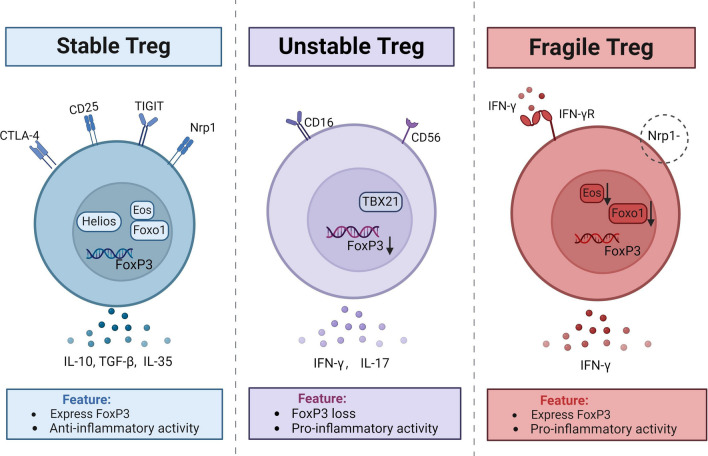
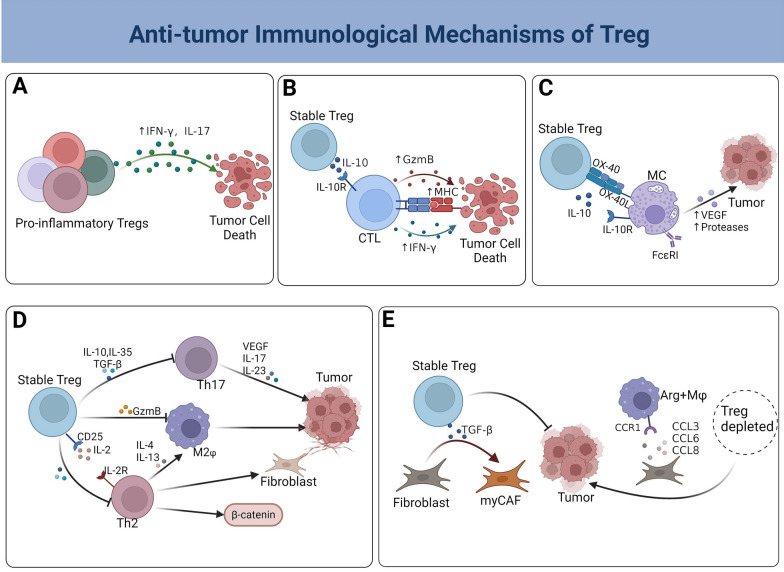
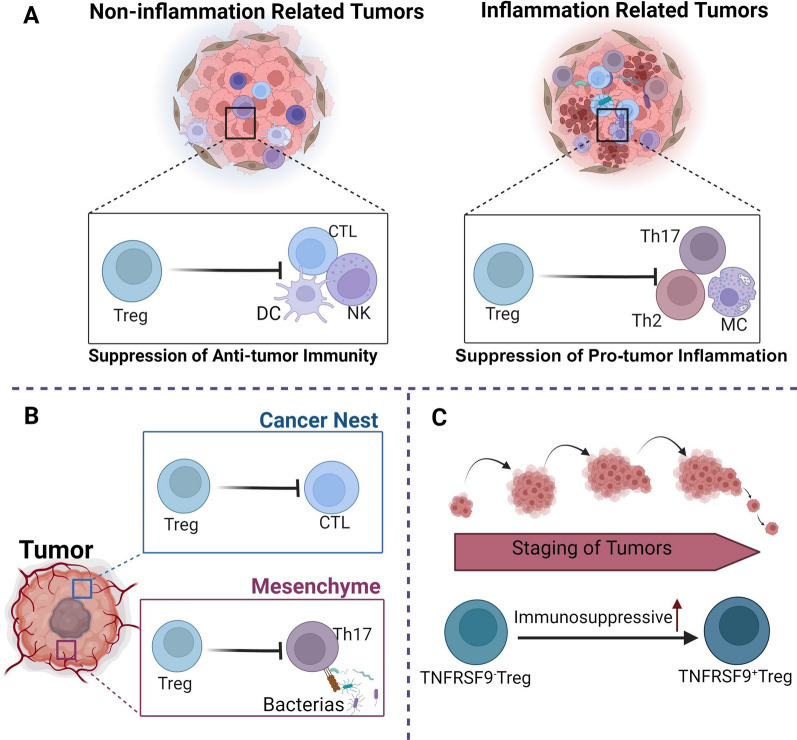
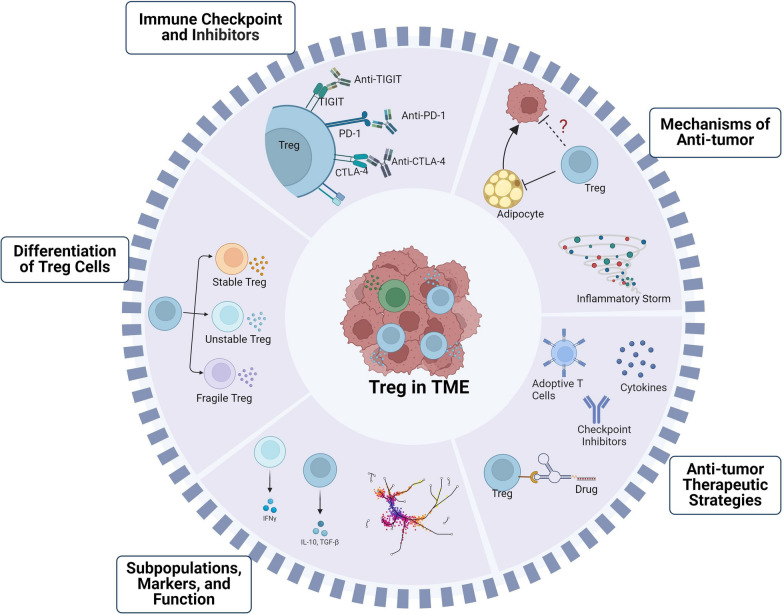
Verification
Claims the paper makes
49 Valid · 7 Not valid · 29 Not checked · 24 Own results and interpretations
At least one cited source doesn’t support this claim or points to a different paper, and none confirmed it — see the verdicts below.
In the paper
“TAMs, which are a significant element of TME, frequently shows a positive correlation with the depth of tumor infiltration and clinical staging [118].”
§ Potential anti-tumor effects of regulatory T cells in the tumor microenvironment: a review > Potential anti-tumor effects > Regulatory role of stable Tregs in tumor-promoting inflammation
What the sources say
- Disputedcites [118] Xue T Yan K Cai Y Sun J Chen Z Chen X Wu W Prognostic significance of CD163+ tumor-associated macrophages in colorectal cancer World J Surg Oncol 2021 19 186 10.1186/s12957-021-02299-y 34167561 PMC8229299 sourceExperimental — accuracy not yet measured
In Results, under “Association between CD163+ TAM infiltration and clinical characteristics” (page unavailable), the authors report no significant difference in TNM stage between the high- and low-CD163+ TAM groups; Table 1 gives P = 0.599. The cited paper therefore does not support the claimed positive correlation with clinical staging. It does not report an analysis of tumor-infiltration depth. (LLM, conf=0.87)
Checked by a reasoning model — may be wrong.
plainstates an association- Asserted: passes — The authors put it forward as true.
- Checkable: passes — It can be checked against evidence.
- Load-bearing: unclear — It is unclear whether the paper’s conclusions depend on it.
- Based: passes — The paper gives a reason why it holds.
- Disputed
The cited sources support only part of this claim — read each source’s verdict below.
In the paper
“Increased presence of Tregs is linked to decreased patient survival in several types of malignancies [5–7].”
§ Potential anti-tumor effects of regulatory T cells in the tumor microenvironment: a review > Background
What the sources say
- Partly supportedcites [5] Sayour EJ McLendon P McLendon R De Leon G Reynolds R Kresak J Sampson JH Mitchell DA Increased proportion of FoxP3+ regulatory T cells in tumor infiltrating lymphocytes is associated with tumor recurrence and reduced survival in patients with glioblastoma Cancer Immunol Immunother 2015 64 419 427 10.1007/s00262-014-1651-7 25555571 PMC4774199 sourceExperimental — accuracy not yet measured
The Discussion (page unavailable) links lower effector-T-cell-to-FoxP3+ ratios with reduced survival in primary glioblastoma, but says FoxP3 expression alone was not associated with outcomes. The Introduction discusses other malignancies, yet does not establish that increased Treg presence predicts decreased survival across several cancer types. (LLM, conf=0.88)
- Not checked — no full text of the sourcecites [6] Peng J Yang S Ng CSH Chen GG The role of FOXP3 in non-small cell lung cancer and its therapeutic potentials Pharmacol Ther 2023 241 108333 10.1016/j.pharmthera.2022.108333 36528259 source
- Partly supportedcites [7] Kos K de Visser KE The multifaceted role of regulatory T cells in breast cancer Annu Rev Cancer Biol 2021 5 291 310 10.1146/annurev-cancerbio-042920-104912 34632244 PMC7611782 sourceExperimental — accuracy not yet measured
The “Prognostic Value of Tregs in Breast Cancer” section reports that high FOXP3-positive T-cell infiltration correlates with poor survival in HR-positive breast cancer. It does not establish decreased survival across several malignancy types; it also reports a favorable prognosis association in HR-negative and triple-negative breast cancer. Page numbers were not available in our copy. (LLM, conf=0.87)
plainstates an association- Asserted: passes — The authors put it forward as true.
- Checkable: passes — It can be checked against evidence.
- Load-bearing: unclear — It is unclear whether the paper’s conclusions depend on it.
- Based: passes — The paper gives a reason why it holds.
- Partly supported
The cited sources support only part of this claim — read each source’s verdict below.
In the paper
“In addition, IL-2 interacts to IL-2R on Tregs’ cell surface, maintaining FoxP3 expression via activating downstream STAT5 [38].”
§ Potential anti-tumor effects of regulatory T cells in the tumor microenvironment: a review > Potential anti-tumor effects > Tregs promote anti-tumor immune responses
What the sources say
- Partly supportedcites [38] Permanyer M Bošnjak B Glage S Friedrichsen M Floess S Huehn J Patzer GE Odak I Eckert N Zargari R Ospina-Quintero L Georgiev H Förster R Efficient IL-2R signaling differentially affects the stability, function, and composition of the regulatory T-cell pool Cell Mol Immunol 2021 18 398 414 10.1038/s41423-020-00599-z 33408345 PMC8027001 sourceExperimental — accuracy not yet measured
The Introduction says IL-2 binds IL-2R, and the Results report IL-2-induced STAT5 phosphorylation in Tregs. The Discussion finds that efficient IL-2R signaling is required for sustained Foxp3 expression under inflammatory conditions. It does not establish that STAT5 activation is the mechanism maintaining Foxp3 expression, and it notes that Foxp3 expression persisted, though at a lower level, under steady-state conditions with impaired signaling. No page numbers are available in our copy. (LLM, conf=0.85)
plainstates a cause- Asserted: passes — The authors put it forward as true.
- Checkable: passes — It can be checked against evidence.
- Load-bearing: unclear — It is unclear whether the paper’s conclusions depend on it.
- Based: passes — The paper gives a reason why it holds.
- Partly supported
Every source the paper cites for this claim was checked and supports it.
In the paper
“Several elements, including Nrp1, Foxo1, and Eos, are essential in maintaining the stability of Tregs [45].”
§ Potential anti-tumor effects of regulatory T cells in the tumor microenvironment: a review > Potential anti-tumor effects > Tregs promote anti-tumor immune responses
What the sources say
- Supportedcites [45] Overacre AE Vignali DAA Treg stability: to be or not to be Curr Opin Immunol 2016 39 39 43 10.1016/j.coi.2015.12.009 26774863 PMC4801724 source
The Conclusions section says that Foxo1/3a, Eos, and the Nrp1:Sema4a axis contribute to and are required for maintaining a stable Treg phenotype. The section on how Treg stability is maintained discusses each factor's role. (LLM, conf=0.92)
plainstates a cause- Asserted: passes — The authors put it forward as true.
- Checkable: passes — It can be checked against evidence.
- Load-bearing: passes — The paper’s conclusions depend on it.
- Based: passes — The paper gives a reason why it holds.
- Supported
Every source the paper cites for this claim was checked and supports it.
In the paper
“However, the type I IFN/IFNAR1 pathway can induce the transformation of Tregs to fragile Tregs [42].”
§ Potential anti-tumor effects of regulatory T cells in the tumor microenvironment: a review > Potential anti-tumor effects > Tregs promote anti-tumor immune responses
What the sources say
- Supportedcites [42] Zhang H Tomar VS Li J Basavaraja R Yan F Gui J McBrearty N Costich TL Beiting DP Blanco MA Conejo-Garcia JR Saggu G Berger A Nefedova Y Gabrilovich DI Fuchs SY Protection of regulatory T cells from fragility and inactivation in the tumor microenvironment Cancer Immunol Res 2022 10 1490 1505 10.1158/2326-6066.CIR-22-0295 36255418 PMC9722544 source
In Results, under “Reactivating IFNAR1 in Treg cells induces their fragility and suppresses tumor growth” (page not provided), the paper reports that activating the type I interferon pathway can induce Treg fragility in an IFNAR1-dependent manner. The Discussion also describes IFN1-induced changes that contribute to the fragility phenotype. (LLM, conf=0.93)
plainstates a cause- Asserted: passes — The authors put it forward as true.
- Checkable: passes — It can be checked against evidence.
- Load-bearing: passes — The paper’s conclusions depend on it.
- Based: passes — The paper gives a reason why it holds.
- Supported
55 more claims · 23 with their cited sources checked
Create a free account to see all 109 claims and to verify the 17 references still open.
- It may state two separate claims as one. 47
- Probably not a substantial claim. 2
Citations
Cites
Hallmarks of Cancer: The Next Generation
Hanahan, D., & Weinberg, R. A. (2011) · Cell · doi:10.1016/j.cell.2011.02.013 · Cited by 66,590 · cited 1×
“Additionally, they induce tumor angiogenesis and chemoresistance, promoting the proliferation and invasion of tumor cells [81].”
BackgroundType, Density, and Location of Immune Cells Within Human Colorectal Tumors Predict Clinical Outcome
Galon, J., Costes, A., Sanchez-Cabo, F., Kirilovsky, A., Mlecnik, B., Lagorce-Pagès, C., Tosolini, M., Camus, M., Berger, A., Wind, P., et al. (2006) · Science · doi:10.1126/science.1129139 · Cited by 6,516 · cited 1×
“In CRC, Tregs situated in the tumor mesenchyme result in a better prognosis, whereas Tregs residing in the tumor nests and infiltrating margins are linked to unfavorable clinical outcomes [142, 143].”
BackgroundElements of cancer immunity and the cancer–immune set point
Chen, D. S., & Mellman, I. (2017) · Nature · doi:10.1038/nature21349 · Cited by 5,352 · cited 1×
“Tumors can be classified into “immune desert”, “immune exclusion”, and “inflammatory” categories based on the number of infiltrated CD8 + T lymphocytes [138, 139].”
BackgroundMatrix Metalloproteinases: Regulators of the Tumor Microenvironment
Kessenbrock, K., Plaks, V., & Werb, Z. (2010) · Cell · doi:10.1016/j.cell.2010.03.015 · Cited by 5,151 · cited 1×
“MMPs release and activate VEGF ligands, which are crucial for tumor metastasis [108].”
BackgroundThe biology and function of fibroblasts in cancer
Kalluri, R. (2016) · Nature Reviews Cancer · doi:10.1038/nrc.2016.73 · Cited by 4,366 · cited 2×
“In addition, the depletion of Tregs results in the upregulation of the expression of immunosuppressive genes, including arginase1 and CD274 (PD-L1) [132].”
BackgroundThe evolving tumor microenvironment: From cancer initiation to metastatic outgrowth
de Visser, K. E., & Joyce, J. A. (2023) · Cancer Cell · doi:10.1016/j.ccell.2023.02.016 · Cited by 4,059
Inflammation and tumor progression: signaling pathways and targeted intervention
Zhao, H., Wu, L., Yan, G., Chen, Y., Zhou, M., Wu, Y., & Li, Y. (2021) · Signal Transduction and Targeted Therapy · doi:10.1038/s41392-021-00658-5 · Cited by 2,792 · cited 1×
“Inflammatory cells and cytokines in the TME can enhance tumor angiogenesis, facilitating tumor growth and spread [17].”
BackgroundSelf-citationAlternative Activation of Macrophages: An Immunologic Functional Perspective
Martinez, F. O., Helming, L., & Gordon, S. (2009) · Annual Review of Immunology · doi:10.1146/annurev.immunol.021908.132532 · Cited by 2,745 · cited 1×
“Th2 cells alternatively activates M2-TAMs through secretion of IL-4 and IL-13 cytokines [96].”
BackgroundAnderson, N. M., & Simon, M. C. (2020) · Current Biology · doi:10.1016/j.cub.2020.06.081 · Cited by 2,718
CD127 expression inversely correlates with FoxP3 and suppressive function of human CD4+ T reg cells
Liu, W., Putnam, A. L., Xu-yu, Z., Szot, G. L., Lee, M. R., Zhu, S., Gottlieb, P. A., Kapranov, P., Gingeras, T. R., de St. Groth, B. F., et al. (2006) · The Journal of Experimental Medicine · doi:10.1084/jem.20060772 · Cited by 2,606
Cited by
Immune evasion in cancer: mechanisms and cutting-edge therapeutic approaches
Tufail, M., Jiang, C.-H., & Li, N. (2025) · Signal Transduction and Targeted Therapy · doi:10.1038/s41392-025-02280-1 · Cited by 363
Regulatory T cells in immune checkpoint blockade antitumor therapy
Zhang, A., Fan, T., Liu, Y., Yu, G., Li, C., & Jiang, Z. (2024) · Molecular Cancer · doi:10.1186/s12943-024-02156-y · Cited by 190
“In colorectal cancer, Tregs in the tumor mesenchyme contribute to a better prognosis compared to those in the tumor nests and swelling margins [200].”
BackgroundCD4+ T cells in antitumor immunity
Montauti, E. I., Oh, D. Y., & Fong, L. H. (2024) · Trends in cancer · doi:10.1016/j.trecan.2024.07.009 · Cited by 190
Thuya, W. L., Cao, Y., Ho, P. C., Wong, A. L., Wang, L., Zhou, J., Nicot, C., & Goh, B. C. (2025) · Cytokine & Growth Factor Reviews · doi:10.1016/j.cytogfr.2025.01.003 · Cited by 168
Lin, A., Xiong, M., Jiang, A., Huang, L., Wong, H. Z. H., Feng, S., Zhang, C., Yu, H., Chen, L., Chi, H., et al. (2025) · iMeta · doi:10.1002/imt2.70070 · Cited by 108
Self-citationBakrim, S., Fessikh, M. E., Elhrech, H., Omari, N. E., Amanullah, M. R., Ming, L. C., Moshawih, S., & Bouyahya, A. (2025) · Journal of Translational Medicine · doi:10.1186/s12967-025-06583-3 · Cited by 66
Cancer-nervous system crosstalk: from biological mechanism to therapeutic opportunities
Huang, S., Zhu, J., Yu, L., Huang, Y., & Hu, Y. H. (2025) · Molecular Cancer · doi:10.1186/s12943-025-02336-4 · Cited by 62
The metabolic dialogue between intratumoural microbes and cancer: implications for immunotherapy
Situ, Y., Zhang, P., Zhang, C., Jiang, A., Zhang, N., Zhu, L., Mou, W., Liu, Z., Wong, H. Z. H., Zhang, J., et al. (2025) · eBioMedicine · doi:10.1016/j.ebiom.2025.105708 · Cited by 45
“29 These cells participate in continuous and complex interactions with one another.”
Self-citationGao, Y., Tan, Y.-J., & Fang, J. (2025) · Nature Reviews Clinical Oncology · doi:10.1038/s41571-025-01026-w · Cited by 55
“In addition, T reg cells do not always function as suppressors; specific T reg cell subsets, including ‘fragile’, ‘unstable’ and ‘T H 1-like’ T reg cells, have effector functions and can kill cancer cells 143 .”
Lipids in the tumor microenvironment: immune modulation and metastasis
Pascual, G., & Benitah, S. A. (2024) · Frontiers in Oncology · doi:10.3389/fonc.2024.1435480 · Cited by 53
Microbiome and pancreatic cancer: time to think about chemotherapy
de Castilhos, J., Tillmanns, K., Blessing, J., Larano, A., Borisov, V., & Stein‐Thoeringer, C. K. (2024) · Gut Microbes · doi:10.1080/19490976.2024.2374596 · Cited by 42
“123 Clinically, the presence of Tregs in the TME is associated with poor prognosis and reduced effectiveness of chemotherapy.”
BackgroundNatural Killer Cell Immune Checkpoints and Their Therapeutic Targeting in Cancer Treatment
Lin, A., Ye, P., Li, Z., Jiang, A., Liu, Z., Cheng, Q., Zhang, J., & Luo, P. (2025) · Research · doi:10.34133/research.0723 · Cited by 75
Self-citationDecoding the mechanisms behind second primary cancers
Zeng, M., Lin, A., Jiang, A., Qiu, Z., Zhang, H., Chen, S., Xu, M., Liu, Z., Cheng, Q., Zhang, J., et al. (2025) · Journal of Translational Medicine · doi:10.1186/s12967-025-06151-9 · Cited by 24
Self-citationGiri, S., Lamichhane, G., Pandey, J., Khadayat, R., Sindhu, K. C., Devkota, H. P., & Khadka, D. (2025) · International Journal of Molecular Sciences · doi:10.3390/ijms26072923 · Cited by 26
Debnath, I., & Kundu, M. (2025) · Discover Oncology · doi:10.1007/s12672-025-03190-y · Cited by 23
Gemcitabine: immunomodulatory or immunosuppressive role in the tumor microenvironment
Nemati, M., Hsu, C., Nathiya, D., Kumar, M., Oghenemaro, E. F., Kariem, M., Kaur, P., Bhanot, D., Hjazi, A. M., & Saedi, T. A. (2025) · Frontiers in Immunology · doi:10.3389/fimmu.2025.1536428 · Cited by 20
Interferon-driven Metabolic Reprogramming and Tumor Microenvironment Remodeling
Chang, T.-H., & Ho, P. (2025) · Immune Network · doi:10.4110/in.2025.25.e8 · Cited by 22
Promising New Anti‐ TIGIT Agents: Stealthy Allies in Cancer Immunotherapy
Srikanth, G., Beda, D. P., Dwivedi, A. R., Kumar, D. N., Nanduri, S., & Patel, J. (2025) · Clinical and Translational Science · doi:10.1111/cts.70212 · Cited by 18
Lin, A., Xiong, M., Tang, B., Jiang, A., Shen, J., Liu, Z., Cheng, Q., Zhang, J., & Luo, P. (2025) · Hepatology International · doi:10.1007/s12072-025-10838-y · Cited by 21
“Furthermore, co-transplantation studies involving HSCs and tumor cells revealed that these interactions substantially accelerate HCC growth and progression [124, 126, 127].”
Self-citationDevelopment of NR0B2 as a therapeutic target for the re-education of tumor associated myeloid cells
Vidana Gamage, H. E., Albright, S. T., Smith, A. J., Farmer, R., Shahoei, S. H., Wang, Y., Fink, E. C., Jacquin, E., Weisser, E., Bautista, R. O., et al. (2024) · Cancer Letters · doi:10.1016/j.canlet.2024.217086 · Cited by 13
“[30,31].”
Palieri, R., Luca, M. D., Balestra, F., Panzetta, G., Lotesoriere, C., Rizzi, F. R., Ricci, A. D., Mastrogiacomo, R., Curri, M. L., Laghi, L., et al. (2025) · Oncology Reviews · doi:10.3389/or.2025.1702932 · Cited by 17
Ahmadi, N., Vidanapathirana, G. U., & Gopalan, V. (2025) · Genes · doi:10.3390/genes16101166 · Cited by 15
“Researchers found that ROR γ t and IL-23R were more active in mucosal CD4 + T cells, which is consistent with the fact that IL-17-rich tissues are associated with increased tumour burden [84] (Table 3).”
Song, P., Song, F., Shao, T., Wang, P., Li, R.-K., Chen, Z., Zhang, Z., & Xue, G. (2024) · Frontiers in Pharmacology · doi:10.3389/fphar.2024.1481850 · Cited by 22
“Fragile Tregs are functionally less suppressive in the TME, which is de fi ned as the retention of FoxP3 expression and the secretion of IFN-γ (Abigail and Vignali Dario, 2018).”
InfluentialMechanisms of tumor-associated macrophages promoting tumor immune escape
Li, S., Zhang, M., Gao, Y., Zhao, C., Liao, S., Zhao, X., Ning, Q., & Tang, S. (2025) · Carcinogenesis · doi:10.1093/carcin/bgaf023 · Cited by 11
Regulatory T cells in liver metastases: emerging and divergent roles in tumour progression
Wu, G., Yang, T., Gholami, S., DePeralta, D. K., Weiss, M. J., Deng, M., Wang, P., & Huang, H. (2025) · eGastroenterology · doi:10.1136/egastro-2025-100257 · Cited by 15
“24 They may have contradictory roles across the continuum of cancer development, progression and metastasis, that is, having an initially anti-inflammatory and protective role against inflammation-induced tumour development but eventually contributing to reduced antitumour immunity via their…”
Targeting Cancer: Microenvironment and Immunotherapy Innovations
Padzińska-Pruszyńska, I. B., Taciak, B., Kiraga, Ł., Smolarska, A., Górczak, M., Kucharzewska, P., Kubiak, M., Szeliga, J., Matejuk, A., & Król, M. (2024) · International Journal of Molecular Sciences · doi:10.3390/ijms252413569 · Cited by 12
Zhang, Y., Xu, Y., Zhong, W., Zhao, J., Liu, X., Gao, X., Chen, M., & Wang, M. (2025) · International Journal of Molecular Sciences · doi:10.3390/ijms26104511 · Cited by 13
“Tregs can suppress the generation of TAMs, thereby inhibiting the tumor-promoting effects mediated by TAMs [61].”
Tumor Microenvironment Onmyoji: Cytokines with Dual Protumor and Antitumor Roles
Wang, Y., Lin, A., Liu, Z., Cheng, Q., Zhang, J., & Luo, P. (2026) · 癌症:英文版 · doi:10.34133/cancomm.0008 · Cited by 15
“…immunosuppressive cells (such as MDSCs, Tregs, Bregs, and M2 TAMs, etc.) by secreting various inflammatory cytokines; these immunosuppressive cells, in turn, provide a rich proangiogenic and protumor microenvironment while preventing innate immunity and T cell antitumor immunity [ 117 , 153 ].”
Self-citationMohammed, M. M., Al-Khafaji, Z. A. I., & Al-Hilli, N. M. (2024) · Tzu Chi Medical Journal · doi:10.4103/tcmj.tcmj_134_24 · Cited by 11
Circadian rhythms as a modulator of gut microbiota-tumor microenvironment crosstalk
Xu, Q., Lin, A., Jiang, A., Chen, L., Zhu, L., Mou, W., Liu, Z., Zhang, J., Cheng, Q., Miao, K., et al. (2025) · Cellular and Molecular Life Sciences · doi:10.1007/s00018-025-05935-y · Cited by 12
Self-citationKhalil, R. G., Mohammed, D. A., Hamdalla, H. M., & Ahmed, O. M. (2024) · Cytokine · doi:10.1016/j.cyto.2024.156834 · Cited by 11
Covalent organic frameworks for cancer immunotherapy: mechanisms, applications, and prospects
Zou, Y., Chen, M., Chen, J., Wang, W., & Zheng, X. (2026) · Frontiers in Immunology · doi:10.3389/fimmu.2025.1719005 · Cited by 9
Self-citationTumor Immunotherapy and Microbiome: From Bench‐to‐Bedside Applications
Lin, A., Xiong, M., Jiang, A., Chen, L., Huang, L., Li, K., Wong, H. Z. H., Zhang, J., Liu, Z., Cheng, Q., et al. (2026) · MedComm · doi:10.1002/mco2.70454 · Cited by 11
“Furthermore, HBV can activate Kupffer cells in the liver to secrete IL-6 and tumor necrosis factor (TNF)- α , while simultaneously inducing the production of IL-18, IL-10, and IL-12, which collectively promote the malignant transformation of hepatocytes [56, 168, 169].”
Self-citationGuo, X., Zhang, H., Yao, L., & Ma, W. (2025) · Critical Reviews in Oncology/Hematology · doi:10.1016/j.critrevonc.2025.105076 · Cited by 10
Revisiting Tregs in cancer and beyond: immunological control and therapeutic potential
Zheng, L., Wu, D., Xie, H., & Hai, Z. (2025) · Frontiers in Immunology · doi:10.3389/fimmu.2025.1581093 · Cited by 21
Lü, Y., Feng, X., Wang, Z., Zou, M., Xu, Z., Liu, Q.-J., Chen, W., Ding, J., & Liu, H. (2025) · Precision Clinical Medicine · doi:10.1093/pcmedi/pbaf020 · Cited by 13
“Furthermore, Tregs diminish the clinical efficacy of PD-1/PD-L1 blockade therapies [ 99 ].”
Immunotherapy biomarkers in brain metastases: insights into tumor microenvironment dynamics
Li, M., Zhang, Y., Yu, D., Yu, Y., & Ma, W. (2025) · Frontiers in Immunology · doi:10.3389/fimmu.2025.1600261 · Cited by 18
Engineering and biofabrication of early cancer models
Helms, H. R., Davies, A. E., Schutt, C. E., Langer, E. M., Duhen, R., Sinawang, P. D., Akin, D., Demirci, U., Esener, S. C., Fitzgerald, R. C., et al. (2025) · Nature Reviews Bioengineering · doi:10.1038/s44222-025-00371-w · Cited by 9
“For example, high densities of regulatory T cells (T reg cells, which express the receptor cluster of differentiation (CD) 4, CD4 + ) and M2 macrophages often correlate with poor patient outcomes, such as fast disease progression, resistance to therapy or low survival, across many cancers 25 .”
Genetic and Epigenetic Association of FOXP3 with Papillary Thyroid Cancer Predisposition
Achilla, C., Chorti, A. G., Papavramidis, T. S., Angelis, L., & Chatzikyriakidou, A. (2024) · International Journal of Molecular Sciences · doi:10.3390/ijms25137161 · Cited by 7
Gu, X., Yu, T., Nie, W., Shi, H., Jin, K., Zhang, W., & Cai, J. (2025) · Advanced Composites and Hybrid Materials · doi:10.1007/s42114-025-01335-9 · Cited by 8
Comprehensive Single-Cell RNA Atlas of Human Laryngeal Normal, Preneoplastic, and Tumorigenic States
Fu, Z.-M., Bao, Y., Dai, L., Zhong, J., Chen, H.-C., Chen, Z., & Zhou, S. (2025) · Clinical Cancer Research · doi:10.1158/1078-0432.ccr-24-3679 · Cited by 13
“Although essential for maintaining immune homeostasis, their suppressive activity can facilitate immune evasion in malignancies (40–42).”
Kang, L., Huang, H.-J., Xu, C., Chen, H., Huang, D., & Jiang, Z. (2025) · Frontiers in Immunology · doi:10.3389/fimmu.2025.1630940 · Cited by 7
“Elevated levels of Tregs in the TME signify an unfavorable prognosis and can hinder T cell activation in responses to ICIs (117).”
Rehman, S. U., Usenova, A. A., Abdullah, M., Osmonaliev, K., Habib, A., Shahzad, A., & Abdillaeva, N. (2025) · Brazilian Journal of Biology · doi:10.1590/1519-6984.292947 · Cited by 8
Salemi, R., Sergi, V., Basile, M. S., Bravaccini, S., Frittitta, L., Graziano, A. C. E., Filippello, A., Malaguarnera, R., & Francesco, E. M. D. (2025) · Journal of Translational Medicine · doi:10.1186/s12967-025-06970-w · Cited by 8
“Different from the adipose tissue, the obese TME is primarily infiltrated by suppressive cell populations, including M2 macrophages, T-regulatory cells, and myeloid-derived suppressor cells (MDSCs), whose accumulation is driven by immunosuppressive factors derived from cancer cells [155, 156].”
Organoids: technology refining, current applications and future directions
Cheng, X., Fang, Z., Sun, J., Liu, L., Yang, Y., Wang, J., Shuai, J., Zhou, X., Lin, P., Yang, G., et al. (2026) · Molecular Biomedicine · doi:10.1186/s43556-026-00422-7 · Cited by 9
“…immunosuppressive cells will cause the tumor immunosuppressive microenvironment to continue to be maintained, and the proportion of immune cells that perform killing functions will gradually decrease until they no longer exist, which is more conducive to tumor development and angiogenesis [147].”
Self-citationRegulatory T Cell Heterogeneity in the Steady State and Tumor
Kim, D., Lee, N., & Ha, S. (2026) · Immune Network · doi:10.4110/in.2026.26.e10 · Cited by 7
“Although Tregs can mitigate early tumor-promoting inflammation (69,70), their primary role in established tumor is enforcing an immunosuppressive milieu.”
Wang, X., Shi, W., Xiao, Y., Wang, H., Si, H., Kang, Y., Si, J., Liu, Y., Li, S., & Jin, J. (2025) · Lung Cancer · doi:10.1016/j.lungcan.2025.108817 · Cited by 6
Majchrzak, A., Lewandowski, F., Hrynkiewicz, R., Poniewierska-Baran, A., Bębnowska, D., & Niedźwiedzka‐Rystwej, P. (2025) · Frontiers in Immunology · doi:10.3389/fimmu.2025.1628014 · Cited by 6
Advances in immunotoxin engineering: precision therapeutic strategies in modern oncology
Oghalaie, A., Hosseini, M. E., Hosseininejad-Chafi, M., Eftekhari, Z., Behdani, M., & Kazemi‐Lomedasht, F. (2024) · Medical Oncology · doi:10.1007/s12032-024-02478-3 · Cited by 4
“However, previous attempts using antibodies and immunoconjugates targeting CD25 have been ineffective in controlling tumor growth, likely due to the unintended killing of cytotoxic CD8 T cells expressing CD25, which are necessary for anti-tumor activity [76, 77].”
Maru, S. Y., Wetzel, M., Mitchell, J. T., Groß, N., Andaloori, L., Howe, K., Kartalia, E., Mo, G., Leatherman, J. M., Ho, W. J., et al. (2025) · bioRxiv (Cold Spring Harbor Laboratory) · doi:10.1101/2025.03.27.645833 · Cited by 5
“This eliminates existing heterogeneity of Tregs within the TME, which could represent peripheral (pTreg) or thymic (tTreg) Tregs that could differ between the sensitive and resistant TME (60).”
Dzhalilova, D. S., Silina, M. V., Kosyreva, A. M., Fokichev, N., & Makarova, O. V. (2025) · PeerJ · doi:10.7717/peerj.19024 · Cited by 7
“However, for many years, clinical and experimental studies did not confirm this relationship in colorectal cancer, as well as in head and neck tumors ( Salama et al., 2009 ; Ladoire, Martin & Ghiringhelli, 2011 ; De Leeuw et al., 2012 ; Li et al., 2024 ).”
Su, X., Tan, Q., Zheng, L., & Zhixiang, D. I. N. G. (2026) · Frontiers in Immunology · doi:10.3389/fimmu.2026.1793865 · Cited by 4
“The reciprocal plasticity between Tregs and Th17 cells is not only a hallmark of autoimmune diseases but also a signi fi cant factor in tumor immunity, where Tregs often adopt a more stable and suppressive phenotype to inhibit anti-tumor responses (73).”
Zhuang, S., Deng, X., Fu, F., & Zhang, Z. (2025) · Discover Oncology · doi:10.1007/s12672-025-04040-7 · Cited by 3
“In addition, recent reviews highlight the functional plasticity of γδ T cells and regulatory T cells in shaping the tumor immune landscape and influencing responses to immune checkpoint blockade, underscoring the need to consider these subsets in therapeutic design [41, 42].”
Lactate Metabolism: The String-Puller for the Development of Pancreatic Cancer
Yang, L., Guo, D. S., Wu, K., Li, Y., Xi, Y., Qin, W., Chen, X., Zhou, C., & Tang, J. (2025) · Biology · doi:10.3390/biology14091213 · Cited by 11
“Regulatory T cells (Tregs) alleviate effector T cell activity, thereby reducing the immune system’ s attack on tumor cells [144].”
Self-citationLi, X., Xue, H., Liu, Q., Ren, L., & Yu, S. (2026) · Journal of Translational Medicine · doi:10.1186/s12967-026-07697-y · Cited by 6
Khamaru, S., Tung, K. S., & Chattopadhyay, S. (2025) · Immunology · doi:10.1111/imm.70072 · Cited by 6
“Conversely, upon IL-12 stimulation, FOXP3 + Tregs upregulate the transcription factor T-bet, differentiating into Th1-like Tregs (T-bet + IFN-γ + FOXP3 + ), which lose their suppressive function and begin secreting the pro-inflammatory cytokine IFN-γ, thereby promoting Treg fragility [23].”
Loss of B3GAT1/HNK-1 disrupts glioma-CD8+ T cell immune synapse formation for immune escape
Duan, J., Lin, Y., He, Z., Schachner, M., & Lin, S. L. (2025) · International Immunopharmacology · doi:10.1016/j.intimp.2025.115877 · Cited by 2
Lu, F., Bai, X., Lv, Z., & Zhang, W. (2025) · Biochimica et Biophysica Acta (BBA) - Reviews on Cancer · doi:10.1016/j.bbcan.2025.189487 · Cited by 4
Progress and Future Perspectives of Treg Cell Therapy
Fang, K., Zong, J., & Chang, X. (2025) · Frontiers in Bioscience-Landmark · doi:10.31083/fbl41250 · Cited by 3
“Some studies have even reported the antitumor activity of Tregs [10,117,118].”
Liu, M., Guo, J., Liu, W., Yang, Z., & Yu, F. (2025) · Cancer Science · doi:10.1111/cas.70072 · Cited by 4
“Tregs and TAMs-mediated immune suppression are the major mechanisms responsible for immune evasion in tumors [33, 34].”
Li, S., Lu, X., & Zhang, L. (2026) · Frontiers in Immunology · doi:10.3389/fimmu.2025.1752404 · Cited by 5
Cheng, J., Zhang, D., Zhu, L., Xu, H., Zhao, H., Zhu, P., & Li, Y. (2025) · Annals of Surgical Oncology · doi:10.1245/s10434-025-18541-w · Cited by 2
“60 Tregs exert suppressive effects on anti-tumor immune responses and facilitate immune tolerance within the tumor microenvironment.”
Self-citationZhu, M., Xiong, J., Zhang, R., Yang, X., Sun, W., Yang, Z., Chai, Y., Tao, Y., Zhao, Y., Fan, B., et al. (2026) · Cells · doi:10.3390/cells15020126 · Cited by 5
“Additionally, IL-10 and TGF-β secreted by Tregs promote the differentiation of M0 macrophages into the M2 subtype, facilitating angiogenesis and establishing an immunosuppressive microenvironment [30].”
Lin, Z., Wang, Q., Zheng, Z., Zhang, B., Zhou, S., Zheng, D., Chen, Z., Zheng, S., Zhu, S., Zhang, X., et al. (2024) · Frontiers in Pharmacology · doi:10.3389/fphar.2024.1377370 · Cited by 3
“And numerous experiments have shown that Treg cells not only inhibit anti-tumor immune responses, but also promote tumor microenvironmental vascular regeneration (Chaudary and Hill, 2007; Kim et al., 2020; Li et al., 2024).”
BackgroundCAR T cells targeting CCR4 selectively deplete human Tregs ex vivo and in vivo
Tilsed, C. M., Fong, K. P., Shi, X., Akimova, T., Wang, L., Noguera-Ortega, E., Krouse, R., Bermudez, A. F., Singhal, S. K., Young, R. M., et al. (2026) · Blood Advances · doi:10.1182/bloodadvances.2025017573 · Cited by 3
Zhang, N., Su, W., Chen, T., Zhang, Q., Cao, B., Wang, Y., & Chen, Y. (2026) · Journal of Neuroinflammation · doi:10.1186/s12974-025-03677-z · Cited by 5
“Tregs can maintain their immunosuppressive phenotype and function only if the lineage-defining transcription factor Fork-head box protein P3 (FOXP3) is continuously expressed [16].”
Cui, J., Han, J., Dai, Y., Li, S., Wang, X., Ge, T., He, G., Zhou, J., Yang, L., Tian, Y., et al. (2026) · Immunology · doi:10.1111/imm.70140 · Cited by 1
“…between intratumoral Treg frequency and patient prognosis varies across studies, with some reporting an adverse impact while others find no significant association or even a favourable trend, likely reflecting differences in Treg sub-set composition, tumour stage, and treatment context [87–89].”
Huang, W., Chaudhary, A., Sun, Z., Reuben, C. S., Balaji, S., Catey, A. R., Luo, S., Cai, W., Hsu, J. C., & Xu, J. (2026) · Journal of Nanobiotechnology · doi:10.1186/s12951-026-04338-w · Cited by 4
“These suppressive immune populations secrete inhibitory cytokines such as interleukin-10 (IL-10) and transforming growth factor-β (TGF-β), which directly suppress cytotoxic lymphocyte activity while further impairing antigen presentation and dendritic cell maturation [32].”
Wang, F., Zhao, Q., Liu, W., Zhang, D., Dai, X., Zhou, W., Zeng, X., Zhang, Y., Cheng, L., Shen, G., et al. (2025) · Biochemical and Biophysical Research Communications · doi:10.1016/j.bbrc.2025.151347 · Cited by 1
Shi, L., Mei, Y., Jiang, P., Chen, R., Wang, Y., & Li, D. (2026) · Discover Oncology · doi:10.1007/s12672-026-04803-w · Cited by 1
“Tregs are known to promote immune evasion by suppressing anti-tumor immune responses, and their increased presence in the low-immune group might explain the poorer prognosis observed in this subgroup [20, 30].”
Liu, Z., Zheng, Y., Yuan, M., Zhang, G., & Yang, G. (2024) · Cytokine · doi:10.1016/j.cyto.2024.156680 · Cited by 1
Self-citationEditorial: Inflammatory Treg reprogramming in the tumor immune microenvironment
Deng, X., Su, Y., Fu, H., Gao, Y., & Liu, P. F. (2024) · Frontiers in Immunology · doi:10.3389/fimmu.2024.1411923 · Cited by 1
Digestive System Toxicities of Immune Checkpoint Inhibitors: Mechanisms and Clinical Implications
Lin, A., Huang, Q., Zhang, J., & Luo, P. (2026) · BIO Integration · doi:10.15212/bioi-2025-0169 · Cited by 1
Self-citationBenešová, I., Stammberger, A., Balko, J., Pablik, J., Ozaniak, A., Rupp, L., Lischke, R., Weitz, J., Bartůňková, J., Wehner, R., et al. (2026) · Experimental and Molecular Pathology · doi:10.1016/j.yexmp.2026.105057
Trailin, A. V., Ali, E., Pavlov, S., Ye, W., Červenková, L., Vyčítal, O., Ambrożkiewicz, F., Jiřík, M., Daum, O., Liška, V., et al. (2026) · Cancer Medicine · doi:10.1002/cam4.71989
“Anti-tumor effects of Foxp3+ cells imply polarization of Tregs into their proinflammatory states, such as fragile Tregs, unstable Tregs, and Th1-like Treg, which produce IFN-γ and IL-17, and can contribute to the destruction of tumor cells [25].”
InfluentialMardham, S., & Dakshinamurthy, S. (2025) · Elsevier eBooks · doi:10.1016/b978-0-443-24742-2.00005-8
Chang, S., Zha, Y., Chen, S., Xiao, Y., Zhou, Y., Tian, Y., Liu, Z., Zhang, X., Zhang, H., Li, W., et al. (2026) · Journal of Agricultural and Food Chemistry · doi:10.1021/acs.jafc.6c06885
Self-citationAnu, D., Rennis, K. D., Soumya, V. V., Jisna, B., Hussan, K. P. S., Chandrasekharan, L., & Babu, T. D. (2025) · Journal of advanced health research & clinical medicine. · doi:10.4103/jhcr.jhcr_2_25
Latif, R., & Nawaz, T. (2026) · Critical Reviews in Oncology/Hematology · doi:10.1016/j.critrevonc.2026.105529
Breast-specific regulatory T cell mediators
Modanwal, S., Mishra, A., Mishra, N., & Sethi, G. (2026) · Elsevier eBooks · doi:10.1016/b978-0-443-43846-2.00003-9
Zilio, S., Rouault, A., Seradj, M., Marigo, I., Prévost‐Blondel, A., Peranzoni, E., & Bercovici, N. (2026) · Frontiers in Immunology · doi:10.3389/fimmu.2026.1851873 · Cited by 1
“Nevertheless, by limiting chronic in fl ammation, Tregs may also indirectly restrain tumor progression underlying the complexity of Tregs functions at different tumor stages (34, 35).”
A Mendelian Randomization Study on the Relationship between Immune Cells and Drug Dependence
叶, 晨. (2024) · Hans Journal of Biomedicine · doi:10.12677/hjbm.2024.143053
Cytokine fusion proteins for solid tumor therapy: mechanistic insights and clinical advances
Wang, Y., Zheng, J., Li, Z., Qu, J., Ren, Y., Cai, Z., Li, Y., Sun, W., Jiang, N., Cai, C., et al. (2026) · Journal of Hematology & Oncology · doi:10.1186/s13045-026-01842-2
Self-citationKareva, I., & Pavillet, C. E. (2025) · Research Square · doi:10.21203/rs.3.rs-5663382/v1
NarenYa, Feng, Y., Su, Y., Chen, L., Liu, Y., Sun, Z., & Ma, Z. (2025) · Brain and Behavior · doi:10.1002/brb3.70371 · Cited by 4
“Treg plays an important role in maintaining immune homeostasis (Li et al. 2024).”
Brain-specific regulatory T cell mediators
Bharadwaj, A., Ashwani, Bhamboo, N., Vikash, & Gugulothu, D. B. (2026) · Elsevier eBooks · doi:10.1016/b978-0-443-43846-2.00008-8
Yadav, P., Chaudhary, P., Chaudhary, A., Sargam, S., & Manna, P. P. (2026) · Biochimica et Biophysica Acta (BBA) - Reviews on Cancer · doi:10.1016/j.bbcan.2026.189635
The role of FOXM1 in tumor immunology: implications for cancer treatment strategies
Wang, S., Zhang, K. L., Yong, T., An, Y., Bai, S., Yuan, C., 刘华勇, Liu, T., & Li, Z. (2026) · Human Cell · doi:10.1007/s13577-026-01407-y
“T cells are central to the response of immune system against tumors, with regulatory T cells (Tregs) constituting a major immunosuppressive component within the TME [93].”
Advances and challenges in cancer immunotherapy targeting regulatory T cells
George, E., L.Ersoy, O., & Taemriu, A. Y. (2026) · Ibn Sina Journal of Medical Science Health & Pharmacy · doi:10.64440/ibnsina/sina0015 · Cited by 1
Pan, Y., Yang, H., Shao, J., Qiang, X., & Wang, Q. (2026) · Human Vaccines & Immunotherapeutics · doi:10.1080/21645515.2026.2654318 · Cited by 1
“Concurrently, radiotherapy-induced lymphopenia and M2 macrophage polarization hinder the immune-mediated clearance of premalignant clones and may reactivate oncogenic viruses such as EBV in NHL. 60,62 Telomere shortening and reduced telomerase activity initiate breakage-fusion-bridge cycles, which promote chromosomal…”
Requesens, M., Brummel, K., Bhattacharya, A., Somefun, F., van Rooij, N., Plat, A., van der Hall, D. M. X., Vledder, A., Wardenaar, R., Spierings, D. C. J., et al. (2025) · bioRxiv (Cold Spring Harbor Laboratory) · doi:10.1101/2025.08.20.671212
Zheng, C., Nie, D., Wang, Z., Li, N., Jin, X., Zhou, Y., Wang, J., Xu, J., Cai, Z., Xu, B., et al. (2025) · Materials Today Bio · doi:10.1016/j.mtbio.2025.102289 · Cited by 2
Design, Spectral Insights, and Enhanced Antioxidant Potential of Novel Phenothiazine Derivatives -1
Singh, S., Sharma, H., Gohri, S., & Taumar, D. (2026) · Anti-Inflammatory & Anti-Allergy Agents in Medicinal Chemistry · doi:10.2174/0118715230378846251009082148
Lung-specific regulatory T cell mediators
Nashath, O. S., Singh, G. K., Agrawal, P., & Singh, R. B. (2026) · Elsevier eBooks · doi:10.1016/b978-0-443-43846-2.00011-8
Jin, J. (2025) · American journal of clinical and experimental immunology. · doi:10.62347/bthg8733
Metabolic programming and immune suppression
Wang, Y., & Ma, L. (2025) · Elsevier eBooks · doi:10.1016/b978-0-443-14064-8.00054-0
Xiong, W., Shi, X., Pan, S., Li, H., Yang, G., Wang, C., Liu, Y., Xu, M., Chen, B., Liu, R., et al. (2026) · Cancer Letters · doi:10.1016/j.canlet.2026.218654
(2024) · doi:10.1101/2024.06.04.597391
“In the early stage of lung cancer, regulatory T cells (Tregs) exhibit significant plasticity and functional diversity across various tumors within the tumor microenvironment and have been found to increase (Principe et al., 2021; Liang et al., 2022; Li et al., 2024).”
Metadata
- Authors
- Li, Y., Zhang, C., Jiang, A., Lin, A., Liu, Z., Cheng, X., Wang, W., Cheng, Q., Zhang, J., Wei, T., & Luo, P.
- Affiliations
- Zhujiang Hospital (CN)
- Xi'an Jiaotong University (CN)
- Second Military Medical University (CN)
- Chinese Academy of Medical Sciences & Peking Union Medical College (CN)
- Harbin Medical University (CN)
- Central South University (CN)
- Corresponding author
- Cheng, Quan
- Zhang, Jian
- Wei, Ting
- Luo, Peng
- ORCID
- Luo, Peng
- Venue
- Journal of Translational Medicine
- Published
- 2024-03-20
- Volume
- 22
- Issue
- 1
- Pages
- 293-293
- ISSN
- 1479-5876 (ISSN-L)
- PMC
- PMC10953261
- OpenAlex
- W4393011526
- Cited by
- 105
- References
- 191
- Citations by year
- 2026: 34 · 2025: 55 · 2024: 15
- FWCI
- 15.10
- Type
- journal article
- Language
- en
- Open access
- gold
- doi.org
- Licence
- cc-by
- creativecommons.org/licenses/by/4.0 (tdm)
- creativecommons.org/licenses/by/4.0 (vor)
- Locations
- Journal of Translational Medicine (publishedVersion, cc-by)
- PubMed (publishedVersion)
- PubMed Central (submittedVersion, cc-by)
- DOAJ (DOAJ: Directory of Open Access Journals) (submittedVersion)
- Funders
- Natural Science Foundation of Guangdong Province (2018A030313846, 2021A1515012593)
- Science and Technology Planning Project of Guangdong Province (2019A030317020)
- the National Natural Science Foundation of China (81802257, 81871859, 81772457, 82172750, 82172811, 82260546)
- Guangdong Basic and Applied Basic Research Foundation (2022A1515111212)
- Topics
- Life Sciences › Immunology and Microbiology › Immunology › Immune Cell Function and Interaction
- Health Sciences › Medicine › Oncology › Cancer Immunotherapy and Biomarkers
- Health Sciences › Medicine › Oncology › CAR-T cell therapy research
- Keywords
- regulatory T cells, Foxp3, tumor microenvironment, antitumor immunity, immunosuppression, Treg plasticity, Treg heterogeneity, tumor inflammation
- MeSH terms
- Humans, Immunotherapy, Neoplasms, T-Lymphocytes, Regulatory
About these checks
Registry, retraction, Cites and statistics results are computed, not judged, with one exception: a printed reference that no index lists is read once by a model before it counts as a citation error. Claims are extracted by a model and kept only when their quote appears verbatim in the text; each cited source is then checked, with a model’s help, for whether it says what the claim relies on. Those verdicts can be wrong — read the claim’s quote and the cited source before relying on one.
The claim verdicts this report counts are experimental: their accuracy is not yet measured.
A language model drew the claims from the paper on 2026-10-10, under version 3 of the claim definition (model deepseek-v4.1-flash, prompt extract-v3).
A second model labelled each claim on 2026-10-10 (model jev-1.13-20260917, definition revision gold-guideline-v0.2).
Cited sources are checked with a language model’s help (gpt-6-sol).
Statistics and arithmetic are recomputed, not judged.
Confidence bands are shown only for fields calibrated on our annotated test set. None is calibrated yet, so no band is shown.
What counts as a claim ›How we measure confidence ›How we check this ›
Are you an author, or do you see a problem with this page? Request a review
Data sources
Bibliographic data: Semantic Scholar, OpenAlex, Crossref.
Contains information from the Semantic Scholar Academic Graph Datasets, made available under the ODC Attribution License (ODC-BY 1.0).
Semantic Scholar’s data is described in: Kinney, R., et al. (2023). The Semantic Scholar Open Data Platform. arXiv:2301.10140.
