

The DOI matches its Crossref record; 2 of the 2 references it cites were found in a registry or an index.
Analysis of genes involved in immune response in children with HLH – case series
Open accessPublished version of a preprint
Abstract
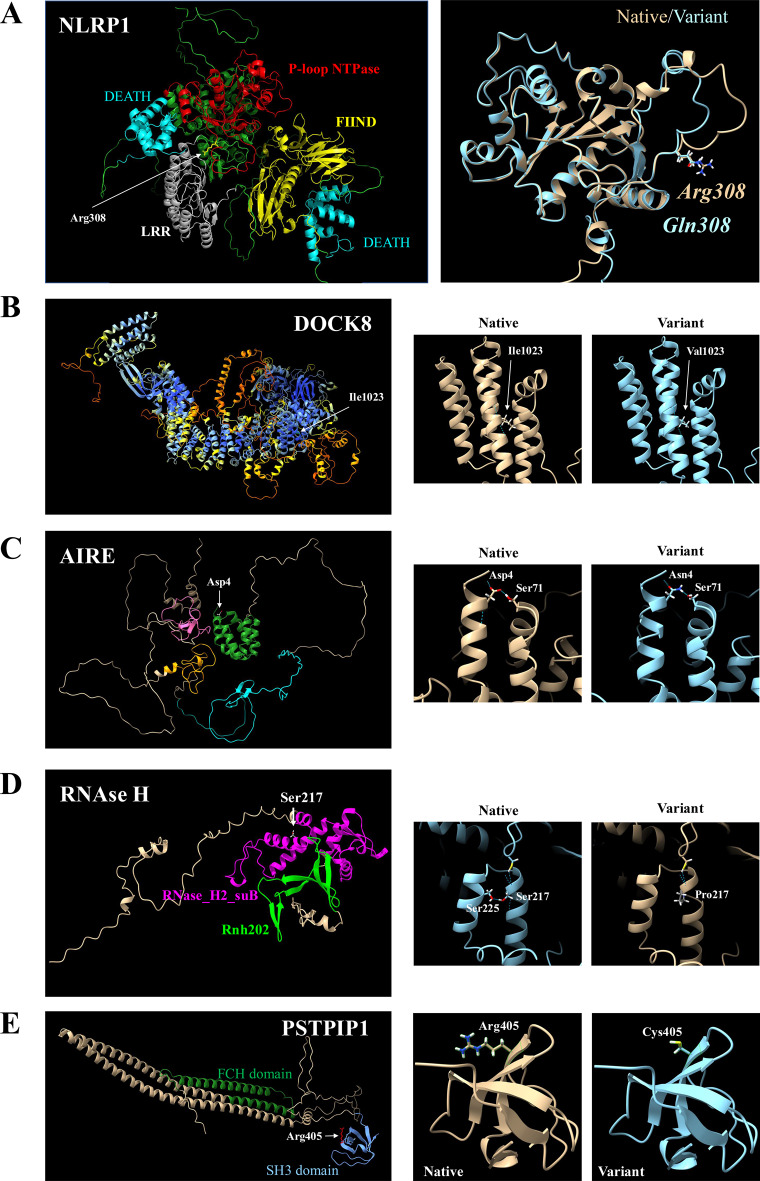
Background Hemophagocytic lymphohistiocytosis (HLH) is an excessive immune activation syndrome. The genetic studies on every patient diagnosed with HLH recently became a standard of care. The likelihood of identifying a gene mutation is highest in the youngest patients. Results [Four HLH patients had changes in the following five genes](mailto:peter.fritsch@medunigraz.at): [NLRP1 (c.923G>A)](mailto:peter.fritsch@medunigraz.at), [DOCK 8 (Dedicator of Cytokinesis 8) (c.3067A>G)](mailto:peter.fritsch@medunigraz.at), [AIRE gene (c.10G>A) and one in the RNASEH2B (c.649T>C)](mailto:peter.fritsch@medunigraz.at), [PSTPIP1 (c.1213C>T)](mailto:peter.fritsch@medunigraz.at). No mutations in genes previously associated with HLH syndrome were found. Conclusions [The described cases show that genetic analysis is helpful for the diagnosis of HLH in pediatric patients. The functional analysis of a putative mutation is essential for understanding the pathological mechanism; while not every change in DNA might be responsible for the disease. Each patient might have different mutations; however, they all develop the same clinical outcome. Disruption at different levels can result in a similar picture.](mailto:peter.fritsch@medunigraz.at)
Overview
The claims and statistics of this paper haven’t been checked yet.
Run the check — free, no account needed. It reads the open-access text and checks the sources it cites.
Integrity signals
Registry
Cites
Statistics
Figures
Verification
Claims the paper makes
The claims and statistics of this paper haven’t been checked yet.
Run the check — free, no account needed. It reads the open-access text and checks the sources it cites.
Self-check
Percentages, sums and reported differences re-computed from the paper’s own numbers.
The self-check needs the paper’s full text.
Citations
Cites
Highly accurate protein structure prediction with AlphaFold
Jumper, J., Evans, R., Pritzel, A., Green, T., Figurnov, M., Ronneberger, O., Tunyasuvunakool, K., Bates, R., Žídek, A., Potapenko, A., et al. (2021) · Nature · doi:10.1038/s41586-021-03819-2 · Cited by 43,764
Hypomorphic mutations in PRF1, MUNC13-4, and STXBP2 are associated with adult-onset familial HLH
Zhang, K., Jordan, M. B., Marsh, R. A., Johnson, J. A., Kissell, D., Meller, J., Villanueva, J., Risma, K. A., Wei, Q., Klein, P. S., et al. (2011) · Blood · doi:10.1182/blood-2011-07-370148 · Cited by 428
Research works printed but not linked: 17
- Filipovich AH. Hemophagocytic lymphohistiocytosis (HLH) and related disorders. Hematology Am Soc Hematol educ program. 2009;127–31. Available from: https://pubmed.ncbi.nlm.nih.gov/20008190/. · DOI
- Blum M, Chang HY, Chuguransky S, Grego T, Kandasaamy S, Mitchell A, et al. The InterPro protein families and domains database: 20 years on. Nucleic Acids Res. 2021;49:D344–54. Available from: https://pubmed.ncbi.nlm.nih.gov/33156333/. · DOI · Paper page
- Ng PC, Henikoff S. Predicting deleterious amino acid substitutions. Genome Res. 2001;11:863–74. Available from: https://pubmed.ncbi.nlm.nih.gov/11337480/. · DOI · Paper page
- Adzhubei IA, Schmidt S, Peshkin L, Ramensky VE, Gerasimova A, Bork P, et al. A method and server for predicting damaging missense mutations. Nat Methods. 2010;7:248–49. Available from: https://pubmed.ncbi.nlm.nih.gov/20354512/. · DOI · Paper page
- Zhong FL, Mamaï O, Sborgi L, Boussofara L, Hopkins R, Robinson K, et al. Germline NLRP1 mutations cause skin inflammatory and cancer susceptibility syndromes via inflammasome activation. Cell. 2016;167:187–202.e17. Available from: https://pubmed.ncbi.nlm.nih.gov/27662089/. · DOI · Paper page
- Hollingsworth LR, Sharif H, Griswold AR, Fontana P, Mintseris J, Dagbay KB, et al. DPP9 sequesters the C terminus of NLRP1 to repress inflammasome activation. Nature. 2021;592:778–83. Available from: https://pubmed.ncbi.nlm.nih.gov/33731932/. · DOI
- Ham H, Guerrier S, Kim J, Schoon RA, Anderson EL, Hamann MJ, et al. Dedicator of cytokinesis 8 interacts with talin and wiskott-aldrich syndrome protein to regulate nk cell cytotoxicity. The J Immunol. 2013;190:3661–69. Available from: https://pubmed.ncbi.nlm.nih.gov/23455509/. · DOI
- Cron R, Zhang M, Absher D, Atkinson P, Chatham W. Characterization of DOCK8 as a novel gene associated with hemophagocytic lymphohistiocytosis. The journal of immunology. 2020 Available from: https://journals.aai.org/jimmunol/article/204/1_Supplement/145.4/63915. · DOI
- Engelhardt KR, Gertz ME, Keles S, Schäffer AA, Sigmund EC, Glocker C, et al. The extended clinical phenotype of 64 patients with dedicator of cytokinesis 8 deficiency. J Allergy Clin Immunol. 2015;136:402–12. Available from: https://pubmed.ncbi.nlm.nih.gov/25724123/. · DOI
- Mizesko MC, Banerjee PP, Monaco-Shawver L, Mace EM, Bernal WE, Sawalle-Belohradsky J, et al. Defective actin accumulation impairs human natural killer cell function in patients with dedicator of cytokinesis 8 deficiency. J Allergy Clin Immunol. 2013;131:840–48. Available from: https://pubmed.ncbi.nlm.nih.gov/23380217/. · DOI
- Suh J, Choi HS, Kwon A, Chae HW, Lee JS, Kim HS. A novel compound heterozygous mutation of the aire gene in a patient with autoimmune polyendocrine syndrome type 1. Ann Pediatr Endocrinol Metab. 2019;24:248–52. Available from: https://pubmed.ncbi.nlm.nih.gov/31905445/. · DOI
- Starnes TW, Bennin DA, Bing X, Eickhoff JC, Grahf DC, Bellak JM, et al. The F-BAR protein PSTPIP1 controls extracellular matrix degradation and filopodia formation in macrophages. Blood. 2014;123:2703–14. Available from: https://pubmed.ncbi.nlm.nih.gov/24421327/. · DOI
- V. MA, Ceccherini I, Gattorno M, Fanoni D, Caroli F, Rusmini M, et al. Association of pyoderma gangrenosum, acne, and suppurative hidradenitis (PASH) shares genetic and cytokine profiles with other autoinflammatory diseases. Med. 2014;93. Available from: https://pubmed.ncbi.nlm.nih.gov/25501066/. · DOI
- Calderón-Castrat X, Bancalari-Díaz D, Román-Curto C, Romo-Melgar A, Amorós-Cerdán D, Alcaraz-Mas LA, et al. PSTPIP1 gene mutation in a pyoderma gangrenosum, acne and suppurative hidradenitis (PASH) syndrome. Br J Dermatol. 2016;175:194–98. Available from: https://pubmed.ncbi.nlm.nih.gov/26713508/. · DOI
- Carvelli J, Piperoglou C, Farnarier C, Vely F, Mazodier K, Audonnet S, et al. Functional and genetic testing in adults with HLH reveals an inflammatory profile rather than a cytotoxicity defect. Blood. 2020;136:542–52. Available from: https://pubmed.ncbi.nlm.nih.gov/32356861/. · DOI
- Gadoury-Levesque V, Dong L, Su R, Chen J, Zhang K, Risma KA, et al. Frequency and spectrum of disease-causing variants in 1892 patients with suspected genetic HLH disorders. Blood Adv. 2020;4:2578–94. Available from: https://pubmed.ncbi.nlm.nih.gov/32542393/. · DOI
- Cetica V, Sieni E, Pende D, Danesino C, De Fusco C, Locatelli F, et al. Genetic predisposition to hemophagocytic lymphohistiocytosis: report on 500 patients from the Italian registry. J Allergy Clin Immunol. 2016;137:188–96.e4. Available from: https://pubmed.ncbi.nlm.nih.gov/26342526/. · DOI
Metadata
- Authors
- Gowin, E., Szaflarski, W., & Januszkiewicz-Lewandowska, D.
- Affiliations
- Poznan University of Medical Sciences (PL)
- Corresponding author
- Gowin, Ewelina
- Venue
- Pediatric Rheumatology
- Published
- 2025-11-21
- Volume
- 23
- Issue
- 1
- Pages
- 119-119
- ISSN
- 1546-0096 (ISSN-L)
- PMC
- PMC12639710
- OpenAlex
- W4416504390
- Cited by
- 0
- References
- 2
- FWCI
- 0.00
- Type
- journal article
- Language
- en
- Open access
- gold
- doi.org
- Licence
- Locations
- Pediatric Rheumatology (publishedVersion, cc-by-nc-nd)
- Europe PMC (PubMed Central) (publishedVersion, cc-by-nc-nd)
- PubMed (publishedVersion)
- DOAJ (DOAJ: Directory of Open Access Journals) (submittedVersion, cc-by-sa)
- Topics
- Health Sciences › Medicine › Hematology › Autoimmune and Inflammatory Disorders Research
- Life Sciences › Immunology and Microbiology › Immunology › Immunodeficiency and Autoimmune Disorders
- Life Sciences › Biochemistry, Genetics and Molecular Biology › Molecular Biology › Inflammasome and immune disorders
- Keywords
- hemophagocytic lymphohistiocytosis, pediatric HLH, genetic mutations, NLRP1, DOCK8, AIRE, RNASEH2B, PSTPIP1, immune response genes, genetic diagnosis, functional analysis of mutations
- MeSH terms
- NLR Proteins, AIRE Protein, Child, Child, Preschool, Cytoskeletal Proteins, Female, Humans, Infant, Male, Mutation, Transcription Factors, Guanine Nucleotide Exchange Factors, Adaptor Proteins, Signal Transducing, Lymphohistiocytosis, Hemophagocytic
About these checks
Registry, retraction, Cites and statistics results are computed, not judged, with one exception: a printed reference that no index lists is read once by a model before it counts as a citation error. Claims are extracted by a model and kept only when their quote appears verbatim in the text; each cited source is then checked, with a model’s help, for whether it says what the claim relies on. Those verdicts can be wrong — read the claim’s quote and the cited source before relying on one.
Statistics and arithmetic are recomputed, not judged.
Confidence bands are shown only for fields calibrated on our annotated test set. None is calibrated yet, so no band is shown.
What counts as a claim ›How we measure confidence ›How we check this ›
Are you an author, or do you see a problem with this page? Request a review
