

The effect of acute vs chronic magnesium supplementation on exercise and recovery on resistance exercise, blood pressure and total peripheral resistance on normotensive adults
Open accessThe DOI matches its Crossref record; 43 of the 44 references it cites were found in a registry or an index.
Abstract
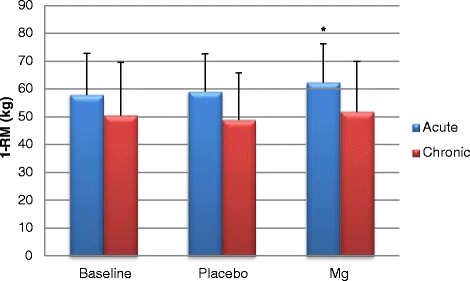
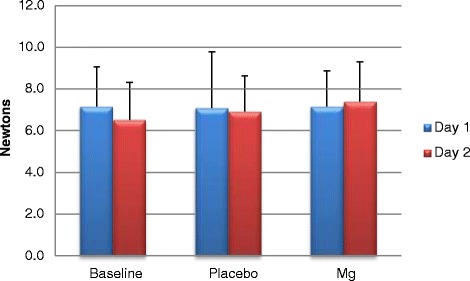
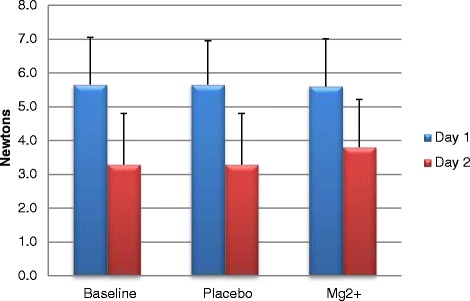
BACKGROUND: Magnesium supplementation has previously shown reductions in blood pressure of up to 12 mmHg. A positive relationship between magnesium supplementation and performance gains in resistance exercise has also been seen. However, no previous studies have investigated loading strategies to optimise response. The aim of this study was to assess the effect of oral magnesium supplementation on resistance exercise and vascular response after intense exercise for an acute and chronic loading strategy on a 2-day repeat protocol. METHODS: The study was a randomised, double-blind, cross-over design, placebo controlled 2 day repeat measure protocol (n = 13). Intense exercise (40 km time trial) was followed by bench press at 80% 1RM to exhaustion, with blood pressure and total peripheral resistance (TPR) recorded. 300 mg/d elemental magnesium was supplemented for either a 1 (A) or 4 (Chr) week loading strategy. Food diaries were recorded. RESULTS: Dietary magnesium intake was above the Reference Nutrient Intake (RNI) for all groups. Bench press showed a significant increase of 7.7% (p = 0.031) [corrected] for A on day 1. On day 2 A showed no decrease in performance whilst Chr showed a 32.1% decrease. On day 2 post-exercise systolic blood pressure (SBP) was significantly lower in both A (p = 0.0.47) and Chr (p = 0.016) groups. Diastolic blood pressure (DBP) showed significant decreases on day 2 solely for A (p = 0.047) with no changes in the Chr. TPR reduced for A on days 1 and 2 (p = 0.031) with Chr showing an increase on day 1 (p = 0.008) and no change on day 2. CONCLUSION: There was no cumulative effect of Chr supplementation compared to A. A group showed improvement for bench press concurring with previous research which was not seen in Chr. On day 2 A showed a small non-significant increase but not a decrement as expected with Chr showing a decrease. DBP showed reductions in both Chr and A loading, agreeing with previous literature. This is suggestive of a different mechanism for BP reduction than for muscular strength. TPR showed greater reductions with A than Chr, which would not be expected as both interventions had reductions in BP, which is associated with TPR.
Overview
The claims and statistics of this paper haven’t been checked yet.
Free: it reads the open-access text and checks the first 5 claims that cite a source we can check. Create a free account to check every claim.
Integrity signals
Registry
Cites
Statistics
Figures
Verification
Claims the paper makes
The claims and statistics of this paper haven’t been checked yet.
Free: it reads the open-access text and checks the first 5 claims that cite a source we can check. Create a free account to check every claim.
Claims other papers make about this one
Each is checked against this paper’s own text: does it say what the citing paper says it does?
The source backs part of the claim, not all of it — or backs it for a different population, condition or comparison.
In the citing paper
“For example, magnesium supplementation (8 mg/kg/day) for 7 weeks was shown to improve muscle strength (quadriceps torque) significantly in 26 untrained young adults submitted to a strength training programme, as compared with placebo [136].”
From Vitamins and Minerals for Energy, Fatigue and Cognition: A Narrative Review of the Biochemical and Clinical Evidence (2020) · cites this paper as [137]
Experimental — accuracy not yet measuredThe cited source says what the claim attributes to it.
In the citing paper
“In addition, acute Mg showed no decline in force during repetitions to fatigue the next day following the time-trial, whereas in the chronic Mg group, there was a 32% performance decrement.”
From The Role of Mineral and Trace Element Supplementation in Exercise and Athletic Performance: A Systematic Review (2019) · cites this paper as [116]
In the citing paper
“Acute Mg increased 1RM by 17% compared to baseline (prior to commencing supplementation), whereas in the chronic (over 4 weeks) Mg group, there was no change in 1RM bench press.”
From The Role of Mineral and Trace Element Supplementation in Exercise and Athletic Performance: A Systematic Review (2019) · cites this paper as [116]
In the citing paper
“In conclusion, the current evidence suggests that 300–500 mg·day−1 for short-term supplementation (~1–4 weeks) can have a positive influence on functional dynamic measures of muscle performance (CMJ, 1RM and fatigue resistance) and exercised-induced inflammation, DNA damage, cortisol and immunological blood markers, but no effect on isokinetic performance [107,116,118].”
From The Role of Mineral and Trace Element Supplementation in Exercise and Athletic Performance: A Systematic Review (2019) · cites this paper as [116]
In the citing paper
“Randomised controlled trials that evaluated the impact of magnesium supplementation on muscle strength and exercise performance in adults have provided conflicting results, with some studies showing a beneficial impact [136,137], while others failed to report benefits [138].”
From Vitamins and Minerals for Energy, Fatigue and Cognition: A Narrative Review of the Biochemical and Clinical Evidence (2020) · cites this paper as [137]
Self-check
Percentages, sums and reported differences re-computed from the paper’s own numbers.
The self-check needs the paper’s full text.
Citations
Cites
Toprak, O., Kurt, H., Sarı, Y., Şarkış, C., Us, H., & Kırık, A. (2017) · Kidney and Blood Pressure Research · doi:10.1159/000468530 · Cited by 29,627
Essentials of Strength Training and Conditioning
Baechle, T. R., & Earle, R. (1994) · Cited by 1,535
Essentials of Strength Training and Conditioning
Phillips, N. (1997) · Physiotherapy · doi:10.1016/s0031-9406(05)66120-2 · Cited by 1,077
Jahnen-Dechent, W., & Ketteler, M. (2012) · Clinical Kidney Journal · doi:10.1093/ndtplus/sfr163 · Cited by 1,054
Dickinson, H. O., Mason, J. M., Nicolson, D. J., Campbell, F., Beyer, F. R., Cook, J. V., Williams, B., & Ford, G. A. (2006) · Journal of Hypertension · doi:10.1097/01.hjh.0000199800.72563.26 · Cited by 759
Magnesium: physiology and pharmacology
Fawcett, W. J., Haxby, E. J., & Male, D. A. (1999) · British Journal of Anaesthesia · doi:10.1093/bja/83.2.302 · Cited by 707
Vitamin and mineral status: effects on physical performance
Lukaski, H. C. (2004) · Nutrition · doi:10.1016/j.nut.2004.04.001 · Cited by 587
Jee, S. H., Miller, E. R., Guallar, E., Singh, V. K., Appel, L. J., & Klag, M. J. (2002) · American Journal of Hypertension · doi:10.1016/s0895-7061(02)02964-3 · Cited by 346
Dietary Magnesium Intake in a National Sample of U.S. Adults
Ford, E. S., & Mokdad, A. H. (2003) · The Journal of Nutrition · doi:10.1093/jn/133.9.2879 · Cited by 341
Low serum magnesium levels and metabolic syndrome
Guerrero-Romero, F., & Rodríguez-Morán, M. (2002) · Acta Diabetologica · doi:10.1007/s005920200036 · Cited by 252
Update on the relationship between magnesium and exercise.
Nielsen, F. H., & Lukaski, H. C. (2006) · PubMed · Cited by 250
Effect of magnesium supplementation on blood pressure: a meta-analysis
Kass, L., Weekes, J., & Carpenter, L. (2012) · European Journal of Clinical Nutrition · doi:10.1038/ejcn.2012.4 · Cited by 235 · cited 2×
“This is supported by findings within a recent meta-analysis [19] looking at Mg supplementation which showed that SBP and DBP reductions of 2–3 mmHg and 3–4 mmHg, respectively.”
BackgroundResultSelf-citationRole of magnesium in the pathogenesis of hypertension
Touyz, R. (2003) · Molecular Aspects of Medicine · doi:10.1016/s0098-2997(02)00094-8 · Cited by 210
Role of cellular magnesium in health and human disease
Laires, M. J. (2004) · Frontiers in Bioscience · doi:10.2741/1223 · Cited by 199
Regulation of magnesium balance: lessons learned from human genetic disease
de Baaij, J. H. F., Hoenderop, J. G. J., & Bindels, R. J. M. (2012) · Clinical Kidney Journal · doi:10.1093/ndtplus/sfr164 · Cited by 197
Impact of dietary and lifestyle factors on the prevalence of hypertension in Western populations
Geleijnse, J. M. (2004) · The European Journal of Public Health · doi:10.1093/eurpub/14.3.235 · Cited by 183
Laurant, P., & Touyz, R. M. (2000) · Journal of Hypertension · doi:10.1097/00004872-200018090-00003 · Cited by 173
Lack of effect of oral magnesium on high blood pressure: a double blind study.
Cappuccio, F. P., Markandu, N. D., Beynon, G. W., Shore, A. C., Sampson, B., & MacGregor, G. A. (1985) · BMJ · doi:10.1136/bmj.291.6490.235 · Cited by 169
Magnesium Transporters: Properties, Regulation and Structure
Maguire, M. (2006) · Frontiers in Bioscience · doi:10.2741/2039 · Cited by 148
Bioavailability and Pharmacokinetics of Magnesium After Administration of Magnesium Salts to Humans
Ranade, V. V., & Somberg, J. C. (2001) · American Journal of Therapeutics · doi:10.1097/00045391-200109000-00008 · Cited by 144
Molecular Determinants of Magnesium Homeostasis: Insights from Human Disease
Alexander, R. T., Hoenderop, J. G., & Bindels, R. A. A. J. (2008) · Journal of the American Society of Nephrology · doi:10.1681/asn.2008010098 · Cited by 144
Magnesium and muscle performance in older persons: The InCHIANTI study
Dominguez, L. J., Barbagallo, M., Lauretani, F., Bandinelli, S., Bos, A., Corsi, A. M., Simonsick, E. M., & Ferrucci, L. (2006) · The American Journal of Clinical Nutrition · doi:10.1093/ajcn/84.2.419 · Cited by 136
Bohl, C. H., & Volpe, S. L. (2002) · Critical Reviews in Food Science and Nutrition · doi:10.1080/20024091054247 · Cited by 135
Geiger, H., & Wanner, C. (2012) · Clinical Kidney Journal · doi:10.1093/ndtplus/sfr165 · Cited by 128
Phosphorylation-Independent Modulation of L-Type Calcium Channels by Magnesium-Nucleotide Complexes
O'Rourke, B., Backx, P. H., & Marban, E. (1992) · Science · doi:10.1126/science.1321495 · Cited by 126
Itoh, K., Kawasaki, T., & Nakamura, M. (1997) · British Journal of Nutrition · doi:10.1079/bjn19970191 · Cited by 109
Lukaski, H. C., & Nielsen, F. H. (2002) · Journal of Nutrition · doi:10.1093/jn/132.5.930 · Cited by 108
Dietary Supplements and Sports Performance: Amino Acids
Williams, M. (2005) · Journal of the International Society of Sports Nutrition · doi:10.1186/1550-2783-2-2-63 · Cited by 107
The effects of magnesium supplementation on exercise performance
Newhouse, I. J., & Finstad, E. W. (2000) · Clinical Journal of Sport Medicine · doi:10.1097/00042752-200007000-00008 · Cited by 90 · cited 1×
“oxide, sulphate, chloride and carbonate [10] When considered relative to the quantity needed to be ingested to release 300 mg of elemental Mg2+ along with the fact that certain magnesiums are unavailable in the UK, magnesium citrate was considered to be the best option for this protocol.”
BackgroundOral magnesium supplementation in patients with essential hypertension.
Motoyama, T., Sano, H., & Fukuzaki, H. (1989) · Hypertension · doi:10.1161/01.hyp.13.3.227 · Cited by 89
Impact of dietary and lifestyle factors on the prevalence of hypertension in Western populations
Geleijnse, J. M., Grobbee, D. E., & Kok, F. J. (2005) · Journal of Human Hypertension · doi:10.1038/sj.jhh.1001953 · Cited by 89
Effect of magnesium supplementation on strength training in humans
Brilla, L. R., & Haley, T. F. (1992) · Journal of the American College of Nutrition · doi:10.1080/07315724.1992.10718233 · Cited by 86
Micronutrients (Magnesium, Zinc, and Copper): Are Mineral Supplements Needed for Athletes?
Lukaski, H. C. (1995) · International Journal of Sport Nutrition · doi:10.1123/ijsn.5.s1.s74 · Cited by 62
Aguiar Santos, D., Nunes Matias, C., Monteiro, C. P., Silva, A. M., Rocha, P. M., Minderico, C. S., Bettencourt Sardinha, L., & Laires, M. J. (2011) · Magnesium Research · doi:10.1684/mrh.2011.0290 · Cited by 57
The effects of magnesium supplementation on exercise performance
FINSTAD, E. W., NEWHOUSE, I. J., LUKASKI, H. C., MCAULIFFE, J. E., & STEWART, C. R. (2001) · Medicine and Science in Sports and Exercise · doi:10.1097/00005768-200103000-00024 · Cited by 51 · cited 1×
“Research to date consists of both positive [11-13] and negative [14,15] findings.”
BackgroundPokan, R., Hofmann, P., von DUVILLARD, S. P., Smekal, G., Wonisch, M., Lettner, K., Schmid, P., Shechter, M., Silver, B., & Bachl, N. (2006) · British Journal of Sports Medicine · doi:10.1136/bjsm.2006.027250 · Cited by 50
On the Significance of Magnesium in Extreme Physical Stress
Golf, S. W., Bender, S., & Grüttner, J. (1998) · Cardiovascular Drugs and Therapy · doi:10.1023/a:1007708918683 · Cited by 45
Setaro, L., Santos-Silva, P. R., Nakano, E. Y., Sales, C. H., Nunes, N., Greve, J. M., & Colli, C. (2014) · Journal of Sports Sciences · doi:10.1080/02640414.2013.828847 · Cited by 45
Doyle, L., Flynn, A., & Cashman, K. D. (1999) · European Journal of Clinical Nutrition · doi:10.1038/sj.ejcn.1600714 · Cited by 44
Terblanche, S., Noakes, T. D., Dennis, S. C., Marais, D. W., & Eckert, M. (1992) · International Journal of Sport Nutrition · doi:10.1123/ijsn.2.2.154 · Cited by 35
Magnesium and Implications on Muscle Function
Carvil, P., & Cronin, J. B. (2010) · Strength and conditioning journal · doi:10.1519/ssc.0b013e3181c16cdc · Cited by 24
Magnesium and strength in elite judo athletes according to intracellular water changes.
Matias, C. N., Santos, D. A., Monteiro, C. P., Silva, A. M., Raposo, M. D. F., Martins, F., Sardinha, L. B., Bicho, M., & Laires, M. J. (2010) · PubMed · doi:10.1684/mrh.2010.0217 · Cited by 23
(2013) · Europe PMC (PubMed Central)
Research works printed but not linked: 1
- Uzun A The acute effect of maximal strength, power endurance and interval run training on levels of some elements in elite basketball players Life Sci J 2013 10 2697 2701
Cited by
Tardy, A.-L., Pouteau, E., Marquez, D., Yilmaz, C., & Scholey, A. (2020) · Nutrients · doi:10.3390/nu12010228 · Cited by 541
‘Magnesium’-the master cation-as a drug—possibilities and evidences
Mathew, A. A., & Panonnummal, R. (2021) · BioMetals · doi:10.1007/s10534-021-00328-7 · Cited by 169
Heffernan, S. M., Horner, K., De Vito, G., & Conway, G. E. (2019) · Nutrients · doi:10.3390/nu11030696 · Cited by 130
Can Magnesium Enhance Exercise Performance?
Zhang, Y., Xun, P., Wang, R., Mao, L., & He, K. (2017) · Nutrients · doi:10.3390/nu9090946 · Cited by 104
“The underlying mechanism of Mg-induced strength improvement is possibly due to the function of Mg in protein synthesis and energy metabolism [11], contributing to the process of muscle contraction and relaxation [36].”
InfluentialThe Integral Role of Magnesium in Muscle Integrity and Aging: A Comprehensive Review
Souza, A. P. D. S., Vasconcelos, A., Dias, D. D., Komoni, G., & Name, J. (2023) · Nutrients · doi:10.3390/nu15245127 · Cited by 113
Metadata
- Authors
- Kass, L. S., & Poeira, F.
- Affiliations
- University of Hertfordshire (GB)
- Corresponding author
- Kass, Lindsy S
- ORCID
- Kass, Lindsy S
- Venue
- Journal of the International Society of Sports Nutrition
- Publisher
- Informa UK Limited
- Published
- 2015-10-20
- Volume
- 12
- Issue
- 1
- Pages
- 19-19
- ISSN
- 1550-2783 (ISSN-L)
- PMC
- PMC4419474
- OpenAlex
- W2123105025
- Cited by
- 31
- References
- 44
- Citations by year
- 2026: 4 · 2025: 2 · 2024: 4 · 2023: 3 · 2022: 2 · 2021: 3 · 2020: 2 · 2019: 7 · 2018: 2 · 2017: 1 · 2016: 1
- FWCI
- 1.28
- Type
- journal article
- Language
- en
- Update notices
- correction (2022-04-01)
- Open access
- gold
- doi.org
- Licence
- Locations
- Journal of the International Society of Sports Nutrition (publishedVersion, cc-by)
- Europe PMC (PubMed Central) (publishedVersion, cc-by)
- PubMed Central (publishedVersion, cc-by)
- PubMed (publishedVersion)
- University of Hertfordshire Research Archive (University of Hertfordshire) (acceptedVersion)
- University of Hertfordshire Research Archive (University of Hertfordshire) (submittedVersion, cc-by)
- Topics
- Health Sciences › Nursing › Nutrition and Dietetics › Magnesium in Health and Disease
- Health Sciences › Medicine › Physiology (medical) › Exercise and Physiological Responses
- Health Sciences › Medicine › Physiology (medical) › Cardiovascular and exercise physiology
- Keywords
- magnesium supplementation, resistance exercise performance, blood pressure, systemic vascular resistance, post-exercise recovery, bench press strength, dietary magnesium, exercise-induced hypotension, normotensive subjects, food diary
- MeSH terms
- Adult, Blood Pressure, Cardiovascular System, Diet, Double-Blind Method, Female, Humans, Magnesium, Male, Middle Aged, Vascular Resistance, Cross-Over Studies, Dietary Supplements, Muscle Strength, Resistance Training, Recommended Dietary Allowances
About these checks
Registry, retraction, Cites and statistics results are computed, not judged, with one exception: a printed reference that no index lists is read once by a model before it counts as a citation error. Claims are extracted by a model and kept only when their quote appears verbatim in the text; each cited source is then checked, with a model’s help, for whether it says what the claim relies on. Those verdicts can be wrong — read the claim’s quote and the cited source before relying on one.
Statistics and arithmetic are recomputed, not judged.
Confidence bands are shown only for fields calibrated on our annotated test set. None is calibrated yet, so no band is shown.
What counts as a claim ›How we measure confidence ›How we check this ›
Are you an author, or do you see a problem with this page? Request a review
Data sources
Bibliographic data: Semantic Scholar, OpenAlex, Crossref.
Contains information from the Semantic Scholar Academic Graph Datasets, made available under the ODC Attribution License (ODC-BY 1.0).
Semantic Scholar’s data is described in: Kinney, R., et al. (2023). The Semantic Scholar Open Data Platform. arXiv:2301.10140.
