

Primary cilia modulate TLR4-mediated inflammatory responses in hippocampal neurons
Open accessThe DOI matches its Crossref record; 50 of the 50 references it cites were found in a registry or an index.
Abstract
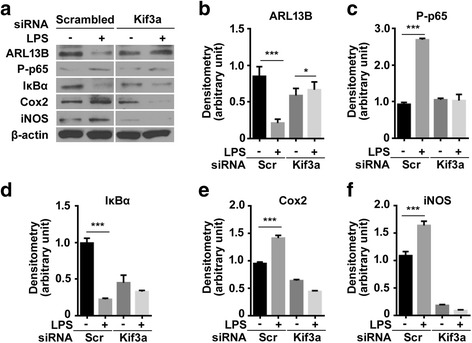
BACKGROUND: The primary cilium is an organelle that can act as a master regulator of cellular signaling. Despite the presence of primary cilia in hippocampal neurons, their function is not fully understood. Recent studies have demonstrated that the primary cilium influences interleukin (IL)-1β-induced NF-κB signaling, ultimately mediating the inflammatory response. We, therefore, investigated ciliary function and NF-κB signaling in lipopolysaccharide (LPS)-induced neuroinflammation in conjunction with ciliary length analysis. METHODS: mice injected with LPS. Next, to exclude the effects of microglial TLR4, we examined the ciliary length, ciliary components, inflammatory cytokine, and mediators in HT22 hippocampal neuronal cells. RESULTS: mice. LPS treatment decreased primary ciliary length, activated NF-κB signaling, and increased Cox2 and iNOS levels in HT22 hippocampal neurons. In contrast, silencing Kif3a, a key protein component of cilia, increased ARL13B ciliary protein levels and suppressed NF-κB signaling and expression of inflammatory mediators. CONCLUSIONS: These data suggest that LPS-induced NF-κB signaling and inflammatory mediator expression are modulated by cilia and that the blockade of primary cilium formation by Kif3a siRNA regulates TLR4-induced NF-κB signaling. We propose that primary cilia are critical for regulating NF-κB signaling events in neuroinflammation and in the innate immune response.
Overview
The claims and statistics of this paper haven’t been checked yet.
Free: it reads the open-access text and checks the first 5 claims that cite a source we can check. Create a free account to check every claim.
Integrity signals
Registry
Cites
Statistics
Figures
Verification
Claims the paper makes
The claims and statistics of this paper haven’t been checked yet.
Free: it reads the open-access text and checks the first 5 claims that cite a source we can check. Create a free account to check every claim.
Claims other papers make about this one
Each is checked against this paper’s own text: does it say what the citing paper says it does?
The source backs part of the claim, not all of it — or backs it for a different population, condition or comparison.
In the citing paper
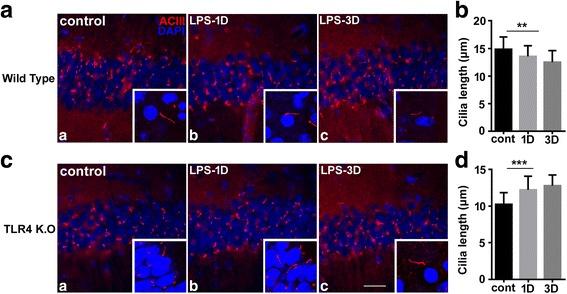
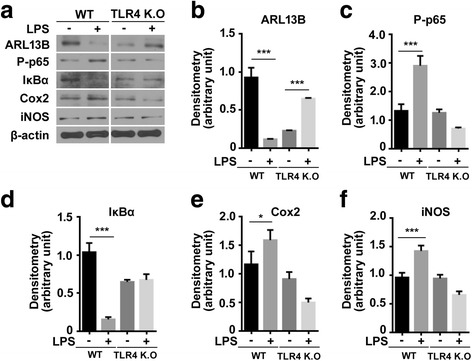
“Further evidence from Baek et al. demonstrated that, 1 day after intracerebroventricular injection of lipopolysaccharide (LPS) in C57BL/6 mice, there was a reduction in both the length of AC3-labeled primary cilia and the expression of Arl13b in the hippocampus, accompanied by increased levels of inflammatory mediators, including Cox2 and iNOS.”
From Primary cilia in the mature brain: emerging roles in Alzheimer's disease pathogenesis (2025) · cites this paper as Baek et al., 2017
Experimental — accuracy not yet measuredThe source backs part of the claim, not all of it — or backs it for a different population, condition or comparison.
In the citing paper
“In contrast, toll-like receptor 4 (Tlr4) knockout mice show increased primary ciliary length and elevated Arl13b expression following LPS administration, without significant changes in Cox2 and iNOS levels.”
From Primary cilia in the mature brain: emerging roles in Alzheimer's disease pathogenesis (2025) · cites this paper as Baek et al., 2017
Experimental — accuracy not yet measuredThe source backs part of the claim, not all of it — or backs it for a different population, condition or comparison.
In the citing paper
“In kinesin family member 3A (Kif3a) knockdown HT22 cells, 24-h LPS exposure fails to elicit an inflammatory response but results in a slight increase in Arl13b expression (Baek et al., 2017), suggesting that intact primary”
From Primary cilia in the mature brain: emerging roles in Alzheimer's disease pathogenesis (2025) · cites this paper as Baek et al., 2017
Experimental — accuracy not yet measuredThe source backs part of the claim, not all of it — or backs it for a different population, condition or comparison.
In the citing paper
“Intraperitoneal LPS administration in mice shortens primary cilium length in hippocampal neurons (Baek et al. 2017).”
From Astrocyte-specific inhibition of the primary cilium suppresses C3 expression in reactive astrocyte (2024) · cites this paper as Baek et al. 2017
Experimental — accuracy not yet measuredThe cited source says what the claim attributes to it.
In the citing paper
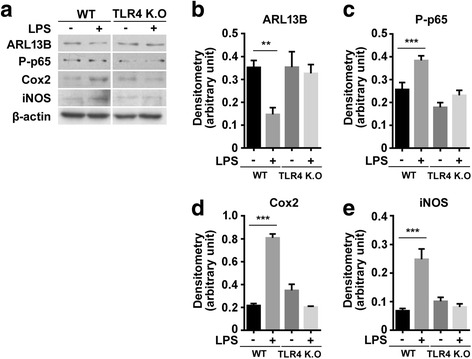
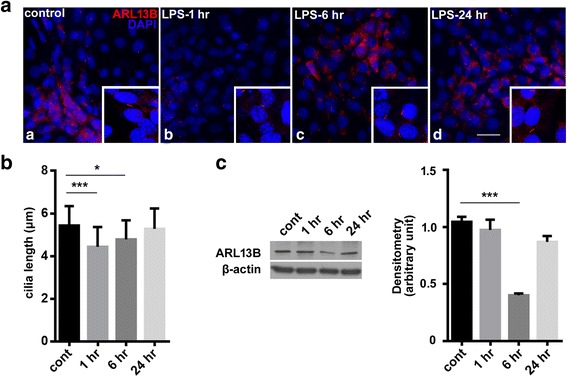
“Similar effects occur in vitro: HT22 hippocampal cells exhibit shortened primary cilia after just 1 h of LPS exposure, with marked Arl13b reduction after 6 h, while LPS does not significantly alter Arl13b expression level in primary neurons from Tlr4 −/− mice.”
From Primary cilia in the mature brain: emerging roles in Alzheimer's disease pathogenesis (2025) · cites this paper as Baek et al., 2017
Self-check
Percentages, sums and reported differences re-computed from the paper’s own numbers.
The self-check needs the paper’s full text.
Citations
Cites
The primary cilium: a signalling centre during vertebrate development
Goetz, S. C., & Anderson, K. V. (2010) · Nature Reviews Genetics · doi:10.1038/nrg2774 · Cited by 1,824 · cited 1×
“Indeed, there are now established functions for primary cilia in left-right determination, mechanosensation, and regulation of Sonic hedgehog (Shh) [3, 4], Wnt [5], insulin growth factor (IGF), and transforming growth factor (TGF) signaling [6].”
BackgroundVertebrate Smoothened functions at the primary cilium
Corbit, K. C., Aanstad, P., Singla, V., Norman, A. R., Stainier, D. Y. R., & Reiter, J. F. (2005) · Nature · doi:10.1038/nature04117 · Cited by 1,481 · cited 1×
“Indeed, there are now established functions for primary cilia in left-right determination, mechanosensation, and regulation of Sonic hedgehog (Shh) [3, 4], Wnt [5], insulin growth factor (IGF), and transforming growth factor (TGF) signaling [6].”
BackgroundPatched1 Regulates Hedgehog Signaling at the Primary Cilium
Rohatgi, R., Milenkovic, L., & Scott, M. P. (2007) · Science · doi:10.1126/science.1139740 · Cited by 1,426 · cited 1×
“Indeed, there are now established functions for primary cilia in left-right determination, mechanosensation, and regulation of Sonic hedgehog (Shh) [3, 4], Wnt [5], insulin growth factor (IGF), and transforming growth factor (TGF) signaling [6].”
Function of Nod‐like receptors in microbial recognition and host defense
Franchi, L., Warner, N., Viani, K., & Nuñez, G. (2009) · Immunological Reviews · doi:10.1111/j.1600-065x.2008.00734.x · Cited by 903 · cited 1×
“While the mechanism of this slightly increased ciliary length under LPS is currently unclear, it may be resulted from existence of other LPS receptors, such as TLR2, nucleotide oligomerization domain (Nod)-like receptors (NLRs) [47], and cannabinoid receptor [48].”
BackgroundThe Vertebrate Primary Cilium in Development, Homeostasis, and Disease
Gerdes, J. M., Davis, E. E., & Katsanis, N. (2009) · Cell · doi:10.1016/j.cell.2009.03.023 · Cited by 706 · cited 1×
“Kinesin-2 motor proteins mediate anterograde transport to the distal tip of the cilium, while dynein motor proteins mediate retrograde transport to the basal body of the cilium [32].”
BackgroundLehnardt, S., Lachance, C., Patrizi, S., Lefebvre, S., Follett, P. L., Jensen, F. E., Rosenberg, P. A., Volpe, J. J., & Vartanian, T. (2002) · The Journal of Neuroscience · doi:10.1523/jneurosci.22-07-02478.2002 · Cited by 689 · cited 1×
“Early studies report that TLR4 is expressed primarily in microglia, but not astrocytes or neurons [21].”
BackgroundToll-like receptors modulate adult hippocampal neurogenesis
Rolls, A., Shechter, R., London, A., Ziv, Y., Ronen, A., Levy, R., & Schwartz, M. (2007) · Nature Cell Biology · doi:10.1038/ncb1629 · Cited by 622 · cited 1×
“Constitutive expression of TLR4 has been detected in hippocampal neurons [25], sensory neurons [26], and neural stem cells [27].”
BackgroundHedgehog signaling and primary cilia are required for the formation of adult neural stem cells
Han, Y.-G., Spassky, N., Romaguera-Ros, M., Garcia-Verdugo, J.-M., Aguilar, A., Schneider-Maunoury, S., & Alvarez-Buylla, A. (2008) · Nature Neuroscience · doi:10.1038/nn2059 · Cited by 547 · cited 1×
“Neurons and astrocytes have been found to have a non-motile primary cilium [7].”
BackgroundCilia and Developmental Signaling
Eggenschwiler, J. T., & Anderson, K. V. (2007) · Annual Review of Cell and Developmental Biology · doi:10.1146/annurev.cellbio.23.090506.123249 · Cited by 530 · cited 1×
“Cilia are conserved, microtubule-based organelles that grow from basal bodies (centrosome-derived structures) and extend from the cell surface [1].”
BackgroundToll-like receptor signaling in neural plasticity and disease
Okun, E., Griffioen, K. J., & Mattson, M. P. (2011) · Trends in Neurosciences · doi:10.1016/j.tins.2011.02.005 · Cited by 510 · cited 1×
“axonal growth, neuronal plasticity, and adult neurogenesis [22].”
Background
Cited by
Fu, S., Thompson, C. L., Ali, A. A., Wang, W., Chapple, J. P., Mitchison, H. M., Beales, P. L., Wann, A. K. T., & Knight, M. M. (2019) · Osteoarthritis and Cartilage · doi:10.1016/j.joca.2019.03.003 · Cited by 90
Ding, W., Cai, C., Zhu, X., Wang, J., & Jiang, Q. (2022) · International Immunopharmacology · doi:10.1016/j.intimp.2022.108913 · Cited by 90
Du, S., Qiao, D., Chen, C., Chen, S., Liu, C., Lin, Z., Wang, H., & Xie, W. (2017) · Frontiers in Molecular Neuroscience · doi:10.3389/fnmol.2017.00409 · Cited by 85
“Studies of other neurological disease models have shown that TLR4 plays an important role in the pathogenesis of a variety of neuro-inflammation and is expressed in microglia and neurons (Wang et al., 2014; Baek et al., 2017; Chen et al., 2017; Lawrimore and Crews, 2017; Rocha Sobrinho et al., 2017).”
BackgroundPalla, A. R., Hilgendorf, K. I., Yang, A. V., Kerr, J. P., Hinken, A. C., Demeter, J., Kraft, P. E., Mooney, N. A., Yucel, N. D., Burns, D. M., et al. (2022) · Nature Communications · doi:10.1038/s41467-022-29150-6 · Cited by 77
Mukherjee, I., Roy, S., & Chakrabarti, S. (2019) · Frontiers in Genetics · doi:10.3389/fgene.2019.00023 · Cited by 56
“, 2015), Hedgehog, PDGF, WNT (Goetz and Anderson, 2010), TLR signaling (Baek et al., 2017) and vesicle mediated transport (Nachury et al.”
BackgroundHu, X., Wang, M., Pan, Y., Xie, Y., Jin-hui, H., Zhang, X., Niayale, R., He, H., Li, Q., Zhao, T., et al. (2020) · Frontiers in Veterinary Science · doi:10.3389/fvets.2020.00201 · Cited by 46
“Cytokines Induced by E. coli Infection As is shown in Figure 10, the protein expression of TLR4 and inflammatory cytokines (IL-1β, IL-6, IL-8, and TNF-α) in the TLR4/NF-κB signaling pathway was significantly increased (P 0.05) by about 39, 40, 35, 27, and 14%, respectively, in group M compared with those in group C. C…”
BackgroundInfluentialMc Fie, M., Koneva, L., Collins, I., Coveney, C. R., Clube, A. M., Chanalaris, A., Vincent, T. L., Bezbradica, J. S., Sansom, S. N., & Wann, A. K. T. (2020) · Journal of Cell Science · doi:10.1242/jcs.239871 · Cited by 40
“This is in contrast to the positive regulatory role in the context of hippocampal neuron response to LPS (Baek et al., 2017), which may reflect context-dependent roles for KIF3A, particularly in cells types such as neurons where its non-ciliary roles are well-documented.”
InfluentialPrimary Cilia in Glial Cells: An Oasis in the Journey to Overcoming Neurodegenerative Diseases
Ki, S. M., Jeong, H. S., & Lee, J. E. (2021) · Frontiers in Neuroscience · doi:10.3389/fnins.2021.736888 · Cited by 40
Meng, H., Fu, S., Ferreira, M. B., Hou, Y., Pearce, O. M. T., Gavara, N., & Knight, M. M. (2022) · Osteoarthritis and Cartilage · doi:10.1016/j.joca.2022.11.001 · Cited by 33
Primary cilia shape hallmarks of health and aging
Silva, D. F., & Cavadas, C. (2023) · Trends in Molecular Medicine · doi:10.1016/j.molmed.2023.04.001 · Cited by 35
Shin, N., Kim, H.-G., Shin, H. J., Kim, S., Kwon, H. H., Baek, H., Yi, M., Zhang, E., Kim, J.-J., Hong, J., et al. (2019) · Antioxidants and Redox Signaling · doi:10.1089/ars.2017.7280 · Cited by 31
“5–15.5 rat embryos as previously described (3).”
InfluentialSelf-citationEpendymal cells: roles in central nervous system infections and therapeutic application
Xie, S., & Li, F. (2024) · Journal of Neuroinflammation · doi:10.1186/s12974-024-03240-2 · Cited by 30
“On the other hand, cilia length and function may regulate TLR4-mediated NF-κB signaling activation and pro-inflammatory cytokine expression [71], suggesting that the interactions between the NF-κB signaling pathway and cilia in neuroinflammation and innate immune responses warrant further…”
BackgroundPrimary cilia in corneal development and disease
Song, T., 250014,中国, 山. 济., Zhou, J., & 300071,中国, 南. (2020) · 动物学研究 · doi:10.24272/j.issn.2095-8137.2020.109 · Cited by 29
“Primary cilia allow cells to sense changes in their external environment, receive extracellular cues, participate in various signaling pathways, and mediate tissue development and homeostasis (Berbari et al., 2009; Yang et al., 2019; Yu et al., 2019).”
BackgroundThe parkin-coregulated gene product PACRG promotes TNF signaling by stabilizing LUBAC
Meschede, J., Šadič, M., Furthmann, N., Miedema, T., Sehr, D. A., Müller-Rischart, A. K., Bader, V., Berlemann, L. A., Pilsl, A., Schlierf, A., et al. (2020) · Science Signaling · doi:10.1126/scisignal.aav1256 · Cited by 28
Limitations and opportunities in the pharmacotherapy of ciliopathies
Phu, M. D., Bross, S., Burkhalter, M. D., & Philipp, M. (2021) · Pharmacology & Therapeutics · doi:10.1016/j.pharmthera.2021.107841 · Cited by 26
Yuan, G., Yang, S., & Yang, S. (2023) · International Journal of Oral Science · doi:10.1038/s41368-023-00216-5 · Cited by 21
C21ORF2 mutations point towards primary cilia dysfunction in amyotrophic lateral sclerosis
Decker, M. D., Zelina, P., Moens, T. G., Beckers, J., Contardo, M., Dittlau, K. S., Schoor, E. V., Ronisz, A., Eggermont, K., Moisse, M., et al. (2024) · Brain · doi:10.1093/brain/awae331 · Cited by 23
“Of 74-77 While further research is needed, we provide evidence that the impairment of this overlooked organelle in ALS contributes to the complex pathobiology of this disease.”
Sheybani, N., Bakhtiarizadeh, M. R., & Salehi, A. (2021) · Scientific Reports · doi:10.1038/s41598-021-97319-y · Cited by 22
Ciliary and Non-Ciliary Roles of IFT88 in Development and Diseases
Wang, X., Yin, G., Yang, Y., & Tian, X. (2025) · International Journal of Molecular Sciences · doi:10.3390/ijms26052110 · Cited by 17
“Recent studies have further elucidated the interaction between pro-inflammatory nuclear factor-kappa B signaling and IFT [110].”
Fu, S., Meng, H., Freer, F., Kwon, J., Shelton, J. C., & Knight, M. M. (2019) · Clinical Biomechanics · doi:10.1016/j.clinbiomech.2019.12.006 · Cited by 18
Hooshmand, K., Halliday, G. M., Pineda, S. S., Sutherland, G. T., & Guennewig, B. (2022) · International Journal of Molecular Sciences · doi:10.3390/ijms23095200 · Cited by 15
“This led to defective cilia-mediated TLR4/NF-κB activation, reduced axonal length, and altered signal transmission [40,41].”
BackgroundPrimary cilia suppress Ripk3-mediated necroptosis
Kieckhöfer, E., Slaats, G. G. G., Ebert, L. K., Albert, M., Dafinger, C., Kashkar, H., Benzing, T. R., & Schermer, B. (2022) · Cell Death Discovery · doi:10.1038/s41420-022-01272-2 · Cited by 16
“With respect to cilia, previous studies have found repression of NFκB upon loss of cilia due to loss of Kif3a in hippocampal neurons [50] or due to hypomorphic Ift88 mutation in chondrocytes [51].”
ResultFu, A., Qiao, F., Feng, H., & Luo, Q. (2023) · Behavioural Brain Research · doi:10.1016/j.bbr.2023.114464 · Cited by 12
ALS-linked C9orf72–SMCR8 complex is a negative regulator of primary ciliogenesis
Tang, D., Zheng, K., Zhu, J., Jin, X., Bao, H., Jiang, L., Li, H., Wang, Y.-C., Lu, Y., Liu, J., et al. (2023) · Proceedings of the National Academy of Sciences · doi:10.1073/pnas.2220496120 · Cited by 14
“The primary cilium has been suggested to regulate the immune response (66), and a longer primary cilium has been observed in cells exposed to inflammatory cytokines (67).”
BackgroundAstrocyte-specific inhibition of the primary cilium suppresses C3 expression in reactive astrocyte
Muhamad, N. A., Masutani, K., Furukawa, S., Yuri, S., Toriyama, M., Matsumoto, C., Itoh, S., Shinagawa, Y., Isotani, A., Toriyama, M., et al. (2024) · Cellular and Molecular Neurobiology · doi:10.1007/s10571-024-01482-5 · Cited by 9
“Intraperitoneal LPS administration in mice short-ens primary cilium length in hippocampal neurons (Baek et al. 2017).”
BackgroundEmerging roles of primary cilia in the pathogenesis of amyotrophic lateral sclerosis
Takahashi, H., Kasai, T., Miyagawa‐Hayashino, A., & Ohara, T. (2025) · Frontiers in Neuroscience · doi:10.3389/fnins.2025.1688839 · Cited by 7
Primary cilia in the mature brain: emerging roles in Alzheimer's disease pathogenesis
Huang, A. S., Li, A. S. M., & Hor, C. H. H. (2025) · Frontiers in Cell and Developmental Biology · doi:10.3389/fcell.2025.1650884 · Cited by 6
“…kinesin family member 3A ( Kif3a ) knockdown HT22 cells, 24-h LPS exposure fails to elicit an inflammatory response but results in a slight increase in Arl13b expression (Baek et al., 2017), suggesting that intact primary ciliary signaling may be required for efficient neuroinflammatory activation.”
Bartz, J., Ma, X., Zhang, L. J., & Dong, X. (2025) · Communications Biology · doi:10.1038/s42003-025-08845-8 · Cited by 7
Regulation of the Cilia as a Potential Treatment for Senescence and Tumors: A Review
Zhu, D., Pan, Y., Yang, Y., & Wang, S. (2024) · Journal of Cellular Physiology · doi:10.1002/jcp.31499 · Cited by 4
“…receptor tyrosine kinases (RTKs) (Christensen et al. 2017), Ca 2+ signaling (Sanchez et al. 2023), Notch signaling (Ezratty et al. 2011), NF ‐ κ B signaling (Baek et al. 2017), ERK signaling (Xiang et al. 2019), cAMP signaling (Hansen et al. 2022), MAPK signaling (Kimura et al. 2018; Ma et…”
Kumari, A., Caliz, A. D., Yoo, H., Kant, S., & Vertii, A. (2024) · Cytoskeleton · doi:10.1002/cm.21873 · Cited by 4
“A rapidly expanding research field reveals the impact of inflammation on ciliogenesis and cilia function as well as the potential role of cilia in inflammatory response and cellular dysfunction (Baek et al., 2017; Dummer et al., 2018; Fie et al., 2020; Hsu et al., 2019).”
Jahn, J., Ehlen, Q. T., Kaplan, L. D., Best, T. M., Meng, Z., & Huang, C.-Y. C. (2024) · Bioengineering · doi:10.3390/bioengineering11100972 · Cited by 4
“Additionally, investigations into primary cilia indicate that they may influence a cell’s response to inflammatory cytokines, such as Interleukin 1 β (IL-1 β ) and tumor necrosis factor α (TNF-α ) [52].”
BackgroundEmerging roles of the ciliary-mitochondrial axis in cellular homeostasis and neuroprotection
Miller, E., Bambakidis, P., Templin, P., Paul, B. D., & Pieper, A. A. (2025) · Molecular Neurodegeneration Advances · doi:10.1186/s44477-025-00005-w · Cited by 4
“Conversely, pathogenic loss or shortening of cilia can suppress pro-inflammatory pathways such as nuclear factor kappa B (NF-κB), which are coupled to mitochondrial biogenesis, ROS homeostasis, and metabolic adaptation [85].”
Rasmusson, S., Shiadeh, S. M. J., Dada, N., Åkesson, E., Mallard, C. E., & Ardalan, M. (2026) · Journal of Neuropathology & Experimental Neurology · doi:10.1093/jnen/nlag001 · Cited by 2
Immunomodulatory potential of primary cilia in the skin
Sun, J., Yuan, H., Yu, Y., Li, A., Zhao, Z., Tang, Y., & Zheng, F. (2024) · Frontiers in Immunology · doi:10.3389/fimmu.2024.1456875 · Cited by 1
Genetic predisposition to persistent fatigue after a diagnosis of colorectal cancer
Kazemian, E., Mo, Q., Matejcic, M., Tsai, Y.-Y., Sobieski, D., Li, X., Hoogland, A. I., Crowder, S. L., Gonzalez, B. D., Oswald, L. B., et al. (2025) · JNCI Journal of the National Cancer Institute · doi:10.1093/jnci/djaf140 · Cited by 1
“68,70,71 Disruption of ciliary signaling may result in cellular dysfunction, chronic inflammation, and systemic fatigue.”
Muhamad, N. A., Furukawa, S., Yuri, S., Toriyama, M., Masutani, K., Matsumoto, C., Itoh, S., Shinagawa, Y., Isotani, A., Toriyama, M., et al. (2023) · bioRxiv (Cold Spring Harbor Laboratory) · doi:10.1101/2023.10.01.560403 · Cited by 1
“328 Intraperitoneal LPS administration in mice shortens primary cilium length in hippocampal neurons 329 (41).”
BackgroundA Novel Framework for Quantitative Analysis of Neuronal Primary Cilia in Brain TissuePreprint
Rafati, A. H., Rasmusson, S., Shiadeh, S. M. J., Rosario, F. J., Jansson, T., Mallard, C. E., & Ardalan, M. (2025) · bioRxiv (Cold Spring Harbor Laboratory) · doi:10.1101/2025.05.09.653053
Le récepteur 5-HT6, une nouvelle cible pour le traitement des douleurs neuropathiques
Martin, P.-Y. (2018) · theses.fr (ABES) · doi:10.70675/07f1c1dcz43f2z4752zbafcz43480dae7825
Hwang, D.-J., & Cho, J. (2026) · Journal of Applied Physiology · doi:10.1152/japplphysiol.00091.2026
He, Q., Liu, X., Zhang, Q., Qiu, Y., Tang, J., Zhang, B., Wu, S., Liu, C., Liu, L., Zhuo, Y., et al. (2026) · Neurobiology of Disease · doi:10.1016/j.nbd.2026.107418
Association of serum coiled-coil domain containing protein 11 levels with coronary artery disease
Gao, J., Wang, H., Wang, W., Hu, W., Yan, P., Lu, J., & Liu, Z. (2026) · Frontiers in Cardiovascular Medicine · doi:10.3389/fcvm.2026.1818052
“Although CCDC11 is primarily known for its role in ciliary function and left-right patterning, emerging evidence suggests that primary cilia signaling can modulate key inflammatory pathways such as NF-κ B and MAPK (16 – 18).”
The centrosome-cilium-centriolar satellite axis in neurodegenerative diseases
Şahin, U., & Firat‐Karalar, E. N. (2026) · EMBO Reports · doi:10.1038/s44319-026-00877-3 · Cited by 1
“In fl ammatory signaling also feeds back onto ciliary structure, as activation of pathways such as TLR4 shortens cilia and increases pro-in fl ammatory activity (Baek et al, 2017).”
Metadata
- Authors
- Baek, H., Shin, H. J., Kim, J.-J., Shin, N., Kim, S., Yi, M.-H., Zhang, E., Hong, J., Kang, J. W., Kim, Y., Kim, C.-S., & Kim, D. W.
- Affiliations
- Chungnam National University (KR)
- University of Alabama (US)
- Corresponding author
- Kim, Cuk-Seong
- Kim, Dong Woon
- ORCID
- Venue
- Journal of Neuroinflammation
- Published
- 2017-09-19
- Volume
- 14
- Issue
- 1
- Pages
- 189-189
- ISSN
- 1742-2094 (ISSN-L)
- PMC
- PMC5606072
- OpenAlex
- W2755666968
- Cited by
- 43
- References
- 50
- Citations by year
- 2026: 5 · 2025: 7 · 2024: 7 · 2023: 6 · 2022: 5 · 2021: 3 · 2020: 4 · 2019: 3 · 2018: 2 · 2017: 1
- FWCI
- 1.82
- Type
- journal article
- Language
- en
- Open access
- gold
- doi.org
- Licence
- cc-by
- Locations
- Journal of Neuroinflammation (publishedVersion, cc-by)
- Europe PMC (PubMed Central) (publishedVersion, cc-by)
- PubMed Central (publishedVersion, cc-by)
- PubMed (publishedVersion)
- DOAJ (DOAJ: Directory of Open Access Journals) (submittedVersion, cc-by-sa)
- Funders
- National Research Foundation of Korea (KR) (NRF-2016M3C7A1905074)
- National Research Foundation of Korea (NRF) (2016R1A2B4009409)
- Chungnam National University (2016)
- Topics
- Life Sciences › Biochemistry, Genetics and Molecular Biology › Genetics › Genetic and Kidney Cyst Diseases
- Life Sciences › Neuroscience › Neurology › Neuroinflammation and Neurodegeneration Mechanisms
- Life Sciences › Biochemistry, Genetics and Molecular Biology › Molecular Biology › Inflammasome and immune disorders
- Keywords
- primary cilia, TLR4, NF-κB signaling, neuroinflammation, hippocampal neurons, lipopolysaccharide, KIF3A, ARL13B, ciliary length, cyclooxygenase-2, inducible nitric oxide synthase, innate immunity, HT22 cells
- MeSH terms
- Animals, Cilia, Hippocampus, Inflammation, Male, Mice, Inbred C57BL, Neurons, Signal Transduction, NF-kappa B, Mice, Knockout, Toll-Like Receptor 4, Mice
About these checks
Registry, retraction, Cites and statistics results are computed, not judged, with one exception: a printed reference that no index lists is read once by a model before it counts as a citation error. Claims are extracted by a model and kept only when their quote appears verbatim in the text; each cited source is then checked, with a model’s help, for whether it says what the claim relies on. Those verdicts can be wrong — read the claim’s quote and the cited source before relying on one.
Statistics and arithmetic are recomputed, not judged.
Confidence bands are shown only for fields calibrated on our annotated test set. None is calibrated yet, so no band is shown.
What counts as a claim ›How we measure confidence ›How we check this ›
Are you an author, or do you see a problem with this page? Request a review
Data sources
Bibliographic data: Semantic Scholar, OpenAlex, Crossref.
Contains information from the Semantic Scholar Academic Graph Datasets, made available under the ODC Attribution License (ODC-BY 1.0).
Semantic Scholar’s data is described in: Kinney, R., et al. (2023). The Semantic Scholar Open Data Platform. arXiv:2301.10140.
