

Primary cilia modulate TLR4-mediated inflammatory responses in hippocampal neurons
Open accessThe DOI matches its Crossref record; 50 of the 50 references it cites were found in a registry or an index.
Abstract
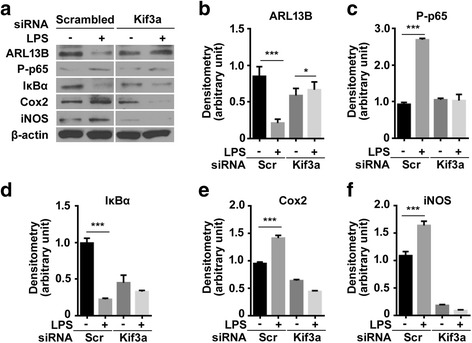
BACKGROUND: The primary cilium is an organelle that can act as a master regulator of cellular signaling. Despite the presence of primary cilia in hippocampal neurons, their function is not fully understood. Recent studies have demonstrated that the primary cilium influences interleukin (IL)-1β-induced NF-κB signaling, ultimately mediating the inflammatory response. We, therefore, investigated ciliary function and NF-κB signaling in lipopolysaccharide (LPS)-induced neuroinflammation in conjunction with ciliary length analysis. METHODS: mice injected with LPS. Next, to exclude the effects of microglial TLR4, we examined the ciliary length, ciliary components, inflammatory cytokine, and mediators in HT22 hippocampal neuronal cells. RESULTS: mice. LPS treatment decreased primary ciliary length, activated NF-κB signaling, and increased Cox2 and iNOS levels in HT22 hippocampal neurons. In contrast, silencing Kif3a, a key protein component of cilia, increased ARL13B ciliary protein levels and suppressed NF-κB signaling and expression of inflammatory mediators. CONCLUSIONS: These data suggest that LPS-induced NF-κB signaling and inflammatory mediator expression are modulated by cilia and that the blockade of primary cilium formation by Kif3a siRNA regulates TLR4-induced NF-κB signaling. We propose that primary cilia are critical for regulating NF-κB signaling events in neuroinflammation and in the innate immune response.
Overview
The claims and statistics of this paper haven’t been checked yet.
Free: it reads the open-access text and checks the first 5 claims that cite a source we can check. Create a free account to check every claim.
Integrity signals
Registry
Cites
Statistics
Figures
Verification
Claims the paper makes
The claims and statistics of this paper haven’t been checked yet.
Free: it reads the open-access text and checks the first 5 claims that cite a source we can check. Create a free account to check every claim.
Claims other papers make about this one
Each is checked against this paper’s own text: does it say what the citing paper says it does?
The source backs part of the claim, not all of it — or backs it for a different population, condition or comparison.
In the citing paper
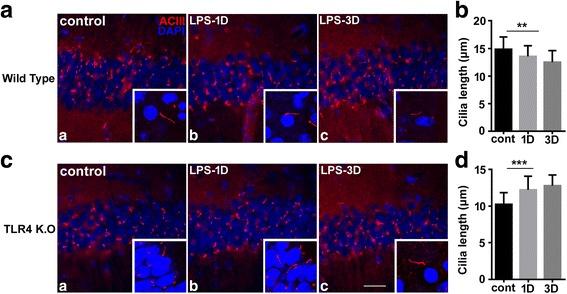
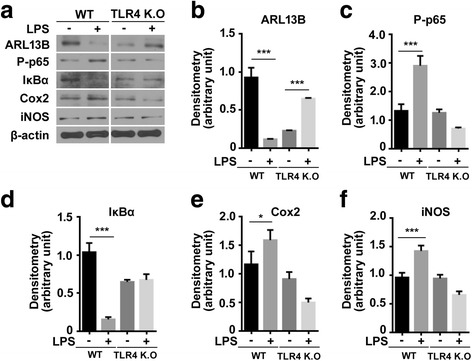
“Further evidence from Baek et al. demonstrated that, 1 day after intracerebroventricular injection of lipopolysaccharide (LPS) in C57BL/6 mice, there was a reduction in both the length of AC3-labeled primary cilia and the expression of Arl13b in the hippocampus, accompanied by increased levels of inflammatory mediators, including Cox2 and iNOS.”
From Primary cilia in the mature brain: emerging roles in Alzheimer's disease pathogenesis (2025) · cites this paper as Baek et al., 2017
Experimental — accuracy not yet measuredThe source backs part of the claim, not all of it — or backs it for a different population, condition or comparison.
In the citing paper
“In contrast, toll-like receptor 4 (Tlr4) knockout mice show increased primary ciliary length and elevated Arl13b expression following LPS administration, without significant changes in Cox2 and iNOS levels.”
From Primary cilia in the mature brain: emerging roles in Alzheimer's disease pathogenesis (2025) · cites this paper as Baek et al., 2017
Experimental — accuracy not yet measuredThe source backs part of the claim, not all of it — or backs it for a different population, condition or comparison.
In the citing paper
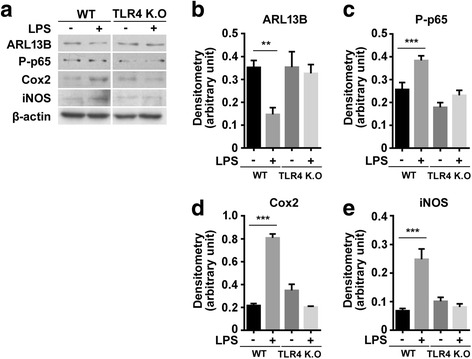
“In kinesin family member 3A (Kif3a) knockdown HT22 cells, 24-h LPS exposure fails to elicit an inflammatory response but results in a slight increase in Arl13b expression (Baek et al., 2017), suggesting that intact primary”
From Primary cilia in the mature brain: emerging roles in Alzheimer's disease pathogenesis (2025) · cites this paper as Baek et al., 2017
Experimental — accuracy not yet measuredThe source backs part of the claim, not all of it — or backs it for a different population, condition or comparison.
In the citing paper
“Intraperitoneal LPS administration in mice shortens primary cilium length in hippocampal neurons (Baek et al. 2017).”
From Astrocyte-specific inhibition of the primary cilium suppresses C3 expression in reactive astrocyte (2024) · cites this paper as Baek et al. 2017
Experimental — accuracy not yet measuredThe cited source says what the claim attributes to it.
In the citing paper
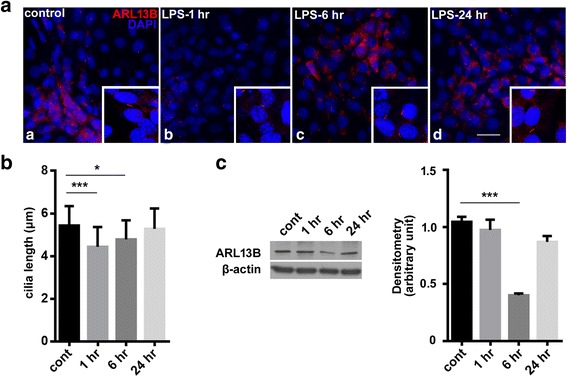
“Similar effects occur in vitro: HT22 hippocampal cells exhibit shortened primary cilia after just 1 h of LPS exposure, with marked Arl13b reduction after 6 h, while LPS does not significantly alter Arl13b expression level in primary neurons from Tlr4 −/− mice.”
From Primary cilia in the mature brain: emerging roles in Alzheimer's disease pathogenesis (2025) · cites this paper as Baek et al., 2017
Self-check
Percentages, sums and reported differences re-computed from the paper’s own numbers.
The self-check needs the paper’s full text.
Citations
Cites
The primary cilium: a signalling centre during vertebrate development
Goetz, S. C., & Anderson, K. V. (2010) · Nature Reviews Genetics · doi:10.1038/nrg2774 · Cited by 1,824 · cited 1×
“Indeed, there are now established functions for primary cilia in left-right determination, mechanosensation, and regulation of Sonic hedgehog (Shh) [3, 4], Wnt [5], insulin growth factor (IGF), and transforming growth factor (TGF) signaling [6].”
BackgroundVertebrate Smoothened functions at the primary cilium
Corbit, K. C., Aanstad, P., Singla, V., Norman, A. R., Stainier, D. Y. R., & Reiter, J. F. (2005) · Nature · doi:10.1038/nature04117 · Cited by 1,481 · cited 1×
“Indeed, there are now established functions for primary cilia in left-right determination, mechanosensation, and regulation of Sonic hedgehog (Shh) [3, 4], Wnt [5], insulin growth factor (IGF), and transforming growth factor (TGF) signaling [6].”
BackgroundPatched1 Regulates Hedgehog Signaling at the Primary Cilium
Rohatgi, R., Milenkovic, L., & Scott, M. P. (2007) · Science · doi:10.1126/science.1139740 · Cited by 1,426 · cited 1×
“Indeed, there are now established functions for primary cilia in left-right determination, mechanosensation, and regulation of Sonic hedgehog (Shh) [3, 4], Wnt [5], insulin growth factor (IGF), and transforming growth factor (TGF) signaling [6].”
Function of Nod‐like receptors in microbial recognition and host defense
Franchi, L., Warner, N., Viani, K., & Nuñez, G. (2009) · Immunological Reviews · doi:10.1111/j.1600-065x.2008.00734.x · Cited by 903 · cited 1×
“While the mechanism of this slightly increased ciliary length under LPS is currently unclear, it may be resulted from existence of other LPS receptors, such as TLR2, nucleotide oligomerization domain (Nod)-like receptors (NLRs) [47], and cannabinoid receptor [48].”
BackgroundThe Vertebrate Primary Cilium in Development, Homeostasis, and Disease
Gerdes, J. M., Davis, E. E., & Katsanis, N. (2009) · Cell · doi:10.1016/j.cell.2009.03.023 · Cited by 706 · cited 1×
“Kinesin-2 motor proteins mediate anterograde transport to the distal tip of the cilium, while dynein motor proteins mediate retrograde transport to the basal body of the cilium [32].”
BackgroundLehnardt, S., Lachance, C., Patrizi, S., Lefebvre, S., Follett, P. L., Jensen, F. E., Rosenberg, P. A., Volpe, J. J., & Vartanian, T. (2002) · The Journal of Neuroscience · doi:10.1523/jneurosci.22-07-02478.2002 · Cited by 689 · cited 1×
“Early studies report that TLR4 is expressed primarily in microglia, but not astrocytes or neurons [21].”
BackgroundToll-like receptors modulate adult hippocampal neurogenesis
Rolls, A., Shechter, R., London, A., Ziv, Y., Ronen, A., Levy, R., & Schwartz, M. (2007) · Nature Cell Biology · doi:10.1038/ncb1629 · Cited by 622 · cited 1×
“Constitutive expression of TLR4 has been detected in hippocampal neurons [25], sensory neurons [26], and neural stem cells [27].”
BackgroundHedgehog signaling and primary cilia are required for the formation of adult neural stem cells
Han, Y.-G., Spassky, N., Romaguera-Ros, M., Garcia-Verdugo, J.-M., Aguilar, A., Schneider-Maunoury, S., & Alvarez-Buylla, A. (2008) · Nature Neuroscience · doi:10.1038/nn2059 · Cited by 547 · cited 1×
“Neurons and astrocytes have been found to have a non-motile primary cilium [7].”
BackgroundCilia and Developmental Signaling
Eggenschwiler, J. T., & Anderson, K. V. (2007) · Annual Review of Cell and Developmental Biology · doi:10.1146/annurev.cellbio.23.090506.123249 · Cited by 530 · cited 1×
“Cilia are conserved, microtubule-based organelles that grow from basal bodies (centrosome-derived structures) and extend from the cell surface [1].”
BackgroundToll-like receptor signaling in neural plasticity and disease
Okun, E., Griffioen, K. J., & Mattson, M. P. (2011) · Trends in Neurosciences · doi:10.1016/j.tins.2011.02.005 · Cited by 510 · cited 1×
“axonal growth, neuronal plasticity, and adult neurogenesis [22].”
BackgroundClinical and genetic aspects of primary ciliary dyskinesia/Kartagener syndrome
Leigh, M. W., Pittman, J. E., Carson, J. L., Ferkol, T. W., Dell, S. D., Davis, S. D., Knowles, M. R., & Zariwala, M. A. (2009) · Genetics in Medicine · doi:10.1097/gim.0b013e3181a53562 · Cited by 470 · cited 1×
“With regard to human disorders, primary ciliary dyskinesia (PCD) is a genetic disorder involving dysfunction of motile cilia, which share much in structural homology with primary cilia [38].”
BackgroundPavlov, V. A., Parrish, W. R., Rosas-Ballina, M., Ochani, M., Puerta, M., Ochani, K., Chavan, S., Al-Abed, Y., & Tracey, K. J. (2009) · Brain, Behavior, and Immunity · doi:10.1016/j.bbi.2008.06.011 · Cited by 435
Guillot, L., Medjane, S., Le-Barillec, K., Balloy, V., Danel, C., Chignard, M., & Si-Tahar, M. (2004) · Journal of Biological Chemistry · doi:10.1074/jbc.m305790200 · Cited by 359
Primary cilia regulate hippocampal neurogenesis by mediating sonic hedgehog signaling
Breunig, J. J., Sarkisian, M. R., Arellano, J. I., Morozov, Y. M., Ayoub, A. E., Sojitra, S., Wang, B., Flavell, R. A., Rakic, P., & Town, T. (2008) · Proceedings of the National Academy of Sciences · doi:10.1073/pnas.0804558105 · Cited by 344 · cited 1×
“Kinesin-2 family protein A (Kif3a), a kinesin motor subunit, is required for proper ciliary function and structure [29, 30].”
BackgroundIdentification of Signaling Pathways Regulating Primary Cilium Length and Flow-Mediated Adaptation
Besschetnova, T. Y., Kolpakova-Hart, E., Guan, Y., Zhou, J., Olsen, B. R., & Shah, J. V. (2010) · Current Biology · doi:10.1016/j.cub.2009.11.072 · Cited by 334 · cited 1×
“The presence and length of cilia are dependent upon various factors, including the expression and activities of ciliary proteins [49], inflammation [13], and mechanical stress [50].”
BackgroundTran, P. V., Haycraft, C. J., Besschetnova, T. Y., Turbe-Doan, A., Stottmann, R. W., Herron, B. J., Chesebro, A. L., Qiu, H., Scherz, P. J., Shah, J. V., et al. (2008) · Nature Genetics · doi:10.1038/ng.105 · Cited by 322 · cited 1×
“Changes in ciliary length are thus indicative of altered function, as observed in Wnt and Sonic hedgehog signaling [15, 16].”
BackgroundType III adenylyl cyclase localizes to primary cilia throughout the adult mouse brain
Bishop, G. A., Berbari, N. F., Lewis, J., & Mykytyn, K. (2007) · Journal of Comparative Neurology · doi:10.1002/cne.21510 · Cited by 317 · cited 4×
“Despite the widespread presence of primary cilia in hippocampal neurons, their function remains unknown [10, 11].”
BackgroundMethodInfluentialPrimary cilia are required for cerebellar development and Shh-dependent expansion of progenitor pool
Spassky, N., Han, Y.-G., Aguilar, A., Strehl, L., Besse, L., Laclef, C., Romaguera Ros, M., Garcia-Verdugo, J. M., & Alvarez-Buylla, A. (2008) · Developmental Biology · doi:10.1016/j.ydbio.2008.02.026 · Cited by 314 · cited 2×
“Primary cilia are present in neurons, mediate mechanical and chemical signal transduction, and contain proteins that support intraciliary transport and structure [8, 9].”
BackgroundPrimary Cilia in the Developing and Mature Brain
Guemez-Gamboa, A., Coufal, N. G., & Gleeson, J. G. (2014) · Neuron · doi:10.1016/j.neuron.2014.04.024 · Cited by 296 · cited 2×
“Primary cilia have well-established roles in the regulation of many signaling pathways [34].”
BackgroundSubcellular spatial regulation of canonical Wnt signalling at the primary cilium
Lancaster, M. A., Schroth, J., & Gleeson, J. G. (2011) · Nature Cell Biology · doi:10.1038/ncb2259 · Cited by 267 · cited 4×
“McMurray RJ, Wann AK, Thompson CL, Connelly JT, Knight MM. Surface topography regulates Wnt signaling through control of primary cilia structure in mesenchymal stem cells.”
BackgroundInfluentialIoannidis, I., Ye, F., McNally, B., Willette, M., & Flaño, E. (2013) · Journal of Virology · doi:10.1128/jvi.01956-12 · Cited by 216 · cited 1×
“Differential and receptor-specific TLR expression on ciliated/basal cells or on the apical/basolateral cell membrane of the airway epithelium has been documented [44].”
BackgroundSoluble levels of cytosolic tubulin regulate ciliary length control
Sharma, N., Kosan, Z. A., Stallworth, J. E., Berbari, N. F., & Yoder, B. K. (2011) · Molecular Biology of the Cell · doi:10.1091/mbc.e10-03-0269 · Cited by 173 · cited 1×
“The presence and length of cilia are dependent upon various factors, including the expression and activities of ciliary proteins [49], inflammation [13], and mechanical stress [50].”
BackgroundThe primary cilium as a cellular signaling center: lessons from disease
Lancaster, M. A., & Gleeson, J. G. (2009) · Current Opinion in Genetics & Development · doi:10.1016/j.gde.2009.04.008 · Cited by 156 · cited 1×
“They have been hypothesized to act as “antennae” during signal detection, which, in many contexts, has proven to be the case [2].”
BackgroundLeow-Dyke, S., Allen, C., Denes, A., Nilsson, O., Maysami, S., Bowie, A. G., Rothwell, N. J., & Pinteaux, E. (2012) · Journal of Neuroinflammation · doi:10.1186/1742-2094-9-230 · Cited by 145 · cited 1×
“Because LPS administration induces neuroinflammation, this model is likely suitable for evaluating ciliary function in the hippocampus [19].”
Duncan, M., Mouihate, A., Mackie, K., Keenan, C. M., Buckley, N. E., Davison, J. S., Patel, K. D., Pittman, Q. J., & Sharkey, K. A. (2008) · American Journal of Physiology-Gastrointestinal and Liver Physiology · doi:10.1152/ajpgi.90285.2008 · Cited by 144
Kinesin-2 is a motor for late endosomes and lysosomes
Brown, C. L., Maier, K. C., Stauber, T., Ginkel, L. M., Wordeman, L., Vernos, I., & Schroer, T. A. (2005) · Traffic · doi:10.1111/j.1600-0854.2005.00347.x · Cited by 140 · cited 1×
“Kinesin-2 forms a heterotrimeric complex consisting of the motor subunits, Kif3a and Kif3b, and a nonmotor subunit, kinesin-associated protein [31].”
BackgroundPrimary cilia elongation in response to interleukin-1 mediates the inflammatory response
Wann, A. K. T., & Knight, M. M. (2012) · Cellular and Molecular Life Sciences · doi:10.1007/s00018-012-0980-y · Cited by 139 · cited 3×
“Recent studies demonstrated that primary cilia contribute to IL-1β-induced NF-κB signaling by regulating IKK activity and mediating the inflammatory response [12, 13].”
BackgroundSchmidts, M., Vodopiutz, J., Christou-Savina, S., Cortés, C. R., McInerney-Leo, A. M., Emes, R. D., Arts, H. H., Tüysüz, B., D’Silva, J., Leo, P. J., et al. (2013) · The American Journal of Human Genetics · doi:10.1016/j.ajhg.2013.10.003 · Cited by 123 · cited 1×
“Similarly, human disorders in which primary ciliary dysfunction has been implicated, including Jeune syndrome and short rib-polydactyly syndrome type III, have been recently linked to WDR34, which is itself associated with NF-κB signaling [40, 41].”
BackgroundCholinergic status modulations in human volunteers under acute inflammation
Ofek, K., Krabbe, K. S., Evron, T., Debecco, M., Nielsen, A. R., Brunnsgaad, H., Yirmiya, R., Soreq, H., & Pedersen, B. K. (2007) · Journal of Molecular Medicine · doi:10.1007/s00109-007-0226-x · Cited by 116
Leptin-promoted cilia assembly is critical for normal energy balance
Han, Y. M., Kang, G. M., Byun, K., Ko, H. W., Kim, J., Shin, M.-S., Kim, H.-K., Gil, S. Y., Yu, J. H., Lee, B., et al. (2014) · Journal of Clinical Investigation · doi:10.1172/jci69395 · Cited by 115 · cited 1×
“Whereas staining for somatostatin receptor 3 could potentially be used for the same purpose, this stain labels only approximately 30–50% of ACIIIimmunoreactive cilia in neurons [20].”
BackgroundSelf-citationHippocampal neurons possess primary cilia in culture
Berbari, N. F., Bishop, G. A., Askwith, C. C., Lewis, J. S., & Mykytyn, K. (2007) · Journal of Neuroscience Research · doi:10.1002/jnr.21209 · Cited by 111 · cited 1×
“Despite the widespread presence of primary cilia in hippocampal neurons, their function remains unknown [10, 11].”
BackgroundHan, B., Li, X., & Hao, J. (2017) · Neuroscience & Biobehavioral Reviews · doi:10.1016/j.neubiorev.2017.04.002 · Cited by 108
McMurray, R. J., Wann, A. K. T., Thompson, C. L., Connelly, J. T., & Knight, M. M. (2013) · Scientific Reports · doi:10.1038/srep03545 · Cited by 106 · cited 1×
“Changes in ciliary length are thus indicative of altered function, as observed in Wnt and Sonic hedgehog signaling [15, 16].”
BackgroundBacterial lipopolysaccharide regulates nociceptin expression in sensory neurons
Acosta, C., & Davies, A. (2008) · Journal of Neuroscience Research · doi:10.1002/jnr.21565 · Cited by 99 · cited 1×
“Constitutive expression of TLR4 has been detected in hippocampal neurons [25], sensory neurons [26], and neural stem cells [27].”
BackgroundLeptin resistance is a secondary consequence of the obesity in ciliopathy mutant mice
Berbari, N. F., Pasek, R. C., Malarkey, E. B., Yazdi, S. M. Z., McNair, A. D., Lewis, W. R., Nagy, T. R., Kesterson, R. A., & Yoder, B. K. (2013) · Proceedings of the National Academy of Sciences · doi:10.1073/pnas.1210192110 · Cited by 98 · cited 2×
“Primary cilia are present in neurons, mediate mechanical and chemical signal transduction, and contain proteins that support intraciliary transport and structure [8, 9].”
BackgroundHuber, C., Wu, S., Kim, A. S., Sigaudy, S., Sarukhanov, A., Serre, V., Baujat, G., Sang, K. L. Q., Rimoin, D. L., Cohn, D. H., et al. (2013) · The American Journal of Human Genetics · doi:10.1016/j.ajhg.2013.10.007 · Cited by 93
Fowler, C., Olivier, K. N., Leung, J. M., Smith, C. C., Huth, A. G., Root, H. B., Kuhns, D. B., Logun, C., Zelazny, A. M., Frein, C. A., et al. (2013) · American Journal of Respiratory and Critical Care Medicine · doi:10.1164/rccm.201212-2197oc · Cited by 85 · cited 1×
“Other studies show that nasal NO production, ciliary beat frequency, and TLR signaling are impaired in pulmonary nontuberculous mycobacterial disease [46].”
BackgroundLattke, M., Magnutzki, A., Walther, P., Wirth, T., & Baumann, B. (2012) · The Journal of Neuroscience · doi:10.1523/jneurosci.0182-12.2012 · Cited by 82
Zeytun, A., Chaudhary, A., Pardington, P. E., Cary, R. B., & Gupta, G. (2010) · Critical Reviews in Immunology · doi:10.1615/critrevimmunol.v30.i1.40 · Cited by 80 · cited 1×
“Because stimulation of TLR4 activates NF-κB signaling to promote the expression of cytokines, chemokines, and adhesion molecules [23, 24], we next measured the expression of ciliary proteins and indicators of TLR4-mediated NF-κB signaling.”
BackgroundAnand, A. R., Bradley, R. R., & Ganju, R. K. (2008) · Molecular Immunology · doi:10.1016/j.molimm.2008.09.022 · Cited by 66
Shin, W.-H., Jeon, M.-T., Leem, E., Won, S.-Y., Jeong, K. H., Park, S.-J., McLean, C., Lee, S. J., Jin, B. K., Jung, U. J., et al. (2015) · Scientific Reports · doi:10.1038/srep14764 · Cited by 64 · cited 1×
“TLR4, however, is also expressed by microglia, and TLR4 activation in microglia mediates inflammation in response to central nervous system infection [28].”
BackgroundSelf-citationZimmerman, G., Shaltiel, G., Barbash, S., Cohen, J., Gasho, C. J., Shenhar-Tsarfaty, S., Shalev, H., Berliner, S. A., Shelef, I., Shoham, S., et al. (2012) · Translational Psychiatry · doi:10.1038/tp.2012.4 · Cited by 55
The primary cilium influences interleukin-1β-induced NFκB signalling by regulating IKK activity
Wann, A. K. T., Chapple, J. P., & Knight, M. M. (2014) · Cellular Signalling · doi:10.1016/j.cellsig.2014.04.004 · Cited by 53
Kif3a is necessary for initiation and maintenance of medulloblastoma
Barakat, M. T., Humke, E. W., & Scott, M. P. (2013) · Carcinogenesis · doi:10.1093/carcin/bgt041 · Cited by 50 · cited 1×
“Kinesin-2 family protein A (Kif3a), a kinesin motor subunit, is required for proper ciliary function and structure [29, 30].”
BackgroundThe IN/OUT assay: a new tool to study ciliogenesis
Kukic, I., Rivera-Molina, F., & Toomre, D. (2016) · Cilia · doi:10.1186/s13630-016-0044-2 · Cited by 40 · cited 2×
“The biogenesis of primary cilia was investigated to track the stages of primary cilia assembly [17].”
BackgroundInterleukin-1β sequesters hypoxia inducible factor 2α to the primary cilium
Wann, A. K., Thompson, C. L., Chapple, J. P., & Knight, M. M. (2013) · Cilia · doi:10.1186/2046-2530-2-17 · Cited by 38
Smith, C. M., Fadaee-Shohada, M. J., Sawhney, R., Baker, N., Williams, G., Hirst, R. A., Andrew, P. W., & O’Callaghan, C. (2013) · CHEST Journal · doi:10.1378/chest.13-0159 · Cited by 25 · cited 1×
“Low nitric oxide (NO) is a clinical marker of PCD, and there is evidence that cells isolated from patients with PCD have a reduced capacity to respond to infectious challenge [39].”
BackgroundVézina, A., Vaillancourt-Jean, E., Albarao, S., & Annabi, B. (2013) · Cancer Letters · doi:10.1016/j.canlet.2013.11.021 · Cited by 25
Yi, M., Zhang, E., Baek, H., Kim, S., Shin, N., Kang, J. W., Lee, S. Y., Oh, S., & Kim, D. W. (2015) · Experimental Neurobiology · doi:10.5607/en.2015.24.2.133 · Cited by 25 · cited 1×
“Immunohistochemical staining of the tissue sections were performed using the avidin–biotin peroxidase complex (ABC) method described previously [11, 18].”
MethodSelf-citationYoo, K., Yoo, D. Y., Hwang, I. K., Park, J. H., Lee, C. H., Choi, J. H., Kwon, S., Her, S., Lee, Y. L., & Won, M. (2011) · Neurochemical Research · doi:10.1007/s11064-011-0569-0 · Cited by 16
Cited by
Fu, S., Thompson, C. L., Ali, A. A., Wang, W., Chapple, J. P., Mitchison, H. M., Beales, P. L., Wann, A. K. T., & Knight, M. M. (2019) · Osteoarthritis and Cartilage · doi:10.1016/j.joca.2019.03.003 · Cited by 90
Ding, W., Cai, C., Zhu, X., Wang, J., & Jiang, Q. (2022) · International Immunopharmacology · doi:10.1016/j.intimp.2022.108913 · Cited by 90
Du, S., Qiao, D., Chen, C., Chen, S., Liu, C., Lin, Z., Wang, H., & Xie, W. (2017) · Frontiers in Molecular Neuroscience · doi:10.3389/fnmol.2017.00409 · Cited by 85
“Studies of other neurological disease models have shown that TLR4 plays an important role in the pathogenesis of a variety of neuro-inflammation and is expressed in microglia and neurons (Wang et al., 2014; Baek et al., 2017; Chen et al., 2017; Lawrimore and Crews, 2017; Rocha Sobrinho et al., 2017).”
BackgroundPalla, A. R., Hilgendorf, K. I., Yang, A. V., Kerr, J. P., Hinken, A. C., Demeter, J., Kraft, P. E., Mooney, N. A., Yucel, N. D., Burns, D. M., et al. (2022) · Nature Communications · doi:10.1038/s41467-022-29150-6 · Cited by 77
Mukherjee, I., Roy, S., & Chakrabarti, S. (2019) · Frontiers in Genetics · doi:10.3389/fgene.2019.00023 · Cited by 56
“, 2015), Hedgehog, PDGF, WNT (Goetz and Anderson, 2010), TLR signaling (Baek et al., 2017) and vesicle mediated transport (Nachury et al.”
Background
Metadata
- Authors
- Baek, H., Shin, H. J., Kim, J.-J., Shin, N., Kim, S., Yi, M.-H., Zhang, E., Hong, J., Kang, J. W., Kim, Y., Kim, C.-S., & Kim, D. W.
- Affiliations
- Chungnam National University (KR)
- University of Alabama (US)
- Corresponding author
- Kim, Cuk-Seong
- Kim, Dong Woon
- ORCID
- Venue
- Journal of Neuroinflammation
- Published
- 2017-09-19
- Volume
- 14
- Issue
- 1
- Pages
- 189-189
- ISSN
- 1742-2094 (ISSN-L)
- PMC
- PMC5606072
- OpenAlex
- W2755666968
- Cited by
- 43
- References
- 50
- Citations by year
- 2026: 5 · 2025: 7 · 2024: 7 · 2023: 6 · 2022: 5 · 2021: 3 · 2020: 4 · 2019: 3 · 2018: 2 · 2017: 1
- FWCI
- 1.82
- Type
- journal article
- Language
- en
- Open access
- gold
- doi.org
- Licence
- cc-by
- Locations
- Journal of Neuroinflammation (publishedVersion, cc-by)
- Europe PMC (PubMed Central) (publishedVersion, cc-by)
- PubMed Central (publishedVersion, cc-by)
- PubMed (publishedVersion)
- DOAJ (DOAJ: Directory of Open Access Journals) (submittedVersion, cc-by-sa)
- Funders
- National Research Foundation of Korea (KR) (NRF-2016M3C7A1905074)
- National Research Foundation of Korea (NRF) (2016R1A2B4009409)
- Chungnam National University (2016)
- Topics
- Life Sciences › Biochemistry, Genetics and Molecular Biology › Genetics › Genetic and Kidney Cyst Diseases
- Life Sciences › Neuroscience › Neurology › Neuroinflammation and Neurodegeneration Mechanisms
- Life Sciences › Biochemistry, Genetics and Molecular Biology › Molecular Biology › Inflammasome and immune disorders
- Keywords
- primary cilia, TLR4, NF-κB signaling, neuroinflammation, hippocampal neurons, lipopolysaccharide, KIF3A, ARL13B, ciliary length, cyclooxygenase-2, inducible nitric oxide synthase, innate immunity, HT22 cells
- MeSH terms
- Animals, Cilia, Hippocampus, Inflammation, Male, Mice, Inbred C57BL, Neurons, Signal Transduction, NF-kappa B, Mice, Knockout, Toll-Like Receptor 4, Mice
About these checks
Registry, retraction, Cites and statistics results are computed, not judged, with one exception: a printed reference that no index lists is read once by a model before it counts as a citation error. Claims are extracted by a model and kept only when their quote appears verbatim in the text; each cited source is then checked, with a model’s help, for whether it says what the claim relies on. Those verdicts can be wrong — read the claim’s quote and the cited source before relying on one.
Statistics and arithmetic are recomputed, not judged.
Confidence bands are shown only for fields calibrated on our annotated test set. None is calibrated yet, so no band is shown.
What counts as a claim ›How we measure confidence ›How we check this ›
Are you an author, or do you see a problem with this page? Request a review
Data sources
Bibliographic data: Semantic Scholar, OpenAlex, Crossref.
Contains information from the Semantic Scholar Academic Graph Datasets, made available under the ODC Attribution License (ODC-BY 1.0).
Semantic Scholar’s data is described in: Kinney, R., et al. (2023). The Semantic Scholar Open Data Platform. arXiv:2301.10140.
