

Salvianolic acid B protects against lipopolysaccharide-induced behavioral deficits and neuroinflammatory response: involvement of autophagy and NLRP3 inflammasome
Open accessThe DOI matches its Crossref record; 42 of the 42 references it cites were found in a registry or an index.
Abstract
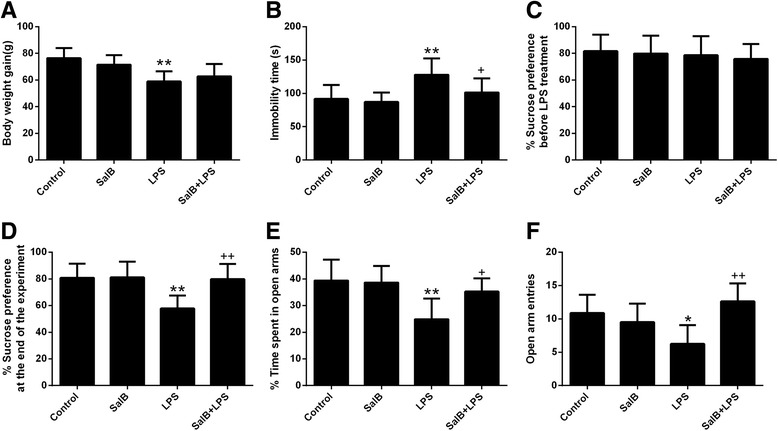
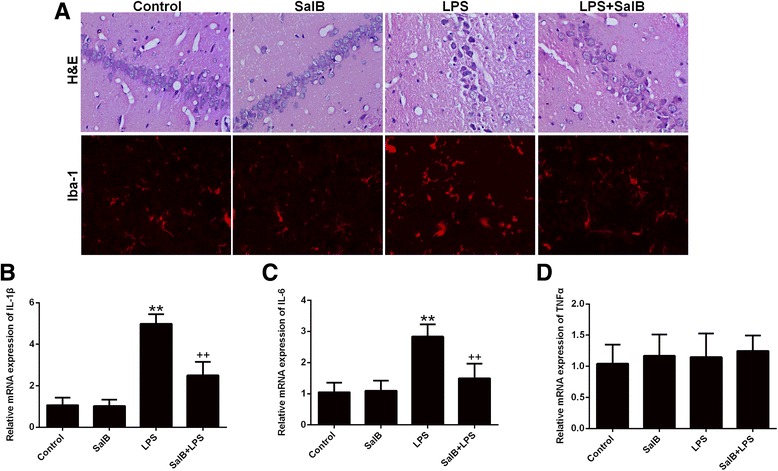
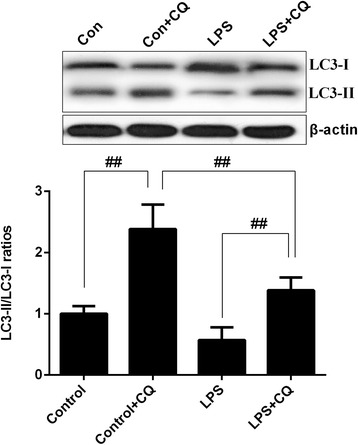
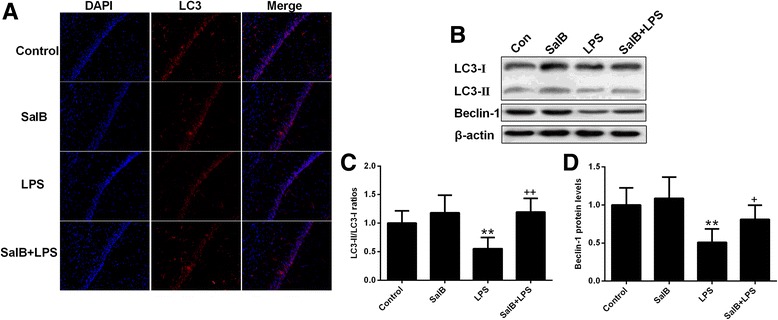
BACKGROUND: The NLRP3 inflammasome activation and neuroinflammation are known to be involved in the pathology of depression, whereas autophagy has multiple effects on immunity, which is partly mediated by the regulation of inflammasome and clearance of proinflammatory cytokines. Given the emerging evidence that autophagy dysfunction plays an essential role in depression, it is very likely that autophagy may interact with the inflammatory process in the development and treatment of depression. Salvianolic acid B (SalB), a naturally occurring compound extracted from Salvia miltiorrhiza, contains anti-inflammatory and antidepression properties and has recently been proven to modulate autophagy. In this study, we sought to investigate whether autophagy is involved in the inflammation-induced depression and the antidepressant effects of SalB. METHODS: The effects of prolonged lipopolysaccharide (LPS) treatment and SalB administration on behavioral changes, neuroinflammation, autophagic markers and NLRP3 activation in rat hippocampus were determined by using behavioral tests, real-time PCR analysis, western blot, and immunostaining. RESULTS: Our data showed that periphery immune challenge by LPS for 2 weeks successfully induced the rats to a depression-like state, accompanied with enhanced expression of pro-inflammatory cytokines and NLRP3 inflammasome activation. Interestingly, autophagic markers, including Beclin-1, and the ratio of LC3II to LC3I were suppressed following prolonged LPS exposure. Meanwhile, co-treatment with SalB showed robust antidepressant effects and ameliorated the LPS-induced neuroinflammation. Additionally, SalB restored the compromised autophagy and overactivated NLRP3 inflammasome in LPS-treated rats. CONCLUSIONS: Collectively, these data suggest that autophagy may interact with NLRP3 activation to contribute to the development of depression, whereas SalB can promote autophagy and induce the clearance of NLRP3, thereby resulting in neuroprotective and antidepressant actions.
Overview
The claims and statistics of this paper haven’t been checked yet.
Free: it reads the open-access text and checks the first 5 claims that cite a source we can check. Create a free account to check every claim.
Integrity signals
Registry
Cites
Statistics
Figures
Verification
Claims the paper makes
The claims and statistics of this paper haven’t been checked yet.
Free: it reads the open-access text and checks the first 5 claims that cite a source we can check. Create a free account to check every claim.
Claims other papers make about this one
Each is checked against this paper’s own text: does it say what the citing paper says it does?
The cited source says what the claim attributes to it.
In the citing paper
“Endotoxin-induced DLB model also exhibits NLRP3 inflammasome activation, particularly in the hippocampus (20, 21).”
From Melatonin Attenuates LPS-Induced Acute Depressive-Like Behaviors and Microglial NLRP3 Inflammasome Activation Through the SIRT1/Nrf2 Pathway (2019) · cites this paper as [20]
Self-check
Percentages, sums and reported differences re-computed from the paper’s own numbers.
The self-check needs the paper’s full text.
Citations
Cites
Whiteford, H. A., Degenhardt, L., Rehm, J., Baxter, A. J., Ferrari, A. J., Erskine, H. E., Charlson, F. J., Norman, R. E., Flaxman, A. D., Johns, N., et al. (2013) · The Lancet · doi:10.1016/s0140-6736(13)61611-6 · Cited by 6,006
Cui, C., Cui, J., Jin, F., Cui, Y., Li, R., Jiang, X., Tian, Y., Wang, K., Jiang, P., & Gao, J. (2017) · Cellular Physiology and Biochemistry · doi:10.1159/000479571 · Cited by 5,203
Self-citationAutophagy and Viruses: Adversaries or Allies?
Dong, X., & Levine, B. (2013) · Journal of Innate Immunity · doi:10.1159/000346388 · Cited by 4,430
The role of inflammation in depression: from evolutionary imperative to modern treatment target
Miller, A. H., & Raison, C. L. (2016) · Nature Reviews Immunology · doi:10.1038/nri.2015.5 · Cited by 3,942 · cited 1×
“Evolving evidence consistently reveals a close linkage between inflammation and major depressive disorder [8].”
Shi, C.-S., Shenderov, K., Huang, N.-N., Kabat, J., Abu-Asab, M., Fitzgerald, K. A., Sher, A., & Kehrl, J. H. (2012) · Nature Immunology · doi:10.1038/ni.2215 · Cited by 1,367 · cited 1×
“The autophagy protein, P62, can interact with the inflammasome component ASC, redirecting the ASC-containing inflammasome towards autophagosome and eventually delivered to lysosomes for destruction [27].”
Autophagy Controls IL-1β Secretion by Targeting Pro-IL-1β for Degradation
Harris, J., Hartman, M., Roche, C., Zeng, S. G., O'Shea, A., Sharp, F. A., Lambe, E. M., Creagh, E. M., Golenbock, D. T., Tschopp, J., et al. (2011) · Journal of Biological Chemistry · doi:10.1074/jbc.m110.202911 · Cited by 794 · cited 3×
“Additionally, it has been shown that IL-1β is sequestered in the LC3-positive autophagosomes upon TLR stimulation, and pro-IL-1β protein levels decreased when autophagy is induced by rapamycin, suggesting that pro-IL-1β is also targeted to autophagosome for degradation [22].”
Crosstalk between autophagy and inflammatory signalling pathways: balancing defence and homeostasis
Cadwell, K. (2016) · Nature Reviews Immunology · doi:10.1038/nri.2016.100 · Cited by 475 · cited 1×
“Autophagy limits detrimental and uncontrolled inflammation, through the clearance of inflammasomes and proinflammatory cytokines, thus functioning as a central fulcrum that balances inflammatory responses [20].”
Autophagy Receptors and Neurodegenerative Diseases
Deng, Z., Purtell, K., Lachance, V., Wold, M. S., Chen, S., & Yue, Z. (2017) · Trends in Cell Biology · doi:10.1016/j.tcb.2017.01.001 · Cited by 238 · cited 1×
“This process is orchestrated by a series of autophagy-related genes (Atg genes), such as Beclin-1 and LC3-II (derived from LC3-I upon lipidation), which are reliable biomarkers for assessing autophagy process [2].”
Harris, J., Lang, T., Thomas, J. P. W., Sukkar, M. B., Nabar, N. R., & Kehrl, J. H. (2017) · Molecular Immunology · doi:10.1016/j.molimm.2017.02.013 · Cited by 222 · cited 1×
“While depression is tightly related to the hyperactivation of NLRP3 inflammasome and overproduction of IL-1β, autophagy removes aggregated inflammasome structures, thus contributing to dampening proinflammatory responses [12].”
NLRP3 gene knockout blocks NF-κB and MAPK signaling pathway in CUMS-induced depression mouse model
Su, W.-J., Zhang, Y., Chen, Y., Gong, H., Lian, Y.-J., Peng, W., Liu, Y.-Z., Wang, Y.-X., You, Z.-L., Feng, S.-J., et al. (2017) · Behavioural Brain Research · doi:10.1016/j.bbr.2017.01.018 · Cited by 215 · cited 1×
“Genetic knock-out of NLRP3 increases the resilience to stress and blocks LPS-induced inflammatory responses [10, 26].”
Cited by
Items 101–139 of 139
Gomes, D. B., Serpa, P. Z., Miorando, D., Zanatta, M. E. D. C., Carteri, C. S., Somensi, L. B., Venzon, L., dos Santos, A. C., França, T. C. S., da Silva, L. M., et al. (2022) · Evidence-based Complementary and Alternative Medicine · doi:10.1155/2022/1041656 · Cited by 17
Yang, C., Xu, Y., Zhang, W., Ma, M., Wang, S., Chai, L., Guo, H. W., & Hu, L. (2021) · Journal of Ethnopharmacology · doi:10.1016/j.jep.2021.113898 · Cited by 13
Gou, Y., Mu, X., Li, Y., Tang, M., Chen, G., & Xiao, S. (2021) · Biochemical Engineering Journal · doi:10.1016/j.bej.2021.108173 · Cited by 12
Chinese Medicine-Derived Salvianolic Acid B for Disease Therapy: A Scientometric Study
Zhao, M., Mu, F., Lin, R. J., Gao, K., Zhang, W., Tao, X., Xu, D. W., & Wang, J. (2024) · The American Journal of Chinese Medicine · doi:10.1142/s0192415x2450054x · Cited by 12
Mohamed, S. S., Rasheed, N. O. A., Ibrahim, W. W., & Shiha, N. A. (2024) · Journal of Neuroimmune Pharmacology · doi:10.1007/s11481-024-10149-3 · Cited by 13
“This study was performed in accordance with the previous investigations (Yang et al. 2018; Jiang et al. 2017; Abdel Rasheed et al. 2023; Gong et al. 2019), which showed that repeated peripheral LPS administration effectively provoked depressive-like behaviors and neuroinflammation in rodents.”
ResultNatural products that alleviate depression: The putative role of autophagy
Zhou, Y., Nan, F., Zhang, Q., Xu, W., Fang, S., Liu, K., Zhao, B., Han, H., Xie, X., Qin, C., et al. (2024) · Pharmacology & Therapeutics · doi:10.1016/j.pharmthera.2024.108731 · Cited by 12
Yu, W., Wu, Z., Li, X., Ding, M., Xu, Y., & Zhao, P. (2023) · Molecular Neurobiology · doi:10.1007/s12035-023-03474-w · Cited by 11
Bi, S., Liu, S., Zhu, K., Gao, D., Chen, L., Yu, C., & Liang, G. (2025) · Frontiers in Pharmacology · doi:10.3389/fphar.2025.1606146 · Cited by 12
Advances of paeoniflorin in depression: the molecular mechanism and formula application
Hou, Y., Li, H., Zhu, L., Tian, Q., Feng, X., Li, Y., Bian, Y., & Wei, Y. (2025) · Frontiers in Pharmacology · doi:10.3389/fphar.2025.1614429 · Cited by 11
Self-citationWang, R., Ji, L., Yuan, S., Liu, X., Liang, Z., Chen, W., Wang, B., Hu, S., Liu, Z., Zeng, Z., et al. (2024) · British Journal of Pharmacology · doi:10.1111/bph.16474 · Cited by 9
“Autophagy process may interact with NLRP3 to contribute to the development of depression, activation of autophagy could induce the clearance of NLRP3, thereby resulting in neuroprotective and antidepressant actions (Jiang et al., 2017).”
Wang, Z., Ma, K., Liu, C., Hu, X., Que, W., Ito, H., Takahashi, K., Nakajima, M., Tanaka, T., Ren, K., et al. (2020) · Drug Discoveries & Therapeutics · doi:10.5582/ddt.2020.03112 · Cited by 8
“Many reports in addition to our own have shown that 5-ALA/SFC has an anti-inflammatory effect in different kinds of diseases (24-33).”
ResultWang, Q., Wang, M., Li, Y., Liu, Y., & Sun, L.-Q. (2022) · Chinese Journal of Integrative Medicine · doi:10.1007/s11655-021-3507-2 · Cited by 9
Han, W., Cui, C., Zhang, H., Guo, Y., Xie, D., Zhang, W., Wang, C., Yang, M., & Jiang, P. (2022) · Pharmacological Research · doi:10.1016/j.phrs.2022.106224 · Cited by 10
Self-citationZhang, G., Lv, S., Bao, S., Zhao, W., Yi, Y., Gao, H., Zhong, X., Li, X., Liu, F., Lu, Y., et al. (2025) · Journal of Pharmaceutical Analysis · doi:10.1016/j.jpha.2025.101356 · Cited by 10
Salvianolate reduces neuronal apoptosis by suppressing OGD-induced microglial activation
Luan, P., Ding, X., Xu, J., Jiang, L., Xu, Y., Zhu, Y., Li, R., & Zhang, J. (2020) · Life Sciences · doi:10.1016/j.lfs.2020.118393 · Cited by 7
Bai, X., Fan, W., Luo, Y., Liu, Y., Zhang, Y., & Liao, X. (2022) · Molecules · doi:10.3390/molecules27227896 · Cited by 7
Zhang, G., Shang, R., Zhong, X., Lv, S., Yi, Y., Lu, Y., Xu, Z., Wang, Y., & Teng, J. (2025) · Phytomedicine · doi:10.1016/j.phymed.2025.156394 · Cited by 7
Modulation of autophagy by melatonin and its receptors: implications in brain disorders
Zhu, C., Li, G., Lyu, H.-F., Lu, Y., Li, Y., & Zhang, X. (2024) · Acta Pharmacologica Sinica · doi:10.1038/s41401-024-01398-2 · Cited by 190
Diterpenoid WT-29 isolated from Wedelia exerted anti-inflammatory and anti-allergic activities
Wang, R., Zeng, J., Chen, L., Sun, L., Wang, Y., Xu, J., & He, X. (2023) · Journal of Ethnopharmacology · doi:10.1016/j.jep.2023.117265 · Cited by 6
Fu, R., Wang, W., Tao, H., Wang, M., Chen, Y., Gao, H., Yue, S., & Tang, Y. (2021) · Journal of Separation Science · doi:10.1002/jssc.202000932 · Cited by 5
Al-Shawadfy, M. G., Kamel, G. A. M., & Abd‐Allah, A. R. A. (2022) · Canadian Journal of Physiology and Pharmacology · doi:10.1139/cjpp-2022-0111 · Cited by 5
Fu, M., Zhang, F., Song, Y., & Wang, J. (2025) · Neurochemical Research · doi:10.1007/s11064-025-04402-1 · Cited by 5
Rushendran, R., Begum, R. F., Ankul Singh, S., Narayanan, P. L., Vellapandian, C., Prajapati, B. G., & Paul, P. K. (2024) · EXCLI journal · doi:10.17179/excli2024-7051 · Cited by 10
Zhao, Z., Chong, Z., & Yunxia, Z. (2023) · PubMed Central · doi:10.19852/j.cnki.jtcm.20220707.005 · Cited by 3
Ning, B., Wei, Y., Luo, C., Yang, L., Zheng, Z., Fang, P., Ge, T., Wang, C., Hu, J., Zhao, Q., et al. (2026) · Phytomedicine · doi:10.1016/j.phymed.2026.158061 · Cited by 2
Kiah, M., Azimi, A., Hajisoltani, R., & Yousefifard, M. (2024) · Archives of Academic Emergency Medicine · doi:10.22037/aaem.v12i1.2150 · Cited by 2
“Since rapamycin acts as an mTOR kinase inhibitor, it holds the potential for anti-inflammatory effects (48).”
BackgroundWang, Y. N., Feng-ling, Y., Wang, Y., Liu, C. X., Hua, X., Wang, L., Zu, X., Liu, X., Pozzolini, M., Zhu, Y., et al. (2025) · International Journal of Biological Macromolecules · doi:10.1016/j.ijbiomac.2025.147167 · Cited by 1
Autophagy Modulation by Antidepressants: Mechanisms and Implications
Zheng, Y., Ma, Y., Pan, Y., Ali, T., Zheng, C., Miu, K. K., Wang, Z., Zhang, L., Li, S., & Tan, Z. (2025) · Neurochemical Research · doi:10.1007/s11064-025-04534-4 · Cited by 3
Bo, Y., Chen, Y., Liang, H. Y., Zhao, F., Wu, M., Wang, Y., & Sha, R. (2025) · AI Med · doi:10.71423/aimed.20250103 · Cited by 1
RetractedEffect of salvianolic acid B on NLRP3/caspase-1/GSDMD pyrolysis pathway in NASH cells
Chen, X.-Q., Peng, B., Jiang, H., Zhang, C.-X., Li, H., & Li, Z. (2022) · World Chinese Journal of Digestology · doi:10.11569/wcjd.v30.i2.69
Self-citationEpperson, C. N., & Novick, A. M. (2020) · Faculty Opinions – Post-Publication Peer Review of the Biomedical Literature · doi:10.3410/f.737255275.793571700
Adeoluwa, O. A., Agboola, I., Akinluyi, E. T., Eduviere, A. T., Adeoluwa, G. O., Ajayi, A. M., & Aderibigbe, A. O. (2023) · Research Square · doi:10.21203/rs.3.rs-2022819/v1
Neuroprotection induced by salvianolic acids
Habtemariam, S. (2024) · Elsevier eBooks · doi:10.1016/b978-0-443-23763-8.00052-x
Ullah, A., Irfan, H. M., Siddiqui, S., & Khan, I. (2022) · Phytopharmacological communications. · doi:10.55627/ppc.002.01.0043
Yang, Q., Lv, Y., Gao, S., Zhang, Y., & Zhai, X. (2025) · Frontiers in Psychology · doi:10.3389/fpsyg.2025.1529339
Treutlein, J., Krämer, B., & Gruber, O. (2025) · The World Journal of Biological Psychiatry · doi:10.1080/15622975.2025.2522793
“…(LPS) treatment of rodents, an experimental model for behavioural alterations that resemble depression in humans, induced depression-like symptoms and changed expression of autophagic markers, among them protein LC3 in the central nervous system (François et al. 2014; Jiang et al. 2017).”
Autophagy Pathways in Major Depressive Disorder
Shafiei, G., Saadat, M., Farajpour, S., Mohammadi, S., Dashti, N., & Mokhtari, T. (2025) · IGI Global eBooks · doi:10.4018/979-8-3693-5908-2.ch004 · Cited by 2
孙, 瑛. (2026) · Advances in Clinical Medicine · doi:10.12677/acm.2026.1662376
Metadata
- Authors
- Jiang, P., Guo, Y., Dang, R., Yang, M., Liao, D., Li, H., Sun, Z., Feng, Q., & Xu, P.
- Affiliations
- Jining First People's Hospital (CN)
- Central South University (CN)
- Corresponding author
- Dang, Ruili
- Xu, Pengfei
- Venue
- Journal of Neuroinflammation
- Published
- 2017-12
- Volume
- 14
- Issue
- 1
- Pages
- 239-239
- ISSN
- 1742-2094 (ISSN-L)
- PMC
- PMC5719935
- OpenAlex
- W2771367031
- Cited by
- 139
- References
- 42
- Citations by year
- 2026: 2 · 2025: 16 · 2024: 13 · 2023: 12 · 2022: 25 · 2021: 24 · 2020: 23 · 2019: 16 · 2018: 8
- FWCI
- 4.27
- Type
- journal article
- Language
- en
- Open access
- gold
- doi.org
- Licence
- cc-by
- Locations
- Journal of Neuroinflammation (publishedVersion, cc-by)
- Europe PMC (PubMed Central) (publishedVersion, cc-by)
- PubMed Central (publishedVersion, cc-by)
- PubMed (publishedVersion)
- DOAJ (DOAJ: Directory of Open Access Journals) (submittedVersion)
- Funders
- National Natural Science Foundation of China (81602846)
- Natural Science Foundation of Shandong Province (ZR2016HQ21, ZR2016HP24)
- Topics
- Life Sciences › Neuroscience › Biological Psychiatry › Tryptophan and brain disorders
- Life Sciences › Neuroscience › Neurology › Neuroinflammation and Neurodegeneration Mechanisms
- Health Sciences › Medicine › Pharmacology (medical) › Treatment of Major Depression
- Keywords
- salvianolic acid B, lipopolysaccharide, depression, neuroinflammation, autophagy, NLRP3 inflammasome, hippocampus, Beclin-1, LC3, inflammatory cytokines, antidepressant effects, Salvia miltiorrhiza, neuroprotection
- MeSH terms
- NLR Family, Pyrin Domain-Containing 3 Protein, Animals, Anti-Inflammatory Agents, Autophagy, Behavior, Animal, Benzofurans, Depression, Inflammation, Lipopolysaccharides, Male, Rats, Sprague-Dawley, Rats, Depsides, Inflammasomes
About these checks
Registry, retraction, Cites and statistics results are computed, not judged, with one exception: a printed reference that no index lists is read once by a model before it counts as a citation error. Claims are extracted by a model and kept only when their quote appears verbatim in the text; each cited source is then checked, with a model’s help, for whether it says what the claim relies on. Those verdicts can be wrong — read the claim’s quote and the cited source before relying on one.
Statistics and arithmetic are recomputed, not judged.
Confidence bands are shown only for fields calibrated on our annotated test set. None is calibrated yet, so no band is shown.
What counts as a claim ›How we measure confidence ›How we check this ›
Are you an author, or do you see a problem with this page? Request a review
Data sources
Bibliographic data: Semantic Scholar, OpenAlex, Crossref.
Contains information from the Semantic Scholar Academic Graph Datasets, made available under the ODC Attribution License (ODC-BY 1.0).
Semantic Scholar’s data is described in: Kinney, R., et al. (2023). The Semantic Scholar Open Data Platform. arXiv:2301.10140.
