

AM404, paracetamol metabolite, prevents prostaglandin synthesis in activated microglia by inhibiting COX activity
Open accessThe DOI matches its Crossref record; 64 of the 64 references it cites were found in a registry or an index.
Abstract
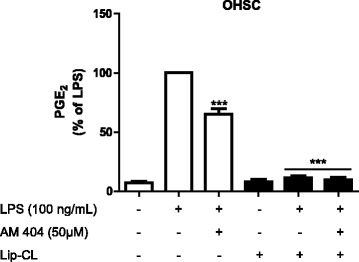
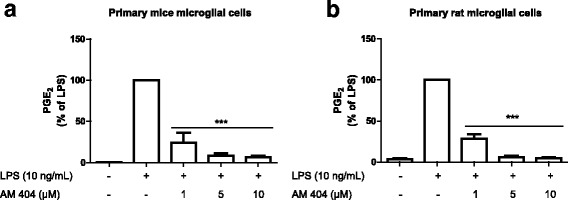
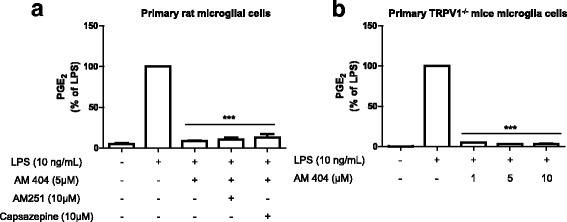
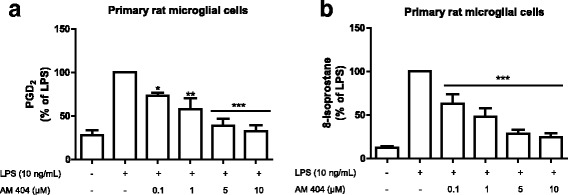
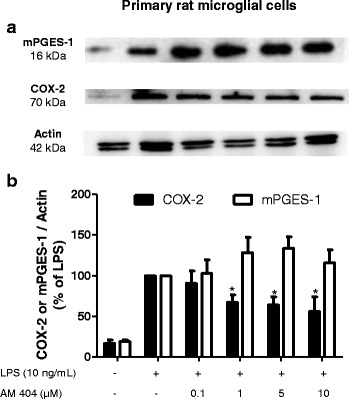
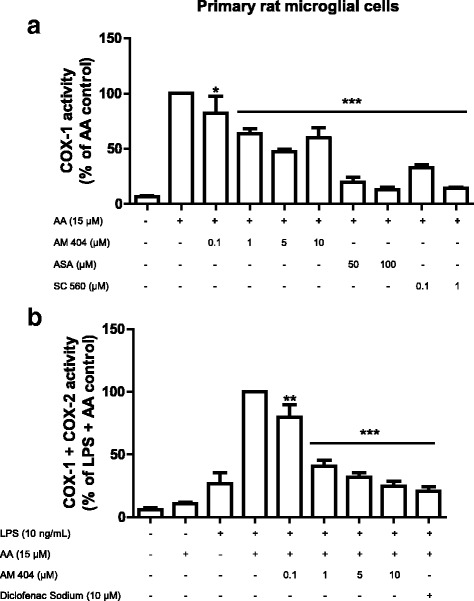
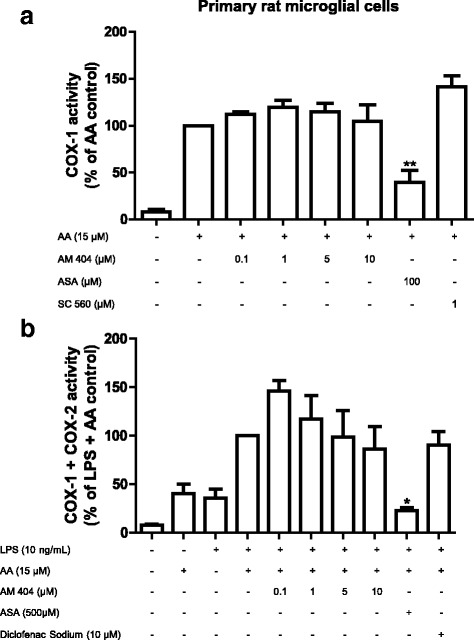
N -arachidonoylphenolamine (AM404), a paracetamol metabolite, is a potent agonist of the transient receptor potential vanilloid type 1 (TRPV1) and low-affinity ligand of the cannabinoid receptor type 1 (CB1). There is evidence that AM404 exerts its pharmacological effects in immune cells. However, the effect of AM404 on the production of inflammatory mediators of the arachidonic acid pathway in activated microglia is still not fully elucidated. In the present study, we investigated the effects of AM404 on the eicosanoid production induced by lipopolysaccharide (LPS) in organotypic hippocampal slices culture (OHSC) and primary microglia cultures using Western blot, immunohistochemistry, and ELISA. Our results show that AM404 inhibited LPS-mediated prostaglandin E 2 (PGE 2 ) production in OHSC, and LPS-stimulated PGE 2 release was totally abolished in OHSC if microglial cells were removed. In primary microglia cultures, AM404 led to a significant dose-dependent decrease in the release of PGE 2 , independent of TRPV1 or CB1 receptors. Moreover, AM404 also inhibited the production of PGD 2 and the formation of reactive oxygen species (8-iso-PGF 2 alpha) with a reversible reduction of COX-1- and COX-2 activity. Also, it slightly decreased the levels of LPS-induced COX-2 protein, although no effect was observed on LPS-induced mPGES-1 protein synthesis. This study provides new significant insights about the potential anti-inflammatory role of AM404 and new mechanisms of action of paracetamol on the modulation of prostaglandin production by activated microglia.
Overview
The claims and statistics of this paper haven’t been checked yet.
Free: it reads the open-access text and checks the first 5 claims that cite a source we can check. Create a free account to check every claim.
Integrity signals
Registry
Cites
Statistics
Figures
Verification
Claims the paper makes
The claims and statistics of this paper haven’t been checked yet.
Free: it reads the open-access text and checks the first 5 claims that cite a source we can check. Create a free account to check every claim.
Claims other papers make about this one
Each is checked against this paper’s own text: does it say what the citing paper says it does?
The source backs part of the claim, not all of it — or backs it for a different population, condition or comparison.
In the citing paper
“Moreover, several molecular actors targeted by the bioactive AM404, including the Cav3.2 calcium channel, the cannabinoid CB1 receptors and TRPV1 receptors, would participate in the MoA.10,20,21”
From An Updated Review on the Metabolite (AM404)-Mediated Central Mechanism of Action of Paracetamol (Acetaminophen): Experimental Evidence and Potential Clinical Impact (2023) · cites this paper as [21]
Experimental — accuracy not yet measured
Self-check
Percentages, sums and reported differences re-computed from the paper’s own numbers.
The self-check needs the paper’s full text.
Citations
Cites
Molecular characterization of a peripheral receptor for cannabinoids
Munro, S., Thomas, K. L., & Abu-Shaar, M. (1993) · Nature · doi:10.1038/365061a0 · Cited by 5,092 · cited 1×
“Immune cells express the cannabinoid receptors type 1 and type 2, albeit CB2 appears to be the predominant isoform [57, 58].”
Chandrasekharan, N. V., Dai, H., Roos, K. L. T., Evanson, N. K., Tomsik, J., Elton, T. S., & Simmons, D. L. (2002) · Proceedings of the National Academy of Sciences · doi:10.1073/pnas.162468699 · Cited by 1,989 · cited 1×
“Acetaminophen produces a weak inhibition of COX, and it has been proposed that acetaminophen acts on COX-3, a brain-specific isoform of COX and slice variant of constitutive enzyme COX-1 [32, 33].”
Morrow, J. D., Hill, K. E., Burk, R. F., Nammour, T. M., Badr, K. F., & Roberts, L. J. (1990) · Proceedings of the National Academy of Sciences · doi:10.1073/pnas.87.23.9383 · Cited by 1,899 · cited 1×
“8-iso-PGF2α is produced by the non-enzymatic peroxidation of arachidonic acid in membrane phospholipids and is considered a reliable and highly sensitive marker to assess oxidative stress [31].”
An Introduction to the Endogenous Cannabinoid System
Lu, H.-C., & Mackie, K. (2016) · Biological Psychiatry · doi:10.1016/j.biopsych.2015.07.028 · Cited by 1,234 · cited 1×
“Moreover, microglia can also express TRPV1 that mediate some endocannabinoid actions [59, 60].”
Functional Role of High-Affinity Anandamide Transport, as Revealed by Selective Inhibition
Beltramo, M., Stella, N., Calignano, A., Lin, S. Y., Makriyannis, A., & Piomelli, D. (1997) · Science · doi:10.1126/science.277.5329.1094 · Cited by 813 · cited 4×
“AM404 is a potent agonist of the transient receptor potential vanilloid type 1 (TRPV1) [8], a low-affinity ligand of the cannabinoid receptor type 1 (CB1) [3, 9], and an anandamide membrane transporter (AMT) blocker [10, 11].”
InfluentialFLOWER, R. J., & VANE, J. R. (1972) · Nature · doi:10.1038/240410a0 · Cited by 779 · cited 11×
“The pharmacokinetics of AM404 formation in the CNS after acetaminophen administration has been studied by two different groups, Högestätt et al. [3] and Murasamatsu et al. [7].”
InfluentialParacetamol: New Vistas of an Old Drug
Bertolini, A., Ferrari, A., Ottani, A., Guerzoni, S., Tacchi, R., & Leone, S. (2006) · CNS Drug Reviews · doi:10.1111/j.1527-3458.2006.00250.x · Cited by 674
Samuelsson, B., Granstrom, E., Green, K., Hamberg, M., & Hammarstrom, S. (1975) · Annual Review of Biochemistry · doi:10.1146/annurev.bi.44.070175.003321 · Cited by 529
Cannabinoid and cannabinoid‐like receptors in microglia, astrocytes, and astrocytomas
Stella, N. (2010) · Glia · doi:10.1002/glia.20983 · Cited by 527 · cited 1×
“Moreover, microglia can also express TRPV1 that mediate some endocannabinoid actions [59, 60].”
Organotypic brain slice cultures: A review
Humpel, C. (2015) · Neuroscience · doi:10.1016/j.neuroscience.2015.07.086 · Cited by 480 · cited 1×
“OHSC is a well-established brain tissue model maintaining the main architecture of the cells, and its complex system provides a good tool to understand cellular and molecular processes of the brain in vitro [40, 41].”
Cited by
Paracetamol (acetaminophen): A familiar drug with an unexplained mechanism of action
Ayoub, S. S. (2021) · Temperature · doi:10.1080/23328940.2021.1886392 · Cited by 223
“[105] Saliba SW, Marcotegui AR, Fortwängler E, et al.”
BackgroundParacetamol – An old drug with new mechanisms of action
Przybyła, G. W., Szychowski, K. A., & Gmiński, J. (2021) · Clinical and Experimental Pharmacology and Physiology · doi:10.1111/1440-1681.13392 · Cited by 190
The Endocannabinoid System of Animals
Silver, R. (2019) · Animals · doi:10.3390/ani9090686 · Cited by 203
“Non-steroidal anti-inflammatory drugs are COX-2 inhibitors that work, in part, by reducing the enzymatic degradation of the endocannabinoid anandamide [49].”
BackgroundAnti-neuroinflammatory effects of GPR55 antagonists in LPS-activated primary microglial cells
Saliba, S. W., Jauch, H., Gargouri, B., Keil, A., Hurrle, T., Volz, N., Mohr, F., van der Stelt, M., Bräse, S., & Fiebich, B. L. (2018) · Journal of Neuroinflammation · doi:10.1186/s12974-018-1362-7 · Cited by 90
Self-citationMallet, C., Desmeules, J., Pegahi, R., & Eschalier, A. (2023) · Journal of Pain Research · doi:10.2147/jpr.s393809 · Cited by 83
“Theoretically, combining two analgesics with different mechanisms of action potentiates their analgesic actions without increasing their doses and compromising the safety outcomes.103–106 Paracetamol has linear and consistent pharmacokinetics, and its tolerable profile makes it a good option when a combination is requ…”
BackgroundInfluentialDelbridge, A. R. D., Huh, D., Brickelmaier, M., Burns, J. C., Roberts, C., Challa, R., Raymond, N., Cullen, P., Carlile, T. M., Ennis, K. A., et al. (2020) · Frontiers in Cellular Neuroscience · doi:10.3389/fncel.2020.592005 · Cited by 72
“…al., 2012; Ziemka-Nałecz et al., 2013; Olajide et al., 2014; Hellwig et al., 2015; Gerlach et al., 2016; Masuch et al., 2016a,b; Bhatia et al., 2017; Saliba et al., 2017; Yousif et al., 2018; Araki Frontiers in Cellular Neuroscience | www.frontiersin.org 16 December 2020 | Volume 14 | Article…”
BackgroundGargouri, B., Yousif, N. M., Attaai, A., Bouchard, M., Chtourou, Y., Fiebich, B. L., & Fetoui, H. (2018) · Neurochemistry International · doi:10.1016/j.neuint.2018.08.004 · Cited by 62
Self-citationCannabis in Veterinary Medicine: Cannabinoid Therapies for Animals
Hartsel, J. A., Boyar, K., Pham, A., Silver, R. J., & Makriyannis, A. (2019) · Springer eBooks · doi:10.1007/978-3-030-04624-8_10 · Cited by 66
Park, M. H., Lee, M., Nam, G., Kim, M., Kang, J., Choi, B. J., Jeong, M. S., Park, K. H., Han, W. H., Tak, E., et al. (2019) · Proceedings of the National Academy of Sciences · doi:10.1073/pnas.1916318116 · Cited by 55
“AAP is known to suppress inflammation by inhibiting the activity of cyclooxygenase 1 (COX-1) or 2 (COX-2) in microglia (26, 59, 60).”
BackgroundDaniel, D., Dionísio, R., de Alkimin, G. D., & Nunes, B. (2018) · Environmental Science and Pollution Research · doi:10.1007/s11356-018-3788-y · Cited by 58
“…and Zera 2007); moreover, PAR is a cyclooxygenase inhibitor (Xu et al. 2008) and may interfere with prostaglandin synthesis (Graham et al. 2001; Saliba et al. 2017) and affect endocrine balance (Kristensen et al. 2012); consequently, we also measured the reproductive success of…”
BackgroundPavlov, D., Bettendorff, L., Вячеславовна, Г. А., Olkhovik, A., Kalueff, A. V., Ponomarev, E. D., Inozemtsev, A. N., Chekhonin, V. P., Lesch, K., Anthony, D. C., et al. (2018) · Progress in Neuro-Psychopharmacology and Biological Psychiatry · doi:10.1016/j.pnpbp.2018.11.014 · Cited by 52
“, 1993) and inflammatory prostaglandins (Saliba et al., 2017) that can further aggravate neuroinflammation and its inhibitory effects on the neurogenesis (Wang et al.”
de Munter, J., Pavlov, D., Вячеславовна, Г. А., Sicker, M., Proshin, A. T., Kalueff, A. V., Svistunov, A. А., Kiselev, D., Nedorubov, A. A., Morozov, S., et al. (2021) · Frontiers in Nutrition · doi:10.3389/fnut.2021.661455 · Cited by 42
Gellner, A., Reis, J., Fiebich, B. L., & Fritsch, B. (2021) · Brain stimulation · doi:10.1016/j.brs.2021.08.007 · Cited by 43
“6 wildtypes (P0-3, sex not determined), following our previously described protocol [26] (for details 1 see Supplementary Methods).”
BackgroundSelf-citationLong-Term Safety of Prenatal and Neonatal Exposure to Paracetamol: A Systematic Review
Patel, R., Sushko, K., van den Anker, J. N., & Samiee‐Zafarghandy, S. (2022) · International Journal of Environmental Research and Public Health · doi:10.3390/ijerph19042128 · Cited by 38
“AM404 is an indirect agonist at the cannabinoid receptors and has a disruptive effect on the normal function of the endocannabinoid system, an identified factor in the pathophysiology of neurodevelopmental disorders [8].”
BackgroundSynergistic interaction between matrine and paracetamol in the acetic acid writhing test in mice
Dai, G., Li, B., Xu, Y., Li, Z., Mo, F., & Wei, C. (2021) · European Journal of Pharmacology · doi:10.1016/j.ejphar.2021.173869 · Cited by 36
Saliba, S. W., Gläser, F., Deckers, A., Keil, A., Hurrle, T., Apweiler, M., Ferver, F., Volz, N., Endres, D., Bräse, S., et al. (2021) · International Journal of Molecular Sciences · doi:10.3390/ijms22052503 · Cited by 30
“As described in our previous studies [49,50], primary mixed glial cell cultures were prepared from cerebral cortices of 1-day neonatal Sprague–Dawley rats.”
MethodSelf-citationColeman, R. A., Muli, C. S., Zhao, Y., Bhardwaj, A., Newhouse, T. R., & Trader, D. J. (2018) · Bioorganic & Medicinal Chemistry Letters · doi:10.1016/j.bmcl.2018.12.030 · Cited by 28
Intravenous paracetamol for neonates: long-term diseases not escalated during 5 years of follow-up
Juujärvi, S., Saarela, T., Pokka, T. M.-L., Hallman, M., & Aikio, O. (2020) · Archives of Disease in Childhood Fetal & Neonatal · doi:10.1136/archdischild-2020-319069 · Cited by 27
Ahmed, M., Jinks, N., Babaei‐Jadidi, R., Kashfi, H., Castellanos‐Uribe, M., May, S. T., Mukherjee, A., & Nateri, A. S. (2019) · Cancers · doi:10.3390/cancers12010106 · Cited by 31
“, [19] AM404 was detectable in plasma of only eight of the 26 plasma samples, with three being above 5 nmol/L, which warranted an unidentified mechanism in some individuals through which AM404 leaks out of the brain and into the blood.”
BackgroundInfluentialHasan, T., Jahan, E., Ahmed, K. S., Hossain, H., Siam, S. M. M., Nahid, N., Mazumder, T., Shuvo, M. S. R., & Daula, A. F. M. S. U. (2022) · Biomedicine & Pharmacotherapy · doi:10.1016/j.biopha.2022.112774 · Cited by 22
Lead (Pb) as a Factor Initiating and Potentiating Inflammation in Human THP-1 Macrophages
Metryka, E., Kupnicka, P., Kapczuk, P., Simińska, D., Tarnowski, M., Goschorska, M., Gutowska, I., Chlubek, D., & Baranowska‐Bosiacka, I. (2020) · International Journal of Molecular Sciences · doi:10.3390/ijms21062254 · Cited by 20
Huang, H.-J., Chen, S.-L., Huang, H., Sun, Y., Lee, G.-C., Lee‐Chen, G., Hsieh‐Li, H. M., & Su, M. (2018) · Psychopharmacology · doi:10.1007/s00213-018-5108-0 · Cited by 20
“In addition, it has been reported that the dose of AM404 targeting on the TRPV1 and cannabinoid (CB) receptors exceeds 10 μM (in vitro) and 10 mg/kg (in vivo; i.p.) (Pertwee 1997; Saliba et al. 2017).”
BackgroundHoshijima, H., Hunt, M. A., Nagasaka, H., & Yaksh, T. L. (2021) · Journal of Pain Research · doi:10.2147/jpr.s308028 · Cited by 21
“A further point is that recent work has suggested that AM404, the downstream metabolite of acetaminophen, can inhibit isolated cyclooxygenase (COX)-1 and COX-2 enzymes and prostaglandin synthesis in macrophage cultures and in brain slices.(196,212,213) AM404 is also a potent inhibitor of T cell activation and inhibite…”
BackgroundÅ.Nilsson, J. L., Mallet, C., Shionoya, K., Blomgren, A., Sundin, A. P., Grundemar, L., Boudieu, L., Blomqvist, A., Eschalier, A., Nilsson, U. J., et al. (2021) · European Journal of Medicinal Chemistry · doi:10.1016/j.ejmech.2020.113042 · Cited by 17
“The antipyretic action of paracetamol has been attributed to inhibition of central COX [36,49], and the N -arachidonoyl conjugate AM404, which is produced by FAAH from paracetamol-derived 4-AP, has been shown to inhibit COX-mediated production of the pyrogenic mediator PGE 2 in vitro [16,27].”
BackgroundNeuroprotective Effect of AM404 Against NMDA-Induced Hippocampal Excitotoxicity
Saliba, S. W., Bonifacino, T., Serchov, T., Bonanno, G., de Oliveira, A. C. P., & Fiebich, B. L. (2019) · Frontiers in Cellular Neuroscience · doi:10.3389/fncel.2019.00566 · Cited by 17
Self-citationPharmacological bases of combining nonsteroidal antiinflammatory drugs and paracetamol
Tena‐Garitaonaindia, M., Rubio, J. M., Martínez-Plata, E., Martínez‐Augustin, O., & de Medina, F. S. (2025) · Biomedicine & Pharmacotherapy · doi:10.1016/j.biopha.2025.118069 · Cited by 15
Bhatia, H. S., Apweiler, M., Sun, L., Baron, J., Tirkey, A., & Fiebich, B. L. (2023) · Molecules · doi:10.3390/molecules28041927 · Cited by 14
“In previous studies, AA administration alone showed only small effects on COX-2 activity measured by released PGE2 [43,47].”
Self-citationKlein, R. M., Motomura, V. N., Debiasi, J. D., & Moreira, E. G. (2023) · Neurotoxicology and Teratology · doi:10.1016/j.ntt.2023.107279 · Cited by 14
Targeting Oxidative Stress: Novel Coumarin-Based Inverse Agonists of GPR55
Apweiler, M., Saliba, S. W., Streyczek, J., Hurrle, T., Gräßle, S., Bräse, S., & Fiebich, B. L. (2021) · International Journal of Molecular Sciences · doi:10.3390/ijms222111665 · Cited by 13
“Primary mouse mixed glia cultures were prepared from 2 to 3 days old C57B1/6 WT mice as described before [35].”
MethodSelf-citationBai, J.-Q., Li, P., Li, C., & Li, H. (2023) · European Journal of Pharmacology · doi:10.1016/j.ejphar.2023.176235 · Cited by 13
Functional Selectivity of Coumarin Derivates Acting via GPR55 in Neuroinflammation
Apweiler, M., Streyczek, J., Saliba, S. W., Collado, J. A., Hurrle, T., Gräßle, S., Muñóz, E., Normann, C., Hellwig, S., Bräse, S., et al. (2022) · International Journal of Molecular Sciences · doi:10.3390/ijms23020959 · Cited by 14
Self-citationSun, L., Saliba, S. W., Apweiler, M., Akmermer, K., Herlan, C., Grathwol, C. W., de Oliveira, A. C. P., Normann, C., Jung, N., Bräse, S., et al. (2024) · International Journal of Molecular Sciences · doi:10.3390/ijms25084462 · Cited by 10
“We showed different approaches for the modulation of neuroinflammation using different compounds in LPS-stimulated microglial cells [17,18].”
MethodSelf-citationAgúndez, J. A. G., Gómez‐Tabales, J., Ruano, F. J., & García‐Martín, E. (2018) · Current Opinion in Allergy and Clinical Immunology · doi:10.1097/aci.0000000000000452 · Cited by 11
Apweiler, M., Streyczek, J., Saliba, S. W., Ditrich, J., Muñóz, E., & Fiebich, B. L. (2021) · Frontiers in Pharmacology · doi:10.3389/fphar.2021.789074 · Cited by 10
“As shown in our previous study (Saliba et al., 2017), AM404 prevented the synthesis of PGE2 and 8-iso-PGF2α in LPSstimulated primary rat microglia independent of its suggested target receptors CB1 and TRPV1.”
BackgroundInfluentialSelf-citationHigh-Dose Acetaminophen as a Treatment for Cancer
Wu, J. J., Maller, B., Kaul, R., Galabow, A., Bryan, A., & Neuwelt, A. J. (2024) · Livers · doi:10.3390/livers4010007 · Cited by 9
“AAP is metabolized by a variety of pathways, including glucuronidation, sulfation, and fatty acid amide hydrolase (FAAH)- mediated conversion to N-arachidonoylphenolamine (AM404); AM404 is thought to be an active metabolite that contributes to the anti-nociceptive properties of AAP [1].”
Haranishi, Y., Hara, K., & Terada, T. (2021) · Pharmacological Reports · doi:10.1007/s43440-021-00250-2 · Cited by 9
Fructose-1,6-Bisphosphate Protects Hippocampal Rat Slices from NMDA Excitotoxicity
Yakoub, K. M., Lazzarino, G., Amorini, A. M., Caruso, G., Scazzone, C., Ciaccio, M., Tavazzi, B., Lazzarino, G., Belli, A., & Pietro, V. D. (2019) · International Journal of Molecular Sciences · doi:10.3390/ijms20092239 · Cited by 10
“Organotypic hippocampal slice cultures represent a useful in vitro model with which to study not only the effects of excitotoxicity (triggered by the challenge with NMDA) on nervous cell metabolism and functions [38] but also to evaluate efficacy of drug treatments [39].”
BackgroundIslam, M. T., Chowdhury, R., Bhuia, M. S., Hasan, M. S. A., Akbor, M. S., Farhad, F., Domiciano, C. B., Silva, D. A. E., & Coutinho, H. D. M. (2025) · Pharmaceutical Science Advances · doi:10.1016/j.pscia.2025.100070 · Cited by 9
“AM404 activates TRPV1 receptors to reduce neuronal excitability and has anticonvulsant effects, while also inhibiting COX-1/COX-2 and reducing in fl ammatory mediators, demonstrating its anti-in fl ammatory action in animals [3,4].”
Paracetamol-Induced Hypothermia in Rodents: A Review on Pharmacodynamics
Coman, L., Păunescu, H., Ghiță, C. I. V., Ţincu, R. C., Vasile, S., Cinteză, D., Fulga, I., & Coman, O. A. (2022) · Processes · doi:10.3390/pr10040687 · Cited by 8
Analysis of Biological Activity Like Antioxidant, Antimicrobial, and DNA Damage of Paracetamol
Barasker, K., Jain, N., Jain, P., & Gour, K. (2024) · Journal Of Biochemical Technology · doi:10.51847/ojqfuut9r0 · Cited by 7
Huang, Y., Qiu, F., Dzięgielewska, K. M., Koehn, L. M., Habgood, M. D., & Saunders, N. R. (2023) · Experimental Physiology · doi:10.1113/ep091442 · Cited by 7
Zhou, Y., Yuan, P., Xing, Q. C., Jin, W., & Shi, C. (2024) · BMC Anesthesiology · doi:10.1186/s12871-023-02386-5 · Cited by 7
“Previous studies revealed acetaminophen hindered the enzymatic prostaglandin biosynthesis to release pain by inhibiting the cyclooxygenase 3 mainly [29].”
BackgroundSupportive Care for the Cancer Patient
Vail, D. M., Thamm, D. H., & Liptak, J. M. (2019) · Elsevier eBooks · doi:10.1016/b978-0-323-59496-7.00016-5 · Cited by 7
The Three W's of Acetaminophen In Children: Who, Why, and Which Administration Mode?
Thibault, C., Pelletier, É., Nguyen, C., Trottier, E. D., Doré‐Bergeron, M., DeKoven, K., Roy, A.-M., Piché, N., Delisle, J., Morin, C., et al. (2023) · The Journal of Pediatric Pharmacology and Therapeutics · doi:10.5863/1551-6776-28.1.20 · Cited by 10
Dannesboe, J., Bastrup, J., Nielsen, K. H., Munck, P., Thomsen, M. B., Hawkins, C. L., & Jepps, T. A. (2024) · Pharmacological Research · doi:10.1016/j.phrs.2024.107540 · Cited by 6
A novel paracetamol derivative alleviates lipopolysaccharide-induced neuroinflammation
Králová, A., Montaser, A. B., Tampio, J., Adla, S. K., Jalkanen, A. J., Rysä, J., & Huttunen, K. M. (2025) · European Journal of Pharmacology · doi:10.1016/j.ejphar.2025.177409 · Cited by 5
Tsuchiya, H., & Mizogami, M. (2025) · Future Pharmacology · doi:10.3390/futurepharmacol5030040 · Cited by 9
“Saliba et al. [98] treated primary mouse and rat microglial cell cultures with AM404 and found that AM404 prevents PGE 2 production induced by LPS in both cell cultures at concentrations of 1–10 µ M.”
Fructose as a novel nutraceutical for acetaminophen (APAP)-induced hepatotoxicity
Rodrigues, K., Hussain, R., Cooke, S., Zhang, G., Zhang, D., Yin, L., & Tong, X. (2023) · Metabolism and Target Organ Damage · doi:10.20517/mtod.2023.28 · Cited by 7
“It inhibits prostaglandin synthesis in the central nervous system [4,5] .”
BackgroundParacetamol preceding very preterm birth: Is it safe?
Laitala, A., Saarela, T., Vääräsmäki, M., Hallman, M., & Aikio, O. (2022) · Acta Obstetricia Et Gynecologica Scandinavica · doi:10.1111/aogs.14405 · Cited by 4
Inflammatory biomarkers in very preterm infants during early intravenous paracetamol administration
Aikio, O., Härmä, A., Härkin, P., Leskinen, M., Valkama, M., Saarela, T., Salminen, A., & Hallman, M. (2021) · Early Human Development · doi:10.1016/j.earlhumdev.2021.105464 · Cited by 4
Saliba, S. W., Marcotegui, A. R., Fortwängler, E., Ditrich, J., Perazzo, J. C., Muñóz, E., de Oliveira, A. C. P., & Fiebich, B. L. (2018) · Journal of Neuroinflammation · doi:10.1186/s12974-018-1072-1 · Cited by 4
“Correction After publication of the article [1], it has been brought to our attention that the caption for Figure 2 has been mistakenly replaced with a reproduction of the Figure 4 caption.”
Self-citationYun, M., Regen, N. D., Anchondo, Y., Eddinger, K. A., Malkmus, S. A., Roberts, S. W., Donati, E., Leonardi, A., & Yaksh, T. L. (2024) · PAIN Reports · doi:10.1097/pr9.0000000000001168 · Cited by 3
Ballester-Caudet, A., Perea, S., García‐Gómez, D., Pavón, J. L. P., & Rodríguez‐Gonzalo, E. (2025) · Journal of Chromatography A · doi:10.1016/j.chroma.2025.465760 · Cited by 2
Hasanain, R. S., Al-Kuraishy, H. M., Shokr, M. M., Kafy, S., Alshaikh, A. B. A., Mogharbel, H., Kashgari, F. A., Sebghatallah, A., & Batiha, G. E. (2026) · NeuroToxicology · doi:10.1016/j.neuro.2026.103555 · Cited by 1
Yadav, S., & Tripathi, A. (2023) · Indian Journal of Experimental Biology · doi:10.56042/ijeb.v61i10.1641 · Cited by 1
Minimal Hepatic Encephalopathy and Neuroinflammation
Marcotegui, A. R. (2018) · Gastroenterology Medicine & Research · doi:10.31031/gmr.2018.02.000533
“Recently, a paracetamol metabolite, AM404 (N- (4-Hydroxyphenyl) -eicosa-5,8,11,14-tetraenamide) has demonstrated the ability to reduce the inflammatory mediators of the arachidonic acid pathway in microglial and organotypic cultures [45].”
BackgroundSelf-citationПавлов (2020) · Research Publications (Maastricht University) · doi:10.26481/dis.20200305dp · Cited by 3
Shah, S. R., & Shaukat, A. (2024) · Pakistan Postgraduate Medical Journal · doi:10.51642/ppmj.v35i01.695
Carassiti, M., Massè, A., Miceli, L., Puntillo, F., Solarino, G., Teori, G., Romualdi, P., & MOST PAIN Group (2025) · Expert Opinion on Pharmacotherapy · doi:10.1080/14656566.2025.2523976 · Cited by 1
“This mechanism explains the analgesic effects and sense of well-being in some patients [86,88,89].”
The role of the endocannabinoid system in the mechanism of action of nonopioid analgesics
Unterspann, M., Lapka, M., Charalambous, C., & Slíva, J. (2025) · European Journal of Pharmacology · doi:10.1016/j.ejphar.2025.177946
Efficacia e sicurezza di paracetamolo nei primi 1.000 giorni di vita: opinione di esperti
Scaglione, F., Aprile, P. L., Peccarisi, L., Villaccio, B., & Agosti, M. A. (2025) · Medico e Bambino - Pagine Elettroniche · doi:10.53126/mebxxviiio203
Chuykova, P., Shtrygol, S. Y., & Горбач, Т. В. (2026) · Pharmacology and Drug Toxicology · doi:10.33250/19.04.362
Laroche, L. (2023) · HAL · Cited by 1
Tsuchiya, H., Takai, Y., & Mizogami, M. (2026) · Medical Principles and Practice · doi:10.1159/mpp/adpag006
“Action on Central COX-2 AM404 inhibited at 1–10 μmol/L lipopolysaccharide-induced PGE 2 synthesis in mouse and rat microglial cultures, although neither TRPV1 antagonist cap-sazepine nor CB1R antagonist AM251 affected such inhibitory effects of AM404 in activated microglia [57].”
Extended cognitive recovery in down syndrome mice via sustained release of AM404 from microplates
Portioli, C., Murgia, D., Spanò, R., Mamberti, S., Estevão, B. M., Avancini, G., Bertozzi, S. M., Armirotti, A., Cancedda, L., & Decuzzi, P. (2026) · Drug Delivery and Translational Research · doi:10.21203/rs.3.rs-10255698/v1
Vibrational spectroscopy and molecular modeling reveal thermorotameric lipid-tail dynamics of AM404
Borysiuk, B., Kraszewski, S., & Gąsior‐Głogowska, M. (2026) · Spectrochimica Acta Part A Molecular and Biomolecular Spectroscopy · doi:10.1016/j.saa.2026.128878
Metadata
- Authors
- Saliba, S. W., Marcotegui, A. R., Fortwängler, E., Ditrich, J., Perazzo, J. C., Muñoz, E., de Oliveira, A. C. P., & Fiebich, B. L.
- Affiliations
- University of Freiburg (DE)
- Universidad de Buenos Aires (AR)
- Corresponding author
- Saliba, Soraya Wilke
- Fiebich, Bernd L.
- Venue
- Journal of Neuroinflammation
- Published
- 2017-12
- Volume
- 14
- Issue
- 1
- Pages
- 246-246
- ISSN
- 1742-2094 (ISSN-L)
- PMC
- PMC5729401
- OpenAlex
- W2775186789
- Cited by
- 62
- References
- 62
- Citations by year
- 2026: 2 · 2025: 8 · 2024: 7 · 2023: 8 · 2022: 5 · 2021: 10 · 2020: 6 · 2019: 7 · 2018: 9
- FWCI
- 4.20
- Type
- journal article
- Language
- en
- Update notices
- correction (2018-02-06)
- Open access
- gold
- doi.org
- Licence
- cc-by
- Locations
- Journal of Neuroinflammation (publishedVersion, cc-by)
- PubMed Central (publishedVersion, cc-by)
- PubMed (publishedVersion)
- RISalud Institutional Health Repository of Andalucía (submittedVersion, cc-by)
- DOAJ (DOAJ: Directory of Open Access Journals) (submittedVersion, cc-by-sa)
- FreiDok plus (Universitätsbibliothek Freiburg) (submittedVersion)
- Funders
- Conselho Nacional de Desenvolvimento Científico e Tecnológico (309718/2015-5)
- Deutscher Akademischer Austauschdienst
- Topics
- Health Sciences › Medicine › Pharmacology (medical) › Inflammatory mediators and NSAID effects
- Life Sciences › Neuroscience › Neurology › Neuroinflammation and Neurodegeneration Mechanisms
- Health Sciences › Medicine › Physiology (medical) › Pain Mechanisms and Treatments
- Keywords
- AM404, paracetamol metabolites, microglia, prostaglandin E2, prostaglandin D2, cyclooxygenase inhibition, cyclooxygenase-1, cyclooxygenase-2, arachidonic acid pathway, lipopolysaccharide, neuroinflammation, anti-inflammatory activity, organotypic hippocampal slices, reactive oxygen species
- MeSH terms
- Acetaminophen, Animals, Anti-Inflammatory Agents, Arachidonic Acids, Cells, Cultured, Mice, Inbred C57BL, Prostaglandins, Cyclooxygenase Inhibitors, Rats, Sprague-Dawley, Microglia, Mice, Rats, Cyclooxygenase 1, Cyclooxygenase 2
About these checks
Registry, retraction, Cites and statistics results are computed, not judged, with one exception: a printed reference that no index lists is read once by a model before it counts as a citation error. Claims are extracted by a model and kept only when their quote appears verbatim in the text; each cited source is then checked, with a model’s help, for whether it says what the claim relies on. Those verdicts can be wrong — read the claim’s quote and the cited source before relying on one.
Statistics and arithmetic are recomputed, not judged.
Confidence bands are shown only for fields calibrated on our annotated test set. None is calibrated yet, so no band is shown.
What counts as a claim ›How we measure confidence ›How we check this ›
Are you an author, or do you see a problem with this page? Request a review
Data sources
Bibliographic data: Semantic Scholar, OpenAlex, Crossref.
Contains information from the Semantic Scholar Academic Graph Datasets, made available under the ODC Attribution License (ODC-BY 1.0).
Semantic Scholar’s data is described in: Kinney, R., et al. (2023). The Semantic Scholar Open Data Platform. arXiv:2301.10140.
