

High throughput identification of genetic regulators of microglial inflammatory processes in Alzheimer's disease
Open accessPublished version of a preprint
The DOI matches its Crossref record; 86 of the 86 references it cites were found in a registry or an index; none of the 68 sources its claims cite is checked for support yet.
Abstract
Greater than a hundred genetic risk factors for Alzheimer’s disease (AD) have been identified by genome-wide association studies (GWAS), many of which are primarily expressed in microglia. However, the pathogenic role for most of them remains unclear. We sought to assess at scale how AD GWAS hits influence human microglial inflammatory responses. Thus, we conducted CRISPR inhibition (CRISPRi) screens of 119 AD GWAS hits in hiPSC-derived microglia (iMGLs), with reactive oxygen species (ROS) produced in response to the viral mimic poly(I:C) as a readout. Top hits that either decreased or increased ROS in response to poly(I:C) when knocked down were then interrogated in CROP-seq experiments, where CRISPRi was combined with single cell RNA-sequencing (scRNA-seq). These analyses identified 9 unique microglial clusters, including a poly(I:C)-driven inflammatory cluster (2). Emerging evidence supports a pathogenic role of viral infections in AD and our scRNA-seq showed significant overlap with AD-relevant microglial clusters. Knockdown (KD) of two hit genes, MS4A6A and EED, which lead to high levels of ROS in the presence of poly(I:C), increased the proportion of inflammatory cluster 2 cells and led to functionally related changes in gene expression. In addition, KD of MS4A6A reduced the proportion of iMGLs in the disease-associated microglia (DAM) cluster under all conditions, suggesting that MS4A6A may modulate the DAM response. In contrast, KD of hit genes, INPP5D or RABEP1 which led to low levels of ROS in the presence of poly(I:C), did not significantly affect the proportion of cells in inflammatory cluster 2 but rather shaped the inflammatory response. This included upregulation of a poly(I:C)-independent HLA inflammatory cluster (6) by INPP5D KD under all conditions. Despite INPP5D or RABEP1 being involved in disparate biological processes, their perturbation led to similar changes in gene expression, which included changes in genes related to metabolism such as oxidative phosphorylation, suggesting a shared conversion point by which AD GWAS hits affect cell state. Overall, our data begin to elucidate the functional roles played by various AD GWAS hits, including how they regulate and shape inflammatory responses such as those observed in AD.
Overview
CoChat Summary
TL;DR
This study used pooled CRISPRi screens in hiPSC-derived microglia to test 119 Alzheimer’s disease GWAS hits for effects on ROS production after poly(I:C), then CROP-seq on top hits. It identifies high-ROS regulators MS4A6A and EED as drivers of an inflammatory microglial cluster and low-ROS regulators INPP5D and RABEP1 as modulators of inflammatory state and metabolism.
Key findings
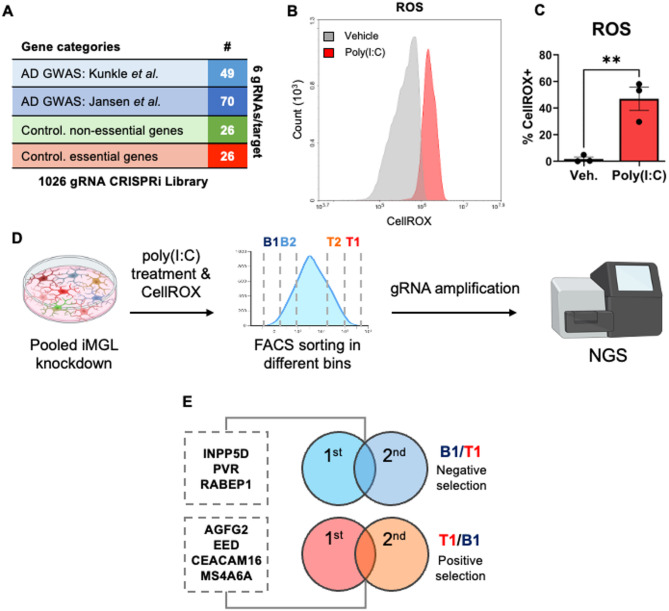
- In two independent CRISPRi screens of 119 AD GWAS hits, top high-ROS hits included AGF2, EED, and MS4A6A, and top low-ROS hits included INPP5D, PVR, and RABEP1; CROP-seq found 4 of 6 tested genes had significant effects on gene expression: INPP5D, RABEP1, MS4A6A, and EED.
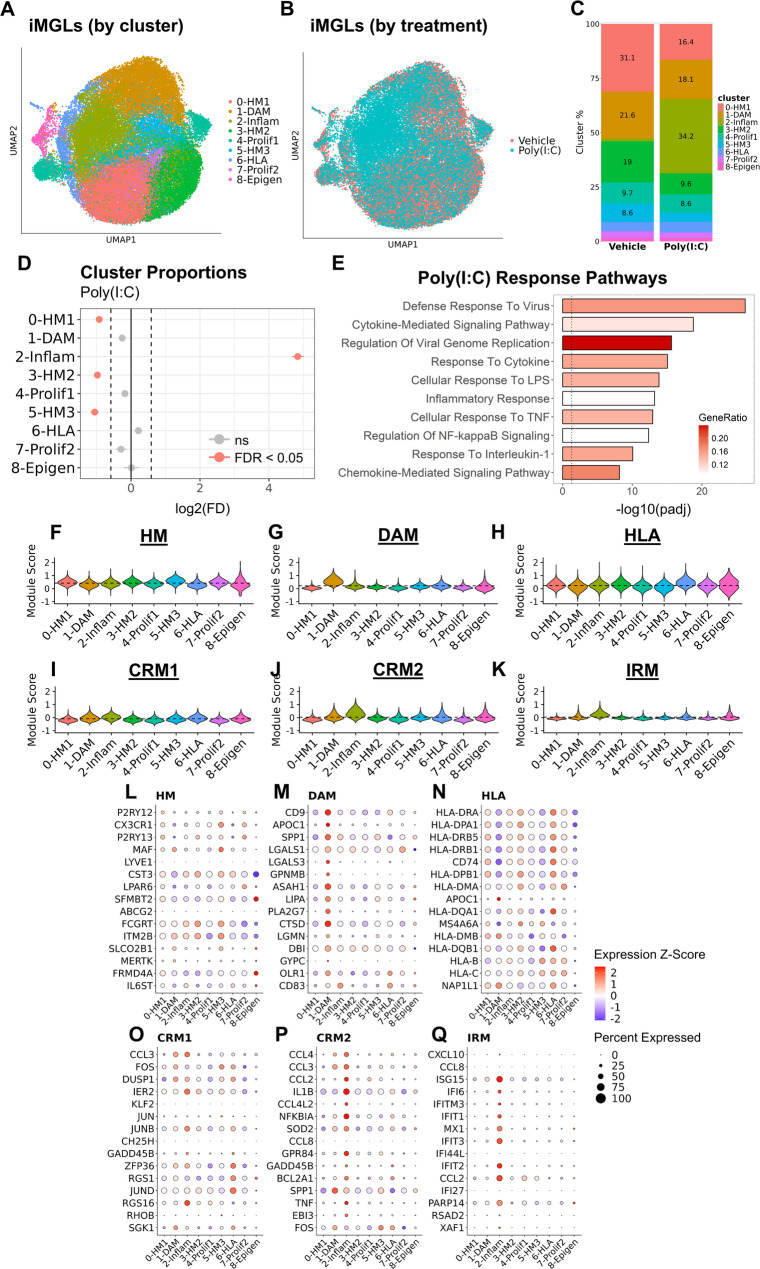
- scRNA-seq of 44,913 cells identified 9 microglial clusters; poly(I:C) increased cluster 2-Inflam from 1.2% of vehicle-treated cells to 34.2% of poly(I:C)-treated cells, with a log2 fold difference greater than 4, and depleted clusters 0, 3, and 5.
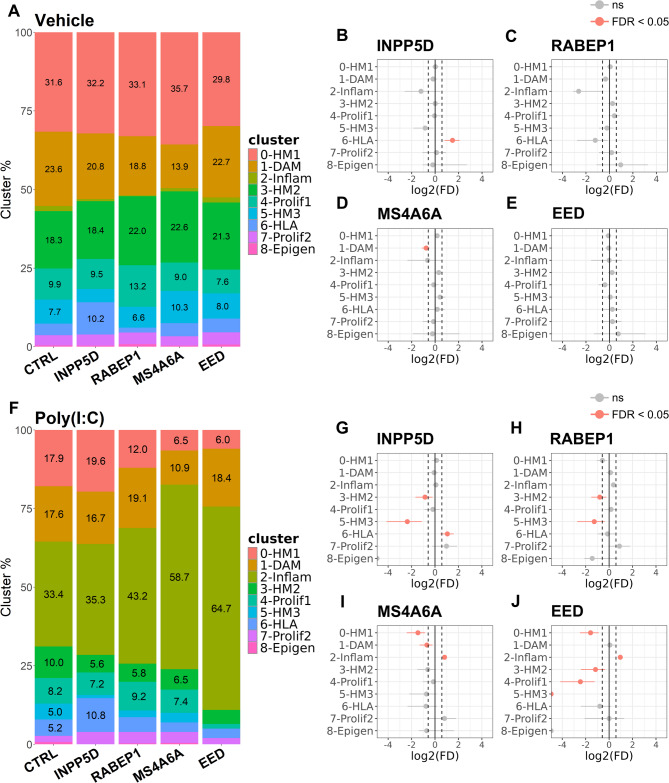
- Knockdown of high-ROS hits MS4A6A and EED increased the proportion of inflammatory cluster 2 cells and pro-inflammatory/antiviral gene expression; MS4A6A knockdown also reduced the DAM cluster under all conditions. Knockdown of low-ROS hits INPP5D or RABEP1 did not significantly change cluster 2 but shaped the inflammatory response, including INPP5D knockdown increasing HLA cluster 6 under all conditions.
- iMGL clusters overlapped with human AD brain microglia: cluster 2-Inflam had module-score z-scores of 107.0 and 72.9 with endogenous MG10:Inflammatory cluster III and MG11:Antiviral, while cluster 1-DAM had z-scores of 103.4 and 65.5 with MG4:Lipid Processing and MG5:Phagocytic.
Methods
- Pooled CRISPRi screen: a library of 1026 gRNAs targeting 171 genes (119 AD GWAS hits plus 26 essential and 26 non-essential controls), with 6 guides per gene, was lentivirally transduced into dCas9-KRAB-MeCP2 FA10 hiPSC-derived iMGLs at MOI ~0.3 on day 21 post-HPC; cells were treated with 10 µg/mL poly(I:C) for 2 h on day 35, stained with CellROX Deep Red for ROS, FACS-sorted into top/bottom 12.5% bins, and analyzed with MAGeCK-RRA across two independent screens.
- CROP-seq: 8 target genes (high ROS: AGF2, EED, MS4A6A; low ROS: INPP5D, PVR, RABEP1; controls: CABP5, SAGE1) were targeted with 3 gRNAs each, with vehicle or poly(I:C) treatment, then processed for 10x scRNA-seq; analysis used Seurat, Mixscape, scProportionTest, FindMarkers, and EnrichR across two independent experiments.
- Comparisons to human data used PCA and module-score analysis against published human microglial snRNA-seq from 423 subjects and xenotransplanted iMGL datasets.
Limitations
- The paper states that the CRISPRi screen focused only on ROS production as the inflammatory output, not the full repertoire such as cytokine and chemokine secretion; it also did not assess non-inflammatory processes such as phagocytosis, and all experiments were in vitro, with future xenotransplantation suggested for maturation and host-tissue interactions.
- The paper notes that EED knockdown was modest, likely blunting results, and suggests CRISPR knockout or other loss-of-function methods for future work.
- Evident from the text: the study used a single hiPSC line (FA10), a single inflammatory stimulus (poly(I:C) for 2 h), and hit selection in the screen used an FDR < 0.5 threshold, which may limit generalizability and sensitivity.
Model-written summary. Check it against the paper before relying on it.
Integrity signals
Registry
Cites
Statistics
Figures
Verification
Claims the paper makes
0 Valid · 0 Not valid · 42 Not checked · 105 Own results and interpretations
A result the paper reports from its own data — it cites no other source for it, so there is none to check. The quote shows it is in the paper.
In the paper
“Treatment with poly(I:C) for 2 h led to an increase of ROS as measured by flow cytometry (FC) of CellROX + cells.”
- Also stated in: § Generation of dCas9-KRAB-MeCP2 hiPSCs and development of a fluorescent readout for NGS · plain
“Treatment of iMGLs led to an increase in CellROX fluorescence intensity (Fig. 1B-C)”
§ High throughput identification of genetic regulators of microglial inflammatory processes in Alzheimer's disease > Results > Generation of pooled CRISPRi gRNA libraries for AD GWAS hits and control genes
plainstates a causen = 3- Asserted: passes — The authors put it forward as true.
- Checkable: passes — It can be checked against evidence.
- Load-bearing: passes — The paper’s conclusions depend on it.
- Based: passes — The paper gives a reason why it holds.
- Also stated in: § Generation of dCas9-KRAB-MeCP2 hiPSCs and development of a fluorescent readout for NGS · plain
A result the paper reports from its own data — it cites no other source for it, so there is none to check. The quote shows it is in the paper.
In the paper
“iMGLs enriched to specific clusters based on treatment conditions (Fig. 2B)”
§ High throughput identification of genetic regulators of microglial inflammatory processes in Alzheimer's disease > Results > Analysis of the effect of poly(I:C) on microglial cell state
plainstates an association- Asserted: passes — The authors put it forward as true.
- Checkable: passes — It can be checked against evidence.
- Load-bearing: passes — The paper’s conclusions depend on it.
- Based: passes — The paper gives a reason why it holds.
A result the paper reports from its own data — it cites no other source for it, so there is none to check. The quote shows it is in the paper.
In the paper
“4 of 6 genes tested had significant effects on gene expression (INPP5D, RABEP1, MS4A6A, EED) and were analyzed further.”
§ High throughput identification of genetic regulators of microglial inflammatory processes in Alzheimer's disease > Results > CROP-seq investigation of top AD GWAS ROS modulators
plainstates a cause- Asserted: passes — The authors put it forward as true.
- Checkable: passes — It can be checked against evidence.
- Load-bearing: passes — The paper’s conclusions depend on it.
- Based: passes — The paper gives a reason why it holds.
A result the paper reports from its own data — it cites no other source for it, so there is none to check. The quote shows it is in the paper.
In the paper
“we identified 9 total microglial clusters in our dataset (Fig. 2A)”
- Also stated in: § Abstract · plain
“These analyses identified 9 unique microglial clusters”
§ High throughput identification of genetic regulators of microglial inflammatory processes in Alzheimer's disease > Results > Analysis of the effect of poly(I:C) on microglial cell state
plain- Asserted: passes — The authors put it forward as true.
- Checkable: passes — It can be checked against evidence.
- Load-bearing: passes — The paper’s conclusions depend on it.
- Based: passes — The paper gives a reason why it holds.
- Also stated in: § Abstract · plain
A result the paper reports from its own data — it cites no other source for it, so there is none to check. The quote shows it is in the paper.
In the paper
“This included upregulation of a poly(I:C)-independent HLA inflammatory cluster (6) by INPP5D KD under all conditions.”
§ High throughput identification of genetic regulators of microglial inflammatory processes in Alzheimer's disease > Abstract
plainstates a cause- Asserted: passes — The authors put it forward as true.
- Checkable: passes — It can be checked against evidence.
- Load-bearing: passes — The paper’s conclusions depend on it.
- Based: passes — The paper gives a reason why it holds.
79 more claims
Create a free account to see all 147 claims and to verify the 68 references still open.
- It may state two separate claims as one. 40
- Probably not a substantial claim. 30
Self-check
Percentages, sums and reported differences re-computed from the paper’s own numbers.
Each contradiction between two passages listed here was confirmed by an independent check.
Rated minor: it would not touch a result — a value no result rests on, a p-value that stays on the same side of the significance level, or a conflict that is clerical, resolved elsewhere in the paper, or outside its own findings.
In the paper
§ High throughput identification of genetic regulators of microglial inflammatory processes in Alzheimer's disease > Results > KD of ROS modulators change global gene expression
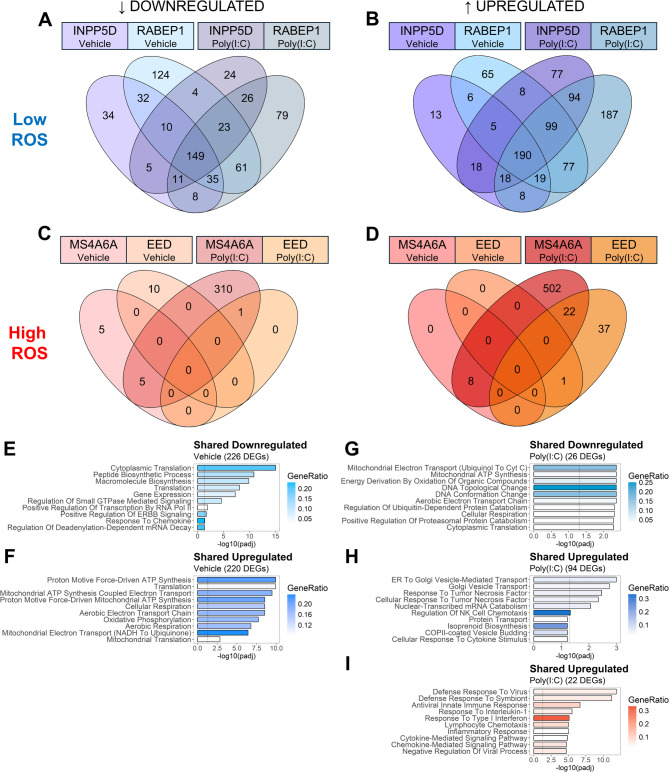
“Next, we performed pathway analysis on shared DR and UR DEGs in low ROS targets under poly(I:C)-stimulated conditions (Fig. 4G-I and Table S5).”
§ High throughput identification of genetic regulators of microglial inflammatory processes in Alzheimer's disease > Results > KD of ROS modulators change global gene expression
“I Pathway analysis showing significant pathways for upregulated shared poly(I:C) DEGs in high ROS CRISPRi targets, excluding changes seen in vehicle conditions.”
Rated minor: it would not touch a result — a value no result rests on, a p-value that stays on the same side of the significance level, or a conflict that is clerical, resolved elsewhere in the paper, or outside its own findings.
In the paper
§ High throughput identification of genetic regulators of microglial inflammatory processes in Alzheimer's disease > Results > iMGLs are transcriptionally similar to human AD brain microglia
“To further compare our iMGL clusters to endogenous control and AD microglial clusters from the same data set as used in the PCA [29], we performed module score analysis (Figures S4B-M; Table S4).”
§ High throughput identification of genetic regulators of microglial inflammatory processes in Alzheimer's disease > Results > KD of ROS modulators change global gene expression
“Analysis of INPP5D unique UR DEGs revealed several pathways associated with MHCII protein complex assembly, antigen presentation, and immunoglobulin production (Figure S4B).”
Citations
Cites
Comprehensive Integration of Single-Cell Data
Stuart, T., Butler, A., Hoffman, P., Hafemeister, C., Papalexi, E., Mauck, W. M., Hao, Y., Stoeckius, M., Smibert, P., & Satija, R. (2019) · Cell · doi:10.1016/j.cell.2019.05.031 · Cited by 15,453
Induced Pluripotent Stem Cell Lines Derived from Human Somatic Cells
Yu, J., Vodyanik, M. A., Smuga-Otto, K., Antosiewicz-Bourget, J., Frane, J. L., Tian, S., Nie, J., Jonsdottir, G. A., Ruotti, V., Stewart, R., et al. (2007) · Science · doi:10.1126/science.1151526 · Cited by 10,310
Enrichr: interactive and collaborative HTML5 gene list enrichment analysis tool
Chen, E. Y., Tan, C. M., Kou, Y., Duan, Q., Wang, Z., Meirelles, G. V., Clark, N. R., & Ma’ayan, A. (2013) · BMC Bioinformatics · doi:10.1186/1471-2105-14-128 · Cited by 7,814
Dictionary learning for integrative, multimodal and scalable single-cell analysis
Hao, Y., Stuart, T., Kowalski, M. H., Choudhary, S., Hoffman, P., Hartman, A., Srivastava, A., Molla, G., Madad, S., Fernandez-Granda, C., et al. (2024) · Nature Biotechnology · doi:10.1038/s41587-023-01767-y · Cited by 5,631
Defining a Cancer Dependency Map
Tsherniak, A., Vazquez, F., Montgomery, P. G., Weir, B. A., Kryukov, G., Cowley, G. S., Gill, S., Harrington, W. F., Pantel, S., Krill-Burger, J. M., et al. (2017) · Cell · doi:10.1016/j.cell.2017.06.010 · Cited by 3,276 · cited 1×
“26 essential genes as assessed by DepMap [35], a data repository with over >1,000 CRISPR screens, were included as positive controls as they should be depleted by successful CRISPRi.”
Alzheimer Disease Genetics Consortium (ADGC), Kunkle, B. W., The European Alzheimer’s Disease Initiative (EADI), Cohorts for Heart and Aging Research in Genomic Epidemiology Consortium (CHARGE), Genetic and Environmental Risk in AD/Defining Genetic, P. A. E. R. F. A. D. C. (., Grenier-Boley, B., Sims, R., Bis, J. C., Damotte, V., Naj, A. C., et al. (2019) · Nature Genetics · doi:10.1038/s41588-019-0358-2 · Cited by 2,946
Li, W., Xu, H., Xiao, T., Cong, L., Love, M. I., Zhang, F., Irizarry, R. A., Liu, J. S., Brown, M., & Liu, X. S. (2014) · Genome Biology · doi:10.1186/s13059-014-0554-4 · Cited by 2,684
New insights into the genetic etiology of Alzheimer’s disease and related dementias
Bellenguez, C., Küçükali, F., Jansen, I. E., Kleineidam, L., Moreno-Grau, S., Amin, N., Naj, A. C., Campos-Martin, R., Grenier-Boley, B., Andrade, V., et al. (2022) · Nature Genetics · doi:10.1038/s41588-022-01024-z · Cited by 2,498
Jansen, I. E., Savage, J. E., Watanabe, K., Bryois, J., Williams, D. M., Steinberg, S., Sealock, J., Karlsson, I. K., Hägg, S., Athanasiu, L., et al. (2019) · Nature Genetics · doi:10.1038/s41588-018-0311-9 · Cited by 2,277
Initiative, T. A. D. N., Hollingworth, P., CHARGE consortium, EADI1 consortium, Harold, D., Sims, R., Gerrish, A., Lambert, J.-C., Carrasquillo, M. M., Abraham, R., et al. (2011) · Nature Genetics · doi:10.1038/ng.803 · Cited by 1,997
Cited by
Zhou, S., Xu, L., Dong, J., Zhang, X., Gao, W., Luo, H., & Fang, X. (2026) · Phytotherapy Research · doi:10.1002/ptr.70249 · Cited by 2
Cell-type-resolved transcriptomic landscape of human focal cortical dysplasia
Fang, C., Liu, Y., Zhang, X., Wang, Z., Guo, R., Guo, J., Liu, X., Tan, Y., Lu, H., Zhao, R., et al. (2026) · Proceedings of the National Academy of Sciences · doi:10.1073/pnas.2513674123 · Cited by 2
Li, Y., Ma, S., & Fei, T. (2026) · International Journal of Molecular Sciences · doi:10.3390/ijms27083371 · Cited by 1
Liu, Y., Fu, R., Ge, C., Long, Z., Wang, H., & He, G. (2026) · Brain Research Bulletin · doi:10.1016/j.brainresbull.2026.111994 · Cited by 1
High‐Content CRISPR Screening: Methods and Applications
Zhang, Y., Zhang, Y., Tang, X., Deng, X., Zhou, Y., Wu, Y., & Luo, J. (2026) · MedComm · doi:10.1002/mco2.70964
Li, X., Rong-liang, G., Teng, Z., Liu, P.-P., & Liu, C. (2026) · Ageing Research Reviews · doi:10.1016/j.arr.2026.103377
Arif, S., Luo, Q., Hao, X., Zheng, R., Sun, N., Quan, Z., Ni, J., Qiu, Y., & Qing, H. (2026) · Research Square · doi:10.21203/rs.3.rs-10721231/v1
Microglia in Alzheimer’s disease: Insights into disease progression and therapy
Saini, V., Mukherjee, S., Vora, C., Jindal, H., & Jha, H. C. (2026) · Advances in immunology · doi:10.1016/bs.ai.2026.06.004
Esmaeili, H., Das, S., Rytel, K., Sidransky, E., & Chen, Y. (2026) · Molecular Genetics and Metabolism · doi:10.1016/j.ymgme.2026.110265
Chen, B., Yang, H., 安贵鹏, & Mao, X. (2026) · Frontiers in Immunology · doi:10.3389/fimmu.2026.1979260
Cardona, C. L., Patel, R., Finan, G. M., Kim, T., Sproul, A. A., & Teich, A. F. (2026) · bioRxiv (Cold Spring Harbor Laboratory) · doi:10.64898/2026.11.16.767071
Self-citationLai, G., Hu, B., Duan, S., Yang, X., Xie, G., & Wu, X. (2026) · Journal of Immunology Research · doi:10.1155/jimr/4142717
Metadata
- Authors
- Cardona, C. L., Wei, L., Kim, J., Angeles, E., Singh, G., Chen, S., Patel, R., Ifediora, N., Canoll, P., Teich, A. F., Hargus, G., Chavez, A., & Sproul, A. A.
- Affiliations
- Columbia University Irving Medical Center (US)
- University of California San Diego (US)
- Seoul National University (KR)
- Corresponding author
- Sproul, Andrew A.
- ORCID
- Venue
- Journal of Neuroinflammation
- Published
- 2025-12-03
- Volume
- 22
- Issue
- 1
- Pages
- 294-294
- ISSN
- 1742-2094 (ISSN-L)
- PMC
- PMC12729107
- OpenAlex
- W4416933689
- Cited by
- 12
- References
- 81
- Citations by year
- 2026: 12
- FWCI
- 3.39
- Type
- journal article
- Language
- en
- Open access
- gold
- doi.org
- Licence
- cc-by-nc-nd
- creativecommons.org/licenses/by-nc-nd/4.0 (tdm)
- creativecommons.org/licenses/by-nc-nd/4.0 (vor, 21 d)
- Locations
- Journal of Neuroinflammation (publishedVersion, cc-by-nc-nd)
- bioRxiv (Cold Spring Harbor Laboratory) (submittedVersion)
- PubMed Central (publishedVersion, cc-by-nc-nd)
- PubMed (publishedVersion)
- PubMed Central (submittedVersion)
- PubMed (submittedVersion)
- DOAJ (DOAJ: Directory of Open Access Journals) (submittedVersion)
- Seoul National University Open Repository (Seoul National University) (submittedVersion)
- Funders
- National Institute on Aging (R01AG073360, P30AG066462-02)
- Burroughs Wellcome Fund
- National Institutes of Health (DP2NS131566-02)
- Henry and Marilyn Taub Foundation
- Thompson Family Foundation (TAME-AD)
- Topics
- Life Sciences › Neuroscience › Neurology › Neuroinflammation and Neurodegeneration Mechanisms
- Life Sciences › Neuroscience › Cellular and Molecular Neuroscience › Alzheimer's disease research and treatments
- Life Sciences › Biochemistry, Genetics and Molecular Biology › Molecular Biology › Inflammasome and immune disorders
- Keywords
- Alzheimer's disease, microglia, microglial inflammation, genetic risk factors, iPSC-derived microglia, reactive oxygen species, poly(I:C), viral mimicry, disease-associated microglia, MS4A6A, EED, INPP5D, HLA, oxidative phosphorylation
- MeSH terms
- Neuroinflammatory Diseases, Alzheimer Disease, Humans, Inflammation, Reactive Oxygen Species, Microglia, Genome-Wide Association Study
About these checks
Registry, retraction, Cites and statistics results are computed, not judged, with one exception: a printed reference that no index lists is read once by a model before it counts as a citation error. Claims are extracted by a model and kept only when their quote appears verbatim in the text; each cited source is then checked, with a model’s help, for whether it says what the claim relies on. Those verdicts can be wrong — read the claim’s quote and the cited source before relying on one.
A language model drew the claims from the paper on 2026-11-27, under version 3 of the claim definition (model deepseek-v4.1-flash, prompt extract-v3).
A second model labelled each claim on 2026-11-27 (model jev-1.13-20260917, definition revision gold-guideline-v0.2).
Statistics and arithmetic are recomputed, not judged.
Confidence bands are shown only for fields calibrated on our annotated test set. None is calibrated yet, so no band is shown.
What counts as a claim ›How we measure confidence ›How we check this ›
Are you an author, or do you see a problem with this page? Request a review
Data sources
Bibliographic data: Semantic Scholar, OpenAlex, Crossref.
Contains information from the Semantic Scholar Academic Graph Datasets, made available under the ODC Attribution License (ODC-BY 1.0).
Semantic Scholar’s data is described in: Kinney, R., et al. (2023). The Semantic Scholar Open Data Platform. arXiv:2301.10140.
