

Investigating the relationship between intimate partner violence, reproductive health and pregnancy outcome: a systematic review
Open accessThe DOI matches its Crossref record; 75 of the 75 references it cites were found in a registry or an index; none of the 98 sources its claims cite is checked for support yet.
Abstract
INTRODUCTION: Intimate partner violence (IPV) is a universal problem that exists in most countries of the world. Worldwide, one third of women will experience physical or sexual violence in their lifetime, mainly by intimate partner. IPV can affected on reproductive health and lead to serious injury and death of mother and baby. Current systematic review was conducted with the aim of determining the relationship between intimate partner violence, reproductive health and pregnancy outcome. MATERIAL AND METHODS: Study performed based on "Preferred Reporting Items for Systematic Reviews and Meta-Analyses" (PRISMA) by PICO components. The literature review was conducted using the electronic medical databases were searched using the equivalent keywords without starting time limit, up to January 2024. Medical subject headings with Boolean operators, and the proportionate keywords as follows: (fertility OR pregnancy OR child bearing) AND (intimate partner violence OR domestic violence) in title, abstract and keywords of articles were used. Inclusion criteria were published observational studies and clinical trials in English language. Studies participants considered women with a history of IPV and fertility as an outcome. Data extracted according to a predefined checklist. Two investigators independently examined title, abstract, and full-text screening. The study selection, quality assess, and extraction of data were independently by two researchers. Inconsistencies resolved by a third researcher. FINDINGS: A total of 1834 documents were retrieved that finally; 39 articles were reviewed. About 50% of the articles were related to the last five years. Relationship between IPV and intention to have children through "unwanted and unintended pregnancy", "contraception use", "contraception use and types of IPV and unmet need for contraception use" has a contradictory effect. Additionally, relationship between IPV and pregnancy outcomes through "maternal health", "pregnancy", "number of children and childbirth intervals" and "fetal outcomes" has a contradictory effect in different ways. According to the results, women subjected to violence may face an increased risk of pregnancy complications, abortion, stillbirth and infant death. Also, intimate partner violence may increase the incidence of induced abortion among women experiencing violence. CONCLUSION: According to this review study, intimate partner violence can affect the reproductive health, and pregnancy outcome. Therefore, violence against women by the husband should be given more attention and solutions should be considered at the social and individual level for improve the reproductive health and pregnancy outcome.
Overview
CoChat Summary
TL;DR
This systematic review of 39 studies found that intimate partner violence (IPV) is linked to reproductive health and pregnancy outcomes, but the relationships are often contradictory across studies. It reports associations with unintended pregnancy, contraceptive use and discontinuation, unmet need for contraception, miscarriage, stillbirth, infant death, and induced abortion.
Key findings
- From 1,834 retrieved documents, 39 articles were reviewed; about 50% were from the last five years, and about 90% had a quality score above 75% on the CASP checklist.
- IPV was associated with unwanted/unintended pregnancy, contraception use and discontinuation, unmet need for contraception, and constraints on reproductive autonomy, but findings were contradictory; for example, couples with no IPV had a 13% higher likelihood of planning their fertility, and women who experienced any IPV and their husband’s controlling attitudes were 12% less likely to use modern contraceptives.
- For pregnancy outcomes, IPV significantly increased stillbirth, miscarriage, and risk of premature birth; women who experienced IPV were more likely to report both unwanted pregnancy and pregnancy loss in the form of miscarriage, induced abortion, or stillbirth.
- Regarding number of children and childbirth intervals, one study found a positive correlation between a large number of children and level of IPV; IPV significantly influenced child spacing, and women who experienced IPV appeared to reproduce more quickly, while total fertility rate was slightly lower among women who experienced IPV.
Methods
- PRISMA-based systematic review registered on PROSPERO (ID: CRD42024540677); databases searched were Scopus, Web of Science, PubMed, Science Direct, ProQuest, and Cochrane, without a starting time limit up to January 2024, using terms combining fertility/pregnancy/childbearing with intimate partner violence/domestic violence/abuse.
- Inclusion criteria were peer-reviewed published observational studies (cross-sectional, surveys, longitudinal, cohort) and clinical trials in English about women facing IPV; excluded expert opinions, commentaries, qualitative studies, case reports, editorials, conference abstracts, news, and book chapters.
- Two investigators independently screened titles, abstracts, and full texts and extracted data using a predefined checklist; disagreements were resolved by a third researcher. Quality was assessed with the CASP checklist, scored out of 12.
Limitations
- The paper states that included studies were mainly from Asia and Africa, which may limit generalizability; access to some databases and full texts was restricted; some online resources lacked advanced search features; and variation in study design, sample size, and data collection methods may have contributed to heterogeneity.
- The paper also states that cultural, social, and healthcare differences across countries may have influenced both the prevalence and reporting of IPV and its impact on reproductive health and pregnancy outcomes.
- Evident from the text: the review synthesizes mostly observational and often secondary survey data, and it repeatedly reports contradictory findings, so causal conclusions cannot be drawn and self-reporting of IPV may be subject to bias.
Model-written summary. Check it against the paper before relying on it.
Integrity signals
Registry
Cites
Statistics
Figures
Verification
Claims the paper makes
0 Valid · 0 Not valid · 71 Not checked · 32 Own results and interpretations
None of the sources cited for this claim have been checked yet.
In the paper
“Intimate partners’ violence significantly increased stillbirth, miscarriage and risk of adverse pregnancy outcomes of premature birth [30, 36].”
- Also stated in: § Pregnancy outcomes · plain
“Intimate partners’ violence significantly increased stillbirth, miscarriage and risk of adverse pregnancy outcomes of premature birth [30, 36].”
§ Investigating the relationship between intimate partner violence, reproductive health and pregnancy outcome: a systematic review > Results > Main results
What the sources say
- Not checked yetcites [30] Dhar D, McDougal L, Hay K, Atmavilas Y, Silverman J, Triplett D, et al. Associations between intimate partner violence and reproductive and maternal health outcomes in Bihar, india: a cross-sectional study. Reproductive Health. 2018;15:1–14. 29921276 PMC6009820 source
- Not checked yetcites [36] Liu F, McFarlane J, Maddoux JA, Cesario S, Gilroy H, Nava A. Perceived fertility control and pregnancy outcomes among abused women. J Obstet Gynecol Neonatal Nurs. 2016;45(4):592–600. 26968241 source
plainstates a cause- Asserted: passes — The authors put it forward as true.
- Checkable: passes — It can be checked against evidence.
- Load-bearing: passes — The paper’s conclusions depend on it.
- Based: passes — The paper gives a reason why it holds.
- Also stated in: § Pregnancy outcomes · plain
A check of a cited source is scheduled, or we don’t hold its full text yet; the claim is checked once it runs.
In the paper
“Spousal violence is a predictor of unwanted fertility [39]”
- Also stated in: § Un wanted and unintended pregnancy · plain
“Based on findings, spousal violence is a predictor of unwanted fertility [39]”
§ Investigating the relationship between intimate partner violence, reproductive health and pregnancy outcome: a systematic review > Results > Main results
What the sources say
- Not checked yetcites [39] Titilayo A, Palamuleni ME. Spousal violence and unwanted fertility in Malawi. Afr Popul Stud. 2015;29(2). https://pdfs.semanticscholar.org/9424/781c44d8675e496b4a9c13517fdbb004da2a.pdf source
A check is scheduled.
plainstates a cause- Asserted: passes — The authors put it forward as true.
- Checkable: passes — It can be checked against evidence.
- Load-bearing: passes — The paper’s conclusions depend on it.
- Based: passes — The paper gives a reason why it holds.
- Also stated in: § Un wanted and unintended pregnancy · plain
None of the sources cited for this claim have been checked yet.
In the paper
“Additionally, association between IPV and unmet need for contraception was documented [35, 37, 41].”
- Also stated in: § Unmet need for contraception use · plain
“Association between IPV and unmet need for contraception was documented [35, 37, 41]”
§ Investigating the relationship between intimate partner violence, reproductive health and pregnancy outcome: a systematic review > Results > Main results
What the sources say
- Not checked yetcites [35] Deyessa N, Argaw A. Intimate partner violence and unmet need for contraceptive use among Ethiopian women living in marital union. Ethiop J Health Dev. 2018;32(3). 10.4314/ejhd.v32i3. doi:10.4314/ejhd.v32i3
- Not checked yetcites [37] Ahinkorah BO, Ameyaw EK, Seidu A-A, Agbaglo E, Budu E, Mensah F, et al. Sexual violence and unmet need for contraception among married and cohabiting women in sub-Saharan Africa: evidence from demographic and health surveys. PLoS One. 2020;15(11):e0240556. 33141830 PMC7608905 source
- Not checked yetcites [41] Dadras O, Nakayama T, Kihara M, Ono-Kihara M, Dadras F. Intimate partner violence and unmet need for family planning in Afghan women: the implication for policy and practice. Reprod Health. 2022;19(1):1–9. 35216612 PMC8881829 source
plainstates an association- Asserted: passes — The authors put it forward as true.
- Checkable: passes — It can be checked against evidence.
- Load-bearing: passes — The paper’s conclusions depend on it.
- Based: passes — The paper gives a reason why it holds.
- Also stated in: § Unmet need for contraception use · plain
A result the paper states — it cites no source for it, so there is none to check. The quote shows it is in the paper.
In the paper
“Also, intimate partner violence may increase the incidence of induced abortion among women experiencing violence.”
§ Investigating the relationship between intimate partner violence, reproductive health and pregnancy outcome: a systematic review > Abstract > Findings
hedgedstates a possible cause- Asserted: passes — The authors put it forward as true.
- Checkable: passes — It can be checked against evidence.
- Load-bearing: passes — The paper’s conclusions depend on it.
- Based: passes — The paper gives a reason why it holds.
In the paper
“While the increased risk of maternal health complications was reported in pregnant women with IPV in a study [30]”
§ Investigating the relationship between intimate partner violence, reproductive health and pregnancy outcome: a systematic review > Results > Main results
What the sources say
- Not checked yetcites [30] Dhar D, McDougal L, Hay K, Atmavilas Y, Silverman J, Triplett D, et al. Associations between intimate partner violence and reproductive and maternal health outcomes in Bihar, india: a cross-sectional study. Reproductive Health. 2018;15:1–14. 29921276 PMC6009820 source
plainstates an association- Asserted: passes — The authors put it forward as true.
- Checkable: passes — It can be checked against evidence.
- Load-bearing: passes — The paper’s conclusions depend on it.
- Based: passes — The paper gives a reason why it holds.
48 more claims
Create a free account to see all 103 claims and to verify the 98 references still open.
- It may state two separate claims as one. 28
- The quote only partly states this claim. 2
- Probably not a substantial claim. 30
Self-check
Percentages, sums and reported differences re-computed from the paper’s own numbers.
Each contradiction between two passages listed here was confirmed by an independent check.
Rated major: it would touch a result — a value a result rests on, reported and recomputed p-values on opposite sides of the significance level, two passages that conflict with no sign which is right, or a cited work retracted before this paper was published.
In the paper
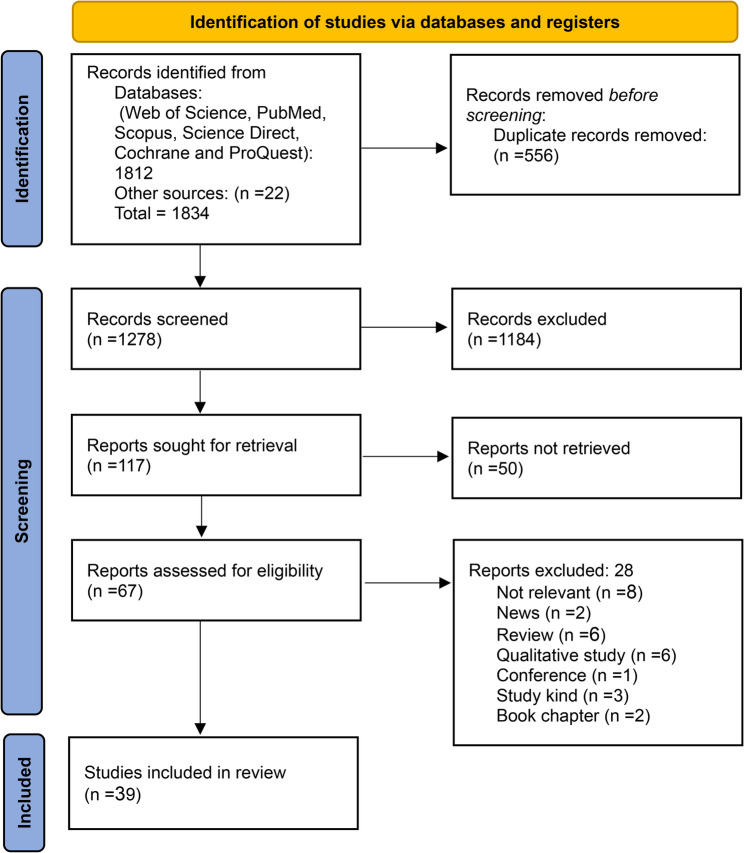
“After duplicate studies were removed, 1278 documents remained. The titles and abstracts of the studies were screened according to inclusion criteria, and a total of 1184 studies were removed. After checking, 117 reports sought for retrieval”
§ Investigating the relationship between intimate partner violence, reproductive health and pregnancy outcome: a systematic review > Materials and methods > Study selection
Reported 117 · recomputed 94
Rated minor: it would not touch a result — a value no result rests on, a p-value that stays on the same side of the significance level, or a conflict that is clerical, resolved elsewhere in the paper, or outside its own findings.
In the paper
§ Investigating the relationship between intimate partner violence, reproductive health and pregnancy outcome: a systematic review > Materials and methods > Assessment of the quality of the reviewed papers
“Silverman et al. (2020), Nigeria [45]”
§ Investigating the relationship between intimate partner violence, reproductive health and pregnancy outcome: a systematic review > Materials and methods > Assessment of the quality of the reviewed papers
“Married adolescents’ girls in the Dosso region of Niger”
Rated minor: it would not touch a result — a value no result rests on, a p-value that stays on the same side of the significance level, or a conflict that is clerical, resolved elsewhere in the paper, or outside its own findings.
In the paper
§ Investigating the relationship between intimate partner violence, reproductive health and pregnancy outcome: a systematic review > Materials and methods > Assessment of the quality of the reviewed papers
“Kuhlmann et al. (2019), Honduras [58] | CU | Cross-sectional | aged 18–30 years, with no prior sterilization, and with no currentpregnancy or plans to conceive. | 577 C”
§ Investigating the relationship between intimate partner violence, reproductive health and pregnancy outcome: a systematic review > Materials and methods > Assessment of the quality of the reviewed papers
“Kuhlmann et al. (2019), Honduras [58] | Pregnancy Intention and CU | Secondary data | were married/living with partner,and had least one living child under 5 years | 6629 W”
Rated minor: it would not touch a result — a value no result rests on, a p-value that stays on the same side of the significance level, or a conflict that is clerical, resolved elsewhere in the paper, or outside its own findings.
In the paper
§ Investigating the relationship between intimate partner violence, reproductive health and pregnancy outcome: a systematic review > Materials and methods > Inclusion and exclusion criteria
“Inclusion criteria were peer-reviewed published observational studies: including cross-sectional, surveys, longitudinal studies, and cohort studies in English language about women who face intimate partner violence.”
§ Investigating the relationship between intimate partner violence, reproductive health and pregnancy outcome: a systematic review > Materials and methods > Assessment of the quality of the reviewed papers
“Silverman (2023), Niger [57] | CU | Cluster-randomized trial”
Rated minor: it would not touch a result — a value no result rests on, a p-value that stays on the same side of the significance level, or a conflict that is clerical, resolved elsewhere in the paper, or outside its own findings.
In the paper
§ Investigating the relationship between intimate partner violence, reproductive health and pregnancy outcome: a systematic review > Materials and methods > Study selection
“A total of 1834 documents were retrieved, plus 22 additional records identified through other sources. After duplicate studies were removed, 1278 documents remained.”
§ Investigating the relationship between intimate partner violence, reproductive health and pregnancy outcome: a systematic review > Materials and methods > Data sources and search strategy
“After removing duplicate articles in endnote software update 20.6 (556 articles), 1278 articles remained”
1 more finding
Create a free account to see every finding of this check.
Citations
Cites
Page, M. J., Moher, D., Bossuyt, P. M., Boutron, I., Hoffmann, T. C., Mulrow, C. D., Shamseer, L., Tetzlaff, J. M., Akl, E. A., Brennan, S. E., et al. (2021) · BMJ · doi:10.1136/bmj.n160 · Cited by 13,262
Posttraumatic Stress Disorder in the National Comorbidity Survey
Kessler, R. C. (1995) · Archives of General Psychiatry · doi:10.1001/archpsyc.1995.03950240066012 · Cited by 10,379 · cited 1×
“According to the “Diagnos-tic and Statistical Manual of Mental Disorders” (DSM-IV), the risk of developing depression and post-traumatic stress disorder following a traumatic event depends on several factors, including the type of trauma, and aggressive violence is the most common factor [8, 9].”
InfluentialTrauma and Posttraumatic Stress Disorder in the Community: The 1996 Detroit Area Survey of Trauma
Breslau, N., Kessler, R. C., Chilcoat, H. D., Schultz, L. R., Davis, G. C., & Andreski, P. (1998) · Archives of General Psychiatry · doi:10.1001/archpsyc.55.7.626 · Cited by 2,407
Shorey, S., Chee, C. Y. I., Ng, E. D., Chan, Y. H., Tam, W. W. S., & Chong, Y. S. (2018) · Journal of Psychiatric Research · doi:10.1016/j.jpsychires.2018.08.001 · Cited by 1,055 · cited 1×
“In the postpartum period, women are faced with post-partum depression to some extent [68].”
Risk Factors for Injury to Women from Domestic Violence
Kyriacou, D. N., Anglin, D., Taliaferro, E., Stone, S., Tubb, T., Linden, J. A., Muelleman, R., Barton, E., & Kraus, J. F. (1999) · New England Journal of Medicine · doi:10.1056/nejm199912163412505 · Cited by 456
Nelson, H. D., Bougatsos, C., & Blazina, I. (2012) · Annals of Internal Medicine · doi:10.7326/0003-4819-156-11-201206050-00447 · Cited by 330
Silverman, J., Gupta, J., Decker, M., Kapur, N., & Raj, A. (2007) · BJOG: An International Journal of Obstetrics & Gynaecology · doi:10.1111/j.1471-0528.2007.01481.x · Cited by 330 · cited 5×
“Also, based on a study miscarriage was more likely among victimized violence women, and a non-significant trend was detected for increased risk of induced abortion [60].”
InfluentialDomestic violence against women and associated factors in Ethiopia; systematic review
Semahegn, A., & Mengistie, B. (2015) · Reproductive Health · doi:10.1186/s12978-015-0072-1 · Cited by 326
Stith, S. M., Green, N. M., Smith, D. B., & Ward, D. B. (2008) · Journal of Family Violence · doi:10.1007/s10896-007-9137-4 · Cited by 228 · cited 1×
“In some societies and cultures, a man’s violence towards his wife is accepted and sometimes even considered a source of pride for women, which naturally affects marital relations and child bearing [71, 72].”
Pallitto, C. C., & O'Campo, P. (2004) · International Family Planning Perspectives · doi:10.1363/3016504 · Cited by 176
Research works printed but not linked: 4
- Aliverdinia A, Eini N. An experimental application of the theory of radical feminism in explaining students’ attitudes towards wife beating. Strateg Res Soc Probl Iran. 2020;9(1):53–78.
- Torabi F, Sheidani R. A study of effective factors in tendency to fewer childbearing of 15–49 year old women residents of Tehran. J Woman Family Stud. 2019;7(2):31–67.
- Deyessa N, Argaw A. Intimate partner violence and unmet need for contraceptive use among Ethiopian women living in marital union. Ethiop J Health Dev. 2018;32(3). 10.4314/ejhd.v32i3. · doi:10.4314/ejhd.v32i3
- Shittu SB, Babalola BI, Oladele R, Adedini SA. Intimate partners’ violence and birth spacing in Nigeria, implication for high Fertility. Evidence from 2018 NDHSb3. Health Sci J. 2022;16(9):1–5.
Cited by
Jabali, O. M., Mukh, H. A., & Qadri, R. (2026) · Women s Health · doi:10.1177/17455057261464220
FATORES ASSOCIADOS AO COMPORTAMENTO CONTROLADOR DO PARCEIRO
Farias, L. G. F., Silva, E. P., Silva, L. S. B. V., Sá, M. D. S., Selva, M. W., de Melo, Y. K. M., & Ludermir, A. B. (2026) · Aracê. · doi:10.56238/arev8n5-113
Kimber, F., Abusbaitan, H. A., Munala, L., Luebke, J. M., Walton, A., Eyadat, A. M., Gondwe, K. W., Bement, K., Jerome, M., Clark, C., et al. (2026) · Nursing Inquiry · doi:10.1111/nin.70184
“Other long‐term effects include chronic pain, cardiovascular and gastrointestinal disorders, mental health conditions, and reproductive complications, such as preterm birth and mis-carriage (Banjar et al. 2022; Barez et al. 2025; Lagdon et al. 2014; Thurston et al. 2022; Uvelli et al. 2024).”
Stone, L., Rafferty, J., Farr, I., Thornton, C., & Griffiths, L. J. (2026) · BMJ Public Health · doi:10.1136/bmjph-2025-004632
“48 49 All these scenarios could contribute to changes in fertility trends during the pandemic, alongside changes to incidences of stillbirth and miscarriage, and instabilities to the population structure caused by changes to internal and external migration flows and an increase in mortality rates…”
Caron, A.-J. (2026) · Papyrus : Institutional Repository (Université de Montréal) · doi:10.71781/36372
Yan, C., Yan, W., Kang, L., Liu, W., Zhang, Y., Liu, S., Wang, H., He, H., Fu, J., Tao, L., et al. (2026) · BMJ Public Health · doi:10.1136/bmjph-2026-005194
Santana, M. E., de Oliveira, S. L. P., & de Almeida, T. N. D. S. D. (2026) · Revista Ibero-Americana de Humanidades, Ciências e Educação · doi:10.51891/rease.v4i01.28109
Concejero, L. T., Arnedillo-Sánchez, S., & Muñoz, M. Á. G. (2026) · BMC Public Health · doi:10.1186/s12889-026-28673-7
“Over time, these individuals are more likely to experience chronic somatic conditions such as fibromyalgia, irritable bowel syndrome, and reproductive health complications, including miscarriage and increased vulnerability to sexually transmitted infections [12, 13].”
Khan, M. N. (2026) · PLoS ONE · doi:10.1371/journal.pone.0360372
“These studies have established strong associations between violence and adverse outcomes including depression, suicidal ideation, maternal morbidity, unintended pregnancy, and reduced healthcare use [17,19–21].”
Hanifah, A. N., R, C. R. C., & Rahmat, R. A. (2026) · Barongko Jurnal Ilmu Kesehatan · doi:10.59585/bajik.v5i1.1653
Timisela, J., Rahmat, R. A., & Batmomolin, A. (2026) · Barongko Jurnal Ilmu Kesehatan · doi:10.59585/bajik.v5i1.1758
Metadata
- Authors
- Barez, M. A., Goudarzi, F., Sharifi, N., Ahmadi, A., Sharifi, A., Moradi, M., & Sharifi, F.
- Affiliations
- Islamic Azad University, Mashhad (IR)
- Yasuj University of Medical Sciences (IR)
- Shiraz University of Medical Sciences (IR)
- Monash University (AU)
- Shahrekord University of Medical Sciences (IR)
- Corresponding author
- Sharifi, Farangis
- Venue
- Reproductive Health
- Published
- 2025-12-24
- Volume
- 22
- Issue
- 1
- Pages
- 255-255
- ISSN
- 1742-4755 (ISSN-L)
- PMC
- PMC12729150
- OpenAlex
- W7117136303
- Cited by
- 11
- References
- 74
- Citations by year
- 2026: 11
- FWCI
- 1.25
- Type
- journal article
- Language
- en
- Open access
- gold
- doi.org
- Licence
- cc-by-nc-nd
- creativecommons.org/licenses/by-nc-nd/4.0 (tdm)
- creativecommons.org/licenses/by-nc-nd/4.0 (vor)
- Locations
- Reproductive Health (publishedVersion, cc-by-nc-nd)
- PubMed Central (publishedVersion, cc-by-nc-nd)
- PubMed (publishedVersion)
- DOAJ (DOAJ: Directory of Open Access Journals) (submittedVersion)
- Funders
- Shahrekord University
- Shahrekord University of Medical Sciences
- Topics
- Social Sciences › Health › Intimate Partner and Family Violence
- Health Sciences › Medicine › Public Health, Environmental and Occupational Health › Reproductive Health and Contraception
- Health Sciences › Medicine › Obstetrics and Gynecology › Maternal and Perinatal Health Interventions
- Keywords
- intimate partner violence, domestic violence, pregnancy outcomes, fertility, contraceptive use, unintended pregnancy, maternal health, fetal outcomes, abortion, stillbirth, infant mortality, violence against women
- MeSH terms
- Intimate Partner Violence, Female, Humans, Pregnancy, Pregnancy Outcome, Reproductive Health
About these checks
Registry, retraction, Cites and statistics results are computed, not judged, with one exception: a printed reference that no index lists is read once by a model before it counts as a citation error. Claims are extracted by a model and kept only when their quote appears verbatim in the text; each cited source is then checked, with a model’s help, for whether it says what the claim relies on. Those verdicts can be wrong — read the claim’s quote and the cited source before relying on one.
A language model drew the claims from the paper on 2026-11-29, under version 3 of the claim definition (model deepseek-v4.1-flash, prompt extract-v3).
A second model labelled each claim on 2026-11-29 (model jev-1.13-20260917, definition revision gold-guideline-v0.2).
Statistics and arithmetic are recomputed, not judged.
Confidence bands are shown only for fields calibrated on our annotated test set. None is calibrated yet, so no band is shown.
What counts as a claim ›How we measure confidence ›How we check this ›
Are you an author, or do you see a problem with this page? Request a review
Data sources
Bibliographic data: Semantic Scholar, OpenAlex, Crossref.
Contains information from the Semantic Scholar Academic Graph Datasets, made available under the ODC Attribution License (ODC-BY 1.0).
Semantic Scholar’s data is described in: Kinney, R., et al. (2023). The Semantic Scholar Open Data Platform. arXiv:2301.10140.
