

Intimate partner violence during pregnancy in sub-Saharan Africa: a systematic review and meta-analysis
Open accessThe DOI matches its Crossref record; 108 of the 109 references it cites were found in a registry or an index; none of the 125 sources its claims cite is checked for support yet.
Abstract
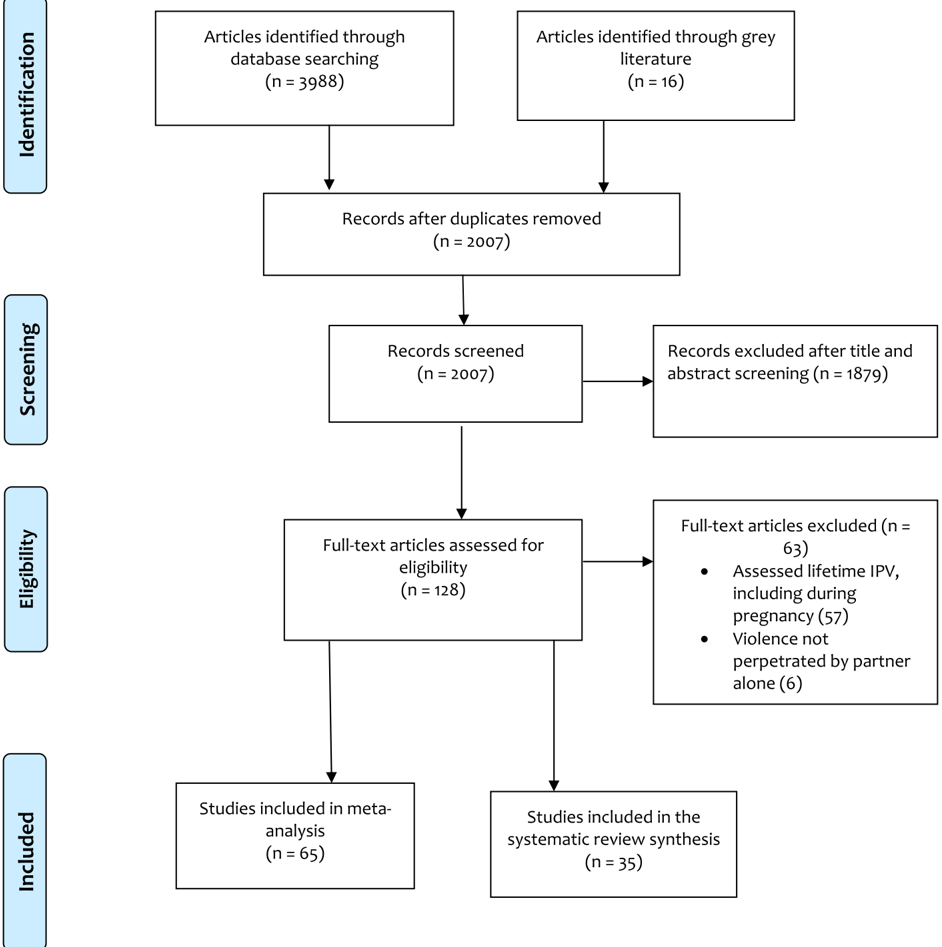
BACKGROUND: Intimate partner violence (IPV) has health and human rights implications for victim-survivors. During pregnancy, IPV is associated with several morbidities, injuries, and mortality among women and their foetuses. Identifying the prevalence and factors associated with IPV during pregnancy is crucial towards developing preventive strategies to curb its occurrence. This review estimated the prevalence of IPV during pregnancy and examined its associated factors in sub-Saharan Africa. METHODS: This review adhered to the Preferred Reporting Items for Systematic Reviews and Meta-Analysis (PRISMA) guidelines. A literature search was conducted in PubMed, Scopus, Web of Science, PsycINFO, Embase, and CINAHL for articles published on IPV experienced during pregnancy in sub-Saharan Africa from January 01, 2011, to May 30, 2025. Additional literature search was conducted in Google Scholar and Google to complement the articles retrieved from the six databases. All the published articles that met the inclusion criteria were included in the final analysis. Stata 18.0 was used for data analysis. Microsoft Excel was utilised for synthesising the factors associated with IPV during pregnancy. RESULTS: A total of 3,988 records were retrieved from the six databases, and 16 articles were identified through Google Scholar and Google literature search. Sixty-five (65) articles met the inclusion criteria and were finally included in the study. The pooled prevalence of IPV was 38.3% (95% confidence interval [CI] = 33.5 - 43.2). The prevalence of physical, sexual, and emotional violence was 15.7% (95%CI = 13.2-18.3), 18.0% (95%CI = 14.6-21.5), and 27.7% (95%CI = 23.6-31.9), respectively. The risk factors for IPV during pregnancy were substance use, unplanned pregnancy, justification of violence against women, exposure to violence during childhood, experience of controlling behaviour, past experiences of IPV and marital conflicts, rural residency, and polygyny. Women's empowerment, social support, and education were identified as key factors that reduce women's likelihood of experiencing IPV during pregnancy. CONCLUSION: Our study highlights the prevalence of IPV during pregnancy in sub-Saharan Africa, emphasising the need for targeted strategies that address key risk factors. It advocates for promoting women's empowerment, improving girls' education, and strengthening legal frameworks to effectively prevent IPV. Ministries of Health across sub-Saharan African countries could integrate routine, confidential IPV screening into antenatal care and ensure immediate access to evidence-based interventions with clear referral pathways to supportive services to prevent further violence.
Overview
CoChat Summary
TL;DR
This systematic review and meta-analysis of 65 studies estimates that 38.3% of pregnant women in sub-Saharan Africa experienced intimate partner violence (IPV) during pregnancy, with emotional violence the most common form. It identifies partner substance use, unplanned pregnancy, childhood violence exposure, controlling behaviour, past IPV/marital conflict, rural residence, and polygyny as risk factors, while women’s empowerment, social support, and education are protective.
Key findings
- The pooled prevalence of IPV during pregnancy was 38.3% (95% CI = 33.5–43.2) across 49 studies; country estimates ranged from 7.1% (95% CI = 4.8–9.5) in Ethiopia to 68.7% (95% CI = 64.2–73.3) in Nigeria.
- Form-specific pooled prevalence was 15.7% (95% CI = 13.2–18.3) for physical violence (54 studies), 18.0% (95% CI = 14.6–21.5) for sexual violence (45 studies), and 27.7% (95% CI = 23.6–31.9) for emotional/psychological violence.
- Risk factors included partner substance use (predominant, reported by 21 studies), unplanned pregnancy, justification of violence against women, exposure to violence during childhood, partner controlling behaviour, past IPV and marital conflicts, rural residency, and polygyny.
- Protective factors included women’s empowerment/decision-making, social support, and education (women’s and partner’s).
Methods
- PRISMA-adherent systematic review and meta-analysis; protocol registered in PROSPERO (CRD42024526989). Searched PubMed, Scopus, Web of Science, PsycINFO, Embase, and CINAHL, plus Google Scholar and Google, for articles published January 1, 2011–May 30, 2025.
- Included 65 articles meeting criteria (observational, interventional, or mixed-method; pregnant women/pregnancy; sub-Saharan Africa; English). Most studies were from Ethiopia (26; 40.0%) and Nigeria (12; 18.5%); 54 reported physical violence, 46 emotional/psychological violence, 45 sexual violence, and 49 overall IPV.
- Data analyzed in Stata 18.0 using random-effects meta-analysis for pooled prevalence, Cochran’s Q and I² for heterogeneity, subgroup analyses by country, study design, and year of publication, and Egger’s test for small-study effects; Microsoft Excel was used to synthesize associated factors.
Limitations
- Stated by the paper: heterogeneity in IPV assessment tools and timing may have contributed to under- or over-reporting; self-reports are susceptible to social desirability and recall bias; predominance of cross-sectional designs limits causal inference; some studies had small samples, suboptimal response rates, or non-probability sampling; exclusion of non-English studies may introduce language bias; pooled prevalence of controlling behaviour and economic/financial violence could not be estimated due to limited data; exclusion of studies without clear IPV-during-pregnancy data may have influenced the number of included studies and pooled estimate.
- Evident in the text: heterogeneity was consistently very high (I² = 98.90% for overall IPV; 99.36% physical; 98.86% sexual; 98.92% emotional), and Egger’s test indicated small-study effects/publication bias (p = 0.017), although trim-and-fill and sensitivity analyses showed no evidence of variation in the pooled IPV prevalence.
Model-written summary. Check it against the paper before relying on it.
Integrity signals
Registry
Cites
Statistics
Figures
Verification
Claims the paper makes
0 Valid · 0 Not valid · 80 Not checked · 71 Own results and interpretations
A result the paper reports from its own data — it cites no other source for it, so there is none to check. The quote shows it is in the paper.
In the paper
“The risk factors for IPV during pregnancy were substance use, unplanned pregnancy, justification of violence against women, exposure to violence during childhood, experience of controlling behaviour, past experiences of IPV and marital conflicts, rural residency, and polygyny.”
§ Intimate partner violence during pregnancy in sub-Saharan Africa: a systematic review and meta-analysis > Abstract > Results
plainstates a cause- Asserted: passes — The authors put it forward as true.
- Checkable: passes — It can be checked against evidence.
- Load-bearing: passes — The paper’s conclusions depend on it.
- Based: passes — The paper gives a reason why it holds.
- Rests on an assumption not shown here.
A result the paper reports from its own data — it cites no other source for it, so there is none to check. The quote shows it is in the paper.
In the paper
“Women’s empowerment, social support, and education were identified as key factors that reduce women's likelihood of experiencing IPV during pregnancy.”
§ Intimate partner violence during pregnancy in sub-Saharan Africa: a systematic review and meta-analysis > Abstract > Results
plainstates a cause- Asserted: passes — The authors put it forward as true.
- Checkable: passes — It can be checked against evidence.
- Load-bearing: passes — The paper’s conclusions depend on it.
- Based: passes — The paper gives a reason why it holds.
- Rests on an assumption not shown here.
A result the paper reports from its own data — it cites no other source for it, so there is none to check. The quote shows it is in the paper.
In the paper
“The risk factors for IPV during pregnancy were substance use, unplanned pregnancy, justification of violence against women, exposure to violence during childhood, experience of controlling behaviour, past experiences of IPV and marital conflicts, rural residency, and polygyny.”
§ Intimate partner violence during pregnancy in sub-Saharan Africa: a systematic review and meta-analysis > Abstract > Results
plainstates a cause- Asserted: passes — The authors put it forward as true.
- Checkable: passes — It can be checked against evidence.
- Load-bearing: passes — The paper’s conclusions depend on it.
- Based: passes — The paper gives a reason why it holds.
- Rests on an assumption not shown here.
A result the paper reports from its own data — it cites no other source for it, so there is none to check. The quote shows it is in the paper.
In the paper
“The risk factors for IPV during pregnancy were substance use, unplanned pregnancy, justification of violence against women, exposure to violence during childhood, experience of controlling behaviour, past experiences of IPV and marital conflicts, rural residency, and polygyny.”
§ Intimate partner violence during pregnancy in sub-Saharan Africa: a systematic review and meta-analysis > Abstract > Results
plainstates an association- Asserted: passes — The authors put it forward as true.
- Checkable: passes — It can be checked against evidence.
- Load-bearing: passes — The paper’s conclusions depend on it.
- Based: passes — The paper gives a reason why it holds.
- Rests on an assumption not shown here.
94 more claims
Create a free account to see all 151 claims and to verify the 125 references still open.
- Probably not a substantial claim. 25
- It may state two separate claims as one. 39
Self-check
Percentages, sums and reported differences re-computed from the paper’s own numbers.
Each contradiction between two passages listed here was confirmed by an independent check.
Rated minor: it would not touch a result — a value no result rests on, a p-value that stays on the same side of the significance level, or a conflict that is clerical, resolved elsewhere in the paper, or outside its own findings.
In the paper
§ Intimate partner violence during pregnancy in sub-Saharan Africa: a systematic review and meta-analysis > Methods > Data extraction
“| Manongi et al. [75] | 2017 | Tanzania |”
§ Intimate partner violence during pregnancy in sub-Saharan Africa: a systematic review and meta-analysis > References
“75. Manongi R, Rogathi J, Sigalla G, Mushi D, Rasch V, Gammeltoft T, et al. The association between intimate partner violence and signs of depression during pregnancy in Kilimanjaro Region, Northern Tanzania. J Interpers Violence. 2020;35(23–24):5797–811.”
Rated minor: it would not touch a result — a value no result rests on, a p-value that stays on the same side of the significance level, or a conflict that is clerical, resolved elsewhere in the paper, or outside its own findings.
In the paper
“Partner substance use was the predominant risk factor for IPV during pregnancy, reported by 21 studies. Of this, ten were conducted in Ethiopia [22, 29, 31–33, 38, 53, 62, 70, 73], three in Kenya [20, 26, 61], two each from Gambia [37, 52] and Uganda [25, 41], and one each from Ghana [65], Nigeria [72], and South Africa [54].”
§ Intimate partner violence during pregnancy in sub-Saharan Africa: a systematic review and meta-analysis > Results > Substance use
Reported 21 · recomputed 20
Rated minor: it would not touch a result — a value no result rests on, a p-value that stays on the same side of the significance level, or a conflict that is clerical, resolved elsewhere in the paper, or outside its own findings.
In the paper
§ Intimate partner violence during pregnancy in sub-Saharan Africa: a systematic review and meta-analysis > Results > Unintended pregnancy
“Six (6) studies reported this association”
§ Intimate partner violence during pregnancy in sub-Saharan Africa: a systematic review and meta-analysis > Results > Unintended pregnancy
“five from Ethiopia [17, 22, 31, 32, 63, 73] and one from Nigeria [18].”
Citations
Cites
Page, M. J., Moher, D., Bossuyt, P. M., Boutron, I., Hoffmann, T. C., Mulrow, C. D., Shamseer, L., Tetzlaff, J. M., Akl, E. A., Brennan, S. E., et al. (2021) · BMJ · doi:10.1136/bmj.n160 · Cited by 13,262 · cited 1×
“This review adhered to the Preferred Reporting Items for Systematic Reviews and Meta-analyses (PRISMA) guidelines in writing and reporting the findings [12] (Fig.”
Lockwood, C., Munn, Z., & Porritt, K. (2015) · International Journal of Evidence-Based Healthcare · doi:10.1097/xeb.0000000000000062 · Cited by 2,456
Chapter 7: Systematic reviews of etiology and risk
Moola, S., Munn, Z., Tufanaru, C., Aromataris, E., Sears, K., Sfetic, R., Currie, M., Lisy, K., Qureshi, R., Mattis, P., et al. (2019) · JBI Reviewer's Manual · doi:10.46658/jbirm-17-06 · Cited by 2,114
Sardinha, L., Maheu-Giroux, M., Stöckl, H., Meyer, S. R., & García-Moreno, C. (2022) · The Lancet · doi:10.1016/s0140-6736(21)02664-7 · Cited by 1,328
Barker, T. H., Stone, J. C., Sears, K., Klugar, M., Tufanaru, C., Leonardi-Bee, J., Aromataris, E., & Munn, Z. (2023) · JBI Evidence Synthesis · doi:10.11124/jbies-22-00430 · Cited by 1,225
The Intergenerational Transmission of Spouse Abuse: A Meta‐Analysis
Stith, S. M., Rosen, K. H., Middleton, K. A., Busch, A. L., Lundeberg, K., & Carlton, R. P. (2000) · Journal of Marriage and Family · doi:10.1111/j.1741-3737.2000.00640.x · Cited by 691 · cited 4×
“For example, exposure to violence during childhood could culminate in violence as a normative activity, which could be transferred across generations [96].”
InfluentialShamu, S., Abrahams, N., Temmerman, M., Musekiwa, A., & Zarowsky, C. (2011) · PLoS ONE · doi:10.1371/journal.pone.0017591 · Cited by 510
Tip of the iceberg: reporting and gender-based violence in developing countries
Palermo, T., Bleck, J., & Peterman, A. (2014) · American Journal of Epidemiology · doi:10.1093/aje/kwt295 · Cited by 480 · cited 1×
“Violence against women is a widespread phenomenon associated with a myriad of negative health and social consequences that extend beyond individual victim-survivors [1].”
Antai, D. (2011) · BMC Public Health · doi:10.1186/1471-2458-11-511 · Cited by 268
Risk Factors for Domestic Violence During Pregnancy: A Meta-Analytic Review
James, L., Brody, D., & Hamilton, Z. (2013) · Violence and Victims · doi:10.1891/0886-6708.vv-d-12-00034 · Cited by 241
JBI critical appraisal checklist for systematic reviews and research syntheses (product review)
Hilton, M. (2024) · Journal of the Canadian Health Libraries Association / Journal de l Association de bilbiothèques de la santé du Canada · doi:10.29173/jchla29801 · Cited by 241
Roberts, A. L., Gilman, S. E., Fitzmaurice, G., Decker, M. R., & Koenen, K. C. (2010) · Epidemiology · doi:10.1097/ede.0b013e3181f39f03 · Cited by 192 · cited 1×
“Boys who witness paternal per-petration of violence may model such behaviour, while girls may internalise victim-role norms, contributing to male perpetration and female victimisation later in their lives [96, 97].”
Chapter 5: Systematic reviews of prevalence and incidence
(2020) · JBI Manual for Evidence Synthesis · doi:10.46658/jbimes-20-06 · Cited by 169
Román-Gálvez, R. M., Martín-Peláez, S., Fernández-Félix, B. M., Zamora, J., Khan, K. S., & Bueno-Cavanillas, A. (2021) · Frontiers in Public Health · doi:10.3389/fpubh.2021.738459 · Cited by 162 · cited 5×
“A global meta-analysis study further showed that the prevalence of physical, psychological or emotional, and sexual violence during pregnancy was 9.2%, 18.7%, and 5.5%, respectively [7].”
InfluentialHalim, N., Beard, J., Mesic, A., Patel, A., Henderson, D., & Hibberd, P. (2018) · Clinical Psychology Review · doi:10.1016/j.cpr.2017.11.004 · Cited by 161
Makayoto, L. A., Omolo, J., Kamweya, A. M., Harder, V. S., & Mutai, J. (2013) · Maternal and Child Health Journal · doi:10.1007/s10995-012-1015-x · Cited by 126
Alebel, A., Kibret, G. D., Wagnew, F., Leshargie, C. T., Ferede, A., Petrucka, P. M., Bobo, F. T., Birhanu, M. Y., Tadesse, A. A., & Eshetie, S. (2018) · Reproductive Health · doi:10.1186/s12978-018-0637-x · Cited by 123
Mahenge, B., Likindikoki, S., Stöckl, H., & Mbwambo, J. (2013) · BJOG: An International Journal of Obstetrics & Gynaecology · doi:10.1111/1471-0528.12185 · Cited by 123
Gunarathne, L., Bhowmik, J., Apputhurai, P., & Nedeljkovic, M. (2023) · PLOS ONE · doi:10.1371/journal.pone.0293295 · Cited by 111
Shamu, S., Zarowsky, C., Roelens, K., Temmerman, M., & Abrahams, N. (2015) · General Hospital Psychiatry · doi:10.1016/j.genhosppsych.2015.10.005 · Cited by 111
Abeya, S. G., Afework, M. F., & Yalew, A. W. (2011) · BMC Public Health · doi:10.1186/1471-2458-11-913 · Cited by 109
Shamu, S., Abrahams, N., Zarowsky, C., Shefer, T., & Temmerman, M. (2013) · Tropical Medicine & International Health · doi:10.1111/tmi.12078 · Cited by 105
Gebrezgi, B. H., Badi, M. B., Cherkose, E. A., & Weldehaweria, N. B. (2017) · Reproductive Health · doi:10.1186/s12978-017-0337-y · Cited by 105
Lencha, B., Ameya, G., Baresa, G., Minda, Z., & Ganfure, G. (2019) · PLoS ONE · doi:10.1371/journal.pone.0214962 · Cited by 105
Groves, A. K., Moodley, D., McNaughton-Reyes, L., Martin, S. L., Foshee, V., & Maman, S. (2015) · Maternal and Child Health Journal · doi:10.1007/s10995-014-1528-6 · Cited by 95
Intimate Partner Violence Against Women in the Arab Countries: A Systematic Review of Risk Factors
Mojahed, A., Alaidarous, N., Shabta, H., Hegewald, J., & Garthus‐Niegel, S. (2020) · Trauma Violence & Abuse · doi:10.1177/1524838020953099 · Cited by 92
Physical violence during pregnancy and pregnancy outcomes in Ghana
Pool, M. S., Otupiri, E., Owusu‐Dabo, E., de Jonge, A., & Agyemang, C. O. (2014) · BMC Pregnancy and Childbirth · doi:10.1186/1471-2393-14-71 · Cited by 85
Aizpurua, E., Copp, J., Ricarte, J. J., & Vázquez, D. (2021) · Journal of Interpersonal Violence · doi:10.1177/0886260517723744 · Cited by 84
Effect of intimate partner violence on birth outcomes
Laelago, T., Belachew, T., & Tamrat, M. (2017) · African Health Sciences · doi:10.4314/ahs.v17i3.10 · Cited by 80
Rurangirwa, A. A., Mogren, I., Ntaganira, J., & Krantz, G. (2017) · BMJ Open · doi:10.1136/bmjopen-2016-013155 · Cited by 79
Field, S., Onah, M., van Heyningen, T., & Honikman, S. (2018) · BMC Women's Health · doi:10.1186/s12905-018-0612-2 · Cited by 74
Women's Autonomy and Intimate Partner Violence in Ghana
Tenkorang (2018) · International Perspectives on Sexual and Reproductive Health · doi:10.1363/44e6118 · Cited by 72
Abebe Abate, B., Admassu Wossen, B., & Tilahun Degfie, T. (2016) · BMC Women's Health · doi:10.1186/s12905-016-0294-6 · Cited by 71
Belay, S., Astatkie, A., Emmelin, M., & Hinderaker, S. G. (2019) · PLOS ONE · doi:10.1371/journal.pone.0220003 · Cited by 69
Azene, Z. N., Yeshita, H. Y., & Mekonnen, F. A. (2019) · PLOS ONE · doi:10.1371/journal.pone.0218722 · Cited by 67
Mahenge, B., Stöckl, H., Abubakari, A., Mbwambo, J., & Jahn, A. (2016) · PLoS ONE · doi:10.1371/journal.pone.0164376 · Cited by 61
Sigalla, G. N., Rasch, V., Gammeltoft, T., Meyrowitsch, D. W., Rogathi, J., Manongi, R., & Mushi, D. (2017) · BMC Public Health · doi:10.1186/s12889-017-4157-3 · Cited by 58
Apoyo social como factor protector frente a la violencia contra la mujer en la pareja
Plazaola-Castaño, J., Ruiz-Pérez, I., & Isabel Montero-Piñar, M. (2008) · Gaceta Sanitaria · doi:10.1016/s0213-9111(08)75350-0 · Cited by 57
Fekadu, E., Yigzaw, G., Gelaye, K. A., Ayele, T. A., Minwuye, T., Geneta, T., & Teshome, D. F. (2018) · BMC Women's Health · doi:10.1186/s12905-018-0632-y · Cited by 55
Burden of intimate partner violence in The Gambia - a cross sectional study of pregnant women
Idoko, P., Ogbe, E., Jallow, O., & Ocheke, A. N. (2015) · Reproductive Health · doi:10.1186/s12978-015-0023-x · Cited by 53
Wang, T., Liu, Y., Li, Z., Liu, K., Xu, Y., Shi, W., & Chen, L. (2017) · PLOS ONE · doi:10.1371/journal.pone.0175108 · Cited by 50
Manongi, R. N., Rogathi, J. J., Sigalla, G. N., Mushi, D., Rasch, V., Gammeltoft, T. M., & Meyrowitsch, D. W. (2017) · Journal of Interpersonal Violence · doi:10.1177/0886260517724256 · Cited by 48
Social ecological factors and intimate partner violence in pregnancy
Gashaw, B. T., Schei, B., & Magnus, J. H. (2018) · PLOS ONE · doi:10.1371/journal.pone.0194681 · Cited by 46
Aboagye, R. G., Ahinkorah, B. O., Tengan, C. L., Salifu, I., Acheampong, H. Y., & Seidu, A.-A. (2022) · PLOS ONE · doi:10.1371/journal.pone.0278196 · Cited by 44
Self-citationAhinkorah, B. O. (2021) · SSM - Population Health · doi:10.1016/j.ssmph.2021.100730 · Cited by 43
Onoh, R., Umeora, O., Onyebuchi, A., Lawani, O., Ezeonu, P., & Agwu, U. (2013) · Annals of Medical and Health Sciences Research · doi:10.4103/2141-9248.122048 · Cited by 42
Women’s Household Decision-Making and Intimate Partner Violence in Ethiopia
Ebrahim, N. B., & Atteraya, M. S. (2019) · Academic Journal of Interdisciplinary Studies · doi:10.2478/ajis-2019-0041 · Cited by 41
Teshome, A., Gudu, W., Bekele, D., Asfaw, M., Enyew, R., & Compton, S. D. (2021) · International Journal of Gynecology & Obstetrics · doi:10.1002/ijgo.13566 · Cited by 39
Mukherjee, R., & Joshi, R. K. (2019) · Journal of Interpersonal Violence · doi:10.1177/0886260519876720 · Cited by 37
Controlling Behavior and Lifetime Physical, Sexual, and Emotional Violence in sub-Saharan Africa
McClintock, H. F., Trego, M. L., & Wang, E. M. (2021) · Journal of Interpersonal Violence · doi:10.1177/0886260519835878 · Cited by 37
Domestic Violence among Pregnant Mothers in Northwest Ethiopia: Prevalence and Associated Factors
Bifftu, B. B., Dachew, B. A., Tadesse Tiruneh, B., & Zewoldie, A. Z. (2017) · Advances in Public Health · doi:10.1155/2017/6506231 · Cited by 37
Aboagye, R. G., Seidu, A.-A., Asare, B. Y.-A., Peprah, P., Addo, I. Y., & Ahinkorah, B. O. (2021) · Archives of Public Health · doi:10.1186/s13690-021-00684-3 · Cited by 36
Self-citationNguyen, T. H., Ngo, T. V., Nguyen, V. D., Nguyen, H. D., Nguyen, H. T. T., Gammeltoft, T., Wolf Meyrowitsch, D., & Rasch, V. (2018) · Global Health Action · doi:10.1080/16549716.2019.1638052 · Cited by 36
Musa, A., Chojenta, C., & Loxton, D. (2020) · PLOS ONE · doi:10.1371/journal.pone.0233907 · Cited by 34
Gebreslasie, K. Z., Weldemariam, S., Gebre, G., & Mehari, M.-A. (2020) · The Italian Journal of Pediatrics/Italian journal of pediatrics · doi:10.1186/s13052-020-00857-w · Cited by 34
Bikinesi, L., Mash, R. J., & Joyner, K. (2017) · African Journal of Primary Health Care & Family Medicine · doi:10.4102/phcfm.v9i1.1512 · Cited by 32
Intimate partner violence against women in Maputo city, Mozambique
Zacarias, A. E., Macassa, G., Svanström, L., Soares, J. J., & Antai, D. (2012) · BMC International Health and Human Rights · doi:10.1186/1472-698x-12-35 · Cited by 31
Magnitude of Intimate Partner Violence and Associated Factors among Pregnant Women in Ethiopia
Adhena, G., Oljira, L., Dessie, Y., & Hidru, H. D. (2020) · Advances in Public Health · doi:10.1155/2020/1682847 · Cited by 30
Shubina, O., Mshana, G., Sichalwe, S., Malibwa, D., Mosha, N., Hashim, R., Nahay, F., Ayieko, P., Kapiga, S., & Stöckl, H. (2023) · Global Health Action · doi:10.1080/16549716.2023.2185967 · Cited by 29
Chasweka, R., Chimwaza, A., & Maluwa, A. (2018) · Malawi Medical Journal · doi:10.4314/mmj.v30i3.11 · Cited by 29
Violence against women and unintended pregnancies in Nicaragua: a population-based multilevel study
Salazar, M., & San Sebastian, M. (2014) · BMC Women's Health · doi:10.1186/1472-6874-14-26 · Cited by 27
Ayodapo, A. O., Sekoni, O. O., & Asuzu, M. C. (2017) · South African Family Practice · doi:10.1080/20786190.2016.1272245 · Cited by 27
Yimer, T., Gobena, T., Egata, G., & Mellie, H. (2014) · Advances in Public Health · doi:10.1155/2014/484897 · Cited by 26
Owaka, I. O., Nyanchoka, M. K., & Atieli, H. E. (2017) · Pan African Medical Journal · doi:10.11604/pamj.2017.28.229.8840 · Cited by 24
Trinh, O. T. H., Oh, J., Choi, S., To, K. G., & Do, D. V. (2016) · Global Health Action · doi:10.3402/gha.v9.29577 · Cited by 24
Raziani, Y., Hasheminasab, L., Gheshlagh, R. G., Dalvand, P., Baghi, V., & Aslani, M. (2022) · Scandinavian Journal of Public Health · doi:10.1177/14034948221119641 · Cited by 23
Aboagye, R. G., Okyere, J., Seidu, A.-A., Hagan, J. E., & Ahinkorah, B. O. (2021) · Healthcare · doi:10.3390/healthcare9050563 · Cited by 22
Self-citationPrevalence and Associated Factors of Intimate Partner Violence During Pregnancy in Eastern Ethiopia
Ashenafi, W., Mengistie, B., Egata, G., & Berhane, Y. (2020) · International Journal of Women's Health · doi:10.2147/ijwh.s246499 · Cited by 22
Luhumyo, L. M., Mwaliko, E., Tonui, P., Getanda, A., & Hann, K. (2020) · Health Policy and Planning · doi:10.1093/heapol/czaa103 · Cited by 22
Saud, M., Ashfaq, A., & Mas’udah, S. (2021) · Journal of international women's studies · Cited by 22
Intimate partner violence among pregnant women attending antenatal care services in the rural Gambia
Jatta, J. W., Baru, A., Fawole, O. I., & Ojengbede, O. A. (2021) · PLOS ONE · doi:10.1371/journal.pone.0255723 · Cited by 21
Boah, M., Abdulai, N., Issah, A.-N., Yeboah, D., Kpordoxah, M. R., Aballo, J., & Adokiya, M. N. (2023) · Heliyon · doi:10.1016/j.heliyon.2023.e15391 · Cited by 20
Kana, M. A., Safiyan, H., Yusuf, H. E., Musa, A. S. M., Richards-Barber, M., Harmon, Q. E., & London, S. J. (2020) · BMJ Open · doi:10.1136/bmjopen-2019-036320 · Cited by 20
Intimate partner violence in pregnancy: a cross-sectional study from post-conflict northern Uganda
Clarke, S., Richmond, R., Black, E., Fry, H., Obol, J. H., & Worth, H. (2019) · BMJ Open · doi:10.1136/bmjopen-2018-027541 · Cited by 20
Donkoh, I. E., Aboagye, R. G., Okyere, J., Seidu, A.-A., Ahinkorah, B. O., & Yaya, S. (2024) · Reproductive Health · doi:10.1186/s12978-024-01755-8 · Cited by 19
Self-citationEzeudu, C. C., Akpa, O., Waziri, N. E., Oladimeji, A., Adedire, E., Saude, I., Nguku, P., Nsubuga, P., & Fawole, O. I. (2019) · Pan African Medical Journal · doi:10.11604/pamj.supp.2019.32.1.13287 · Cited by 18
Physical Violence and Associated Factors during Pregnancy in Yirgalem Town, South Ethiopia
Kassa, Z. Y., & Menale, A. W. (2016) · Current Pediatric Research · Cited by 18
Ayele, S., Alemayehu, M., Fikadu, E., & Tarekegn, G. E. (2021) · BioMed Research International · doi:10.1155/2021/9965289 · Cited by 17
Kebede, A. A., Aklil, M. B., Gessesse, D. N., Tsega, N. T., Temesgan, W. Z., Abegaz, M. Y., Anteneh, T. A., Tibebu, N. S., Alemu, H. N., Haile, T. T., et al. (2022) · Frontiers in Public Health · doi:10.3389/fpubh.2022.904792 · Cited by 17
Fetene, G., Alie, M. S., Girma, D., & Negesse, Y. (2022) · SAGE Open Medicine · doi:10.1177/20503121221079317 · Cited by 16
Intimate partner violence among pregnant women in Uganda
Epuitai, J., Udho, S., Auma, A. G., & Nabirye, R. C. (2019) · African Journal of Midwifery and Women's Health · doi:10.12968/ajmw.2018.0027 · Cited by 15
Ansari, U., Cobham, B., Etim, E. M., Ahamad, H. M., Owan, N. O., Tijani, Y., Cockcroft, A., & Andersson, N. (2017) · Violence Against Women · doi:10.1177/1077801216644072 · Cited by 15
Jeremiah, I., Kalio, G. B., & Oriji, V. K. (2011) · PubMed · Cited by 15
Ahinkorah, B. O., Aboagye, R. G., Seidu, A., Frimpong, J. B., Hagan, J. E., Budu, E., & Yaya, S. (2023) · BMJ Open · doi:10.1136/bmjopen-2021-059236 · Cited by 13
Self-citationBelay, A. S., Kassie, A., & Abera, T. (2022) · SAGE Open Medicine · doi:10.1177/20503121221116671 · Cited by 12
Njoku, I. V., Enebe, J. T., & Dim, C. C. (2021) · PubMed Central · doi:10.11604/pamj.2021.40.82.28157 · Cited by 12
Okunola, T. O., Awoleke, J. O., Olofinbiyi, B. A., Rosiji, B. O., Omoya, S., & Olubiyi, A. O. (2021) · European Journal of Obstetrics & Gynecology and Reproductive Biology · doi:10.1016/j.ejogrb.2021.11.017 · Cited by 12
Auma, A. G., Ayebare, E., Olwit, C., Ndeezi, G., Nankabirwa, V., & Tumwine, J. K. (2020) · African Journal of Midwifery and Women's Health · doi:10.12968/ajmw.2020.0011 · Cited by 12
Aboagye, R. G., Seidu, A.-A., Peprah, P., Asare, B. Y.-A., Addo, I. Y., & Ahinkorah, B. O. (2023) · International Health · doi:10.1093/inthealth/ihac075 · Cited by 11
Self-citationAdjimi Nyemgah, C., Ranganathan, M., & Stöckl, H. (2024) · Injury Prevention · doi:10.1136/ip-2023-044985 · Cited by 11
Abota, T. L., Gashe, F. E., & Deyessa, N. (2022) · Scientific Reports · doi:10.1038/s41598-022-23645-4 · Cited by 10
Kofoworade, A. Y., Alabi, K., Odeigah, L. O., & Amoko, A. (2022) · Pan African Medical Journal · doi:10.11604/pamj.2022.41.1.29893 · Cited by 10
Intimate Partner Physical Violence During Pregnancy in Kenya: Prevalence and Risk Factors
Kiragu, A., Simon, D. J., Kacou, E. A., & Joseph, F. (2022) · Sexuality & Culture · doi:10.1007/s12119-021-09941-7 · Cited by 8
Sulaiman, B., Omonua, K. I., Opadiran, O. R., & Yabagi, A. I. (2021) · Nigerian Postgraduate Medical Journal · doi:10.4103/npmj.npmj_413_21 · Cited by 8
Thompson, N., Mumuni, K., Oppong, S. A., Sefogah, P. E., Nuamah, M. A., & Nkyekyer, K. (2022) · International Journal of Gynecology & Obstetrics · doi:10.1002/ijgo.14375 · Cited by 8
Atsbaha, M., Alemayehu, M., Mekango, D. E., Moges, S., Ejajo, T., Erkalo, D., & Tamrat, H. (2022) · Journal of Obstetrics and Gynaecology · doi:10.1080/01443615.2022.2026900 · Cited by 7
Asratie, M. H. (2022) · Clinical Epidemiology and Global Health · doi:10.1016/j.cegh.2022.101146 · Cited by 7
Kpordoxah, M. R., Adiak, A. A., Issah, A.-N., Yeboah, D., Abdulai, N., & Boah, M. (2024) · BMC Pregnancy and Childbirth · doi:10.1186/s12884-023-06229-6 · Cited by 6
Abegaz, M. Y., Muche, H. A., Aynalem, G. L., Anteneh, T. A., Tibebu, N. S., Gedef, G. M., & Sitot, A. (2023) · Frontiers in Global Women s Health · doi:10.3389/fgwh.2023.1009272 · Cited by 6
Aychiluhm, S. B., Mare, K. U., Ahmed, K. Y., Demissie, M. S., & Tadesse, A. W. (2024) · PLOS ONE · doi:10.1371/journal.pone.0304498 · Cited by 5
Amodoi, G. P., Taremwa, I. M., Nakakande, J., Akugizibwe, P., Mugambe, S., & Nanyingi, M. (2024) · PLOS Global Public Health · doi:10.1371/journal.pgph.0002286 · Cited by 5
Ayodapo, A. O., Sekoni, O. O., & Asuzu, M. C. (2017) · South African Family Practice · doi:10.4102/safp.v59i2.4523 · Cited by 5
Utaile, M. M., Ahmed, A. A., & Yalew, A. W. (2023) · Frontiers in Public Health · doi:10.3389/fpubh.2023.1122041 · Cited by 4
Deresa Dinagde, D., Tesema, K. F., Wolde, F., Heyi, G. W., Feyisa, G. T., & Walle, A. D. (2024) · PLOS Global Public Health · doi:10.1371/journal.pgph.0002246 · Cited by 3
Nigussie, Z. M., Yeshita, H. Y., Mekonnen, F. A., Muluneh, A. G., & Andualem, Z. (2020) · The Ethiopian journal of reproductive health. · doi:10.69614/ejrh.v12i3.401 · Cited by 3
Onuonga, K., Onguru, D., Ogolla, S., & Mutanyi, J. A. (2023) · International Journal of Gynecology & Obstetrics · doi:10.1002/ijgo.14219 · Cited by 3
(2012)
Umoh, A., Abah, G., Ugege, W., & Inyangetoh, E. (2012) · TAF Preventive Medicine Bulletin · doi:10.5455/pmb.1-1329127812
Research works printed but not linked: 1
- United Nations. Declaration on the elimination of violence against women. New York: United Nations; 1993.
Metadata
- Authors
- Aboagye, R. G., Razee, H., Kugbey, N., & Akombi-Inyang, B. J.
- Affiliations
- UNSW Sydney (AU)
- University of Environment and Sustainable Development (GH)
- Corresponding author
- Aboagye, Richard Gyan
- Venue
- Reproductive Health
- Published
- 2026-05-02
- Volume
- 23
- Issue
- 1
- Pages
- 172
- ISSN
- 1742-4755 (ISSN-L)
- PMC
- PMC13602594
- OpenAlex
- W7159839901
- Cited by
- 0
- References
- 107
- FWCI
- 0.00
- Type
- journal article
- Language
- en
- Open access
- gold
- doi.org
- Licence
- cc-by-nc-nd
- creativecommons.org/licenses/by-nc-nd/4.0 (tdm)
- creativecommons.org/licenses/by-nc-nd/4.0 (vor, 145 d)
- Locations
- Reproductive Health (publishedVersion, cc-by-nc-nd)
- PubMed Central (publishedVersion, cc-by-nc-nd)
- PubMed (publishedVersion)
- DOAJ (DOAJ: Directory of Open Access Journals) (submittedVersion)
- Funders
- University of New South Wales
- Topics
- Social Sciences › Health › Intimate Partner and Family Violence
- Health Sciences › Medicine › Geriatrics and Gerontology › Elder Abuse and Neglect
- Social Sciences › Sociology and Political Science › Gender, Violence, Rights in Latin America
- Keywords
- intimate partner violence, pregnancy, sub-Saharan Africa, prevalence, risk factors, physical violence, sexual violence, emotional abuse, substance use, unintended pregnancy, polygyny, women's empowerment, social support, childhood exposure to violence, controlling behavior, marital conflict, violence against women, prevention, legal framework, maternal and child health, rural residence, women's health rights, human rights
- MeSH terms
- Intimate Partner Violence, Sub-Saharan African People, Female, Humans, Pregnancy, Risk Factors, Prevalence, Africa South of the Sahara
About these checks
Registry, retraction, Cites and statistics results are computed, not judged, with one exception: a printed reference that no index lists is read once by a model before it counts as a citation error. Claims are extracted by a model and kept only when their quote appears verbatim in the text; each cited source is then checked, with a model’s help, for whether it says what the claim relies on. Those verdicts can be wrong — read the claim’s quote and the cited source before relying on one.
A language model drew the claims from the paper on 2026-11-29, under version 3 of the claim definition (model deepseek-v4.1-flash, prompt extract-v3).
A second model labelled each claim on 2026-11-29 (model jev-1.13-20260917, definition revision gold-guideline-v0.2).
Statistics and arithmetic are recomputed, not judged.
Confidence bands are shown only for fields calibrated on our annotated test set. None is calibrated yet, so no band is shown.
What counts as a claim ›How we measure confidence ›How we check this ›
Are you an author, or do you see a problem with this page? Request a review
Data sources
Bibliographic data: Semantic Scholar, OpenAlex, Crossref.
Contains information from the Semantic Scholar Academic Graph Datasets, made available under the ODC Attribution License (ODC-BY 1.0).
Semantic Scholar’s data is described in: Kinney, R., et al. (2023). The Semantic Scholar Open Data Platform. arXiv:2301.10140.
