

The DOI matches its Crossref record; 47 of the 47 references it cites were found in a registry or an index.
Exposure to combustion generated environmentally persistent free radicals enhances severity of influenza virus infection
Open accessAbstract
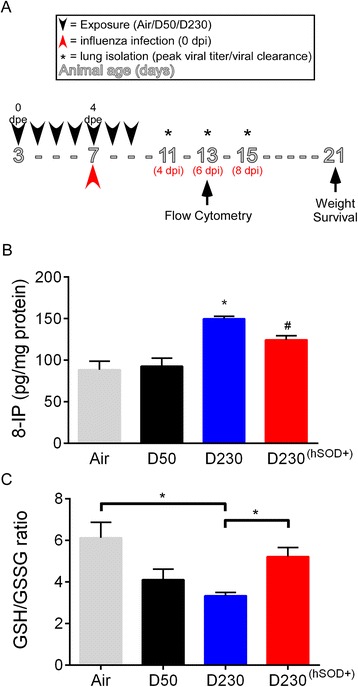
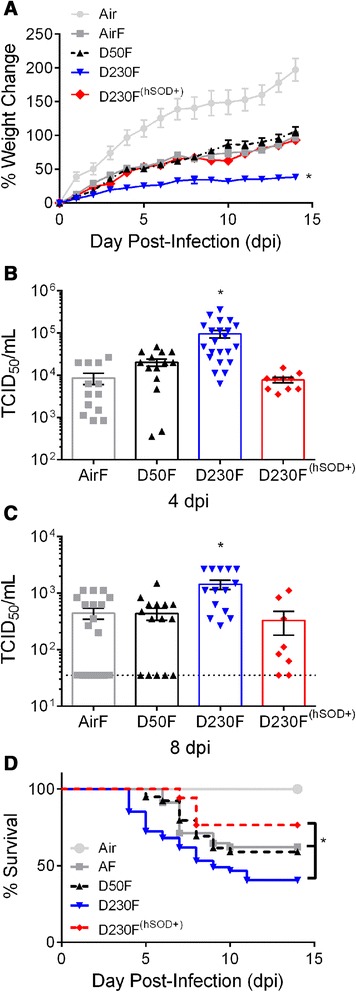
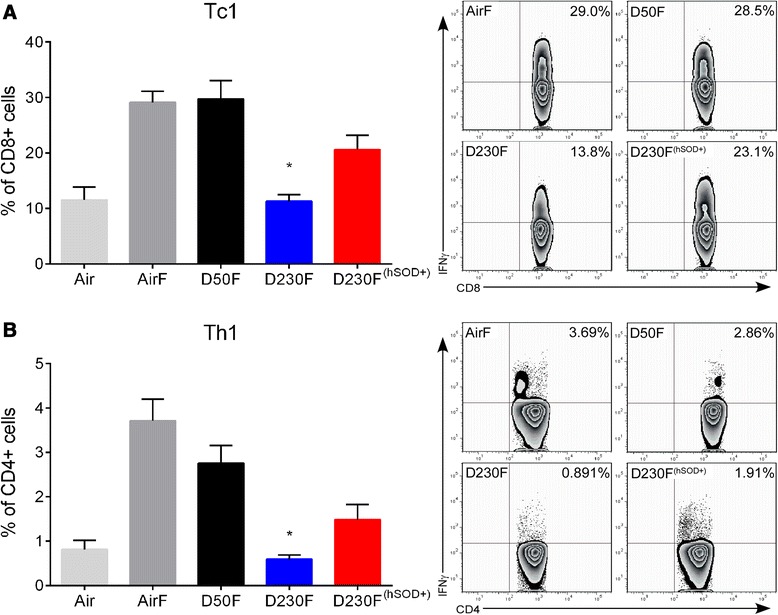
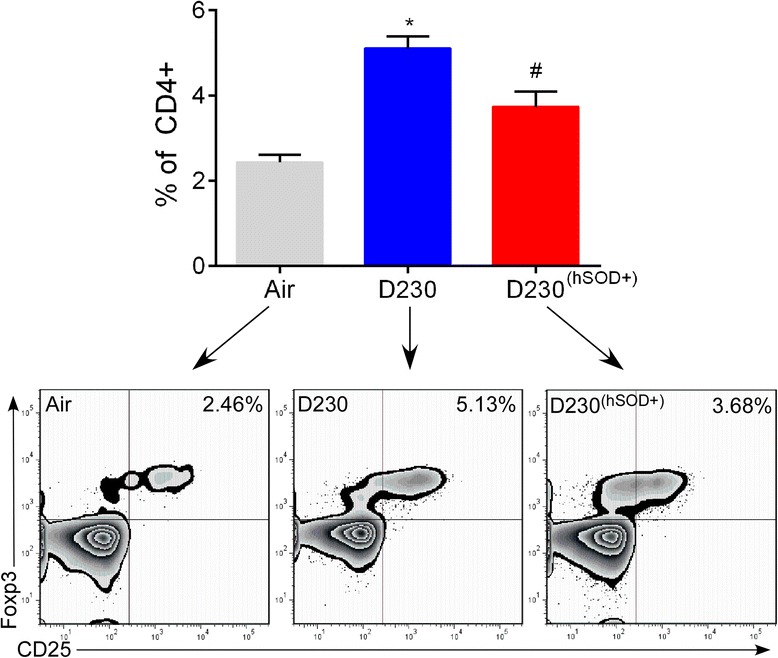
BACKGROUND: Exposures to elevated levels of particulate matter (PM) enhance severity of influenza virus infection in infants. The biological mechanism responsible for this phenomenon is unknown. The recent identification of environmentally persistent free radicals (EPFRs) associated with PM from a variety of combustion sources suggests its role in the enhancement of influenza disease severity. METHODS: Neonatal mice (< seven days of age) were exposed to DCB230 (combustion derived PM with a chemisorbed EPFR), DCB50 (non-EPFR PM sample), or air for 30 minutes/day for seven consecutive days. Four days post-exposure, neonates were infected with influenza intranasally at 1.25 TCID50/neonate. Neonates were assessed for morbidity (% weight gain, peak pulmonary viral load, and viral clearance) and percent survival. Lungs were isolated and assessed for oxidative stress (8-isoprostanes and glutathione levels), adaptive immune response to influenza, and regulatory T cells (Tregs). The role of the EPFR was also assessed by use of transgenic mice expressing human superoxide dismutase 2. RESULTS: Neonates exposed to EPFRs had significantly enhanced morbidity and decreased survival following influenza infection. Increased oxidative stress was also observed in EPFR exposed neonates. This correlated with increased pulmonary Tregs and dampened protective T cell responses to influenza infection. Reduction of EPFR-induced oxidative stress attenuated these effects. CONCLUSIONS: Neonatal exposure to EPFR containing PM resulted in pulmonary oxidative stress and enhanced influenza disease severity. EPFR-induced oxidative stress resulted in increased presence of Tregs in the lungs and subsequent suppression of adaptive immune response to influenza.
Overview
The claims and statistics of this paper haven’t been checked yet.
Run the check — free, no account needed. It reads the open-access text and checks the sources it cites.
Integrity signals
Registry
Cites
Statistics
Figures
Verification
Claims the paper makes
The claims and statistics of this paper haven’t been checked yet.
Run the check — free, no account needed. It reads the open-access text and checks the sources it cites.
Claims other papers make about this one
Each is checked against this paper’s own text: does it say what the citing paper says it does?
The source backs part of the claim, not all of it — or backs it for a different population, condition or comparison.
In the citing paper
“Moreover, the initial immune suppression is relevant to respiratory infection risk, which investigators went on to show neonates exposed to PM0.1 early in life were more susceptible to severe influenza infection [74].”
From Air pollution and children’s health—a review of adverse effects associated with prenatal exposure from fine to ultrafine particulate matter (2021) · cites this paper as [74]
Experimental — accuracy not yet measuredThe source backs part of the claim, not all of it — or backs it for a different population, condition or comparison.
In the citing paper
“Successive research from this group supports the role of early life PM0.1 exposure and increased risk of both asthma and respiratory infection risk.”
From Air pollution and children’s health—a review of adverse effects associated with prenatal exposure from fine to ultrafine particulate matter (2021) · cites this paper as [74]
Experimental — accuracy not yet measured
Self-check
Percentages, sums and reported differences re-computed from the paper’s own numbers.
The self-check needs the paper’s full text.
Citations
Cites
Lung cancer, cardiopulmonary mortality, and long-term exposure to fine particulate air pollution
Pope III, C. A. (2002) · JAMA · doi:10.1001/jama.287.9.1132 · Cited by 8,447
Beitrag zur kollektiven Behandlung pharmakologischer Reihenversuche
Kärber, G. (1931) · Naunyn-Schmiedeberg s Archives of Pharmacology · doi:10.1007/bf01863914 · Cited by 3,074
Regulatory T cells: mechanisms of differentiation and function
Josefowicz, S. Z., Lu, L.-F., & Rudensky, A. Y. (2012) · Annual Review of Immunology · doi:10.1146/annurev.immunol.25.022106.141623 · Cited by 2,866
Valavanidis, A., Fiotakis, K., & Vlachogianni, T. (2008) · Journal of Environmental Science and Health Part C · doi:10.1080/10590500802494538 · Cited by 1,536
Indoor air pollution in developing countries and acute lower respiratory infections in children
Smith, K. R. (2000) · Thorax · doi:10.1136/thorax.55.6.518 · Cited by 948
THE METHOD OF ‘RIGHT AND WRONG CASES’ (‘CONSTANT STIMULI’) WITHOUT GAUSS'S FORMULAE
Spearman, C. (1908) · British Journal of Psychology 1904-1920 · doi:10.1111/j.2044-8295.1908.tb00176.x · Cited by 723
Effector T cells control lung inflammation during acute influenza virus infection by producing IL-10
Sun, J., Madan, R., Karp, C. L., & Braciale, T. J. (2009) · Nature Medicine · doi:10.1038/nm.1929 · Cited by 626
Role of Free Radicals in the Toxicity of Airborne Fine Particulate Matter
Dellinger, B., Pryor, W. A., Cueto, R., Squadrito, G. L., Hegde, V. K., & Deutsch, W. A. (2001) · Chemical Research in Toxicology · doi:10.1021/tx010050x · Cited by 533
Flow Cytometry: A Practical Approach
Ormerod, M. G. (1994) · Cited by 452
Health Effects of Particulate Air Pollution
Dockery, D. W. (2009) · Annals of Epidemiology · doi:10.1016/j.annepidem.2009.01.018 · Cited by 367
Cited by
Sorted by citations
Items 101–119 of 119
Liang, D., Liu, J., Wang, C., Tu, K., Wang, L., Qiu, L., Zhang, X., & Liu, L. (2024) · Toxics · doi:10.3390/toxics12080582 · Cited by 2
Nwosu, U. G. (2016) · Louisiana State University · doi:10.31390/gradschool_dissertations.4229 · Cited by 2
Environmentally persistent free radicals in household dust: the seasonal and longitudinal trendsPreprint
Vilcins, D., Dangal, P., Lomnicki, S. M., Cormier, S. A., Lee, W. R., & Sly, P. D. (2023) · medRxiv · doi:10.1101/2023.10.22.23297366 · Cited by 2
Self-citationHeavy metals and organic pollutants during thermochemical conversion of solid waste
Yuan, H. (2025) · Elsevier eBooks · doi:10.1016/b978-0-443-29291-0.00013-2 · Cited by 1
Associations of air pollution and pediatric influenza and the effect modification of temperature
Wu, L., Liao, H., Hu, M., Luo, Y., Shen, J., Zhang, B., Si, Q., Fu, W., & Deng, Z. (2026) · International Journal of Environmental Health Research · doi:10.1080/09603123.2026.2625182 · Cited by 1
Muszyński, P., Pawluczuk, E., Januszko, T., Kruszyńska, J., Duzinkiewicz, M., Kurasz, A., Bonda, T. A., Tomaszuk−Kazberuk, A., Dobrzycki, S., & Kożuch, M. (2024) · Journal of Clinical Medicine · doi:10.3390/jcm13175037 · Cited by 1
Clay, K. B., Lewis, J., & Severnini, E. (2019) · SSRN Electronic Journal · doi:10.2139/ssrn.3335921 · Cited by 1
Sakr, N. (2020) · Louisiana State University · doi:10.31390/gradschool_dissertations.5132
Harding, J. N. (2020) · Louisiana State University · doi:10.31390/gradschool_dissertations.5362
Dust events affect the occurrence of influenza: A case-crossover study in an arid city of ChinaPreprint
Zhang, L., Li, S., Wang, B., Liu, C., He, L., Shan, X., Zhang, K., & Luo, B. (2022) · Research Square · doi:10.21203/rs.3.rs-1780064/v1
Toxicity of organic radicals for humans, plants, soils, and other living organisms
Chen, M., Ma, J., Fan, Y., Liu, C., Wang, Y., & Li, J. (2024) · Elsevier eBooks · doi:10.1016/b978-0-443-13346-6.00002-6
Zhang, R. Y., Meng, Y., Song, H., Niu, R., Wang, Y., Li, Y., & Wang, S. (2021) · Figshare · doi:10.6084/m9.figshare.14633838
Zhang, R. Y., Meng, Y., Song, H., Niu, R., Wang, Y., Li, Y., & Wang, S. (2021) · Figshare · doi:10.6084/m9.figshare.14633844
Zhang, R. Y., Meng, Y., Song, H., Niu, R., Wang, Y., Li, Y., & Wang, S. (2021) · Figshare · doi:10.6084/m9.figshare.14633841
Johnson, N. M., Hoffmann, A. R., Behlen, J. C., Lau, C. H., Pendleton, D., Harvey, N., Shore, R. A., Li, Y., Chen, J., Tian, Y., et al. (2021) · Figshare · doi:10.6084/m9.figshare.14966363
Metadata
- Authors
- Lee, G. I., Saravia, J., You, D., Shrestha, B., Jaligama, S., Hebert, V. Y., Dugas, T. R., & Cormier, S. A.
- Affiliations
- University of Tennessee Health Science Center (US)
- Louisiana State University Health Sciences Center Shreveport (US)
- Corresponding author
- Cormier, Stephania A
- Venue
- Particle and Fibre Toxicology
- Published
- 2014-10-30
- Volume
- 11
- Issue
- 1
- Pages
- 57-57
- ISSN
- 1743-8977 (ISSN-L)
- PMC
- PMC4222384
- OpenAlex
- W2102366014
- Cited by
- 119
- References
- 47
- Citations by year
- 2026: 1 · 2025: 7 · 2024: 14 · 2023: 17 · 2022: 16 · 2021: 23 · 2020: 13 · 2019: 8 · 2018: 6 · 2017: 4 · 2016: 5 · 2015: 5
- FWCI
- 3.07
- Type
- journal article
- Language
- en
- Open access
- gold
- doi.org
- Locations
- Particle and Fibre Toxicology (publishedVersion, cc-by)
- PubMed Central (publishedVersion, cc-by)
- PubMed (publishedVersion)
- Civil War Book Review (submittedVersion)
- Funders
- National Institute of Allergy and Infectious Diseases (R01AI090059)
- National Institute of Environmental Health Sciences (P42ES013648, R01ES015050)
- Topics
- Physical Sciences › Environmental Science › Health, Toxicology and Mutagenesis › Air Quality and Health Impacts
- Health Sciences › Medicine › Epidemiology › Influenza Virus Research Studies
- Life Sciences › Immunology and Microbiology › Immunology › Immunotoxicology and immune responses
- Keywords
- environmentally persistent free radicals, particulate matter, influenza, disease severity, neonatal mice, oxidative stress, regulatory T cells, adaptive immune response, manganese superoxide dismutase, air pollution
- MeSH terms
- Superoxide Dismutase 2, Animals, Animals, Newborn, Free Radicals, Glutathione, Humans, Lung, Mice, Inbred C57BL, Mice, Transgenic, Orthomyxoviridae Infections, Superoxide Dismutase, Time Factors, Dinoprost, Oxidative Stress, Risk Assessment, Viral Load, Inhalation Exposure, T-Lymphocytes, Regulatory, Mice, Particulate Matter, Influenza A Virus, H1N1 Subtype, Adaptive Immunity
About these checks
Registry, retraction, Cites and statistics results are computed, not judged, with one exception: a printed reference that no index lists is read once by a model before it counts as a citation error. Claims are extracted by a model and kept only when their quote appears verbatim in the text; each cited source is then checked, with a model’s help, for whether it says what the claim relies on. Those verdicts can be wrong — read the claim’s quote and the cited source before relying on one.
Statistics and arithmetic are recomputed, not judged.
Confidence bands are shown only for fields calibrated on our annotated test set. None is calibrated yet, so no band is shown.
What counts as a claim ›How we measure confidence ›How we check this ›
Are you an author, or do you see a problem with this page? Request a review
